


St. John's Wort Chelidonium majus
Other Common Name(s):
Other plants called St. John's Wort:
- Phonetic Spelling
- kel-ih-DOH-nee-um MAY-jus
- This plant has high severity poison characteristics.
- See below
- Description
-
Greater celandine is a herbaceous flowering short-lived perennial or biennial in the poppy family (Papaveraceae) native to Europe and Western Asia. It has naturalized in North America and can be found on rocky slopes, in woodlands, waste areas and roadsides. The genus name comes from the Greek word chelidon meaning a swallow as it flowered when the swallows arrived. Specific epithet means bigger or larger.
Greater celandine will grow up to 2 feet tall and 1 foot wide and prefers partial shade to full shade, but tolerates full sun in cool summer areas. It prefers moist but not wet, well-drained soils and tolerates poor soils. It readily reseeds and can spread rapidly. It is considered a noxious weed in WI, Ml and NH.
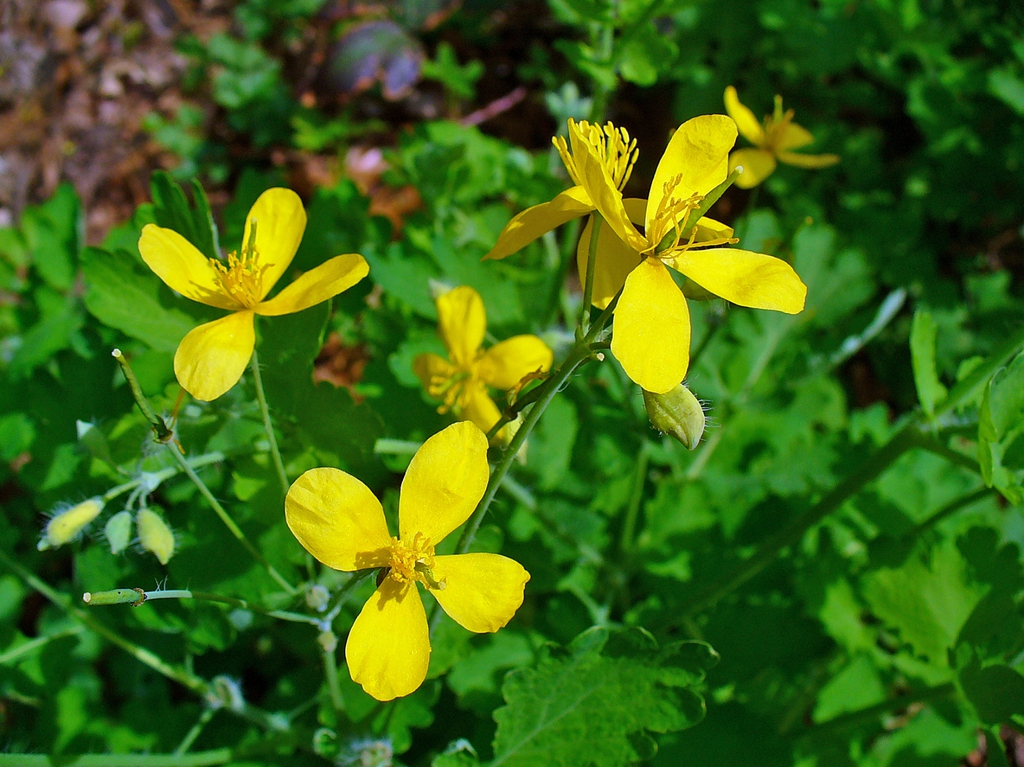
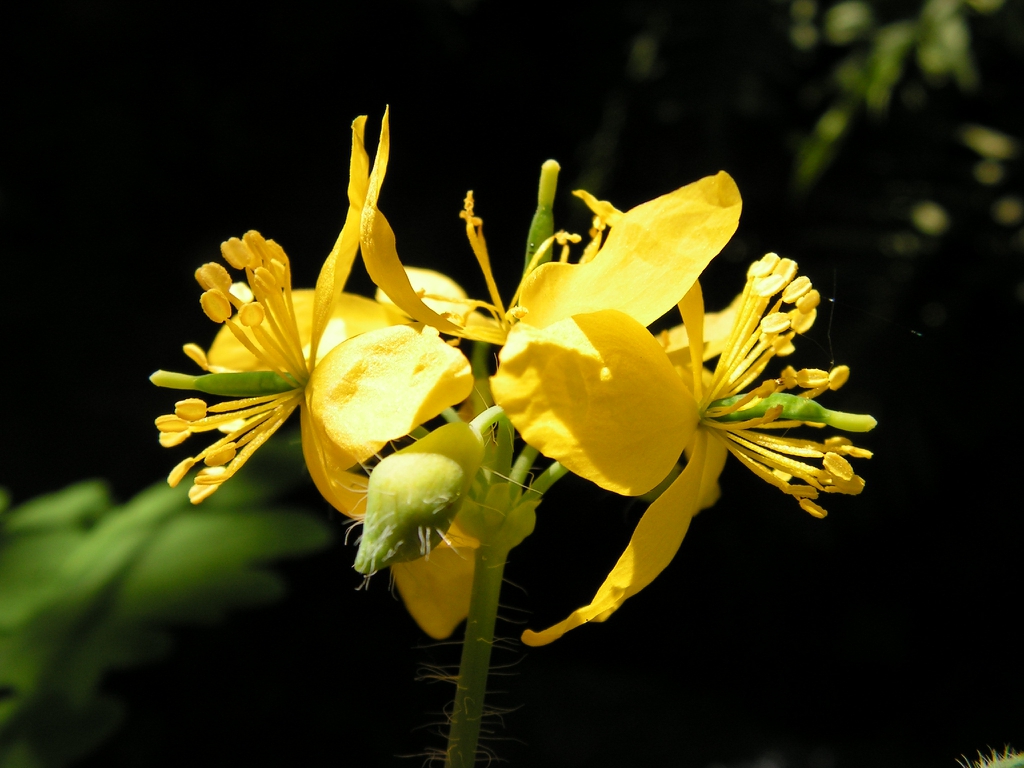
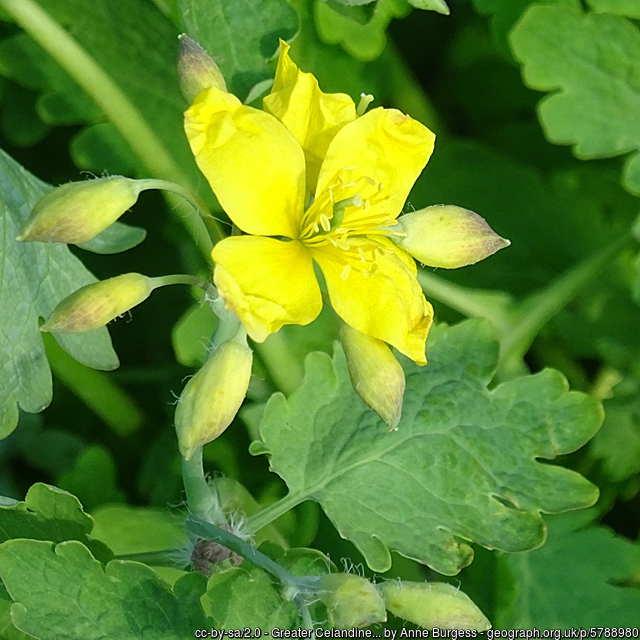
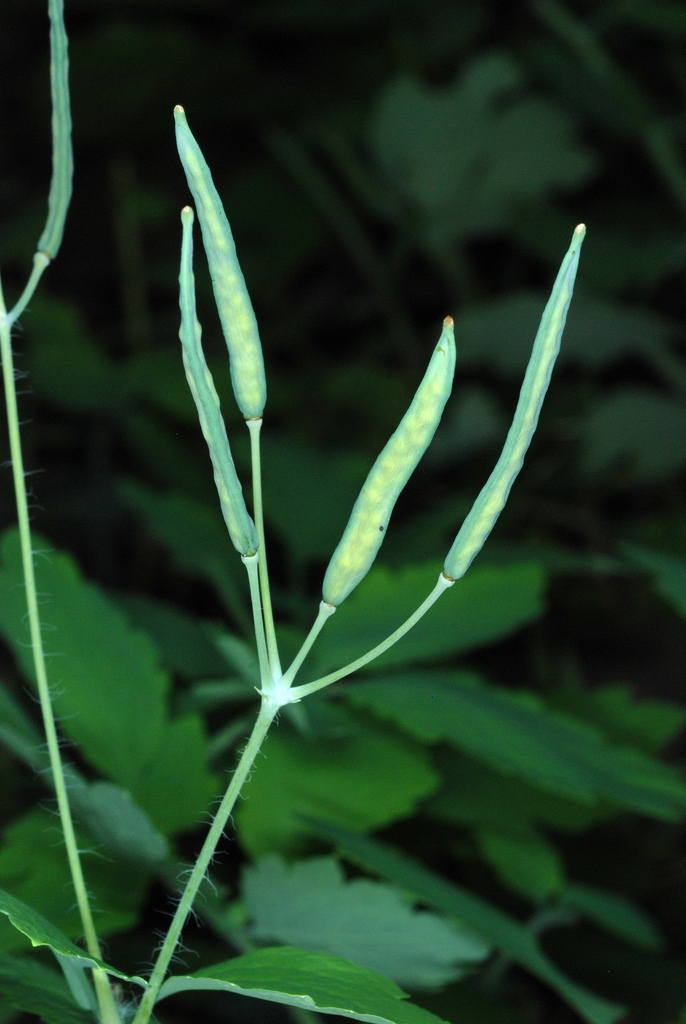
From May to August, one-inch-wide yellow flowers with four petals appear in clusters. Two-inch-long capsules follow that split open to release many seeds. The large compound leaves are lobed, and the stems, when broken, exude an irritating orange-yellow sap. Wear gloves when dealing with this plant
This plant is not recommended for garden use as it spreads very fast and has the potential to escape gardens and become invasive. Best control is hand-pulling before it flowers.
Insects, Diseases, and Other Plant Problems: No significant problems.
- See this plant in the following landscape :
- Cultivars / Varieties:
-
- Tags:







- Cultivars / Varieties:
-
- Tags:
-
-
Attributes:
- Genus:
- Chelidonium
- Species:
- majus
- Family:
- Papaveraceae
- Uses (Ethnobotany):
- It has been used in herbal medicine but the correct dose is essential.
- Life Cycle:
- Biennial
- Perennial
- Recommended Propagation Strategy:
- Seed
- Country Or Region Of Origin:
- Eurasia
- Play Value:
- Attractive Flowers
- Dimensions:
- Height: 1 ft. 0 in. - 2 ft. 0 in.
- Width: 0 ft. 8 in. - 1 ft. 0 in.
-
-
Whole Plant Traits:
- Plant Type:
- Herbaceous Perennial
- Poisonous
- Weed
- Habit/Form:
- Clumping
- Growth Rate:
- Rapid
- Maintenance:
- High
-
-
Cultural Conditions:
- Light:
- Dappled Sunlight (Shade through upper canopy all day)
- Deep shade (Less than 2 hours to no direct sunlight)
- Partial Shade (Direct sunlight only part of the day, 2-6 hours)
- Soil Texture:
- Clay
- High Organic Matter
- Loam (Silt)
- Sand
- Soil Drainage:
- Good Drainage
- Moist
- Available Space To Plant:
- Less than 12 inches
- 12 inches-3 feet
- NC Region:
- Coastal
- Mountains
- Piedmont
- USDA Plant Hardiness Zone:
- 4a, 4b, 5a, 5b, 6a, 6b, 7a, 7b, 8a, 8b
-
-
Fruit:
- Display/Harvest Time:
- Fall
- Summer
- Fruit Type:
- Capsule
- Fruit Length:
- 1-3 inches
- Fruit Width:
- < 1 inch
- Fruit Description:
- Fruit a slender capsule about 2 inches long that splits to release seeds.
-
-
Flowers:
- Flower Color:
- Gold/Yellow
- Flower Inflorescence:
- Umbel
- Flower Value To Gardener:
- Showy
- Flower Bloom Time:
- Summer
- Flower Shape:
- Cross
- Flower Petals:
- 4-5 petals/rays
- Flower Size:
- < 1 inch
- Flower Description:
- The 1-inch flowers are yellow and 4-parted, blooming in May to August in loose clusters.
-
-
Leaves:
- Leaf Color:
- Gray/Silver
- Green
- Leaf Type:
- Compound (Pinnately , Bipinnately, Palmately)
- Leaf Arrangement:
- Alternate
- Leaf Shape:
- Obovate
- Ovate
- Pinnatifid
- Leaf Margin:
- Lobed
- Undulate
- Hairs Present:
- Yes
- Leaf Length:
- > 6 inches
- Leaf Width:
- 3-6 inches
- Leaf Description:
- 5-10 inch Leaves are pinnately divided with 5–9 leaflets and have veins that are easily seen since the veins are a lighter color. Margins are lobed and wavy. Undersides are paler with a few soft hairs. Leaves become smaller as they ascend the stem.
-
-
Stem:
- Stem Color:
- Green
- Stem Is Aromatic:
- No
- Stem Surface:
- Hairy (pubescent)
- Stem Description:
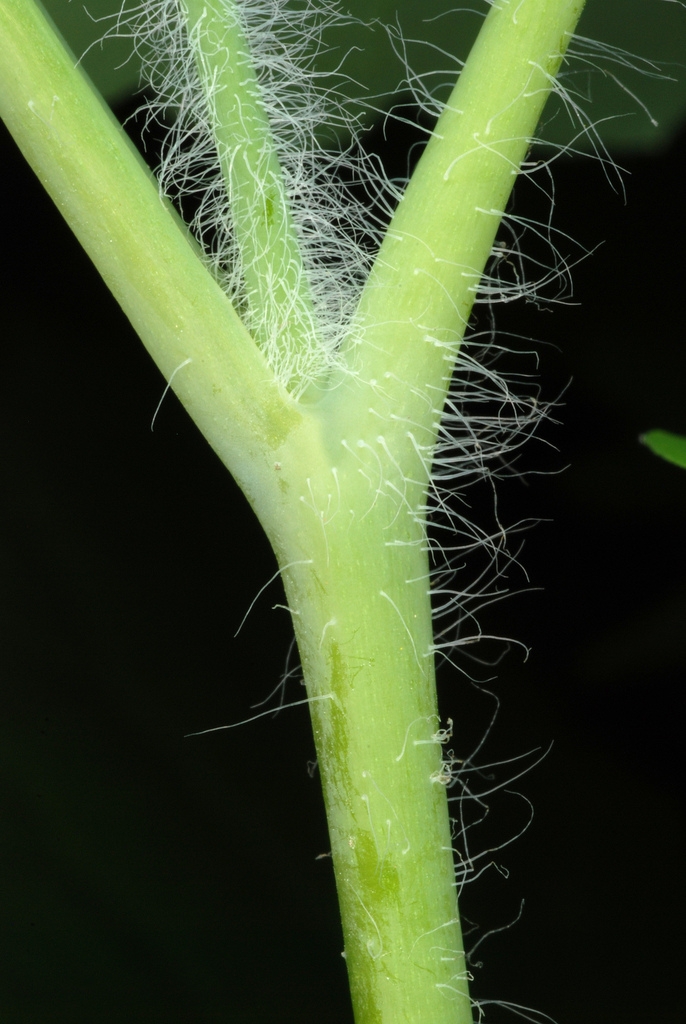
- Brittle with yellow-orange sap. The surface is waxy with sparse hairs.
-
-
Landscape:
- Resistance To Challenges:
- Heavy Shade
- Poor Soil
- Problems:
- Contact Dermatitis
- Poisonous to Humans
- Weedy