


Photinia serratifolia
Common Name(s):
Previously known as:
- Crataegus serratifolia
- Phonetic Spelling
- foh-TIN-nee-uh ser-at-ih-FOH-lee-uh
- Description
-
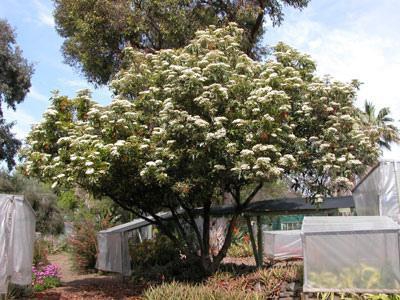
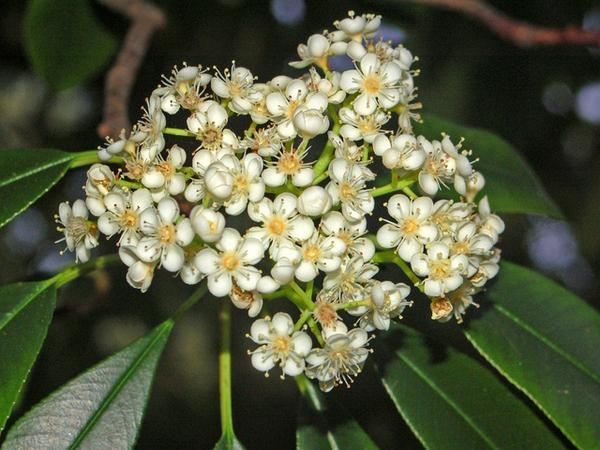
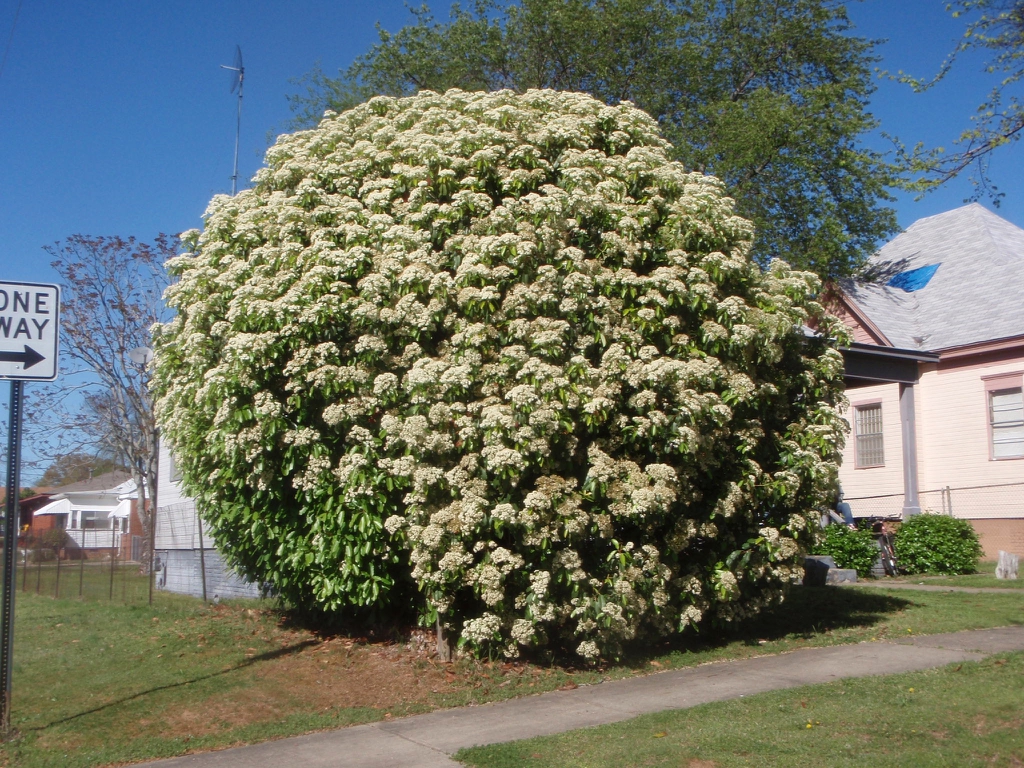
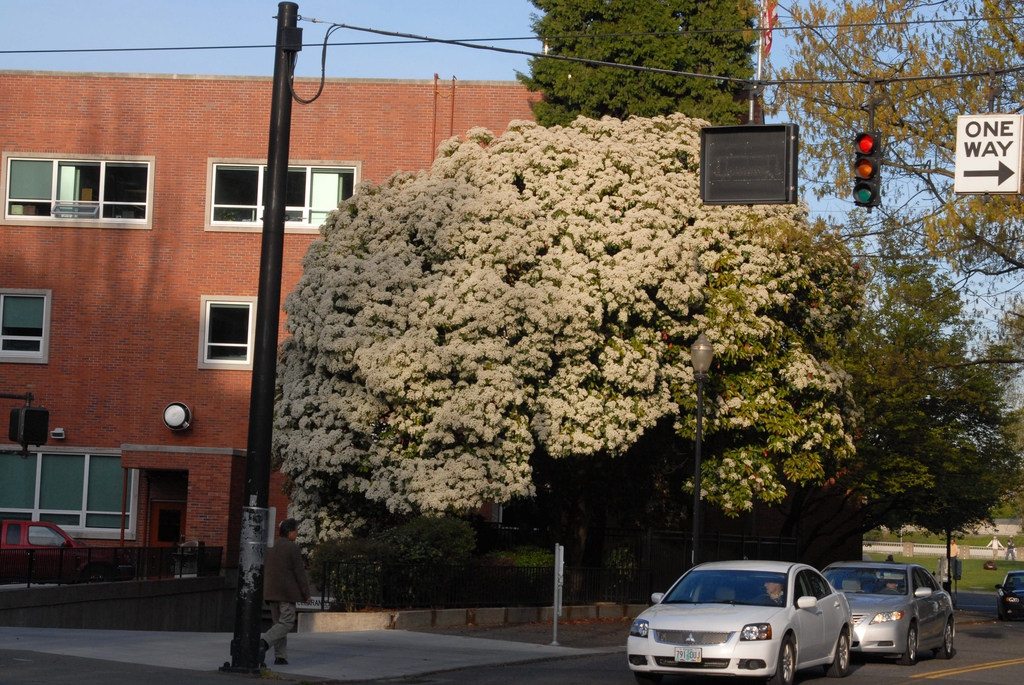
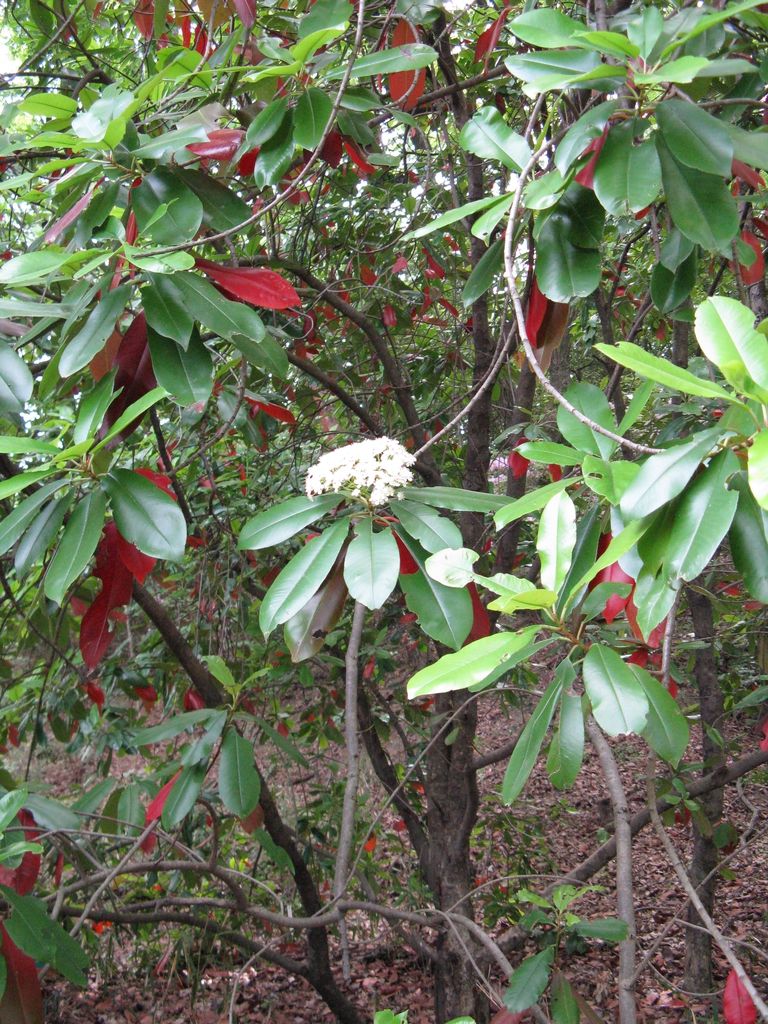
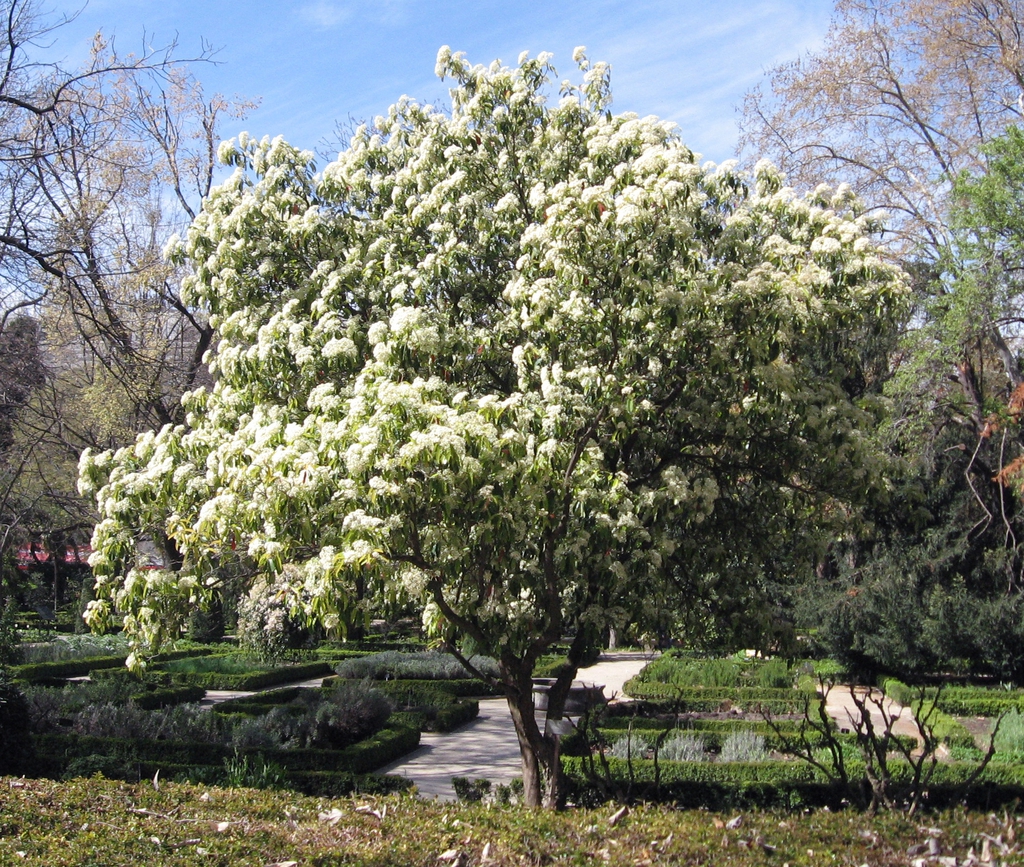
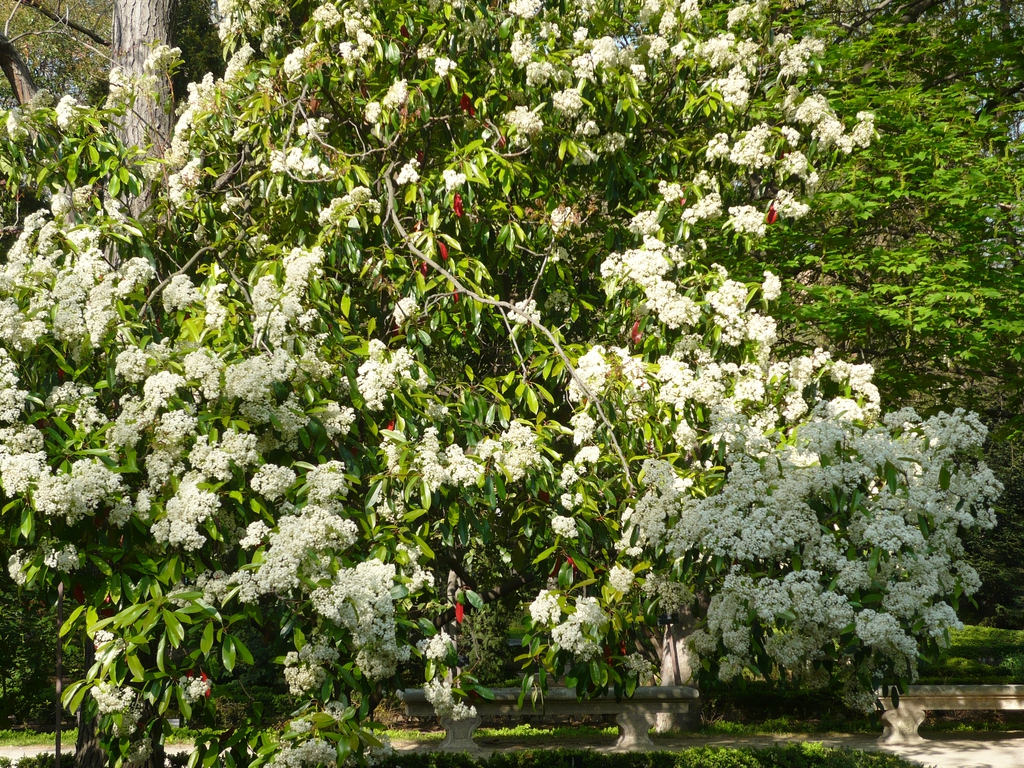
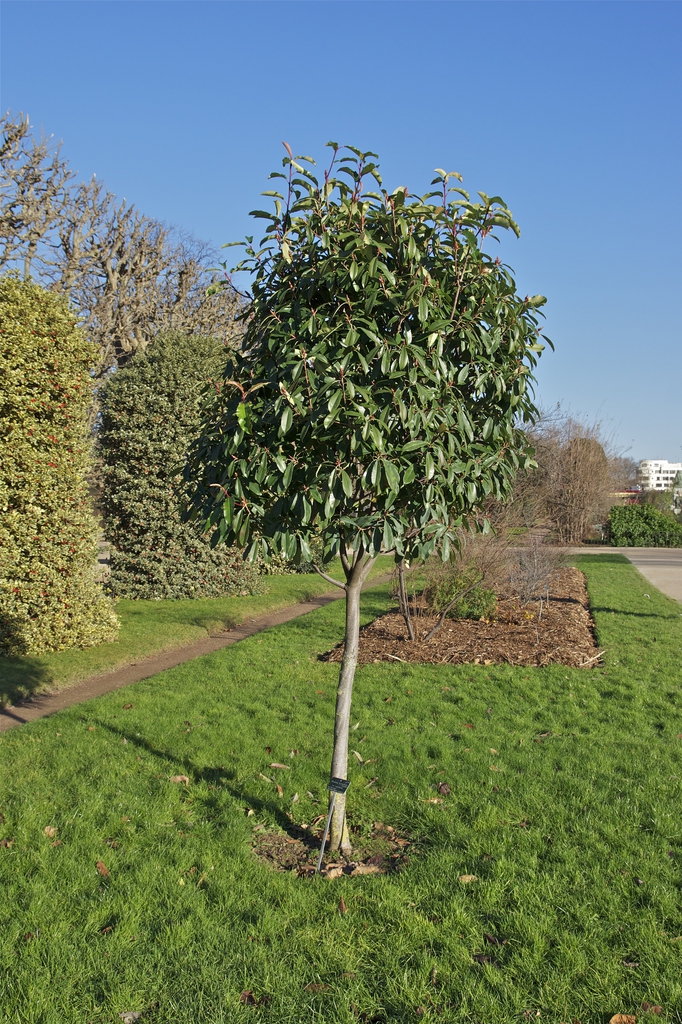
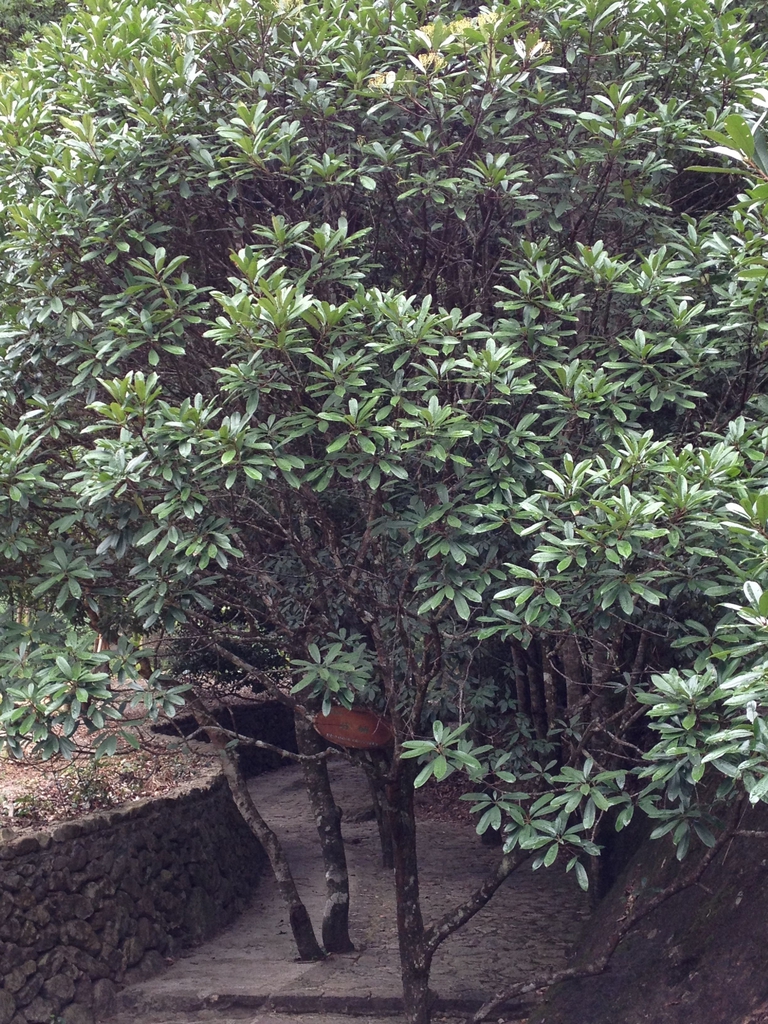
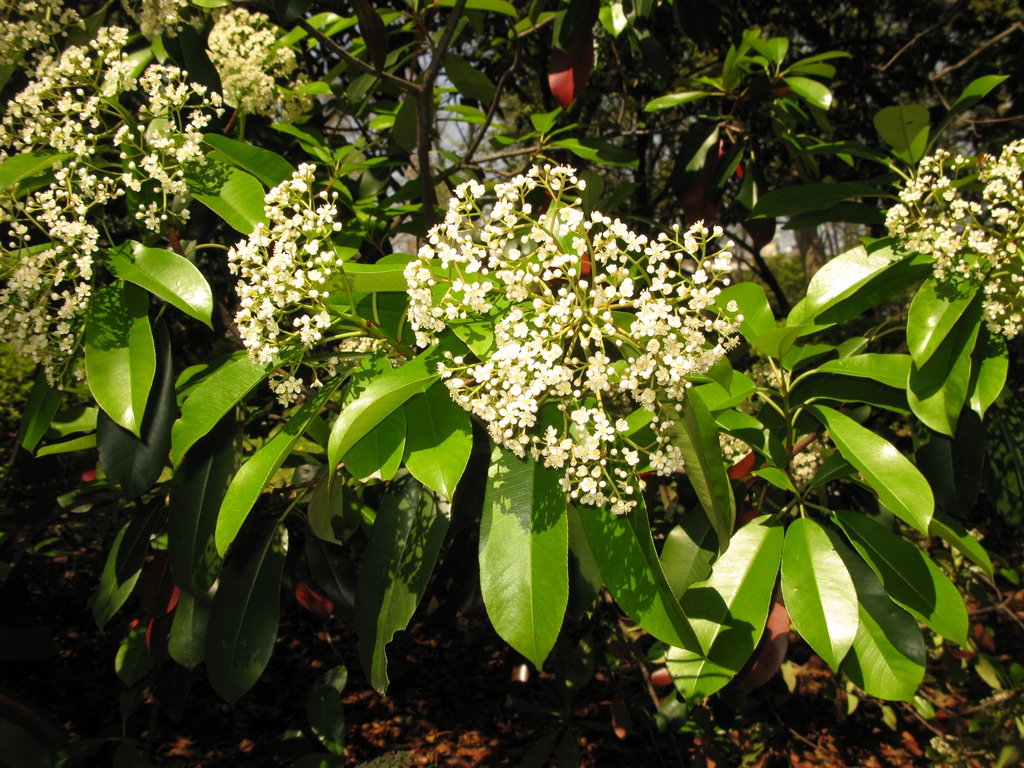
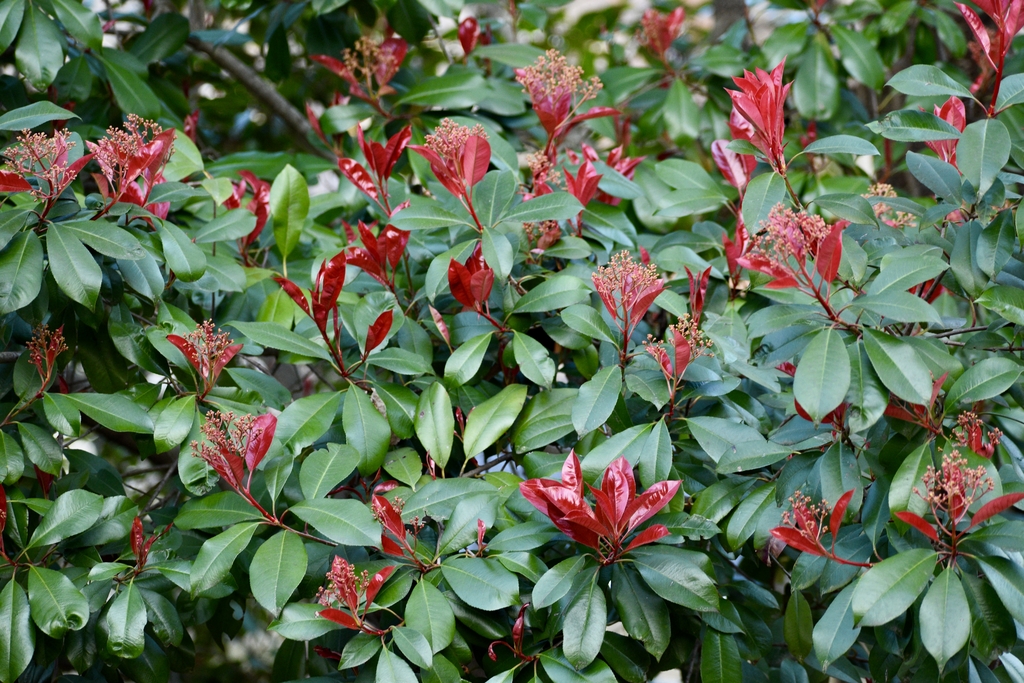
Chinese hawthorn is a large, broadleaf evergreen shrub or small tree in the rose family and native to China, India, Japan, and the Philippines. At maturity, it can reach a height of 20 feet tall grown as a shrub, or 35 feet as a tree. It has showy, fragrant, white flowers that bloom in mid-spring and large, red buds. As leaves age, they go from spinose (spiny) to serrate (toothed) to crenate (rounded teeth). It is the largest and heaviest-blooming of all photinias, although some may find the fragrance of the flowers malodorous.The genus name is from the Greek for "shining" referring to the shiny leaves of some species. The species name is from the Latin for small saw referring to the serrated leaf margins.
Plant in full sun to partial shade with average, medium moisture and well-drained soil. Established plants tolerate drought, but it does not like wet soil or the leaves getting wet. It is also intolerant of alkaline soils. Site in a location where there is good air circulation and, if the climate is cold and windy, provide protection from winter winds. Due to its size, it should not be used in small designs. Prune in winter to thin the plant for air circulation.
Chinese hawthorn can be grown as a small tree or hedge and is easy to transplant. The leaves, red buds, and flowers combine to provide four season interest. Note that this plant has been known to escape cultivation and naturalized, typically from southern gardens.
Quick ID Hints:
- Large, leathery, serrate leaves have 25 to 40 veins
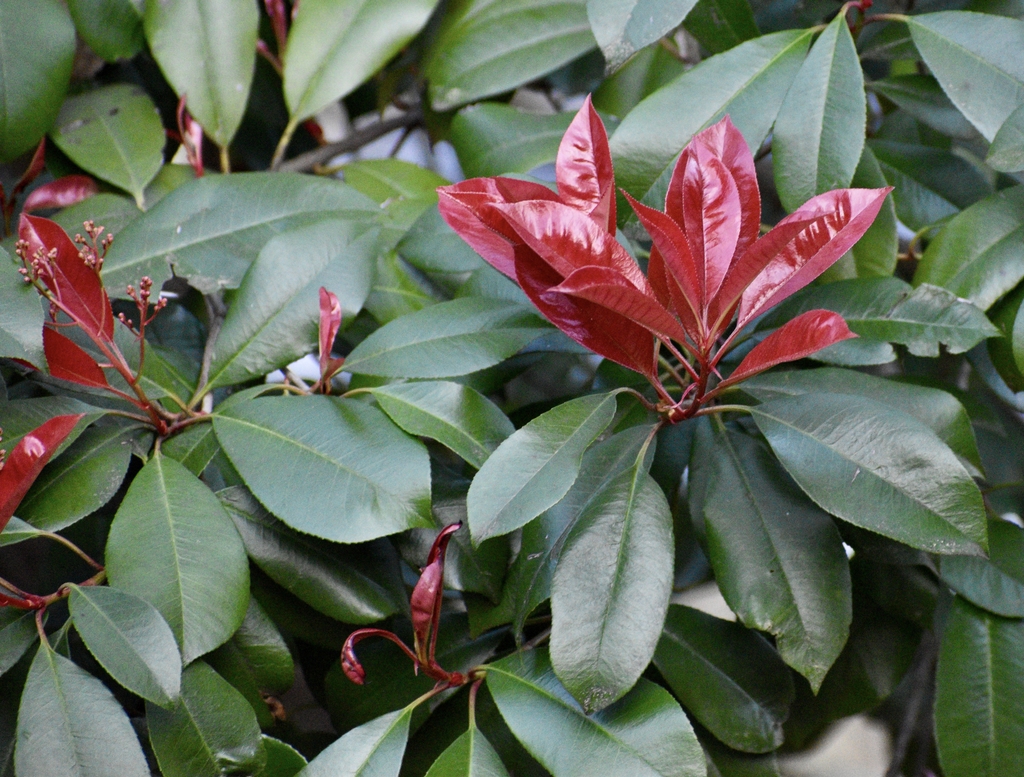
- This plant produces large red buds that emerge from foliage
Insects, Diseases, and Other Plant Problems:
This plant has pest problems but is the most disease-resistant of the genus, being particularly resistant to Entemosporium leaf spot. Phytophthora root rot, powdery mildew and fire blight can occur. Insects to watch for are aphids and scales. Entemosporium leaf spot can still be a problem for plants in warm climates (USDA zones 8 and 9).
- See this plant in the following landscape :
- Cultivars / Varieties:
-
- Tags:


- Cultivars / Varieties:
-
- Tags:
-
-
Attributes:
- Genus:
- Photinia
- Species:
- serratifolia
- Family:
- Rosaceae
- Life Cycle:
- Woody
- Recommended Propagation Strategy:
- Stem Cutting
- Country Or Region Of Origin:
- China, India, Japan, and Philippines
- Distribution:
- Introduced to southern United States, Georgia west to Texas, Bolivia, Spain, and Bulgaria.
- Wildlife Value:
- Fruits are food source for birds.
- Play Value:
- Wildlife Food Source
- Particularly Resistant To (Insects/Diseases/Other Problems):
- Resistant to Entemosporium leaf spot
- Edibility:
- Leaves can be toxic to some animals due to the presence of cyanogenic glycosides.
- Dimensions:
- Height: 12 ft. 0 in. - 20 ft. 0 in.
- Width: 9 ft. 0 in. - 16 ft. 0 in.
-
-
Whole Plant Traits:
- Plant Type:
- Shrub
- Tree
- Woody Plant Leaf Characteristics:
- Broadleaf Evergreen
- Habit/Form:
- Broad
- Multi-stemmed
- Oval
- Rounded
- Vase
- Growth Rate:
- Medium
- Maintenance:
- Medium
-
-
Cultural Conditions:
- Light:
- Full sun (6 or more hours of direct sunlight a day)
- Partial Shade (Direct sunlight only part of the day, 2-6 hours)
- Soil Texture:
- Clay
- Loam (Silt)
- Sand
- Soil pH:
- Acid (<6.0)
- Neutral (6.0-8.0)
- Soil Drainage:
- Good Drainage
- Moist
- Available Space To Plant:
- 12-24 feet
- NC Region:
- Coastal
- Mountains
- Piedmont
- USDA Plant Hardiness Zone:
- 6a, 6b, 7a, 7b, 8a, 8b, 9a, 9b
-
-
Fruit:
- Fruit Color:
- Red/Burgundy
- Fruit Value To Gardener:
- Showy
- Display/Harvest Time:
- Fall
- Summer
- Fruit Type:
- Pome
- Fruit Length:
- < 1 inch
- Fruit Width:
- < 1 inch
- Fruit Description:
- Plant produces a red, globose, berry-like pome that is less than an inch in diameter. Berries are initially green, mature first to red and finally to brownish-purple and persist on the plant into winter.
-
-
Flowers:
- Flower Color:
- White
- Flower Inflorescence:
- Cyme
- Flower Value To Gardener:
- Fragrant
- Showy
- Flower Bloom Time:
- Spring
- Flower Petals:
- 4-5 petals/rays
- Flower Size:
- < 1 inch
- Flower Description:
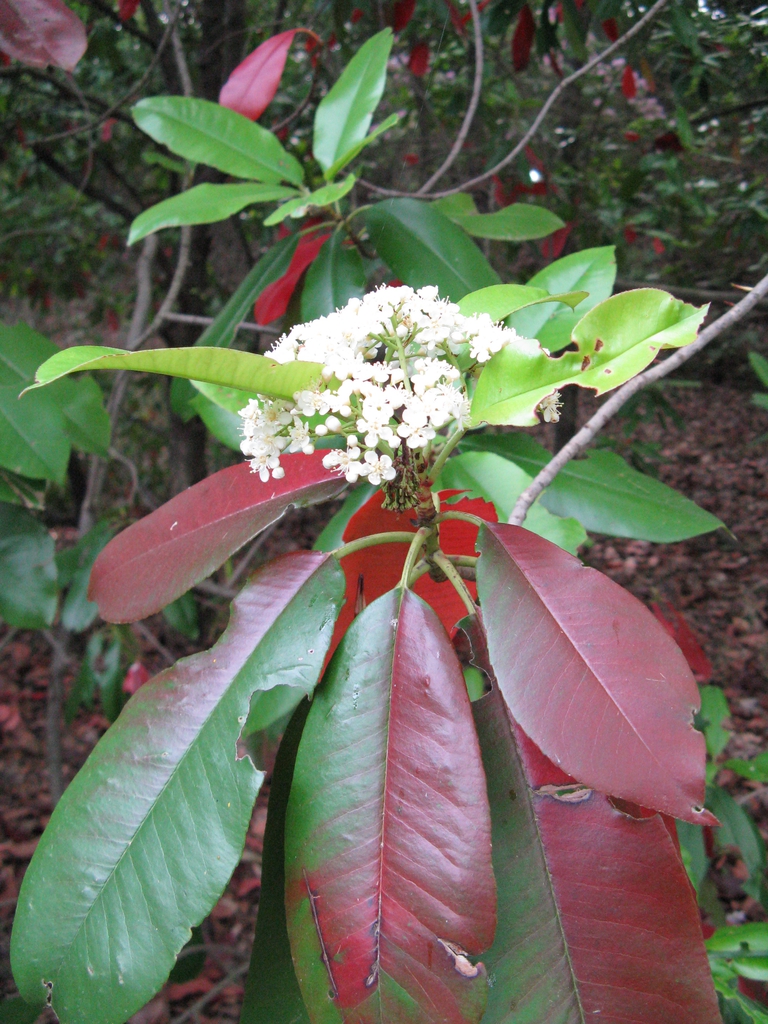
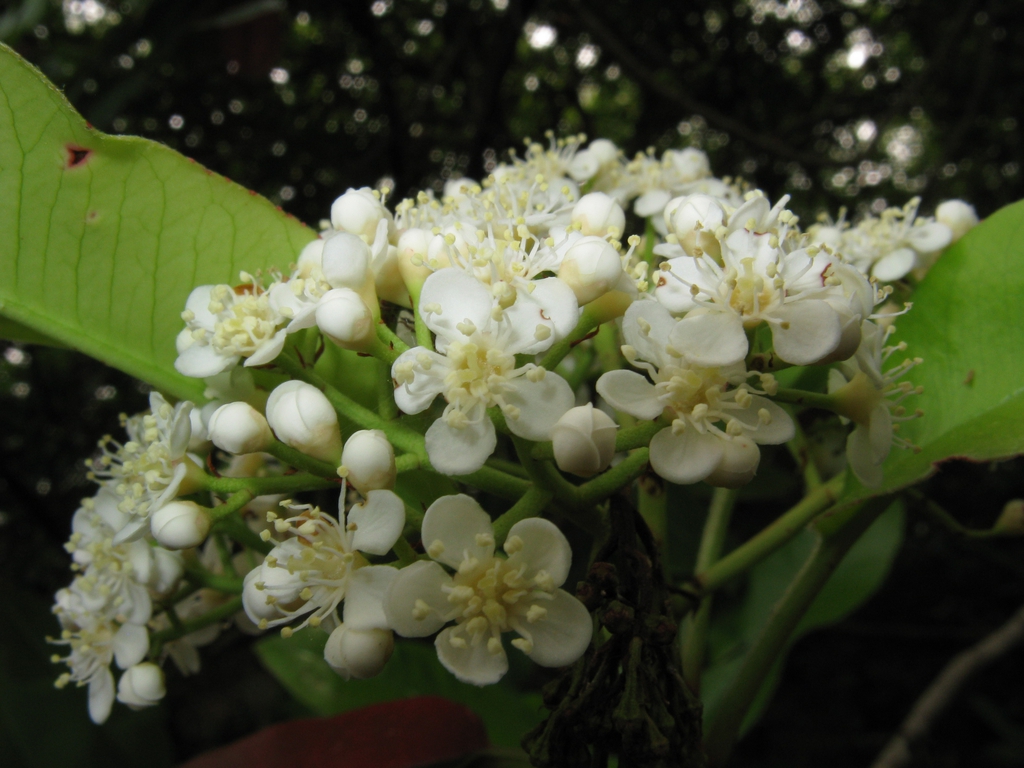
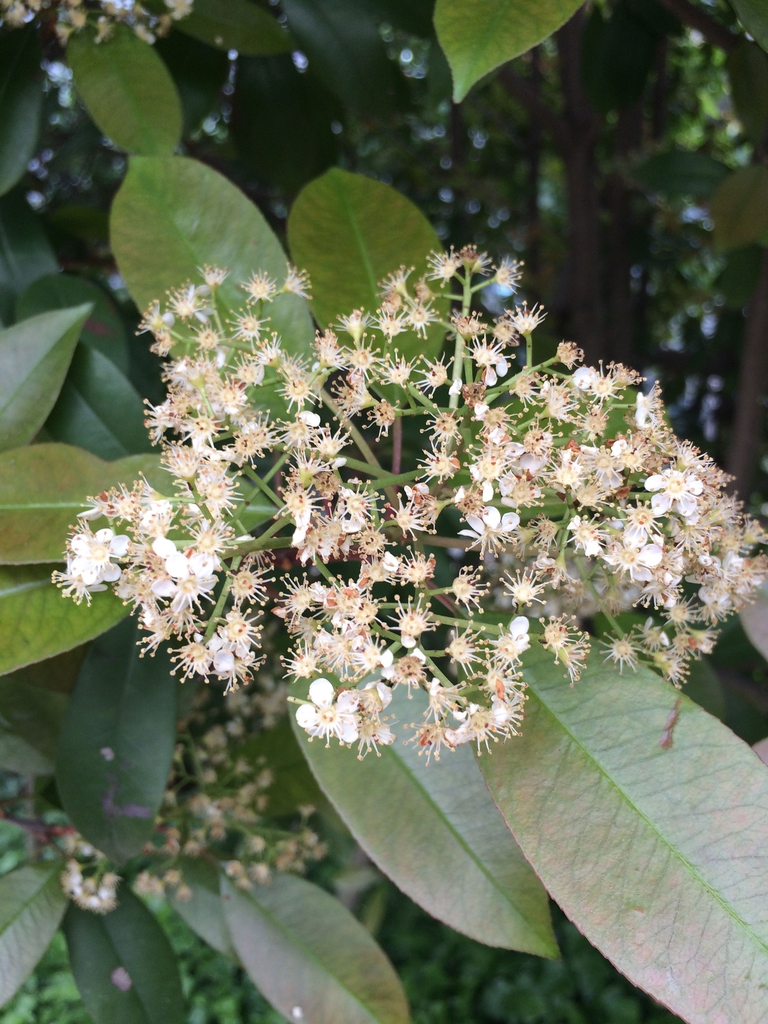
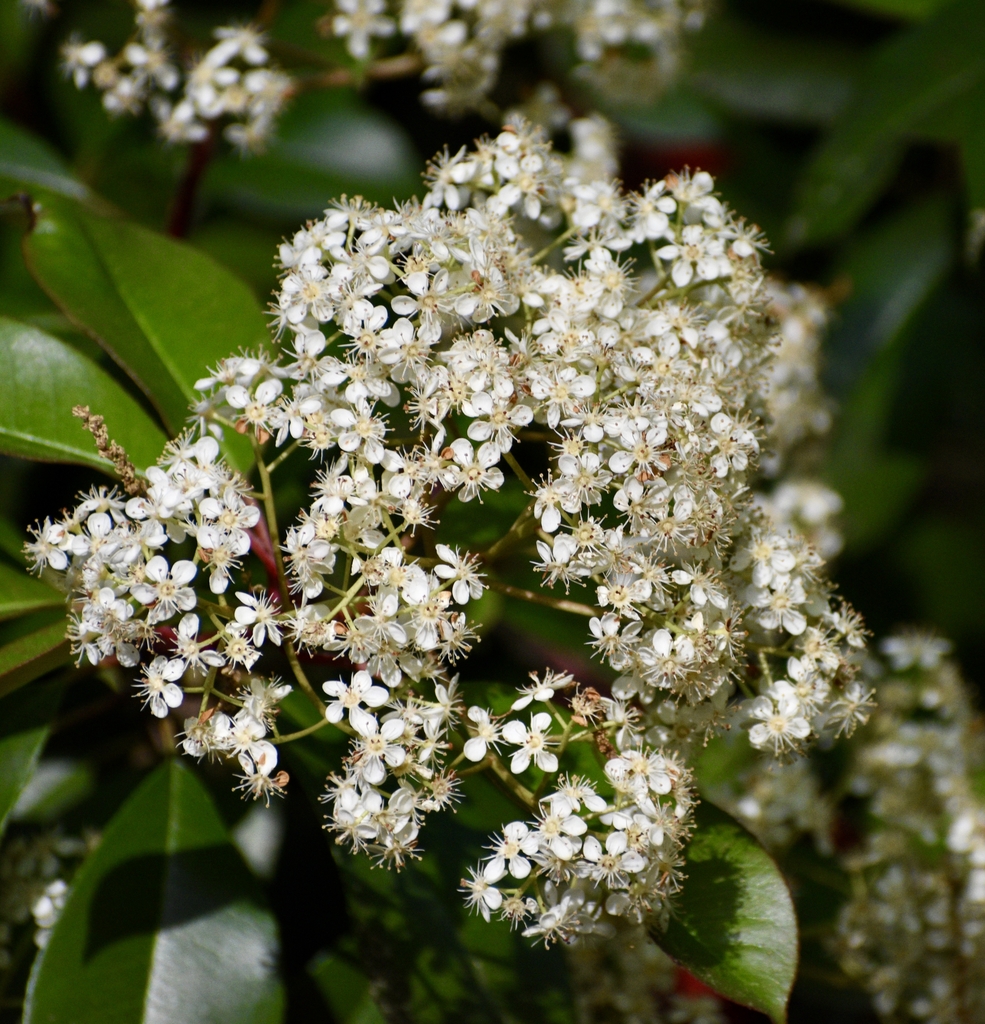
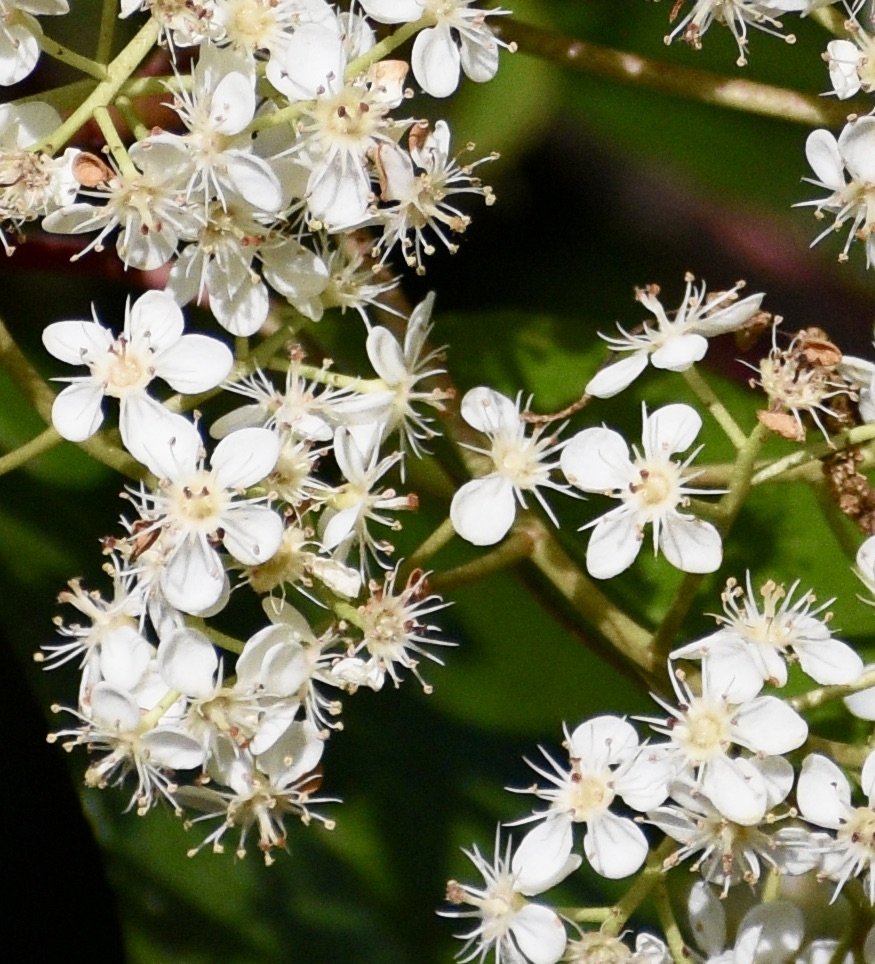
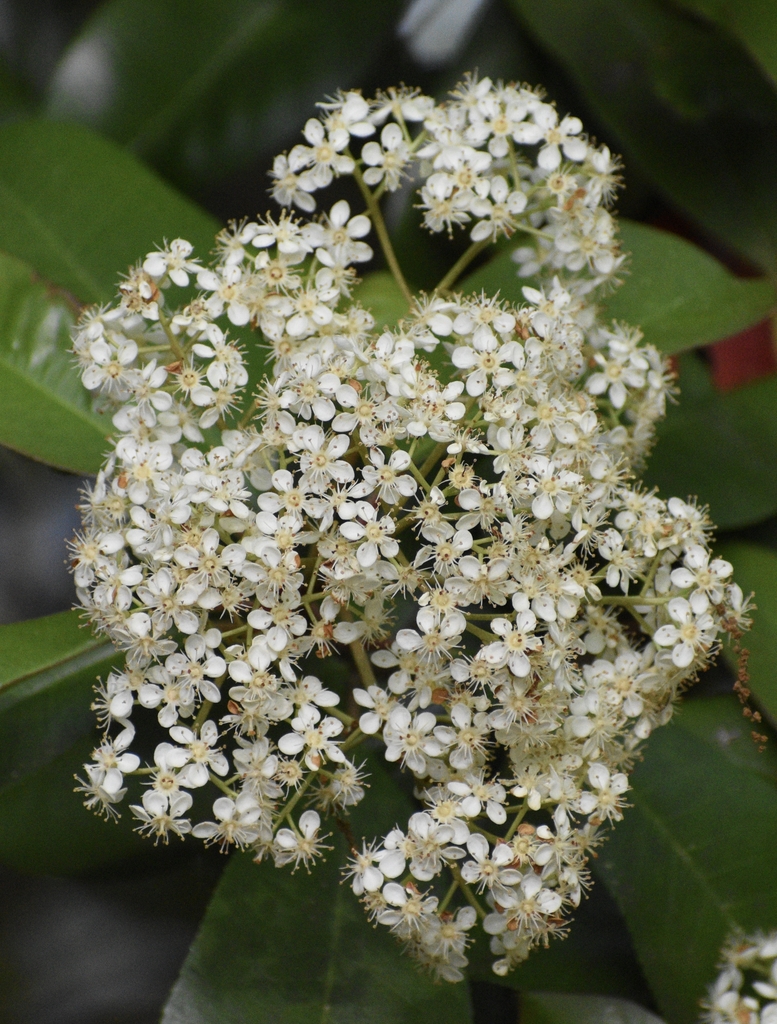
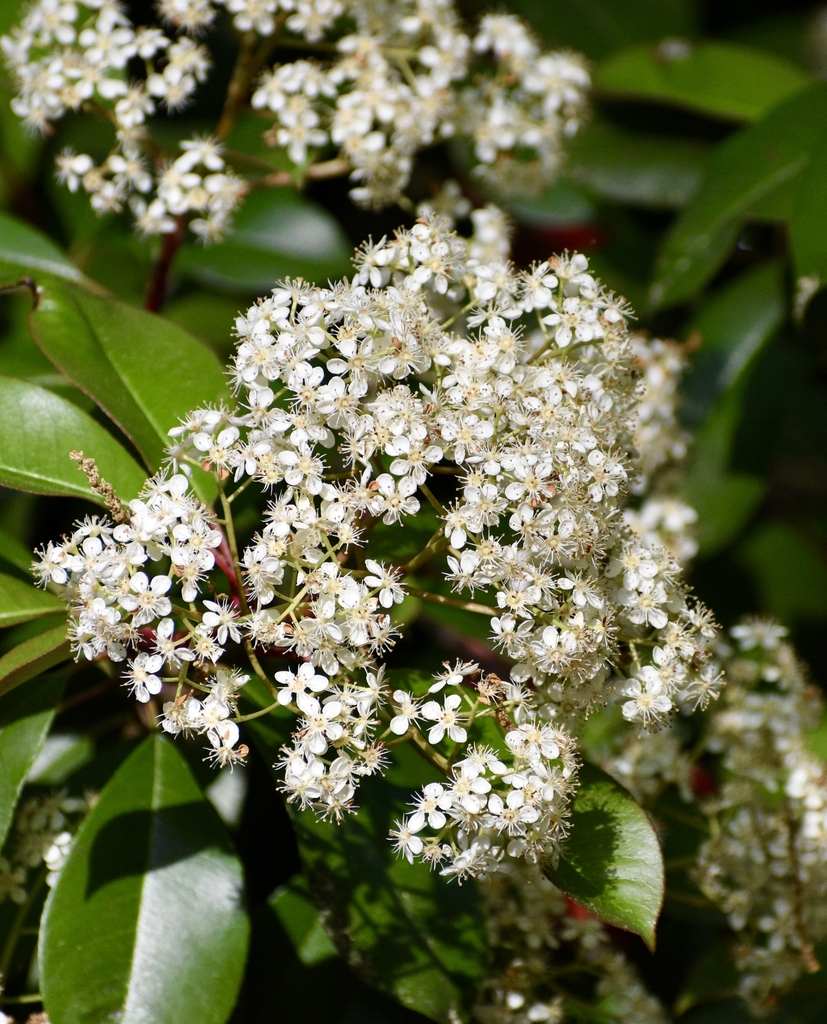
- Flowers are white, fragrant, and less than an inch in size. Infloresence is a 4 to 6 inch terminal cyme. The five-petaled flowers bloom in spring (April) in somewhat flattened panicles. Flowers are ornamentally attractive but have an unpleasant aroma to some.
-
-
Leaves:
- Woody Plant Leaf Characteristics:
- Broadleaf Evergreen
- Leaf Color:
- Brown/Copper
- Gold/Yellow
- Green
- Purple/Lavender
- Leaf Feel:
- Leathery
- Leaf Type:
- Simple
- Leaf Arrangement:
- Alternate
- Leaf Shape:
- Lanceolate
- Oblong
- Leaf Margin:
- Crenate
- Serrate
- Hairs Present:
- No
- Leaf Length:
- > 6 inches
- Leaf Width:
- 1-3 inches
- Leaf Description:
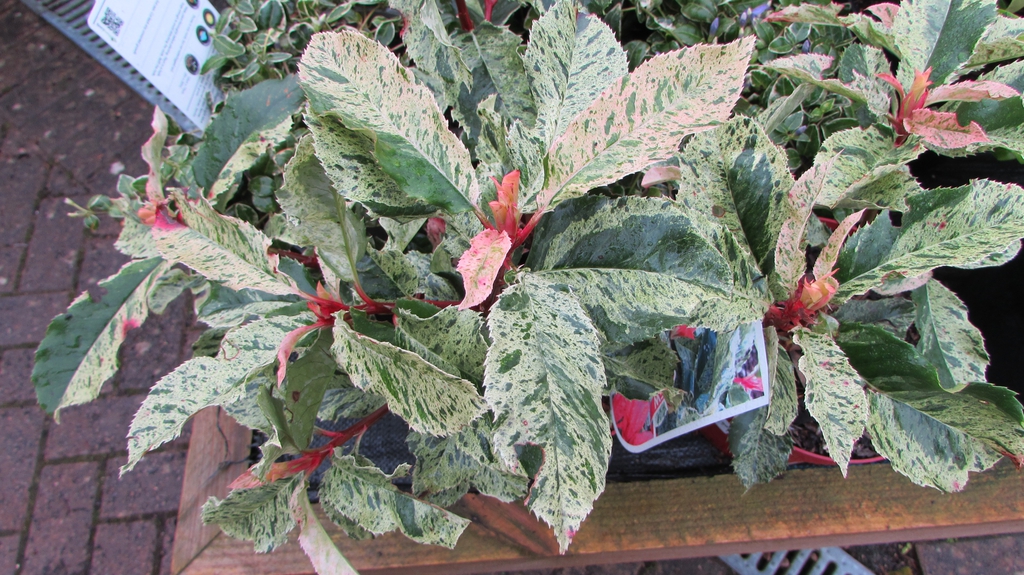
- Leaves are alternate, simple, lanceolate to oblong, and margins change from spinose to serrate to crenate. Leaves have 25 to 49 prominent lateral veins and are 4 to 8 inches long and 1 1/2 to 3 1/2 inches wide. New leaves are apple green to bronze-tinged or reddish purple, later maturing to dark green.
-
-
Bark:
- Bark Color:
- Black
- Surface/Attachment:
- Patchy
-
-
Stem:
- Stem Color:
- Brown/Copper
- Green
- Stem Is Aromatic:
- No
- Stem Description:
- Stems are stout, greenish-brown, and lenticeled.
-
-
Landscape:
- Landscape Location:
- Recreational Play Area
- Woodland
- Landscape Theme:
- Winter Garden
- Design Feature:
- Barrier
- Hedge
- Screen/Privacy
- Attracts:
- Songbirds
- Resistance To Challenges:
- Drought
- Problems:
- Frequent Insect Problems
- Malodorous