


Photinia glabra
Common Name(s):
Previously known as:
- Photinia serrulata
- Phonetic Spelling
- foh-TIN-nee-uh GLAH-bruh
- Description
-
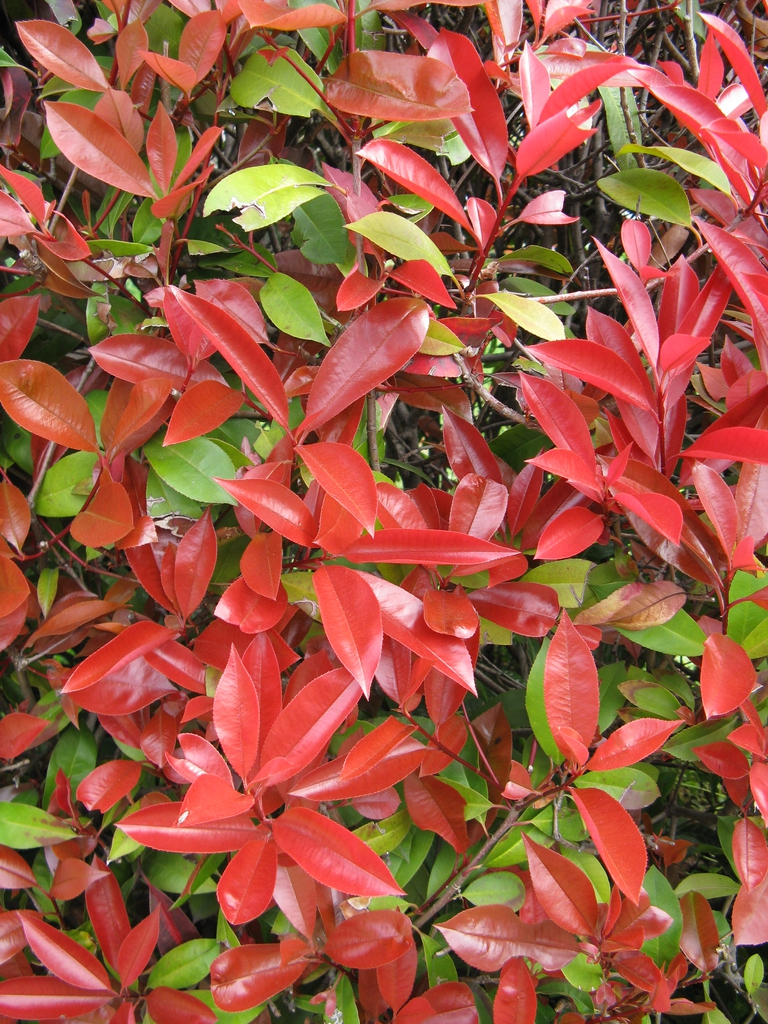
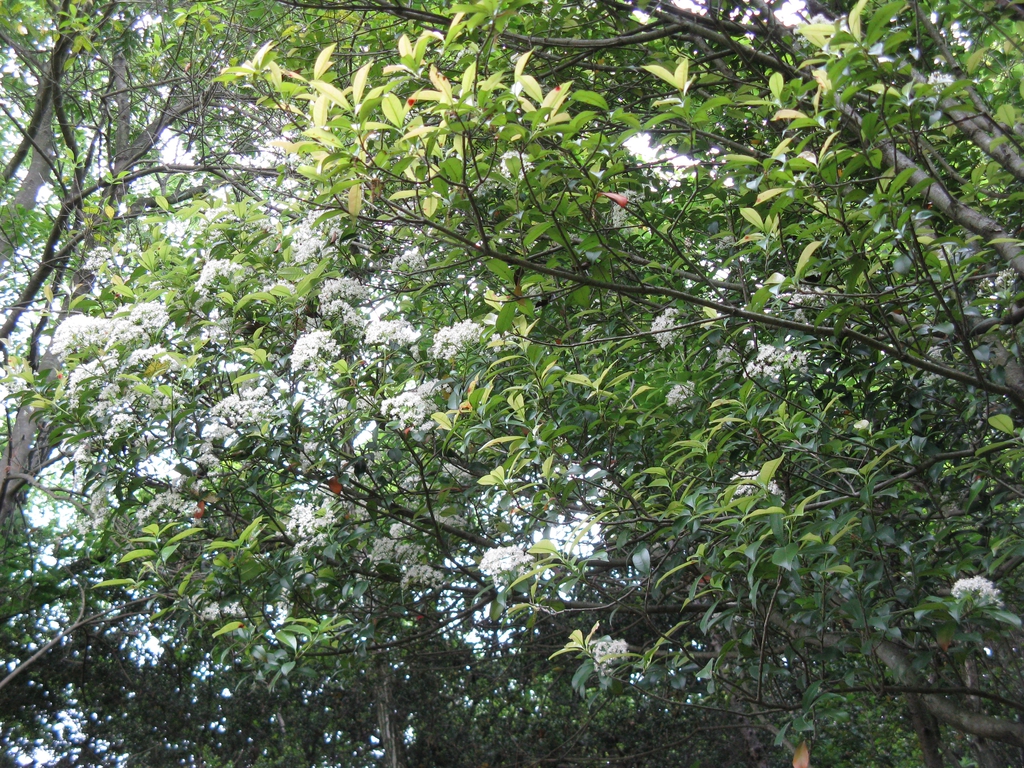
Japanese Photinia is a large evergreen shrub or small tree in the rose family with an upright and rounded form. It is a native of southern China and central and southern Japan. At maturity, it can reach up to 10 feet tall, although an unpruned speciman could eventually reach 20 feet. This plant blooms in late spring (making it the last of the photinias to flower). The fragrance of its blooms has been compared to that of the hawthorn, but others find it offensive. New foliage is a colorful reddish bronze that later turns green, and reddish buds are visible most of the year.
Japanese Photinia does best in moist, well drained soil, sited in full sun to partial shade with good air circulation. This plant is alkaline tolerant and drought tolerant once established. It is intolerant of wet conditions and should be watered at the soil level to avoid getting water on the leaves. It is the least cold-tolerant of the photinias and should be planted where it would be protected from cool winds. P. glabra is related to, and sometimes confused with, P. serrulata; however, P. glabra is the larger of the two and also has larger leaves.
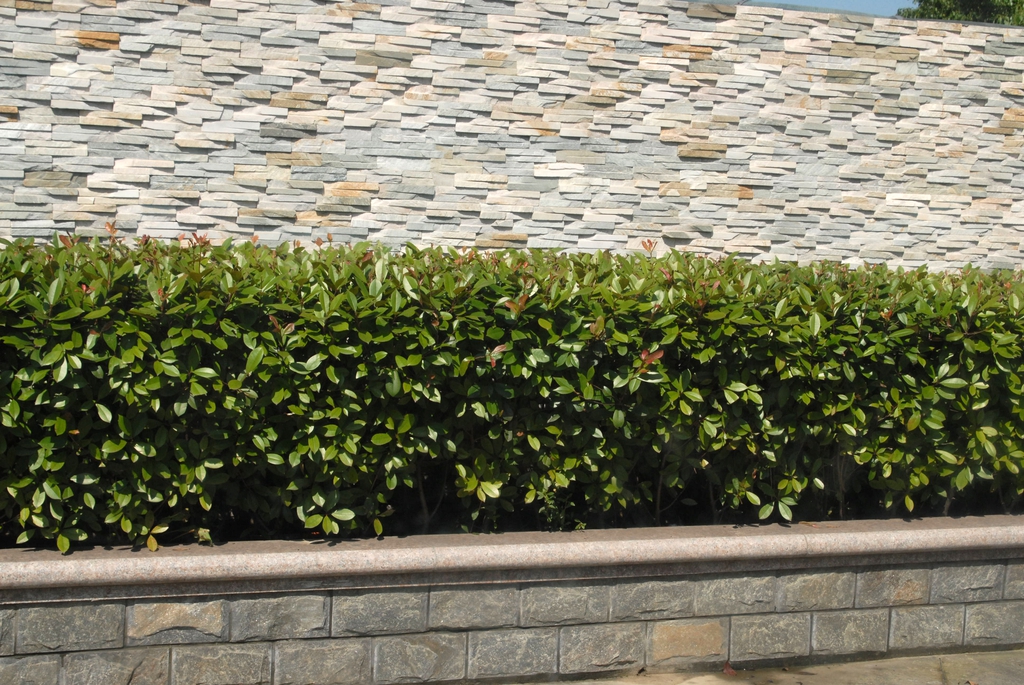
This plant can be used as a hedge or grown as a small tree.
Quick ID Hints:
- Leaves are alternate, coriaceous, and elliptic-obovate
- Leaves are reddish when young
- Leaves have 8 to 14 pairs of lateral veins
Diseases, Insect Pests, and Other Plant Problems:
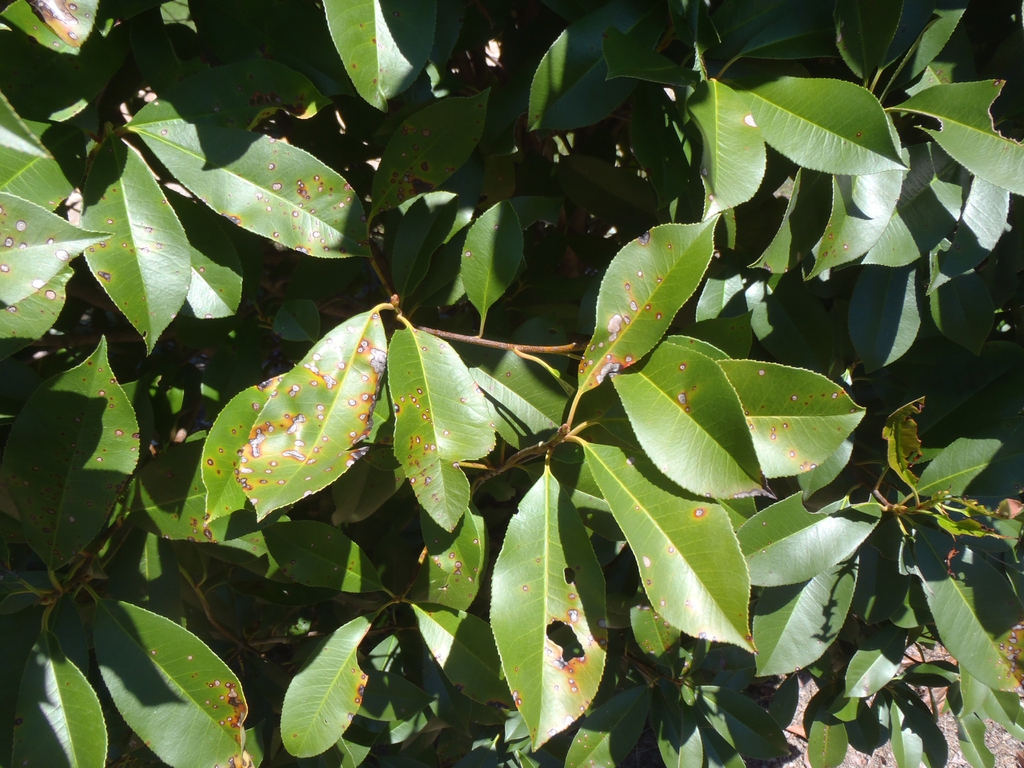
Japanese Photinia has pest and disease problems, including leaf spot. Leaf spot can be a problem in the summer climates of USDA Zones 8-9. Fireblight, powdery mildew, aphids, and scale can also occur.
- See this plant in the following landscape :
- Cultivars / Varieties:
-
- Rubens
- Rubens
- Rubens
- Tags:




- Cultivars / Varieties:
-
- Rubens
- Rubens
- Rubens
- Tags:
-
-
Attributes:
- Genus:
- Photinia
- Species:
- glabra
- Family:
- Rosaceae
- Life Cycle:
- Woody
- Recommended Propagation Strategy:
- Root Cutting
- Stem Cutting
- Country Or Region Of Origin:
- Southern China, Northern Indo-China, Southern and Central Japan
- Distribution:
- Introduced into Korea and Louisiana.
- Play Value:
- Attractive Flowers
- Dimensions:
- Height: 10 ft. 0 in. - 12 ft. 0 in.
- Width: 6 ft. 0 in. - 10 ft. 0 in.
-
-
Whole Plant Traits:
- Plant Type:
- Shrub
- Tree
- Woody Plant Leaf Characteristics:
- Broadleaf Evergreen
- Habit/Form:
- Oval
- Rounded
- Vase
- Growth Rate:
- Rapid
- Maintenance:
- Medium
- Texture:
- Medium
-
-
Cultural Conditions:
- Light:
- Full sun (6 or more hours of direct sunlight a day)
- Partial Shade (Direct sunlight only part of the day, 2-6 hours)
- Soil Texture:
- Clay
- Loam (Silt)
- Sand
- Soil pH:
- Alkaline (>8.0)
- Soil Drainage:
- Good Drainage
- Moist
- Occasionally Dry
- Very Dry
- NC Region:
- Coastal
- Mountains
- Piedmont
- USDA Plant Hardiness Zone:
- 7a, 7b, 8a, 8b, 9a, 9b, 10a, 10b
-
-
Fruit:
- Fruit Color:
- Black
- Red/Burgundy
- Display/Harvest Time:
- Fall
- Fruit Type:
- Pome
- Fruit Length:
- < 1 inch
- Fruit Width:
- < 1 inch
- Fruit Description:
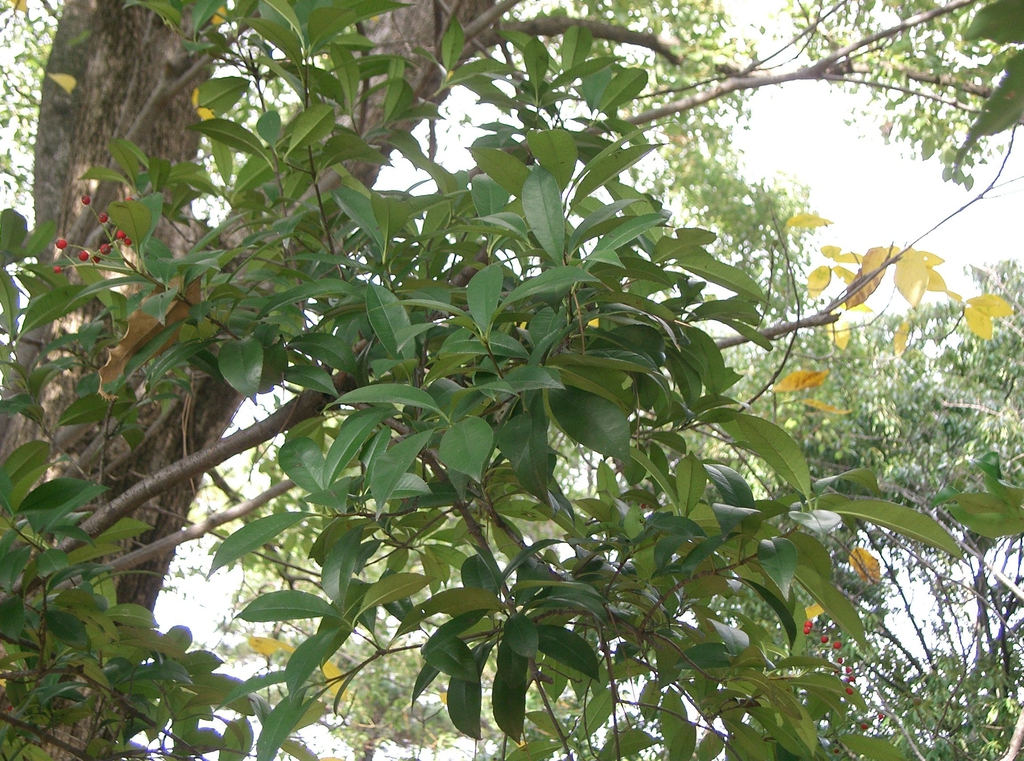
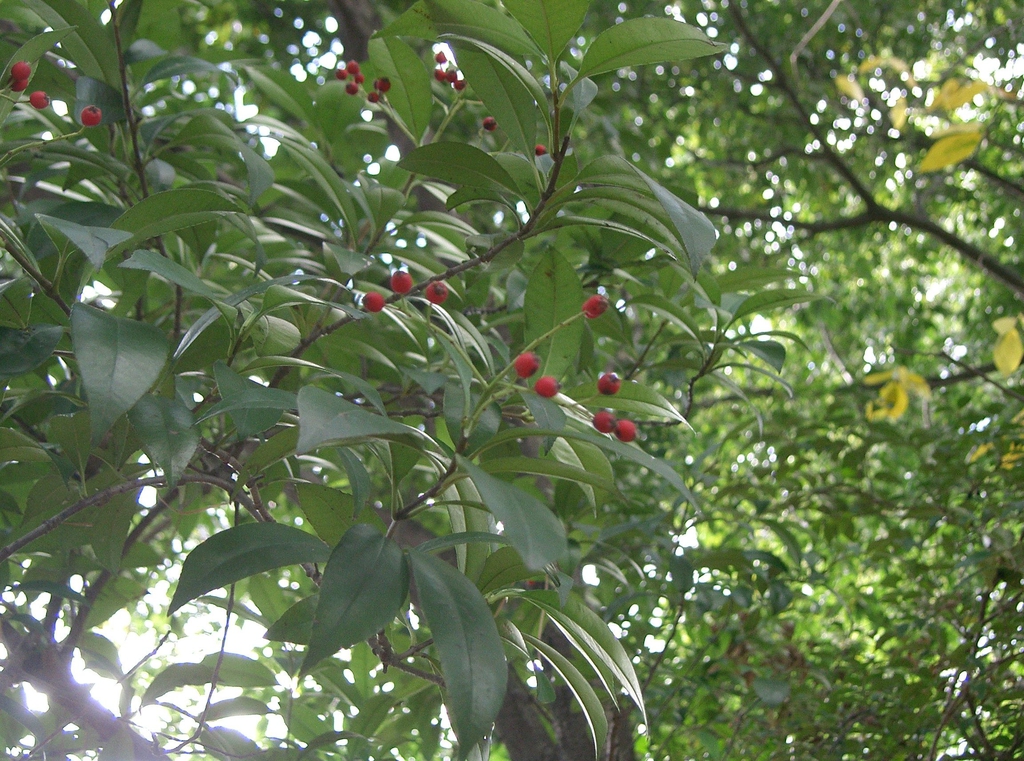
- Fruits are a berry-like pome that is red, turning to black, and less than an inch in size.
-
-
Flowers:
- Flower Color:
- White
- Flower Inflorescence:
- Cyme
- Flower Value To Gardener:
- Fragrant
- Showy
- Flower Bloom Time:
- Spring
- Flower Size:
- < 1 inch
- Flower Description:
- White flowers that are sometimes flushed pink have a strong odor that some find offensive. Flowers appear in spring and are less than an inch in size. Inflorescence is a terminal cyme that is 2 to 4 inches in diameter. Flowers are scented like hawthorn, hairy on the inside at the base, and open in June.
-
-
Leaves:
- Woody Plant Leaf Characteristics:
- Broadleaf Evergreen
- Leaf Color:
- Gold/Yellow
- Green
- Red/Burgundy
- Leaf Value To Gardener:
- Showy
- Leaf Type:
- Simple
- Leaf Arrangement:
- Alternate
- Leaf Shape:
- Elliptical
- Obovate
- Leaf Margin:
- Serrate
- Hairs Present:
- No
- Leaf Length:
- 1-3 inches
- Leaf Width:
- 1-3 inches
- Leaf Description:
- Leaves are alternate, simple, elliptic to obovate, 2 to 3 inches long and 1 to 1 1/2 inches wide, acute, cuneate, serrulate, coriaceous, and with 8 to 14 pairs of parallel leaf veins. Leaves are lustrous dark green in color and new growth is bronzy red.
-
-
Bark:
- Surface/Attachment:
- Smooth
-
-
Stem:
- Stem Color:
- Brown/Copper
- Green
- Stem Is Aromatic:
- No
- Stem Surface:
- Smooth (glabrous)
- Stem Description:
- Stems are stout and greenish-brown and glabrous.
-
-
Landscape:
- Landscape Location:
- Recreational Play Area
- Woodland
- Landscape Theme:
- Children's Garden
- Design Feature:
- Border
- Flowering Tree
- Hedge
- Small Tree
- Resistance To Challenges:
- Drought