


Quercus variabilis
Common Name(s):
- Phonetic Spelling
- KWER-kus var-ee-AH-bil-iss
- This plant has low severity poison characteristics.
- See below
- Description
-
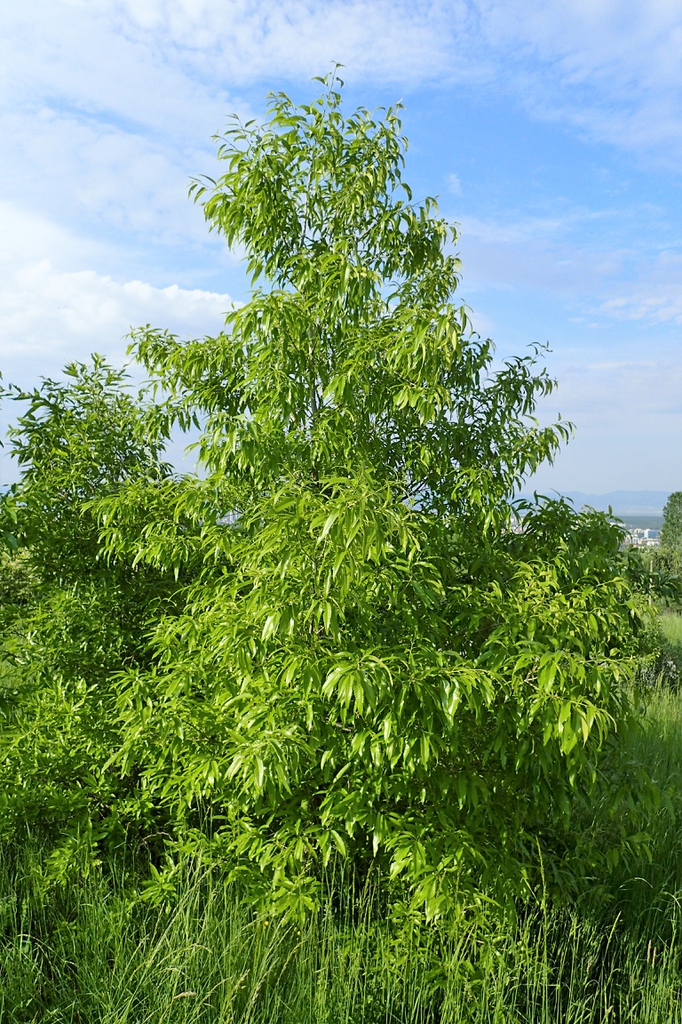
Oriental cork oak is a medium to large tree in the red oak family (Fagaceae), native to China, Taiwan, Japan and Korea and is important economically and ornamentally. In Asia, the bark is harvested for cork. The specific epithet refers to the variability of the leaves.
It prefers moist, well-drained clay to sandy loam soils and full sun but will tolerate some shade.
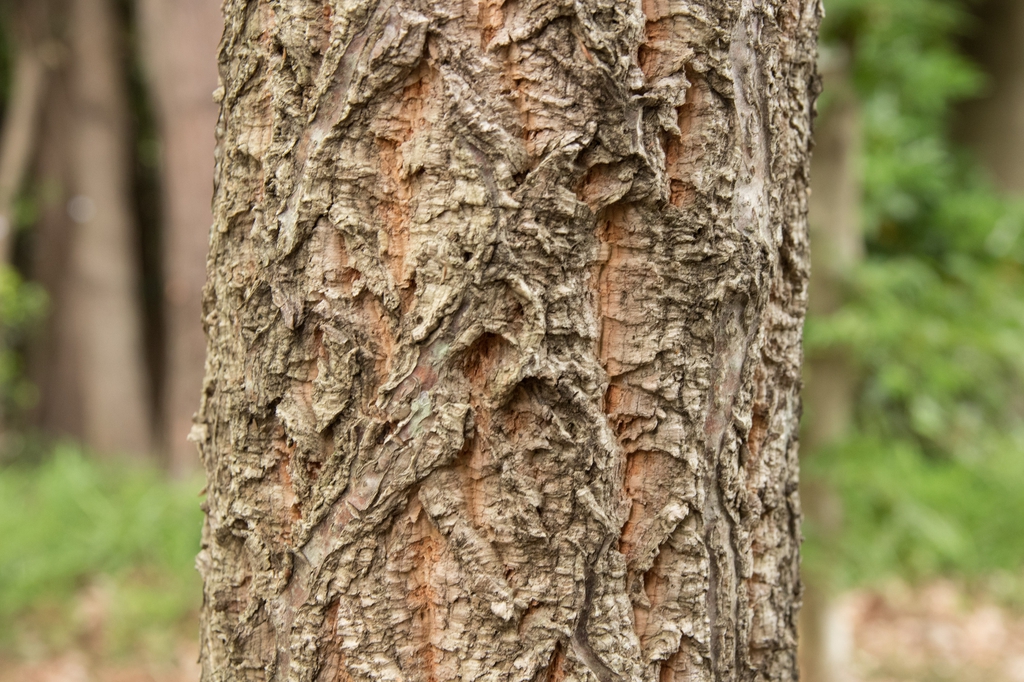
The tree is ornamental in appearance with thick, corky, ridged bark and green leaves with serrated margins and silvery undersides. The acorns mature the second year.
Oriental cork oak can be difficult to find for sale in this country but could be used as a shade tree. This tree is mainly cultivated in arboreta around the world. See a few native oak trees listed to the left.
Insects, Diseases, and Other Plant Problems: See common pests of oaks in NC to the left. The Clemson Cooperative Extension Home and Garden Information Center has a factsheet on common pests and insects.
- See this plant in the following landscape :
- Cultivars / Varieties:
-
- Tags:
 Download Image
 Download Image


- Cultivars / Varieties:
-
- Tags:
-
-
Attributes:
- Genus:
- Quercus
- Species:
- variabilis
- Family:
- Fagaceae
- Uses (Ethnobotany):
- Bark can be used for cork production. The acorn cups produce a black dye used to color silk.
- Life Cycle:
- Woody
- Recommended Propagation Strategy:
- Seed
- Country Or Region Of Origin:
- Asia
- Wildlife Value:
- Oak trees support a wide variety of Lepidopteran. You may see Imperial Moth (Eacles imperialis) larvae which have one brood per season and appear from April-October in the south. Adult Imperial Moths do not feed. Banded Hairstreak (Satyrium calanus), which have one flight from June-August everywhere but Florida where they emerge April-May. Edward's Hairstreak (Satyrium edwardsii), has one flight from May-July in the south and June-July in the north. Gray Hairstreak (Strymon melinus), has three to four flights in the south from February-November and two flights in the north from May-September. White-M Hairstreak (Parrhasius m-album) has three broods in the north from February-October. Horace’s Duskywing (Erynnis horatius) has three broods in Texas and the deep south from January-November, and two broods in the north from April-September. Juvenal’s Duskywing (Erynnis juvenalis) has one brood from April-June, appearing as early as January in Florida. Mildly resistant to deer damage.
- Edibility:
- Acorns can be eaten after the tannin is leached or boiled out.
- Dimensions:
- Height: 60 ft. 0 in. - 80 ft. 0 in.
- Width: 60 ft. 0 in. - 75 ft. 0 in.
-
-
Whole Plant Traits:
- Plant Type:
- Poisonous
- Tree
- Woody Plant Leaf Characteristics:
- Deciduous
- Habit/Form:
- Erect
- Open
- Growth Rate:
- Slow
- Maintenance:
- Medium
- Texture:
- Coarse
-
-
Cultural Conditions:
- Light:
- Full sun (6 or more hours of direct sunlight a day)
- Soil Texture:
- Clay
- Loam (Silt)
- Sand
- Soil Drainage:
- Good Drainage
- Moist
- Occasionally Dry
- NC Region:
- Coastal
- Mountains
- Piedmont
- USDA Plant Hardiness Zone:
- 5a, 5b, 6a, 6b, 7a, 7b, 8a, 8b
-
-
Fruit:
- Fruit Color:
- Brown/Copper
- Display/Harvest Time:
- Fall
- Fruit Type:
- Nut
- Fruit Length:
- < 1 inch
- Fruit Width:
- < 1 inch
- Fruit Description:
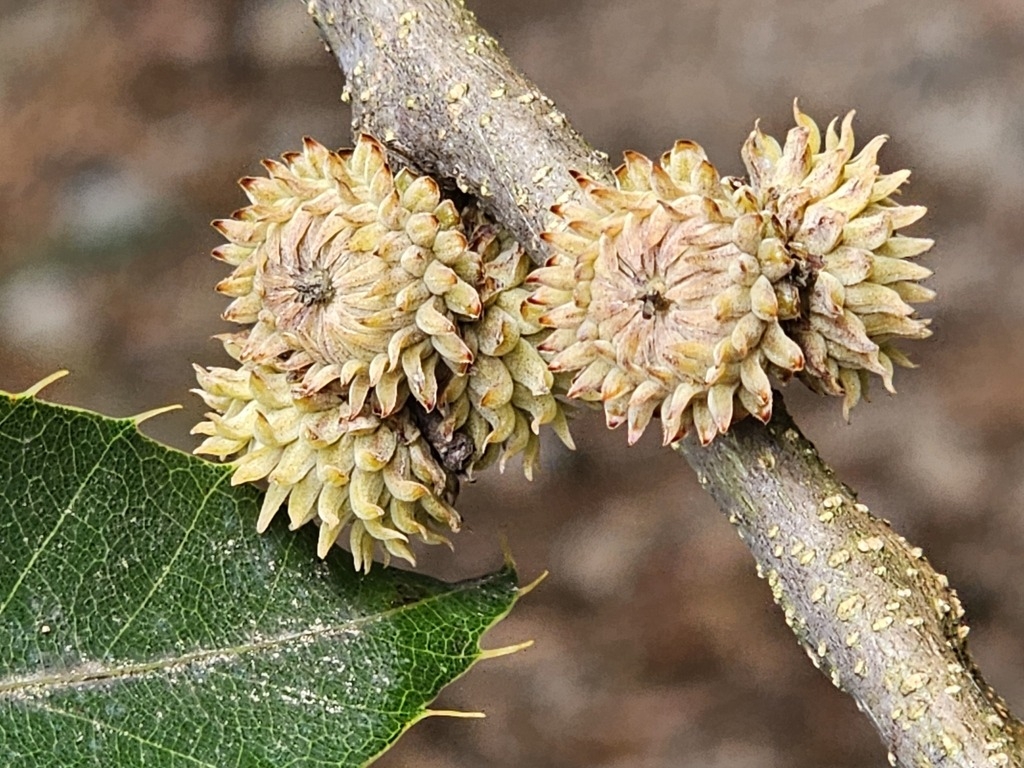
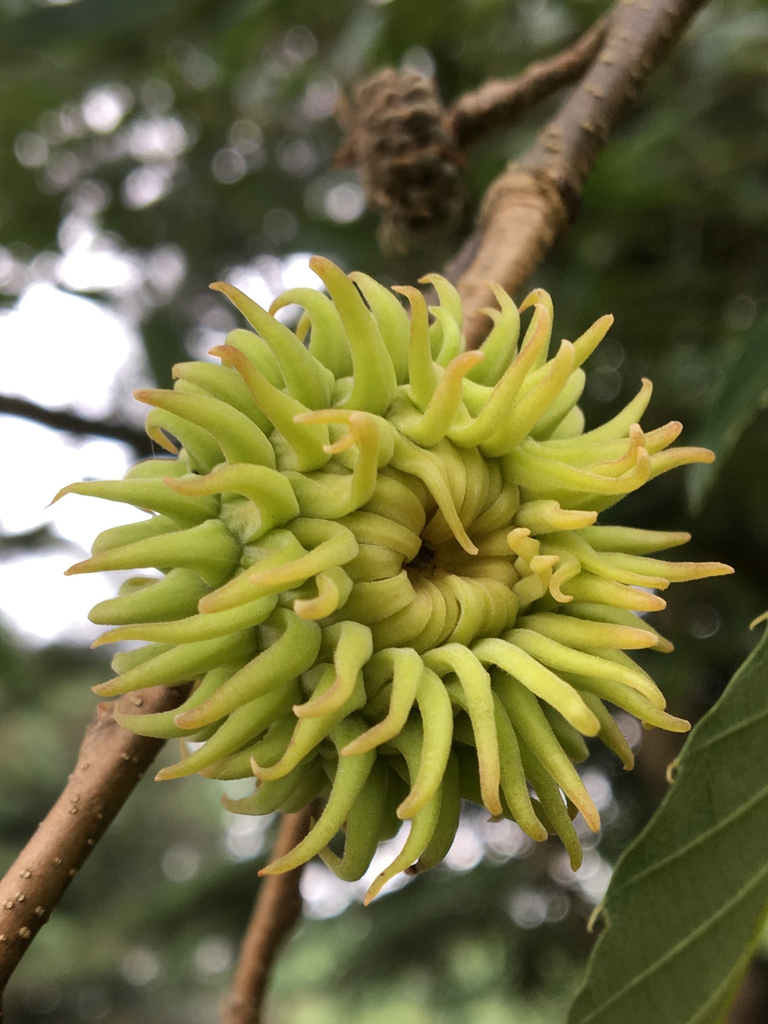
- The 5/8 inch brown acorn is round and two-thirds enclosed in the cup, which is densely covered in soft 'mossy' bristles. Matures in 2 years.
-
-
Flowers:
- Flower Color:
- Gold/Yellow
- Flower Inflorescence:
- Catkin
- Insignificant
- Flower Bloom Time:
- Spring
- Flower Description:
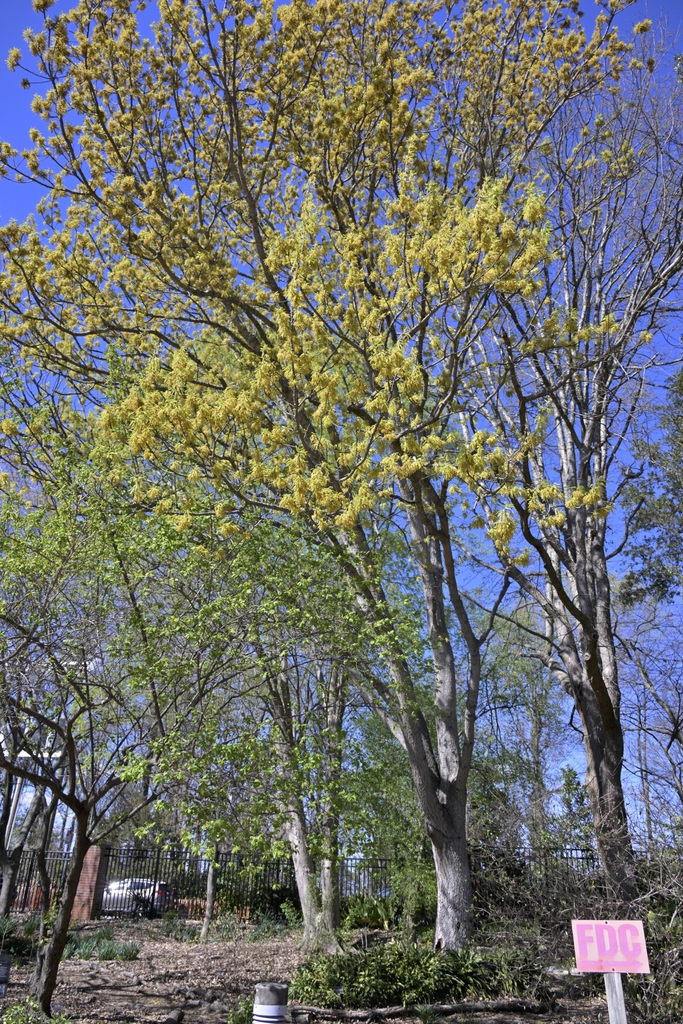
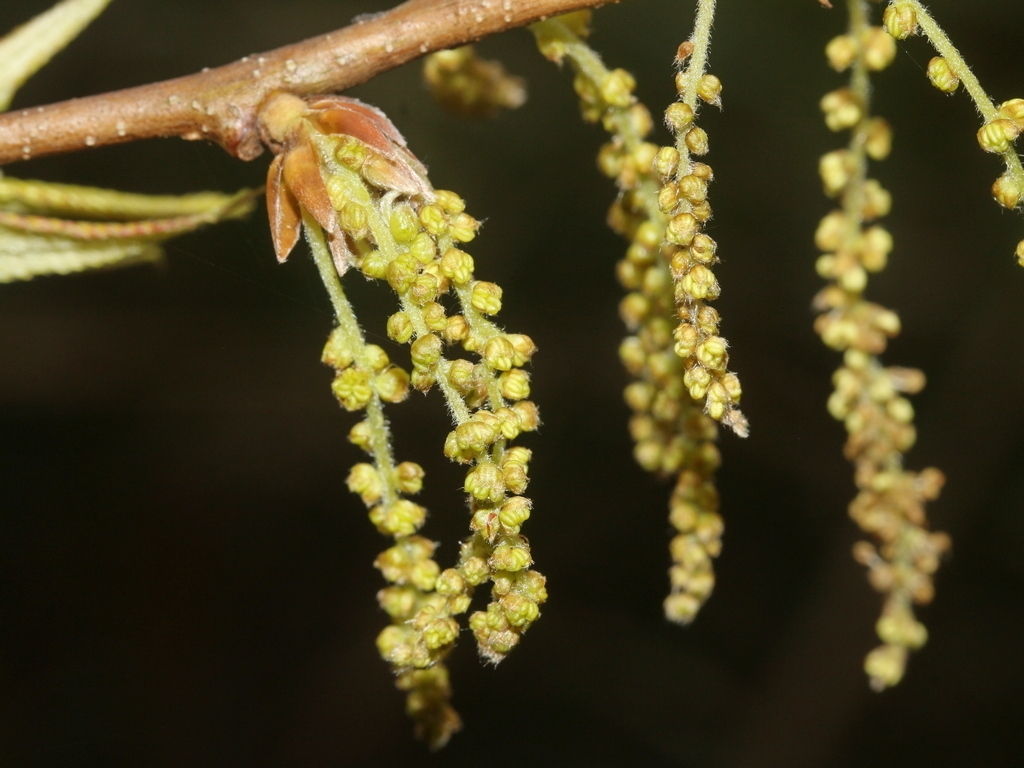
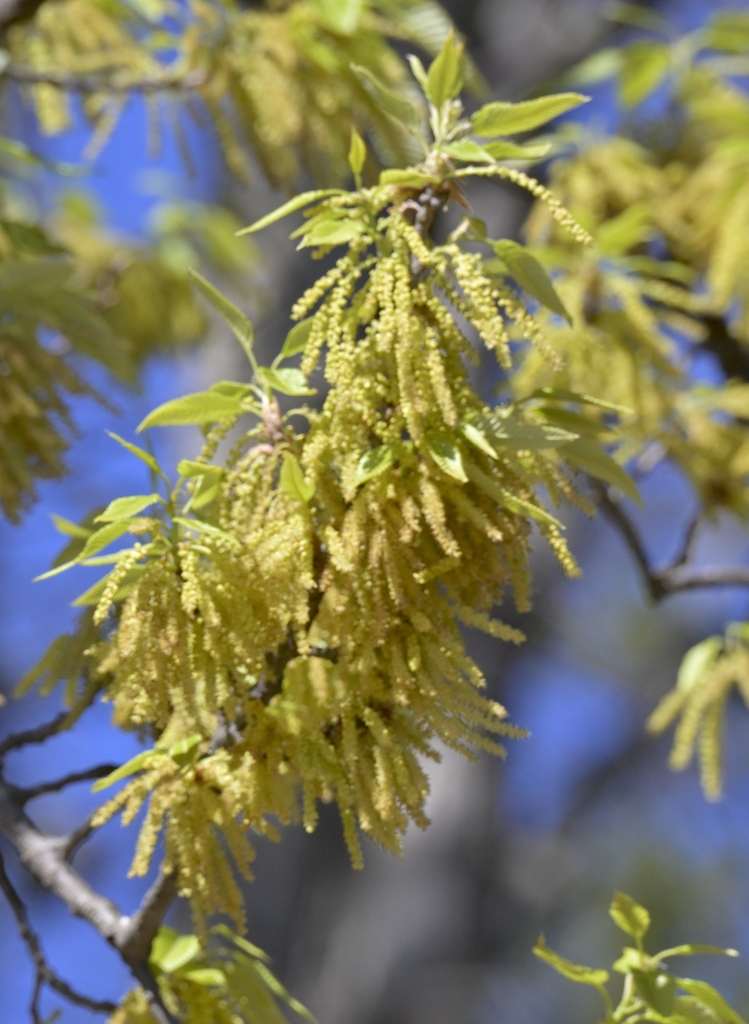
- Male flowers appear as drooping catkins, female flowers in clusters.
-
-
Leaves:
- Woody Plant Leaf Characteristics:
- Deciduous
- Leaf Color:
- Green
- White
- Leaf Type:
- Simple
- Leaf Arrangement:
- Opposite
- Leaf Shape:
- Lanceolate
- Ovate
- Leaf Margin:
- Serrate
- Hairs Present:
- Yes
- Leaf Length:
- 3-6 inches
- Leaf Width:
- 1-3 inches
- Leaf Description:
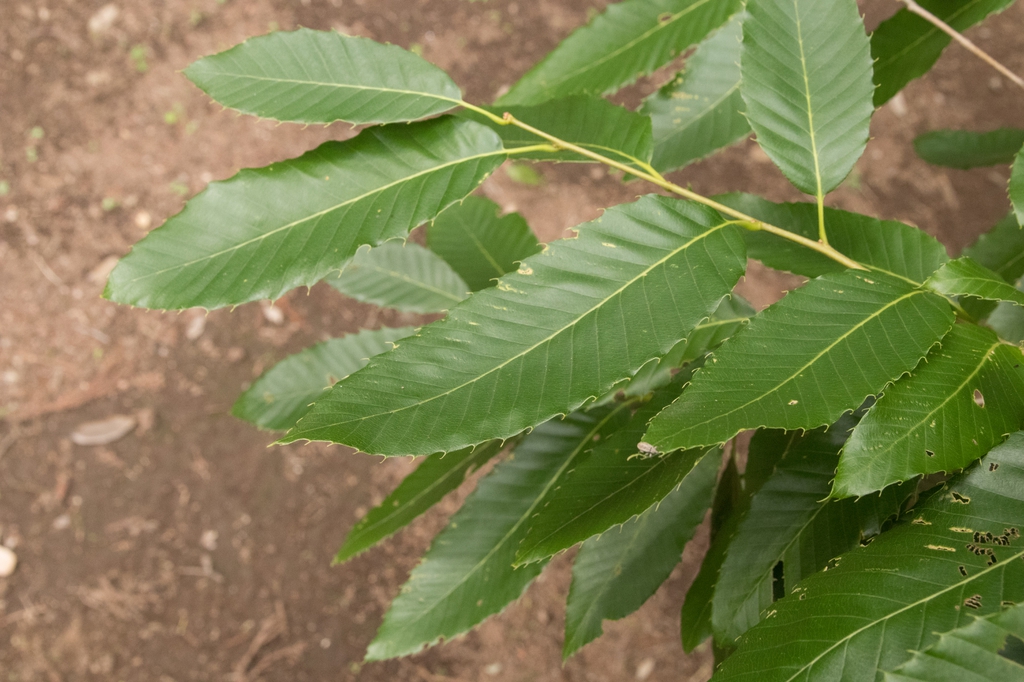
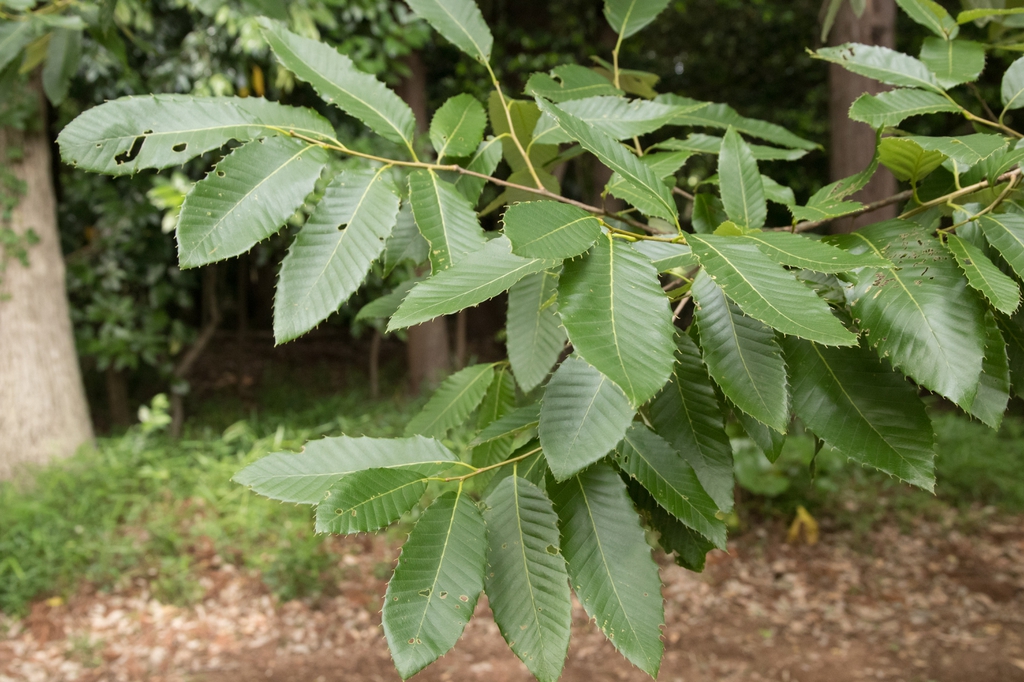
- The 3 to 6-inch leaves are elongate with serrate margin and white pubescence on the underside. Each leaf has 13-18 pairs of parallel side veins each of which ends at the leaf margin in a tiny bristle-like tooth. Young trees hold their leaves into winter.
-
-
Bark:
- Bark Color:
- Light Gray
- Surface/Attachment:
- Ridges
- Bark Description:
- The yellowish-gray bark is thick and corky with deep fissures and marked by sinuous ridges
-
-
Stem:
- Stem Color:
- Brown/Copper
- Gray/Silver
- Green
- Stem Is Aromatic:
- No
- Stem Buds:
- Scaly
- Stem Bud Terminal:
- Cluster of terminal buds
- Stem Bud Scales:
- Enclosed in more than 2 scales
- Stem Cross Section:
- Round
- Stem Lenticels:
- Conspicuous
- Stem Surface:
- Smooth (glabrous)
- Stem Description:
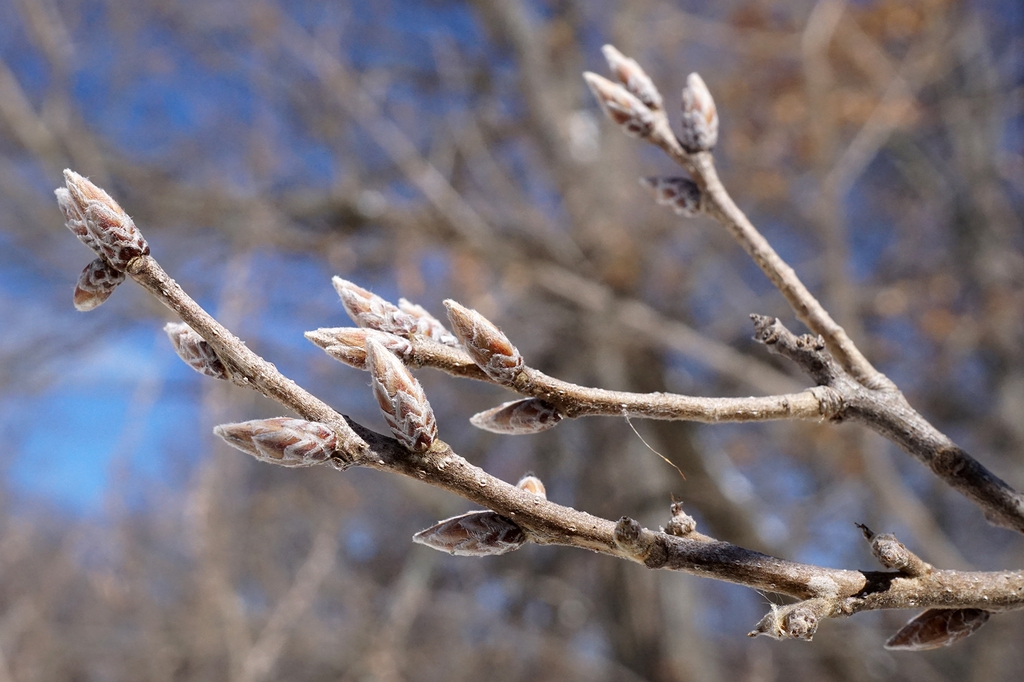
- Branchlets are grayish brown with hairs but soon become glabrous, olive brown or light brown. In the second year, they are grayish-brown with visible lenticels. Buds are ovoid, elongated and covered in reddish-brown scales.
-
-
Landscape:
- Landscape Location:
- Lawn
- Woodland
- Landscape Theme:
- Butterfly Garden
- Nighttime Garden
- Pollinator Garden
- Design Feature:
- Shade Tree
- Specimen
- Street Tree
- Attracts:
- Butterflies
- Moths
- Pollinators
- Resistance To Challenges:
- Deer
- Drought
- Problems:
- Problem for Horses
-
-
Poisonous to Humans:
- Poison Severity:
- Low
- Poison Symptoms:
- Abdominal pain, constipation then diarrhea (occasionally bloody), depression, frequent urination, discolored urine, jaundice; acorns can obstruct the digestive tract
- Poison Toxic Principle:
- Gallotannins, quercitrin, and quercitin
- Causes Contact Dermatitis:
- No
- Poison Part:
- Fruits
- Leaves