


Lizard Tail Saururus cernuus
Other Common Name(s):
Previously known as:
- Mattuschkia aquatica
- Phonetic Spelling
- saw-roo-rus SER-new-us
- Description
-
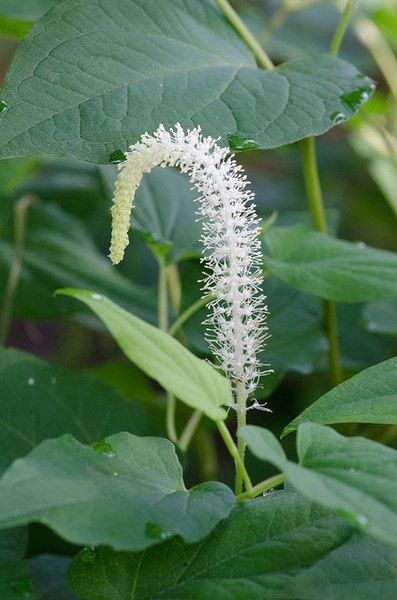
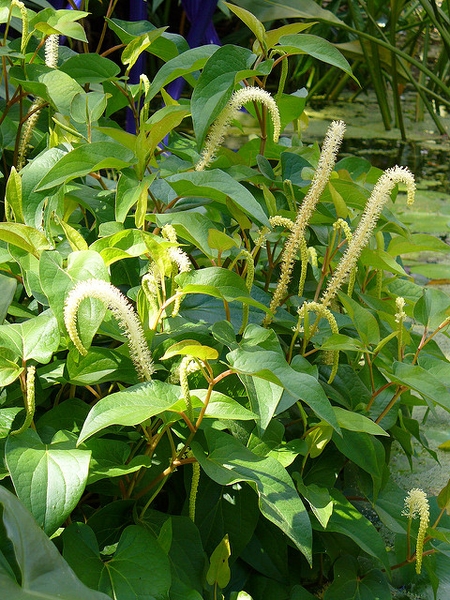
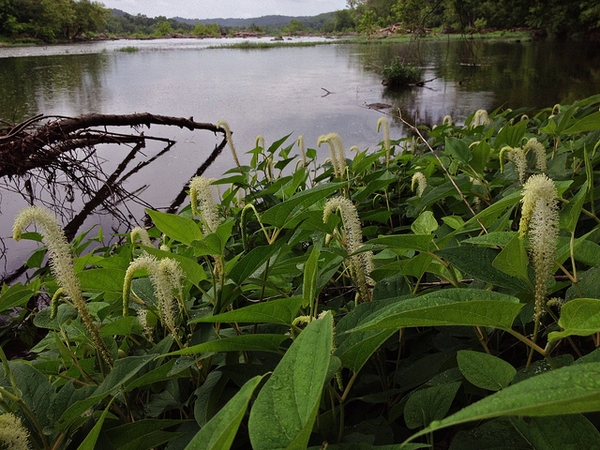
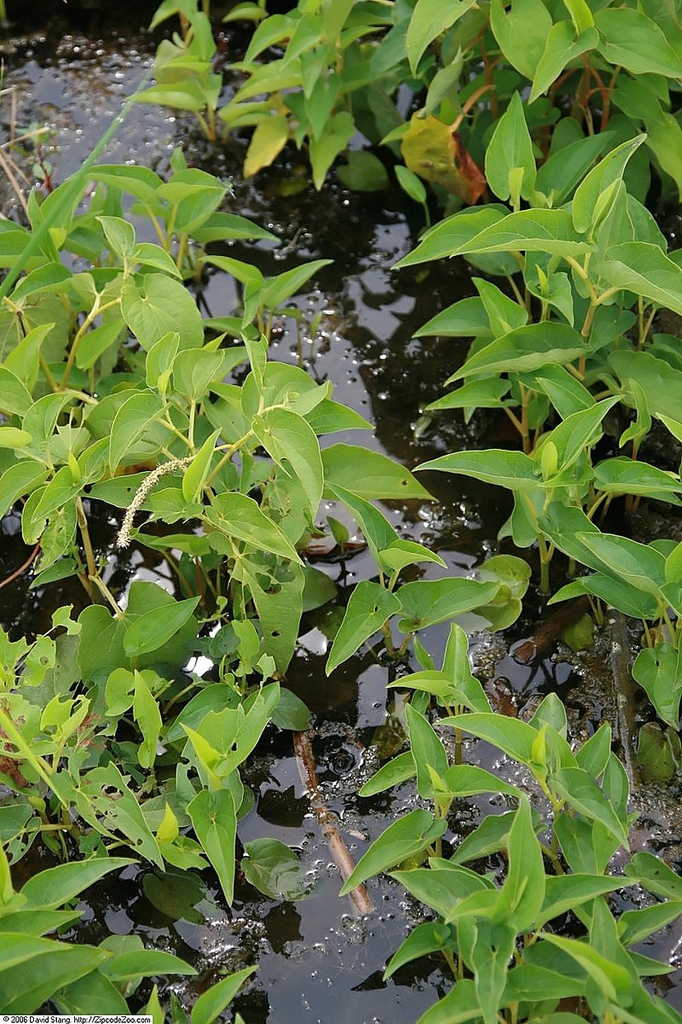
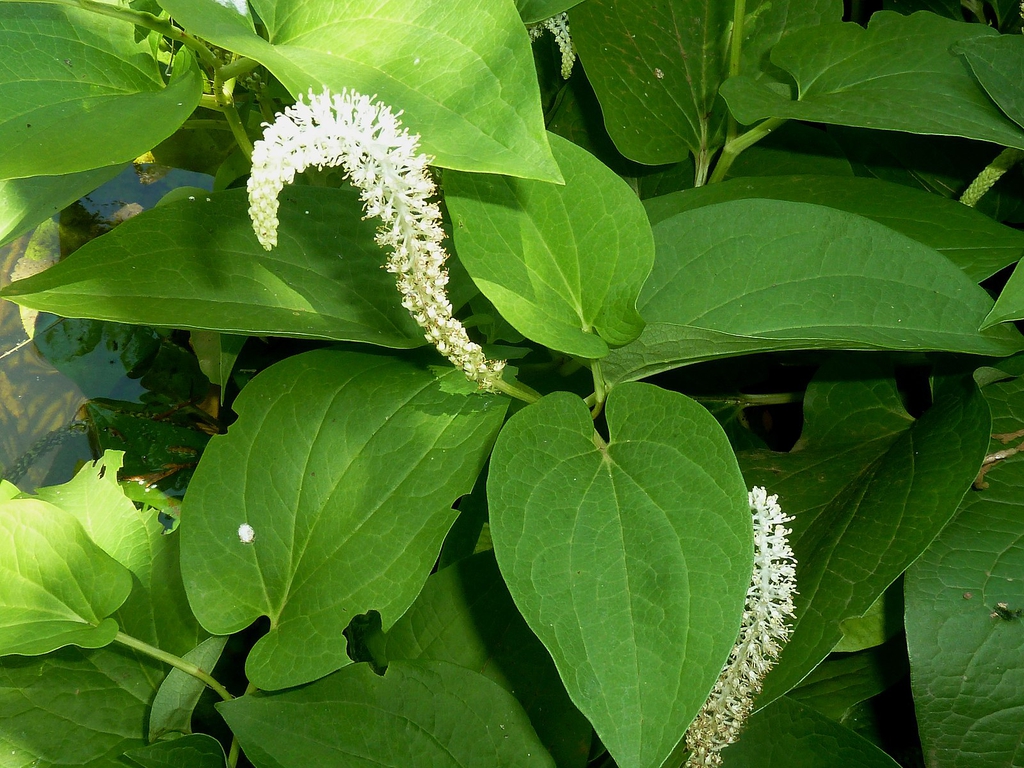
Lizard's tail is a native, rhizomatous, aquatic perennial found in marshes, swamps, and streams in eastern Canada, the central and eastern United States, and Mexico. In North Carolina, this plant is found throughout the Coastal Plains and Piedmont in swamps or wet wooded areas. It grows 1 to 2 feet tall, with upright, branching, zigzag stems and green, heart-shaped leaves. Fragrant, white flowers appear on spike-like racemes from May through September. The spike tips droop similar to a lizard's tail. The leaves, blooms, and roots emit a citrus scent, and the plant can form a dense groundcover in wet sites. The genus name Saururus is derived from two Greek words: sauros, meaning lizard, and oura, meaning tail. This refers to the appearance of its flowers. The specific epithet cernuus means "drooping.' The common name lizard's tail comes from the appearance of the flowers and later the fruit.
Lizard's tail prefers full sun to partial shade and is best in moist, boggy soils and muddy pond margins in shallow water. The wet soil needs to be fresh water or slightly brackish, since it is intolerant of salt water and salt spray. It may also be planted in containers of shallow water up to 6 inches deep in a water garden. This plant will form large colonies over time and can be propagated by seed or root division.
Consider this ornamental groundcover along a pond, bog, or water garden.
Insects, Diseases, and Other Plant Problems: No significant insect pests or diseases.
Overeaten young shoots and leaves can be toxic to sheep and cattle.
- See this plant in the following landscape :
- Cultivars / Varieties:
-
- Tags:


- Cultivars / Varieties:
-
- Tags:
-
-
Attributes:
- Genus:
- Saururus
- Species:
- cernuus
- Family:
- Saururaceae
- Uses (Ethnobotany):
- Native Americans used the roots for medicinal purposes. They applied a poultice to treat breast or back inflammation; hence the common name, breastweed. Early settlers used the roots to make sedatives.
- Life Cycle:
- Perennial
- Recommended Propagation Strategy:
- Division
- Seed
- Country Or Region Of Origin:
- Eastern Canada to Mexico
- Distribution:
- Native: United States--AL, AR, DE, DC, FL, GA, IL, IN, KS, KY, LA, ME, MD, MI, MS, MO, NJ, NY, NC, OH, OK, PA, RI, SC, TN, TX, VA, WV, and WI; Canada--Ontario and Quebec; Mexico-- Northeast, Southwest. Introduced: Corsica, France, Germany and Great Britain.
- Wildlife Value:
- This plant provides cover for wood ducks and habitat for young fish. Herbivorous mammals avoid the toxic foliage. If ingested in large quantities, the foliage is toxic to cattle or sheep.
- Play Value:
- Attractive Flowers
- Fragrance
- Wildlife Cover/Habitat
- Dimensions:
- Height: 1 ft. 0 in. - 2 ft. 0 in.
- Width: 1 ft. 0 in. - 2 ft. 0 in.
-
-
Whole Plant Traits:
- Plant Type:
- Herbaceous Perennial
- Native Plant
- Water Plant
- Wildflower
- Woody Plant Leaf Characteristics:
- Deciduous
- Habit/Form:
- Erect
- Spreading
- Growth Rate:
- Rapid
- Maintenance:
- Low
- Texture:
- Medium
-
-
Cultural Conditions:
- Light:
- Full sun (6 or more hours of direct sunlight a day)
- Partial Shade (Direct sunlight only part of the day, 2-6 hours)
- Soil Texture:
- Clay
- Loam (Silt)
- Sand
- Soil pH:
- Acid (<6.0)
- Alkaline (>8.0)
- Neutral (6.0-8.0)
- Soil Drainage:
- Frequent Standing Water
- Occasional Flooding
- Occasionally Wet
- Available Space To Plant:
- 12 inches-3 feet
- NC Region:
- Coastal
- Mountains
- Piedmont
- USDA Plant Hardiness Zone:
- 3a, 3b, 4a, 4b, 5a, 5b, 6a, 6b, 7a, 7b, 8a, 8b, 9a, 9b
-
-
Fruit:
- Fruit Color:
- Brown/Copper
- Green
- Display/Harvest Time:
- Fall
- Summer
- Fruit Type:
- Schizocarp
- Fruit Description:
- The fruit is a small, green, warty-like schizocarp that ripens to brown. In North Carolina, the fruits are available from August to November.
-
-
Flowers:
- Flower Color:
- White
- Flower Inflorescence:
- Raceme
- Flower Value To Gardener:
- Fragrant
- Showy
- Flower Bloom Time:
- Spring
- Summer
- Flower Size:
- < 1 inch
- Flower Description:
- Long, narrow, nodding racemes appear opposite a leaf and measure 4 to 6 inches long. They can reach up to 12 inches long. These flowers' tips droop. The white flowers are small, but fragrant and a bit showy. In North Carolina, the flowers are available from May to September.
-
-
Leaves:
- Woody Plant Leaf Characteristics:
- Deciduous
- Leaf Color:
- Green
- Leaf Value To Gardener:
- Fragrant
- Leaf Type:
- Simple
- Leaf Arrangement:
- Alternate
- Leaf Shape:
- Cordate
- Deltoid
- Lanceolate
- Leaf Margin:
- Entire
- Hairs Present:
- No
- Leaf Length:
- 3-6 inches
- Leaf Width:
- 1-3 inches
- Leaf Description:
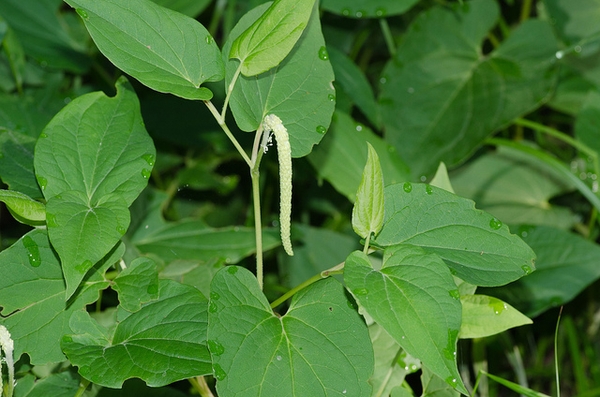
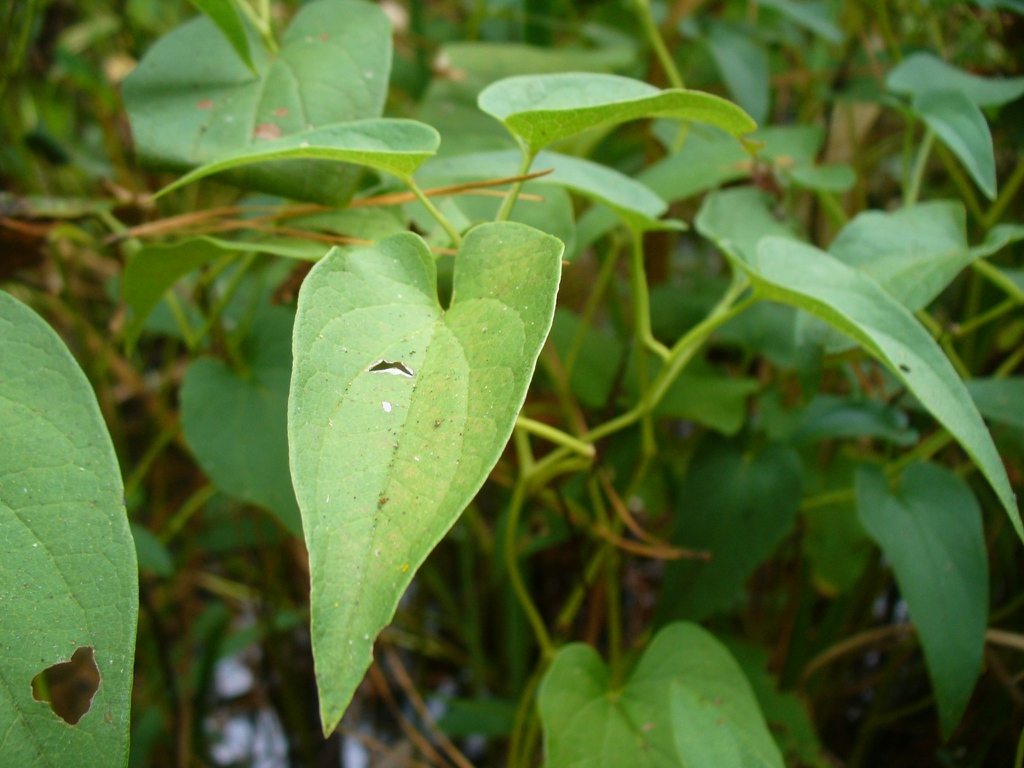
- The leaves are 3 to 6 inches long, bright green, lance-shaped to triangular with a heart-shaped base, and palmately veined.
-
-
Stem:
- Stem Color:
- Green
- Stem Is Aromatic:
- No
- Stem Form:
- Zig Zags
- Stem Surface:
- Smooth (glabrous)
- Stem Description:
- The stems are light green, erect, zigzag, and hairy when young, then smooth.
-
-
Landscape:
- Landscape Location:
- Coastal
- Container
- Naturalized Area
- Pond
- Landscape Theme:
- Native Garden
- Rain Garden
- Shade Garden
- Water Garden
- Resistance To Challenges:
- Deer
- Diseases
- Heavy Shade
- Insect Pests
- Wet Soil