


Paeonia – Herbaceous Types
Common Name(s):
- Phonetic Spelling
- pay-OH-nee-ah
- Description
-
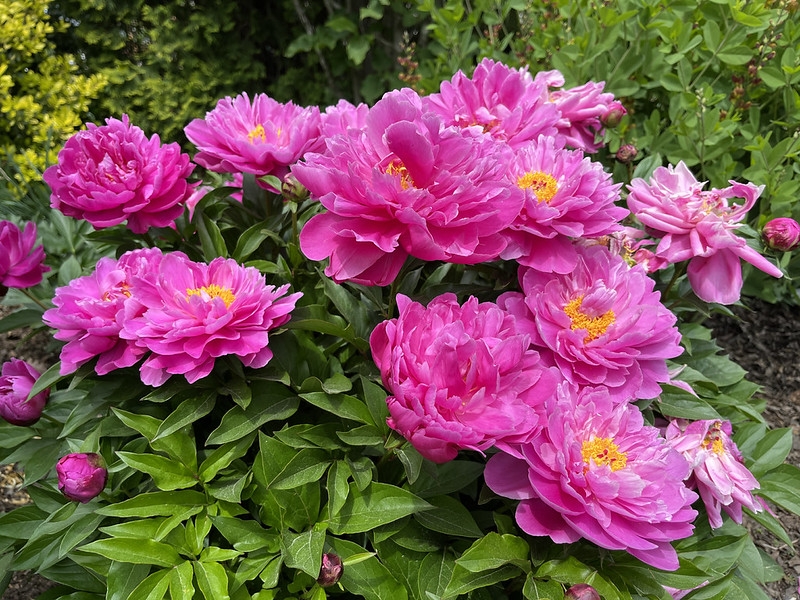
Herbaceous peonies are herbaceous perennials in the peony family (Paeoniaceae), often planted for their very large, showy flowers. Most herbaceous species originate in Europe, around the Mediterranean Basin, and in western and eastern Asia. Two species (not in cultivation) are native to western North America. Paeonia is the classical Greek name for peony, derived from Paean, the physician to the gods of ancient Greek mythology. It may allude to the medicinal properties ascribed to the genus.
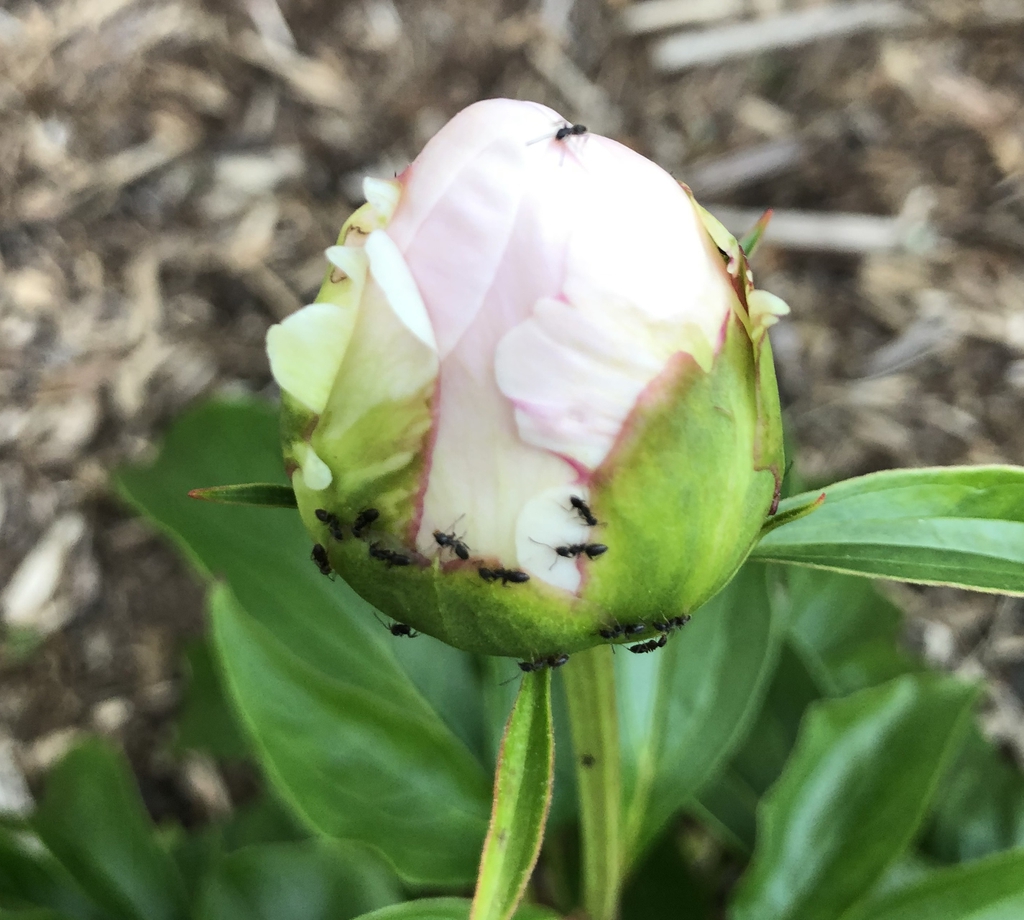
Peonies grow well in the mountains and cooler regions of the Piedmont but languish in warm areas where their chilling requirement is difficult to meet. They do best in zones 5–7 but can grow in zones 3–8. If you are in a warm area, plant low-chill types, do not plant the crowns more than one inch deep, and do not apply mulch in the winter, as it can act like an insulating blanket. Overly shaded sites can inhibit flowering. Peonies do well in full sun to light shade and prefer deep, fertile soils that are well-drained. Locate them in an area that gets good air circulation, not up against a home or a wall. They like some afternoon shade and will require quite a bit of water in the early part of the growing season to establish their leaves and flower buds. They can take quite a while to establish and often will not produce flowers for the first year or two after transplanting. Once established, however, plants can live for decades. Peonies are outcompeted by tree roots when planted close to trees. Each plant will bloom for about two weeks in the late spring to early summer, so planting a variety of peonies with staggered bloom times will help extend the season. They can be divided in the fall, which is also the best time to plant bare-root crowns purchased from nurseries. Plants may require support for large, double flowers, especially if they become wet with rain. The foliage remains attractive through the summer until fall. Powdery mildew can affect many cultivars; remove and destroy dead, diseased leaves. Ants may be present on flower buds (attracted to nectar secreted on the outside of the bud), but they are totally harmless. Shake flowers to dislodge insects before bringing flowers inside. The plants are shunned by deer.
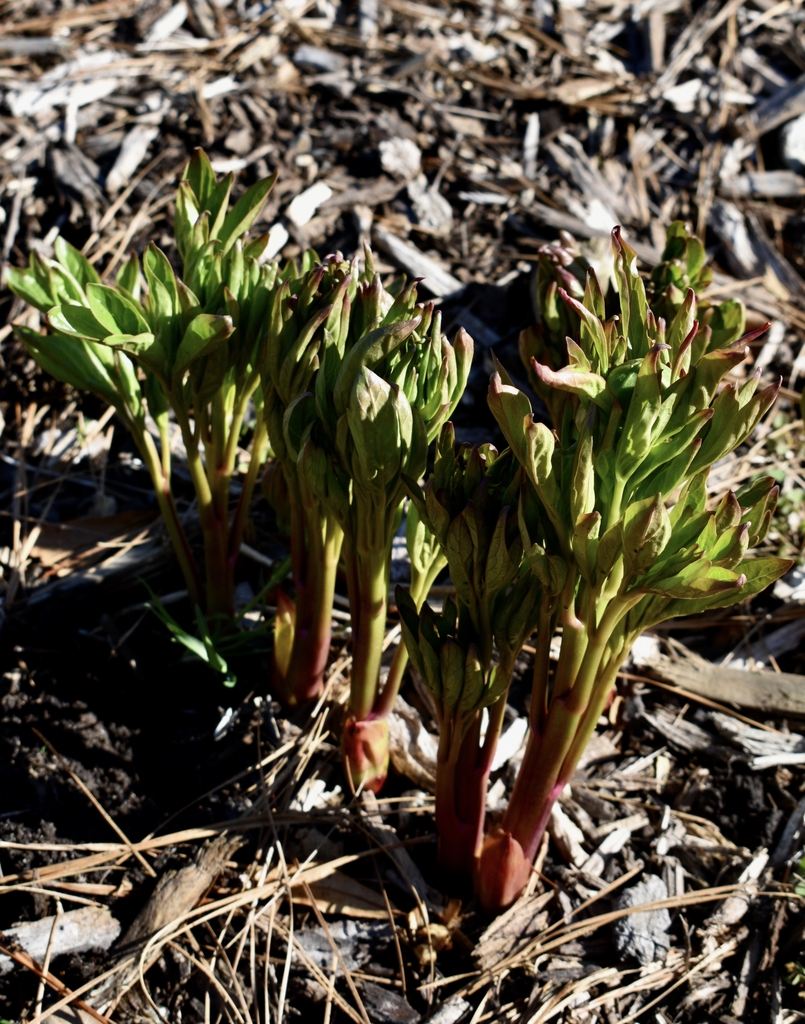
Herbaceous peonies die back completely during the winter. Growers classify herbaceous peonies as either Lactiflora cultivars (cultivars of P. lactiflora) or Herbaceous Hybrids, which are those that involve other species. Regardless of which group they belong to, the cultivation is the same. Older cultivars (many from the 19th and early 20th Centuries) are still available, but these often have weak stems and poor floral carriage. Newer cultivars, especially those having the Award of Landscape Merit (ALM) from the American Peony Society, often surpass the old cultivars. Some cultivars are fragrant.
Lactiflora cultivars for Zone 8 (or colder) include the following:
White flowers: 'Baroness Schroeder', 'Miss America', 'Duchesse de Nemours', 'Festiva Maxima', 'Princess Bride' and 'Shirley Temple'.
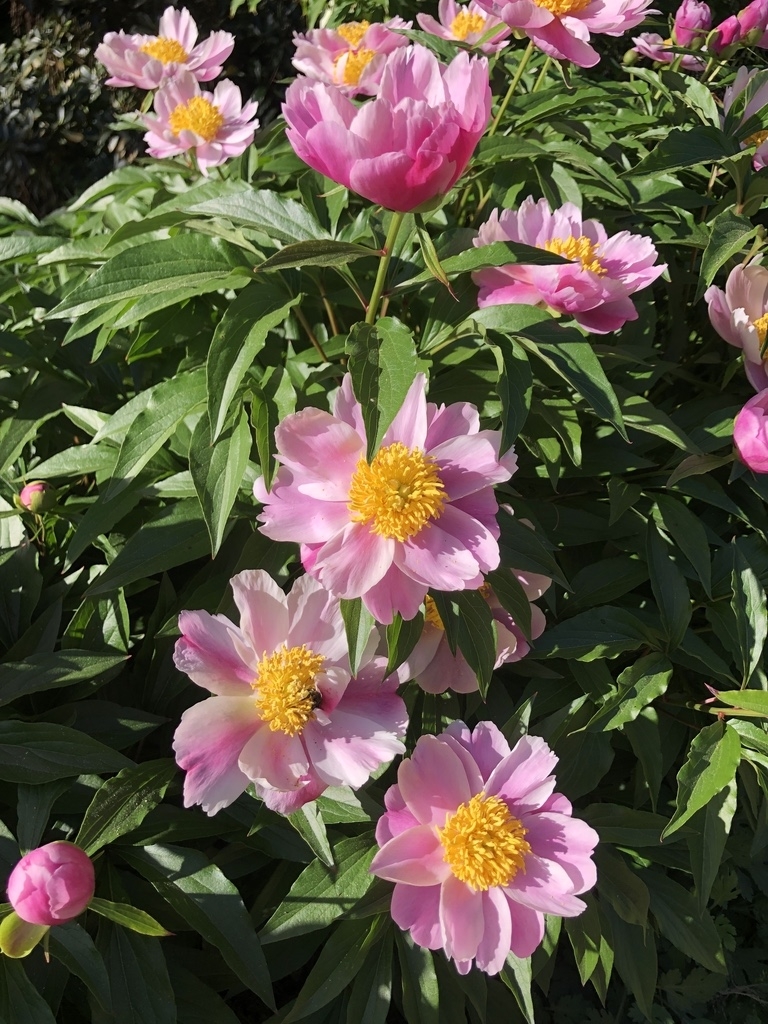
Pink flowers: 'Felix Crousse', 'Sarah Bernhardt', 'Karl Rosenfield', 'Kansas' and 'Monsieur Jules Elie'.
Red flowers: ‘Scarlett O’Hara’ (ALM), ‘The Mackinac Grand’ (ALM), and 'Sword Dance' (ALM)
Herbaceous Hybrids for Zone 8 (or colder) include:
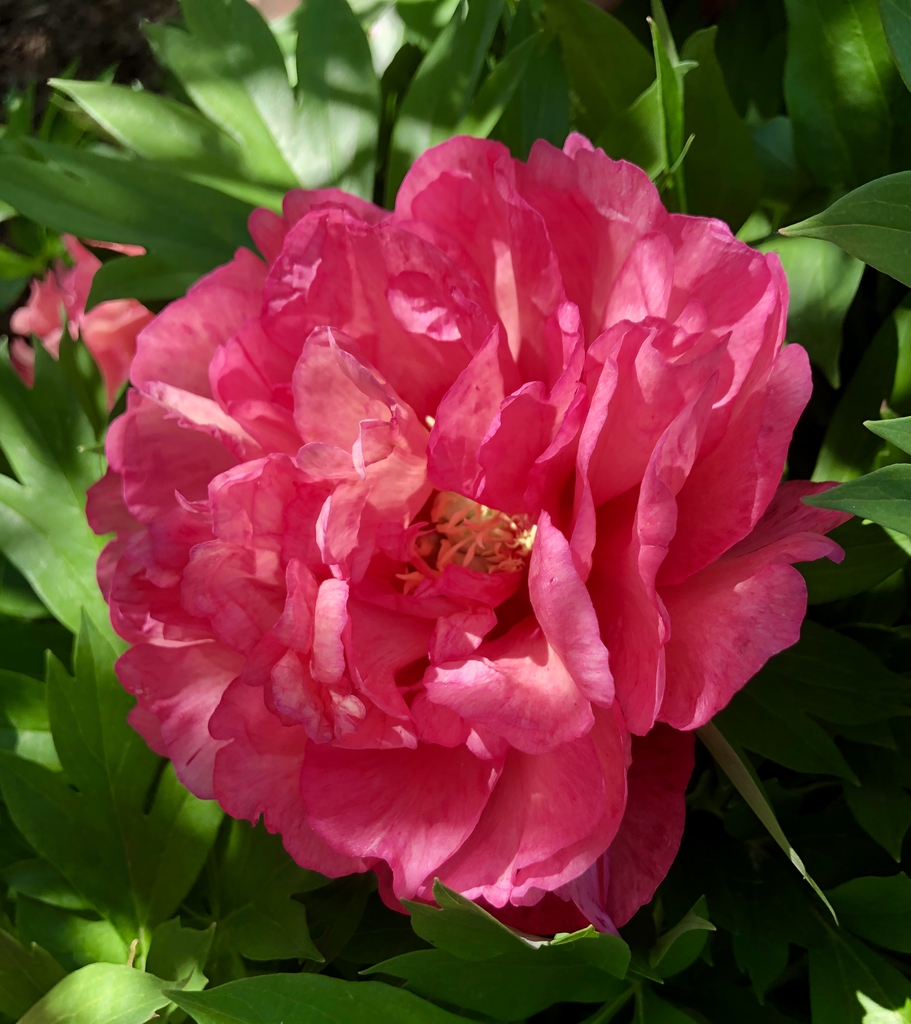
Red flowers: 'America' (ALM), 'Buckeye Belle' (ALM), 'Merry Mayshine' (ALM), 'Red Charm', 'Red Grace' and 'Old Faithful' (ALM).
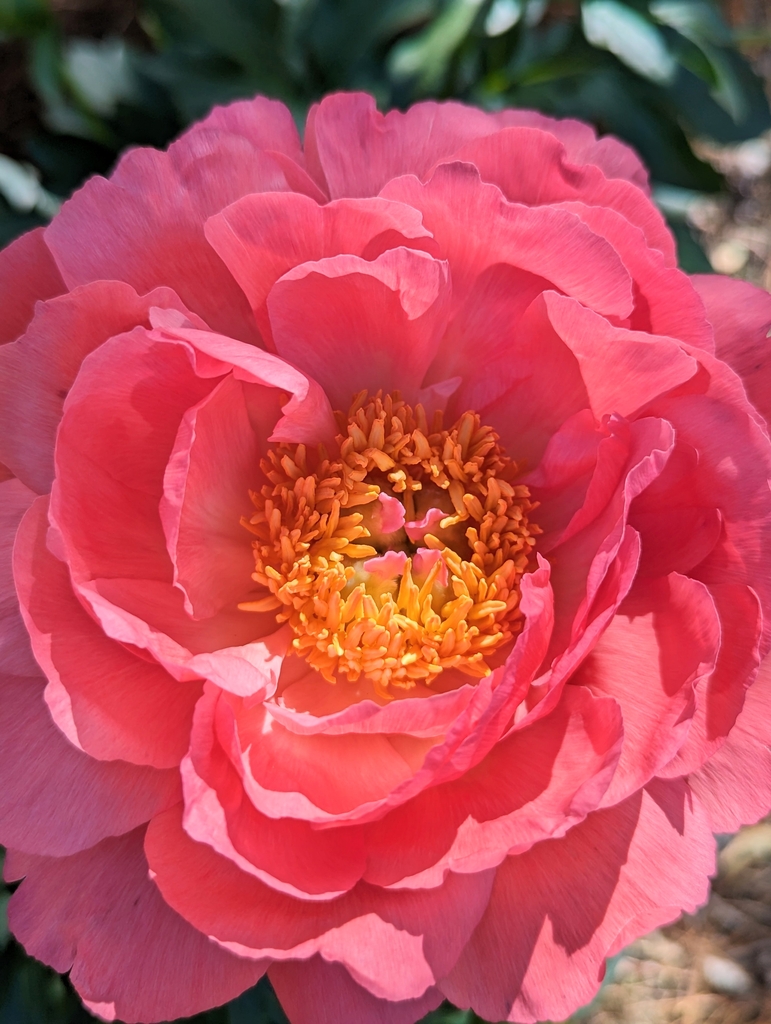
Coral pink flowers: 'Flame', 'Soft Salmon Saucer', 'Pink Hawaiian Coral' (ALM), 'Coral Charm' and 'Coral Sunset' (ALM).
Intersectional hybrids (hybrids between woody and herbaceous peonies), including the widely available Itoh hybrids, are deciduous and have short woody stems that bear new leaves in spring. More information about woody peonies is found on the Paeony – Woody Types page.
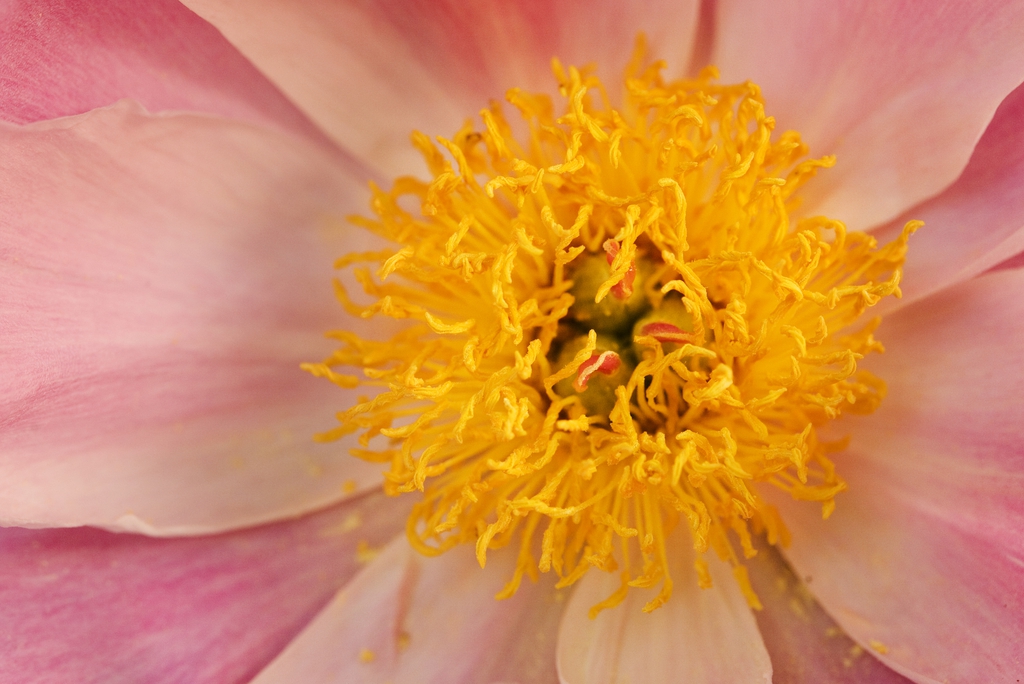
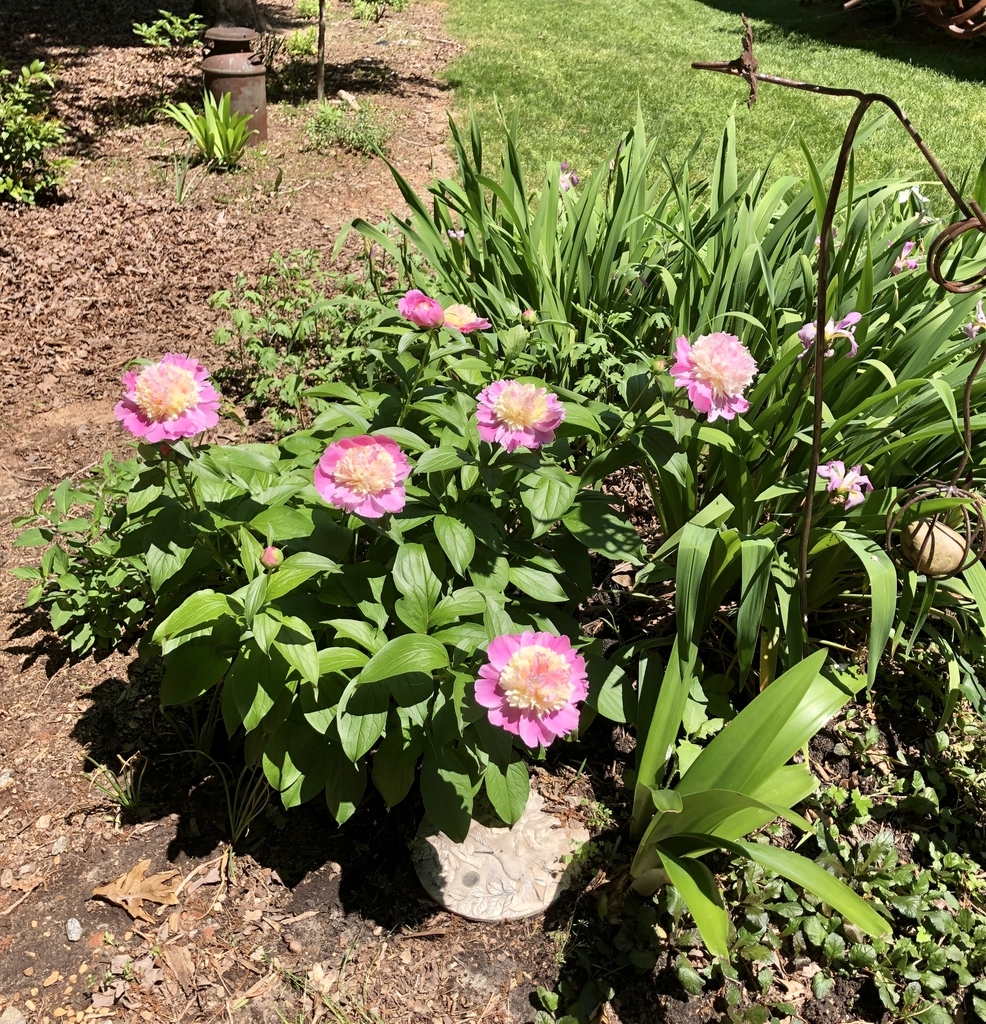
Peonies are used as a specimen plant, in borders, and in the cutting garden. Cultivars with single flowers and masses of pollen are good for pollinator gardens. Smaller cultivars are suitable for rock gardens. They are perfect for cottage gardens and sensory gardens.
Quick ID Hints:
- Herbs with gigantic flowers of various colors
- Flower buds are spherical (pointed in woody peonies)
- Flowers are multi-petaled, with many stamens and 3 or more separate carpels.
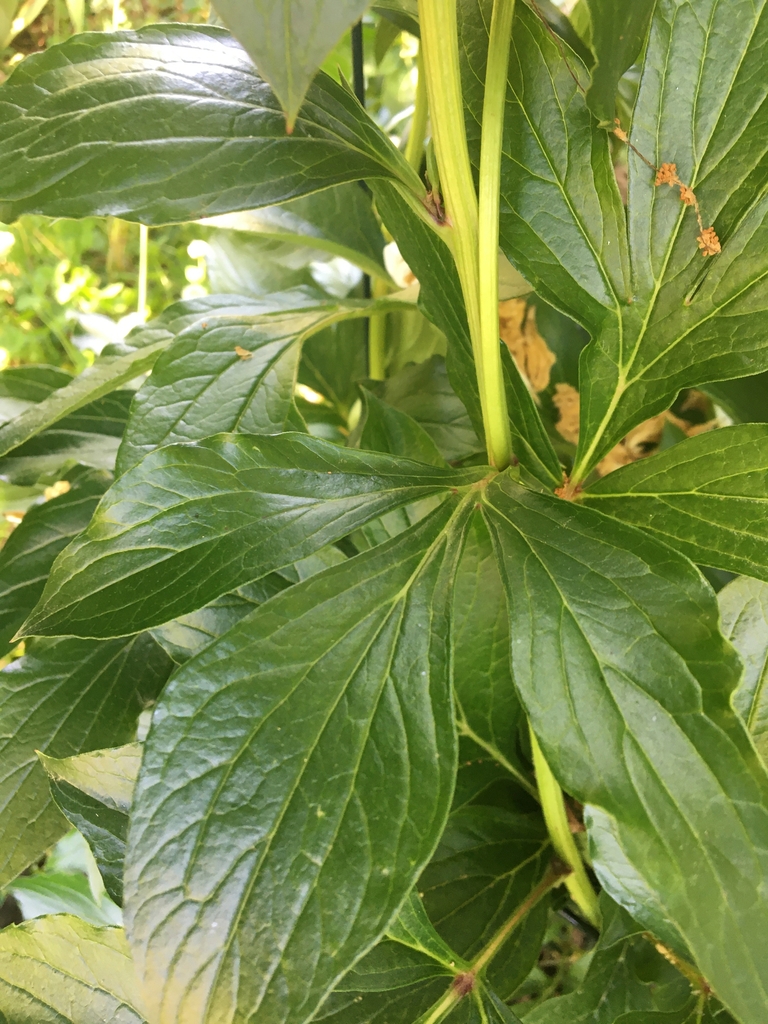
- Leaves are pinnately or ternately compound.
Insects, Diseases, and Other Plant Problems: Good air circulation discourages fungal diseases, but powdery mildew can disfigure foliage in the autumn. An unidentified bud-boring insect (probably a moth larva) is present in the NC and may destroy some flower buds.
- See this plant in the following landscape s :
- Davidson County Extension Demonstration Garden Plant Walls and Hedges Rock & Water Garden Reynolda Gardens Juniper Level Botanic Gardens: Front Shade Garden Juniper Level Botanic Gardens: Muscadine Bed Backyard Patio
- Cultivars / Varieties:
-
- 'Auguste Dessert'
Reddish-pink petals are edged with a narrow silver border - 'Bowl of Beauty'
Broad pink petals surrounding a mass of pale-yellow, narrow staminodes. Lactiflora. - 'Cora Stubbs'
Deep pink outer petals surround cream and light pink inner petals - 'Eliza Lundy'
Compact variety with large double red flowers - 'Felix Crousse'
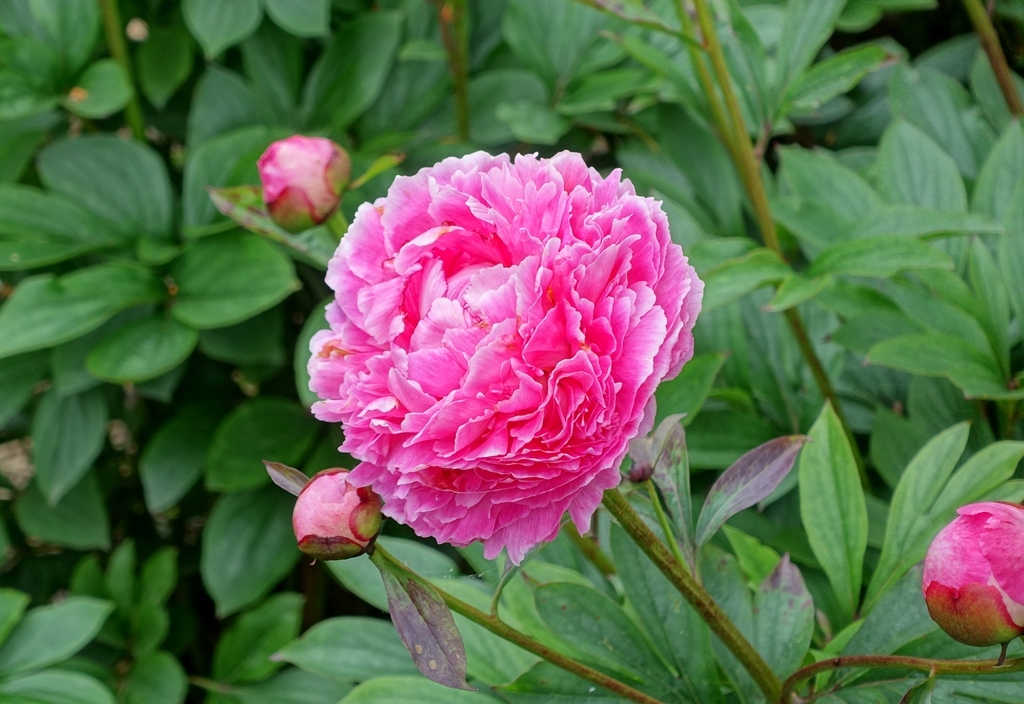
Brilliant pink, double flowers. Low chill hour requirement - 'Festiva Maxima'
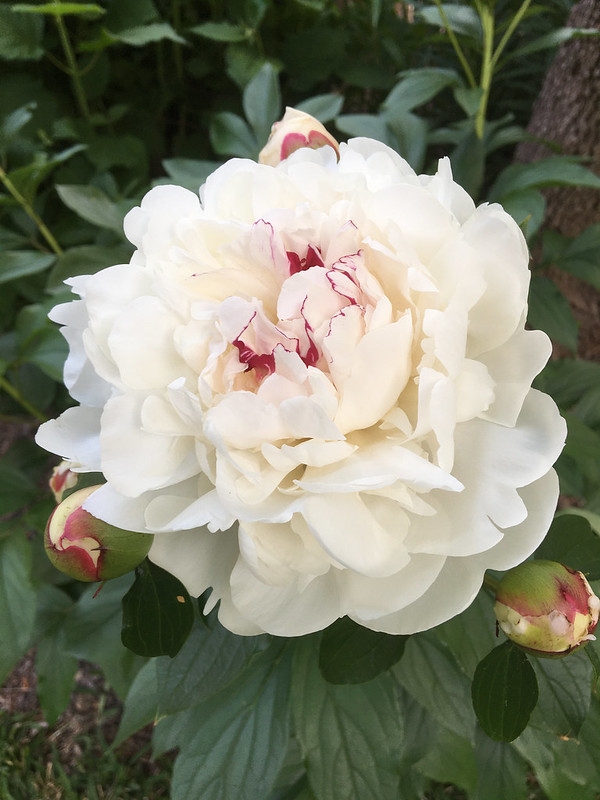
Double white with flecks of red. Fragrant. Low chill hour requirement - 'Golden Sunrise'
Gold leaves, early blooming (May) - 'Mons. Jules Elie'
Low chill hour requirement - 'Raspberry Sundae'
Large, light pink blooms. Lactiflora. - 'Red Charm'
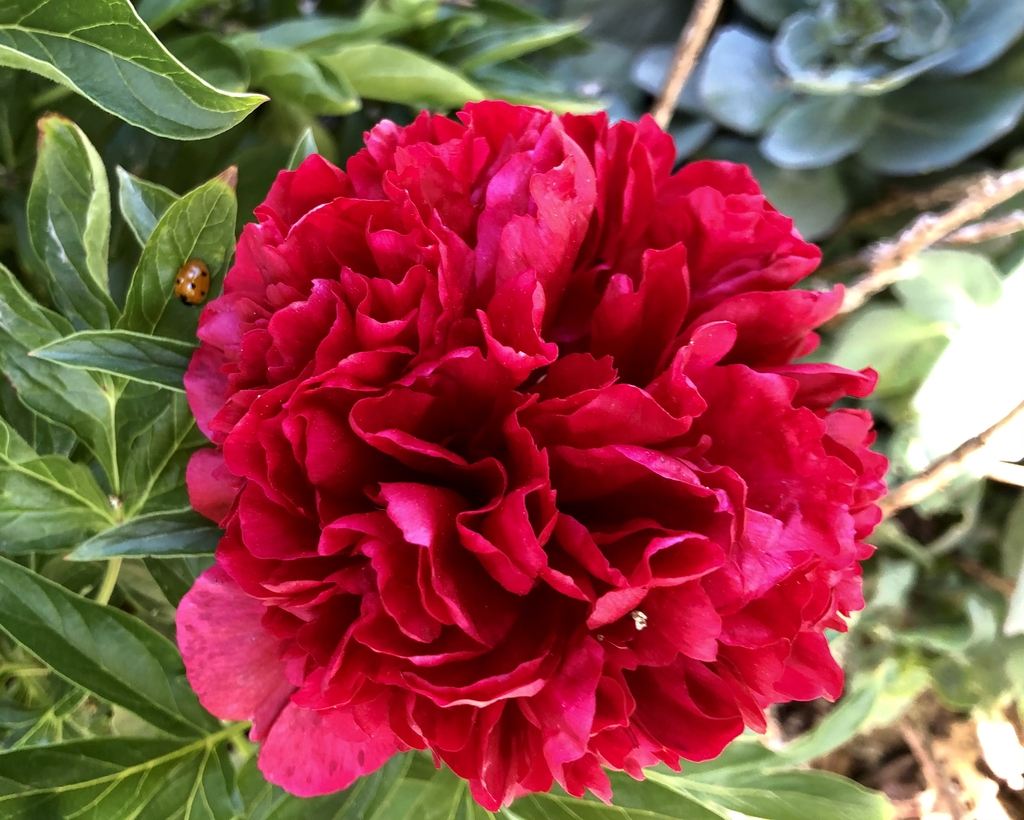
Early blooming, red flowers. Fragrant. Herbaceous Hybrid. - ‘Red Magic’
Large double fragrant red flowers - 'Sarah Bernhardt'
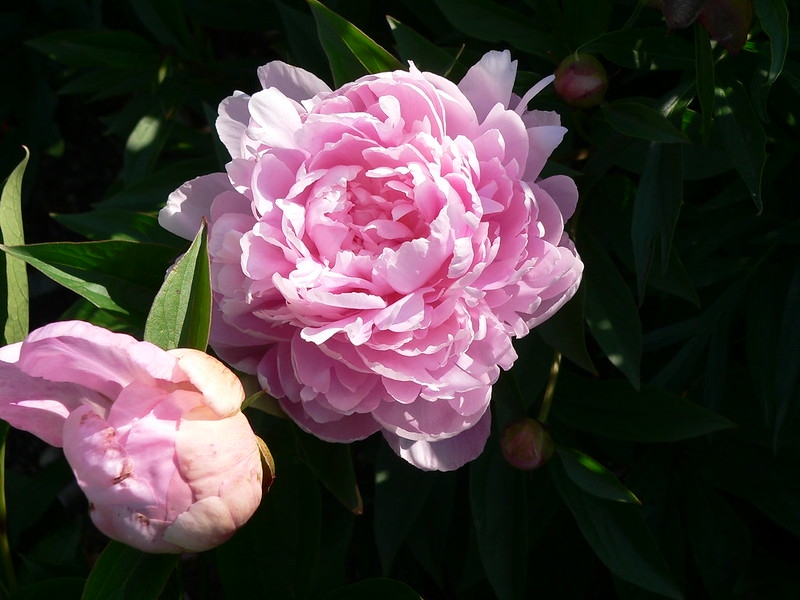
Big double pink flowers. Reliable bloomer. Fragrant. Low chill hour requirement
- 'Auguste Dessert'
- 'Auguste Dessert', 'Bowl of Beauty', 'Cora Stubbs', 'Eliza Lundy', 'Felix Crousse', 'Festiva Maxima', 'Golden Sunrise', 'Mons. Jules Elie', 'Raspberry Sundae', 'Red Charm', ‘Red Magic’, 'Sarah Bernhardt'
- Tags:



- Cultivars / Varieties:
-
- 'Auguste Dessert'
Reddish-pink petals are edged with a narrow silver border - 'Bowl of Beauty'
Broad pink petals surrounding a mass of pale-yellow, narrow staminodes. Lactiflora. - 'Cora Stubbs'
Deep pink outer petals surround cream and light pink inner petals - 'Eliza Lundy'
Compact variety with large double red flowers - 'Felix Crousse'
Brilliant pink, double flowers. Low chill hour requirement - 'Festiva Maxima'
Double white with flecks of red. Fragrant. Low chill hour requirement - 'Golden Sunrise'
Gold leaves, early blooming (May) - 'Mons. Jules Elie'
Low chill hour requirement - 'Raspberry Sundae'
Large, light pink blooms. Lactiflora. - 'Red Charm'
Early blooming, red flowers. Fragrant. Herbaceous Hybrid. - ‘Red Magic’
Large double fragrant red flowers - 'Sarah Bernhardt'
Big double pink flowers. Reliable bloomer. Fragrant. Low chill hour requirement
- 'Auguste Dessert'
- 'Auguste Dessert', 'Bowl of Beauty', 'Cora Stubbs', 'Eliza Lundy', 'Felix Crousse', 'Festiva Maxima', 'Golden Sunrise', 'Mons. Jules Elie', 'Raspberry Sundae', 'Red Charm', ‘Red Magic’, 'Sarah Bernhardt'
- Tags:
-
-
Attributes:
- Genus:
- Paeonia
- Family:
- Paeoniaceae
- Uses (Ethnobotany):
- Some species are used medicinally or ritually.
- Life Cycle:
- Perennial
- Recommended Propagation Strategy:
- Division
- Grafting
- Wildlife Value:
- Attracts butterflies and pollen-eating beetles.
- Dimensions:
- Height: 1 ft. 0 in. - 3 ft. 0 in.
- Width: 1 ft. 0 in. - 3 ft. 0 in.
-
-
Whole Plant Traits:
- Plant Type:
- Herbaceous Perennial
- Woody Plant Leaf Characteristics:
- Deciduous
- Habit/Form:
- Clumping
- Growth Rate:
- Slow
- Maintenance:
- Medium
- Texture:
- Medium
-
-
Cultural Conditions:
- Light:
- Full sun (6 or more hours of direct sunlight a day)
- Partial Shade (Direct sunlight only part of the day, 2-6 hours)
- Soil Texture:
- Clay
- High Organic Matter
- Soil pH:
- Acid (<6.0)
- Soil Drainage:
- Good Drainage
- Available Space To Plant:
- 12 inches-3 feet
- NC Region:
- Mountains
- Piedmont
- USDA Plant Hardiness Zone:
- 3a, 3b, 4a, 4b, 5a, 5b, 6a, 6b, 7a, 7b, 8a, 8b
-
-
Fruit:
- Fruit Color:
- Black
- Fruit Type:
- Follicle
- Fruit Length:
- 1-3 inches
- Fruit Width:
- < 1 inch
- Fruit Description:
- Fruits are semi-dry follicles with a suture that split open (dehiscing) to release a few fleshy, black seeds.
-
-
Flowers:
- Flower Color:
- Gold/Yellow
- Orange
- Pink
- Purple/Lavender
- Red/Burgundy
- White
- Flower Inflorescence:
- Solitary
- Flower Value To Gardener:
- Fragrant
- Good Cut
- Showy
- Flower Bloom Time:
- Spring
- Summer
- Flower Shape:
- Cup
- Flower Petals:
- 7 - 20 petals/rays
- Flower Size:
- 3-6 inches
- Flower Description:
- Flowers are solitary to several, 3 to 8 inches in diameter, cup-shaped, single to semi-double to double, and are variously colored pink, white, red, yellow, or bicolor. They have 5 sepals that are green in color. Flowers have 5 or more petals that are broad, obovate, and obtuse. There are numerous stamens (some transformed into petal-like structures in some hybrids). There are 2 to 8 pistils or carpels. Some cultivars have fragrant flowers; a few have disagreeable fragrances.
-
-
Leaves:
- Woody Plant Leaf Characteristics:
- Deciduous
- Leaf Color:
- Green
- Deciduous Leaf Fall Color:
- Brown/Copper
- Orange
- Red/Burgundy
- Leaf Type:
- Compound (Pinnately , Bipinnately, Palmately)
- Leaf Arrangement:
- Alternate
- Leaf Shape:
- Elliptical
- Lanceolate
- Leaf Margin:
- Entire
- Lobed
- Hairs Present:
- No
- Leaf Length:
- > 6 inches
- Leaf Width:
- 3-6 inches
- Leaf Description:
- Leaves are basal and cauline, alternate, and pinnately compound. Leaflets are elliptic to lanceolate, entire, sometimes lobed, and 6 to 8 inches long.
-
-
Stem:
- Stem Color:
- Gray/Silver
- Green
- Stem Is Aromatic:
- No
- Stem Description:
- Thick soft twigs.
-
-
Landscape:
- Landscape Location:
- Meadow
- Slope/Bank
- Small Space
- Woodland
- Landscape Theme:
- Cottage Garden
- Cutting Garden
- Garden for the Blind
- Pollinator Garden
- Rock Garden
- Design Feature:
- Border
- Mass Planting
- Specimen
- Attracts:
- Bees
- Butterflies
- Pollinators
- Resistance To Challenges:
- Deer
- Poor Soil
- Rabbits
- Problems:
- Problem for Cats
- Problem for Dogs
- Problem for Horses