


Paeonia – Woody Types
Common Name(s):
Previously known as:
- Paeonia x chinensis
- Paeonia x moutan
- Phonetic Spelling
- pay-OH-nee-ah
- Description
-
Woody peonies are erect and coarsely branched, deciduous, perennial shrubs that grow up to 6.5 feet tall. They are in the peony family (Paeoniaceae). These shrubs are ancient cultigens from China, and their exact parentage is lost in the mists of time. Paeonia is the classical Greek name for peony, derived from Paean, the physician to the gods of ancient Greek mythology. It may allude to the medicinal properties ascribed to the genus.
Woody peonies thrive in the Piedmont but languish in warm areas where their chilling requirement is difficult to meet and die back in very cold climates in the mountains. They do best in zones 5–8. Woody peonies do well in full sun to light shade and prefer deep, fertile soils that are well-drained. Locate them in an area that gets good air circulation. They like some afternoon shade and will require quite a bit of water in the early part of the growing season to establish their leaves and flower buds. They can take quite a while to establish and often will not produce flowers for the first year or two after transplanting. Once established, however, plants can live for decades and are shunned by deer. Peonies are outcompeted by tree roots when planted close to trees. Plants are often supplied from specialist nurseries as bare-root crowns grafted onto the roots of herbaceous peonies. Crowns should be planted or transplanted in the fall.
Tree peonies bloom in mid- to late spring, and the flowers range in size from a few inches to over nine inches in diameter. Prune this plant only to shape it; do not cut the stems to the ground in winter as with herbaceous peonies. Tree peonies often grow better in North Carolina than herbaceous peonies, but patience is required, as they can be slow to establish. Growers generally recognize four classes of woody peonies:
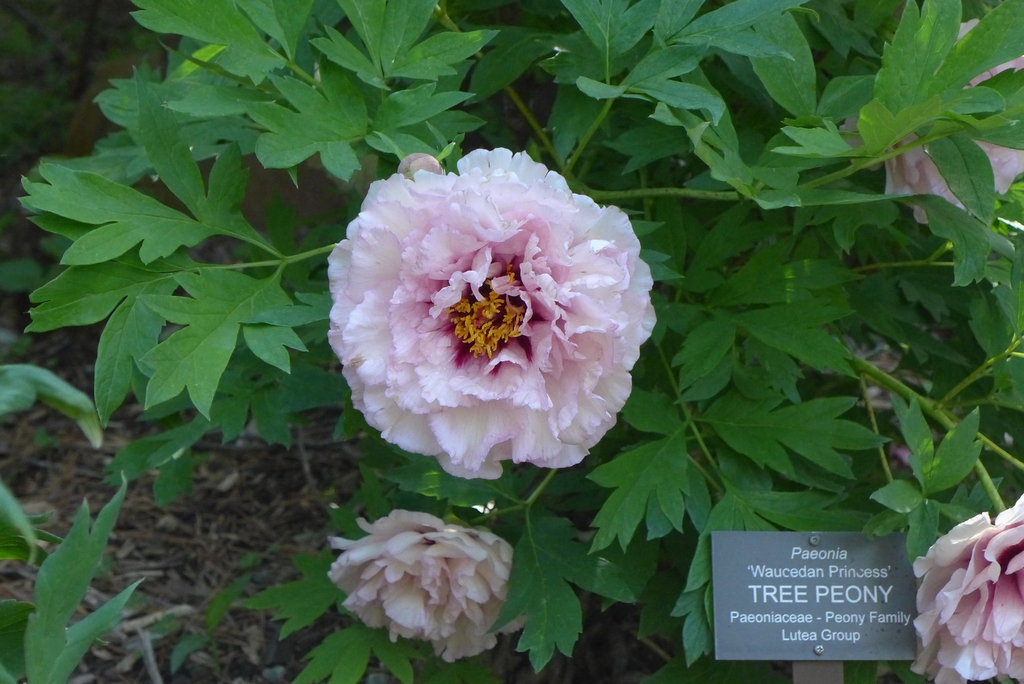
Lutea hybrids, derived from P. delavayi (syn. P. lutea): Flowers often have layers of color that change as the flower ages. This group often suffers from winter die-back of stems, but Lutea hybrids will regrow in spring and flower on new wood.
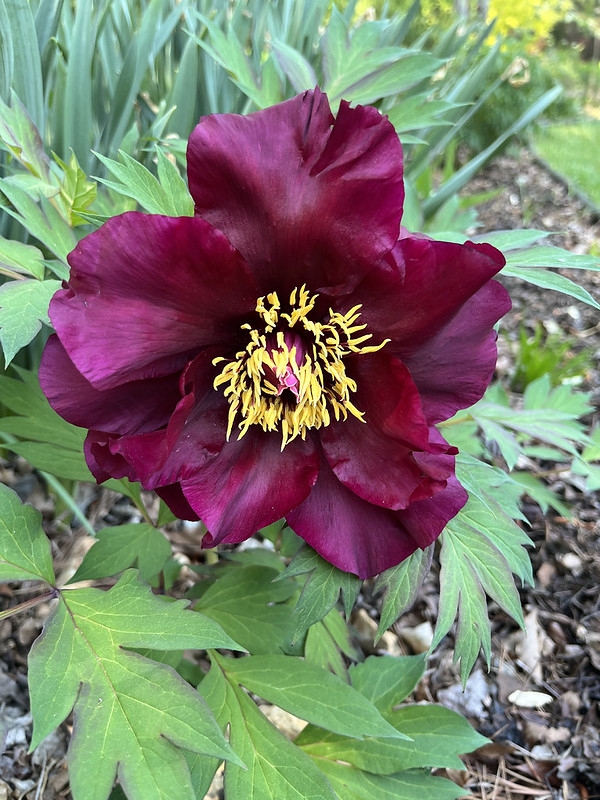
Rockii hybrids, derived from P. rockii (syn. P. × suffruticosa subsp. rockii): Flowers often have a dark maroon spot at the bases of the petals. These plants are generally very hardy.
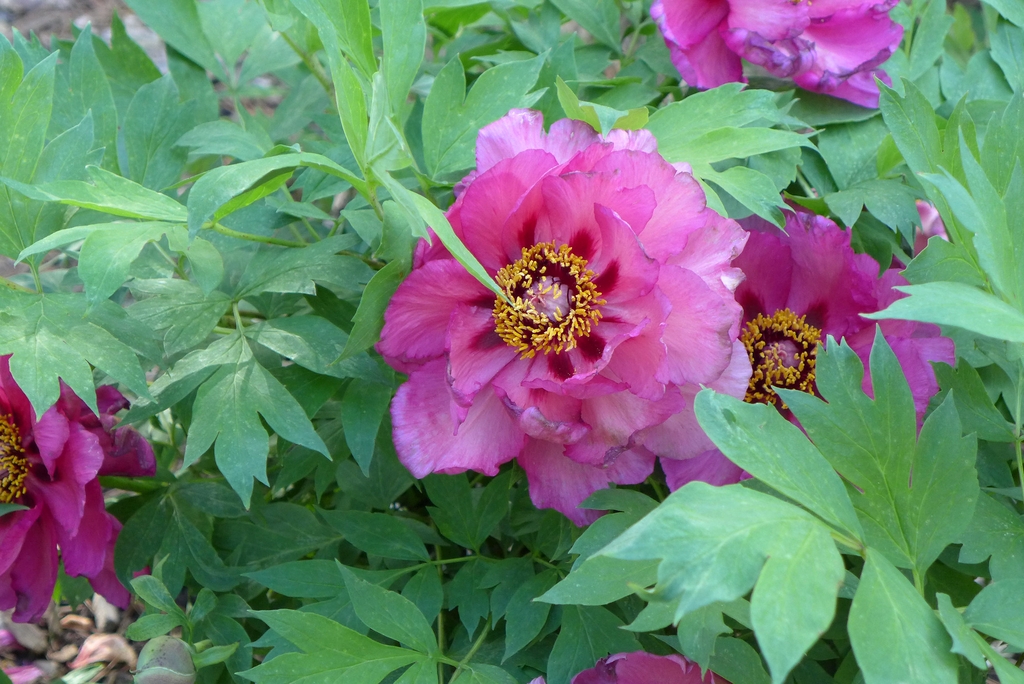
Suffruticosa hybrids include P. × suffruticosa and other species. Many are hybrids developed centuries ago in China. They are strong, hardy plants with flowers in shades of white, red, and pink, but they are intolerant of winter wet.
Intersectional hybrids (hybrids between woody and herbaceous peonies), which include the Itoh hybrids, are deciduous and have short woody stems that bear new leaves in spring. Itoh hybrids are those with P. lactiflora as the herbaceous parent. ‘Bartzella’ (ALM), Belle Toulousaine ('RTPIV789-06') and ‘Canary Brilliants’ (ALM) are good performers in NC.
Use woody peonies in Asian or shade gardens, or in cottage or sensory gardens. They make excellent specimens in a shrubby border. The single-flowered cultivars with visible stamens are good for the pollinator garden.
Quick ID Hints:
- Deciduous shrub with twice-compound, lobed leaves
- Medium to very large, fragrant flowers on slender, brittle stems
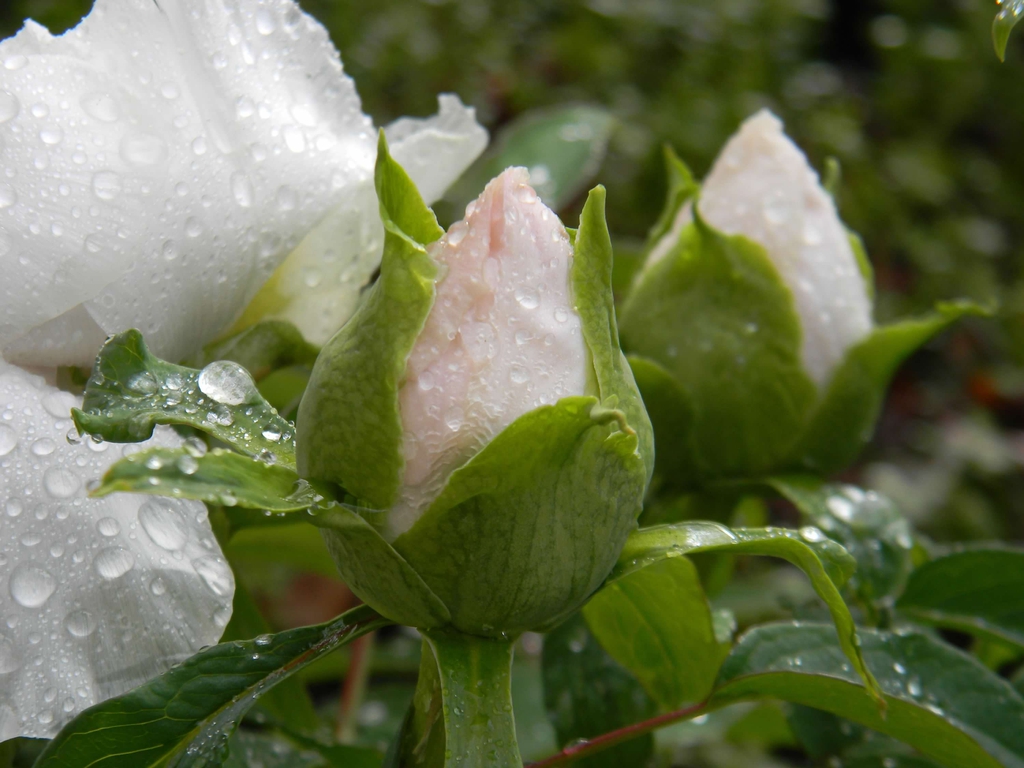
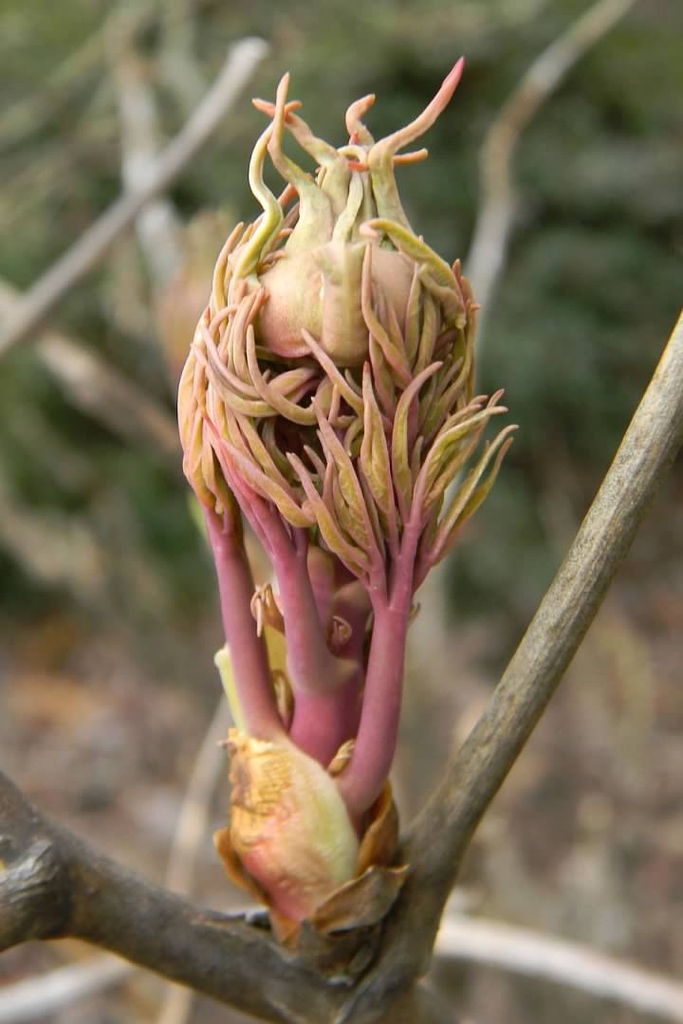
- Flower buds are pointed (rounded in herbaceous peonies)
- Three to five free pistils per flower
Insects, Diseases, and Other Plant Problems: Ants commonly seen on peonies are harmless. Canker, leaf blight and stem wilt occasionally afflict the plant.
- See this plant in the following landscape :
- Mountain Ridge Top Garden - South Lawn and Border
- Cultivars / Varieties:
-
- 'Bartzella'
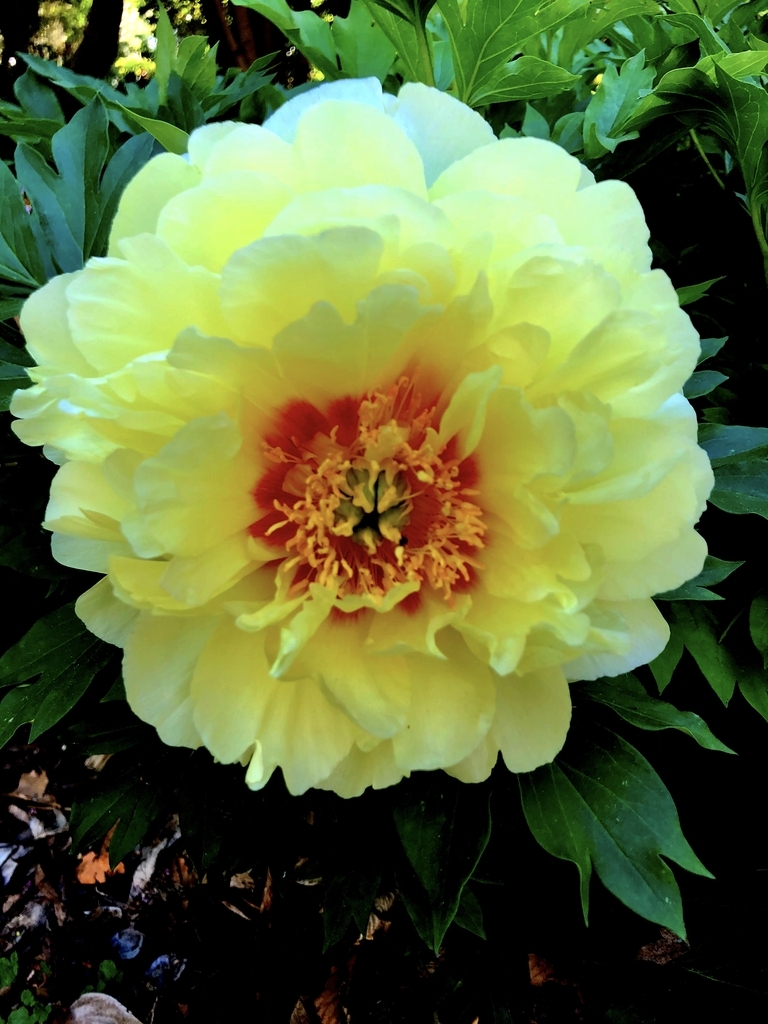
Itoh hybrid with double yellow flowers with reddish centers. - 'Cora Louise'
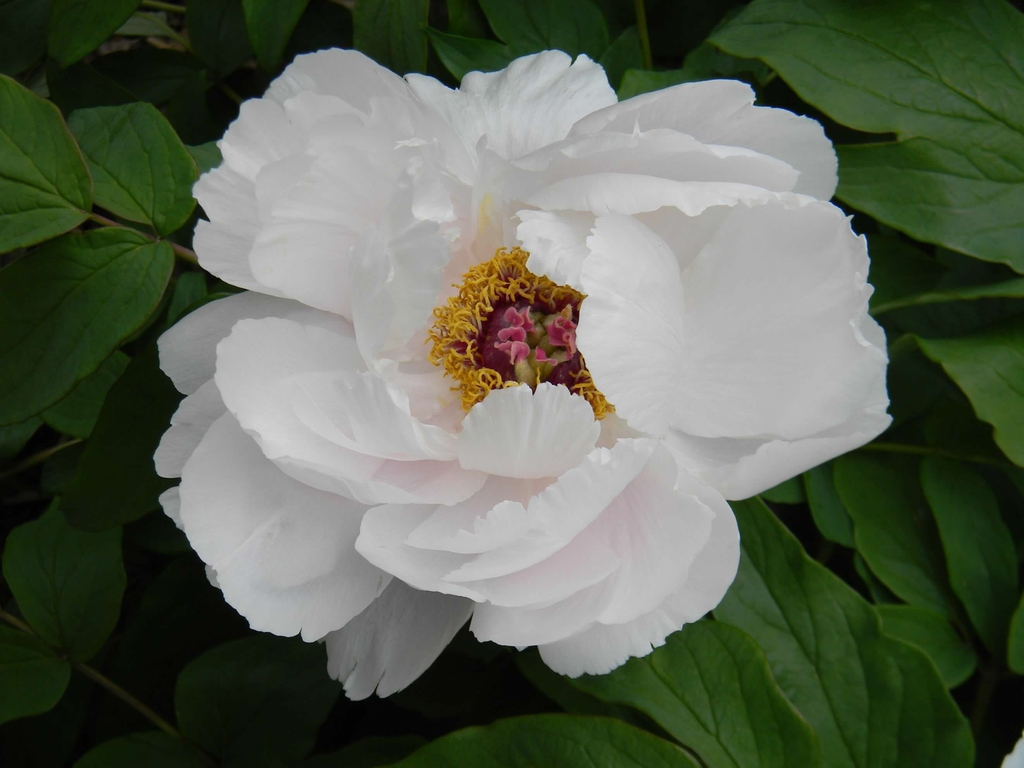
Itoh hybrid with white semi-double flowers with a violet center. - ‘Sequestered Sunshine’
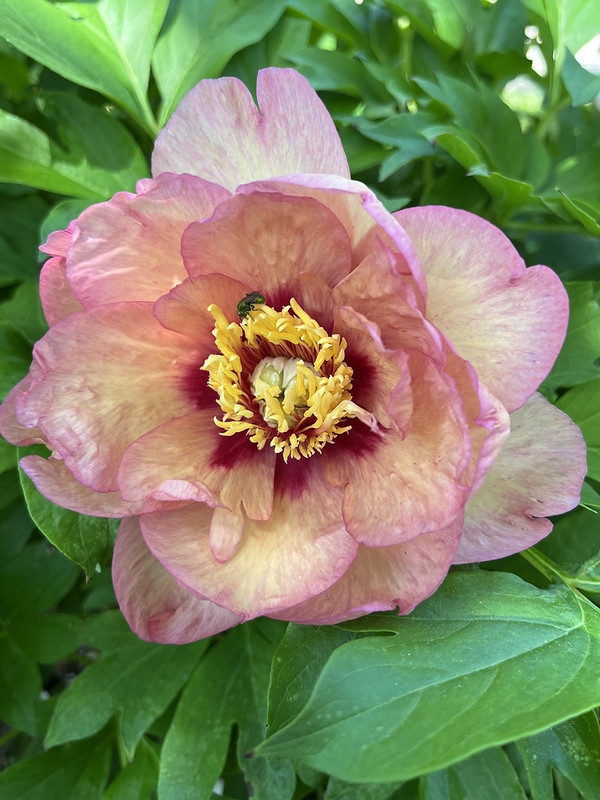
Itoh hybrid with semi-double, yellow flowers. - 'Shima Nishiki'
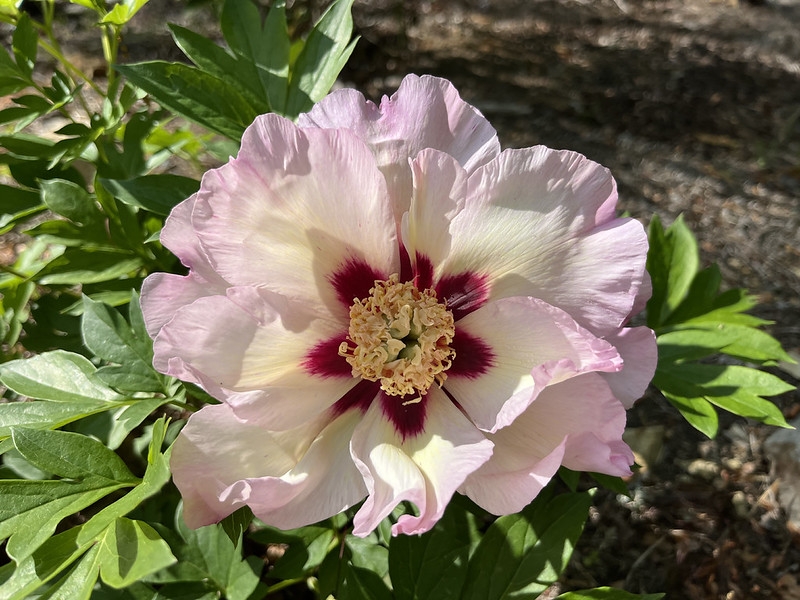
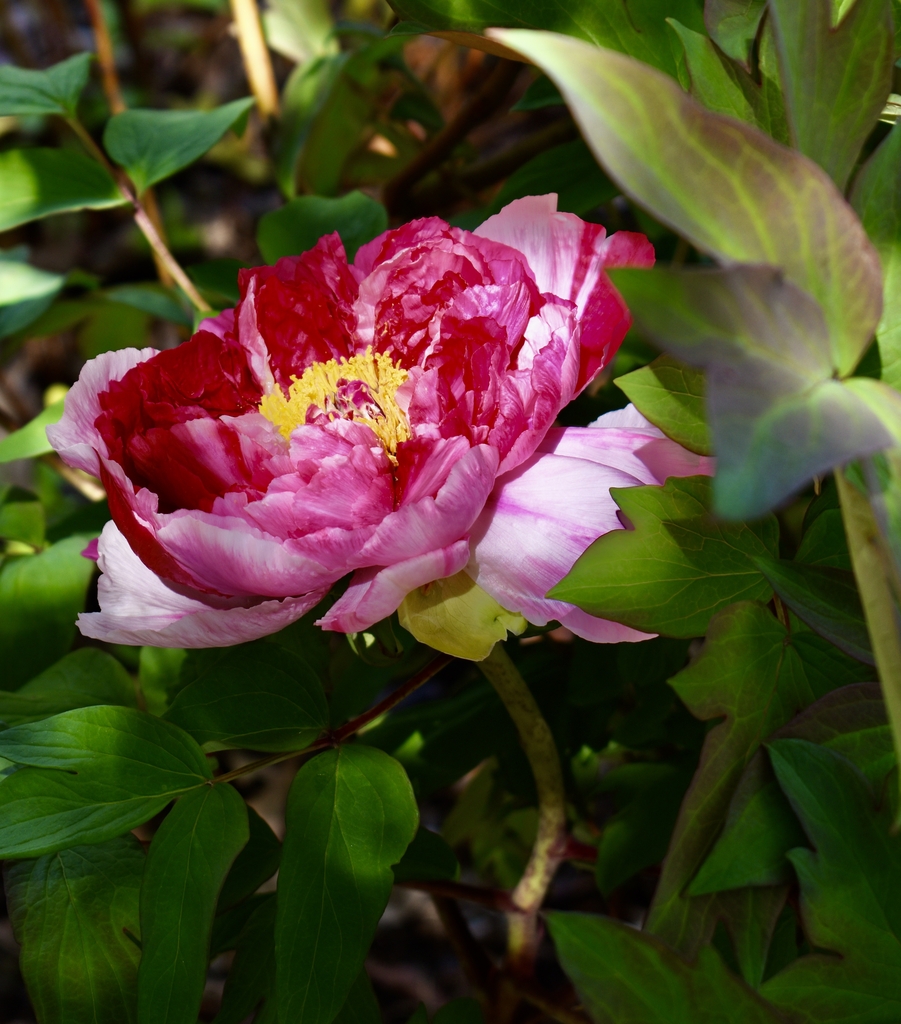
Semi-double purplish-red flowers with prominent white striping and yellow centers
- 'Bartzella'
- 'Bartzella', 'Cora Louise', ‘Sequestered Sunshine’, 'Shima Nishiki'
- Tags:


- Cultivars / Varieties:
-
- 'Bartzella'
Itoh hybrid with double yellow flowers with reddish centers. - 'Cora Louise'
Itoh hybrid with white semi-double flowers with a violet center. - ‘Sequestered Sunshine’
Itoh hybrid with semi-double, yellow flowers. - 'Shima Nishiki'
Semi-double purplish-red flowers with prominent white striping and yellow centers
- 'Bartzella'
- 'Bartzella', 'Cora Louise', ‘Sequestered Sunshine’, 'Shima Nishiki'
- Tags:
-
-
Attributes:
- Genus:
- Paeonia
- Family:
- Paeoniaceae
- Life Cycle:
- Perennial
- Woody
- Country Or Region Of Origin:
- China, Tibet
- Wildlife Value:
- Flowers attract butterflies.
- Dimensions:
- Height: 3 ft. 0 in. - 6 ft. 6 in.
- Width: 3 ft. 0 in. - 5 ft. 0 in.
-
-
Whole Plant Traits:
- Plant Type:
- Perennial
- Shrub
- Woody Plant Leaf Characteristics:
- Deciduous
- Habit/Form:
- Erect
- Growth Rate:
- Slow
- Maintenance:
- Low
-
-
Cultural Conditions:
- Light:
- Full sun (6 or more hours of direct sunlight a day)
- Partial Shade (Direct sunlight only part of the day, 2-6 hours)
- Soil Texture:
- Clay
- High Organic Matter
- Soil pH:
- Alkaline (>8.0)
- Soil Drainage:
- Good Drainage
- Moist
- Available Space To Plant:
- 3 feet-6 feet
- NC Region:
- Mountains
- Piedmont
- USDA Plant Hardiness Zone:
- 3a, 3b, 4a, 4b, 5a, 5b, 6a, 6b, 7a, 7b, 8a
-
-
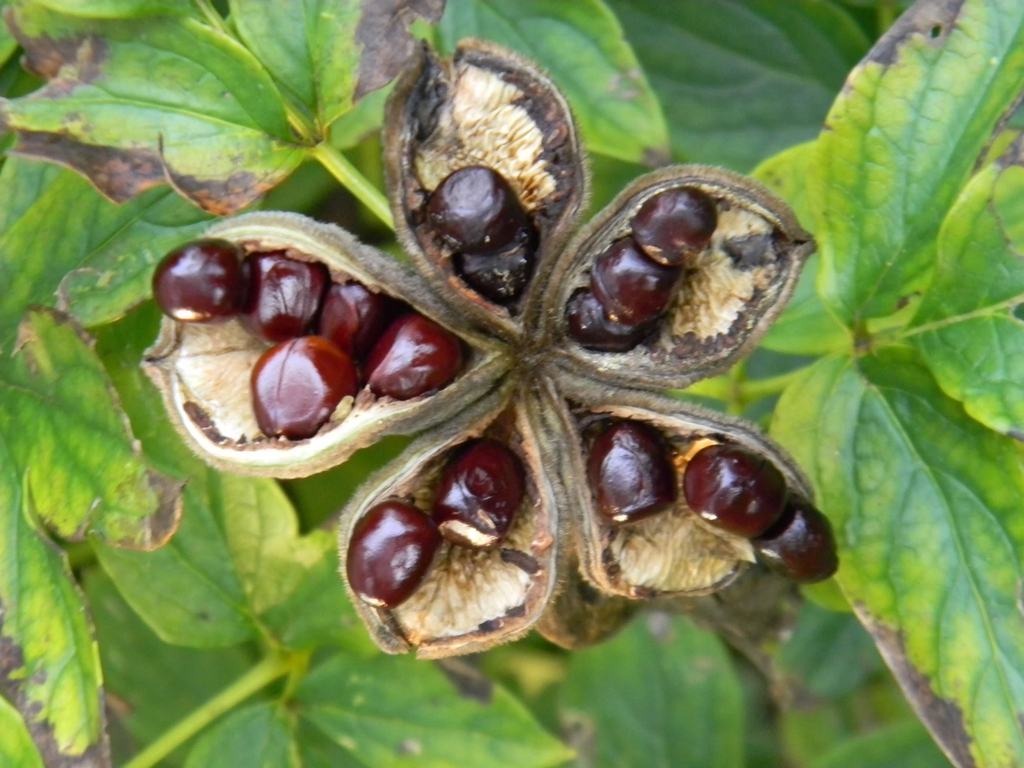
Fruit:
- Fruit Type:
- Follicle
- Fruit Description:
- This plant produces 2 to 5 spreading follicles.
-
-
Flowers:
- Flower Color:
- Gold/Yellow
- Pink
- Purple/Lavender
- Red/Burgundy
- White
- Flower Inflorescence:
- Solitary
- Flower Value To Gardener:
- Fragrant
- Showy
- Flower Bloom Time:
- Spring
- Flower Shape:
- Cup
- Flower Petals:
- more than 20 petals/rays
- Flower Size:
- > 6 inches
- Flower Description:
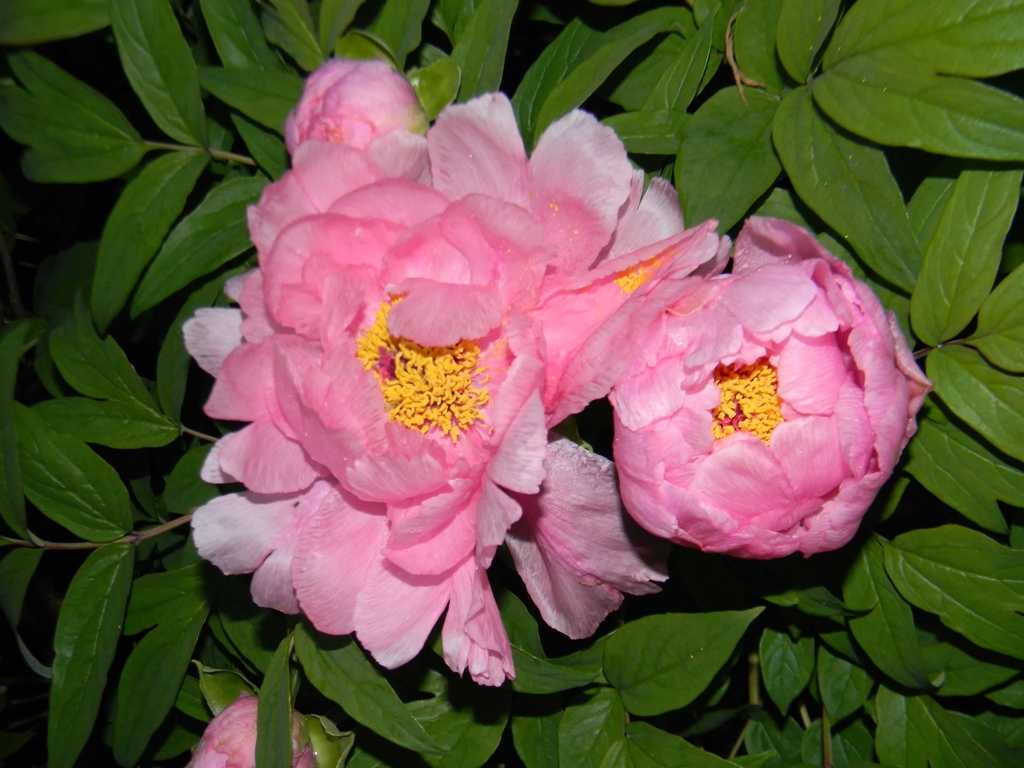
- Flowers are rose, purple, pink, white, or yellow in color. They are fragrant, terminal, and up to 6 inches in diameter. Flowers have many petals that are concave and have finely scalloped margins. There are 5 sepals, numerous stamens, and up to 5 carpels. Flower filaments are often violet-red. Cultivars come in many colors and can be single or double blooms.
-
-
Leaves:
- Woody Plant Leaf Characteristics:
- Deciduous
- Leaf Color:
- Green
- Leaf Type:
- Compound (Pinnately , Bipinnately, Palmately)
- Leaf Arrangement:
- Alternate
- Leaf Shape:
- Ovate
- Hairs Present:
- No
- Leaf Length:
- 3-6 inches
- Leaf Description:
- Leaves are alternate, biternate, and deeply dissected. Leaflets are stalked, ovate to broad-oval, with 3 to 5 lobes, pale green above, blue-green beneath, and up to 4 inches in length.
-
-
Bark:
- Bark Color:
- Dark Brown
- Light Brown
-
-
Stem:
- Stem Is Aromatic:
- No
- Stem Description:
- Twigs are slender, cane-like and branching above.
-
-
Landscape:
- Landscape Theme:
- Asian Garden
- Cottage Garden
- Garden for the Blind
- Pollinator Garden
- Shade Garden
- Design Feature:
- Border
- Hedge
- Small groups
- Specimen
- Attracts:
- Bees
- Butterflies
- Resistance To Challenges:
- Deer
- Heat
- Rabbits