



Marsh Root Limonium carolinianum
Other Common Name(s):
Previously known as:
- Limonium angustatum
- Limonium nashii
- Limonium trichogonum
- Statice caroliniana
- Statice limonium var. carolinianum
- Phonetic Spelling
- lih-MOH-nee-um ka-ro-lin-ee-AY-num
- Description
-
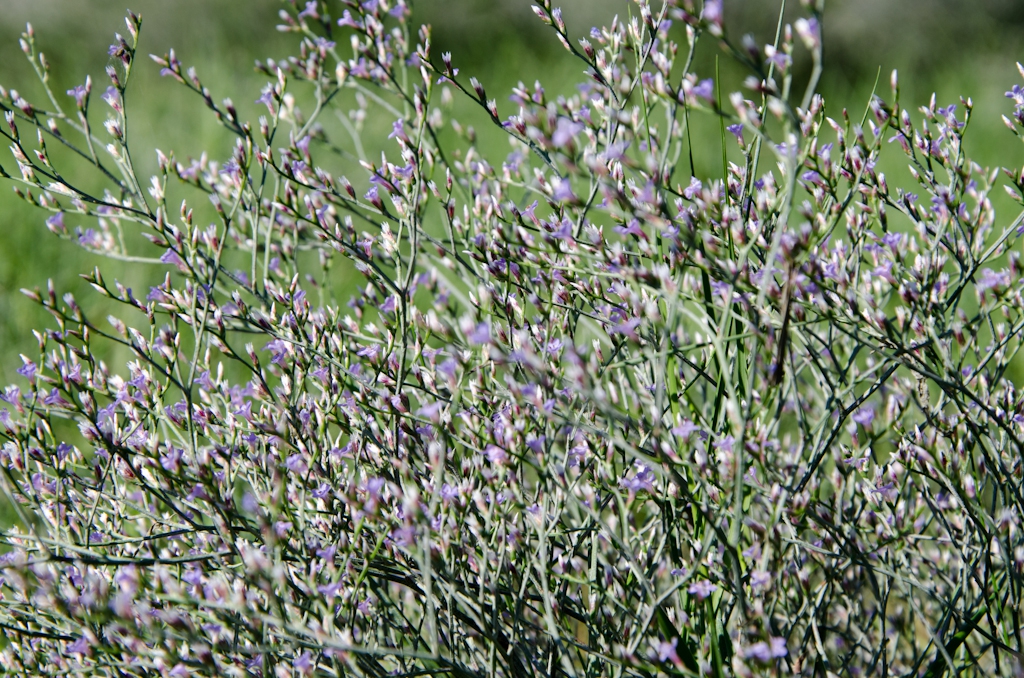
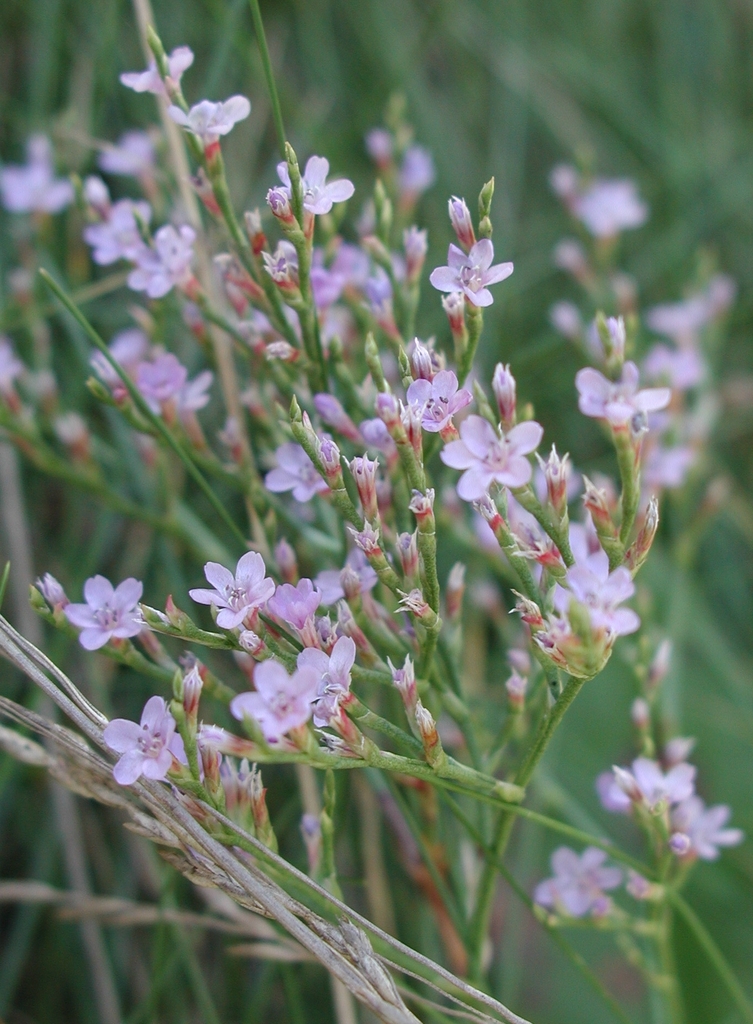
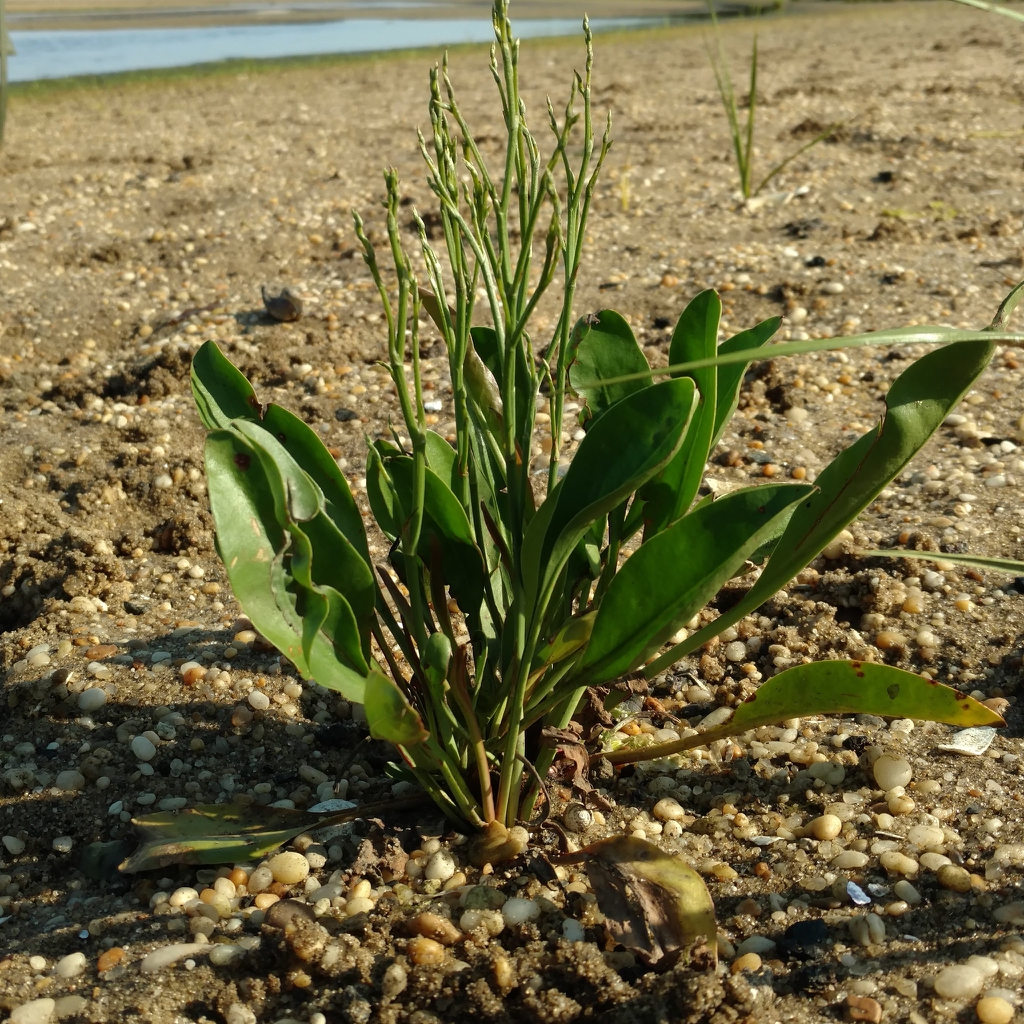
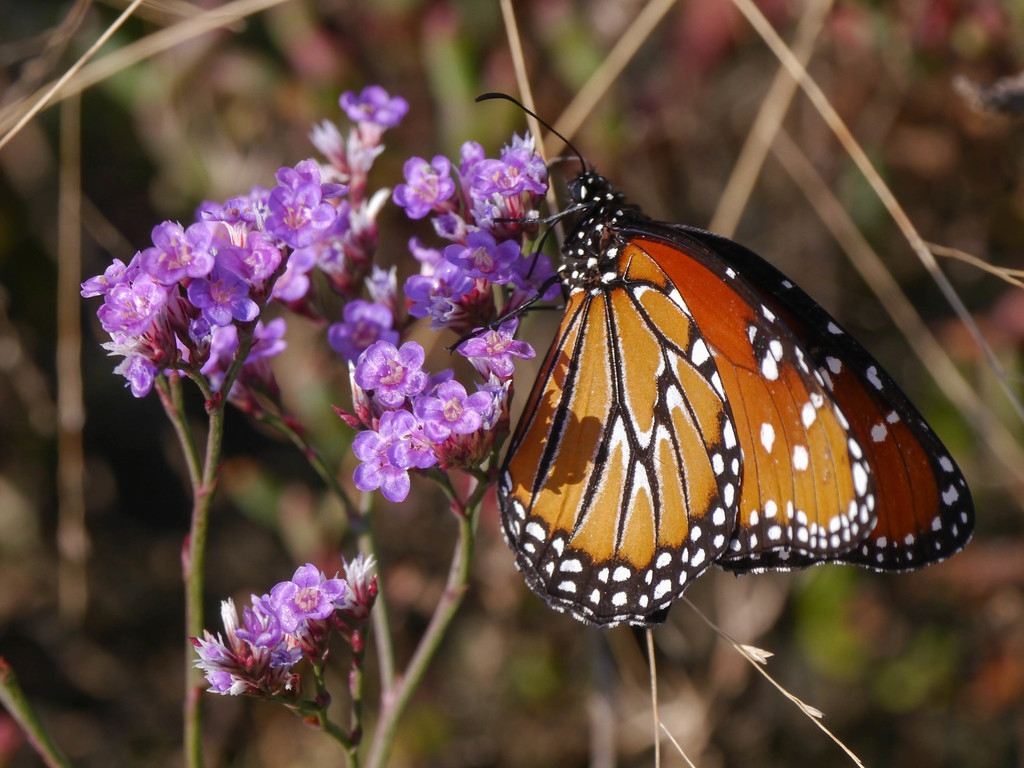
Carolina sea lavender is a native, showy perennial appearing in late summer in brackish or salt marshes, flats, coastal beaches, intertidal or subtidal areas, and the open ocean of Eastern North America. It has been used for making wreaths, but this practice can deplete populations of this slow-growing plant. It grows 1-2 feet tall and 1-1.5 feet wide, with slender, stiff, erect, and greenish-red stems. The showy flowers are pale lavender with white bracts that often last longer than the flowers. The narrow, leathery, deep green leaves form a dense rosette at the base of the plant. Carolina sea lavender is a member of the thrift family (Plumbaginaceae). The specific epithet carolinianum means "from Carolina" and refers to the plant's native habitat.
This plant grows in clay, loam, or sandy tidal marshes in full sun and moist, well-drained soils with mildly acidic to alkaline pH. It is hardy in zones 5 to 11 and tolerates very wet soil and salt. This plant species is very important in helping stabilize salt marsh soils. It also supports our pollinators. This plant is known as a hydrophyte, since it tolerates aquatic conditions. The plant tissue allows the salt water in, and specialized salt glands excrete the salt. Dried salt crystals may be seen on the undersurface of the leaves. Propagate by seeds or division. To help encourage new growth and maintain the plant's shape, prune in the early spring. Deadheading spent flowers will encourage re-blooming.
Carolina sea lavender is popular along the coast and is frequently found in coastal gardens and landscapes.
Insects, Diseases, and Other Plant Problems: Essentially insect- and disease-free.
- See this plant in the following landscape :
- Cultivars / Varieties:
-
- Tags:


- Cultivars / Varieties:
-
- Tags:
-
-
Attributes:
- Genus:
- Limonium
- Species:
- carolinianum
- Family:
- Plumbaginaceae
- Uses (Ethnobotany):
- Used in making wreaths. The roots contain tannin and are powerfully astringent. A decoction of the root has long been used as a popular domestic remedy for diarrhea and dysentery, and is also used to treat sore mouths, cankers, etc. The dried and powdered root is applied to old ulcers or piles. Native Americans also used the roots as a treatment for tuberculosis.
- Life Cycle:
- Perennial
- Recommended Propagation Strategy:
- Division
- Seed
- Country Or Region Of Origin:
- Eastern Canada, East and South Central U.S, NE Mexico, & Bermuda
- Distribution:
- Native: Bermuda, Labrador, Mexico Northeast, New Brunswick, Newfoundland, Nova Scotia, Prince Edward Island, Quebec, and the United States: Alabama, Connecticut, Delaware, Florida, Georgia, Louisiana, Maine, Maryland, Massachusetts, Mississippi, New Hampshire, New Jersey, New York, North Carolina, Rhode Island, South Carolina, Texas, and Virginia
- Wildlife Value:
- Attracts pollinators.
- Play Value:
- Attractive Flowers
- Attracts Pollinators
- Colorful
- Textural
- Dimensions:
- Height: 1 ft. 0 in. - 2 ft. 0 in.
- Width: 1 ft. 0 in. - 1 ft. 6 in.
-
-
Whole Plant Traits:
- Plant Type:
- Native Plant
- Perennial
- Habit/Form:
- Erect
- Growth Rate:
- Slow
- Maintenance:
- Medium
- Texture:
- Medium
-
-
Cultural Conditions:
- Light:
- Full sun (6 or more hours of direct sunlight a day)
- Soil Texture:
- Clay
- Loam (Silt)
- Sand
- Soil pH:
- Alkaline (>8.0)
- Neutral (6.0-8.0)
- Soil Drainage:
- Good Drainage
- Moist
- Occasionally Wet
- Available Space To Plant:
- 12 inches-3 feet
- NC Region:
- Coastal
- USDA Plant Hardiness Zone:
- 5a, 5b, 6a, 6b, 7a, 7b, 8a, 8b, 9a, 9b, 10a, 10b, 11a, 11b
-
-
Fruit:
- Fruit Color:
- Brown/Copper
- Display/Harvest Time:
- Fall
- Fruit Type:
- Achene
- Fruit Length:
- < 1 inch
- Fruit Width:
- < 1 inch
- Fruit Description:
- The fruit is a dried, brown utricle (type of achene), measuring 3 to 5.5 mm long. Each utricle contains 1 seed.
-
-
Flowers:
- Flower Color:
- Purple/Lavender
- Flower Value To Gardener:
- Good Cut
- Good Dried
- Showy
- Flower Bloom Time:
- Fall
- Summer
- Flower Shape:
- Star
- Flower Petals:
- 4-5 petals/rays
- Flower Size:
- < 1 inch
- Flower Description:
- The flowers are very small, pale purple with white sepals; sepals may remain after the flower is gone. Each star-like bloom measures 0.25 inches long and is 5-petaled, with a papery texture. The flowers appear along one side of the stem, forming a cluster. Blooms from August to October.
-
-
Leaves:
- Leaf Color:
- Green
- Leaf Feel:
- Leathery
- Leaf Type:
- Simple
- Leaf Arrangement:
- Rosulate
- Leaf Shape:
- Lanceolate
- Oblanceolate
- Spatulate
- Leaf Margin:
- Entire
- Undulate
- Hairs Present:
- No
- Leaf Length:
- > 6 inches
- Leaf Width:
- 1-3 inches
- Leaf Description:
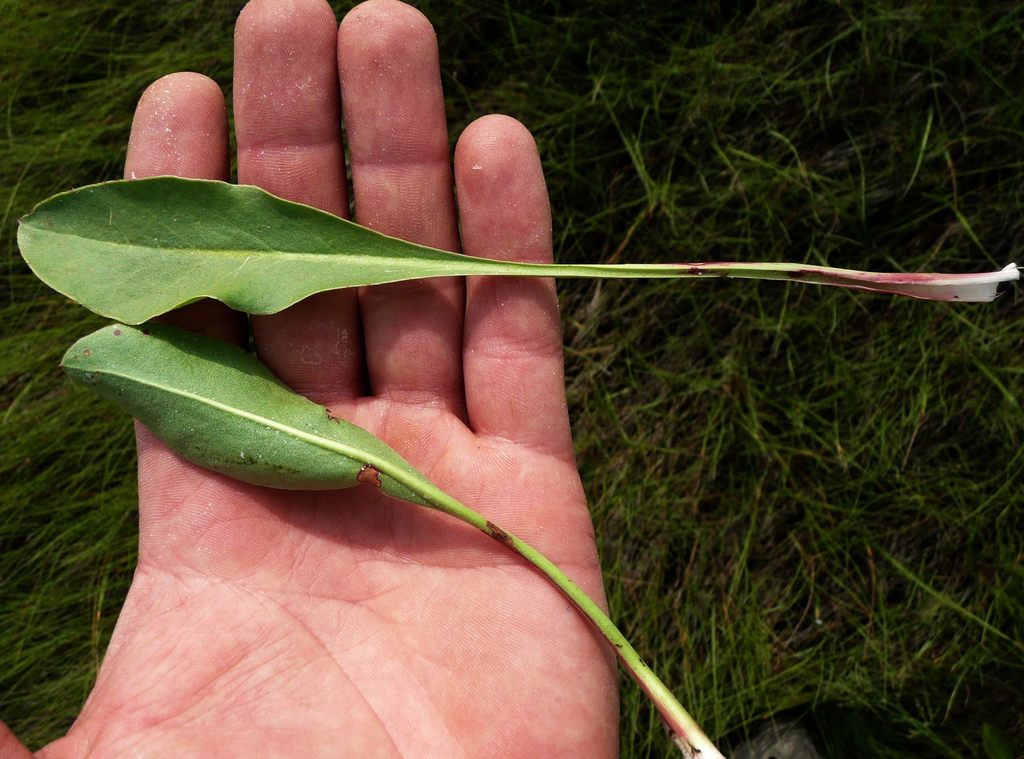
- Leaves are deep green, leathery, simple, basal, with undulate and entire margins. Each leaf blade is lanceolate, oblanceolate, or spatulate, measuring 2 to 12 inches long and 0.25 to 3 inches wide. They form a rosette at the bottom of the main stem. The leaf blades have glands that excrete salt.
-
-
Stem:
- Stem Color:
- Green
- Red/Burgundy
- Stem Is Aromatic:
- No
- Stem Cross Section:
- Round
- Stem Description:
- The stem is green to reddish, erect, stiff, highly branched, with alternating secondary stems. The cross-section of the stem is roughly circular. The stem measures from 8 inches to 28 inches long.
-
-
Landscape:
- Landscape Location:
- Coastal
- Pond
- Riparian
- Landscape Theme:
- Native Garden
- Rain Garden
- Water Garden
- Attracts:
- Butterflies
- Pollinators
- Resistance To Challenges:
- Salt
- Wet Soil
