


Heliotropium amplexicaule
Common Name(s):
- Phonetic Spelling
- hee-lee-oh-TROH-pee-um am-pleks-ih-KAW-lay
- This plant has medium severity poison characteristics.
- See below
- Description
-
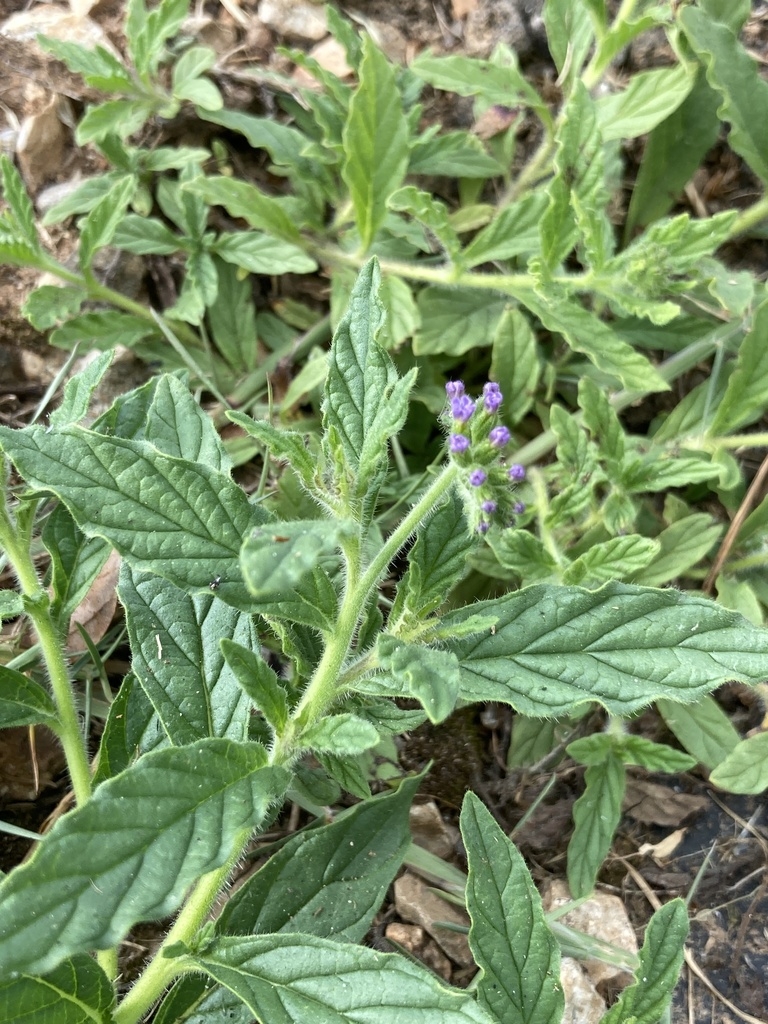
Clasping heliotrope is a prostrate flowering perennial in the borage family (Boraginaceae) native to South America. It has become a noxious weed in Australia and South Wales and has been introduced to parts of the USA. It can invade pastures and is toxic to livestock. The species epithet is from the Latin word 'amplexus' meaning "to wind around" or "surround" and 'caulis' meaning "stem" referring to the sessile leaves.
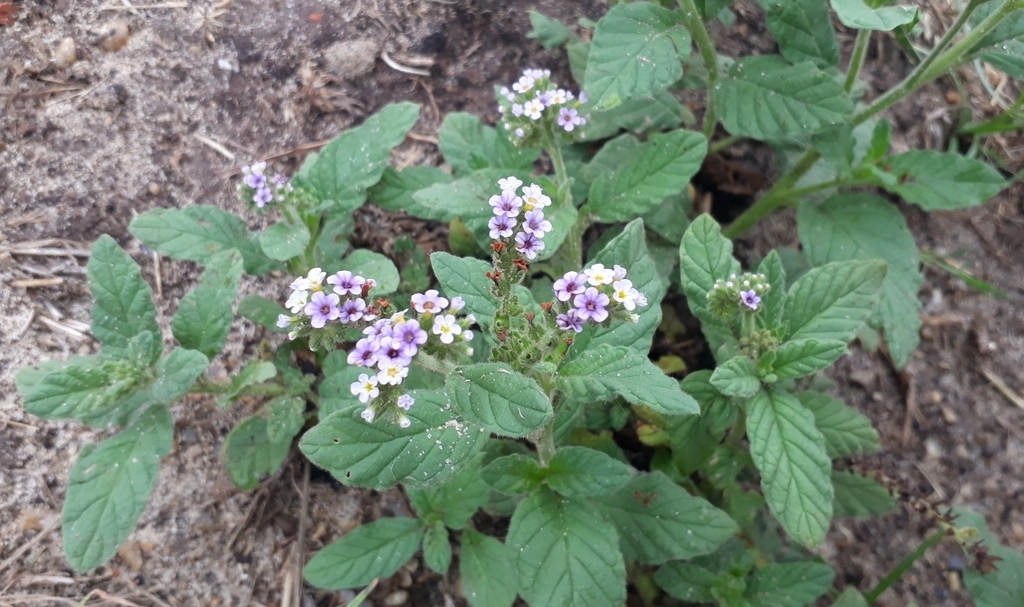
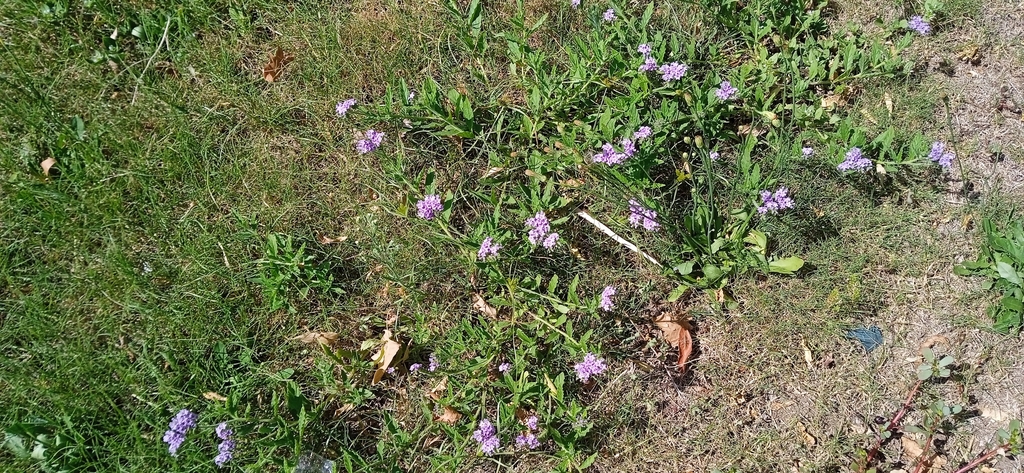
Clasping heliotrope grows 1 to 2 feet tall and spreads 2 to 3 feet by rhizomes. It prefers full sun to partial shade and well-drained acidic, sandy loam soil and is drought-tolerant once established. It can grow rapidly crowding out native plant.
Although it is used as an ornamental. groundcover, keep in mind the invasive qualities of this plant and prevent it from escaping the garden. Keep away from children and pets. See native alternatives to the left.
Insects, Diseases, and Other Plant Problems: Watch for Aphids, mealybugs, spider mites snails, slugs and lace bugs. Disease include powdery mildew and root rot.
- See this plant in the following landscape :
- Cultivars / Varieties:
-
- Tags:


- Cultivars / Varieties:
-
- Tags:
-
-
Attributes:
- Genus:
- Heliotropium
- Species:
- amplexicaule
- Family:
- Boraginaceae
- Life Cycle:
- Perennial
- Recommended Propagation Strategy:
- Division
- Stem Cutting
- Country Or Region Of Origin:
- Bolivia to Brazil and N. Argentina
- Distribution:
- Gulf Coast, Southeastern and MidAtlantic states
- Dimensions:
- Height: 0 ft. 8 in. - 1 ft. 8 in.
- Width: 2 ft. 0 in. - 3 ft. 0 in.
-
-
Whole Plant Traits:
- Plant Type:
- Herbaceous Perennial
- Poisonous
- Habit/Form:
- Prostrate
- Spreading
- Growth Rate:
- Rapid
- Maintenance:
- High
- Texture:
- Medium
-
-
Cultural Conditions:
- Light:
- Full sun (6 or more hours of direct sunlight a day)
- Partial Shade (Direct sunlight only part of the day, 2-6 hours)
- Soil Texture:
- Loam (Silt)
- Sand
- Shallow Rocky
- Soil pH:
- Acid (<6.0)
- Neutral (6.0-8.0)
- Soil Drainage:
- Good Drainage
- Occasionally Dry
- NC Region:
- Coastal
- Piedmont
- USDA Plant Hardiness Zone:
- 7a, 7b, 8a, 8b, 9a, 9b
-
-
Fruit:
- Fruit Color:
- Brown/Copper
- Fruit Type:
- Schizocarp
- Fruit Length:
- < 1 inch
- Fruit Width:
- < 1 inch
- Fruit Description:
- Fruit matures to 2 dry rough nutlets
-
-
Flowers:
- Flower Color:
- Blue
- Purple/Lavender
- Flower Inflorescence:
- Cyme
- Flower Value To Gardener:
- Long Bloom Season
- Flower Bloom Time:
- Fall
- Summer
- Flower Shape:
- Bell
- Tubular
- Flower Petals:
- 4-5 petals/rays
- Flower Size:
- < 1 inch
- Flower Description:
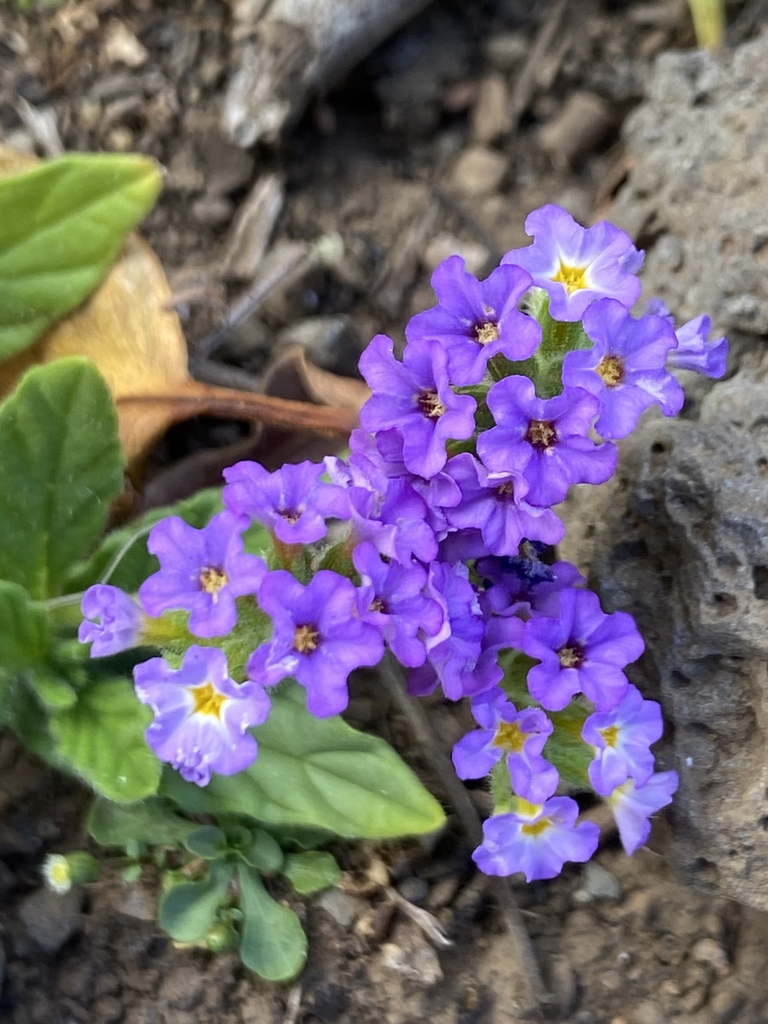
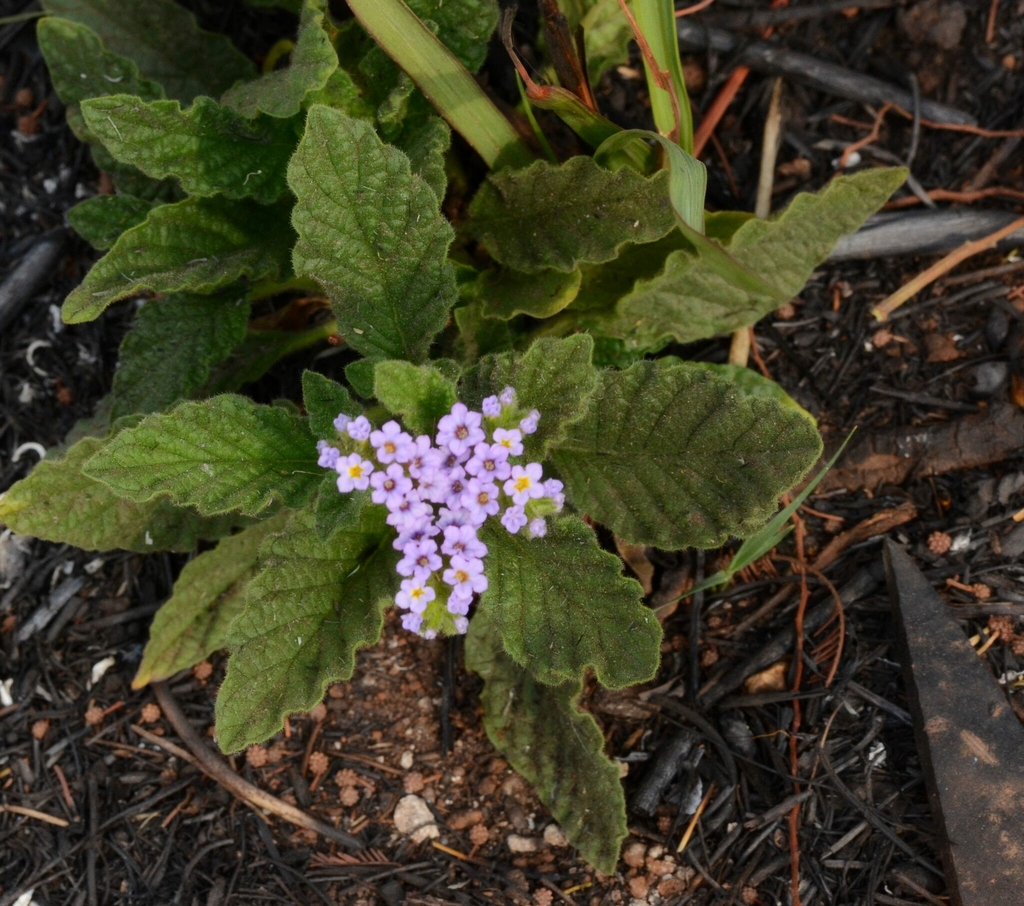
- Flowers appear in clusters on a slender stem with purple petals and a yellow throat. They line one side of the forked and curled-back flower stems
-
-
Leaves:
- Leaf Color:
- Green
- Leaf Feel:
- Soft
- Leaf Type:
- Simple
- Leaf Arrangement:
- Alternate
- Leaf Shape:
- Lanceolate
- Leaf Margin:
- Crenate
- Hairs Present:
- Yes
- Leaf Length:
- 1-3 inches
- Leaf Width:
- < 1 inch
- Leaf Description:
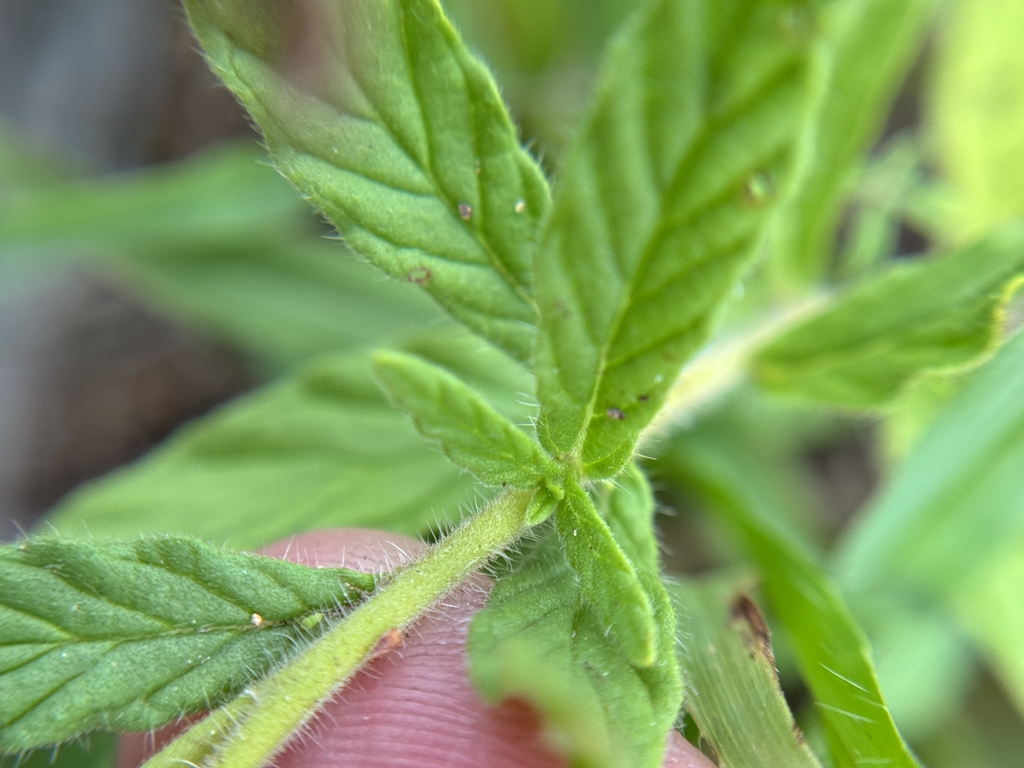
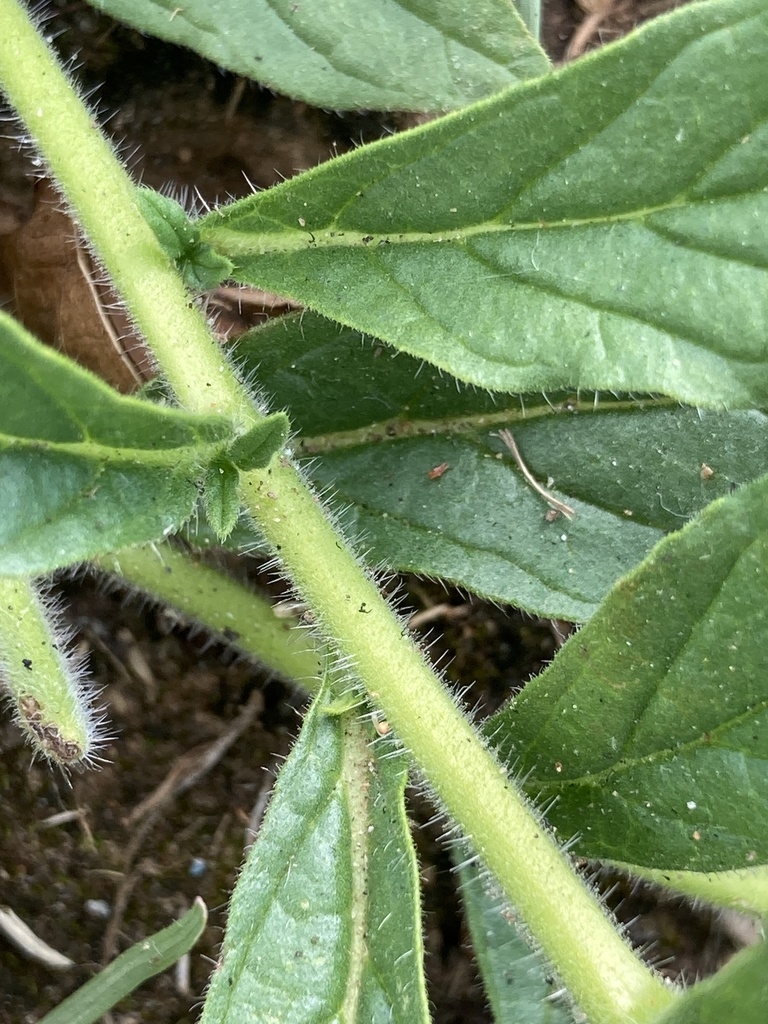
- Aromatic clasping green leaves are lance-shaped, 1 to 3 inches long with sunken veins and sticky hairs.
-
-
Stem:
- Stem Is Aromatic:
- No
-
-
Landscape:
- Landscape Location:
- Container
- Landscape Theme:
- Drought Tolerant Garden
- Rock Garden
- Attracts:
- Pollinators
- Resistance To Challenges:
- Drought
- Dry Soil
- Problems:
- Poisonous to Humans
- Problem for Horses
- Weedy