



Berchemia scandens
Common Name(s):
- Phonetic Spelling
- ber-KEE-mee-ah SKAN-dens
- This plant has low severity poison characteristics.
- See below
- Description
-
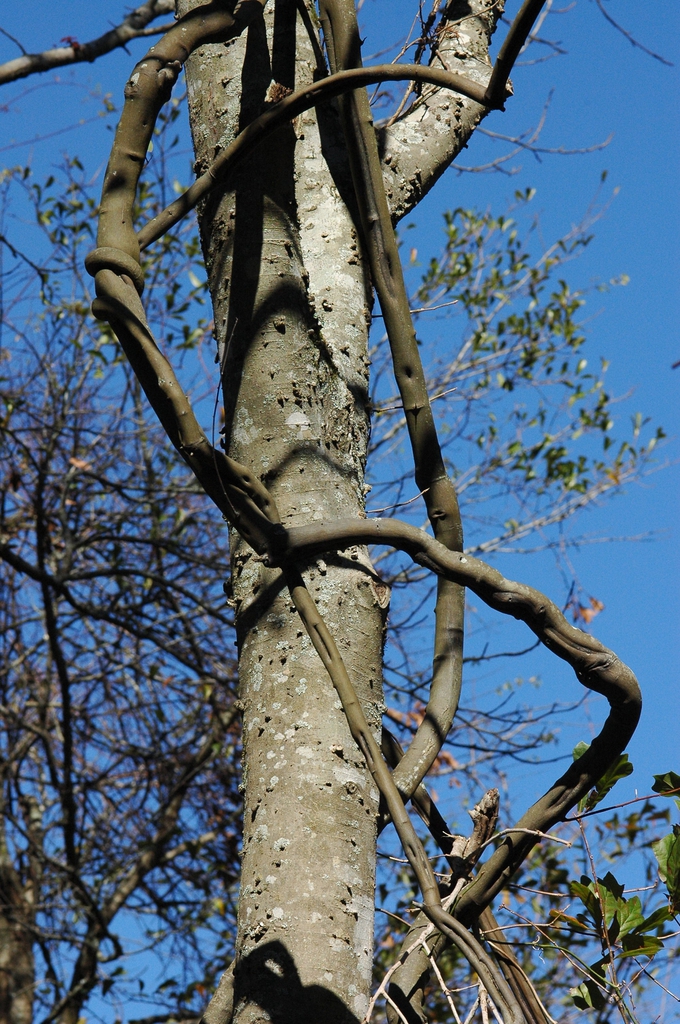
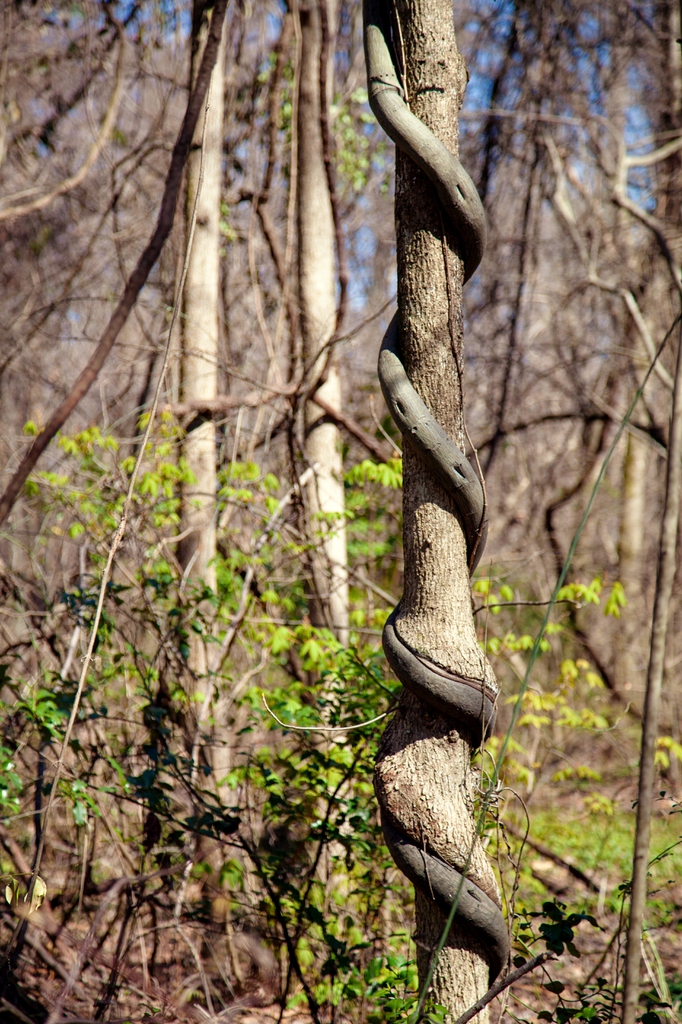
Supplejack is a woody vine of the Buckthorn family (Rhamnaceae) that is native to the Southeast and central USA. It can be found in a variety of habitats, ranging from swamps to upland woodlands, growing on the ground or climbing high into trees. In North Carolina, it can be found mainly on the coastal plain. Genus name honors M. Berchem, a French botanist of the 17th century. Specific epithet means "climbing upward" in reference to the climbing habit of this vine.
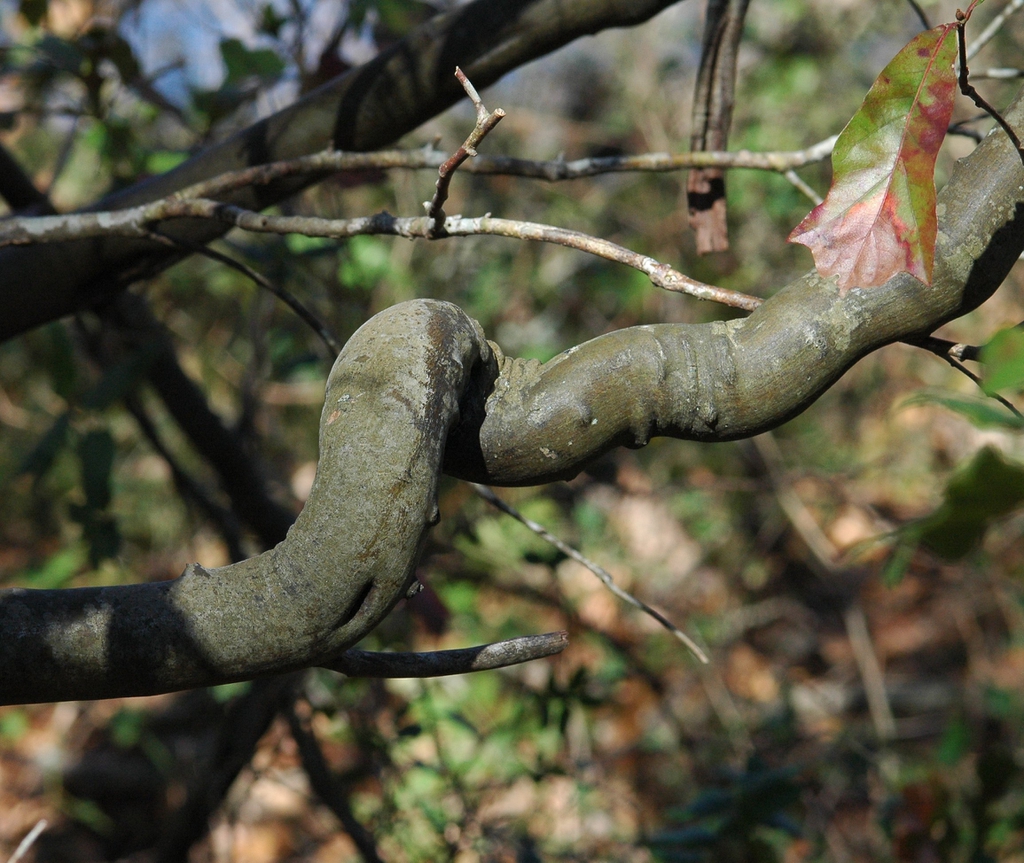
The twining vine can grow up to 60 feet tall and 20 feet wide with annual growth up to 25 feet. Older vines may have a radius of 2 inches. Supplejack tolerates soils from wet to dry in sun to partial shade. Propagation is by seed or softwood cuttings.
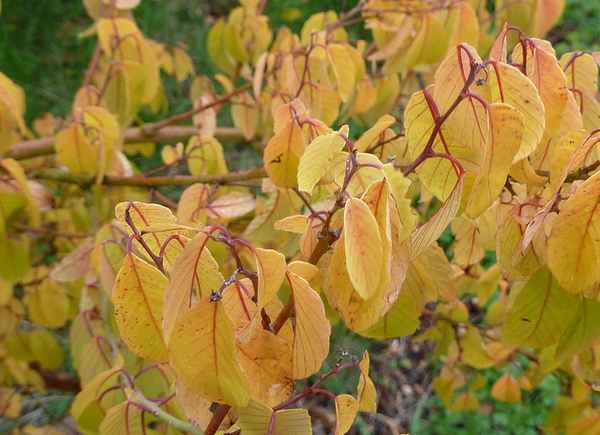
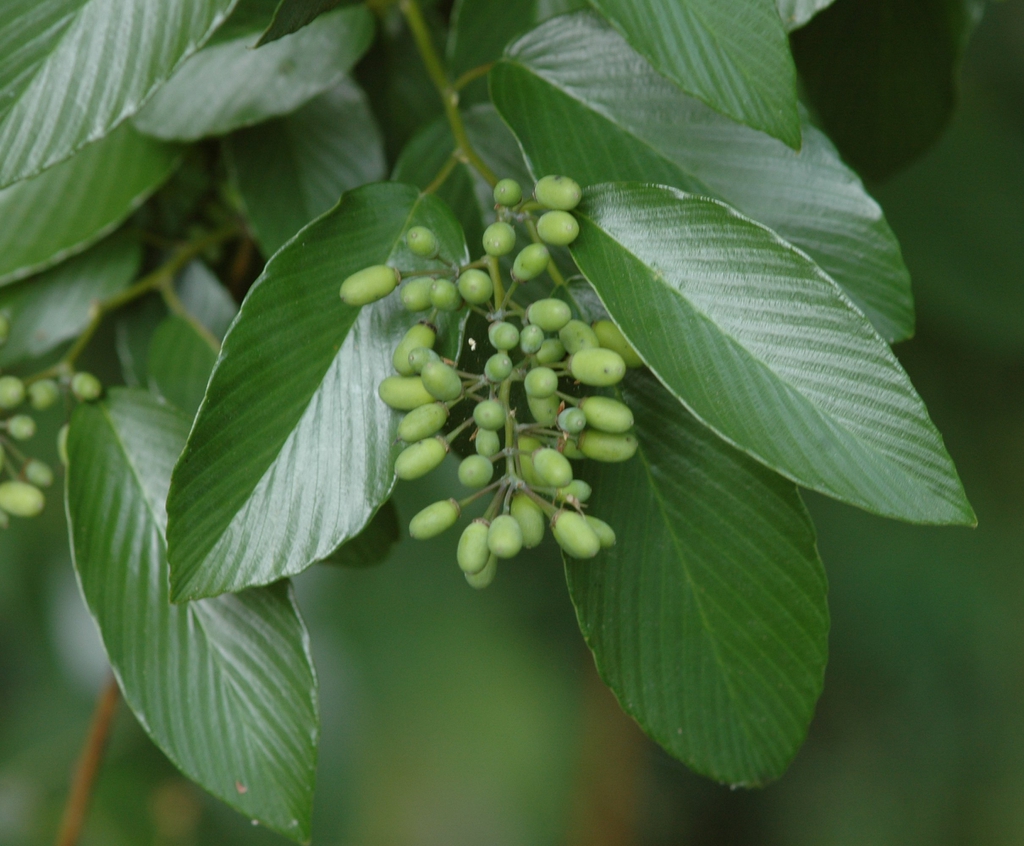
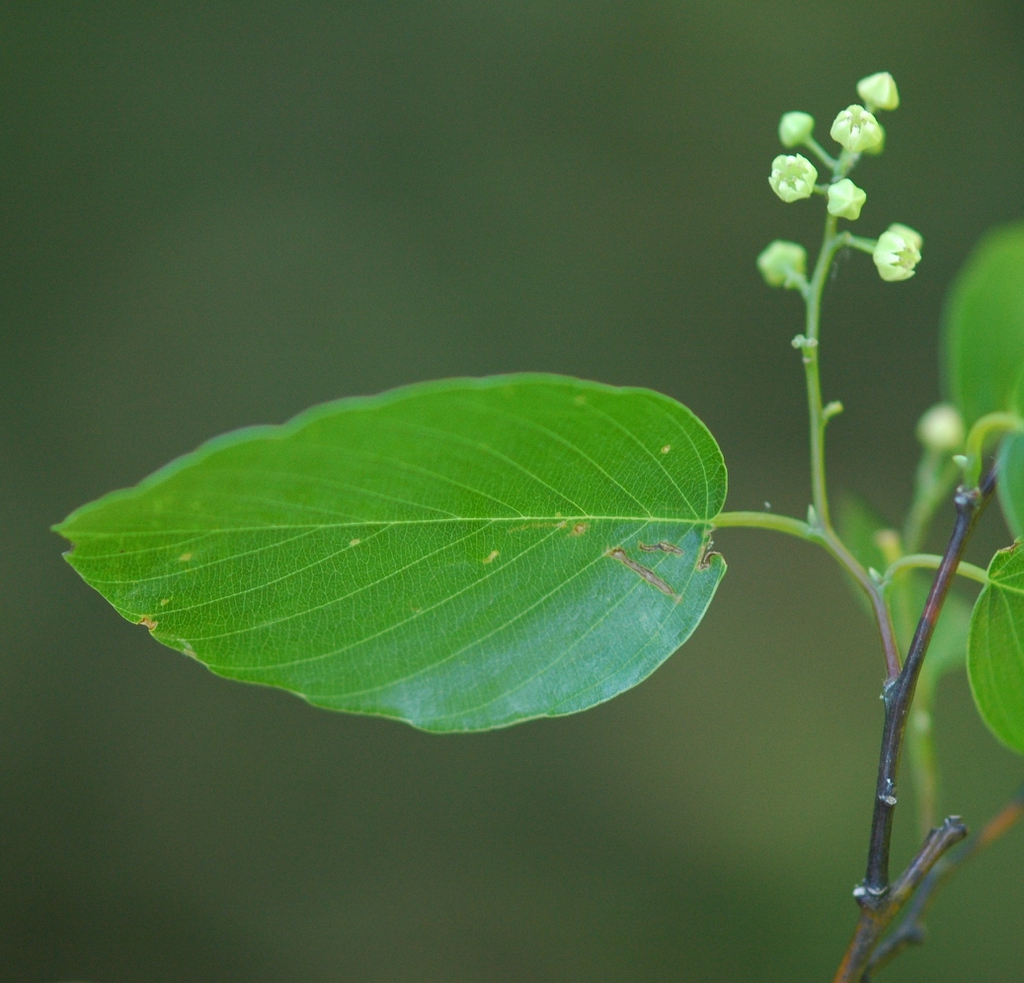
Greenish-white flowers appear in late spring and summer, followed by blue fruits in the fall that are eaten by birds and small mammals. The oval green leaves have a distinctive parallel pinnate venation and turn brownish-orange in the fall. The tough stems have been used in wickerworks and for making a walking stick known as supple-jack.
It is best used in naturalized and woodland settings.
Insects, Diseases, and Other Plant Problems: No significant problems.
- See this plant in the following landscape :
- Cultivars / Varieties:
-
- Tags:





- Cultivars / Varieties:
-
- Tags:
-
-
Attributes:
- Genus:
- Berchemia
- Species:
- scandens
- Family:
- Rhamnaceae
- Uses (Ethnobotany):
- Vines can be used for making wicker products and making walking sticks. Used medicinally by native Americans.
- Life Cycle:
- Woody
- Recommended Propagation Strategy:
- Seed
- Stem Cutting
- Country Or Region Of Origin:
- SE and central. U.S.A.
- Distribution:
- AL , AR , FL , GA , IL , KY , LA , MD , MO , MS , NC , OK , SC , TN , TX , VA
- Fire Risk Rating:
- high flammability
- Wildlife Value:
- It's fruits are high in calcium and are eaten by songbirds, wild turkey, northern bobwhite, raccoon and gray squirrel. Provides nesting sites for birds.
- Particularly Resistant To (Insects/Diseases/Other Problems):
- Heat, drought, and soil compaction tolerant.
- Climbing Method:
- Twining
- Dimensions:
- Height: 20 ft. 0 in. - 60 ft. 0 in.
- Width: 6 ft. 0 in. - 12 ft. 0 in.
-
-
Whole Plant Traits:
- Plant Type:
- Native Plant
- Poisonous
- Vine
- Woody Plant Leaf Characteristics:
- Deciduous
- Habit/Form:
- Climbing
- Growth Rate:
- Medium
- Maintenance:
- Low
- Texture:
- Medium
-
-
Cultural Conditions:
- Light:
- Dappled Sunlight (Shade through upper canopy all day)
- Full sun (6 or more hours of direct sunlight a day)
- Partial Shade (Direct sunlight only part of the day, 2-6 hours)
- Soil Texture:
- Clay
- Loam (Silt)
- Sand
- Soil pH:
- Acid (<6.0)
- Neutral (6.0-8.0)
- Soil Drainage:
- Good Drainage
- Moist
- Occasional Flooding
- Occasionally Dry
- Occasionally Wet
- Available Space To Plant:
- 12-24 feet
- NC Region:
- Coastal
- Piedmont
- USDA Plant Hardiness Zone:
- 6a, 6b, 7a, 7b, 8a, 8b, 9a, 9b
-
-
Fruit:
- Fruit Color:
- Blue
- Display/Harvest Time:
- Fall
- Fruit Type:
- Drupe
- Fruit Length:
- < 1 inch
- Fruit Width:
- < 1 inch
- Fruit Description:
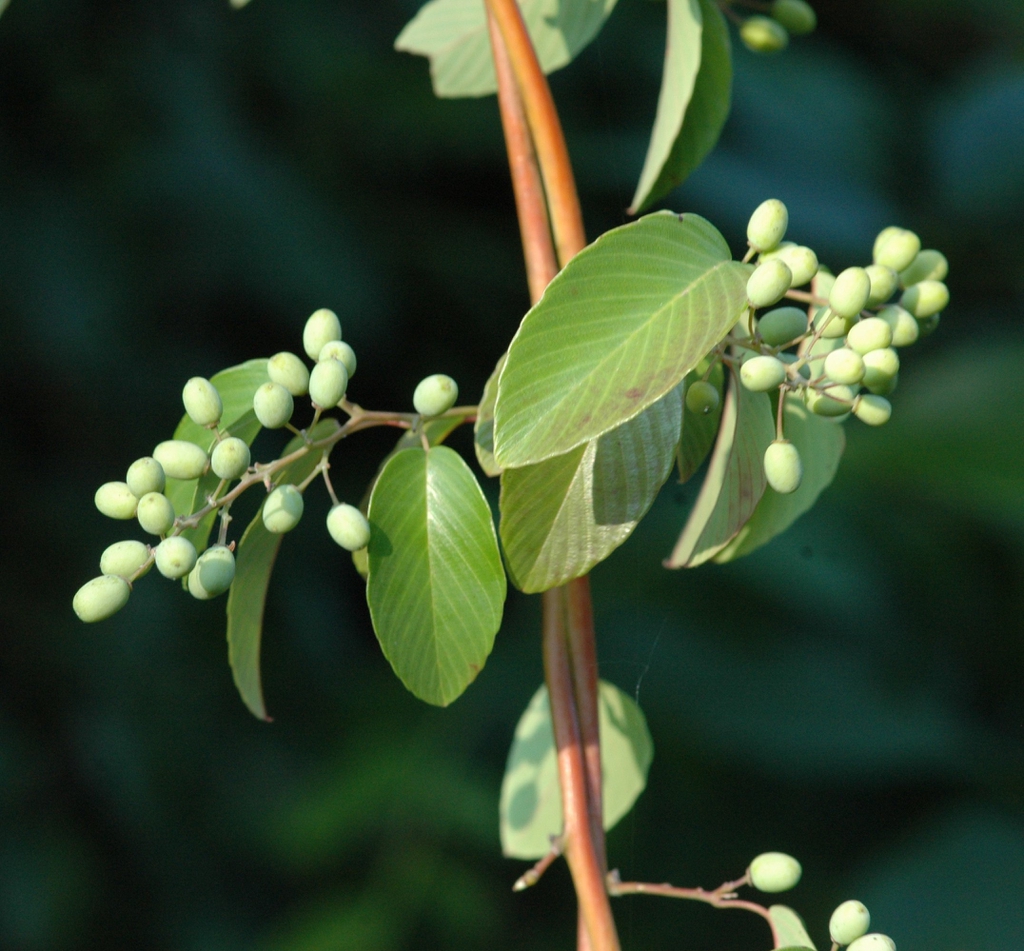
- 1/4 inch fleshy, blue-black fruit, longer than wide and slightly flattened, mature in autumn. Fruit displays from August to October.
-
-
Flowers:
- Flower Color:
- Green
- White
- Flower Inflorescence:
- Panicle
- Flower Bloom Time:
- Spring
- Flower Petals:
- 4-5 petals/rays
- Flower Size:
- < 1 inch
- Flower Description:
- Small greenish-white flowers bloom in open terminal clusters. Blooms from April to May.
-
-
Leaves:
- Woody Plant Leaf Characteristics:
- Deciduous
- Leaf Color:
- Green
- Deciduous Leaf Fall Color:
- Gold/Yellow
- Orange
- Red/Burgundy
- Leaf Type:
- Simple
- Leaf Arrangement:
- Alternate
- Leaf Shape:
- Elliptical
- Ovate
- Leaf Margin:
- Entire
- Undulate
- Hairs Present:
- No
- Leaf Length:
- 1-3 inches
- Leaf Description:
- 1 to 2 1/2 inches long oval leaves have prominent veins branching from the midrib and rounded or pointed tips. Margins are entire to slightly wavy.
-
-
Bark:
- Bark Color:
- Dark Gray
- Green
- Light Gray
- Bark Description:
- Mottled gray and green smooth bark
-
-
Stem:
- Stem Color:
- Gray/Silver
- Green
- Red/Burgundy
- Stem Is Aromatic:
- No
- Stem Surface:
- Smooth (glabrous)
- Stem Description:
- Young stems are reddish and smooth. Mature to green-gray up to 1 inch in diameter. The main stem even larger.
-
-
Landscape:
- Landscape Location:
- Naturalized Area
- Woodland
- Landscape Theme:
- Native Garden
- Rain Garden
- Attracts:
- Small Mammals
- Songbirds
- Resistance To Challenges:
- Drought
- Wet Soil
- Problems:
- Poisonous to Humans



