



Symphyotrichum laeve
Common Name(s):
Previously known as:
- Aster laevis
- Phonetic Spelling
- sim-fy-oh-TRY-kum LAY-vey
- Description
-
Smooth aster is a herbaceous perennial in the daisy family (Asteraceae) that is native to much of North America and parts of Mexico. It can be found growing in prairies, meadows, along roadsides and forest edges. The specific epithet means smooth.
Smooth aster is easy to grow in dry to medium well-drained moderately fertile soils in full sun and is adaptable to various soil types. It grows 2 to 4 feet tall and wide and is drought-tolerant once established. It will readily self-seed.
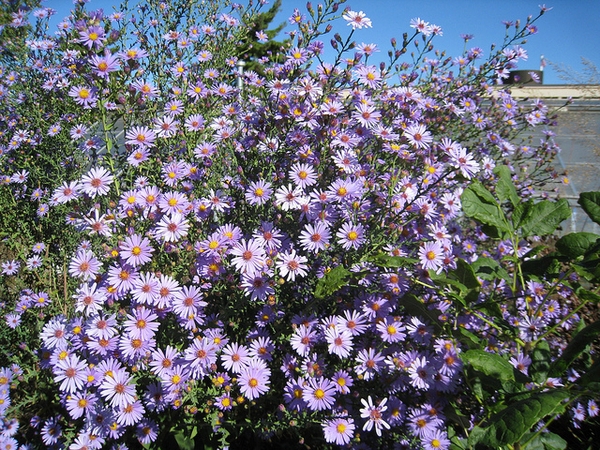
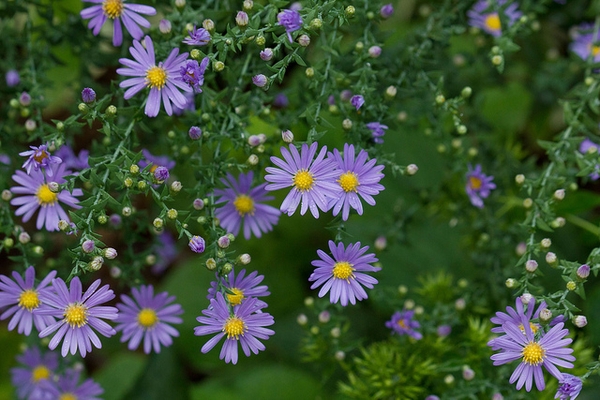
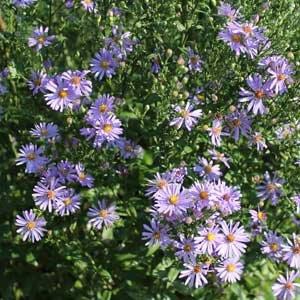
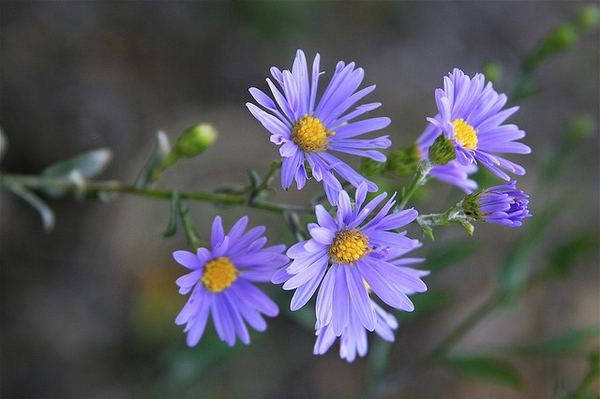
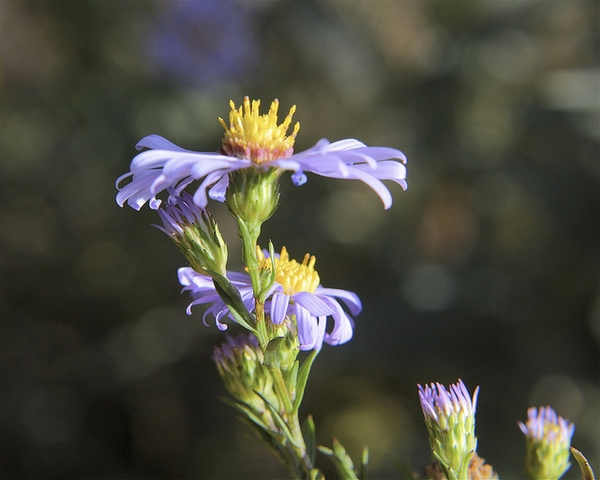
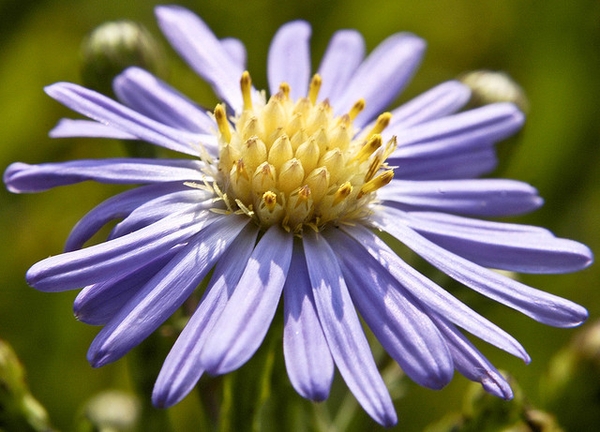
Numerous small lavender-blue flowers occur in later summer to fall and consist of several rays surrounding a disc of yellow florets. The blue-green foliage is attractive all season. Flowers attract pollinators and the birds eat the seeds.
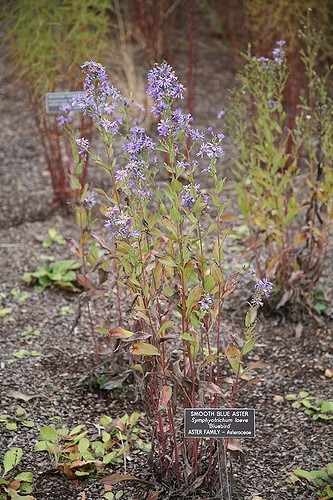
Grow smooth aster in a naturalized area or in a pollinator, drought-tolerant or native garden. It can also be used on slopes and banks. 'Bluebird' is a popular cultivar.
Insects, Diseases, and Other Plant Problems: No significant problems
- See this plant in the following landscape s :
- Pollinator Garden in Full Sun Pollinator Garden in Partial Shade
- Cultivars / Varieties:
-
- 'Bluebird'
1 inch flowers with violet blue rays and yellow centers - var. concinnum
Native to Eastern USA
- 'Bluebird'
- 'Bluebird', var. concinnum
- Tags:


- Cultivars / Varieties:
-
- 'Bluebird'
1 inch flowers with violet blue rays and yellow centers - var. concinnum
Native to Eastern USA
- 'Bluebird'
- 'Bluebird', var. concinnum
- Tags:
-
-
Attributes:
- Genus:
- Symphyotrichum
- Species:
- laeve
- Family:
- Asteraceae
- Life Cycle:
- Perennial
- Recommended Propagation Strategy:
- Division
- Seed
- Country Or Region Of Origin:
- Much of North America and parts of Mexico
- Distribution:
- Alabama, Alberta, Arkansas, British Columbia, California, Colorado, Connecticut, Delaware, District of Columbia, Florida, Georgia, Idaho, Illinois, Indiana, Iowa, Kansas, Kentucky, Louisiana, Maine, Manitoba, Maryland, Massachusetts, Mexico Northeast, Michigan, Minnesota, Mississippi, Missouri, Montana, Nebraska, Nevada, New Brunswick, New Hampshire, New Jersey, New Mexico, New York, North Carolina, North Dakota, Ohio, Ontario, Oregon, Pennsylvania, Québec, Rhode I., Saskatchewan, South Carolina, South Dakota, Tennessee, Texas, Utah, Vermont, Virginia, Washington, West Virginia, Wisconsin, Wyoming, Yukon
- Wildlife Value:
- Host plant for the Pearl Crescent butterfly. Flowers are attractive to bees and butterflies. Songbirds and small mammals eat the seeds. Members of the genus Symphyotrichum support the following specialized bees: Andrena (Callandrena s.l.) asteris, Andrena (Callandrena s.l.) asteroides, Andrena (Cnemidandrena) hirticincta, Andrena (Cnemidandrena) nubecula, Andrena (Callandrena s.l.) placata, Andrena (Callandrena s.l.) simplex, and Colletes simulans.
- Play Value:
- Wildlife Food Source
- Dimensions:
- Height: 2 ft. 0 in. - 4 ft. 0 in.
- Width: 2 ft. 0 in. - 4 ft. 0 in.
-
-
Whole Plant Traits:
- Plant Type:
- Herbaceous Perennial
- Native Plant
- Wildflower
- Habit/Form:
- Clumping
- Erect
- Spreading
- Growth Rate:
- Rapid
- Maintenance:
- Low
- Texture:
- Medium
-
-
Cultural Conditions:
- Light:
- Full sun (6 or more hours of direct sunlight a day)
- Partial Shade (Direct sunlight only part of the day, 2-6 hours)
- Soil Texture:
- Clay
- Loam (Silt)
- Sand
- Soil Drainage:
- Good Drainage
- Moist
- Occasionally Dry
- Available Space To Plant:
- 12 inches-3 feet
- NC Region:
- Coastal
- Mountains
- Piedmont
- USDA Plant Hardiness Zone:
- 4a, 4b, 5a, 5b, 6a, 6b, 7a, 7b, 8a, 8b
-
-
Fruit:
- Display/Harvest Time:
- Winter
- Fruit Type:
- Achene
- Fruit Length:
- < 1 inch
- Fruit Width:
- < 1 inch
- Fruit Description:
- Produces a dry, one-seeded fruit (achene) tipped with red bristles. It displays from October to November
-
-
Flowers:
- Flower Color:
- Blue
- Purple/Lavender
- Flower Inflorescence:
- Head
- Panicle
- Flower Value To Gardener:
- Showy
- Flower Bloom Time:
- Fall
- Summer
- Flower Shape:
- Radial
- Flower Petals:
- 7 - 20 petals/rays
- more than 20 petals/rays
- Flower Size:
- < 1 inch
- Flower Description:
- Many 1/2-1 inch composite violet to blue ray flowers with 15-30 petals and yellow disc flowers in the center. Blooms in late summer through late fall.
-
-
Leaves:
- Leaf Color:
- Green
- Leaf Type:
- Simple
- Leaf Arrangement:
- Alternate
- Leaf Shape:
- Lanceolate
- Ovate
- Leaf Margin:
- Entire
- Hairs Present:
- No
- Leaf Length:
- 1-3 inches
- Leaf Width:
- < 1 inch
- Leaf Description:
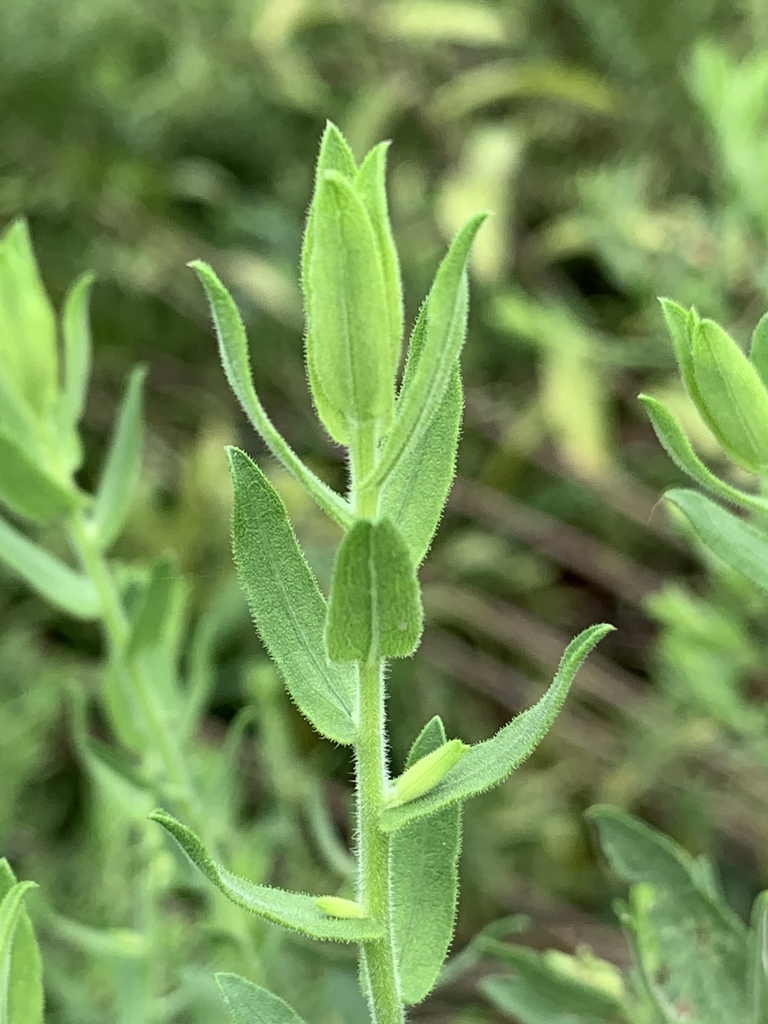
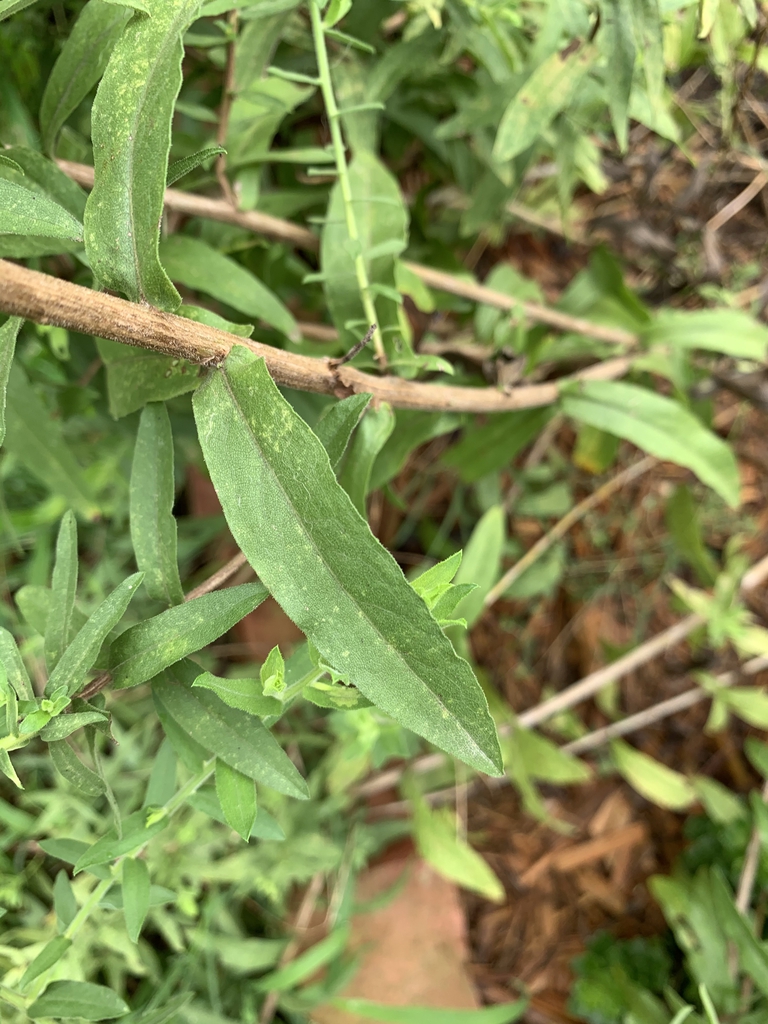
- The leaves alternate and are lance to egg-shaped with a smooth margin. The leaves partly encircle the stem. Upper leaves are smaller and closer together with lower leaves being larger and spaced further apart.
-
-
Stem:
- Stem Color:
- Brown/Copper
- Green
- Stem Is Aromatic:
- No
- Stem Cross Section:
- Round
- Stem Surface:
- Covered with a powdery bloom (glaucous)
- Stem Description:
- Green stems that turn brown with age. Glabrous and sometimes glaucous.
-
-
Landscape:
- Landscape Location:
- Meadow
- Naturalized Area
- Slope/Bank
- Landscape Theme:
- Butterfly Garden
- Drought Tolerant Garden
- Native Garden
- Pollinator Garden
- Rain Garden
- Design Feature:
- Border
- Attracts:
- Bees
- Butterflies
- Pollinators
- Predatory Insects
- Small Mammals
- Songbirds
- Specialized Bees
- Resistance To Challenges:
- Drought



