



Pycnanthemum albescens
Common Name(s):
- Phonetic Spelling
- pik-NAN-thee-mum al-BES-enz
- Description
-
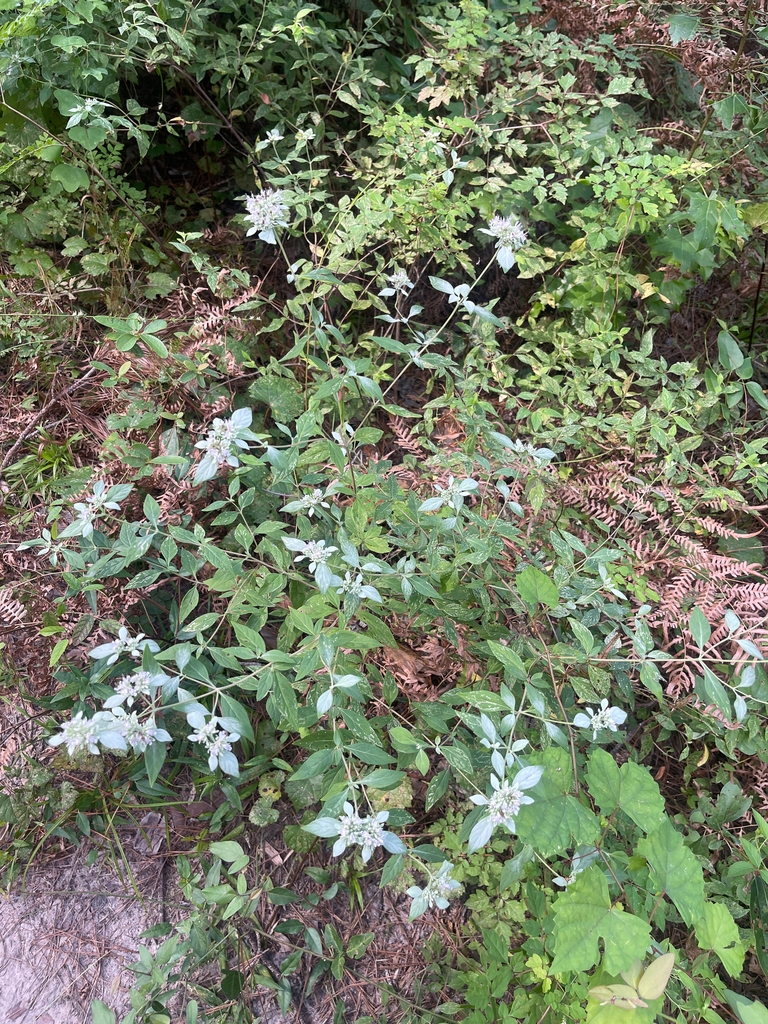
Whiteleaf mountain mint is a flowering herbaceous perennial in the mint family (Lamiaceae) native to the central United States plus Virginia and Florida. It can be found growing in low open woods, along streams, savannas, thickets and dry rocky hillsides. The genus name is based on Greek words for dense (pyknos) and flower (anthos) in reference to its flower clusters. The specific epithet is from a Latin word (albescentem) for “becoming white” in reference to the uppermost leaves and bracts.
Whiteleaf mountain mint is clump-forming, or short rhizomatous, and so does not spread and take over like some species can. It can be grown in full sun to partial shade in average moist well-drained soils. It will grow 2 to 4 feet tall and 2 feet wide.
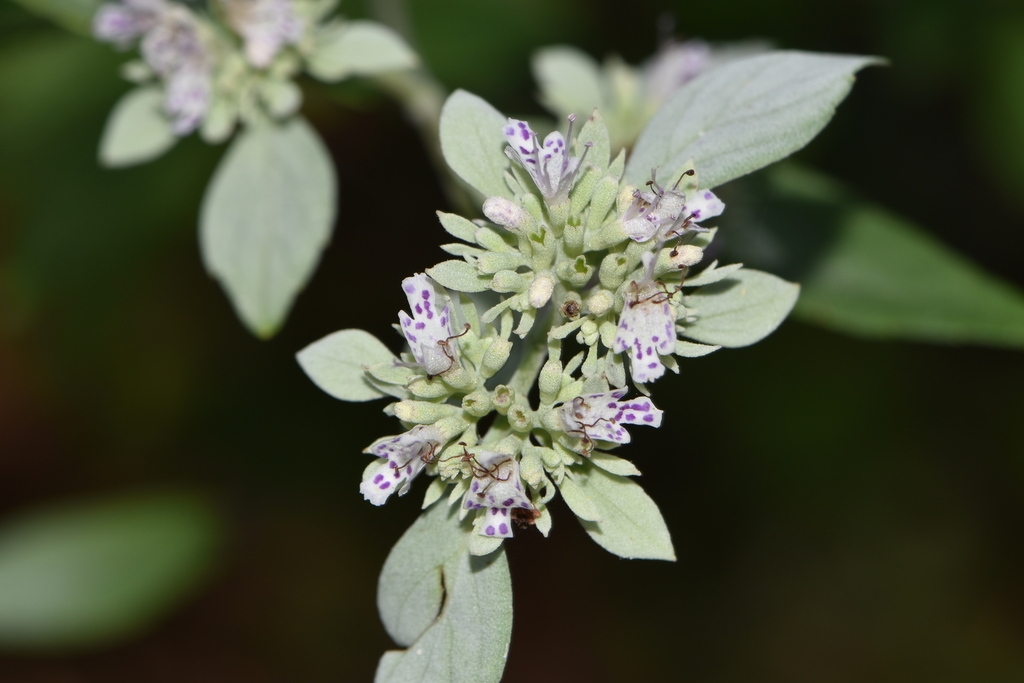
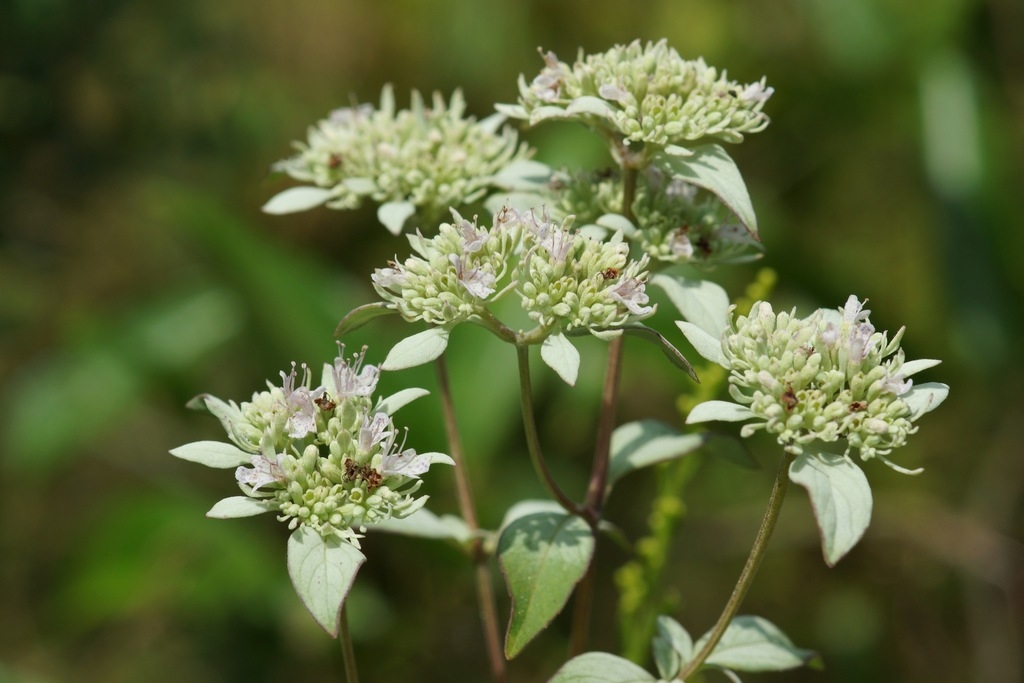
Clusters of small white to light pink tubular flowers surrounded by a mass of velvety silvery-white, bract-like leaves appear from summer into fall. The appearance is somewhat gangly when not in bloom. The leaves have a minty sage-like fragrance when crushed.
Use in naturalized areas, along ponds or streams, in open woodlands and pollinator gardens.
Insects, Diseases, and Other Problems: No significant problems
- See this plant in the following landscape :
- Cultivars / Varieties:
-
- 'Malcolm Vidrine'
3x 3 foot clumps with tiny mauve flowers and strong minty fragrance
- 'Malcolm Vidrine'
- 'Malcolm Vidrine'
- Tags:


- Cultivars / Varieties:
-
- 'Malcolm Vidrine'
3x 3 foot clumps with tiny mauve flowers and strong minty fragrance
- 'Malcolm Vidrine'
- 'Malcolm Vidrine'
- Tags:
-
-
Attributes:
- Genus:
- Pycnanthemum
- Species:
- albescens
- Family:
- Lamiaceae
- Country Or Region Of Origin:
- Central United States plus VA and FL
- Distribution:
- Alabama, Arkansas, Florida, Illinois, Kansas, Kentucky, Louisiana, Mississippi, Missouri, Oklahoma, Tennessee, Texas, Virginia
- Wildlife Value:
- Flowers are very attractive to bees
- Edibility:
- Leaves can be used to make tea. They can also be used in place of sage.
-
-
Whole Plant Traits:
- Habit/Form:
- Clumping
- Growth Rate:
- Medium
- Maintenance:
- Low
- Texture:
- Medium
-
-
Cultural Conditions:
- Light:
- Full sun (6 or more hours of direct sunlight a day)
- Partial Shade (Direct sunlight only part of the day, 2-6 hours)
- Soil Texture:
- Clay
- Loam (Silt)
- Sand
- Soil pH:
- Neutral (6.0-8.0)
- Soil Drainage:
- Good Drainage
- Moist
- Occasionally Dry
- Available Space To Plant:
- 12 inches-3 feet
- USDA Plant Hardiness Zone:
- 7a, 7b, 8a, 8b, 9a, 9b
-
-
Fruit:
- Fruit Color:
- Brown/Copper
- Fruit Length:
- < 1 inch
- Fruit Width:
- < 1 inch
- Fruit Description:
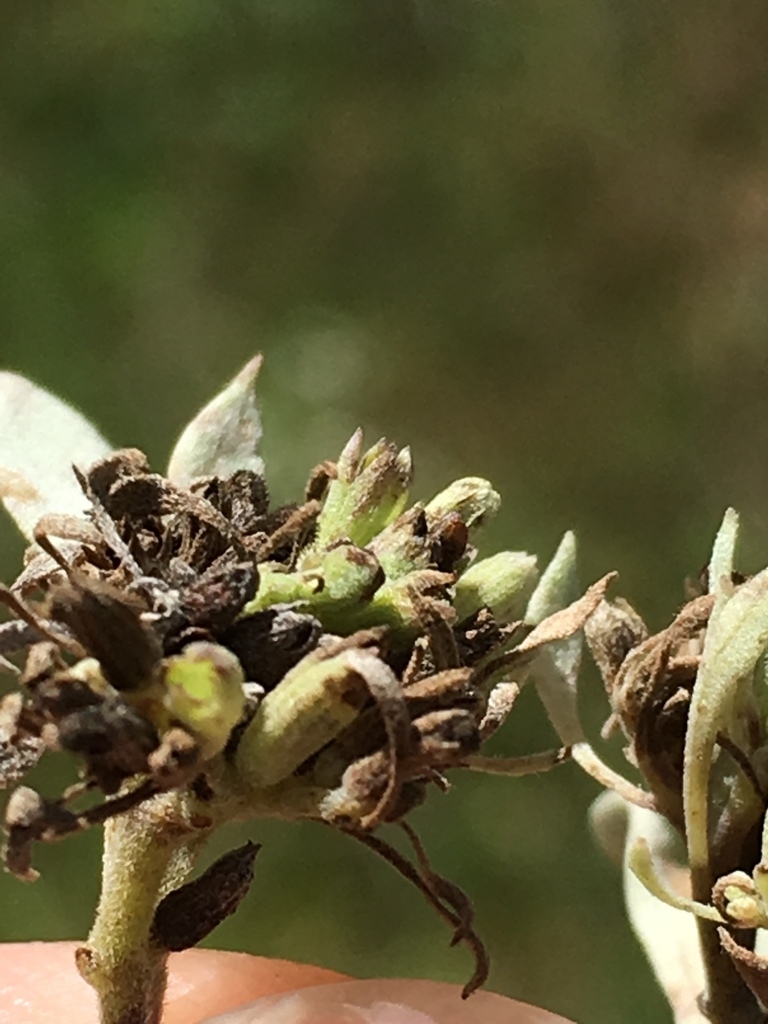
- Small oval brown nutlets form with hairs toward the tips
-
-
Flowers:
- Flower Color:
- Pink
- Purple/Lavender
- White
- Flower Value To Gardener:
- Long-lasting
- Showy
- Flower Bloom Time:
- Fall
- Summer
- Flower Shape:
- Tubular
- Flower Petals:
- Bracts
- Flower Size:
- < 1 inch
- Flower Description:
- Clusters of small white to light pink tubular flowers with purple spots, encircled by a mass of velvety silvery-white, bract-like leaves appear in summer into fall
-
-
Leaves:
- Leaf Color:
- Green
- White
- Leaf Type:
- Simple
- Leaf Arrangement:
- Alternate
- Leaf Shape:
- Elliptical
- Lanceolate
- Ovate
- Leaf Margin:
- Serrate
- Hairs Present:
- Yes
- Leaf Length:
- 1-3 inches
- Leaf Width:
- < 1 inch
- Leaf Description:
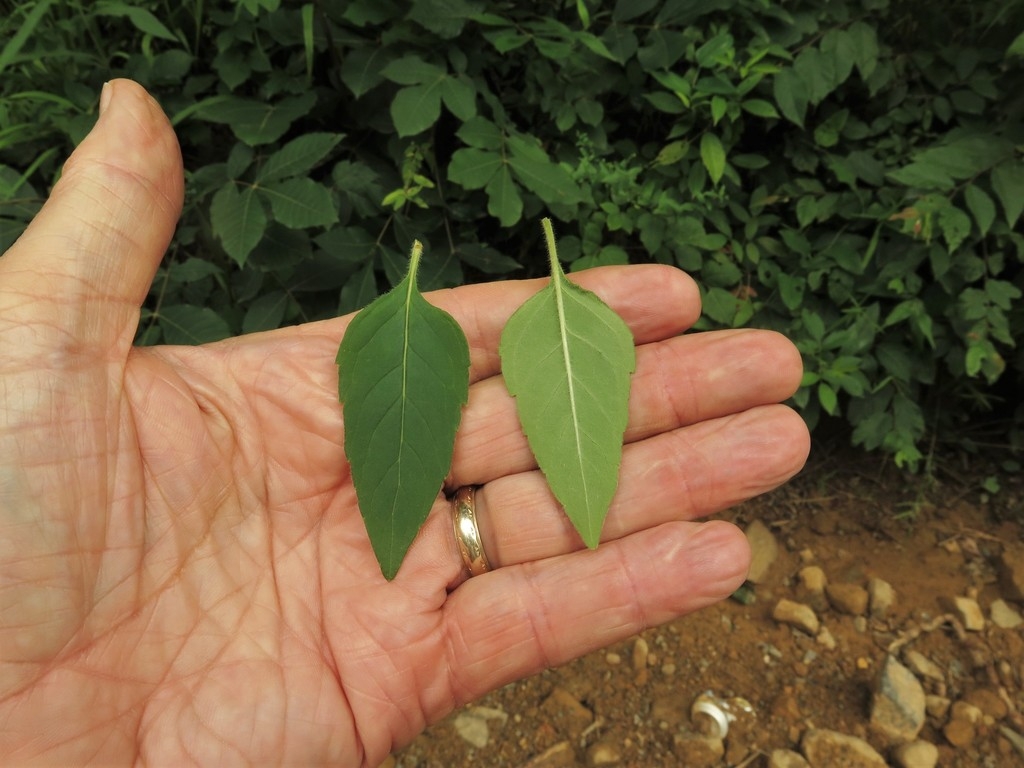
- Leaves are 1.5 inches long and 1/2 inch wide with shallow teeth along the upper 1/2 of the margins. The upper leaves and bracts are conspicuously whitened with a dense but thin coating of grayish-white hair.
-
-
Stem:
- Stem Color:
- Brown/Copper
- Green
- Stem Is Aromatic:
- No
- Stem Cross Section:
- Square
- Stem Form:
- Straight
- Stem Surface:
- Hairy (pubescent)
- Stem Description:
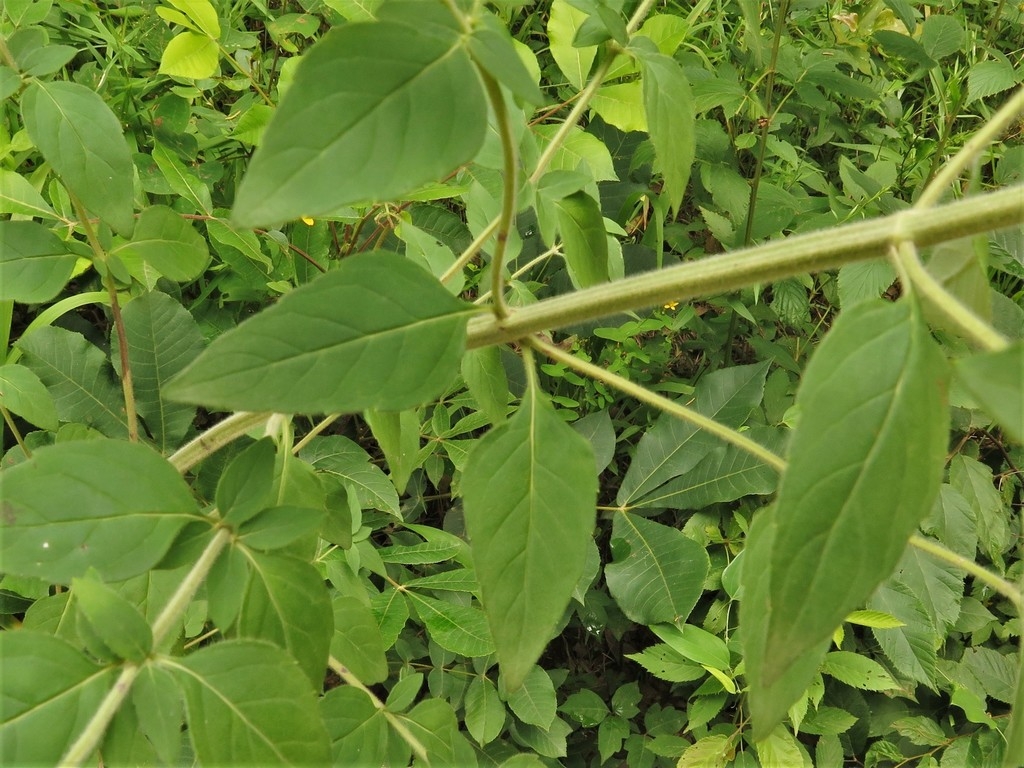
- Four-angled hairy stems are ascending to erect and hollow.
-
-
Landscape:
- Landscape Location:
- Meadow
- Naturalized Area
- Pond
- Landscape Theme:
- Butterfly Garden
- Cottage Garden
- Pollinator Garden
- Design Feature:
- Border
- Attracts:
- Bees
- Butterflies
- Resistance To Challenges:
- Deer
- Heat
- Humidity



