



Lobelia elongata
Common Name(s):
Previously known as:
- Lobelia glandulosa
- Phonetic Spelling
- loh-BEE-lee-ah ee-lon-GAH-tah
- Description
-
Lomgleaf lobelia is a southeastern native wildflower in the bell flower family (Campanulaceae) and can be found in the NC coastal plain along moving water, such as rivers and streams, floodplain forests, marshes, tidal marshes, bogs and pine savannas.
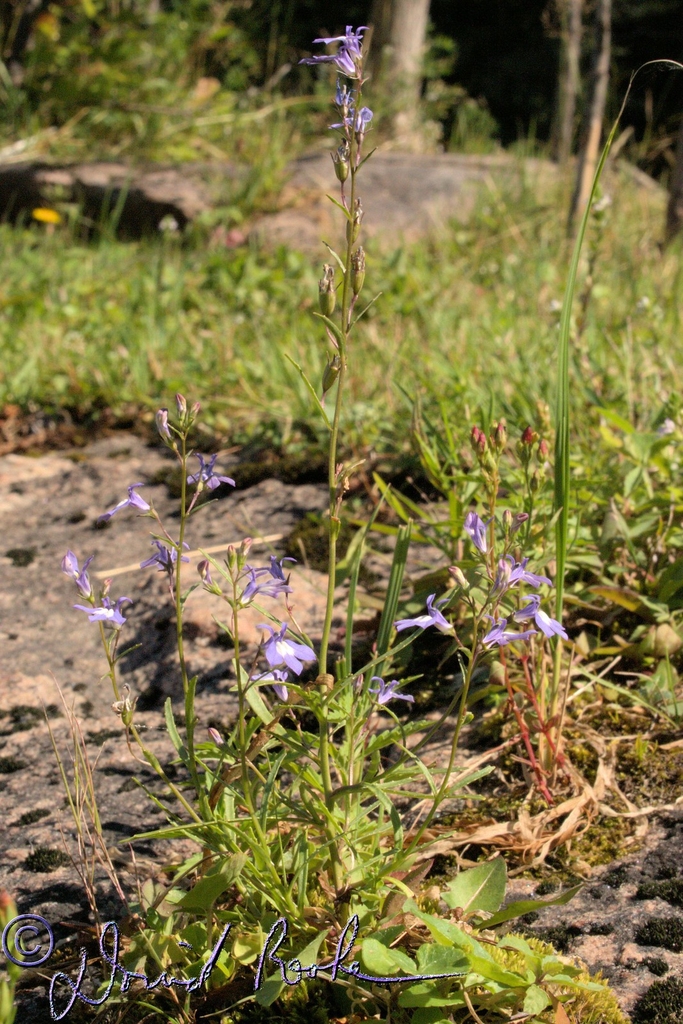
Longleaf lobelia grows up to 4 feet tall and 2 feet wide and is best planted in partial shade in moist to wet, fertile soils. it will spread by offsets.
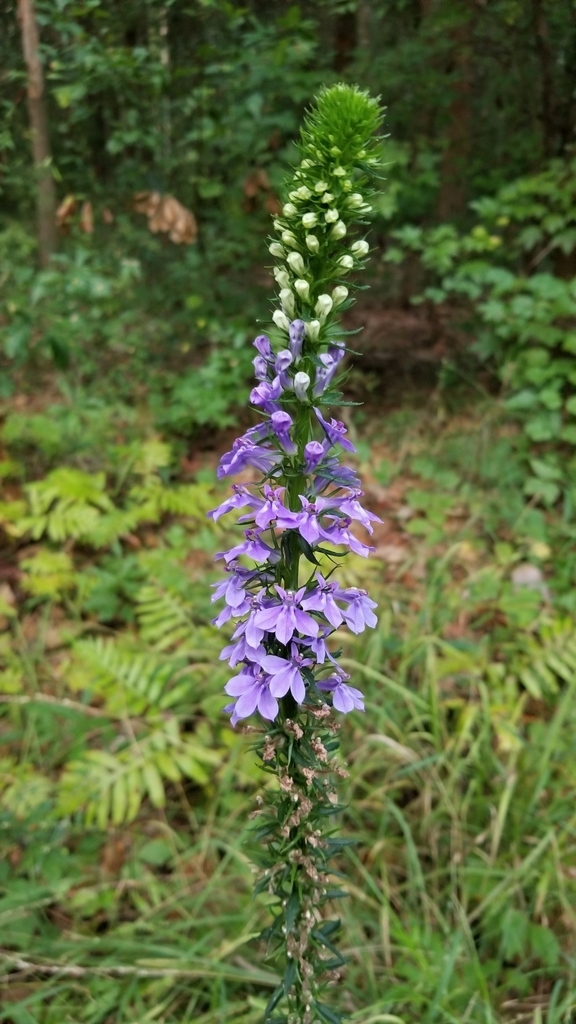
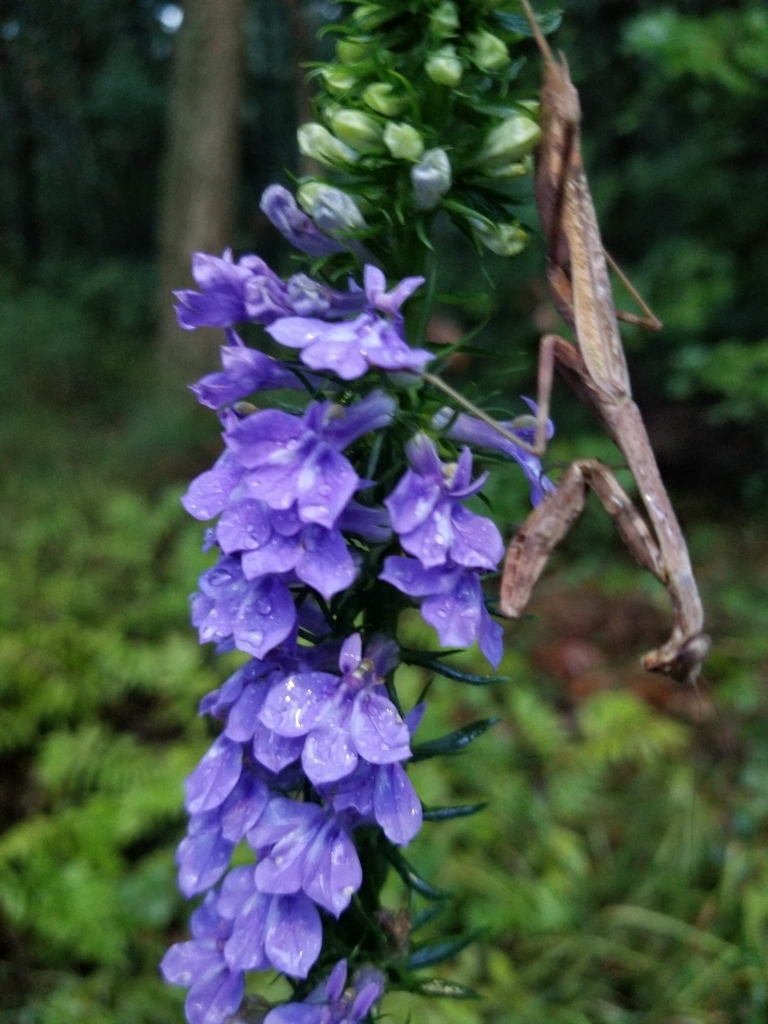
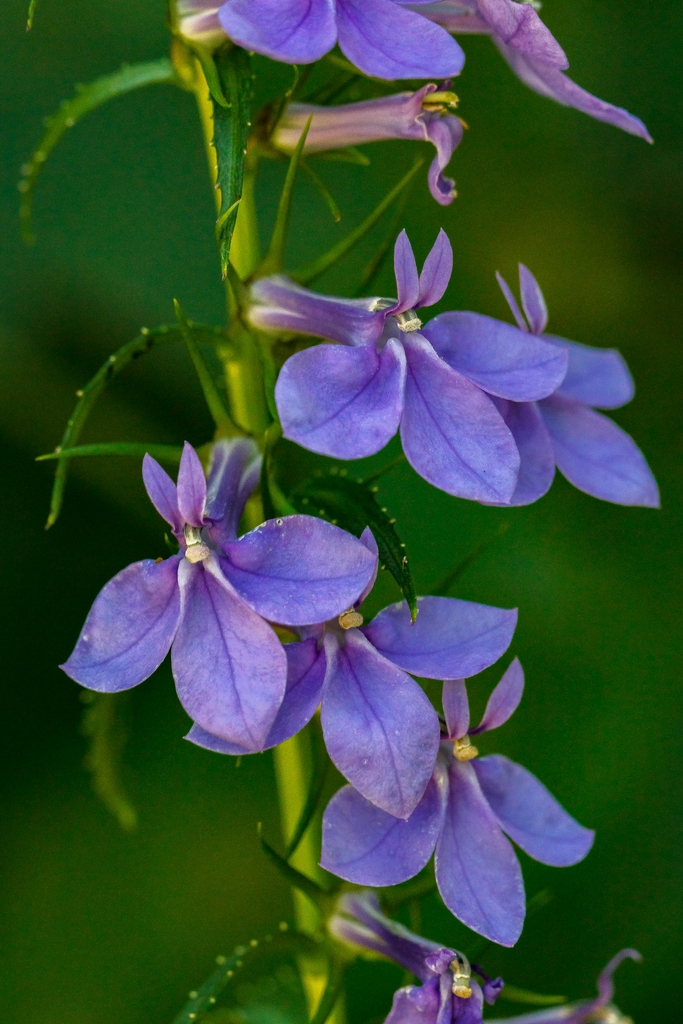
From summer to fall, 10-40 blue to violet flowers per stem appear on terminal spikes that attract a variety of pollinators. The leaves are long and narrow. Leaving the stems help support stem-nesting bees. See this NC Extension article for more information.
Use longleaf lobelia in a pollinator, native, rain or water garden. garden. Often used in wetlands to control erosion and for stream restoration and wetland mitigation.
Insects, Diseases, and Other Plant Problems: No significant problems. Snails and slugs are sometimes found among the foliage.
- See this plant in the following landscape :
- Cultivars / Varieties:
-
- Tags:


- Cultivars / Varieties:
-
- Tags:
-
-
Attributes:
- Genus:
- Lobelia
- Species:
- elongata
- Family:
- Campanulaceae
- Uses (Ethnobotany):
- A beautiful addition to your garden.
- Life Cycle:
- Perennial
- Country Or Region Of Origin:
- Native to South Atlantic US
- Distribution:
- AL, DE, GA, LA, MD, MS, NC, SC, VA
- Wildlife Value:
- Hummingbirds and butterflies are attracted to the flowers. Songbirds eat the seeds during fall and winter.
- Play Value:
- Attractive Flowers
- Attracts Pollinators
- Wildlife Cover/Habitat
- Wildlife Food Source
-
-
Whole Plant Traits:
- Plant Type:
- Herbaceous Perennial
- Native Plant
- Habit/Form:
- Erect
- Growth Rate:
- Medium
- Texture:
- Medium
-
-
Cultural Conditions:
- Light:
- Partial Shade (Direct sunlight only part of the day, 2-6 hours)
- Soil Texture:
- High Organic Matter
- Soil Drainage:
- Frequent Standing Water
- Moist
- Occasionally Wet
- NC Region:
- Coastal
- Piedmont
- USDA Plant Hardiness Zone:
- 4a, 4b, 5a, 5b, 6a, 6b, 7a, 7b, 8a, 8b
-
-
Fruit:
- Fruit Color:
- Brown/Copper
- Display/Harvest Time:
- Fall
- Summer
- Fruit Type:
- Capsule
- Fruit Description:
- Rounded capsule
-
-
Flowers:
- Flower Color:
- Blue
- Purple/Lavender
- Flower Inflorescence:
- Raceme
- Flower Value To Gardener:
- Showy
- Flower Bloom Time:
- Fall
- Summer
- Flower Shape:
- Tubular
- Flower Size:
- < 1 inch
- Flower Description:
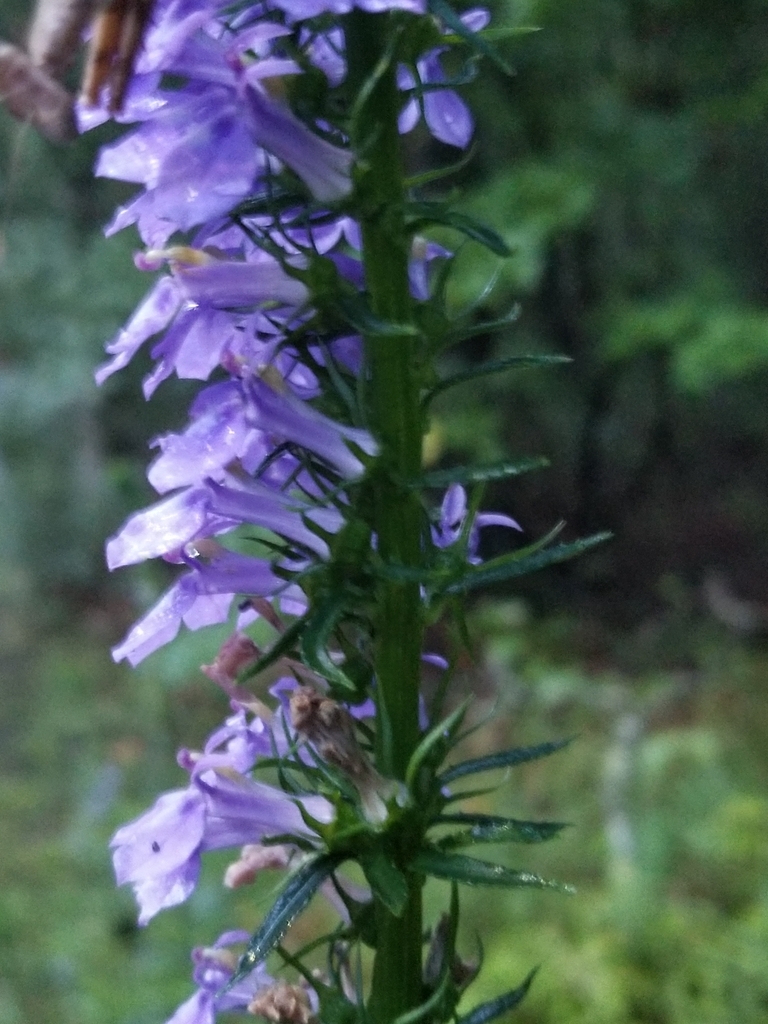
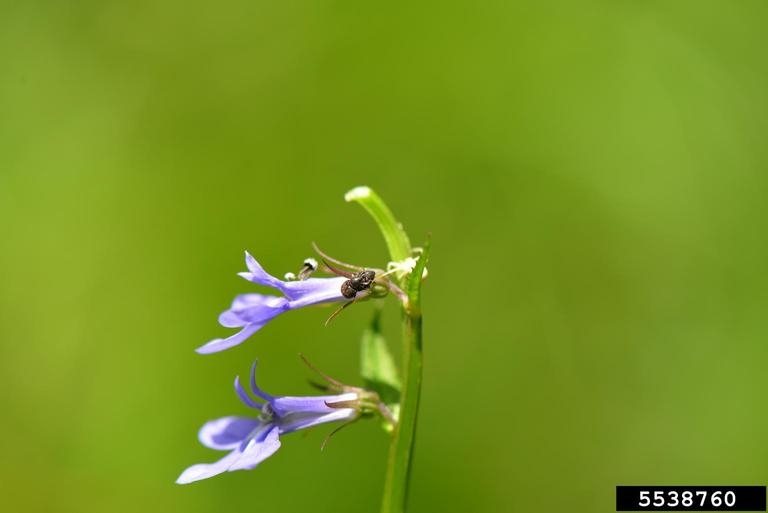
- The flowers are symmetrical, with a 5-lobed calyx and a 2-lipped 5-lobed corolla. They grow on a narrow, terminal spike and are mostly on one side.
-
-
Leaves:
- Leaf Color:
- Green
- Leaf Feel:
- Smooth
- Leaf Type:
- Simple
- Leaf Arrangement:
- Alternate
- Leaf Shape:
- Lanceolate
- Ovate
- Leaf Margin:
- Serrate
- Hairs Present:
- No
- Leaf Length:
- 3-6 inches
- Leaf Width:
- < 1 inch
- Leaf Description:
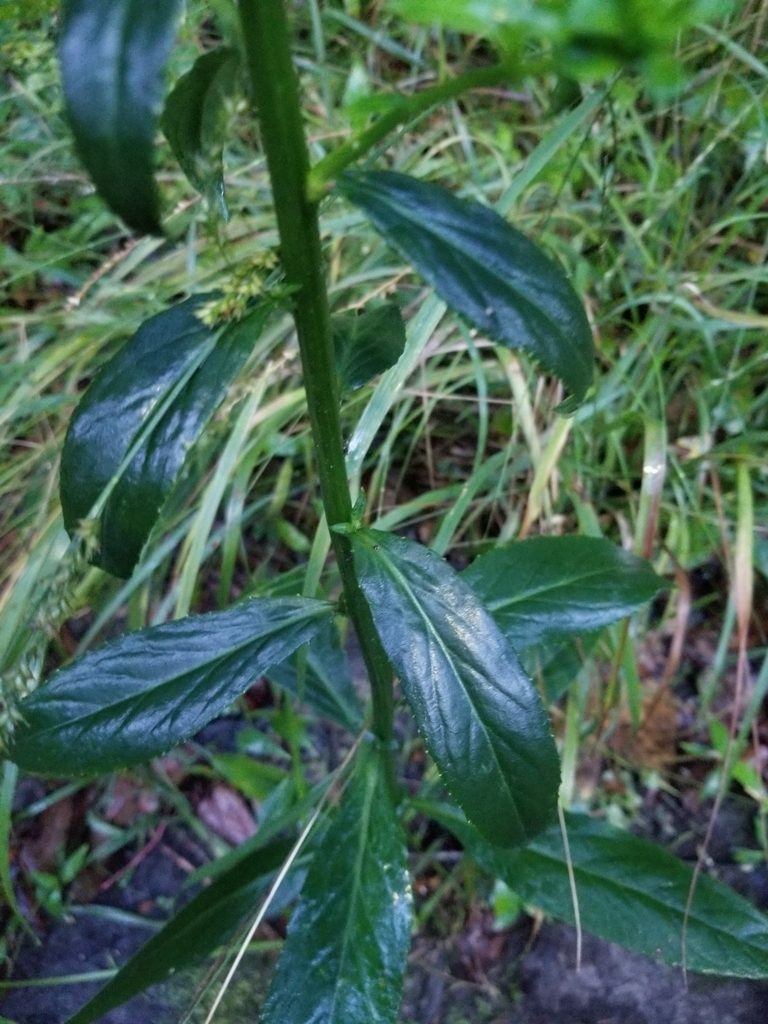
- Lance-shaped to lance-oval green leaves are up to 4 inches long and narrow.
-
-
Stem:
- Stem Color:
- Green
- Stem Is Aromatic:
- No
- Stem Form:
- Straight
- Stem Surface:
- Smooth (glabrous)
- Stem Description:
- The stems are typically unbranched and smooth.
-
-
Landscape:
- Landscape Location:
- Coastal
- Naturalized Area
- Woodland
- Landscape Theme:
- Native Garden
- Pollinator Garden
- Rain Garden
- Shade Garden
- Water Garden
- Design Feature:
- Small groups
- Specimen
- Attracts:
- Butterflies
- Hummingbirds
- Pollinators
- Songbirds
- Resistance To Challenges:
- Wet Soil



