


Gentiana autumnalis
Common Name(s):
Previously known as:
- Dasystephana porphyrio
- Gentiana porphyrio
- Phonetic Spelling
- jen-shee-AN-uh aw-tum-NAH-lis
- Description
-
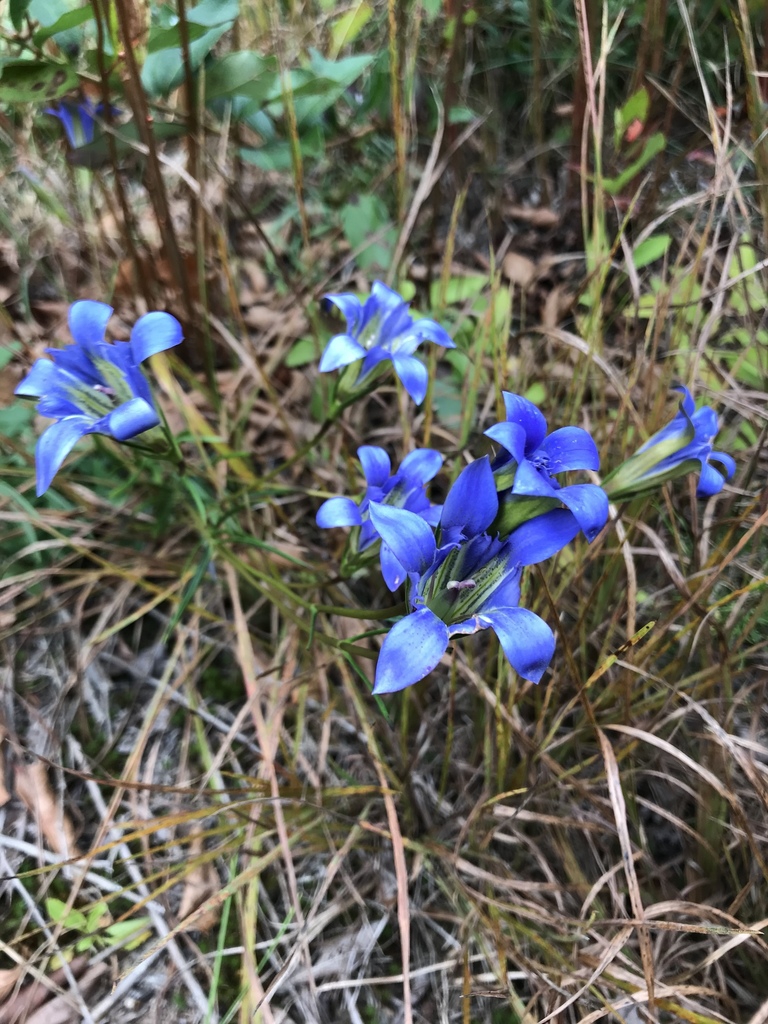
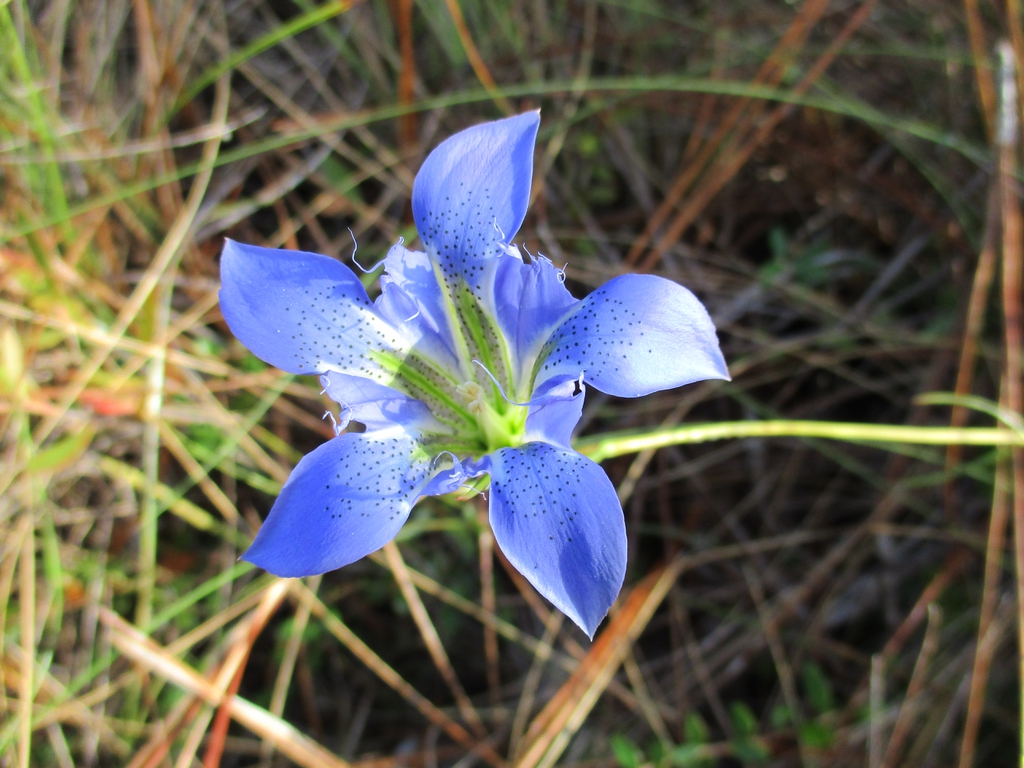
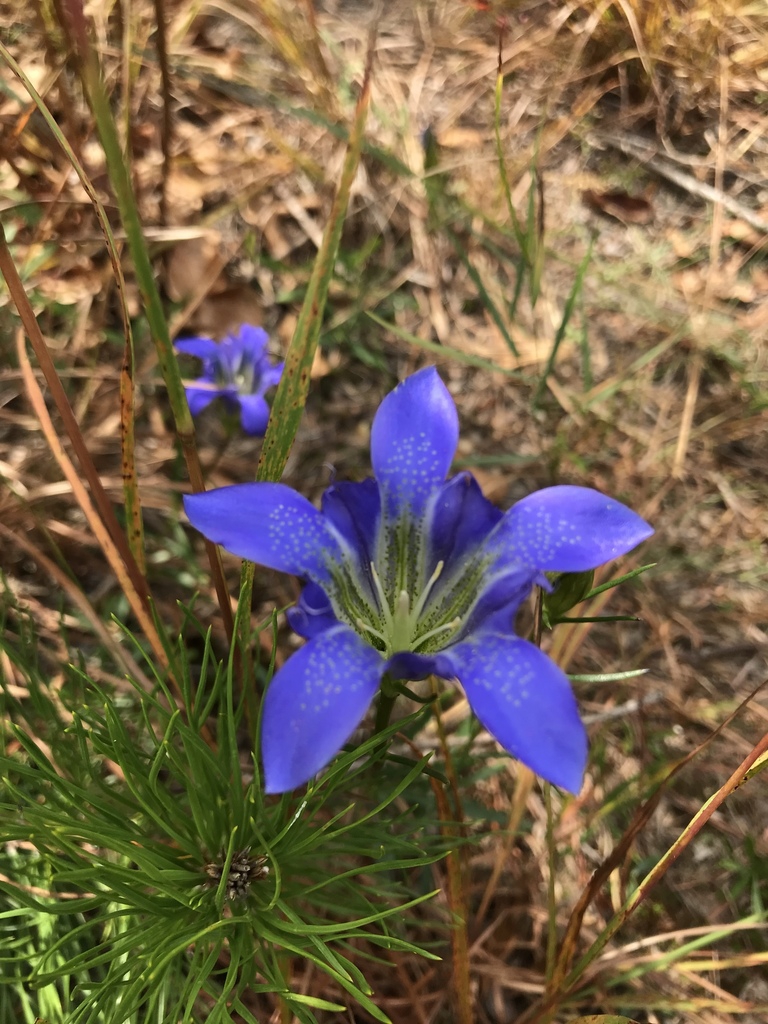
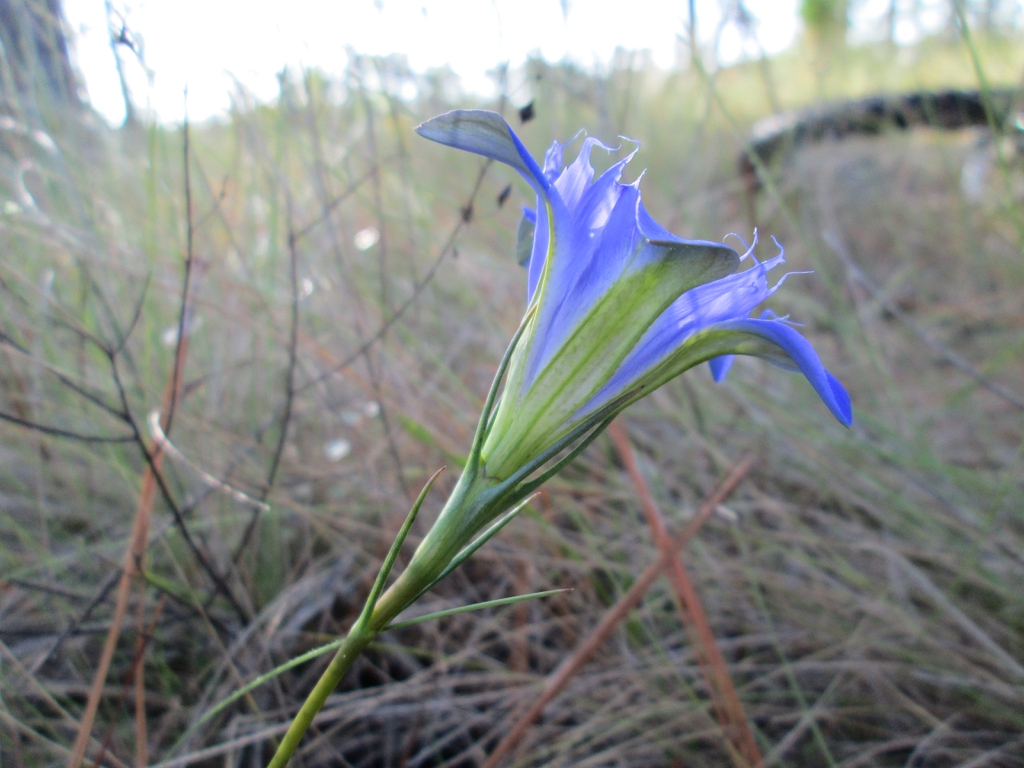
Pinebarren gentian is a native herbaceous perennial wildflower found in New Jersey, North Carolina, South Carolina, Virginia, and Northwest Mexico. It is typically found in the coastal plains and sandhills of longleaf pine savannas, pine flatwoods, sandhills, and pine barrens. It is most often found in the southern coastal plains and the sandhills of North Carolina. It grows up to 1.5 feet tall, has a very slender stem, and has linear, glossy, dark green, opposite leaves. It has deep blue, funnel-shaped flowers with 5 lobes. The flower measures about 2 inches long and equally as wide. Blooms appear in late September through December. This plant is a member of the gentian family (Gentianaceae). The genus name, Gentiana, is named in honor of King Gentius of Illyria, who is thought to have discovered the medicinal value of Gentian root. The specific epithet, autumnalis, is Latin, meaning "of autumn," and refers to its blooming period.
Grown in full sun to partial shade and thrives in moist to dry, well-drained, acidic, sandy soils. Attracts bees and hummingbirds. Propagated by seeds and division.
Pinebarren gentian is a very inconspicuous wildflower, and it is often missed in the wild, except when flowering. Sitings of this plant are declining. Previously, it was found in 26 counties in North Carolina; currently, it is in only 17 and is listed as vulnerable. It is found in 2 counties in Virginia and 3 in South Carolina, and it is listed as critically imperiled or imperiled, respectively.
This is a difficult plant to grow in home gardens, and is not a good plant for novice gardeners.
Insects, Diseases, and Other Plant Problems: Monitor for spider mites and mealybugs. Fungal diseases such as powdery mildew and rust can occur.
- See this plant in the following landscape :
- Cultivars / Varieties:
-
- Tags:


- Cultivars / Varieties:
-
- Tags:
-
-
Attributes:
- Genus:
- Gentiana
- Species:
- autumnalis
- Family:
- Gentianaceae
- Life Cycle:
- Perennial
- Recommended Propagation Strategy:
- Division
- Seed
- Country Or Region Of Origin:
- New Jersey to South Carolina, and Northwest Mexico
- Distribution:
- Native: New Jersey, North Carolina, South Carolina, Virginia, and Northwest Mexico. Extinct in Delaware
- Wildlife Value:
- This plant attracts hummingbirds, bees, and other pollinators.
- Play Value:
- Attractive Flowers
- Attracts Pollinators
- Dimensions:
- Height: 0 ft. 8 in. - 1 ft. 6 in.
- Width: 1 ft. 0 in. - 2 ft. 0 in.
-
-
Whole Plant Traits:
- Plant Type:
- Herbaceous Perennial
- Native Plant
- Habit/Form:
- Erect
- Growth Rate:
- Medium
- Maintenance:
- High
- Texture:
- Fine
-
-
Cultural Conditions:
- Light:
- Full sun (6 or more hours of direct sunlight a day)
- Partial Shade (Direct sunlight only part of the day, 2-6 hours)
- Soil Texture:
- Sand
- Soil pH:
- Acid (<6.0)
- Soil Drainage:
- Good Drainage
- Moist
- Available Space To Plant:
- 12 inches-3 feet
- NC Region:
- Coastal
- USDA Plant Hardiness Zone:
- 6a, 6b, 7a, 7b, 8a, 8b
-
-
Fruit:
- Display/Harvest Time:
- Fall
- Winter
- Fruit Type:
- Capsule
- Fruit Description:
- The fruit is an elliptical-shaped capsule and is displayed from October to February.
-
-
Flowers:
- Flower Color:
- Blue
- Flower Inflorescence:
- Solitary
- Flower Value To Gardener:
- Showy
- Flower Bloom Time:
- Fall
- Winter
- Flower Shape:
- Funnel
- Flower Petals:
- 4-5 petals/rays
- Flower Size:
- 1-3 inches
- Flower Description:
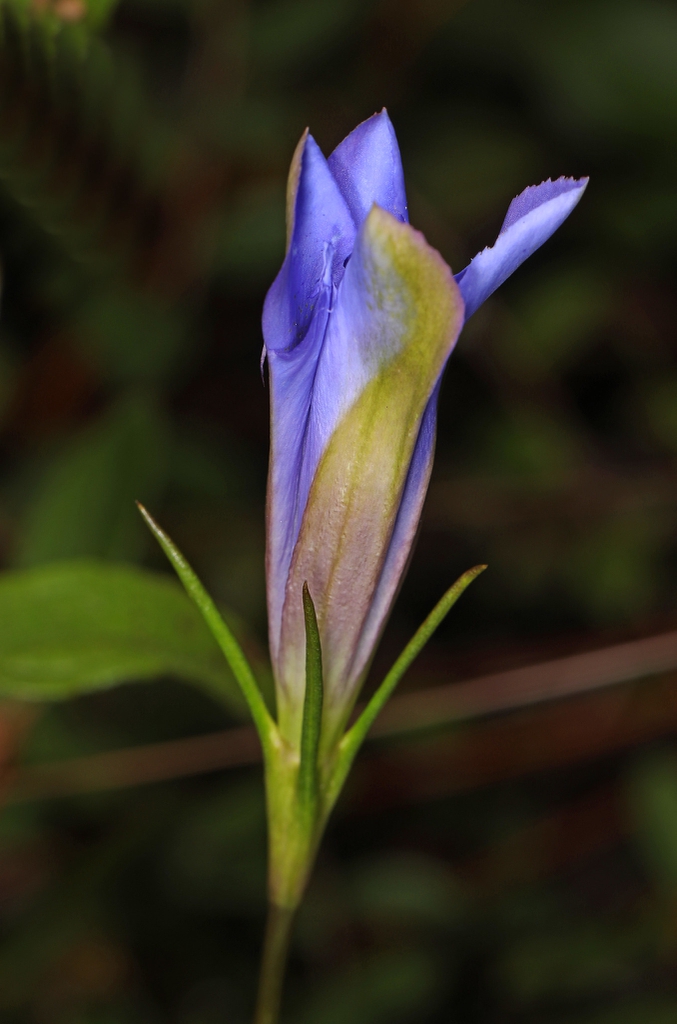
- The flowers are typically solitary; it is rare to see 2 or 3 flowers. Each flower is deep blue and funnel-shaped, and the corolla has 4 to 5 spreading lobes with pleats. The lobes are fused for half their length before spreading open, and the interior of the flower is bronze-green. Each flower measures up to 2 inches long. Blooming occurs from September to December.
-
-
Leaves:
- Leaf Color:
- Green
- Leaf Feel:
- Glossy
- Leaf Type:
- Simple
- Leaf Arrangement:
- Opposite
- Leaf Shape:
- Linear
- Oblong
- Leaf Margin:
- Entire
- Hairs Present:
- No
- Leaf Length:
- 1-3 inches
- Leaf Width:
- < 1 inch
- Leaf Description:
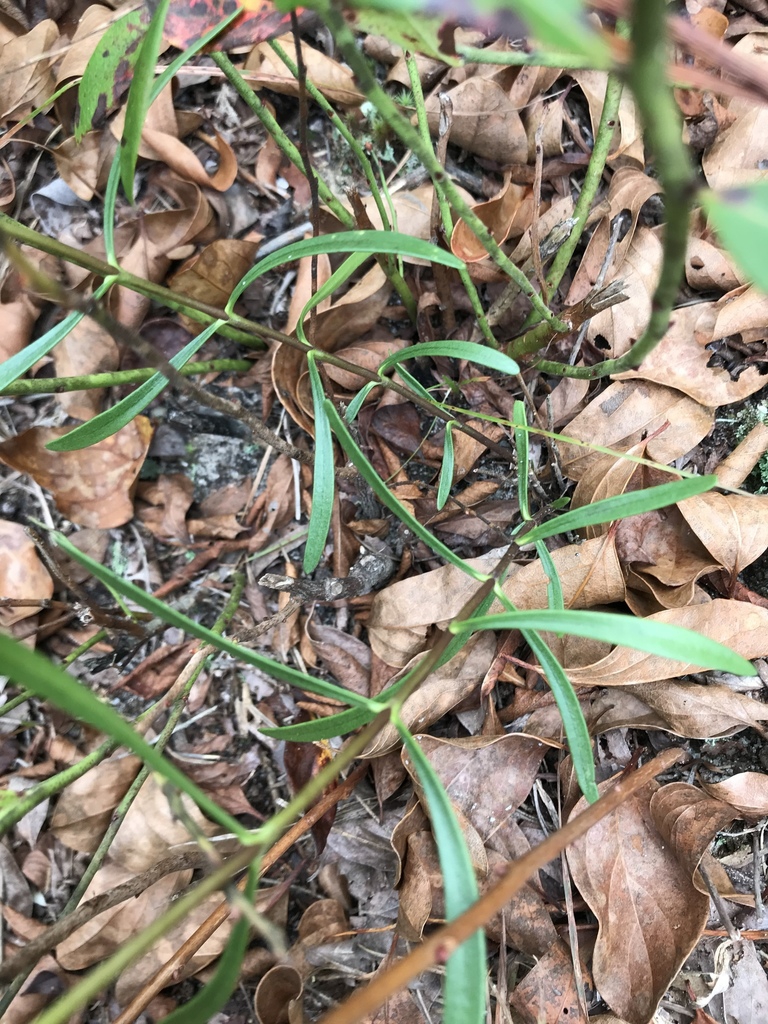
- The leaves are linear or narrowly oblong, glossy, smooth, deep green, measuring 1 to 3 inches long and less than 1 inch wide with entire margins. There are usually 7 to 15 pairs of leaves.
-
-
Stem:
- Stem Is Aromatic:
- No
- Stem Surface:
- Smooth (glabrous)
- Stem Description:
- The smooth stems that are rarely branched.
-
-
Landscape:
- Landscape Location:
- Coastal
- Container
- Pond
- Landscape Theme:
- Native Garden
- Pollinator Garden
- Rain Garden
- Attracts:
- Bees
- Hummingbirds
- Pollinators
- Resistance To Challenges:
- Wet Soil