



Elymus hystrix
Common Name(s):
Previously known as:
- Hystrix patula
- Phonetic Spelling
- EL-ih-mus HIS-triks
- Description
-
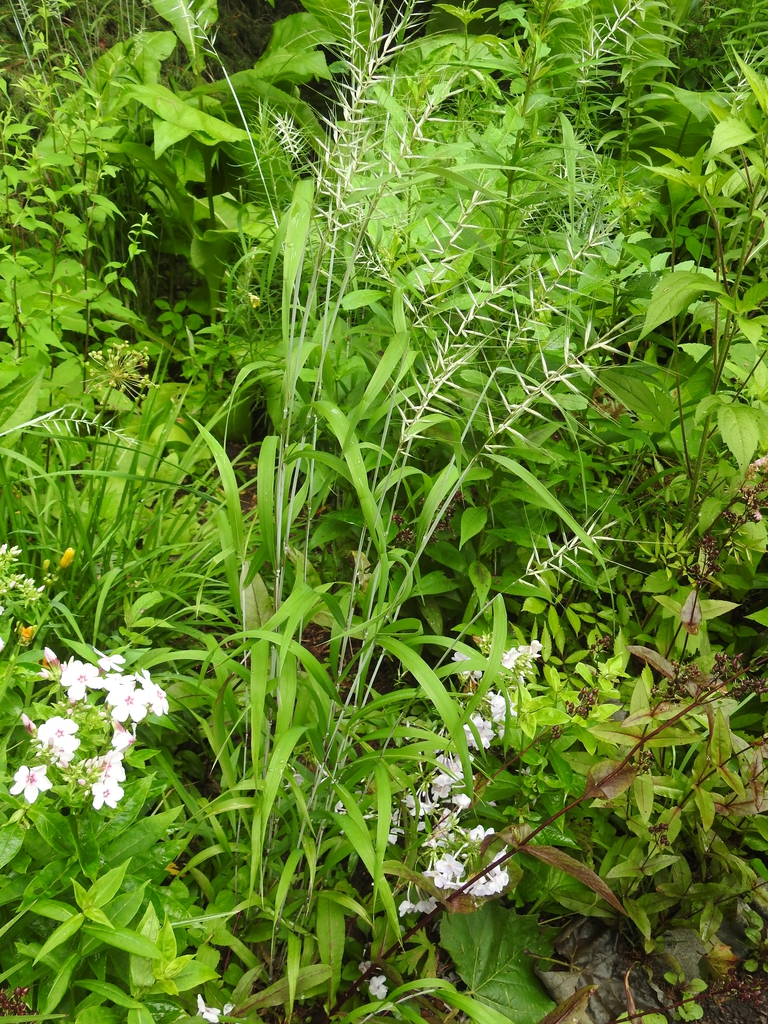
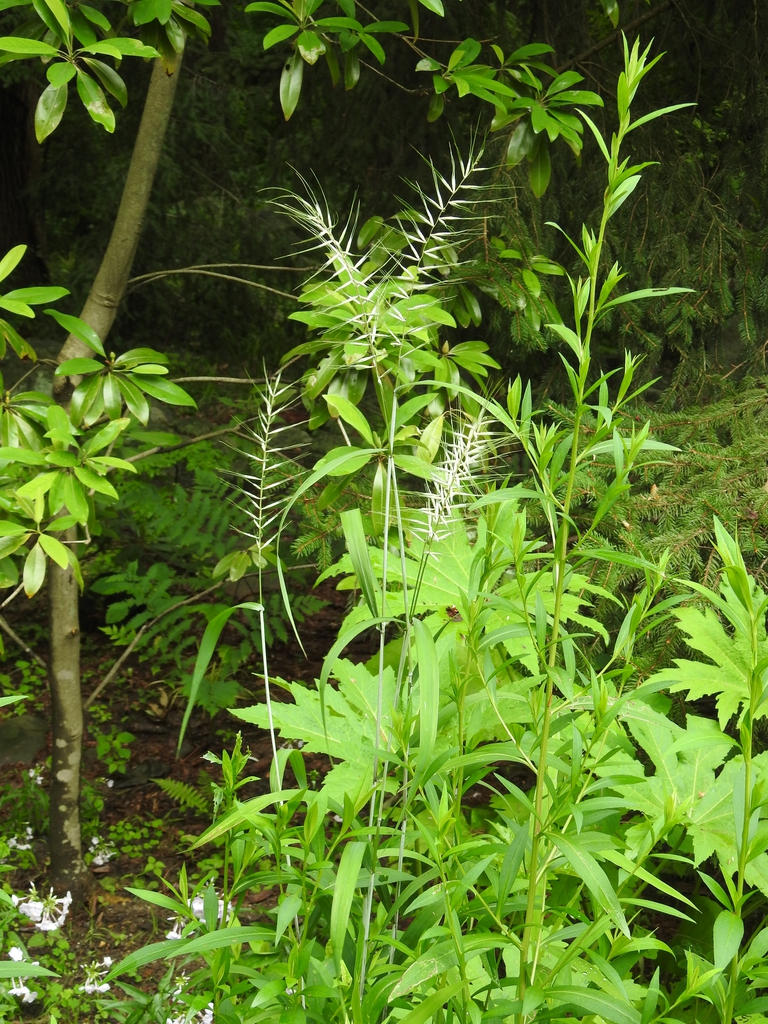
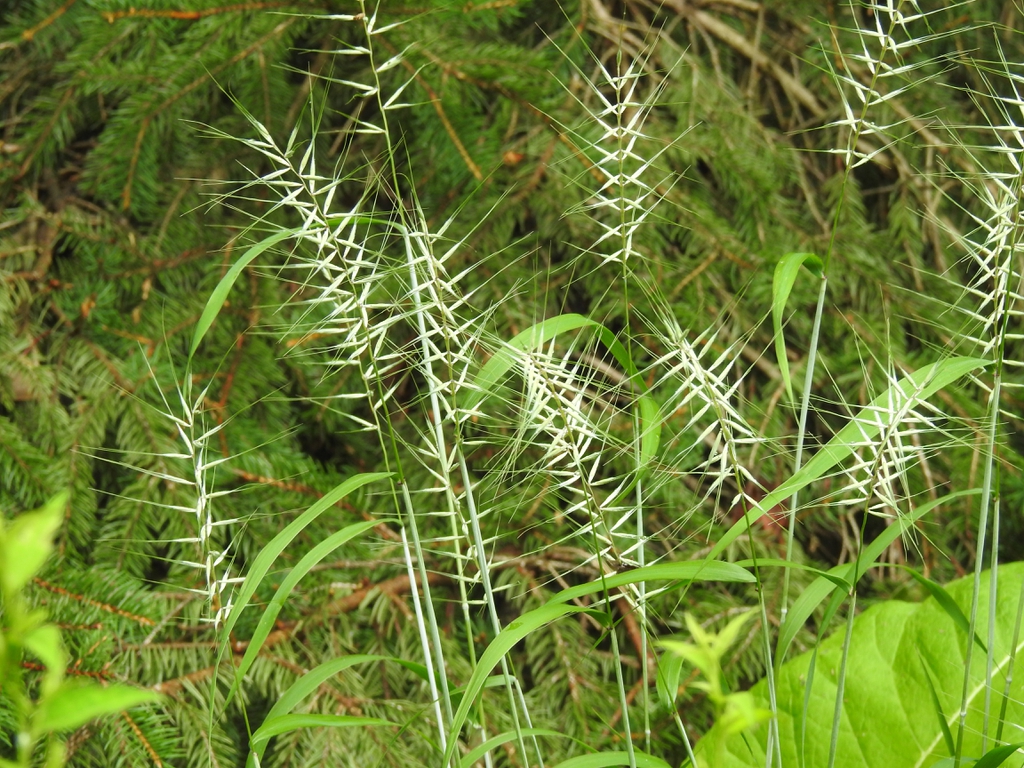
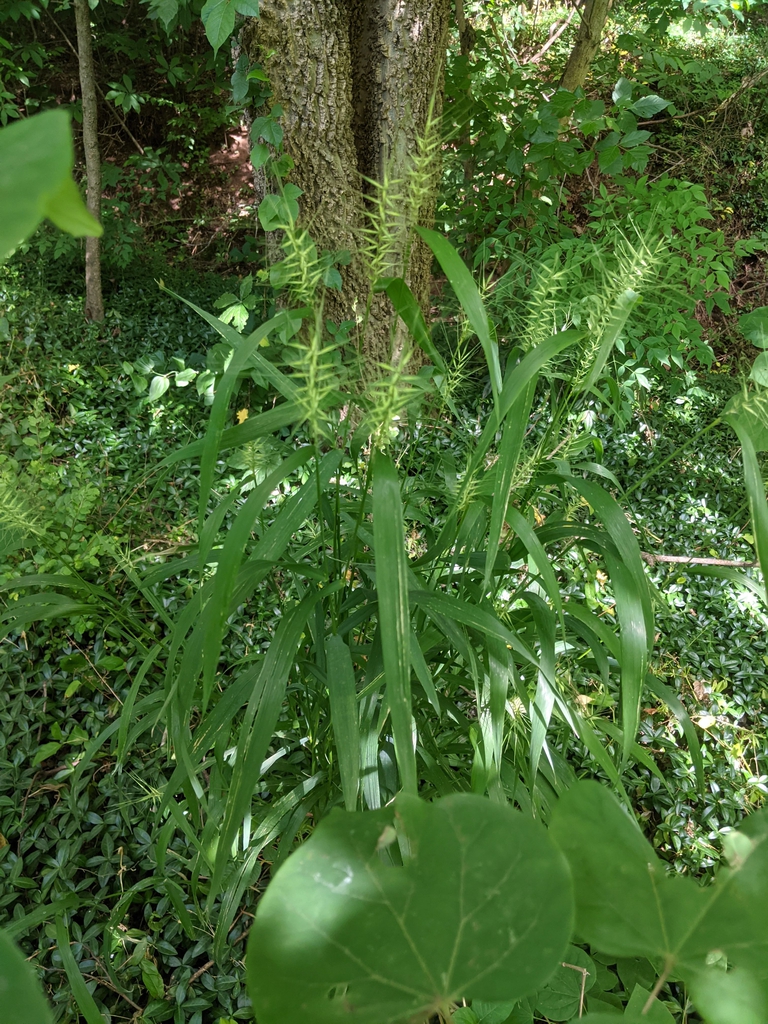
Bottlebrush grass is a native perennial, ornamental, cool-season grass of the Northern, Central, and Eastern United States that grows 2.5 to 3 feet tall, and is usually found in woodland areas. It has a fibrous root system and forms erect clumps of grass with unbranched culms. The leaves are linear, grayish-green to dark green, simple, and alternate, with a rough texture. Its airy, spiky flowers form mid-June and are greenish and bristly, resembling a bottlebrush, and rise above the leaves. As they mature, they become brown and last into October. It is a member of the grass family (Poaceae). The genus name Elymus is derived from the Greek word elymos, or the name used for a type of grain. The specific epithet hystrix, meaning "hedgehog." This is derived from the appearance of this grass's seedheads, resembling the quills of a hedgehog.
Prefers partial shade to light shade and adapts to a variety of soil conditions, including moist to dry, clay, sandy, or loamy soils. It is drought-tolerant, shade-tolerant, erosion-tolerant, and able to thrive in urban sites. It is low-maintenance and easily propagated by seed. In ideal conditions, it will self-seed and form small colonies, but it is not aggressive. In late winter, it is best practice to cut back the old foliage and seedheads before the new growth occurs.
Attracts butterflies and is a larval host of the Northern Pearly Eye (Enoida anthedon). Birds and the white-footed mouse enjoy eating the seeds, while livestock enjoy the foliage. However, the bristly seedheads can cause mouth injuries to livestock.
This ornamental grass, with its interesting seed heads, adds texture to the garden. It would be a delightful addition to a shaded woodland garden or naturalized site. The bottlebrush grass's long flower stems can be added to floral arrangements for added interest.
Insects, Diseases, and Other Plant Problems: No significant insect or disease concerns. Monitor for aphids and leaf spot. Unfortunately, in some states ( for example, Maine), this grass is vulnerable to urban expansion. ,Drought-tolerant
- See this plant in the following landscape :
- Cultivars / Varieties:
-
- Elymus hystrix var. hystrix (Eastern Bottlebrush Grass)
Upright clusters of light green flowers - Elymus hystrix var. piedmontanus (Piedmont Bottlebrush Grass)
Distribution: Piedmont regions of Virginia to Georgia
- Elymus hystrix var. hystrix (Eastern Bottlebrush Grass)
- Elymus hystrix var. hystrix (Eastern Bottlebrush Grass), Elymus hystrix var. piedmontanus (Piedmont Bottlebrush Grass)
- Tags:


- Cultivars / Varieties:
-
- Elymus hystrix var. hystrix (Eastern Bottlebrush Grass)
Upright clusters of light green flowers - Elymus hystrix var. piedmontanus (Piedmont Bottlebrush Grass)
Distribution: Piedmont regions of Virginia to Georgia
- Elymus hystrix var. hystrix (Eastern Bottlebrush Grass)
- Elymus hystrix var. hystrix (Eastern Bottlebrush Grass), Elymus hystrix var. piedmontanus (Piedmont Bottlebrush Grass)
- Tags:
-
-
Attributes:
- Genus:
- Elymus
- Species:
- hystrix
- Family:
- Poaceae
- Life Cycle:
- Perennial
- Recommended Propagation Strategy:
- Division
- Seed
- Country Or Region Of Origin:
- North, Central and Eastern U.S.A
- Distribution:
- Native: AL, CT, DC, IL, IN, IA, KS, ME, MD, MA, MI, MN, MO, NE, NH, NJ, NY, NC, ND, OH, PA, RI, SD, TN, VT, WV, and WI. Introduced: Austria, Germany, and New Mexico.
- Wildlife Value:
- Seeds attract birds and the white-footed mouse. Larval host plant for the Northern Pearly Eye butterfly..
- Play Value:
- Attractive Flowers
- Easy to Grow
- Wildlife Food Source
- Wildlife Larval Host
- Particularly Resistant To (Insects/Diseases/Other Problems):
- Drought, black walnut, poor soil, erosion, urban conditions, pollution
- Dimensions:
- Height: 2 ft. 6 in. - 3 ft. 0 in.
- Width: 1 ft. 0 in. - 1 ft. 6 in.
-
-
Whole Plant Traits:
- Plant Type:
- Native Plant
- Ornamental Grasses and Sedges
- Habit/Form:
- Clumping
- Erect
- Growth Rate:
- Medium
- Maintenance:
- Low
- Texture:
- Coarse
-
-
Cultural Conditions:
- Light:
- Dappled Sunlight (Shade through upper canopy all day)
- Partial Shade (Direct sunlight only part of the day, 2-6 hours)
- Soil Texture:
- Clay
- Loam (Silt)
- Sand
- Soil pH:
- Neutral (6.0-8.0)
- Soil Drainage:
- Good Drainage
- Moist
- Available Space To Plant:
- Less than 12 inches
- 12 inches-3 feet
- NC Region:
- Coastal
- Mountains
- Piedmont
- USDA Plant Hardiness Zone:
- 5a, 5b, 6a, 6b, 7a, 7b, 8a, 8b, 9a, 9b
-
-
Fruit:
- Display/Harvest Time:
- Summer
- Fruit Type:
- Caryopsis
- Fruit Length:
- < 1 inch
- Fruit Width:
- < 1 inch
- Fruit Description:
- The spiklets turn brown when they mature, and the florets will fall off, leaving a pair of bracts (glumes) remaining. The glumes are dry, leaf-like bracts or husks that protect the seeds, and measure 0.5 inches long. At the base of the floret is a pair of bracts known as a lemma and palea. A fertile lemma is 8 to 11 mm long, and its tip extends into a straight awn (bristle-like appendage) that is up to 1.5 inches long. The sterile lemmas are smaller and have a shorter awn. The paleas resemble the lemmas but do not have awns. Fruit displays from July to September.
-
-
Flowers:
- Flower Color:
- Brown/Copper
- Green
- Flower Inflorescence:
- Raceme
- Spike
- Flower Value To Gardener:
- Good Cut
- Showy
- Flower Bloom Time:
- Fall
- Summer
- Flower Size:
- > 6 inches
- Flower Description:
- The flowerheads form at the end of the aerial stem and are a spike-like raceme. They are initially green and cylinder-like during the summer, measuring 9 to 10 inches long, and resembling a bottlebrush. Each spikelet measures 1 to 2 inches long and has 2 to 4 florets. The fertile florets have pale yellow stamens and a white style. As the flowers mature in late summer, they transition to brown and remain present through the fall.
-
-
Leaves:
- Leaf Color:
- Gray/Silver
- Green
- Leaf Feel:
- Rough
- Leaf Type:
- Simple
- Leaf Arrangement:
- Alternate
- Leaf Shape:
- Linear
- Leaf Margin:
- Undulate
- Hairs Present:
- Yes
- Leaf Length:
- > 6 inches
- Leaf Width:
- < 1 inch
- Leaf Description:
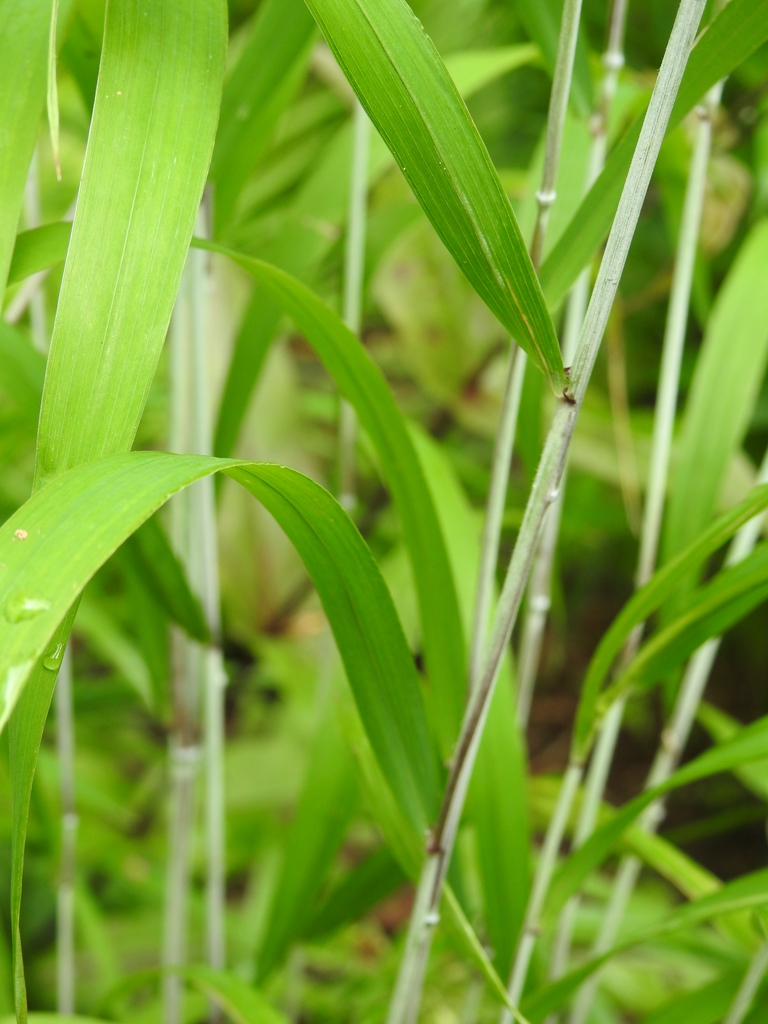
- The leaves grow in tufts, and each blade is grayish-green to dark green, narrow, grass-like, and rough, measuring up to 12 inches long and about 0.5 inches wide. The leaves are pubescent on the upper surface and have stiff hairs or may be smooth underneath.
-
-
Stem:
- Stem Color:
- Green
- Stem Is Aromatic:
- No
- Stem Cross Section:
- Round
- Stem Form:
- Straight
- Stem Surface:
- Smooth (glabrous)
- Stem Description:
- The culm (aerial stem of grass) is green, smooth, unbranched, and circular in cross-section. At the terminal end of the culm, the flower presents as a spike-like raceme.
-
-
Landscape:
- Landscape Location:
- Naturalized Area
- Riparian
- Woodland
- Landscape Theme:
- Garden for the Blind
- Native Garden
- Rain Garden
- Attracts:
- Small Mammals
- Songbirds
- Resistance To Challenges:
- Black Walnut
- Drought
- Dry Soil
- Erosion
- Heavy Shade
- Pollution
- Problems:
- Problem for Horses



