



Chelone obliqua
Common Name(s):
Previously known as:
- Chelone obliqua subsp. typica
- Phonetic Spelling
- kay-LOH-nee oh-BLEEK-wuh
- Description
-
Turtlehead is a clumping native perennial in the plantain family (Plantaginaceae) found in moist forested areas of swamps and bogs in the southeastern and central United States. It is considered rare in NC but can be found in the coastal and mountain areas. The genus name comes from the Greek word chelone, meaning tortoise in reference to the turtlehead shape of the flowers. Specific epithet means lopsided or oblique.
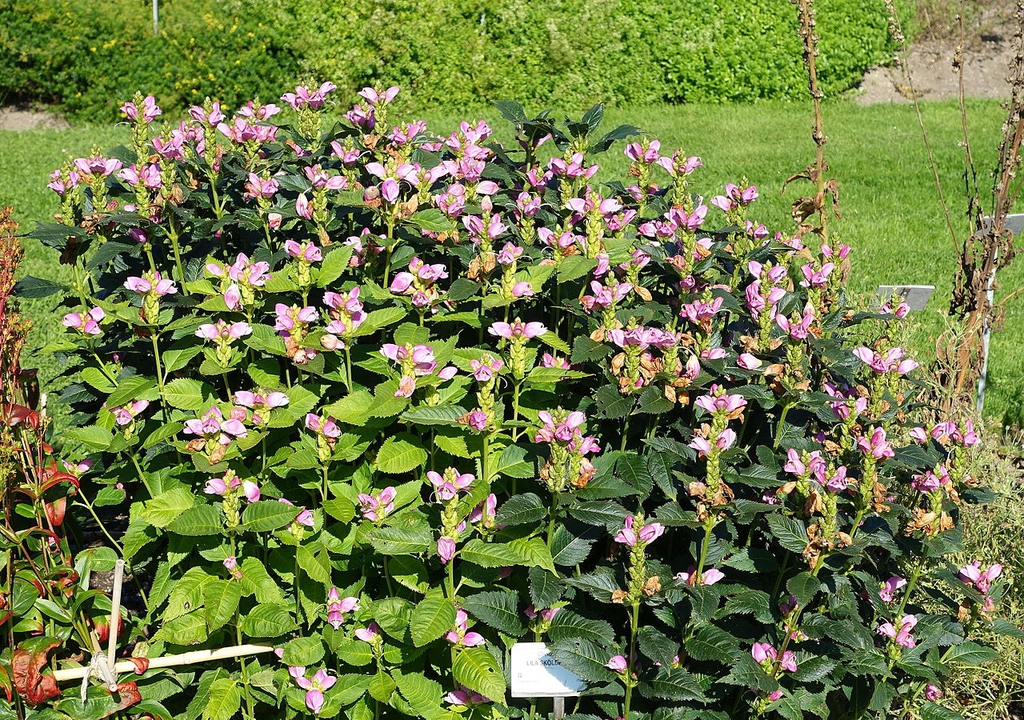
Clump-forming turtlehead grows 2 to 3 feet tall and 1 to 2 feet wide in partial shade to dappled sun, and does best in humus-rich, moist to wet soil. It is adaptable to any fertile, moist garden soil in sunny to shady locations. Propagate by division, seeds or cuttings.
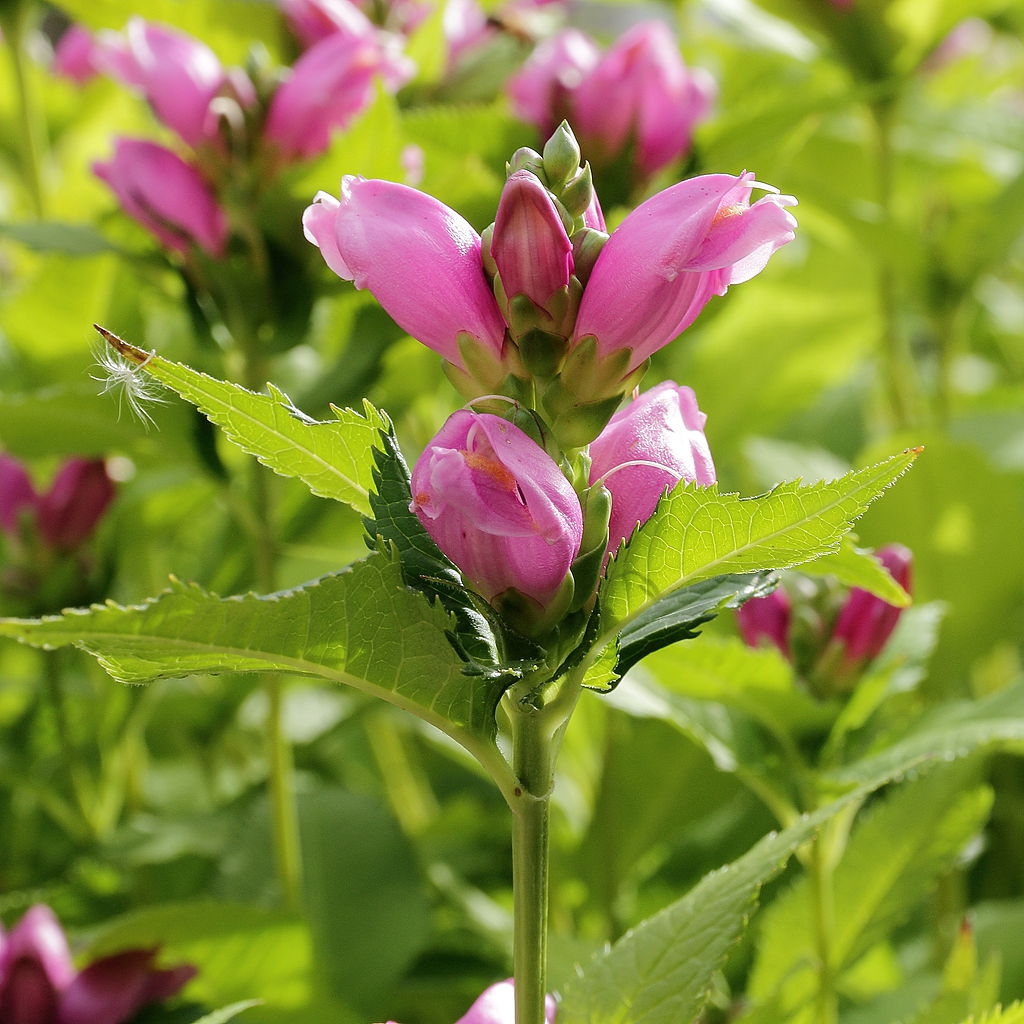
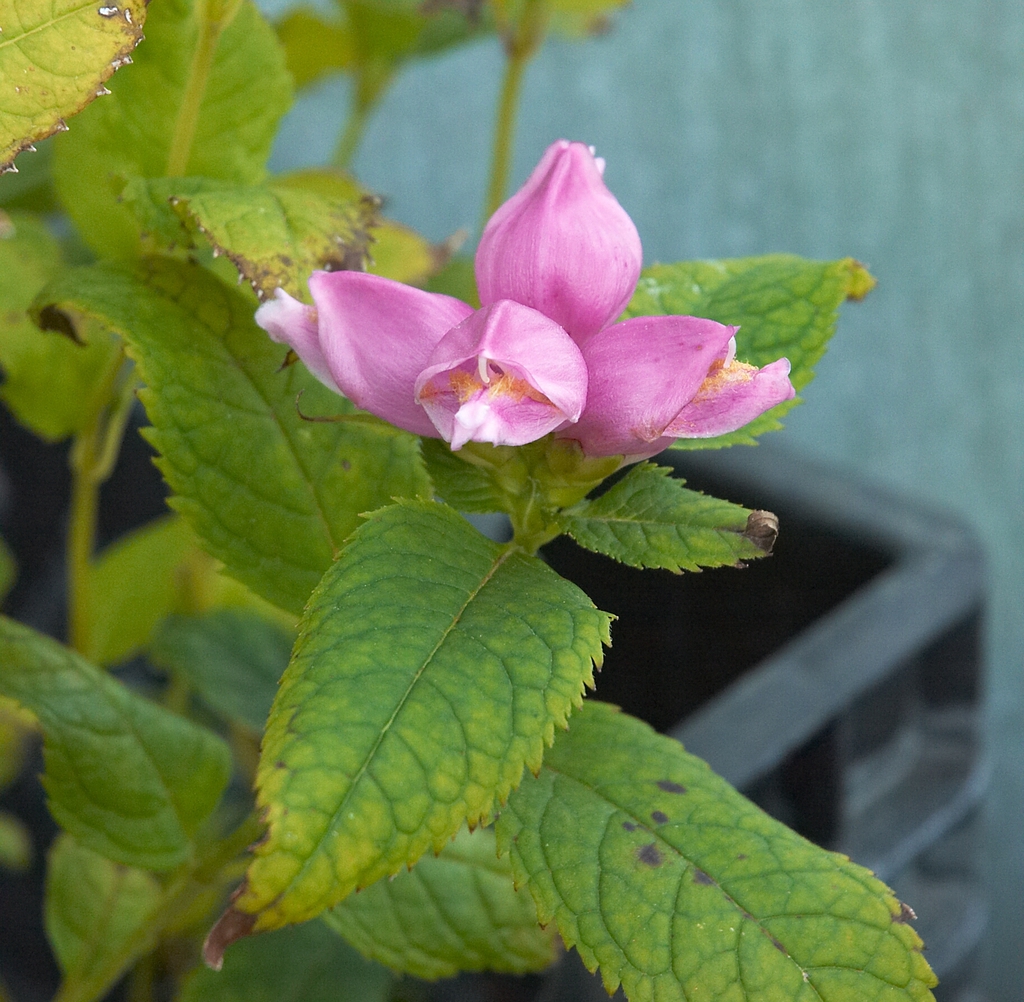
The rose to purple snapdragon-like flowers occur on terminal spike-like clusters in late summer to fall. Each flower is about 1.5 inches, has two lips and a sparse yellow beard inside the lower lip. It is a host plant for the Baltimore checkerspot butterfly and is pollinator-friendly.
Use this plant along streams, ponds or bogs and in pollinator, native, butterfly, woodland and water gardens.
Insects, Diseases, and Other Plant Problems: No significant problems. Mildew can occur if the soil is too dry or overcrowding occurs.Too much shade may cause the plant to need staking.
- See this plant in the following landscape :
- Cultivars / Varieties:
-
- Tags:


- Cultivars / Varieties:
-
- Tags:
-
-
Attributes:
- Genus:
- Chelone
- Species:
- obliqua
- Family:
- Plantaginaceae
- Life Cycle:
- Perennial
- Recommended Propagation Strategy:
- Division
- Seed
- Stem Cutting
- Country Or Region Of Origin:
- Southeastern U.S.A.
- Distribution:
- Alabama, Georgia, Kentucky, Maryland, Mississippi, North Carolina, South Carolina, Tennessee, Virginia
- Wildlife Value:
- This plant attracts hummingbirds and pollinators. It is a host plant for the Baltimore checkerspot butterfly.
- Dimensions:
- Height: 2 ft. 0 in. - 3 ft. 0 in.
- Width: 1 ft. 0 in. - 2 ft. 0 in.
-
-
Whole Plant Traits:
- Plant Type:
- Herbaceous Perennial
- Native Plant
- Habit/Form:
- Clumping
- Erect
- Growth Rate:
- Medium
- Maintenance:
- Medium
- Texture:
- Medium
-
-
Cultural Conditions:
- Light:
- Dappled Sunlight (Shade through upper canopy all day)
- Full sun (6 or more hours of direct sunlight a day)
- Partial Shade (Direct sunlight only part of the day, 2-6 hours)
- Soil Texture:
- Clay
- High Organic Matter
- Loam (Silt)
- Soil pH:
- Acid (<6.0)
- Soil Drainage:
- Occasionally Wet
- NC Region:
- Coastal
- Mountains
- Piedmont
- USDA Plant Hardiness Zone:
- 5a, 5b, 6a, 6b, 7a, 7b, 8a, 8b, 9a, 9b
-
-
Fruit:
- Display/Harvest Time:
- Fall
- Fruit Type:
- Capsule
- Fruit Description:
- The fruit is dry and splits open when ripe. Matures from September to November.
-
-
Flowers:
- Flower Color:
- Pink
- Purple/Lavender
- Flower Inflorescence:
- Raceme
- Flower Value To Gardener:
- Showy
- Flower Bloom Time:
- Fall
- Summer
- Flower Shape:
- Lipped
- Tubular
- Flower Petals:
- fused petals
- Flower Size:
- 1-3 inches
- Flower Description:
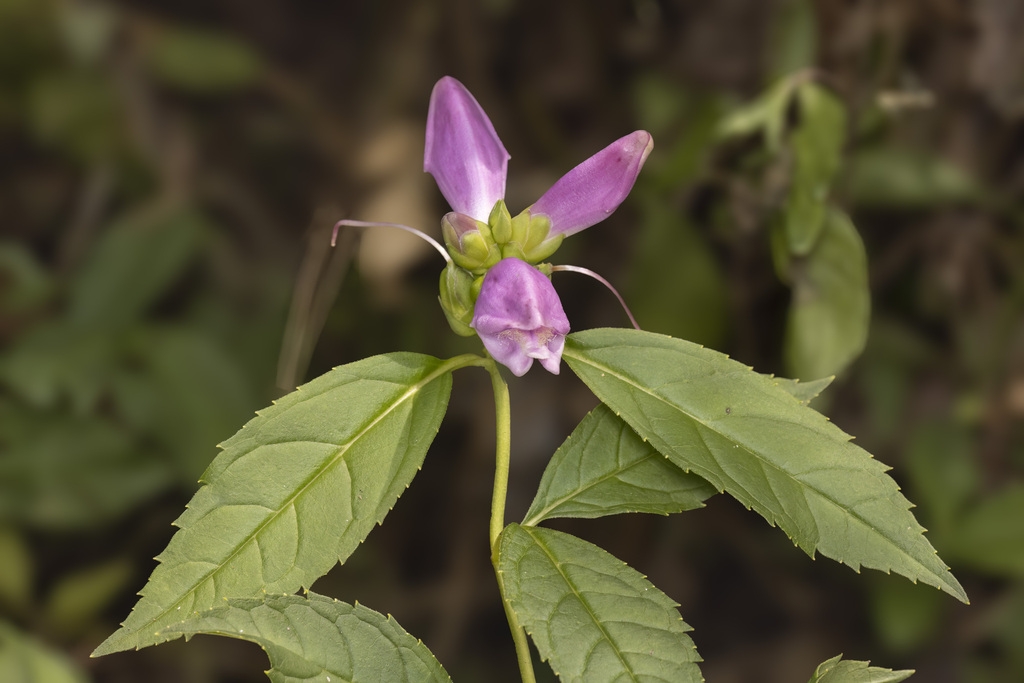
- 1-1.5 inch pinkish-purple flowers are tubular, arching, and produced in dense terminal spike-like racemes. The most distinctive feature of this species is the flower, which has finely hairy sepals, a two-lipped pinkish-purple corolla, and contains a white staminodium (a sterile stamen). Blooms July to Oct.
-
-
Leaves:
- Leaf Color:
- Green
- Leaf Type:
- Simple
- Leaf Arrangement:
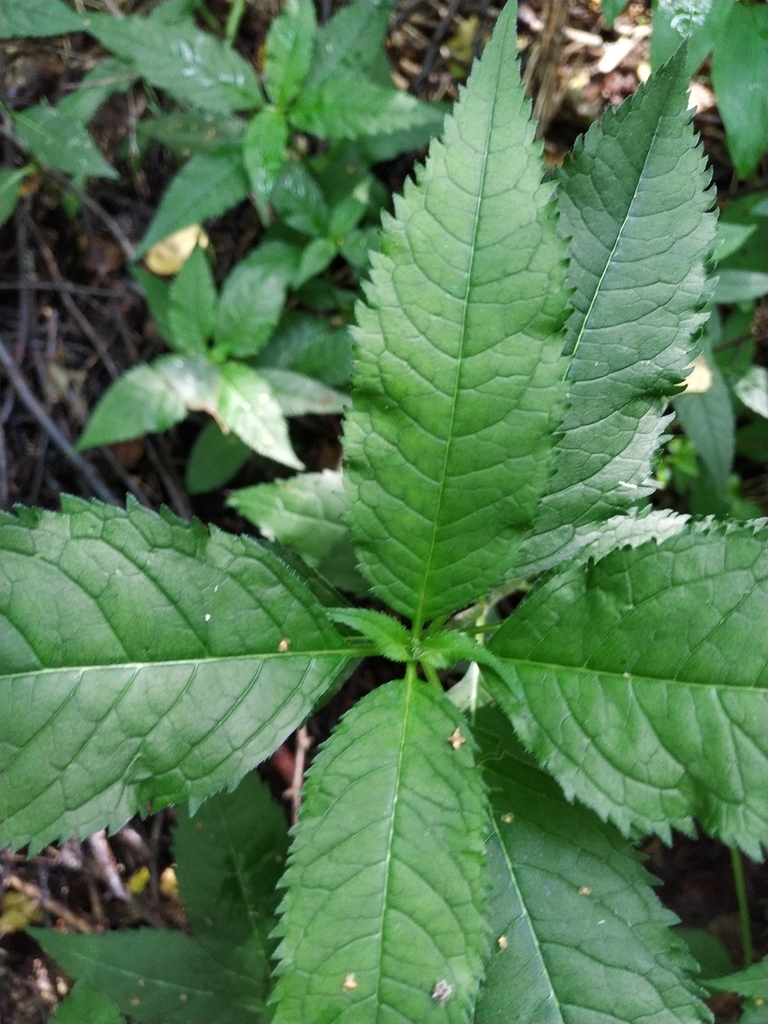
- Opposite
- Leaf Shape:
- Lanceolate
- Leaf Margin:
- Serrate
- Hairs Present:
- No
- Leaf Length:
- > 6 inches
- Leaf Width:
- 3-6 inches
- Leaf Description:
- Leaves are opposite, short-stalked, narrowly lance-shaped, 7-9 inches long and sharply saw-toothed. Underside is paler than the upper surface.
-
-
Stem:
- Stem Color:
- Green
- Stem Is Aromatic:
- No
- Stem Surface:
- Smooth (glabrous)
- Stem Description:
- Smooth, green and hairless
-
-
Landscape:
- Landscape Location:
- Pond
- Riparian
- Woodland
- Landscape Theme:
- Butterfly Garden
- Native Garden
- Pollinator Garden
- Rain Garden
- Water Garden
- Design Feature:
- Border
- Small groups
- Attracts:
- Butterflies
- Hummingbirds
- Pollinators



