



Angelica Tree Aralia elata
Other Common Name(s):
Other plants called Angelica Tree:
- Phonetic Spelling
- ah-RAY-lee-ah el-AH-tuh
- Description
-
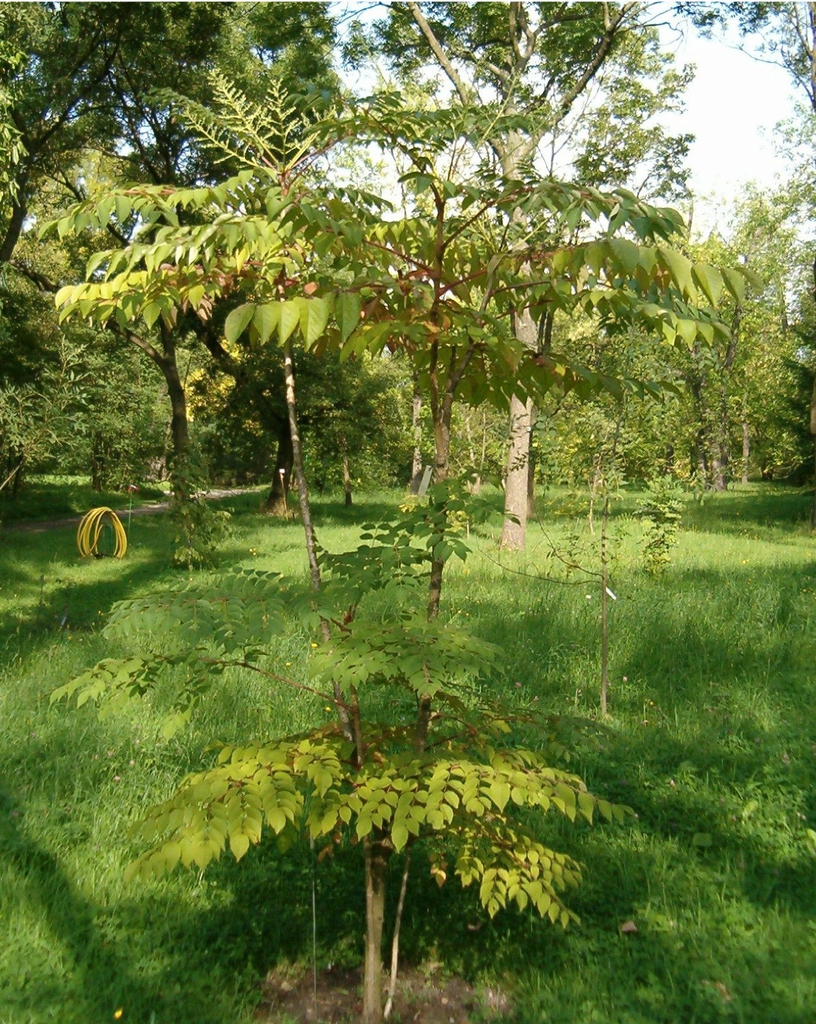
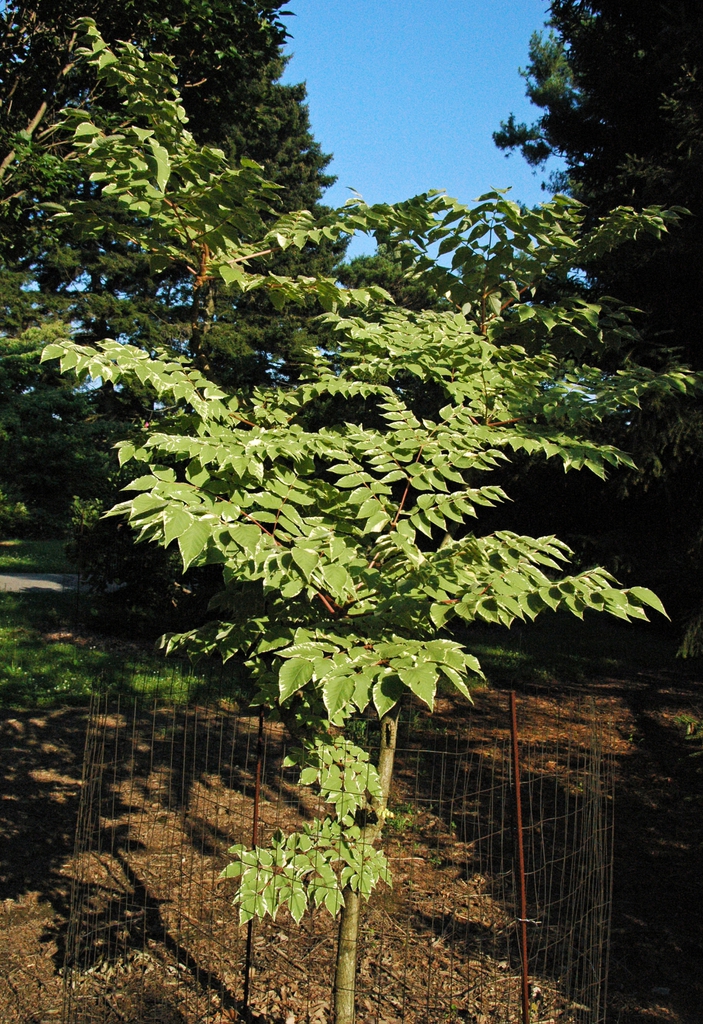
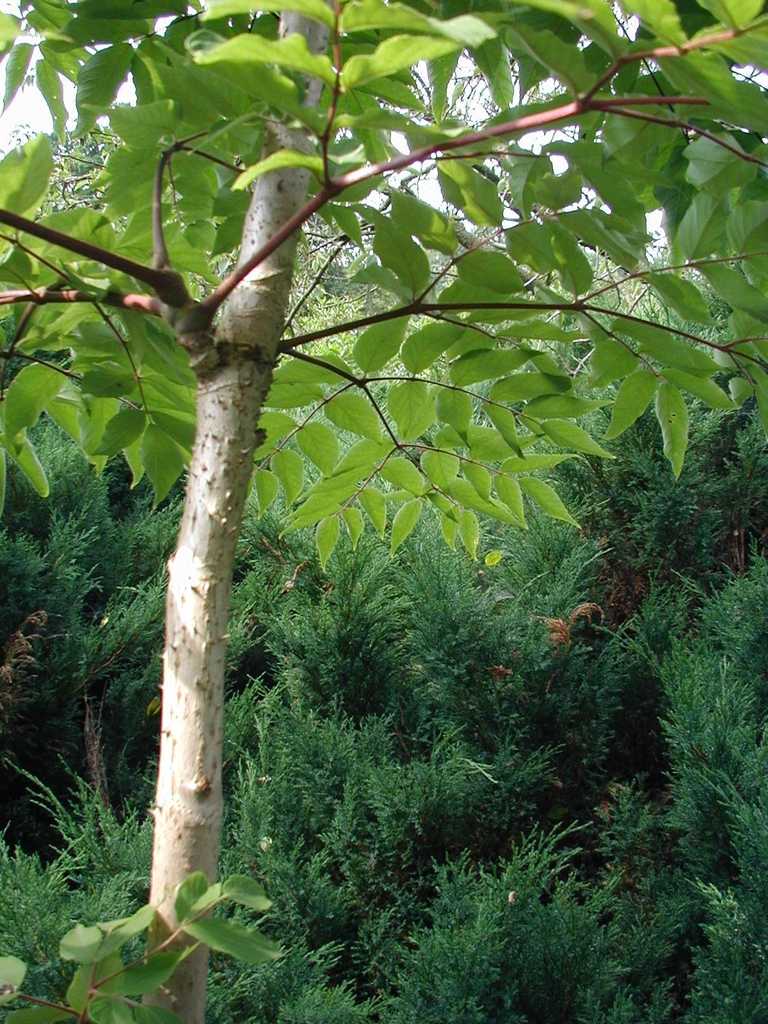
Japanese angelica tree is a rapidly growing, woody deciduous, multistemmed large shrub or small tree in the ginseng family (Araliaceae). It is an invasive species in North Carolina that was introduced to the United States in 1830 from eastern Asia.
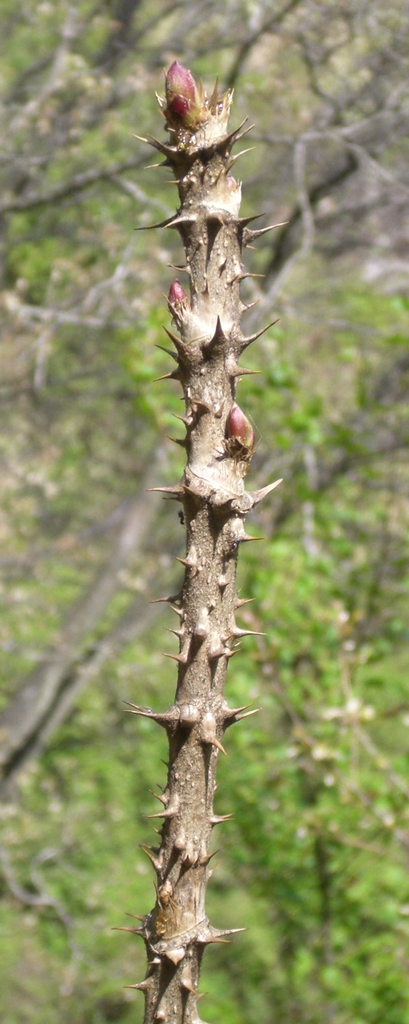
Japanese angelica grows 8 to 20 feet tall and 6 to 10 feet wide and is difficult to control. The branches and trunk have sharp spines. The flowers should be cut in late summer as soon as they fade then bagged and trashed to avoid seed spread. Do not compost. If allowed to fruit, birds and small mammals will eat the fruits and spread the seeds. Its root suckering habit also contributes to its invasiveness. Simply mowing down the suckers will not control the spread and may stimulate more aggressive growth. Each sucker must be dug out to the point where it meets the main stem.
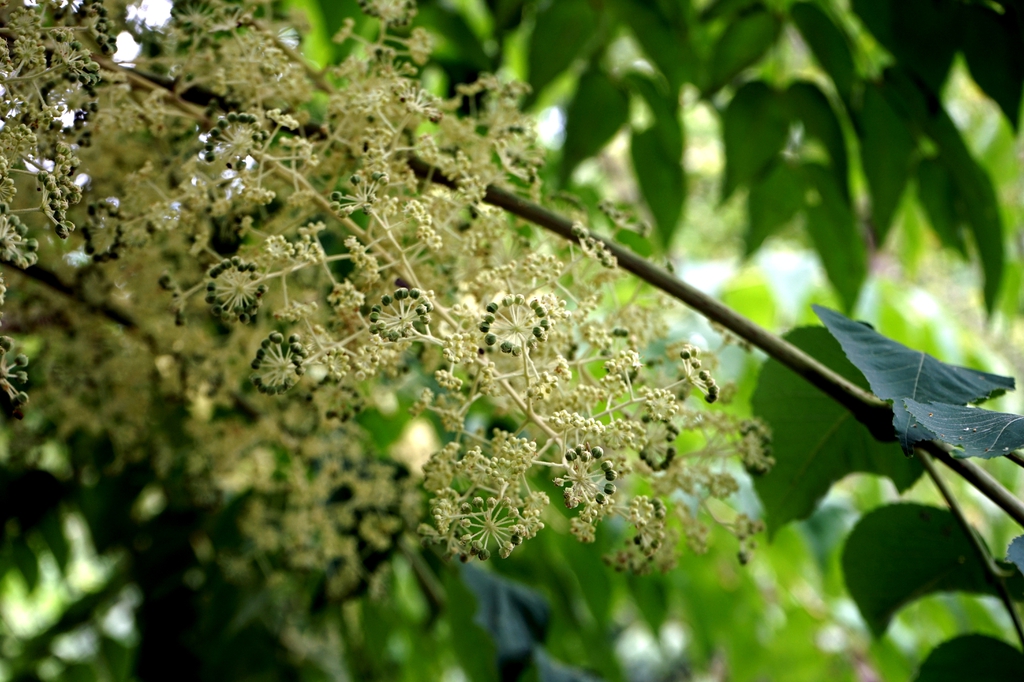
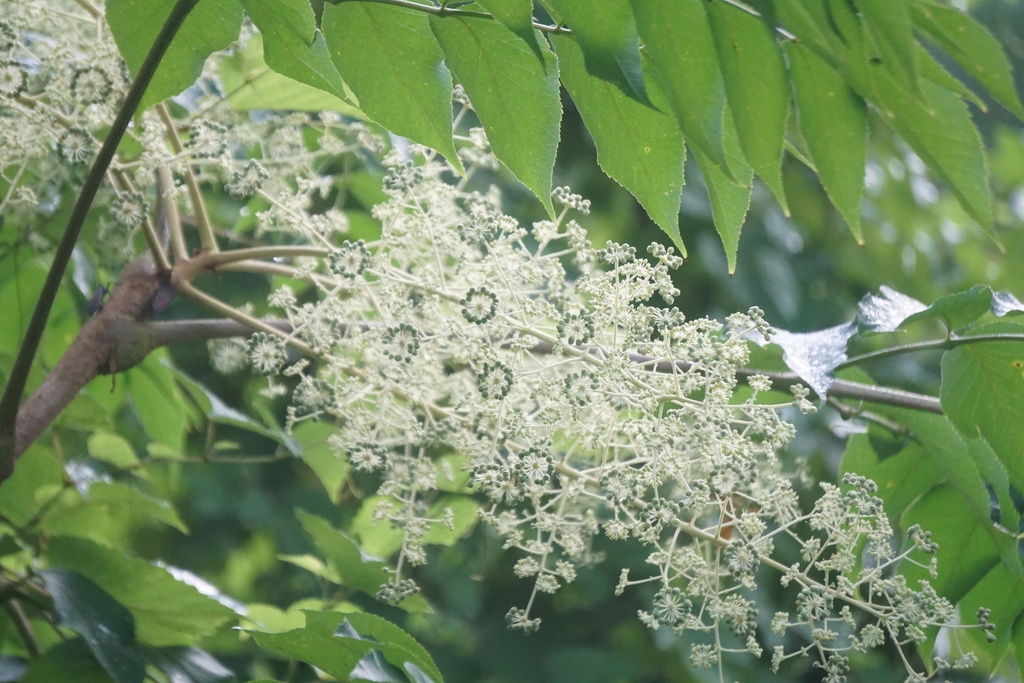
Angelica can be easily confused with devil’s walking stick, a similar looking tree native to the eastern United States including North Carolina. One way to tell them apart is to look closely at the flower panicles. Angelica’s will often be shorter and more wide than long while those of the devil’s walking stick are often longer and more long than wide. Best to check with your local Extension office for a proper identification.
Due to its aggressiveness, the angelica tree invades forest canopy gaps, forest edges, and right of ways. Please consider plants that fill a similar niche, which are listed to the left.
Insects, Diseases and Other Plant Problems: Susceptible to leaf spots, aphids and mealybugs.
- See this plant in the following landscape :
- Cultivars / Varieties:
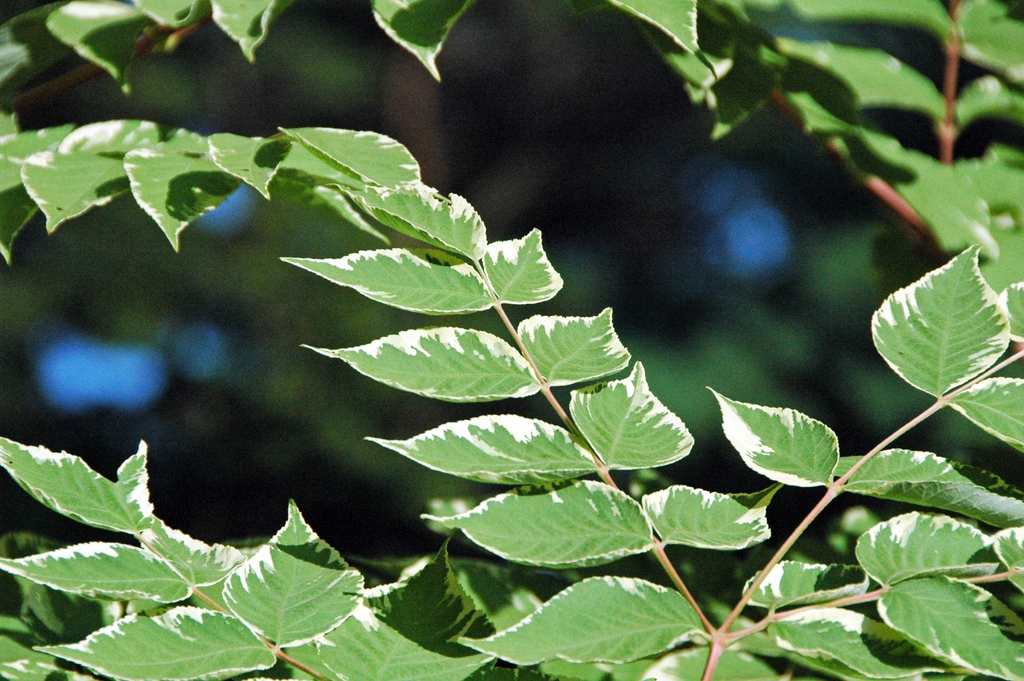
- 'Aureovariegata', 'Variegata'
- Tags:


- Cultivars / Varieties:
- 'Aureovariegata', 'Variegata'
- Tags:
-
-
Attributes:
- Genus:
- Aralia
- Species:
- elata
- Family:
- Araliaceae
- Life Cycle:
- Woody
- Recommended Propagation Strategy:
- Division
- Seed
- Country Or Region Of Origin:
- Eastern Asia
- Distribution:
- Russia, China, Taiwan, the Korean Peninsula, and Japan
- Particularly Resistant To (Insects/Diseases/Other Problems):
- moist soil; a range of soil types
- Dimensions:
- Height: 8 ft. 0 in. - 20 ft. 0 in.
- Width: 6 ft. 0 in. - 10 ft. 0 in.
-
-
Whole Plant Traits:
- Plant Type:
- Shrub
- Tree
- Woody Plant Leaf Characteristics:
- Deciduous
- Habit/Form:
- Multi-stemmed
- Multi-trunked
- Spreading
- Growth Rate:
- Rapid
- Maintenance:
- High
- Texture:
- Medium
- Appendage:
- Spines
-
-
Cultural Conditions:
- Light:
- Full sun (6 or more hours of direct sunlight a day)
- Partial Shade (Direct sunlight only part of the day, 2-6 hours)
- Soil Texture:
- Clay
- Loam (Silt)
- Sand
- Shallow Rocky
- Soil Drainage:
- Good Drainage
- Moist
- Available Space To Plant:
- 6-feet-12 feet
- 12-24 feet
- NC Region:
- Coastal
- Mountains
- Piedmont
- USDA Plant Hardiness Zone:
- 4a, 4b, 5a, 5b, 6a, 6b, 7a, 7b, 8a, 8b, 9a, 9b
-
-
Fruit:
- Fruit Color:
- Black
- Purple/Lavender
- Display/Harvest Time:
- Fall
- Summer
- Fruit Type:
- Drupe
- Fruit Length:
- < 1 inch
- Fruit Width:
- < 1 inch
- Fruit Description:
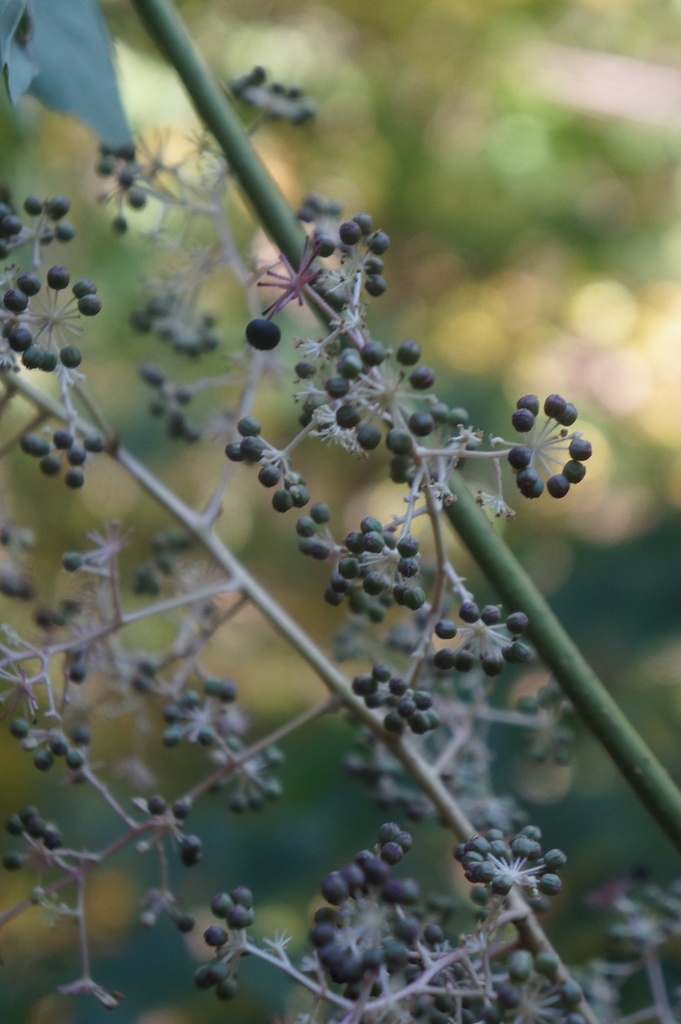
- Purple to blackround drupes appear in summer and ripen into fall.
-
-
Flowers:
- Flower Color:
- Cream/Tan
- White
- Flower Inflorescence:
- Panicle
- Flower Bloom Time:
- Summer
- Flower Size:
- < 1 inch
- Flower Description:
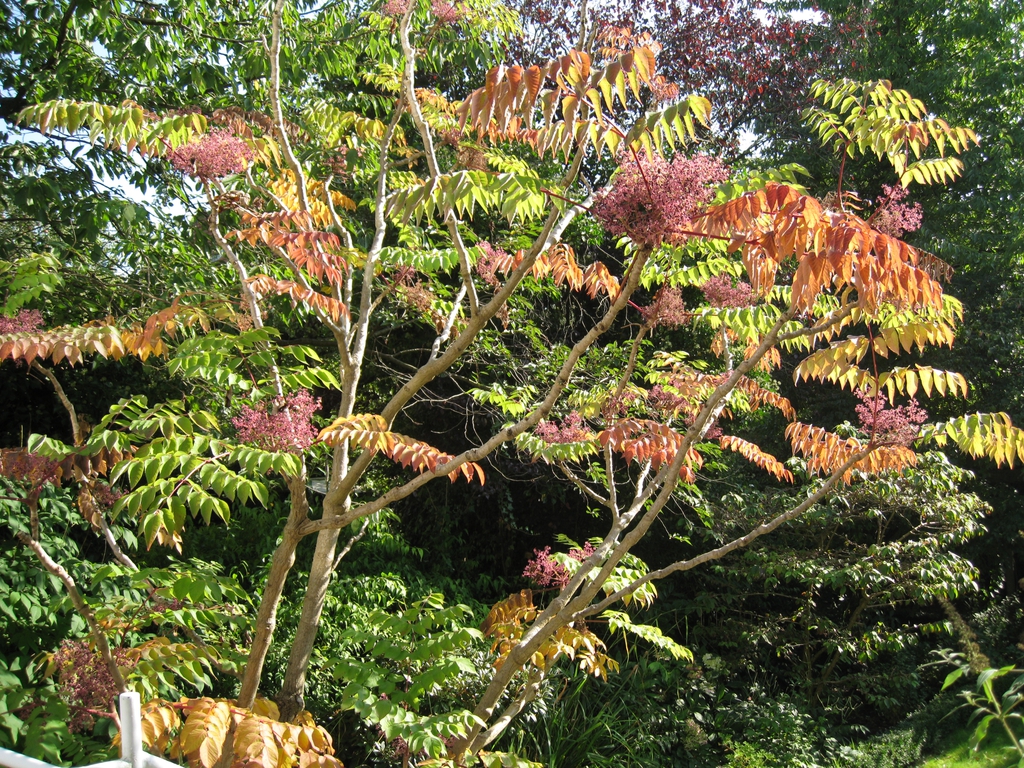
- This plant has 12 to 18 in. white to cream panicles of flowers that are not as tall as they are wide. Blooms from late July to August.
-
-
Leaves:
- Woody Plant Leaf Characteristics:
- Deciduous
- Leaf Color:
- Green
- Leaf Feel:
- Smooth
- Leaf Value To Gardener:
- Showy
- Deciduous Leaf Fall Color:
- Gold/Yellow
- Purple/Lavender
- Red/Burgundy
- Leaf Type:
- Compound (Pinnately , Bipinnately, Palmately)
- Leaf Arrangement:
- Alternate
- Other/more complex
- Leaf Shape:
- Pinnatisect
- Leaf Margin:
- Dentate
- Hairs Present:
- No
- Leaf Length:
- 3-6 inches
- Leaf Description:
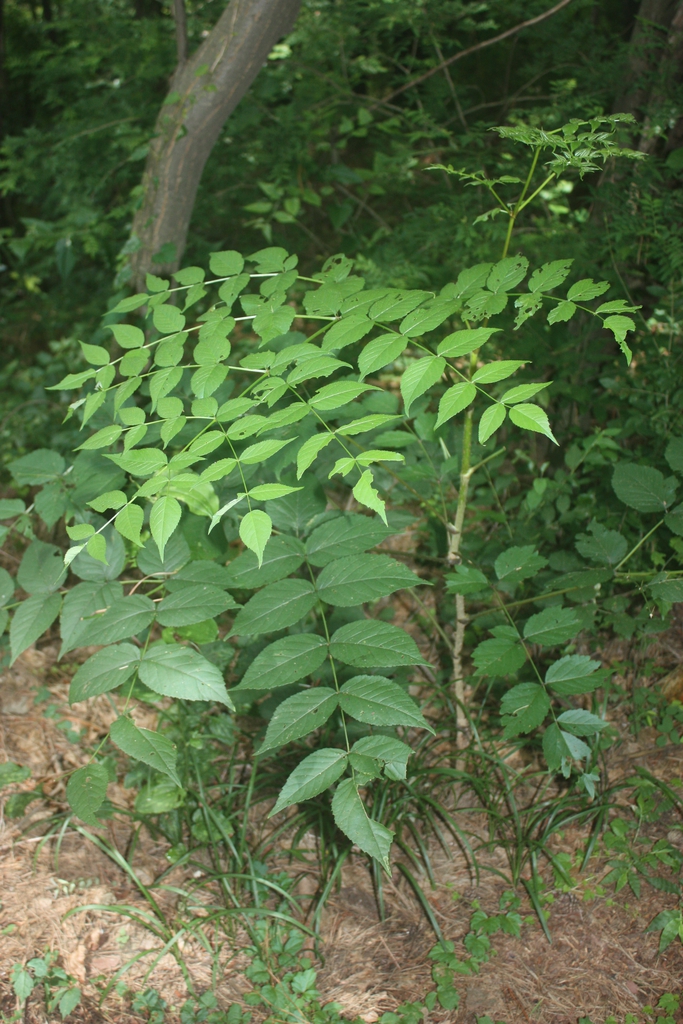
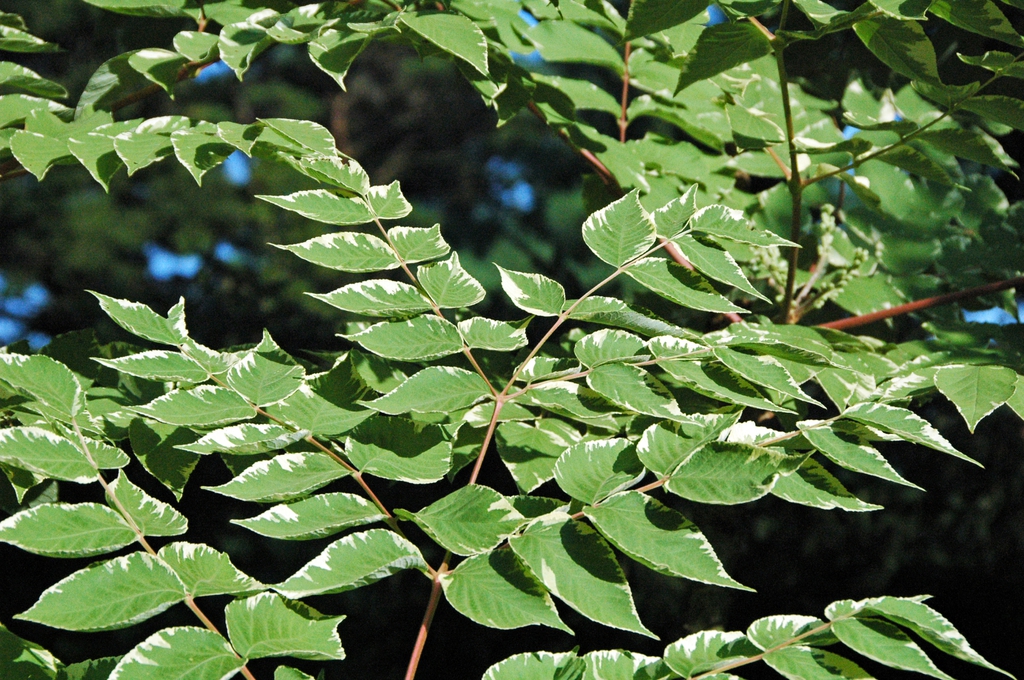
- This plant has 2-4 foot long tripinnately compound leaves with up to 80 leaflets. 3 to 5.5 inch leaflets with toothed to smooth margins and prominent center veins that go all the way to the tip of the left. There are spines in the leaf axis. Leaves turn yellow to reddish-purple for their fall color.
-
-
Bark:
- Bark Description:
- The bark has sharp thorns.
-
-
Stem:
- Stem Is Aromatic:
- No
- Stem Description:
- There are large spines on stems.
-
-
Landscape:
- Attracts:
- Bees
- Songbirds
- Resistance To Challenges:
- Drought
- Dry Soil
- Pollution
- Problems:
- Spines/Thorns
- Weedy



