


Symphyotrichum novae-angliae
Common Name(s):
Previously known as:
- Aster novae-angliae
- Phonetic Spelling
- sim-fy-oh-TRY-kum NO-vee ANG-lee-a
- Description
-
New England Aster is a herbaceous perennial in the daisy family (Asteraceae) native to eastern North America and found in prairies, meadows, thickets, low valleys and stream banks. The specific epithet means of New England, USA.
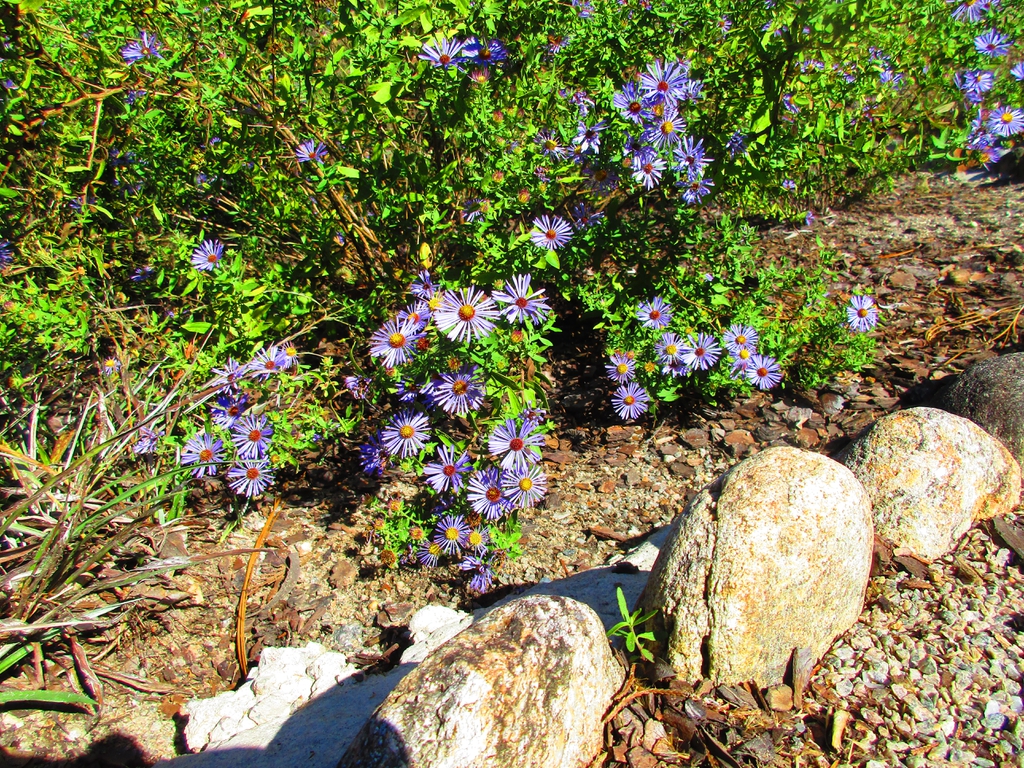
Grow New England Aster in full sun in moist, fertile, well-drained soils, including clay loams. Pinching the stems in spring will delay blooming and create a bushier plant. Provide good airflow to help prevent leaf diseases. The large bushy clumps can grow 3 to 6 feet tall and 1 to 3 feet wide.
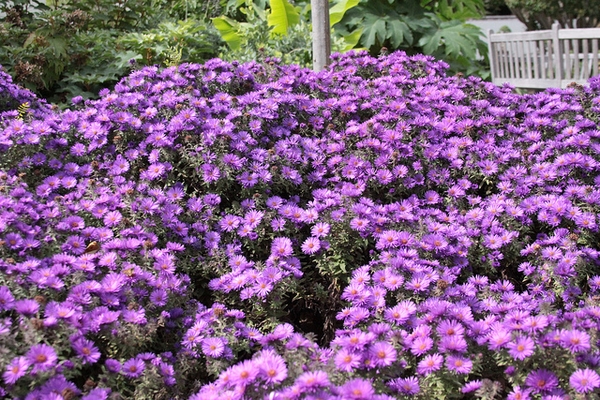
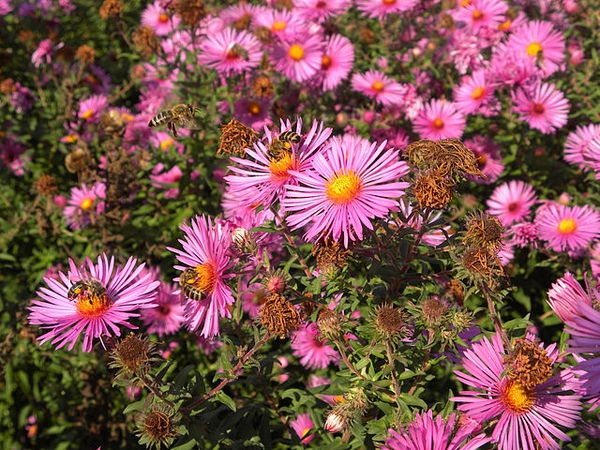
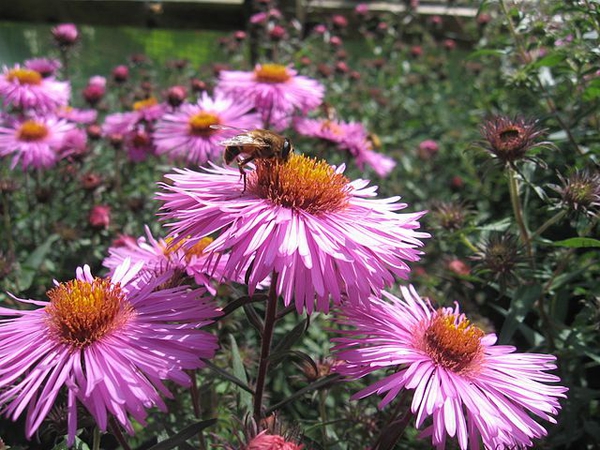
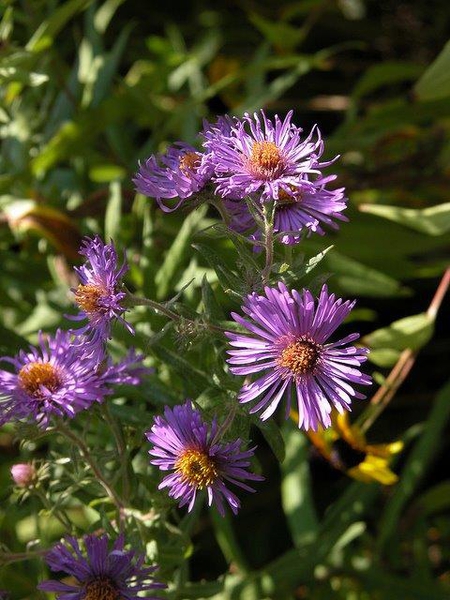
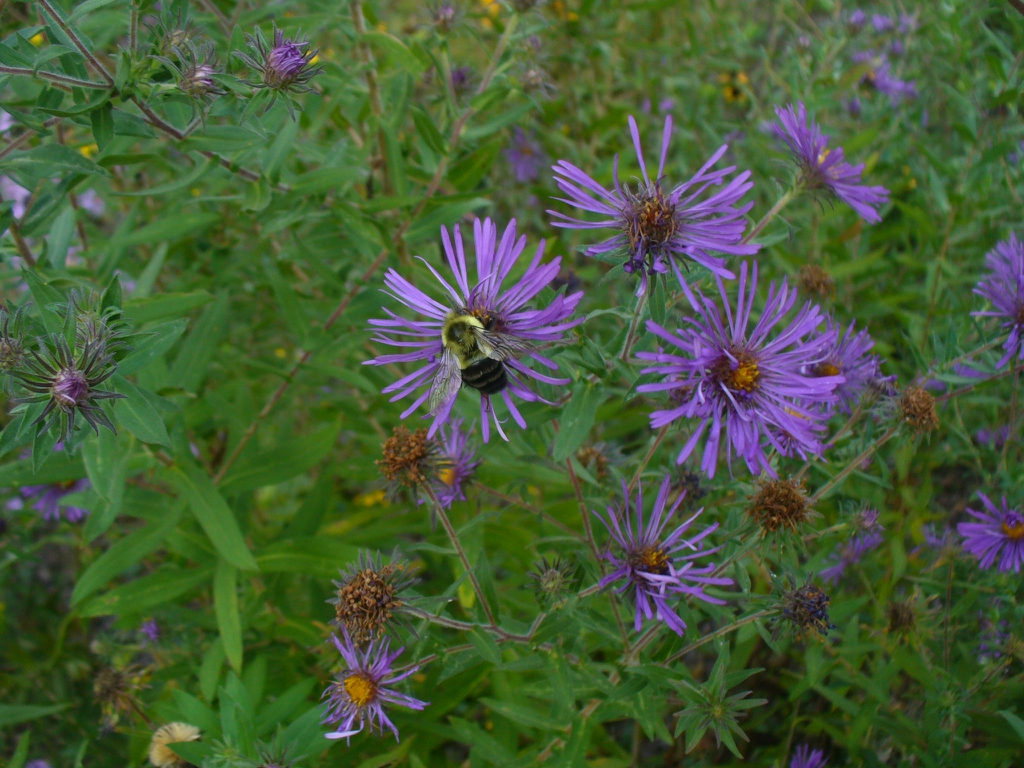
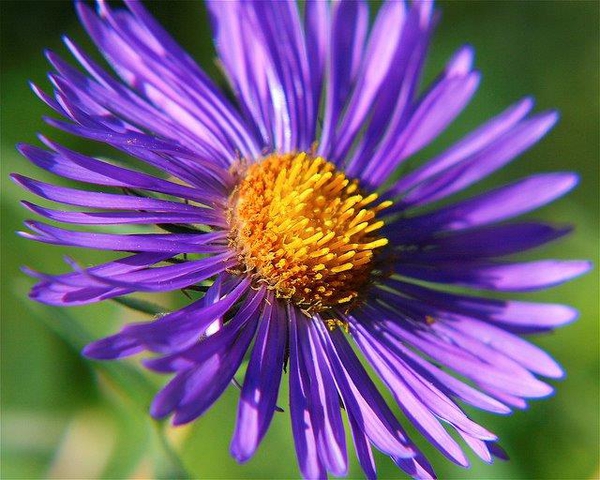
In late summer to fall, New England Aster produces many 1.5-inch-wide composite flowers with up to 100 purple rays surrounding nearly as many yellow disc flowers. The flowers are attractive to late summer bees and butterflies. Many cultivars are available, providing shorter plants with different colored flowers.
Use New England Aster in a pollinator or native garden. Pair it with a fall-blooming Solidago for a colorful fall display. It can also be used in rain gardens, naturalized areas and along ponds and streams.
Insects, Diseases, and Other Plant Problems: Some susceptibility to powdery mildew. Watch for aster wilt and stem rot. Insects can include spider mites, aphids and leaf miners. Taller plants may need to be staked.
Fire Risk: This plant has a medium flammability rating.
- See this plant in the following landscape s :
- Pinehurst Greenway Pollinator Habitat Garden, Moore County HOA Butterfly Garden in Brunswick County
- Cultivars / Varieties:
-
- 'Andenken an Alma Pötschke'
Salmon-pink flowers. 2 to 4 feet tall - 'Honeysong Pink'
2.5 to 3 feet tall with rose pink flowers - Kickin' Series
Compact plants - 'Purple Cloud'
6 feet tall, large purple flowers - 'Purple Dome'
Grows only 2 foot tall with many purple flowers - 'Red Cloud':
5 feet tall, deep rose-pink flowers - September Ruby'
Large ruby-re flowers with yellow centers
- 'Andenken an Alma Pötschke'
- 'Andenken an Alma Pötschke', 'Honeysong Pink', Kickin' Series, 'Purple Cloud', 'Purple Dome', 'Red Cloud':, September Ruby'
- Tags:


- Cultivars / Varieties:
-
- 'Andenken an Alma Pötschke'
Salmon-pink flowers. 2 to 4 feet tall - 'Honeysong Pink'
2.5 to 3 feet tall with rose pink flowers - Kickin' Series
Compact plants - 'Purple Cloud'
6 feet tall, large purple flowers - 'Purple Dome'
Grows only 2 foot tall with many purple flowers - 'Red Cloud':
5 feet tall, deep rose-pink flowers - September Ruby'
Large ruby-re flowers with yellow centers
- 'Andenken an Alma Pötschke'
- 'Andenken an Alma Pötschke', 'Honeysong Pink', Kickin' Series, 'Purple Cloud', 'Purple Dome', 'Red Cloud':, September Ruby'
- Tags:
-
-
Attributes:
- Genus:
- Symphyotrichum
- Species:
- novae-angliae
- Family:
- Asteraceae
- Life Cycle:
- Perennial
- Recommended Propagation Strategy:
- Seed
- Country Or Region Of Origin:
- Eastern North America
- Fire Risk Rating:
- medium flammability
- Wildlife Value:
- Host plant for the Pearl Crescent (Phyciodes tharos) caterpillars which have several broods and appear from April through November in the north and throughout the year in the deep south and Mexico. Flower nectars are attractive to bees, hover flies,ne and migrating Monarch butterflies. Songbirds and small mammals eat the seeds. Members of the genus Symphyotrichum support the following specialized bees: Andrena (Callandrena s.l.) asteris, Andrena (Callandrena s.l.) asteroides, Andrena (Cnemidandrena) hirticincta, Andrena (Cnemidandrena) nubecula, Andrena (Callandrena s.l.) placata, Andrena (Callandrena s.l.) simplex, and Colletes simulans.
- Play Value:
- Attractive Flowers
- Attracts Pollinators
- Wildlife Food Source
- Particularly Resistant To (Insects/Diseases/Other Problems):
- Moderate deer resistance.
- Dimensions:
- Height: 3 ft. 0 in. - 6 ft. 0 in.
- Width: 1 ft. 0 in. - 3 ft. 0 in.
-
-
Whole Plant Traits:
- Plant Type:
- Herbaceous Perennial
- Native Plant
- Wildflower
- Habit/Form:
- Clumping
- Erect
- Growth Rate:
- Medium
- Maintenance:
- Medium
- Texture:
- Medium
-
-
Cultural Conditions:
- Light:
- Full sun (6 or more hours of direct sunlight a day)
- Partial Shade (Direct sunlight only part of the day, 2-6 hours)
- Soil Texture:
- Clay
- High Organic Matter
- Loam (Silt)
- Sand
- Soil Drainage:
- Good Drainage
- Moist
- Occasionally Dry
- Available Space To Plant:
- 12 inches-3 feet
- NC Region:
- Coastal
- Mountains
- Piedmont
- USDA Plant Hardiness Zone:
- 4a, 4b, 5a, 5b, 6a, 6b, 7a, 7b, 8a, 8b
-
-
Fruit:
- Display/Harvest Time:
- Fall
- Winter
- Fruit Type:
- Achene
- Fruit Length:
- < 1 inch
- Fruit Width:
- < 1 inch
- Fruit Description:
- Produces a dry seed with short hairs for wind dispersal. Displays from fall to winter
-
-
Flowers:
- Flower Color:
- Gold/Yellow
- Purple/Lavender
- Flower Inflorescence:
- Panicle
- Flower Value To Gardener:
- Good Cut
- Showy
- Flower Bloom Time:
- Fall
- Summer
- Flower Shape:
- Radial
- Flower Petals:
- more than 20 petals/rays
- Flower Size:
- 1-3 inches
- Flower Description:
- 1.5-inch composite flowers with up to 100 purple rays that surround many yellow disc flowers. Blooms from August to October.
-
-
Leaves:
- Leaf Color:
- Green
- Leaf Feel:
- Rough
- Velvety
- Leaf Arrangement:
- Alternate
- Leaf Margin:
- Entire
- Hairs Present:
- Yes
- Leaf Length:
- 3-6 inches
- Leaf Width:
- < 1 inch
- Leaf Description:
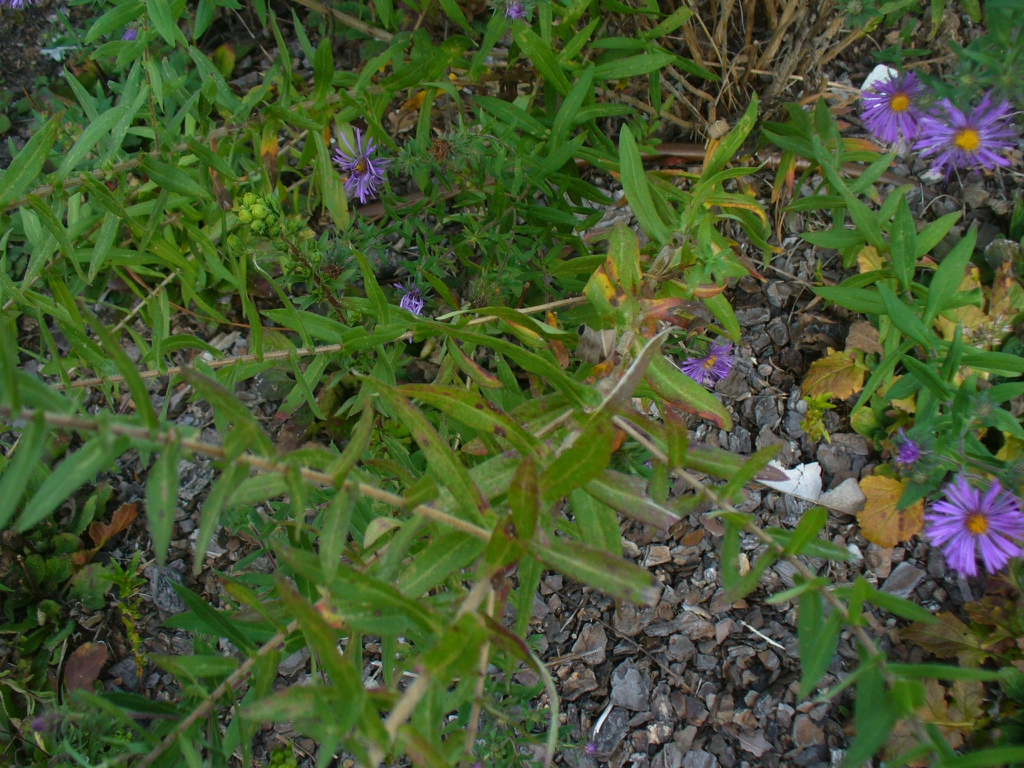
- The green leaves are up to 4 inches long and up to 1 inch wide, clasp the stem and have entire margins. Course hairs on the upper surface and soft hairs on the undersides.
-
-
Stem:
- Stem Color:
- Green
- Stem Is Aromatic:
- No
- Stem Surface:
- Hairy (pubescent)
- Stem Description:
- The stem is stout, stiff and hairy
-
-
Landscape:
- Landscape Location:
- Meadow
- Naturalized Area
- Pond
- Riparian
- Landscape Theme:
- Butterfly Garden
- Native Garden
- Pollinator Garden
- Rain Garden
- Design Feature:
- Border
- Small groups
- Attracts:
- Butterflies
- Pollinators
- Predatory Insects
- Small Mammals
- Songbirds
- Specialized Bees