


Symphyotrichum lateriflorum
Common Name(s):
Previously known as:
- Aster lateriflorus
- Solidago lateriflora
- Phonetic Spelling
- sim-fy-oh-TRY-kum la-ter-uh-FLOR-um
- Description
-
The calico aster is a perennial herbaceous plant in the daisy family (Asteraceae) native to the eastern half of North America. It can be found growing in the mountains, piedmont, and coastal plains of North Carolina. It grows in moist meadow and praries and along forests and streams. The specific epithet is a combination of the Latin words for side and flower in reference to the fact that the flowers are located on one side of the stems, hence the sometimes used common name of side-flowering aster.
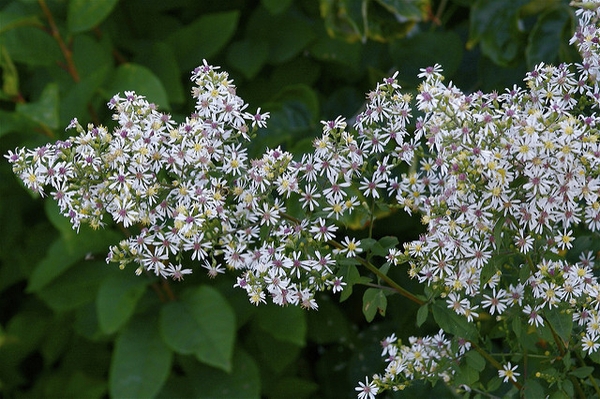
Calico aster grows in clumps from 1 to 4 feet tall in full sun to partial shade. In hot summer areas, it will do best with some afternoon shade. Grow in moist, well-drained soils and provide water during drought conditions. Propagation is by seed or division. Plants can be pinched back in late spring for a shorter, bushier plant.
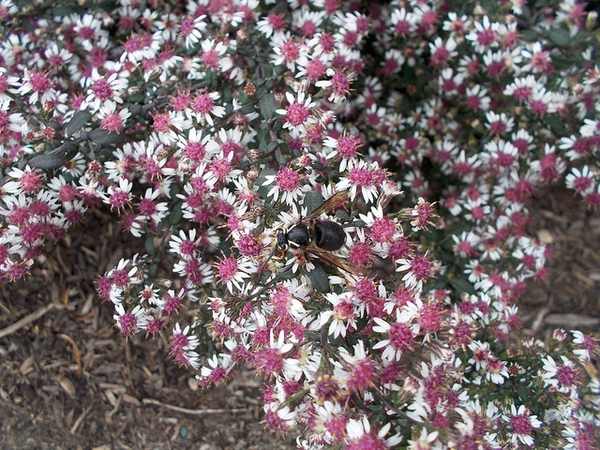
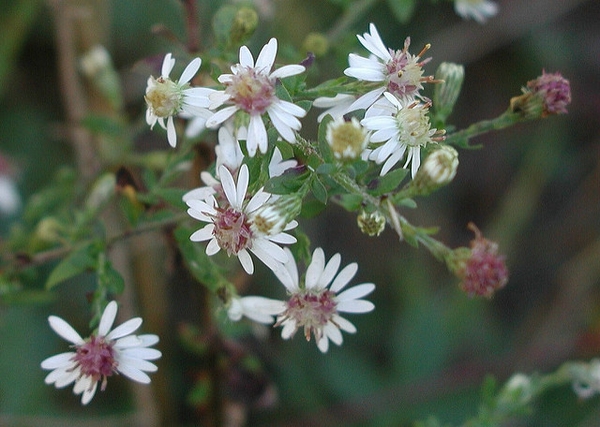
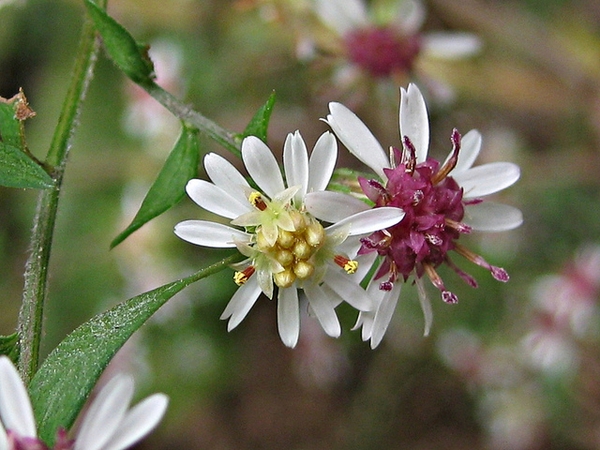
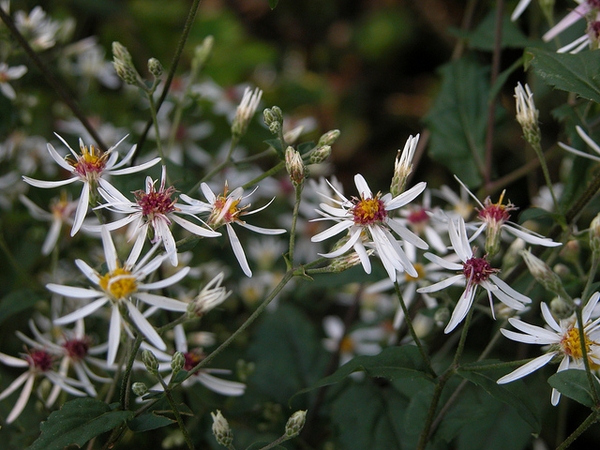
The many small flowers have white rays surrounding cream-colored disc flowers along one side of the stem and occasionally in clusters at the tip. The rays may occasionally have pink or purple tints and the disc flowers darken to purplish or brown after pollination occurs.
Use calico aster in the border or in groups in the pollinator or native garden. Plant in a naturalized area or along ponds or streams and along a woodland edge.
Insects, Diseases, and Other Plant Problems: No significant problems.
- See this plant in the following landscape :
- Cultivars / Varieties:
-
- 'Horizontalis'
Stiff horizontal branches and white flowers - 'Lady in Black'
Small white petal flowers, rosy-pink center disk, purple stems and leaves - Prince'
Compact plant with pale pink flowers
- 'Horizontalis'
- 'Horizontalis', 'Lady in Black', Prince'
- Tags:


- Cultivars / Varieties:
-
- 'Horizontalis'
Stiff horizontal branches and white flowers - 'Lady in Black'
Small white petal flowers, rosy-pink center disk, purple stems and leaves - Prince'
Compact plant with pale pink flowers
- 'Horizontalis'
- 'Horizontalis', 'Lady in Black', Prince'
- Tags:
-
-
Attributes:
- Genus:
- Symphyotricum
- Species:
- lateriflorum
- Family:
- Asteraceae
- Uses (Ethnobotany):
- It has been used by Indigenous peoples of the Americas as a medicinal plant.
- Life Cycle:
- Perennial
- Recommended Propagation Strategy:
- Division
- Seed
- Country Or Region Of Origin:
- Canada to Mexico
- Wildlife Value:
- Members of the genus Symphyotrichum support the following specialized bees: Andrena (Callandrena s.l.) asteris, Andrena (Callandrena s.l.) asteroides, Andrena (Cnemidandrena) hirticincta, Andrena (Cnemidandrena) nubecula, Andrena (Callandrena s.l.) placata, Andrena (Callandrena s.l.) simplex, and Colletes simulans.
- Play Value:
- Attracts Pollinators
- Wildlife Food Source
- Dimensions:
- Height: 2 ft. 0 in. - 4 ft. 0 in.
- Width: 1 ft. 0 in. - 2 ft. 0 in.
-
-
Whole Plant Traits:
- Plant Type:
- Native Plant
- Perennial
- Wildflower
- Habit/Form:
- Clumping
- Erect
- Spreading
- Growth Rate:
- Medium
- Maintenance:
- Low
- Texture:
- Fine
-
-
Cultural Conditions:
- Light:
- Full sun (6 or more hours of direct sunlight a day)
- Partial Shade (Direct sunlight only part of the day, 2-6 hours)
- Soil Texture:
- Clay
- Loam (Silt)
- Sand
- Soil pH:
- Neutral (6.0-8.0)
- Soil Drainage:
- Good Drainage
- Moist
- Occasionally Dry
- Available Space To Plant:
- 12 inches-3 feet
- NC Region:
- Coastal
- Mountains
- Piedmont
- USDA Plant Hardiness Zone:
- 4a, 4b, 5a, 5b, 6a, 6b, 7a, 7b, 8a, 8b
-
-
Fruit:
- Fruit Color:
- Pink
- White
- Display/Harvest Time:
- Fall
- Fruit Type:
- Achene
- Fruit Length:
- < 1 inch
- Fruit Width:
- < 1 inch
- Fruit Description:
- Seeds are covered in short, stiff bristles and dispersed by the wind. Displays from October to November.
-
-
Flowers:
- Flower Color:
- Gold/Yellow
- Purple/Lavender
- White
- Flower Inflorescence:
- Panicle
- Flower Value To Gardener:
- Showy
- Flower Bloom Time:
- Fall
- Summer
- Flower Shape:
- Radial
- Flower Petals:
- 7 - 20 petals/rays
- Flower Size:
- < 1 inch
- Flower Description:
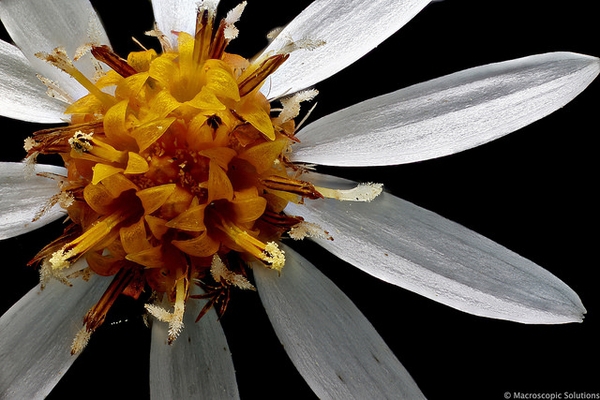
- Flowers consist of white to sometimes pink or purple-tinted rays surrounding cream-colored tubular disc flowers. The disc flowers darken to reddish-purple after pollination. The flowers grow one-sided on the stem and sometimes in clusters at the tips.
-
-
Leaves:
- Leaf Color:
- Brown/Copper
- Green
- Leaf Feel:
- Rough
- Smooth
- Leaf Type:
- Simple
- Leaf Arrangement:
- Alternate
- Leaf Shape:
- Elliptical
- Lanceolate
- Linear
- Oblanceolate
- Leaf Margin:
- Entire
- Hairs Present:
- Yes
- Leaf Length:
- 3-6 inches
- Leaf Width:
- 1-3 inches
- Leaf Description:
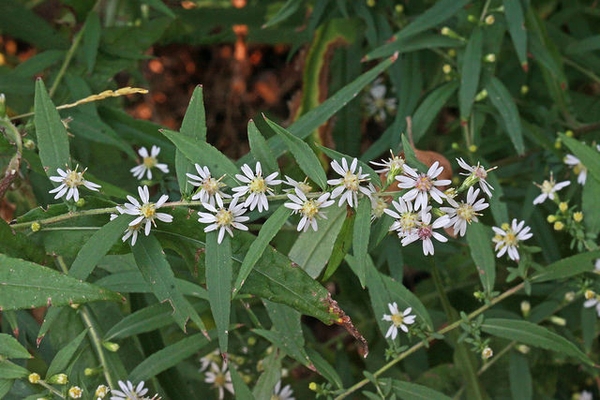
- Alternate 4" long and 1/2' wide and may have white hairs on the undersides of major veins. Upper side of leaves are medium green and lower are light green. They are narrowly lanceolate, oblanceolate, or elliptic, becoming linear near the flowerheads with a few teeth toward the tips of the larger leaves; otherwise, they have smooth margins.
-
-
Stem:
- Stem Color:
- Brown/Copper
- Green
- Red/Burgundy
- Stem Is Aromatic:
- No
- Stem Cross Section:
- Round
- Stem Form:
- Straight
- Stem Surface:
- Hairy (pubescent)
- Stem Description:
- Stems are light green to redish brown and have lines of fine white hairs.
-
-
Landscape:
- Landscape Location:
- Naturalized Area
- Pond
- Riparian
- Woodland
- Landscape Theme:
- Butterfly Garden
- Cottage Garden
- Native Garden
- Pollinator Garden
- Design Feature:
- Border
- Mass Planting
- Attracts:
- Bees
- Butterflies
- Pollinators
- Small Mammals
- Songbirds
- Specialized Bees