



Trillium catesbaei
Common Name(s):
Previously known as:
- Trillium catesbyi
- Trillium stylosum
- Phonetic Spelling
- TRIL-ee-um KAYTS-bee-eye
- This plant has low severity poison characteristics.
- See below
- Description
-
Catesby's trillium is an herbaceous perennial wildflower in the trillium family (Melanthiaceae) native to the Southeastern USA, including North Carolina. In nature, it can be commonly found in bottomland forests, mesic slopes, and cove forests and is common in the NC Piedmont, and rarer in the mountains and coastal areas. The species epithet honors Mark Catesby, the English naturalist who published Natural History of Carolina, Florida and the Bahama Islands in the first half of the 18th century.
This trillium tolerates drier, warmer conditions than other trilliums and is found in acidic soils, often with rhododendrons. Plant in humus-rich well-drained soils in part shade to full shade.
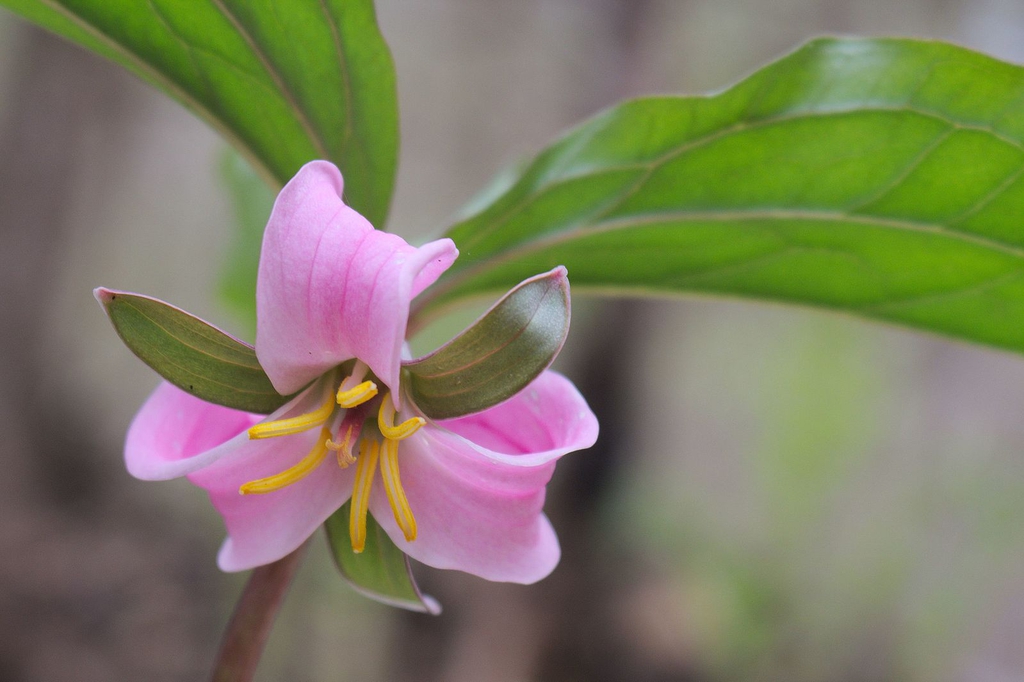
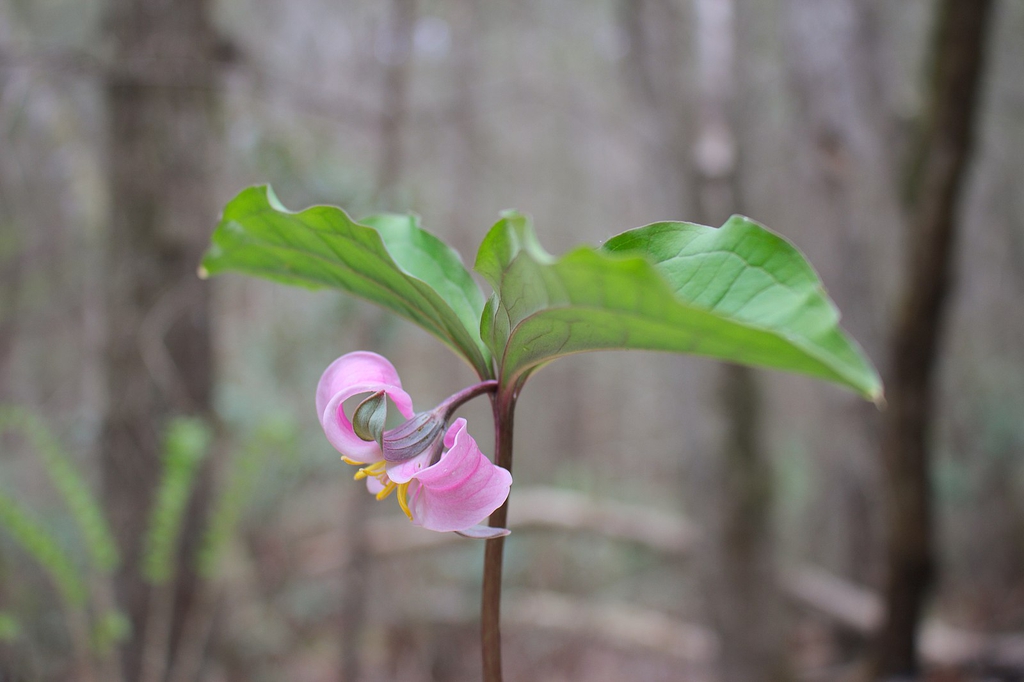
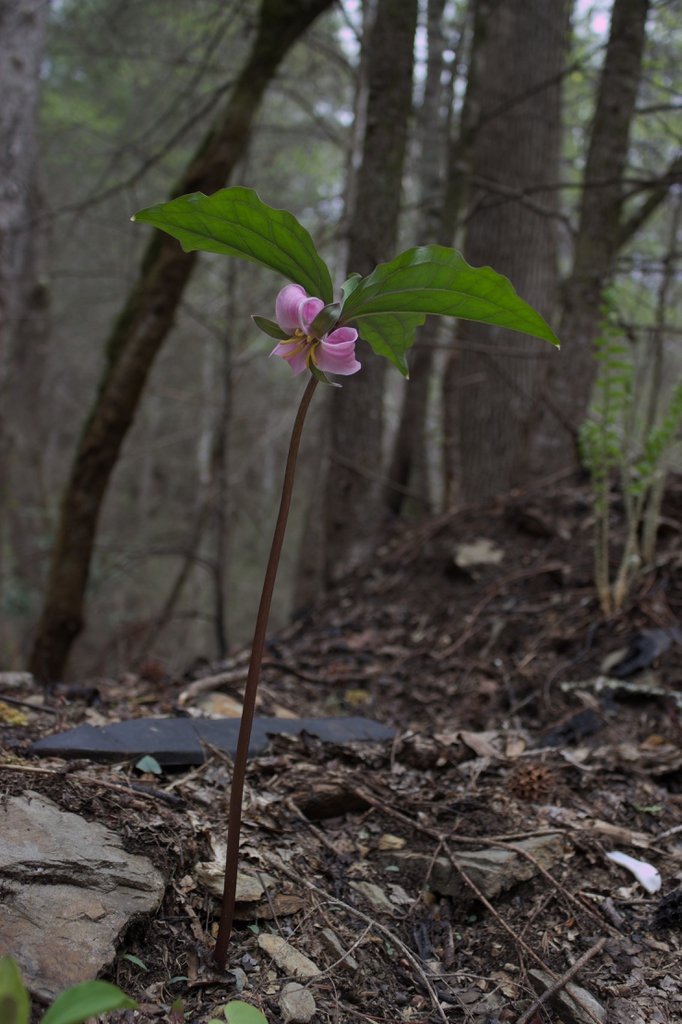
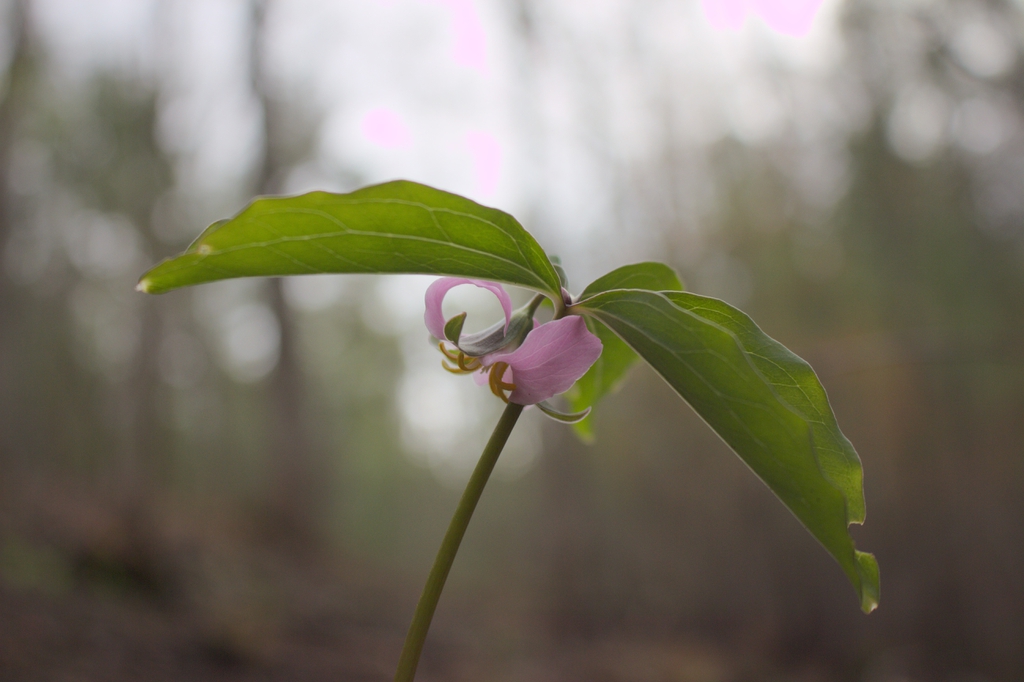
The Catesby's Trillium flowers face downward on a curved stem with 3 pink to purple or white recurved petals and 3 green bracts. It is the larval host plant the black-patched clepsis moth (Clepsis melaleucanus) and American angle shades moth (Euplexia benesimilis).
Insects, Diseases, and Other Plant Problems: No serious problems. Slugs and snails are occasional pests and leaf spot, rust and smut are occasional disease problems. It does not transplant well.
- See this plant in the following landscape :
- Cultivars / Varieties:
-
- Tags:



- Cultivars / Varieties:
-
- Tags:
-
-
Attributes:
- Genus:
- Trillium
- Species:
- catesbaei
- Family:
- Melanthiaceae
- Life Cycle:
- Perennial
- Recommended Propagation Strategy:
- Division
- Seed
- Country Or Region Of Origin:
- Southeastern United States
- Distribution:
- Dry oak and oak-pine forests of Alabama, Georgia, North Carolina, South Carolina, and Tennessee.
- Wildlife Value:
- Moths use this plant as a larval host. Small mammals enjoy the fruits as a food source. Deer will browse the plant
- Play Value:
- Attractive Flowers
- Attracts Pollinators
- Colorful
- Wildlife Food Source
- Wildlife Larval Host
- Edibility:
- EDIBLE PARTS: Young, unfolding leaves HARVEST TIME: Only collect leaves from areas you know have NOT been treated with pesticides. SAFE HANDLING PROCEDURES: Wash leaves in warm water to remove dirt and debris. Do not use dish detergent or any type of sanitizer. These products can leave a residue. Cook in boiling, salted water for ten minutes and serve like greens. SOURCE: Crowhurst, A. 1972. The Weed Cookbook. Lancer Books, Inc. New York, 190 pp.
- Dimensions:
- Height: 0 ft. 8 in. - 1 ft. 6 in.
- Width: 0 ft. 6 in. - 1 ft. 0 in.
-
-
Whole Plant Traits:
- Plant Type:
- Herbaceous Perennial
- Native Plant
- Poisonous
- Wildflower
- Habit/Form:
- Prostrate
- Growth Rate:
- Slow
- Maintenance:
- Medium
- Texture:
- Medium
-
-
Cultural Conditions:
- Light:
- Deep shade (Less than 2 hours to no direct sunlight)
- Partial Shade (Direct sunlight only part of the day, 2-6 hours)
- Soil Texture:
- High Organic Matter
- Soil pH:
- Acid (<6.0)
- Soil Drainage:
- Good Drainage
- Moist
- Available Space To Plant:
- Less than 12 inches
- NC Region:
- Mountains
- Piedmont
- USDA Plant Hardiness Zone:
- 4a, 4b, 5a, 5b, 6a, 6b, 7a, 7b, 8a, 8b, 9a, 9b
-
-
Fruit:
- Fruit Color:
- Red/Burgundy
- Display/Harvest Time:
- Summer
- Fruit Type:
- Berry
- Capsule
- Fruit Description:
- Six sectioned reddish berry-like capsule up to 1.25 inches with small brown seeds each with a protein-rich fleshy elaiosome attached to attract ants to disperse the seed.
-
-
Flowers:
- Flower Color:
- Pink
- White
- Flower Inflorescence:
- Solitary
- Flower Value To Gardener:
- Showy
- Flower Bloom Time:
- Spring
- Summer
- Flower Shape:
- Star
- Flower Petals:
- 2-3 rays/petals
- Flower Size:
- 1-3 inches
- Flower Description:
- 1.5 in. solitary, erect, nodding flower; three white to pale pink to deep rose-colored, sickle-shaped petals and three sepals. In North Carolina, flowers are available from March to June. Pink with a white ovary.
-
-
Leaves:
- Leaf Color:
- Green
- Leaf Value To Gardener:
- Showy
- Leaf Type:
- Simple
- Leaf Arrangement:
- Whorled
- Leaf Shape:
- Elliptical
- Leaf Margin:
- Entire
- Hairs Present:
- No
- Leaf Length:
- 1-3 inches
- Leaf Width:
- 1-3 inches
- Leaf Description:
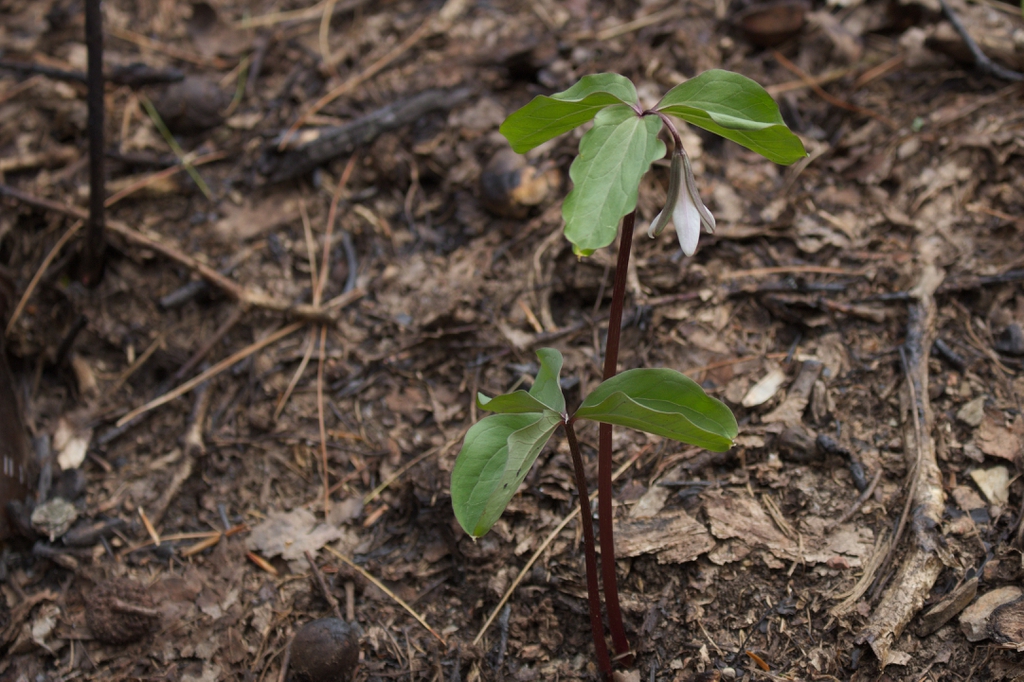
- A whorl of three 1.5 to 3 in. elliptical leaves that are actually bracts of the flower on a green to purple stem. The tips are abruptly tapering.
-
-
Stem:
- Stem Color:
- Green
- Purple/Lavender
- Stem Is Aromatic:
- No
- Stem Description:
- Green to purple stem
-
-
Landscape:
- Landscape Location:
- Walkways
- Woodland
- Landscape Theme:
- Native Garden
- Pollinator Garden
- Shade Garden
- Design Feature:
- Small groups
- Attracts:
- Bees
- Moths
- Pollinators
- Small Mammals



