


Meadow Aster Symphyotrichum pratense
Other Common Name(s):
- Phonetic Spelling
- sim-fy-oh-TRY-kum pray-TEN-see
- Description
-
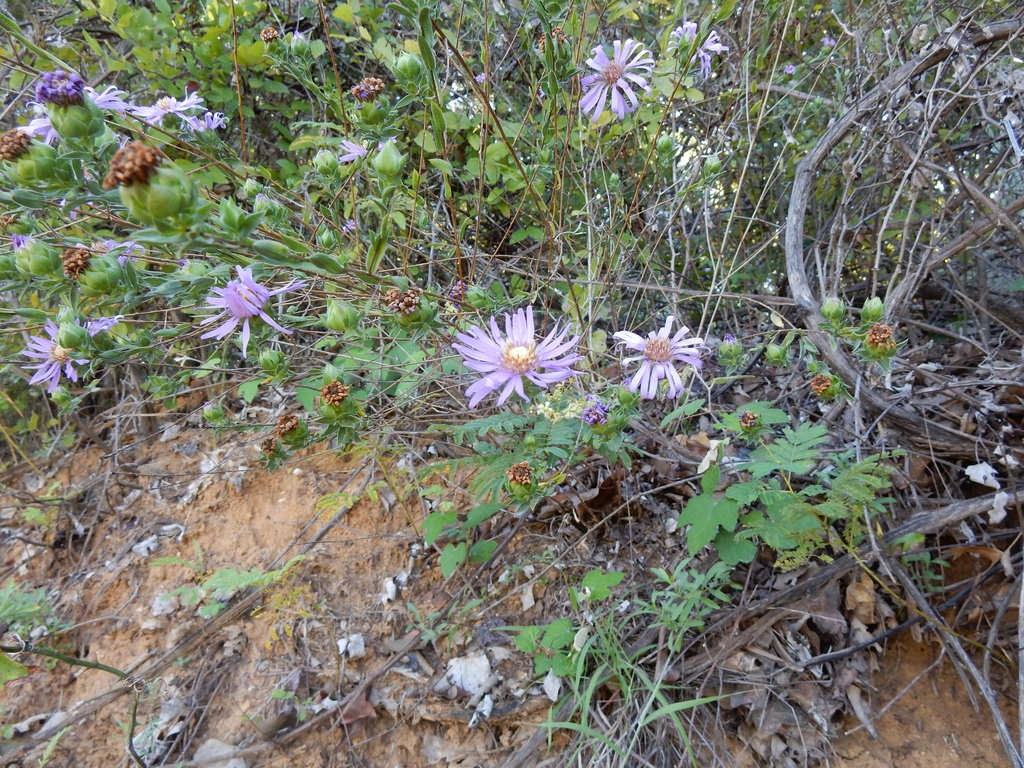
Barrens silky aster is a perennial plant native to the central and southeastern U.S.A. in the daisy family (Asteraceae). It is found in meadows, open woodlands, savannahs, pastures, ravines, ditches, and disturbed sites. It is considered critically impaired in North Carolina and several other states. The specific epithet means spreading.
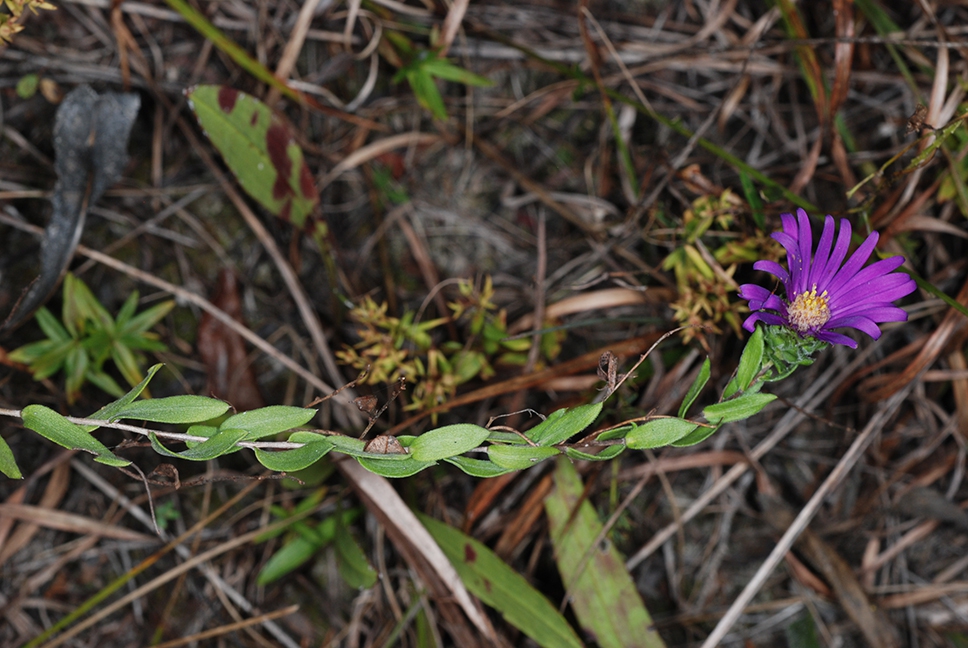
It is easily grown in average, dry to medium, well-drained soil in full sun to part shade. It withstands a wide variety of soil types. It will grow 2 to 3 feet tall and wide with some stems ascending and some erect.
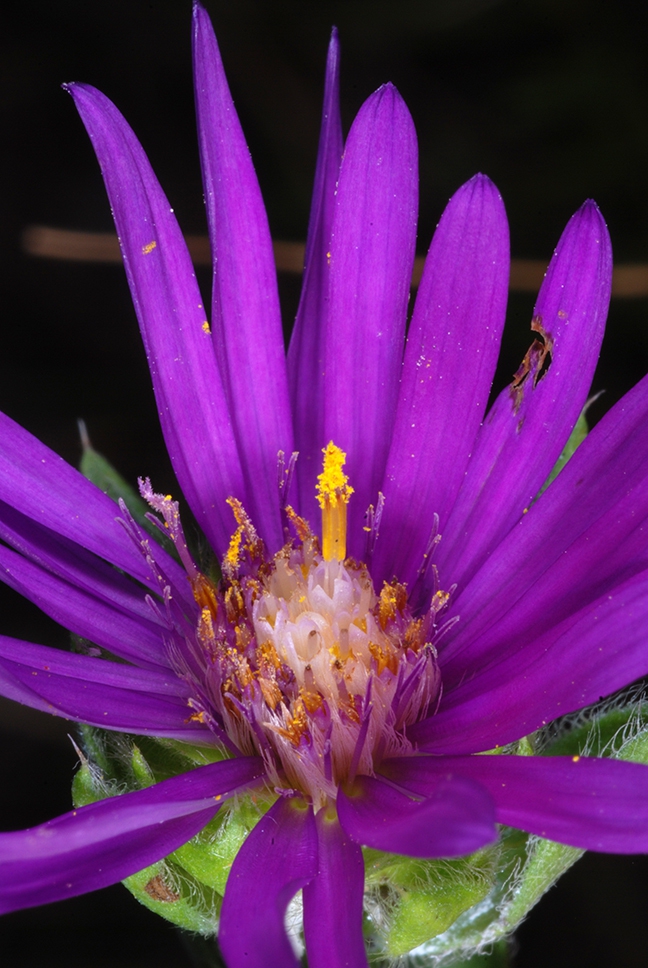
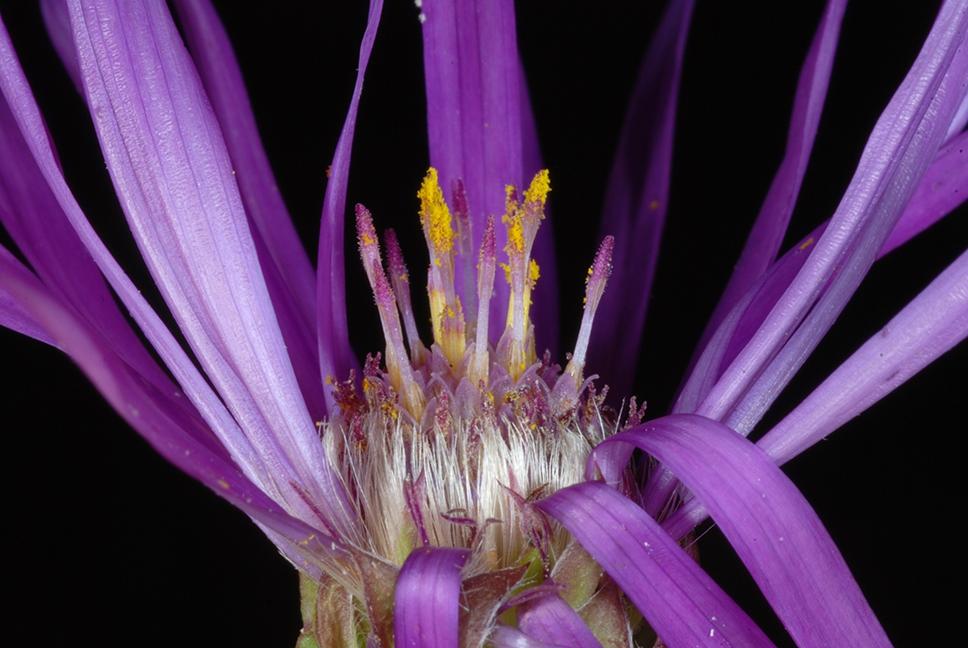
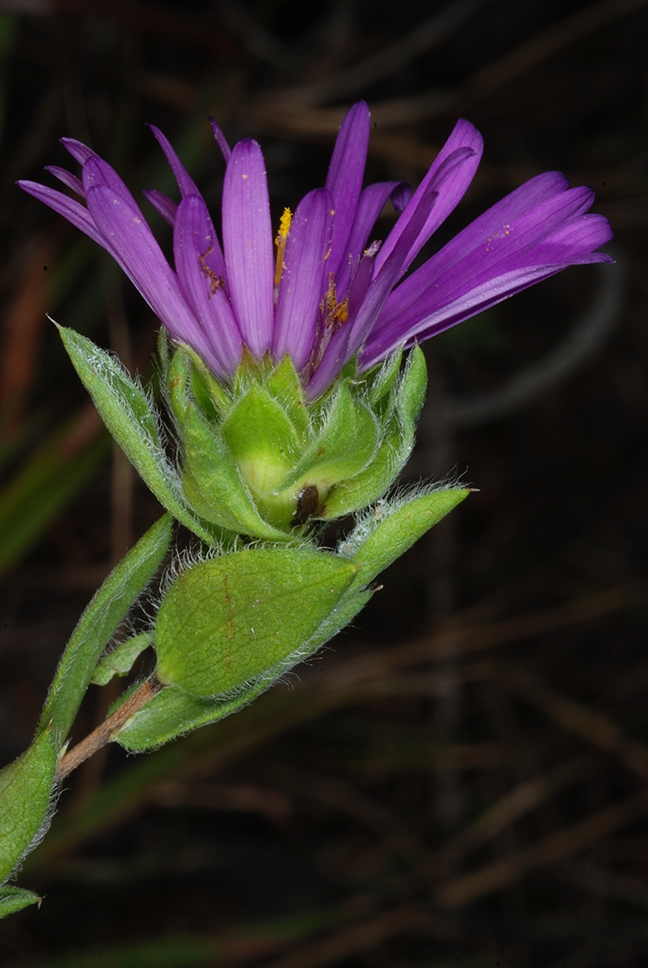
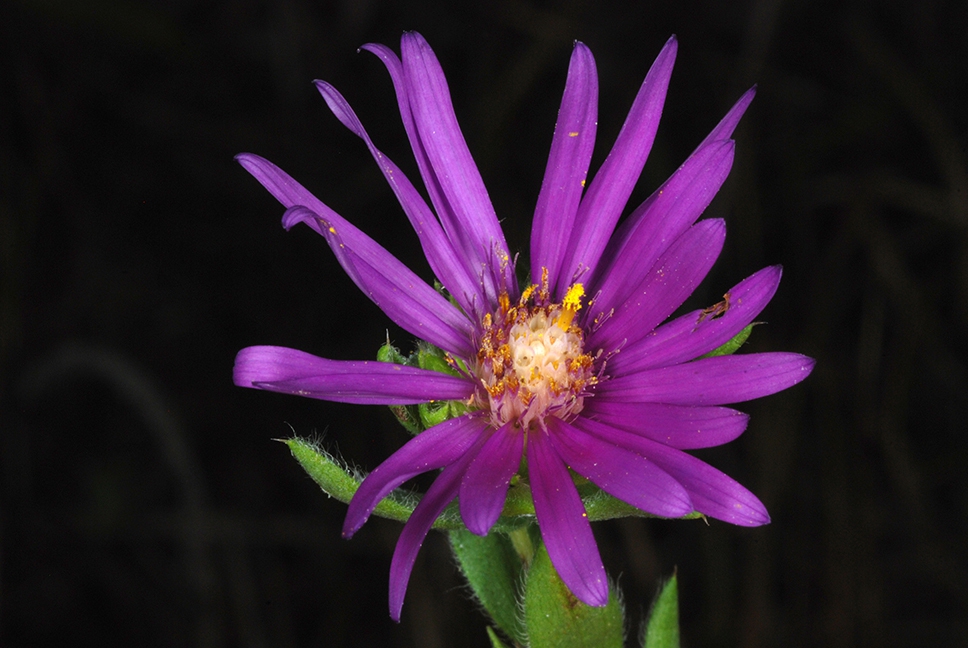
Barrens silky aster produces composite flowers with several purple rays that surround many tubular disc florets in the fall They are attractive to bees and butterflies. The leaves, stems and bracts are hairy.
Barrens silky aster could be used in a woodland or pollinator garden or in naturalized areas.
Insects, Diseases, and Other Plant Problems: Watch for powdery mildew. Allow good air circulation to help prevent.
- See this plant in the following landscape :
- Cultivars / Varieties:
-
- Tags:


- Cultivars / Varieties:
-
- Tags:
-
-
Attributes:
- Genus:
- Symphyotrichum
- Species:
- pratense
- Family:
- Asteraceae
- Life Cycle:
- Perennial
- Recommended Propagation Strategy:
- Division
- Seed
- Stem Cutting
- Country Or Region Of Origin:
- Central and southeastern U.S.A.
- Distribution:
- Alabama, Arkansas, Florida, Georgia, Kentucky, Louisiana, Mississippi, North Carolina, Tennessee, Texas, Virginia
- Wildlife Value:
- Members of the genus Symphyotrichum support the following specialized bees: Andrena (Callandrena s.l.) asteris, Andrena (Callandrena s.l.) asteroides, Andrena (Cnemidandrena) hirticincta, Andrena (Cnemidandrena) nubecula, Andrena (Callandrena s.l.) placata, Andrena (Callandrena s.l.) simplex, and Colletes simulans.
- Dimensions:
- Height: 2 ft. 0 in. - 3 ft. 0 in.
- Width: 1 ft. 6 in. - 2 ft. 0 in.
-
-
Whole Plant Traits:
- Plant Type:
- Herbaceous Perennial
- Wildflower
- Habit/Form:
- Ascending
- Erect
- Spreading
- Growth Rate:
- Medium
- Maintenance:
- Low
- Texture:
- Medium
-
-
Cultural Conditions:
- Light:
- Full sun (6 or more hours of direct sunlight a day)
- Partial Shade (Direct sunlight only part of the day, 2-6 hours)
- Soil Texture:
- Clay
- Loam (Silt)
- Sand
- Soil Drainage:
- Good Drainage
- Moist
- Occasionally Dry
- Available Space To Plant:
- 12 inches-3 feet
- NC Region:
- Coastal
- Mountains
- Piedmont
- USDA Plant Hardiness Zone:
- 4a, 4b, 5a, 5b, 6a, 6b, 7a, 7b, 8a, 8b
-
-
Fruit:
- Display/Harvest Time:
- Fall
- Winter
- Fruit Type:
- Achene
- Fruit Length:
- < 1 inch
- Fruit Width:
- < 1 inch
- Fruit Description:
- Seeds have short hairs and are dispersed by the wind
-
-
Flowers:
- Flower Color:
- Blue
- Purple/Lavender
- Flower Inflorescence:
- Panicle
- Flower Value To Gardener:
- Long Bloom Season
- Showy
- Flower Bloom Time:
- Fall
- Summer
- Flower Shape:
- Radial
- Flower Petals:
- more than 20 petals/rays
- Flower Size:
- 1-3 inches
- Flower Description:
- Composite flowers ar 1 to 1.5 inches across with blue-purple rays surrounding the center disc florets; they appear from September to November.
-
-
Leaves:
- Leaf Color:
- Gray/Silver
- Green
- White
- Leaf Feel:
- Rough
- Leaf Type:
- Simple
- Leaf Arrangement:
- Alternate
- Leaf Shape:
- Elliptical
- Leaf Margin:
- Entire
- Hairs Present:
- Yes
- Leaf Length:
- 1-3 inches
- Leaf Width:
- < 1 inch
- Leaf Description:
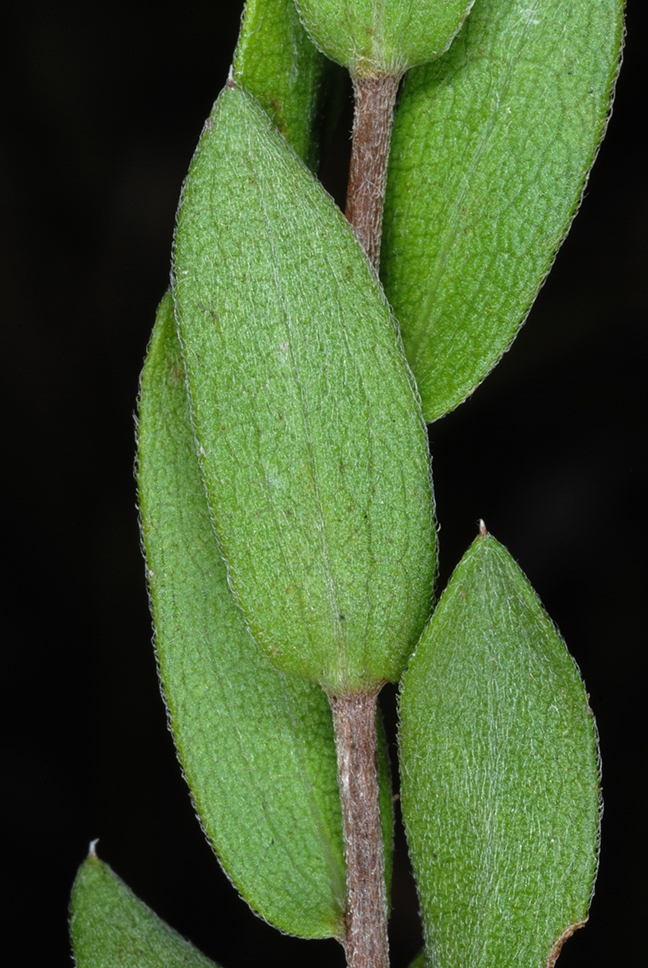
- Simple elliptical, sessile, alternate leaves with entire margins are up to 2 inches long. Leaves appear whitish because of many tiny appressed hairs.
-
-
Stem:
- Stem Color:
- Brown/Copper
- Green
- Stem Is Aromatic:
- No
- Stem Form:
- Straight
- Stem Surface:
- Smooth (glabrous)
- Stem Description:
- Ascending to erect green smooth stems are sometimes sparsely hairy
-
-
Landscape:
- Landscape Location:
- Meadow
- Naturalized Area
- Slope/Bank
- Woodland
- Landscape Theme:
- Butterfly Garden
- Pollinator Garden
- Design Feature:
- Barrier
- Small groups
- Attracts:
- Bees
- Butterflies