


Sarracenia jonesii
Common Name(s):
Previously known as:
- Sarracenia rubra subsp. jonesii
- Phonetic Spelling
- sair-ah-SEEN-ee-ah JONES-ee-eye
- Description
-
Mountain sweet pitcher plant is a rhizomatous herbaceous perennial and carnivorous plant in the pitcher plant family (Sarraceniaceae) native to the seepage bogs of the Appalachian Mountains of North and South Carolina. Typically, the species can be found in waterlogged areas due to dense, acidic, nitrogen-poor soils. The species epithet honors Frank M. Jones of Wilmington, Delaware, who studied the relationship between pitcher plants and insects.
The mountain sweet pitcher plant requires full sun during the growing season and moist to wet, acidic soils of sand and peat, but mostly sand. It is best grown in the consistently moist soils of an artificial bog garden or, if a bog garden is not available, containers are the next best option. Container media can be 50% peat and 50% perlite or sand. The plants must be kept moist at all times. This species does not like commercial potting mixes or fertilizers and is sensitive to dissolved salts in chlorinated water. Rainwater or distilled water must be used in place of tap water for container plants. The plants should not be manually fed or given food scraps. The plants goes dormant in the fall and dormancy continues until spring. The leaves will turn brown, but it is best to wait and remove the foliage in the spring just before the flowers emerge. Most reproduction comes from continuous budding along the rhizome, and propagation is easiest by rhizome division. Plants may be grown from seeds with effort but will not flower for the first 4 or 5 years.
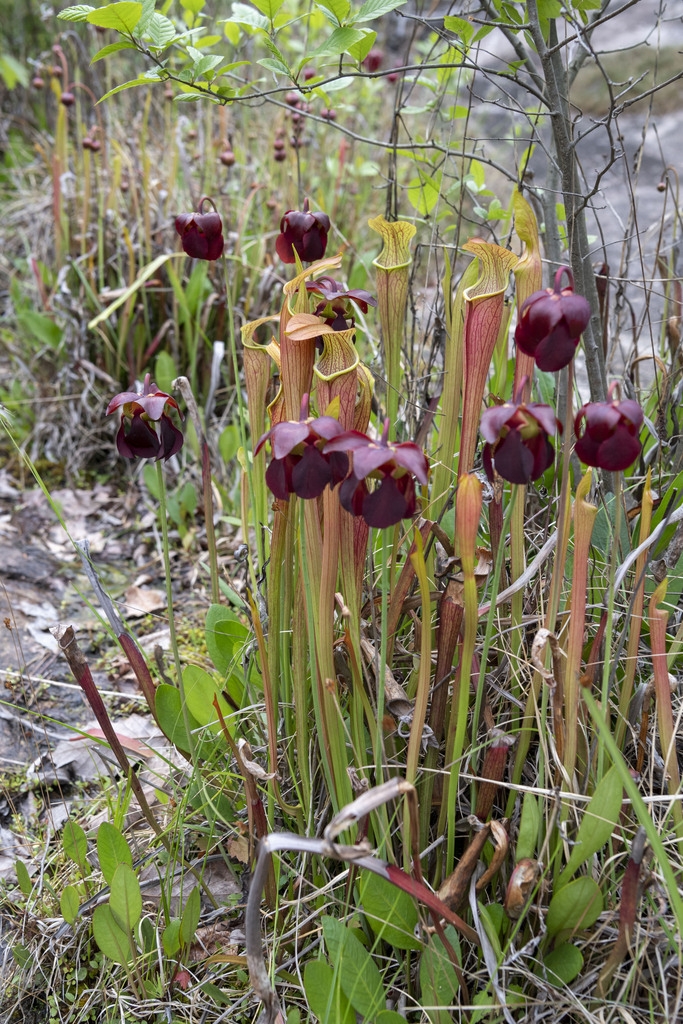
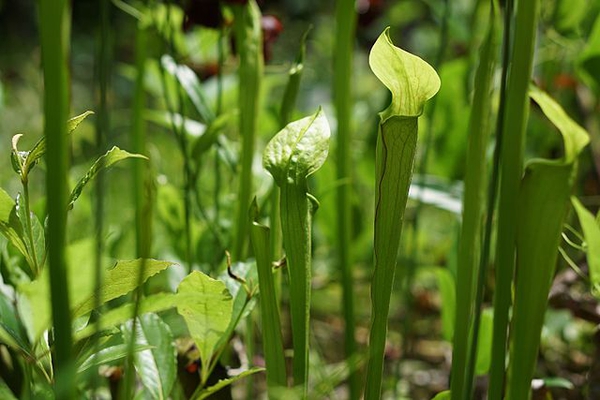
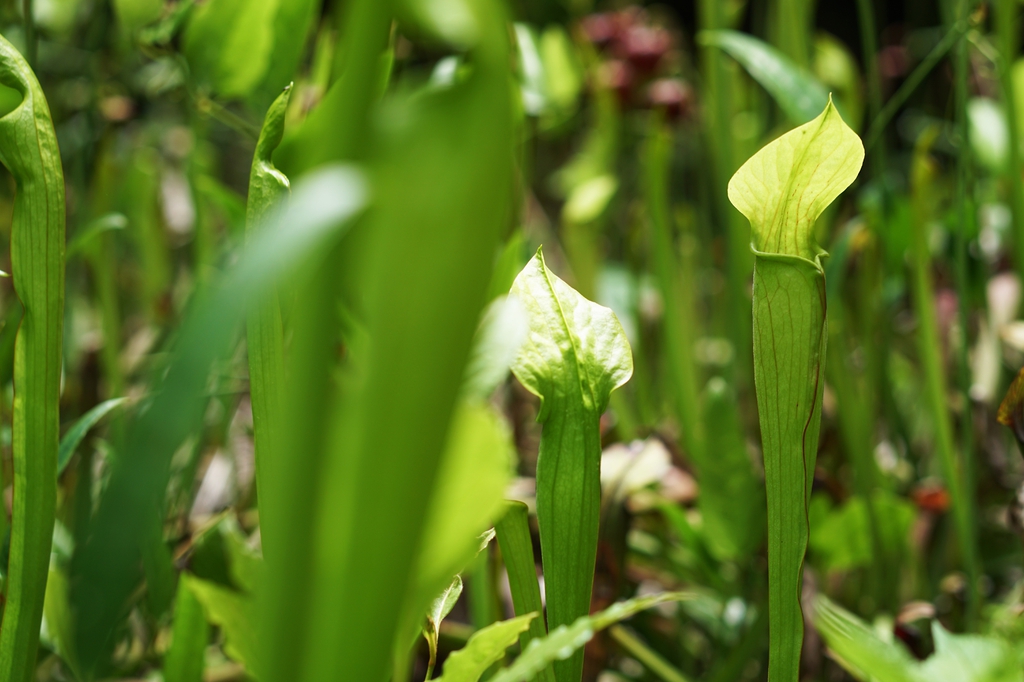
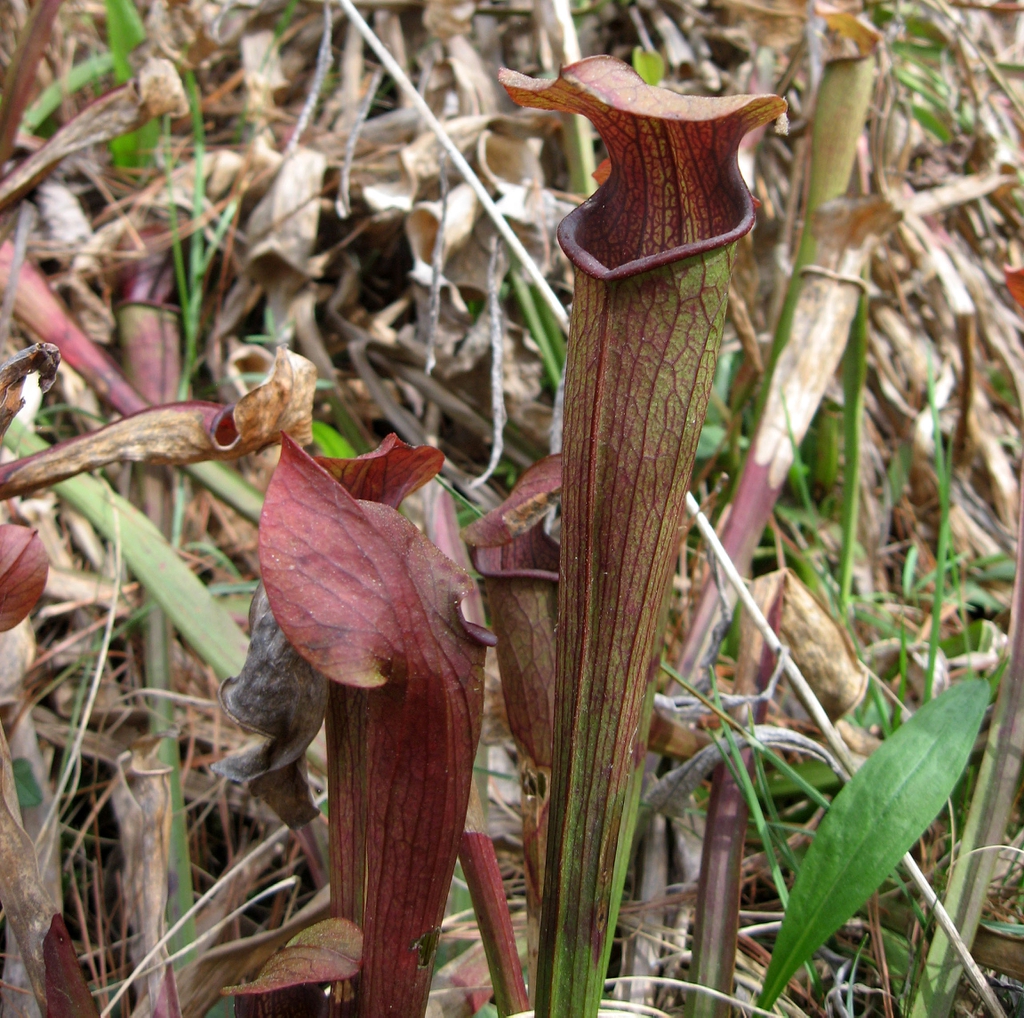
The plant has tall, slender, tubular pitchers with a slight bulge on top and a horizontal lid that prevents too much rainwater from entering the pitcher. They are bright green in color with maroon veins. Some experts believe that Sarracenia jonesii should be included as part of Sarracenia rubra. However, S. jonesii differs from S. rubra in being slightly taller with a slightly larger mouth, a bulge in the upper one-third of the pitcher, and sweeter flower aroma. The mountain sweet pitcher plant is on the Federal endangered species list. These plants are threatened by habitat loss, development, and over-collection. Never harvest these plants from the wild. They are best purchased from a reputable carnivorous plant nursery.
This species is appropriate for children’s gardens, as well as carnivorous, rain, and pollinator gardens.
Insects, Diseases and Other Plant Problems: Monitor for aphids, scale, mealybugs, moth larvae, leaf spots, and root rot.
VIDEO created by Andy Pulte for “Landscape Plant Identification, Taxonomy and Morphology” a plant identification course offered by the Department of Plant Sciences, University of Tennessee.
- Profile Video:
- See this plant in the following landscape :
- Cultivars / Varieties:
-
- Tags:


- Cultivars / Varieties:
-
- Tags:
-
-
Attributes:
- Genus:
- Sarracenia
- Species:
- jonesii
- Family:
- Sarraceniaceae
- Life Cycle:
- Perennial
- Recommended Propagation Strategy:
- Division
- Seed
- Country Or Region Of Origin:
- North and South Carolina
- Dimensions:
- Height: 1 ft. 0 in. - 2 ft. 2 in.
- Width: 1 ft. 0 in. - 2 ft. 0 in.
-
-
Whole Plant Traits:
- Plant Type:
- Carnivorous
- Herbaceous Perennial
- Native Plant
- Woody Plant Leaf Characteristics:
- Semi-evergreen
- Habit/Form:
- Clumping
- Erect
- Maintenance:
- High
-
-
Cultural Conditions:
- Light:
- Full sun (6 or more hours of direct sunlight a day)
- Soil Texture:
- Clay
- Loam (Silt)
- Sand
- Soil pH:
- Acid (<6.0)
- Soil Drainage:
- Frequent Standing Water
- Moist
- Occasionally Wet
- NC Region:
- Mountains
- USDA Plant Hardiness Zone:
- 6a, 6b, 7a, 7b, 8a, 8b
-
-
Fruit:
- Fruit Color:
- Brown/Copper
- Display/Harvest Time:
- Summer
- Fruit Type:
- Capsule
- Fruit Description:
- Seeds set in August.
-
-
Flowers:
- Flower Color:
- Red/Burgundy
- Flower Inflorescence:
- Solitary
- Flower Value To Gardener:
- Fragrant
- Showy
- Flower Bloom Time:
- Spring
- Summer
- Flower Shape:
- Star
- Flower Petals:
- 4-5 petals/rays
- Flower Description:
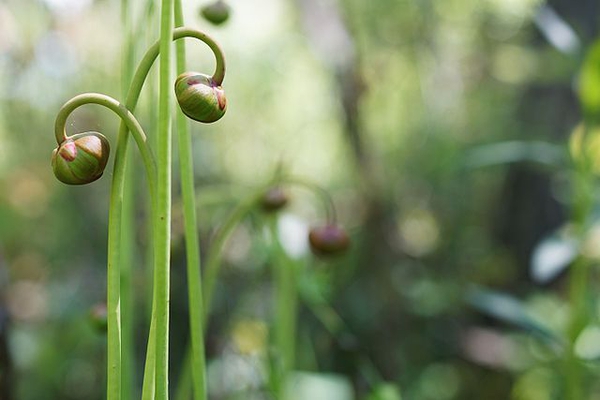
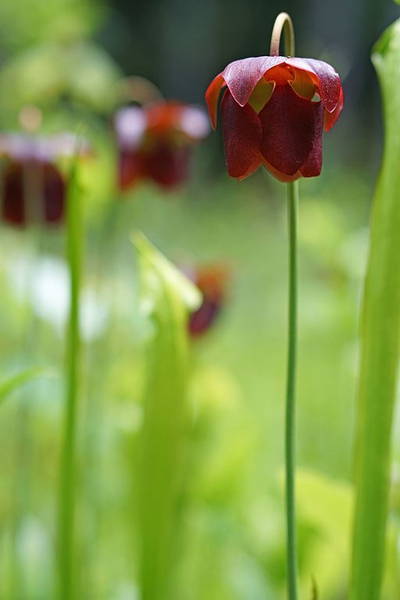
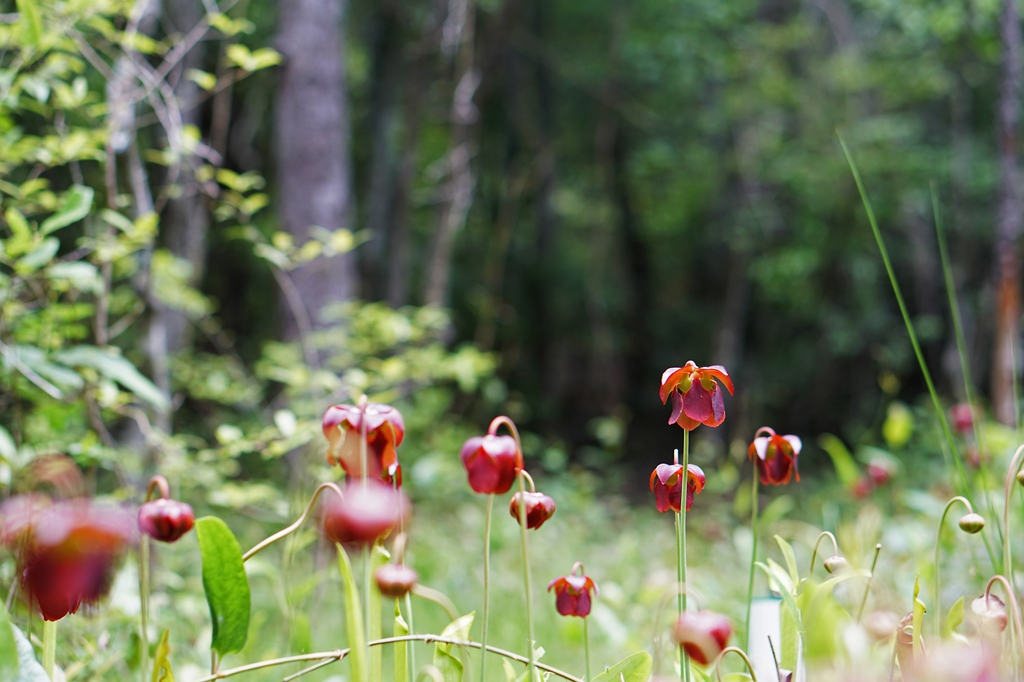
- Single bright red-maroon flowers born on slightly erect leafless stalks with 5 petals appear in April and May. Globular and produce a sweet fragrance reminiscent of violets. Sometimes two flower stalks emerge from the same rhizome point. Flower stalks are crooked at the top.
-
-
Leaves:
- Woody Plant Leaf Characteristics:
- Semi-evergreen
- Leaf Color:
- Gold/Yellow
- Green
- Leaf Value To Gardener:
- Showy
- Leaf Type:
- Simple
- Hairs Present:
- Yes
- Leaf Length:
- > 6 inches
- Leaf Description:
- Modified leaves form distinctive, upright, slender-fluted, heavily veined pitchers of variable height ranging from 12 to 18 inches tall.
-
-
Stem:
- Stem Is Aromatic:
- No
-
-
Landscape:
- Landscape Location:
- Container
- Landscape Theme:
- Native Garden
- Water Garden
- Design Feature:
- Accent
- Specimen
- Attracts:
- Bees
- Pollinators
- Resistance To Challenges:
- Wet Soil