


Pinus sylvestris
Common Name(s):
Previously known as:
- Pinus borealis
- Phonetic Spelling
- PY-nus sil-VES-tris
- Description
-
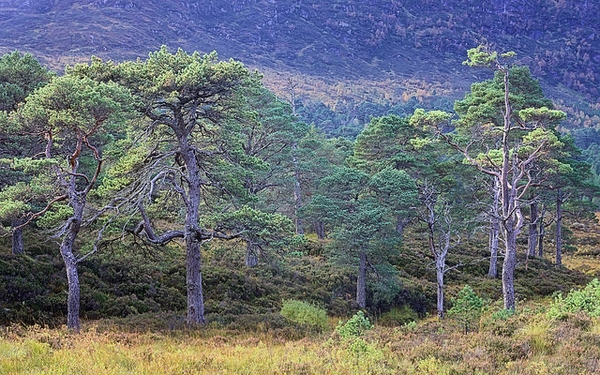
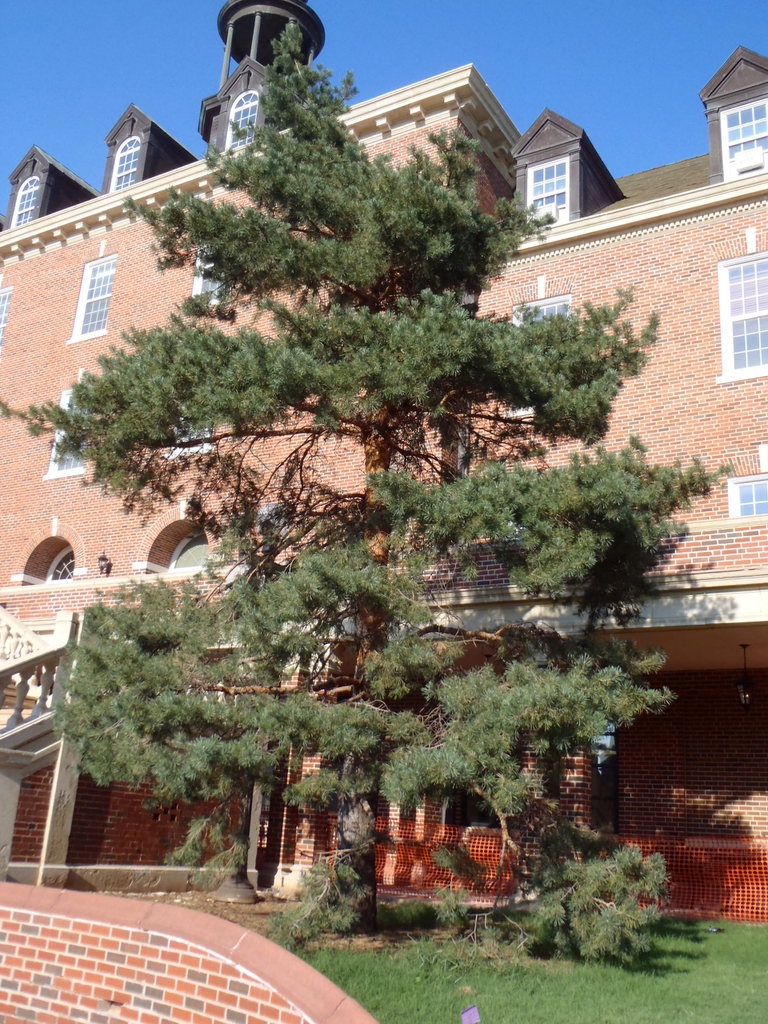
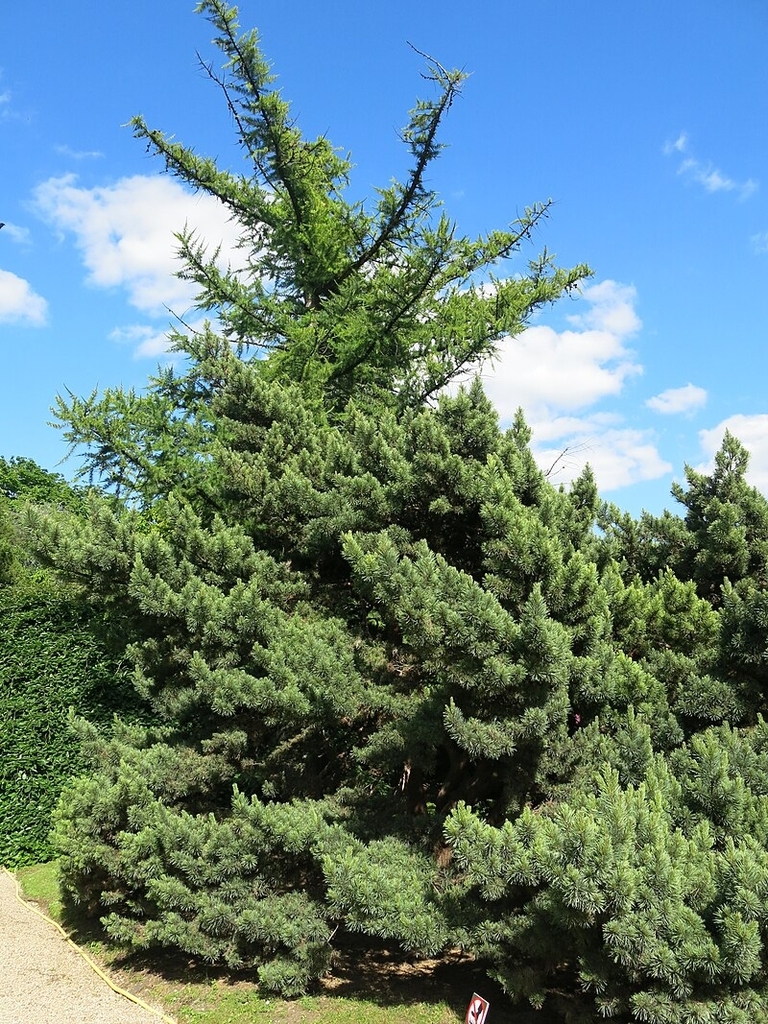
The Scots pine is a fast-growing, medium-sized evergreen conifer that usually grows to 30 to 60 feet in height and 30 to 40 feet in width. It is in the pine family (Pinaceae) and is native to northern Europe and Asia. It has become widely naturalized in the United States, particularly in the northeast and north-central areas. The epithet, sylvestris, means from the woods and forests.
The best growing conditions include full sun and well-drained, acidic soil. It will tolerate a variety of soil types including poor soils and dry sites. It prefers cooler summer weather and is intolerant of the heat and humidity of the southeast United States. It is tolerant of urban conditions and is easily transplanted.
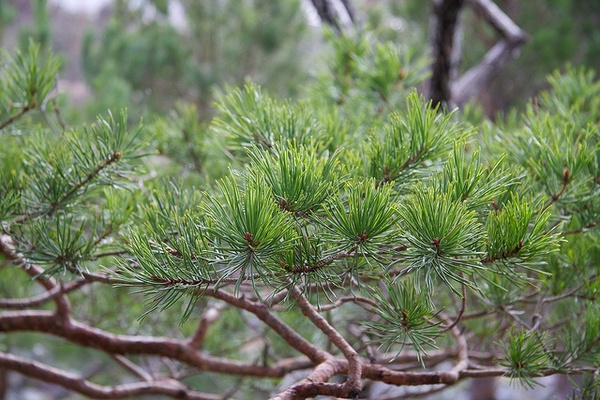
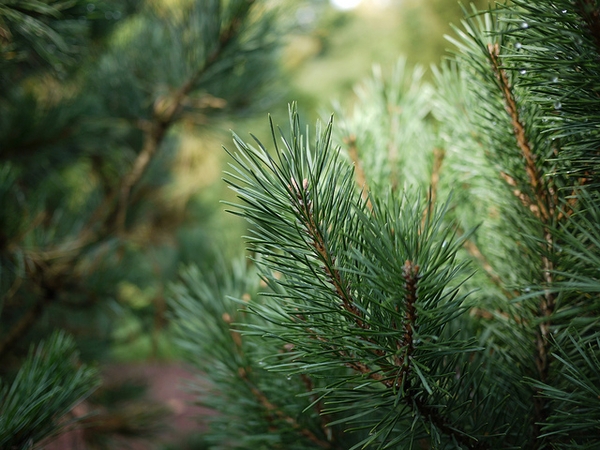
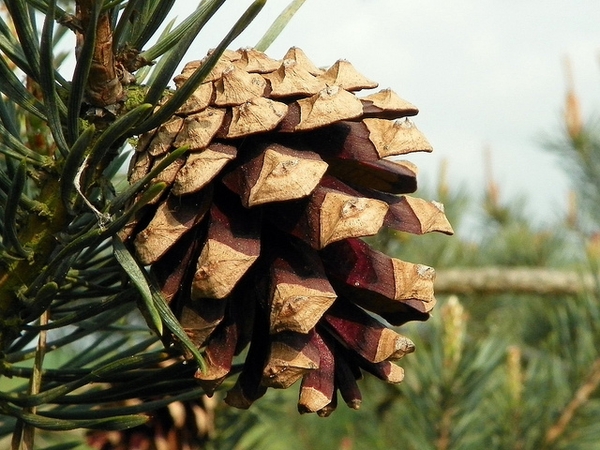
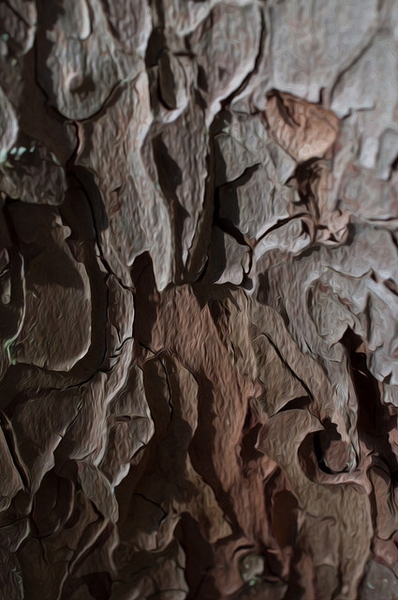
It has a conical to columnar habit and then develops an open rounded irregular crown as it ages. The bark is a distinguishing feature and is flaking, cinnamon, or orangish-reddish brown color in the upper part of the tree and reddish brown near the base. The needles are short, twisted, and bluish-green, and appear in bundles of two. The cones are gray to light brown and are about 3 inches long and point toward the stem.
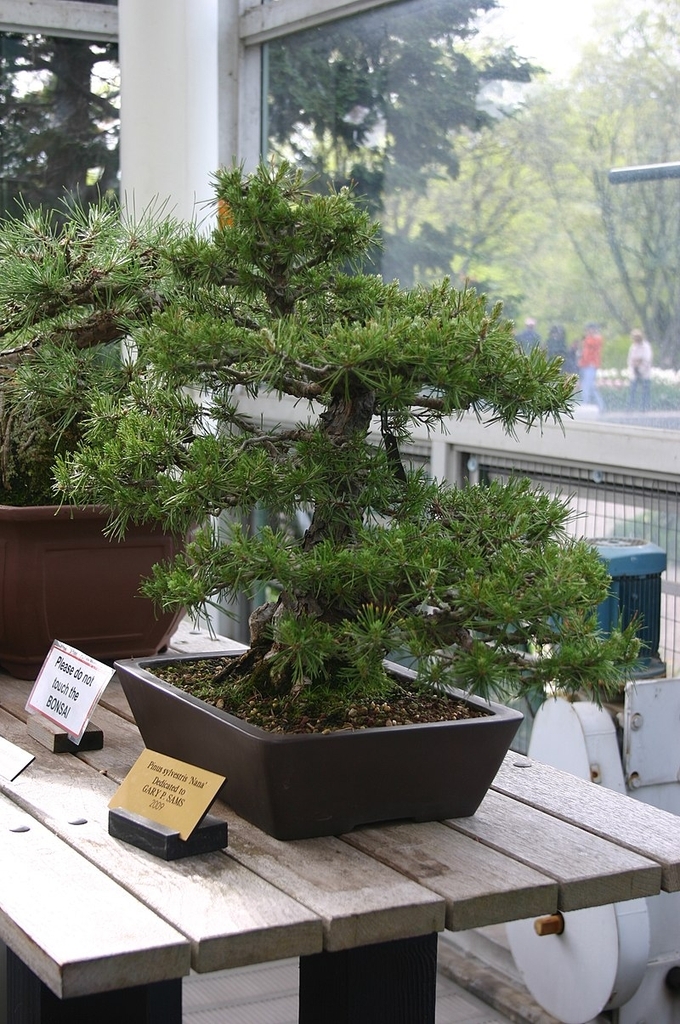
The Scots pine is commonly used as a specimen tree in the home landscape or parks. It is frequently used as a Christmas tree because of its form and the retention of its needles. Some of the smaller cultivars are used in bonsai. Birds and small mammals enjoy this tree as a habitat and as a source of food.
Quick ID Hints:
- bark and stems are orangish-brown or cinnamon-colored on the upper branches and reddish-brown at the base
- blue-green needles twisted, stiff, short, and bundles of two
- cones in groups of 2 to 4 and point toward the stem
Insect, Diseases, and Other Plant Problems: The Scots pine is susceptible to Sphaeropsis (Diplodia) tip blight. Possible insect pests include pine wilt nematode, sawflies, moths, and scale.
VIDEO created by Ryan Contreras for “Landscape Plant Materials I: Deciduous Hardwoods and Conifers or Landscape Plant Materials II: Spring Flowering Trees and Shrubs” a plant identification course offered by the Department of Horticulture at Oregon State University
- Profile Video:
- See this plant in the following landscape :
- Cultivars / Varieties:
-
- 'Albyn'
mat-like shrub, 15 inches tall - 'Aurea'
Yellow needle, yellow-green shoots, green in summer, golden in winter - 'Fastigiata'
Narrow, columnar habit, up to 50 feet, upright branches - 'Glauca Nana'
semi-dwarf blue, rounded scotch pine - 'Gold Coin'
Yellow needle, yellow-green shoots, green in summer, golden in winter - 'Gold Medal'
Yellow needle, yellow-green shoots, green in summer, golden in winter - 'Hillside Creeper'
low growing, creeping form - 'Nana'
dwarf, densely branched, blue-green needles - 'Pendula'
pendulous branches - 'Watereri'
10 to 12 feet tall and wide, needles blue green
- 'Albyn'
- 'Albyn', 'Aurea', 'Fastigiata', 'Glauca Nana', 'Gold Coin', 'Gold Medal', 'Hillside Creeper', 'Nana', 'Pendula', 'Watereri'
- Tags:


- Cultivars / Varieties:
-
- 'Albyn'
mat-like shrub, 15 inches tall - 'Aurea'
Yellow needle, yellow-green shoots, green in summer, golden in winter - 'Fastigiata'
Narrow, columnar habit, up to 50 feet, upright branches - 'Glauca Nana'
semi-dwarf blue, rounded scotch pine - 'Gold Coin'
Yellow needle, yellow-green shoots, green in summer, golden in winter - 'Gold Medal'
Yellow needle, yellow-green shoots, green in summer, golden in winter - 'Hillside Creeper'
low growing, creeping form - 'Nana'
dwarf, densely branched, blue-green needles - 'Pendula'
pendulous branches - 'Watereri'
10 to 12 feet tall and wide, needles blue green
- 'Albyn'
- 'Albyn', 'Aurea', 'Fastigiata', 'Glauca Nana', 'Gold Coin', 'Gold Medal', 'Hillside Creeper', 'Nana', 'Pendula', 'Watereri'
- Tags:
-
-
Attributes:
- Genus:
- Pinus
- Species:
- sylvestris
- Family:
- Pinaceae
- Uses (Ethnobotany):
- This plant is cultivated for windbreaks and commercially grown for Christmas trees. It is an important timber tree in Europe.
- Life Cycle:
- Woody
- Recommended Propagation Strategy:
- Seed
- Country Or Region Of Origin:
- Northern Europe and Northern Asia
- Distribution:
- Native: Albania, Austria, Baltic States, Belarus, Belgium, Bulgaria, Central European Russia, Czechoslovakia, East European Russia, Finland, France, Germany, Great Britain, Greece, Hungary, Inner Mongolia, Italy, Kazakhstan, Manchuria, North Caucasus, Northern European Russia, Norway, Poland, Romania, Southern European Russia, Spain, Sweden, Switzerland, Turkey, Ukraine, West Siberia, and Yugoslavia. Introduced: Ireland, Korea, Netherlands, Newfoundland, Portugal, and the United States--IL, MN, NY, VT, and WI
- Wildlife Value:
- This plant supports Imperial Moth (Eacles imperialis) larvae which have one brood per season and appear from April-October in the south. Adult Imperial Moths do not feed. Porcupines consume the bark, pine grosbeak feed on the buds.
- Play Value:
- Easy to Grow
- Screening
- Wildlife Cover/Habitat
- Wildlife Food Source
- Dimensions:
- Height: 30 ft. 0 in. - 60 ft. 0 in.
- Width: 30 ft. 0 in. - 40 ft. 0 in.
-
-
Whole Plant Traits:
- Plant Type:
- Perennial
- Shrub
- Tree
- Woody Plant Leaf Characteristics:
- Needled Evergreen
- Habit/Form:
- Columnar
- Conical
- Open
- Pyramidal
- Rounded
- Growth Rate:
- Rapid
- Maintenance:
- Low
- Texture:
- Medium
-
-
Cultural Conditions:
- Light:
- Full sun (6 or more hours of direct sunlight a day)
- Soil Texture:
- Clay
- Loam (Silt)
- Sand
- Soil pH:
- Acid (<6.0)
- Soil Drainage:
- Good Drainage
- Moist
- Occasionally Dry
- Available Space To Plant:
- 24-60 feet
- NC Region:
- Mountains
- Piedmont
- USDA Plant Hardiness Zone:
- 2a, 2b, 3a, 3b, 4a, 4b, 5a, 5b, 6a, 6b, 7a, 7b
-
-
Fruit:
- Fruit Color:
- Brown/Copper
- Display/Harvest Time:
- Fall
- Fruit Length:
- 1-3 inches
- Fruit Width:
- 1-3 inches
- Fruit Description:
- The fruit is a small, oval, brown cone that measures 0.5 inches long initially. At maturity, the cone measures 1.5 to 2.5 inches long and has scales without spines.
-
-
Flowers:
- Flower Color:
- Gold/Yellow
- Green
- Insignificant
- Purple/Lavender
- Red/Burgundy
- Flower Bloom Time:
- Spring
- Flower Size:
- < 1 inch
- Flower Description:
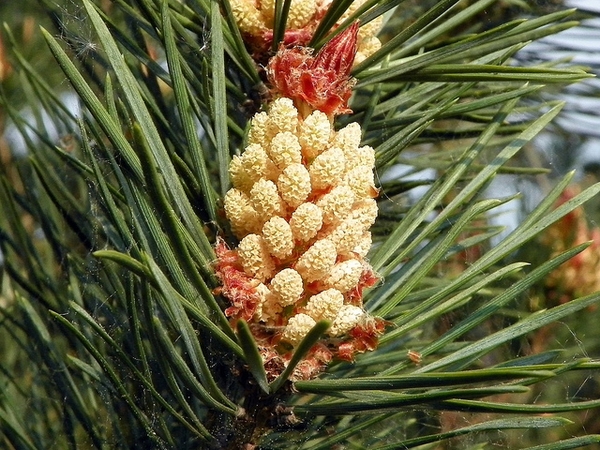
- There are separate male and female cones on the same tree. The male pollen cone is a rounded cylinder, measuring 3/8 to 1/2-inch long, and maybe yellowish-green to red. They appear in dense clusters at the base of the new stems or candles. The female is smaller, oval, 1/4 to 3/8-inch long, reddish-purple, and appears on the tips of the new candle.
-
-
Leaves:
- Woody Plant Leaf Characteristics:
- Needled Evergreen
- Leaf Color:
- Blue
- Green
- Leaf Feel:
- Prickly
- Leaf Type:
- Needles
- Simple
- Leaf Arrangement:
- Alternate
- Leaf Shape:
- Filiform
- Leaf Margin:
- Entire
- Hairs Present:
- No
- Leaf Length:
- 1-3 inches
- Leaf Width:
- < 1 inch
- Leaf Description:
- The leaves are needles and measure 1.5 to 3.5 inches long and appear in bundles of two. They are dark green to bluish-green, stiff, and spiral around the branch.
-
-
Bark:
- Bark Color:
- Dark Brown
- Orange
- Red/Burgundy
- Surface/Attachment:
- Furrowed
- Peeling
- Bark Description:
- The bark in the upper part of the tree is orange/red-brown and flaking. The lower part of the tree, the bark appears reddish-brown and may have furrows.
-
-
Stem:
- Stem Color:
- Brown/Copper
- Green
- Stem Is Aromatic:
- No
- Stem Surface:
- Smooth (glabrous)
- Stem Description:
- The young stems are greenish-brown, dull, and smooth. As the stem ages, it becomes orangish-brown with thin scaly bark. The buds are reddish-brown, 0.5 inches long with a dull point, and cylinder-shaped. They are covered in lance-shaped scales.
-
-
Landscape:
- Landscape Location:
- Coastal
- Lawn
- Meadow
- Patio
- Pool/Hardscape
- Recreational Play Area
- Small Space
- Walkways
- Landscape Theme:
- Children's Garden
- Nighttime Garden
- Rock Garden
- Winter Garden
- Design Feature:
- Accent
- Foundation Planting
- Hedge
- Screen/Privacy
- Small groups
- Specimen
- Attracts:
- Moths
- Small Mammals
- Songbirds
- Resistance To Challenges:
- Deer
- Poor Soil
- Urban Conditions