


Panicum virgatum 'Heavy Metal'
Common Name(s):
- Phonetic Spelling
- PAN-ih-kum ver-GAY-tum HEH-vee MEH-tal
- Description
-
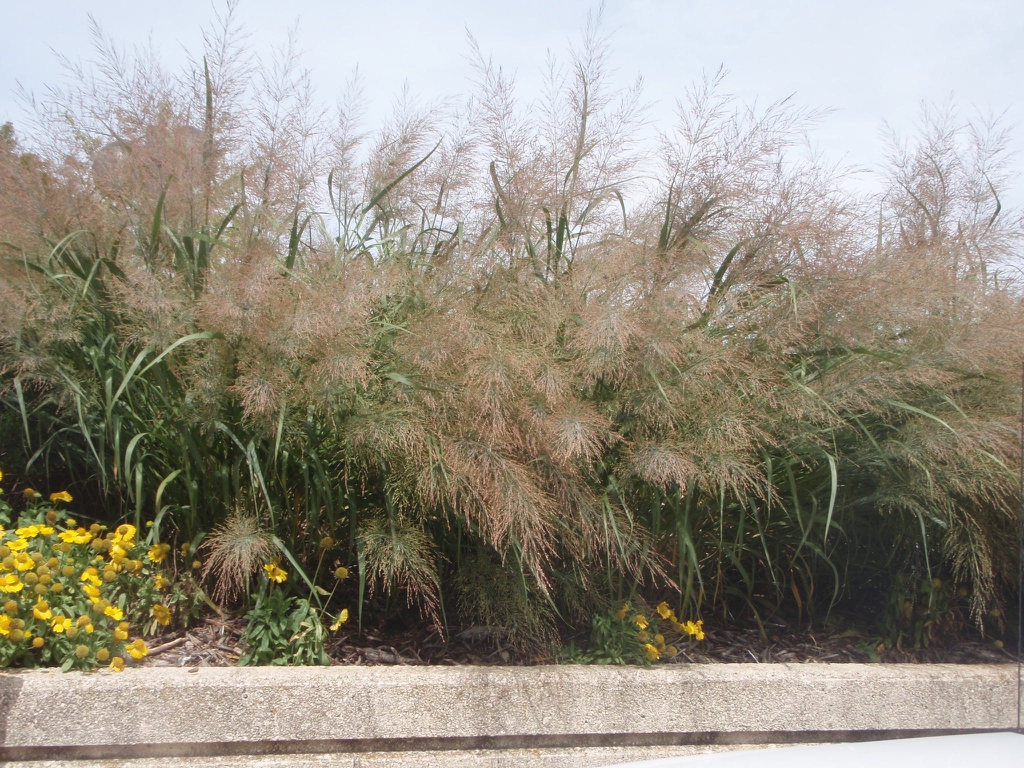
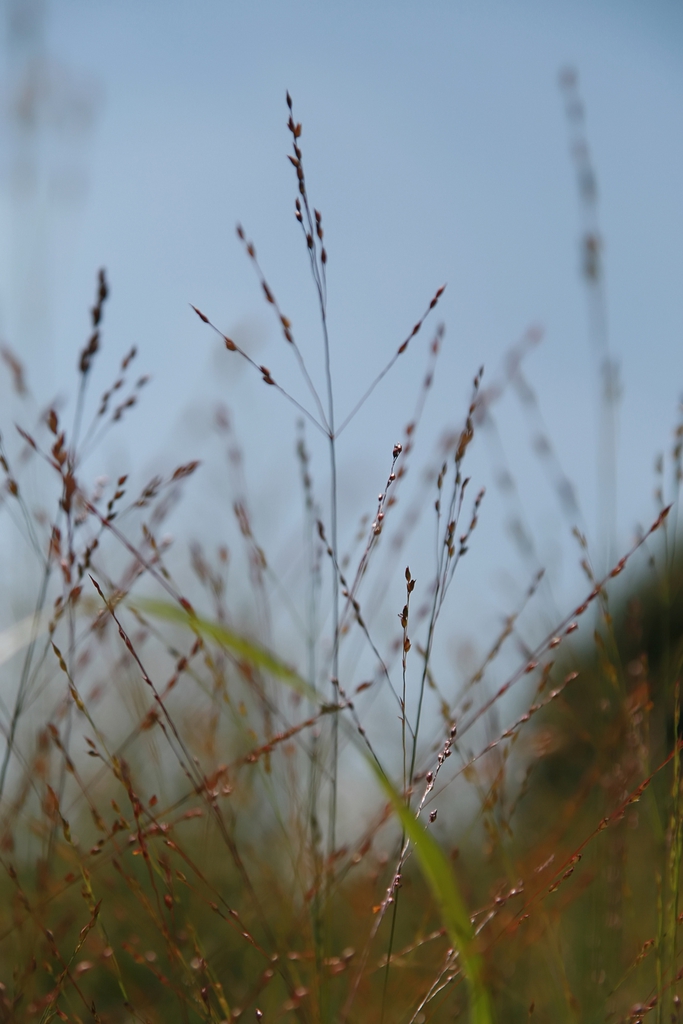
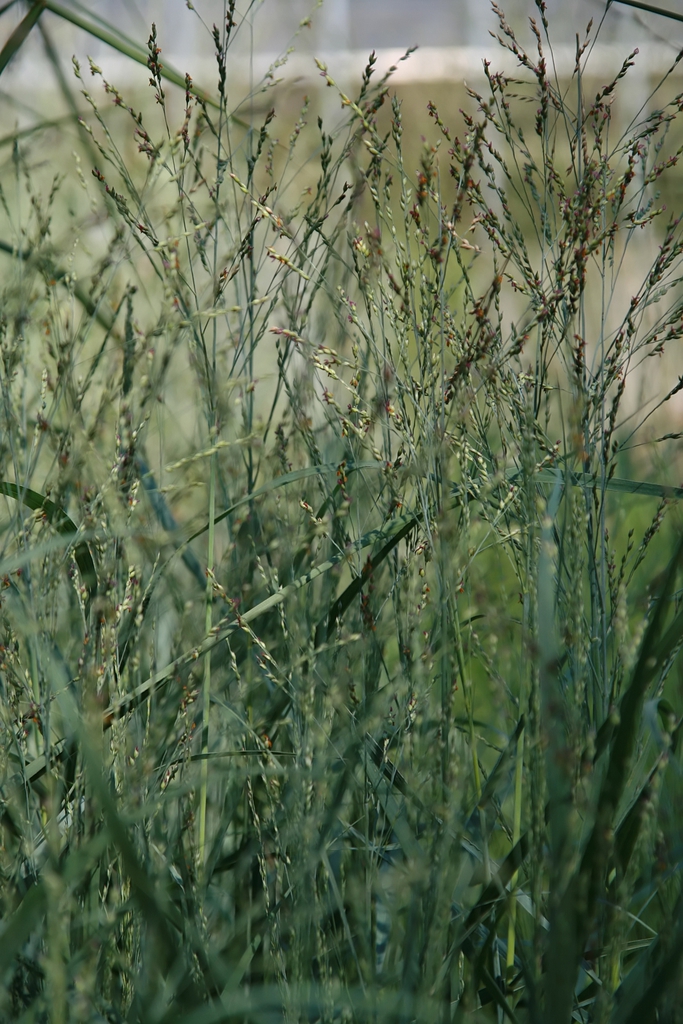
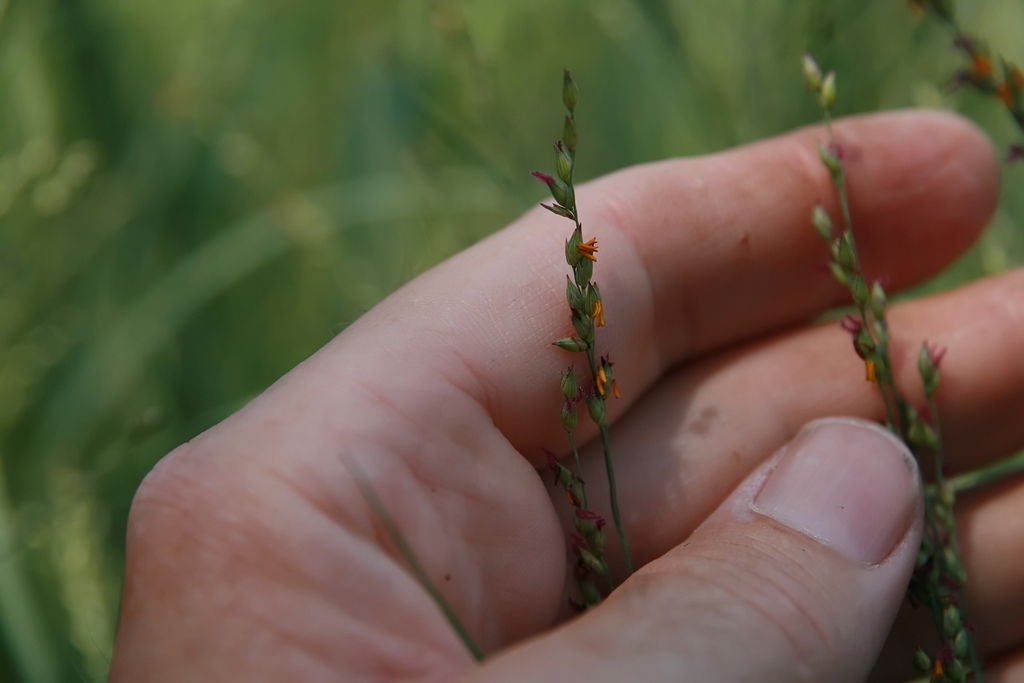
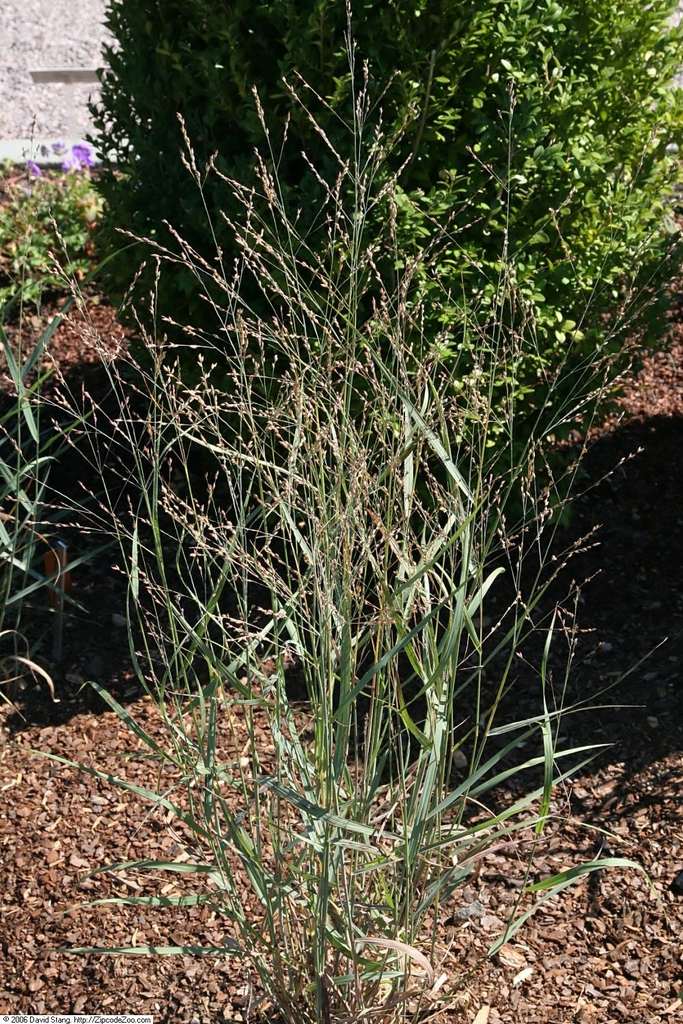
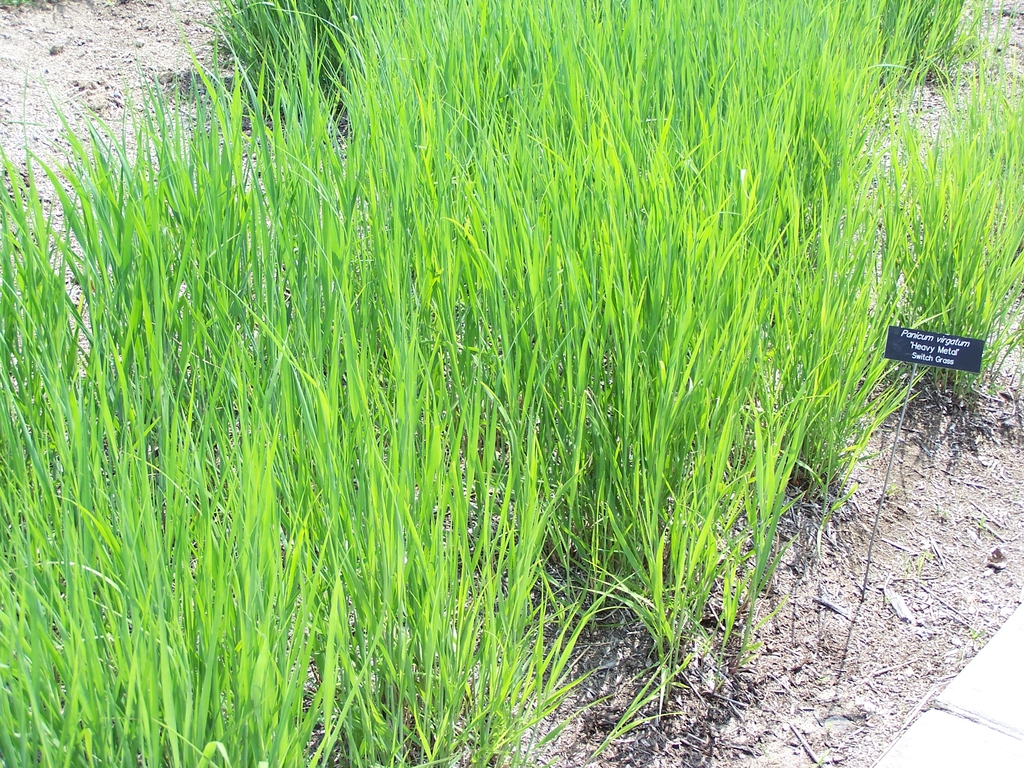
Panicum virgatum 'Heavy Metal' is a deciduous perennial, ornamental grass cultivar, which is known for its compact, upright, columnar, clumping habit and stiff, metallic blue-green foliage. The foliage transitions to amber yellow in the fall and then to tan during the winter months. Its flowers are panicles of airy, pink-tinged blooms with dark burgundy seed heads. The seed heads are a food source for birds and small mammals over the winter, and the foliage provides shelter. The plant grows 4 to 5 feet tall and 1 to 2 feet wide. This plant is one of the oldest switchgrass cultivars, and was introduced in the 1980s by Kurt Bluemel in Maryland.
Prefers full sun, and it will tolerate partial shade, but heavily shaded sites may cause the plant to topple over. Grows well in moist, sandy, or clay soil, and it is tolerant of both wet and dry soils. In late winter to early spring, prune this grass to the ground. Winter hardy in zones 4 to 9. This plant is easy to grow, requires very little maintenance, and is deer-resistant.
Panicum virgatum 'Heavy Metal' may be used as an accent plant or planted in mass in borders, meadows, or naturalized areas. Since it is wet soil-tolerant, it may also be used in rain gardens, bog gardens, and near ponds.
Insects, Diseases, and Other Plant Problems: No significant insect pests or diseases. Monitor for Japanese beetles, spider mites, and thrips. Crown rot and root rot can occur. May be susceptible to rust in hot and humid conditions.
- See this plant in the following landscape :
- Cabarrus County Extension Demonstration Garden, Pollinators
- Cultivars / Varieties:
-
- Tags:


- Cultivars / Varieties:
-
- Tags:
-
-
Attributes:
- Genus:
- Panicum
- Species:
- virgatum
- Family:
- Poaceae
- Life Cycle:
- Perennial
- Fire Risk Rating:
- high flammability
- Wildlife Value:
- The seeds provide a food source for birds and small mammals.
- Play Value:
- Colorful
- Easy to Grow
- Wildlife Cover/Habitat
- Wildlife Food Source
- Dimensions:
- Height: 4 ft. 0 in. - 5 ft. 0 in.
- Width: 1 ft. 0 in. - 2 ft. 0 in.
-
-
Whole Plant Traits:
- Plant Type:
- Herbaceous Perennial
- Ornamental Grasses and Sedges
- Woody Plant Leaf Characteristics:
- Deciduous
- Habit/Form:
- Clumping
- Columnar
- Erect
- Growth Rate:
- Rapid
- Maintenance:
- Low
- Texture:
- Fine
-
-
Cultural Conditions:
- Light:
- Full sun (6 or more hours of direct sunlight a day)
- Partial Shade (Direct sunlight only part of the day, 2-6 hours)
- Soil Texture:
- Clay
- Sand
- Soil pH:
- Acid (<6.0)
- Alkaline (>8.0)
- Neutral (6.0-8.0)
- Soil Drainage:
- Moist
- Occasional Flooding
- Occasionally Dry
- Occasionally Wet
- Available Space To Plant:
- 12 inches-3 feet
- NC Region:
- Coastal
- Mountains
- Piedmont
- USDA Plant Hardiness Zone:
- 4a, 4b, 5a, 5b, 6a, 6b, 7a, 7b, 8a, 8b, 9a, 9b
-
-
Fruit:
- Fruit Type:
- Caryopsis
-
-
Flowers:
- Flower Color:
- Pink
- Flower Inflorescence:
- Panicle
- Flower Value To Gardener:
- Good Cut
- Good Dried
- Long-lasting
- Showy
- Flower Bloom Time:
- Summer
- Flower Description:
- The flowers are displayed on panicles with airy pink-tinted blooms and dark burgundy seed heads, blooming from mid-summer to late summer, and lasting through February.
-
-
Leaves:
- Woody Plant Leaf Characteristics:
- Deciduous
- Leaf Color:
- Blue
- Gray/Silver
- Leaf Feel:
- Glossy
- Leaf Value To Gardener:
- Showy
- Deciduous Leaf Fall Color:
- Cream/Tan
- Gold/Yellow
- Leaf Type:
- Sheath
- Leaf Shape:
- Linear
- Leaf Margin:
- Entire
- Hairs Present:
- No
- Leaf Length:
- > 6 inches
- Leaf Description:
- The leaves are linear, upright, stiff, and metallic blue-green. The fall color is amber-yellow, and the winter color is tan.
-
-
Stem:
- Stem Is Aromatic:
- No
-
-
Landscape:
- Landscape Location:
- Container
- Meadow
- Landscape Theme:
- Rain Garden
- Design Feature:
- Border
- Mass Planting
- Attracts:
- Butterflies
- Small Mammals
- Songbirds
- Resistance To Challenges:
- Black Walnut
- Deer
- Drought
- Dry Soil
- Erosion
- Pollution
- Wet Soil