


Smooth-bark Lithocarpus Lithocarpus glaber
Other Common Name(s):
Previously known as:
- Pasania sieboldiana
- Pasanina glabra f. microphylla
- Quercus glabra
- Phonetic Spelling
- KWER-kus GLAW-kuh
- This plant has low severity poison characteristics.
- See below
- Description
-
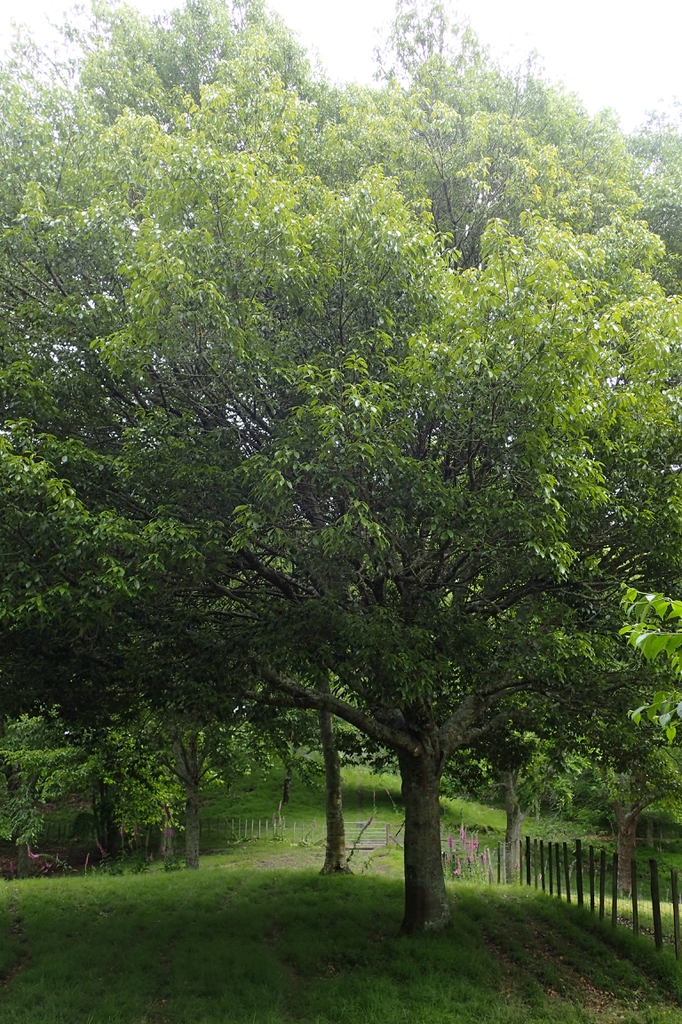
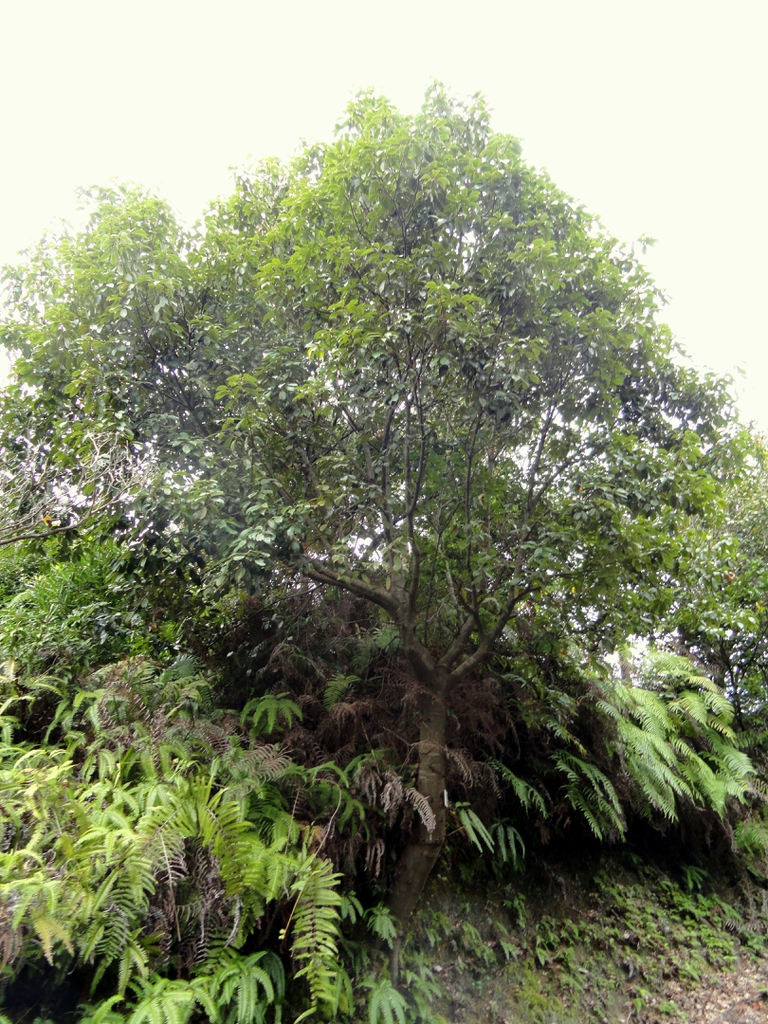
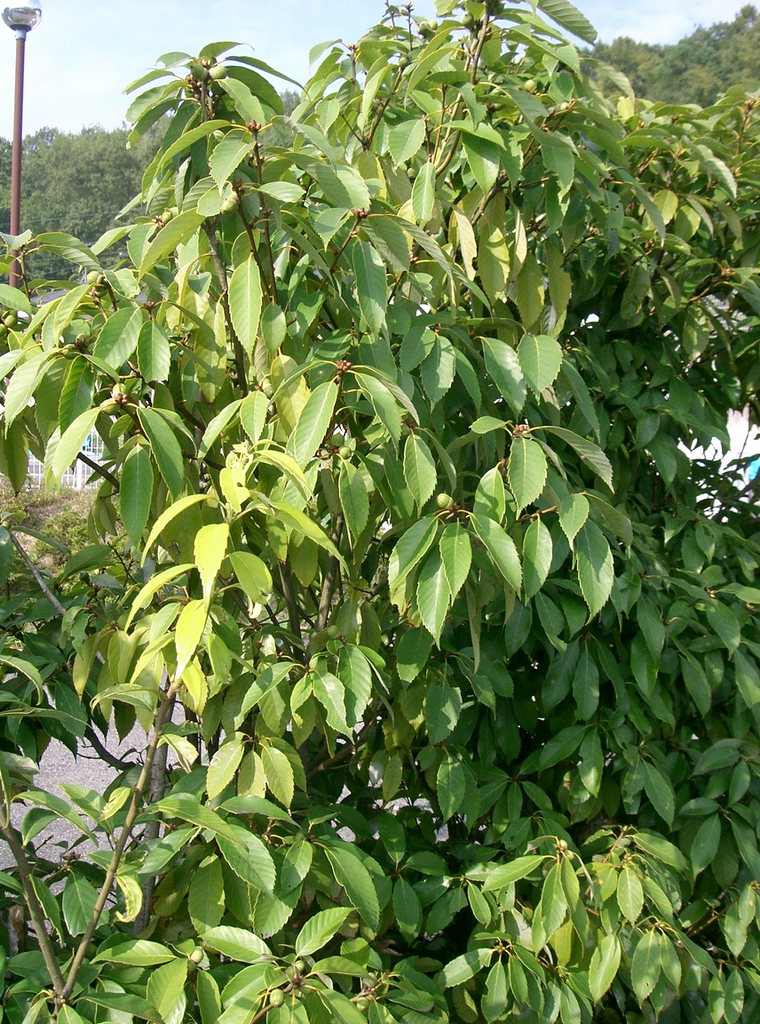
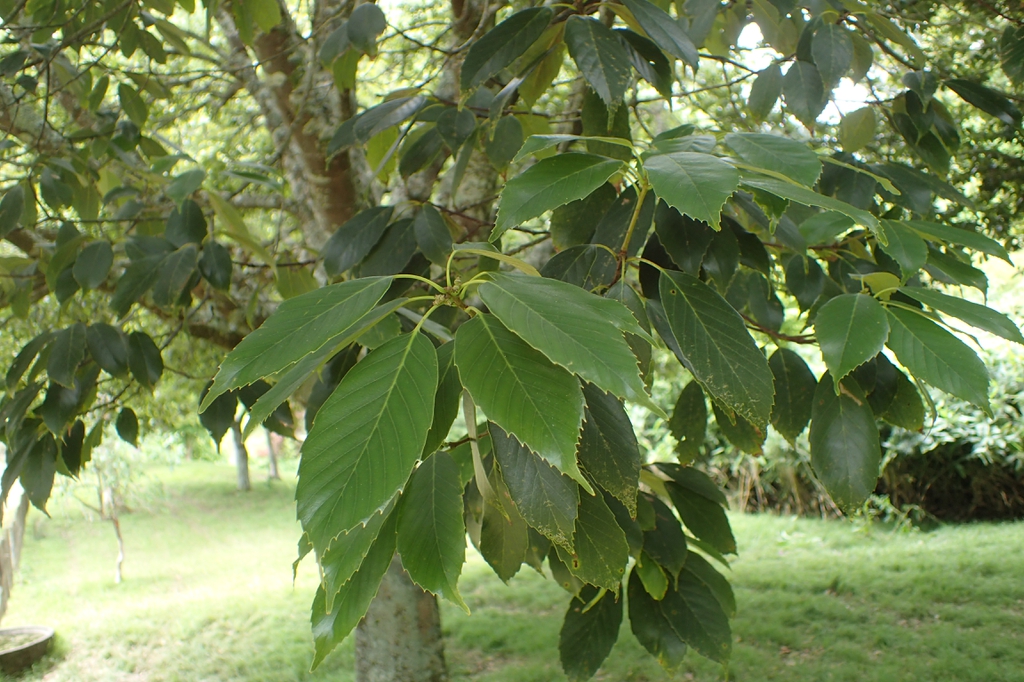
Japanese oak is a multi-stemmed, broadleaf evergreen tree native to the temperate forests of Southern China, Japan, and Taiwan and is a member of the oak family (Fagaceae). It grows 20-30 feet tall and 10-15 feet wide with a broad, rounded crown and dense foliage. Its bark is smooth and gray; the leaves are glossy, leathery, elliptical to oblong, dark green on the upper surface, and pale or glaucous underneath. Inconspicuous male and female yellow blooms appear in the summer, followed by acorns with a woody cupule. The genus name Lithocarpus is derived from two Greek words: lithos, meaning stone, and karpos, meaning fruit. This refers to the tree's hard acorns.
Prefers full sun, high humidity, and moist, humus-rich or loamy, well-drained soils with an acidic to mildly alkaline pH. Protect from harsh cold weather, since the tree's leaves are prone to cold damage. It is hardy in zones 7-10. It tolerates pruning in late winter or early spring. The Japanese oak may also be pruned and shaped as a large shrub for screening and privacy. It is mildly resistant to deer, but its acorns are a food source and nesting site for wildlife, including birds and small mammals. Propagated by seeds.
The Japanese oak has attractive year-round foliage and is best considered as a shade tree in an urban landscape or park. As a shrub, it provides shade, privacy, and screening.
Insects, Diseases, and Other Plant Problems: Monitor for aphids, scale, leaf miner, wood-boring beetles, and caterpillars. Generally disease-resistant but in poorly drained soils may be susceptible to root rot, leaf spot, and oak wilt. Protect from cold damage.
If the leaves or acorns are ingested, they are toxic to humans, cats, and dogs, causing gastrointestinal distress.
- See this plant in the following landscape :
- Cultivars / Varieties:
-
- Tags:


- Cultivars / Varieties:
-
- Tags:
-
-
Attributes:
- Genus:
- Lithocarpus
- Species:
- glaber
- Family:
- Fagaceae
- Uses (Ethnobotany):
- In Asia, this tree is a symbol of endurance and strength. The wood is used to make tools.
- Life Cycle:
- Woody
- Recommended Propagation Strategy:
- Seed
- Country Or Region Of Origin:
- Central and Southern Japan to Taiwan, Southern China
- Distribution:
- Native: China South-Central, China Southeast, Japan, Nansei-shoto, and Taiwan
- Wildlife Value:
- Mildly resistant to damage by deer. Wildlife eats the acorns.
- Play Value:
- Screening
- Shade
- Wildlife Food Source
- Wildlife Nesting
- Edibility:
- Acorns (nuts) are edible after tannins are leached or boiled out
- Dimensions:
- Height: 20 ft. 0 in. - 30 ft. 0 in.
- Width: 10 ft. 0 in. - 15 ft. 0 in.
-
-
Whole Plant Traits:
- Plant Type:
- Poisonous
- Shrub
- Tree
- Woody Plant Leaf Characteristics:
- Broadleaf Evergreen
- Habit/Form:
- Broad
- Erect
- Multi-stemmed
- Oval
- Rounded
- Growth Rate:
- Slow
- Maintenance:
- Low
- Texture:
- Medium
-
-
Cultural Conditions:
- Light:
- Full sun (6 or more hours of direct sunlight a day)
- Soil Texture:
- Clay
- High Organic Matter
- Loam (Silt)
- Sand
- Soil pH:
- Acid (<6.0)
- Neutral (6.0-8.0)
- Soil Drainage:
- Good Drainage
- Moist
- Occasionally Wet
- Available Space To Plant:
- 12-24 feet
- 24-60 feet
- NC Region:
- Coastal
- Mountains
- Piedmont
- USDA Plant Hardiness Zone:
- 7a, 7b, 8a, 8b, 9a, 9b, 10a, 10b
-
-
Fruit:
- Fruit Color:
- Brown/Copper
- Display/Harvest Time:
- Fall
- Fruit Type:
- Nut
- Fruit Length:
- < 1 inch
- Fruit Width:
- < 1 inch
- Fruit Description:
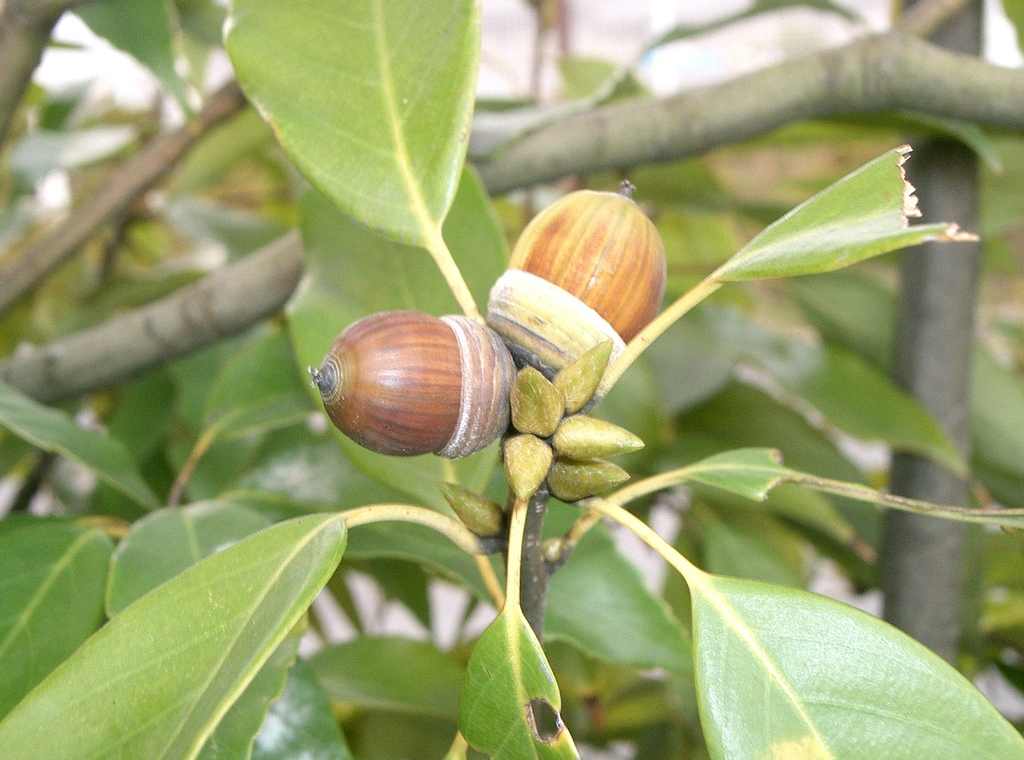
- The fruits are acorns, measuring up to 3/4 inch long. The cup has 5-6 concentric rings and covers approximately 1/3 of the nut. They grow singly or in clusters of 2 or 3. When ripe, the acorns are brown to copper in color. The seeds are enclosed in the acorn.
-
-
Flowers:
- Flower Color:
- Gold/Yellow
- Flower Inflorescence:
- Catkin
- Insignificant
- Flower Bloom Time:
- Fall
- Summer
- Flower Size:
- 3-6 inches
- Flower Description:
- There are separate male and female flowers. The male bloom is a pale yellow, drooping catkin, measuring 2-4 inches long and 0.125 inches wide. The female bloom is pale yellow, upright, measuring 2-5 inches long and 0.25-0.5 inches wide. Blooming occurs from July to November. The male catkins fall from the tree after blooming. The female produces the acorns, which ripen the following year.
-
-
Leaves:
- Woody Plant Leaf Characteristics:
- Broadleaf Evergreen
- Leaf Color:
- Gray/Silver
- Green
- Purple/Lavender
- Red/Burgundy
- Leaf Feel:
- Glossy
- Leathery
- Leaf Value To Gardener:
- Long-lasting
- Showy
- Deciduous Leaf Fall Color:
- Gold/Yellow
- Leaf Type:
- Simple
- Leaf Arrangement:
- Opposite
- Leaf Shape:
- Elliptical
- Oblong
- Leaf Margin:
- Entire
- Serrate
- Hairs Present:
- Yes
- Leaf Length:
- 3-6 inches
- Leaf Width:
- 1-3 inches
- Leaf Description:
- The leaves measure 4-8 inches long and 2-4 inches wide. They are elliptical to oblong and appear bronzy to purplish in the spring. The leaves become glossy dark green in summer. Undersides are gray-green to blue-green with hairs. Margins are entire with teeth near the apex. Bases are rounded. Non-showy fall color is yellowish-green.
-
-
Bark:
- Bark Color:
- Light Brown
- Light Gray
- Surface/Attachment:
- Smooth
- Bark Description:
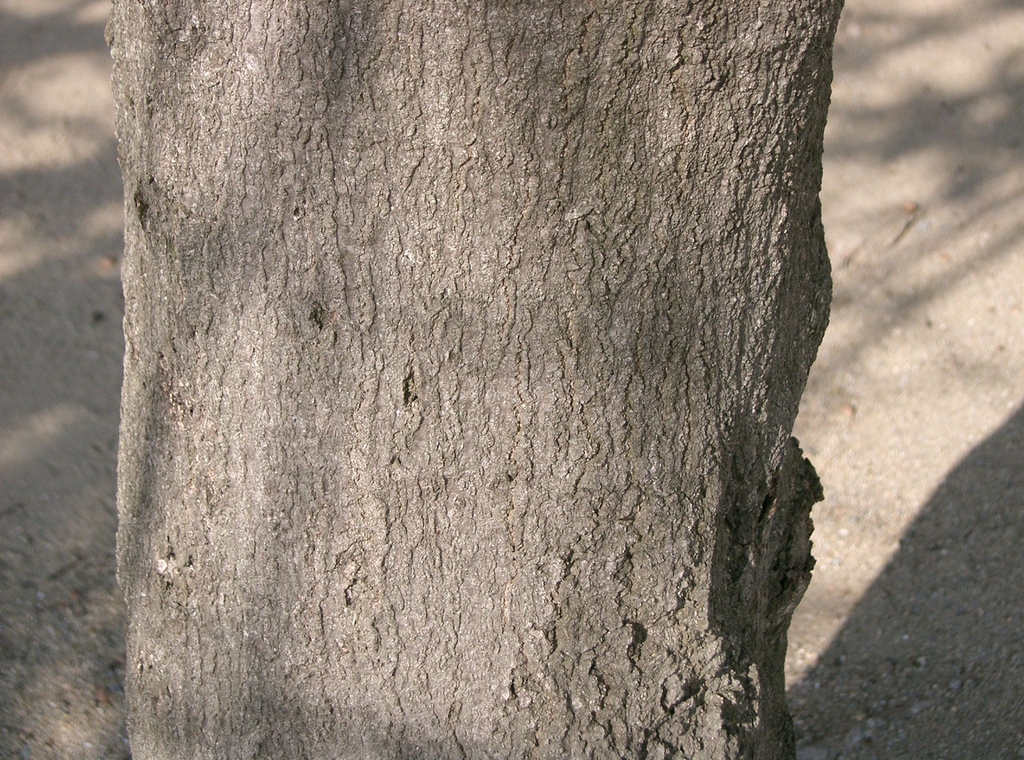
- The bark is smooth and grayish-brown.
-
-
Stem:
- Stem Color:
- Green
- Stem Is Aromatic:
- No
- Stem Bud Terminal:
- Cluster of terminal buds
- Stem Bud Scales:
- Enclosed in more than 2 scales
- Stem Lenticels:
- Conspicuous
- Stem Surface:
- Smooth (glabrous)
- Stem Description:
- Stems are dark olive green, stiff, thick with pale lenticels. Buds are brown with scales.
-
-
Landscape:
- Landscape Location:
- Lawn
- Woodland
- Landscape Theme:
- Asian Garden
- Design Feature:
- Screen/Privacy
- Shade Tree
- Specimen
- Street Tree
- Resistance To Challenges:
- Deer
- Drought
- Urban Conditions
- Problems:
- Poisonous to Humans
- Problem for Cats
- Problem for Children
- Problem for Dogs
-
-
Poisonous to Humans:
- Poison Severity:
- Low
- Poison Symptoms:
- Stomach pain, constipation and later bloody diarrhea, excessive thirst and urination if young leaves or raw acorns eaten.
- Poison Toxic Principle:
- Gallotannins, quercitrin, and quercitin.
- Causes Contact Dermatitis:
- No
- Poison Part:
- Fruits
- Leaves