



Grassleaf Liatris Liatris virgata
Other Common Name(s):
Previously known as:
- Lacinaria regimontis
- Lacinaria smallii
- Liatris graminifolia var. racemosa
- Liatris graminifolia var. smallii
- Liatris graminifolia var. virgata
- Liatris regimontis
- Liatris spicata var. racemosa
- Phonetic Spelling
- ly-AY-tris vir-GAH-tuh
- Description
-
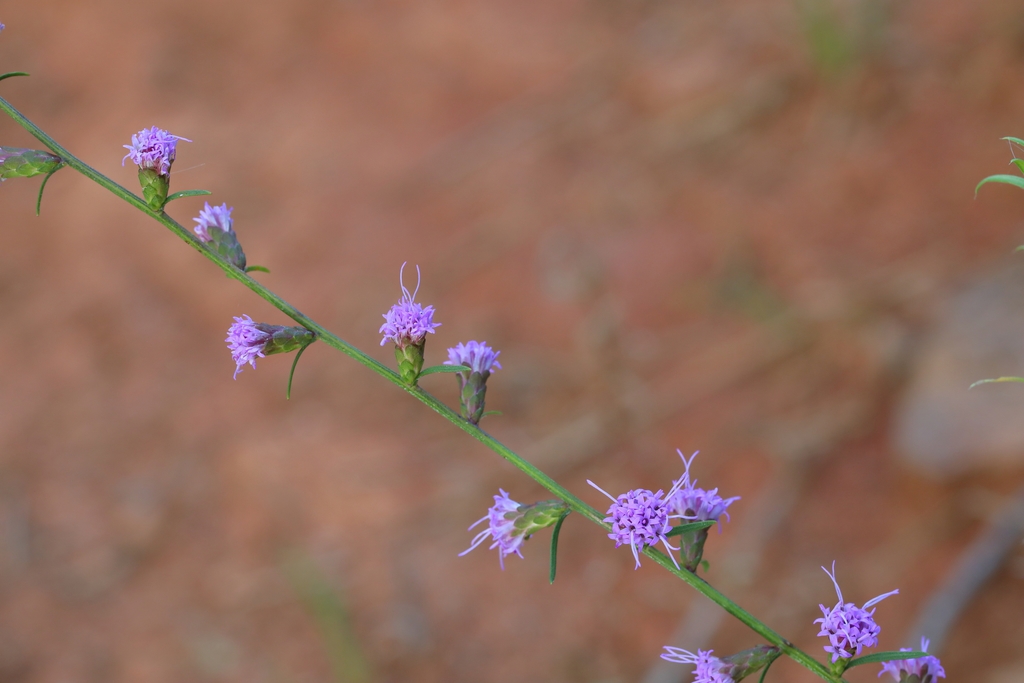
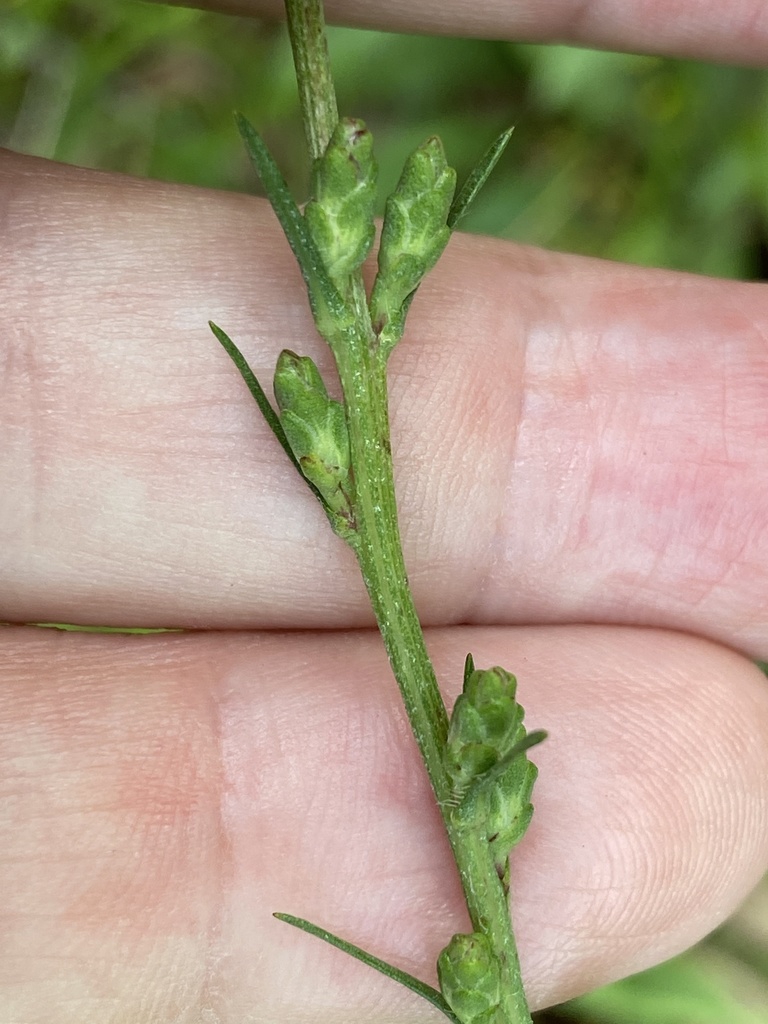
Grass-leaved blazing-star is a native perennial wildflower in the daisy family (Asteraceae). It is found in dry to mesic woodlands, rocky woodlands, openings, and roadsides in the Southeastern United States, including all of North Carolina, especially in the southern counties. It grows 1 to 2.5 feet tall and has unbranched, erect, smooth stems with green, narrowly lanceolate leaves and terminally arranged flowerheads of purplish-blue or lavender. The flowerheads appear on a zigzag stem about 0.5 inches apart. Each flowerhead has 7 to 12 disc florets with a protruding style. The specific epithet virgata is Latin and means twig-like, long, slender, and wand-shaped. .
This plant thrives in a variety of well-drained, slightly acidic soil types and in full to mostly sunny locations. It is low-maintenance and is both drought- and heat-tolerant. Deadhead the spent flowers to encourage re-blooming. Propagated by division.
The flowers provide nectar for bees, butterflies, and hummingbirds. Use in the native pollinator garden or naturalized area.
Insects, Diseases, and Other Plant Problems: Monitor for aphids and spider mites. May be susceptible to powdery mildew, rust, and leaf spot.
- See this plant in the following landscape :
- Cultivars / Varieties:
-
- Tags:


- Cultivars / Varieties:
-
- Tags:
-
-
Attributes:
- Genus:
- Liatris
- Species:
- virgata
- Family:
- Asteraceae
- Uses (Ethnobotany):
- Native Americans used the roots for medicinal treatment of bronchitis or digestive disorders.
- Life Cycle:
- Perennial
- Recommended Propagation Strategy:
- Division
- Country Or Region Of Origin:
- Southeastern United States
- Distribution:
- Native: Georgia, North Carolina, South Carolina, and Virginia
- Wildlife Value:
- Native bees are attracted to this plant. Very high wildlife value.
- Play Value:
- Attractive Flowers
- Attracts Pollinators
- Colorful
- Wildlife Food Source
-
-
Whole Plant Traits:
- Plant Type:
- Herbaceous Perennial
- Native Plant
- Wildflower
- Habit/Form:
- Clumping
- Erect
- Growth Rate:
- Medium
- Maintenance:
- Low
- Texture:
- Medium
-
-
Cultural Conditions:
- Light:
- Full sun (6 or more hours of direct sunlight a day)
- Partial Shade (Direct sunlight only part of the day, 2-6 hours)
- Soil Texture:
- Clay
- Loam (Silt)
- Sand
- Shallow Rocky
- Soil pH:
- Acid (<6.0)
- Neutral (6.0-8.0)
- Soil Drainage:
- Moist
- Occasionally Dry
- Available Space To Plant:
- Less than 12 inches
- 12 inches-3 feet
- NC Region:
- Coastal
- Mountains
- Piedmont
- USDA Plant Hardiness Zone:
- 4b, 5a, 5b, 6a, 6b, 7a, 7b, 8a, 8b, 9a, 9b
-
-
Fruit:
- Display/Harvest Time:
- Fall
- Summer
- Fruit Type:
- Achene
- Fruit Description:
- The fruit is actually a cypsela, but is referred to as an achene. The clustered achenes have tufts of barbed hairs and are seen in the summer and fall. Each achene is small, dry, containing only 1 seed. The wind dispenses the seeds.
-
-
Flowers:
- Flower Color:
- Blue
- Purple/Lavender
- Flower Inflorescence:
- Head
- Spike
- Flower Value To Gardener:
- Showy
- Flower Bloom Time:
- Fall
- Summer
- Flower Shape:
- Tubular
- Flower Petals:
- 4-5 petals/rays
- Flower Size:
- < 1 inch
- Flower Description:
- The spike-like flowerheads consist of frilly purplish-blue to lavender disc florets, arranged in a loose zigzag pattern on the upper stem and about 0.5 inches apart. Each flowerhead is less than 1 inch in size and has 7 to 12 disc florets with 2 protruding style branches. Blooming occurs from August to October.
-
-
Leaves:
- Leaf Color:
- Green
- Leaf Type:
- Simple
- Leaf Arrangement:
- Alternate
- Leaf Shape:
- Elliptical
- Lanceolate
- Leaf Margin:
- Entire
- Hairs Present:
- Yes
- Leaf Length:
- 3-6 inches
- Leaf Description:
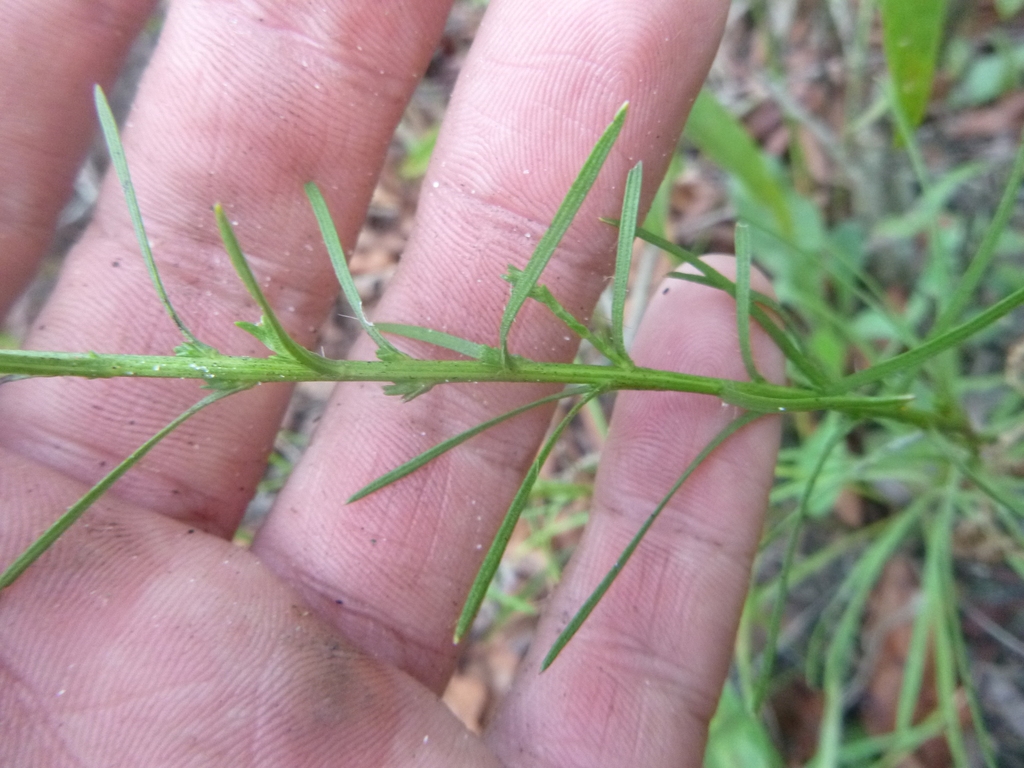
- The basal leaves are green, elliptical to narrowly lanceolate, grass-like, with some leaves alternating up the stem. They may be smooth or hairy, but the lower leaves have hairs along the margins. The leaves measure up to 6 inches long and are dotted with glands.
-
-
Stem:
- Stem Color:
- Green
- Stem Is Aromatic:
- No
- Stem Cross Section:
- Round
- Stem Form:
- Straight
- Stem Surface:
- Smooth (glabrous)
- Stem Description:
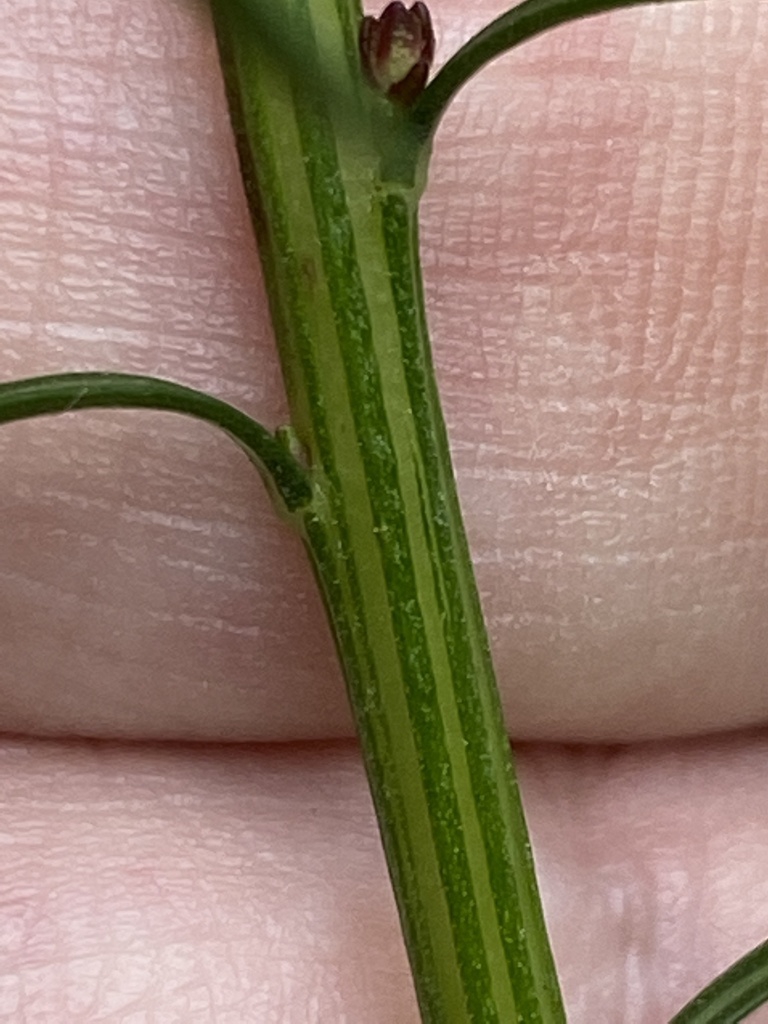
- Green smooth unbranched stem.
-
-
Landscape:
- Landscape Location:
- Meadow
- Naturalized Area
- Woodland
- Landscape Theme:
- Butterfly Garden
- Cottage Garden
- Drought Tolerant Garden
- Native Garden
- Pollinator Garden
- Rain Garden
- Rock Garden
- Design Feature:
- Border
- Small groups
- Attracts:
- Bees
- Butterflies
- Hummingbirds
- Pollinators
- Songbirds
- Resistance To Challenges:
- Drought
- Dry Soil


