



Lagerstroemia indica 'Catawba'
Common Name(s):
- Phonetic Spelling
- la-ger-STROY-mee-a IN-dih-kuh
- Description
-
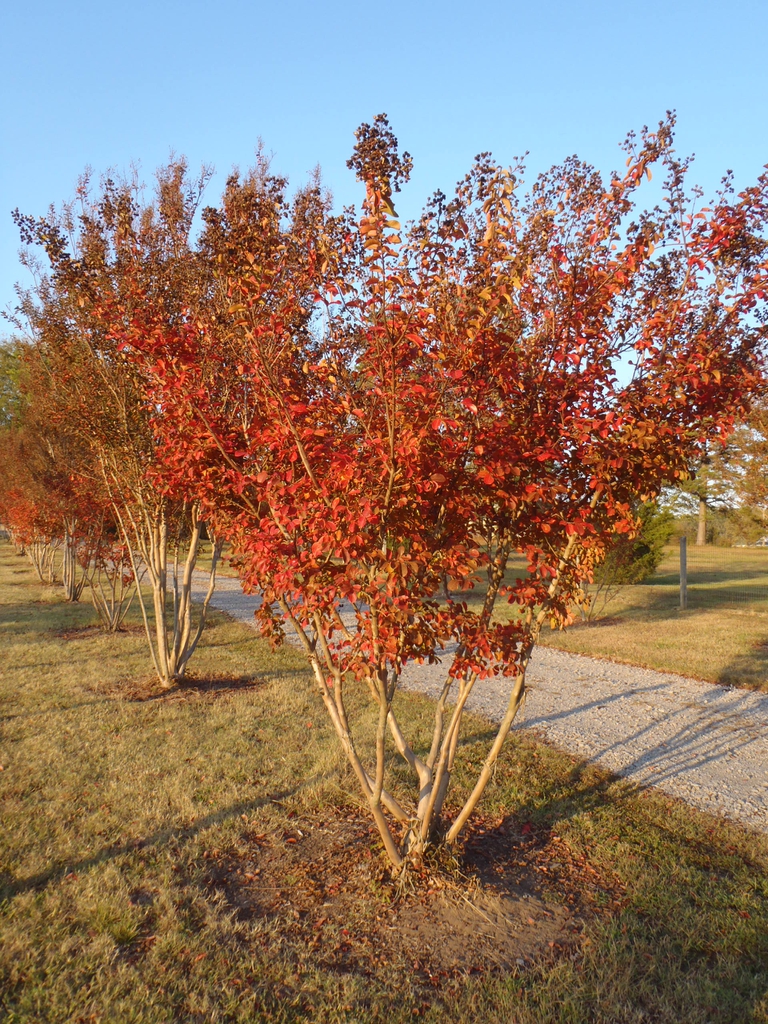
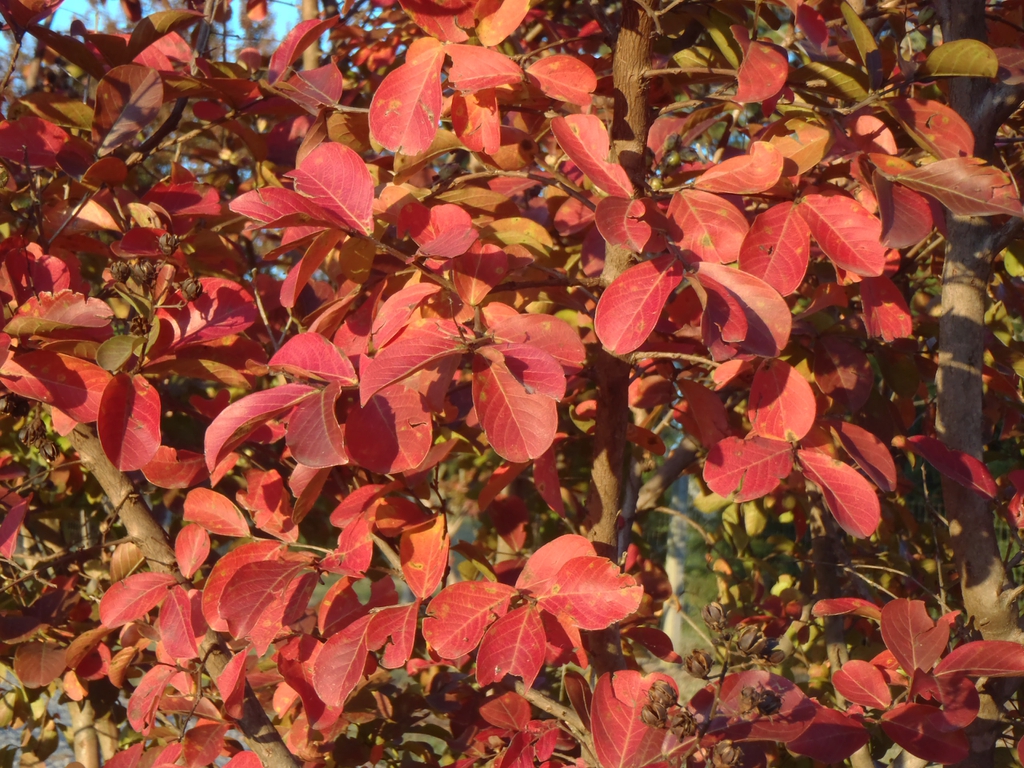
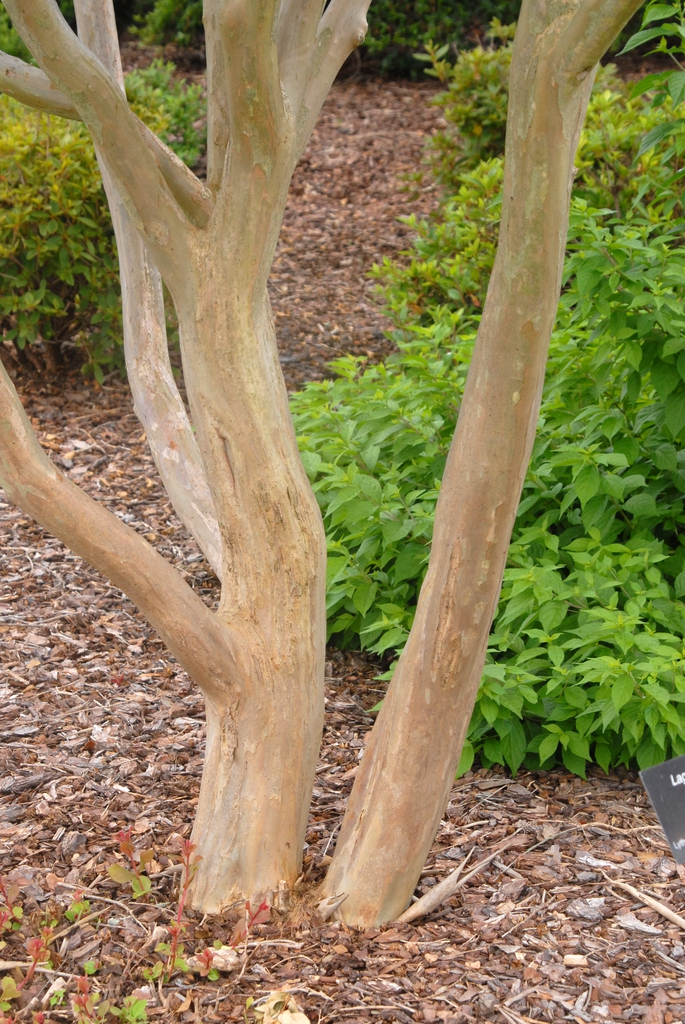
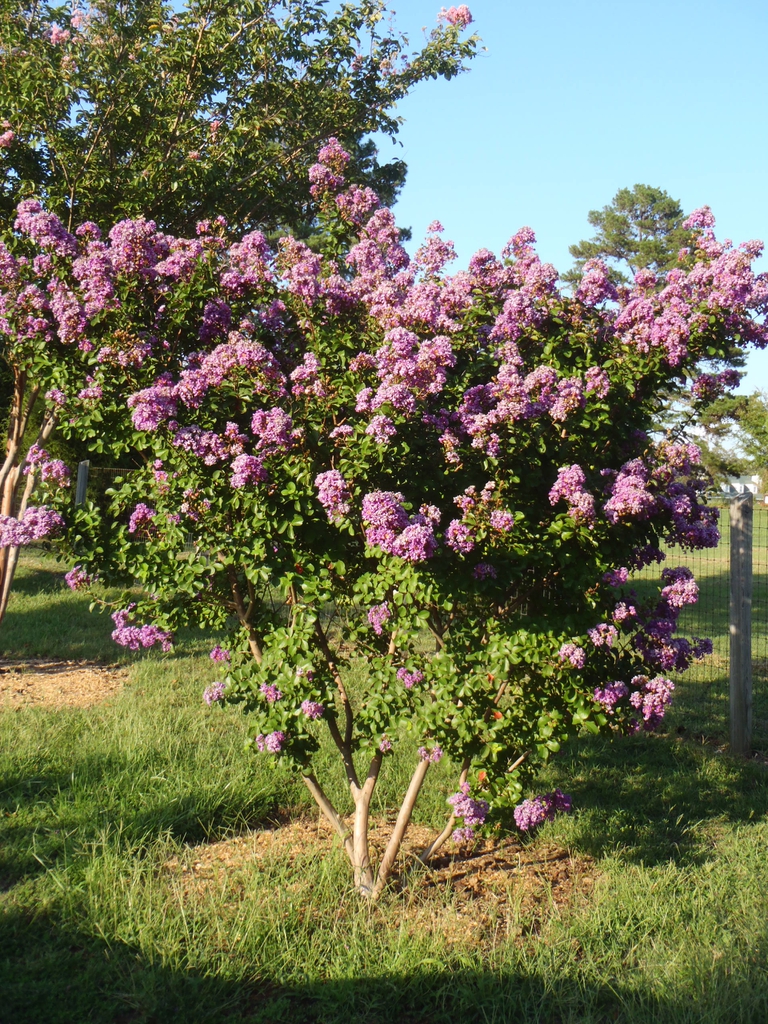
Catawba crape myrtle is a highly mildew-tolerant, compact, deciduous, multi-stemmed, flowering shrub or small tree cultivar that originated in 1960. It is a cross between L. indica 'Dwarf Purple' x L.indica 'Light Lavender '. This cultivar was introduced in 1967 by the U.S. National Arboretum in Washington, D.C. It is a member of the loosestrife family (Lythraceae). Long-lasting, dark purple florets are arranged in panicles, measuring 4.5 to 6.5 inches long and 4 to 6 inches wide, blooming in August to October. Its leaves are glossy dark green, turning bright orange-red in the fall. The bark is smooth and brown. This low-maintenance shrub reaches 12 to 15 feet tall and 8 to 10 feet wide, with a vase-shaped habit and rounded crown.
Prefers full sun and moist, well-drained, slightly acidic, sandy, loamy, or clay soil. It is hardy in zones 7 to 9. This plant is heat- and drought-tolerant once established. It is also deer-resistant and tolerates urban pollution. Pruning should be completed in winter or early spring, as this plant blooms on new wood. A layer of organic mulch will help keep the plant retaining moisture.
Consider the Catawba crape myrtle as a compact, accent shrub or small tree in your home landscape. The striking purple flowers in late summer and the orange-red fall foliage will draw interest to a border, hedge, or container planting.
Insects, Diseases, and Other Plant Problems: Aphids and scales are potential insects. Potential diseases include leaf spots. Chlorosis may be a problem in alkaline soils. In hardiness zones 5 to 6, the tree or shrub is susceptible to winter injury, especially any top growth. Be aware that the flowers can stain walkways or your car surface. Avoid planting near a walkway or driveway.
The Clemson Cooperative Extension Home & Garden Information Center has a factsheet on common crape myrtle pests and diseases.
- See this plant in the following landscape :
- Cultivars / Varieties:
-
- Tags:


- Cultivars / Varieties:
-
- Tags:
-
-
Attributes:
- Genus:
- Lagerstroemia
- Species:
- indica
- Family:
- Lythraceae
- Life Cycle:
- Woody
- Wildlife Value:
- Attracts pollinators.
- Play Value:
- Attractive Flowers
- Colorful
- Easy to Grow
- Particularly Resistant To (Insects/Diseases/Other Problems):
- Mildew
- Dimensions:
- Height: 12 ft. 0 in. - 15 ft. 0 in.
- Width: 8 ft. 0 in. - 10 ft. 0 in.
-
-
Whole Plant Traits:
- Plant Type:
- Shrub
- Tree
- Woody Plant Leaf Characteristics:
- Deciduous
- Habit/Form:
- Multi-stemmed
- Rounded
- Vase
- Growth Rate:
- Medium
- Maintenance:
- Low
- Texture:
- Medium
-
-
Cultural Conditions:
- Light:
- Full sun (6 or more hours of direct sunlight a day)
- Soil Texture:
- Clay
- Loam (Silt)
- Sand
- Soil pH:
- Acid (<6.0)
- Soil Drainage:
- Good Drainage
- Moist
- Available Space To Plant:
- 6-feet-12 feet
- 12-24 feet
- NC Region:
- Coastal
- Mountains
- Piedmont
- USDA Plant Hardiness Zone:
- 7a, 7b, 8a, 8b, 9a, 9b
-
-
Flowers:
- Flower Color:
- Purple/Lavender
- Flower Inflorescence:
- Panicle
- Flower Value To Gardener:
- Long-lasting
- Showy
- Flower Bloom Time:
- Summer
- Flower Description:
- Large, long-lasting crepe-like dark purple florets appear from August to October. They are arranged in panicles, measuring 4.5 to 6.5 inches long and 4 to 6 inches wide.
-
-
Leaves:
- Woody Plant Leaf Characteristics:
- Deciduous
- Leaf Color:
- Green
- Leaf Feel:
- Glossy
- Leaf Value To Gardener:
- Showy
- Deciduous Leaf Fall Color:
- Orange
- Red/Burgundy
- Leaf Type:
- Simple
- Leaf Arrangement:
- Alternate
- Leaf Shape:
- Ovate
- Leaf Margin:
- Entire
- Hairs Present:
- No
- Leaf Description:
- The leaves are glossy, dark green during the summer, turning orangish-red in the fall.
-
-
Bark:
- Bark Color:
- Light Brown
- Surface/Attachment:
- Smooth
- Bark Description:
- Bark is smooth, attractive, brown, and multicolored.
-
-
Stem:
- Stem Is Aromatic:
- No
-
-
Landscape:
- Landscape Location:
- Container
- Patio
- Landscape Theme:
- Cottage Garden
- Winter Garden
- Design Feature:
- Flowering Tree
- Foundation Planting
- Mass Planting
- Small Tree
- Specimen
- Street Tree
- Attracts:
- Pollinators
- Resistance To Challenges:
- Deer
- Diseases
- Drought
- Urban Conditions

