



Lespedeza Kummerowia striata
Other Common Name(s):
Previously known as:
- Hedysarum striatum
- Lespedeza striata
- Phonetic Spelling
- koom-er-OW-ee-uh stry-AY-tuh
- This plant is an invasive species in North Carolina
- Description
-
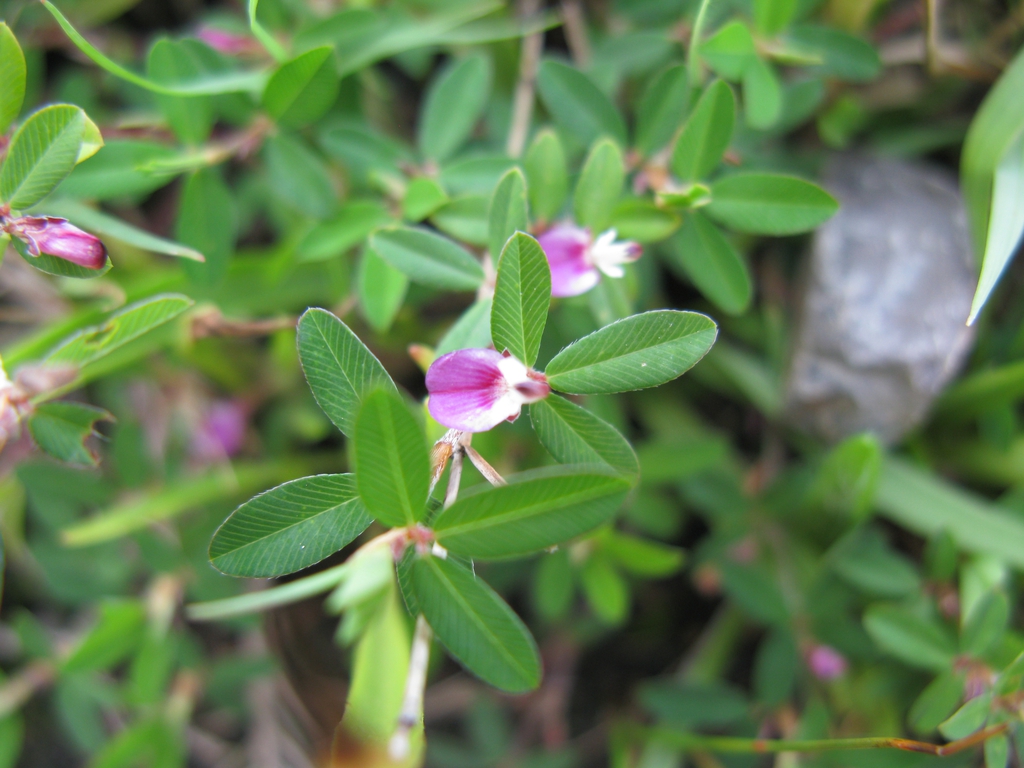
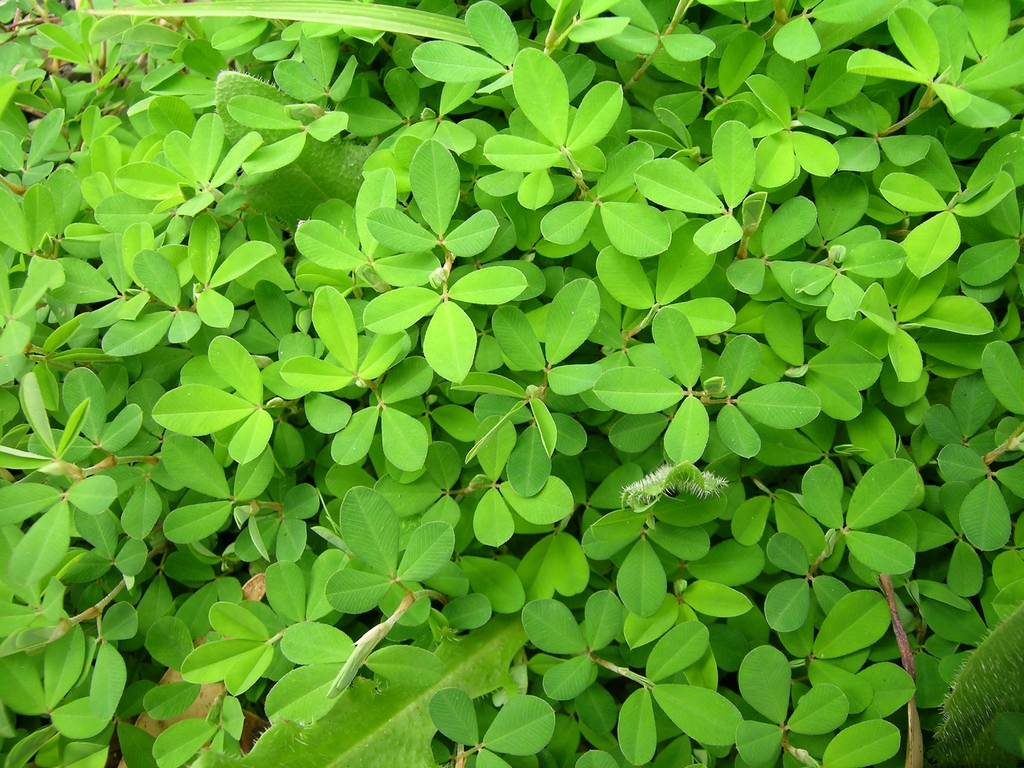
Japanese clover is a very common warm-season annual weed in the bean family (Fabaceae), native to the Russian Far East to northern Indo-China. It occurs in fields, open woods, roadsides, and other disturbed sites. Japanese clover was first introduced to the United States in the late 1800's for use as forage for livestock. Unfortunately, it has become a common weed in many disturbed areas. It grows 2 to 10 inches tall, 1-2 feet wide, with a mat-forming habit, and has wiry, purple, ascending, prostrate, or sprawling stems. The leaves are smooth, dark green, and trifoliate. Flowers bloom from May to September and are borne on the leaf axils or along the nodes of the stems. They are solitary, small, pea-like, and pink to purple. The genus name Kummerowia honors Johannes Gotthilf Heinrich Kummerow, a Polish professor. The specific epithet striata means streaked or having fine linear markings.
This weed thrives in full sun, mesic conditions, and sandy soil, although it tolerates other soil types. It prefers an acidic to neutral pH. Japanese clover is also nitrogen-fixing and tends to grow well in dry compacted areas or in thin turf. Propagate by seed, but it requires cold stratification. This species produces abundant seeds.
To prevent this weed from taking hold, maintain a healthy lawn. Hand pulling is an option for removal of this weed when it is just getting established. Mowing your lawn may provide some control; however, wash lawn mowers and other lawn equipment to prevent the spread of the plant materials and seeds. Chemical options are available, such as post-emergence herbicides; please refer to your local county horticultural agent for herbicide recommendations in your area.
Insects, Diseases, and Other Plant Problems: Japanese clover is used for agricultural purposes in the southeastern United States as a source of forage and hay and to control erosion; however, the North Carolina Native Plant Society lists this species as invasive in North Carolina.
- See this plant in the following landscape :
- Cultivars / Varieties:
-
- Tags:



- Cultivars / Varieties:
-
- Tags:
-
-
Attributes:
- Genus:
- Kummerowia
- Species:
- striata
- Family:
- Fabaceae
- Uses (Ethnobotany):
- It is used as forage, hay, and green manure to enrich the soil as it fixes nitrogen.
- Life Cycle:
- Annual
- Recommended Propagation Strategy:
- Seed
- Country Or Region Of Origin:
- Russia Far East to Northern Indo-China
- Distribution:
- Native: Amur, Assam, China North-Central, China South-Central, China Southeast, Inner Mongolia, Japan, Khabarovsk, Korea, Laos, Manchuria, Nansei-shoto, Primorye, Taiwan, and Vietnam. Introduced: United States--AL, AR, DC, FL, GA, HI, IL, KS, KY, LA, MD, MS, NY, NC, OK, SC, TN, TX, VT, and VA; Argentina Northeast, New South Wales, Queensland, and Transcaucasus.
- Fire Risk Rating:
- medium flammability
- Wildlife Value:
- Bees pollinate the flowers. Game birds and songbirds eat the seeds. Deer and other herbivores eat the foliage.
- Play Value:
- Attracts Pollinators
- Wildlife Food Source
- Edibility:
- Lespedeza is commonly used as forage in pastures. It may be grazed or cut for hay when in 1/2 bloom stage.
- Dimensions:
- Height: 0 ft. 2 in. - 0 ft. 10 in.
- Width: 1 ft. 0 in. - 2 ft. 0 in.
-
-
Whole Plant Traits:
- Plant Type:
- Annual
- Weed
- Habit/Form:
- Ascending
- Prostrate
- Spreading
- Growth Rate:
- Medium
- Maintenance:
- Medium
- Texture:
- Fine
-
-
Cultural Conditions:
- Light:
- Full sun (6 or more hours of direct sunlight a day)
- Soil Texture:
- Clay
- Loam (Silt)
- Sand
- Shallow Rocky
- Soil pH:
- Acid (<6.0)
- Neutral (6.0-8.0)
- Soil Drainage:
- Good Drainage
- Occasionally Dry
- NC Region:
- Coastal
- Mountains
- Piedmont
-
-
Fruit:
- Fruit Color:
- Green
- Display/Harvest Time:
- Fall
- Fruit Type:
- Legume
- Fruit Length:
- < 1 inch
- Fruit Width:
- < 1 inch
- Fruit Description:
- The green fruits are 0.2-inch-long legumes, and each contains a single seed. The seedpods are flat, ovoid, 2-valved, and split open to release the seed. The seeds are smooth, shiny, and brown to black. Ripens from October to November.
-
-
Flowers:
- Flower Color:
- Pink
- Purple/Lavender
- White
- Flower Inflorescence:
- Head
- Insignificant
- Flower Bloom Time:
- Summer
- Flower Shape:
- Lipped
- Flower Petals:
- 4-5 petals/rays
- Flower Size:
- < 1 inch
- Flower Description:
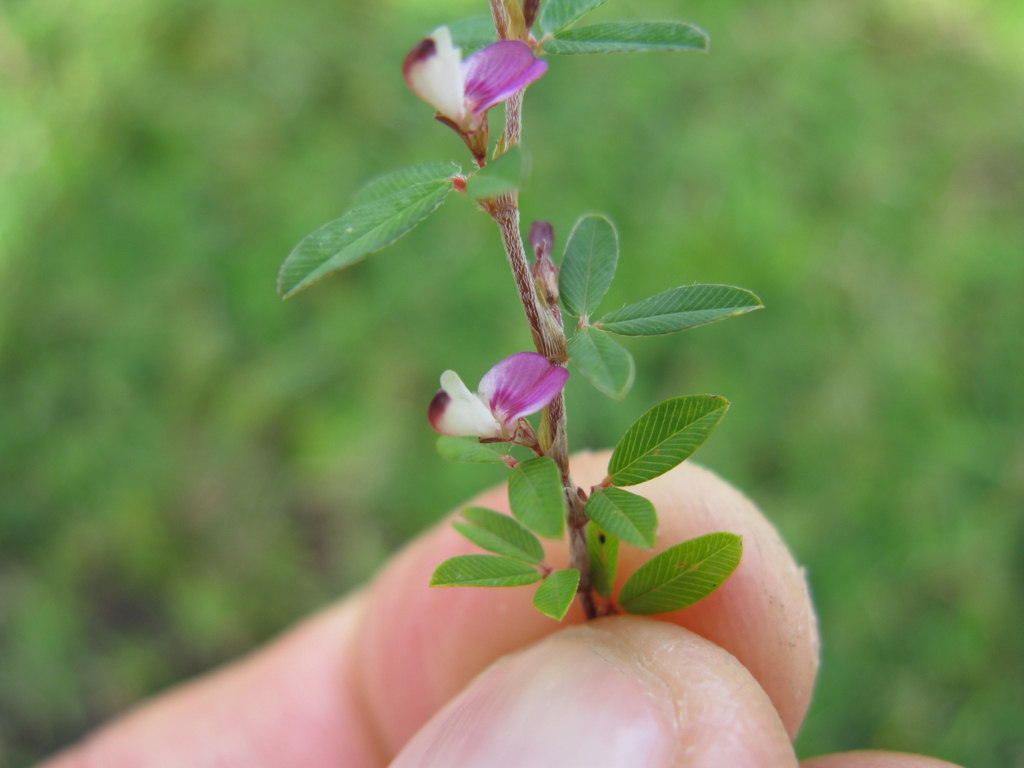
- The blooms are 0.25 inches long, 5-petaled, and appear in the leaf axils in groups of 1-3. They can be upright or horizontal. The shape is similar to pea flowers, with the lower petal pink or purple and the two smaller upper petals white. Bloom time is May to September.
-
-
Leaves:
- Leaf Color:
- Green
- Leaf Type:
- Compound (Pinnately , Bipinnately, Palmately)
- Leaf Arrangement:
- Alternate
- Leaf Shape:
- Elliptical
- Oblong
- Obovate
- Leaf Margin:
- Entire
- Serrate
- Hairs Present:
- No
- Leaf Length:
- < 1 inch
- Leaf Width:
- < 1 inch
- Leaf Description:
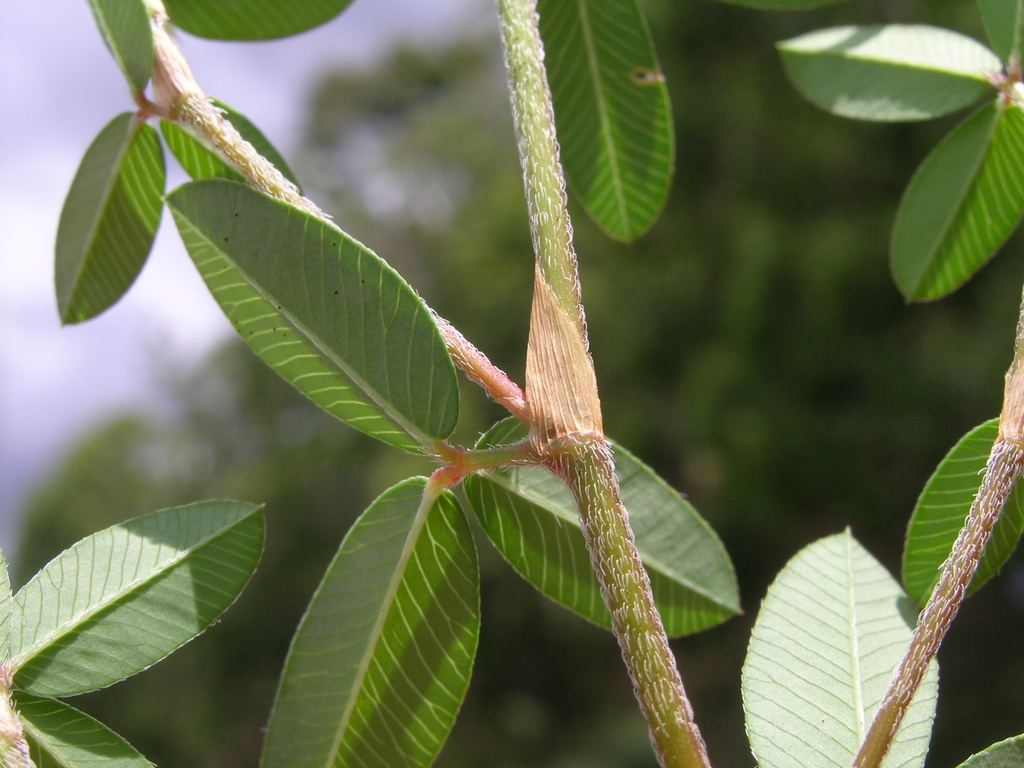
- The alternate compound leaves are trifoliate, with leaflets being 0.25-1 inch long and about one-third to one-half as wide. The leaflets are broadly oblong-elliptic to oblong-obovate, with entire to slightly serrate margins, and are petiolate. The upper surface of the leaflet is medium to dark green, and the lower surface is pale green. The leaflet surface is smooth on both sides. Each leaflet has many straight and parallel lateral veins. A pair of brown stipules are at the base of each petiole. The flowers form in the leaf axils.
-
-
Stem:
- Stem Color:
- Green
- Purple/Lavender
- Stem Is Aromatic:
- No
- Stem Cross Section:
- Round
- Stem Surface:
- Hairy (pubescent)
- Stem Description:
- The stems are round, purplish with appressed white hairs that point downward.
-
-
Landscape:
- Attracts:
- Bees
- Pollinators
- Small Mammals
- Songbirds
- Resistance To Challenges:
- Drought
- Poor Soil
- Problems:
- Invasive Species
- Weedy



