



Juniper 'Compressa' Juniperus communis 'Compressa'
Other Common Name(s):
- Phonetic Spelling
- jew-NIP-er-us KOM-yoo-nis
- Description
-
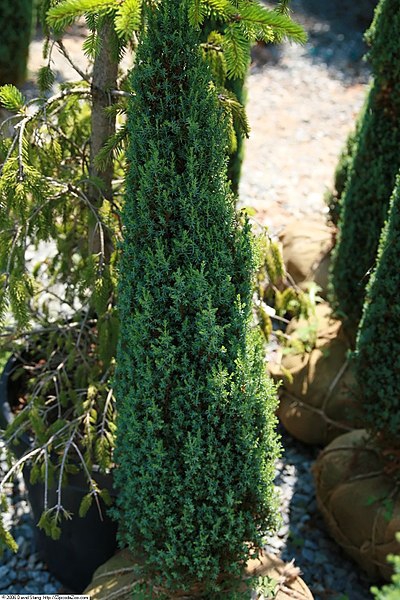
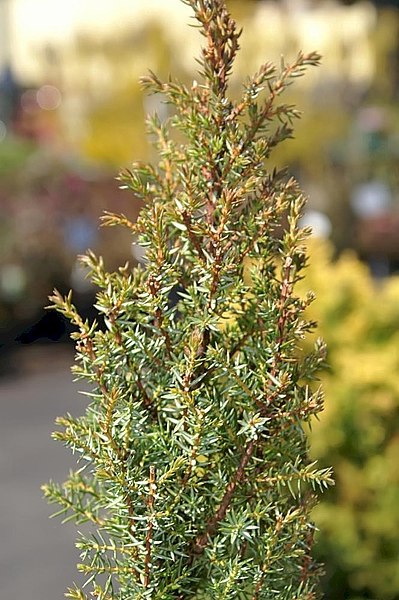
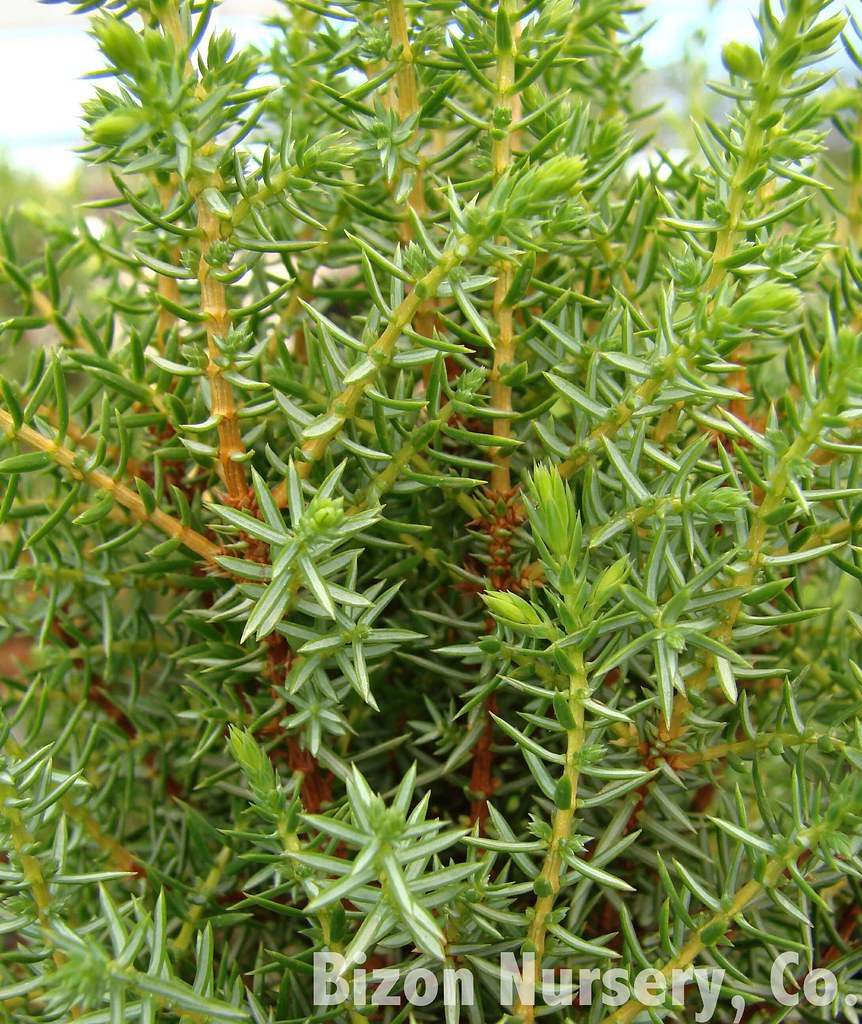
Juniper communis 'Compressa' is a dwarf evergreen conifer cultivar shrub with a dense, columnar, cone-shaped habit. Other descriptive names are Pencil Point and Noah's Ark Juniper. Its fragrant foliage is green to silverish-blue, then turns copper bronze during the fall. The mature foliage is smooth and scale-like, and its juvenile foliage is awl-like, sharp, and prickly. Male and female cones are produced on separate plants. The male juniper provides the pollen cones, and the female juniper produces clusters of green cones that will ripen to a waxy, bluish-black in the fall. This conifer grows 2 to 6 feet tall and 1 to 2 feet wide. It belongs to the cypress family (Cupressaceae).
Prefers full sun and moist, well-drained soils and is adaptable to a variety of soil types, including poor soils. It is drought-tolerant once established. Hardy in zones 3 through 6. Birds and small mammals are attracted to its berry-like fruits, and its dense branches provide a protective habitat for the birds. This shrub is wind-pollinated. Low maintenance and no pruning needed.
Its smaller size makes this conifer a great choice for a specimen, foundation planting, or container plant.
Insects, Diseases, and Other Plant Problems: Monitor for mites, borers, scale, bagworms, and midges. Juniper blight occurs less frequently in this cultivar. May be susceptible to cedar apple rust and wilt.
The Clemson Cooperative Extension Home and Garden Information Center has a factsheet on common juniper diseases and insect pests.
- See this plant in the following landscape :
- Cultivars / Varieties:
-
- Tags:


- Cultivars / Varieties:
-
- Tags:
-
-
Attributes:
- Genus:
- Juniperus
- Species:
- communis
- Family:
- Cupressaceae
- Life Cycle:
- Woody
- Wildlife Value:
- The fruits provide a food source for birds and small mammals, and the dense foliage provides cover/habitat for birds.
- Play Value:
- Edible fruit
- Wildlife Cover/Habitat
- Wildlife Food Source
- Edibility:
- The fruit is edible.
- Dimensions:
- Height: 2 ft. 0 in. - 6 ft. 0 in.
- Width: 1 ft. 0 in. - 2 ft. 0 in.
-
-
Whole Plant Traits:
- Plant Type:
- Shrub
- Woody Plant Leaf Characteristics:
- Needled Evergreen
- Habit/Form:
- Columnar
- Dense
- Erect
- Growth Rate:
- Slow
- Maintenance:
- Low
- Texture:
- Medium
-
-
Cultural Conditions:
- Light:
- Full sun (6 or more hours of direct sunlight a day)
- Soil Texture:
- Clay
- Loam (Silt)
- Sand
- Shallow Rocky
- Soil pH:
- Acid (<6.0)
- Neutral (6.0-8.0)
- Soil Drainage:
- Good Drainage
- Occasionally Dry
- Very Dry
- Available Space To Plant:
- 12 inches-3 feet
- USDA Plant Hardiness Zone:
- 2a, 2b, 3a, 3b, 4a, 4b, 5a, 5b, 6a, 6b
-
-
Fruit:
- Fruit Color:
- Black
- Blue
- Green
- Fruit Value To Gardener:
- Edible
- Display/Harvest Time:
- Fall
- Fruit Length:
- < 1 inch
- Fruit Width:
- < 1 inch
- Fruit Description:
- Although there are no true fruits, female plants will produce 0.5-inch green seed cones, which are "berry-looking" (juniper berries). These will ripen in the 2nd and 3rd year to a waxy, dark-blue/black color, and are edible. Each berry-like cone contains 2 to 3 seeds. The male plant produces small pollen cones.
-
-
Flowers:
- Flower Size:
- < 1 inch
- Flower Description:
- Non-flowering
-
-
Leaves:
- Woody Plant Leaf Characteristics:
- Needled Evergreen
- Leaf Color:
- Blue
- Gray/Silver
- Green
- Leaf Feel:
- Prickly
- Leaf Value To Gardener:
- Fragrant
- Leaf Type:
- Needles
- Leaf Arrangement:
- Whorled
- Hairs Present:
- No
- Leaf Description:
- The foliage grows in whorls and is green to silvery-blue, but appears copper bronze in the fall. The mature foliage is scale-like and smooth. The juvenile foliage is prickly, sharp, and needle-like.
-
-
Bark:
- Bark Color:
- Dark Brown
- Red/Burgundy
- Surface/Attachment:
- Exfoliating
- Bark Description:
- The bark is reddish-brown and exfoliating.
-
-
Stem:
- Stem Is Aromatic:
- No
-
-
Landscape:
- Landscape Location:
- Container
- Small Space
- Landscape Theme:
- Cottage Garden
- Drought Tolerant Garden
- Rock Garden
- Design Feature:
- Border
- Foundation Planting
- Attracts:
- Small Mammals
- Songbirds
- Resistance To Challenges:
- Deer
- Drought
- Dry Soil
- Erosion
- Pollution


