


Echinacea simulata
Common Name(s):
Previously known as:
- Echinacea pallida var. simulata
- Phonetic Spelling
- eh-ki-NAY-see-ah sim-you-LAH-tah
- Description
-
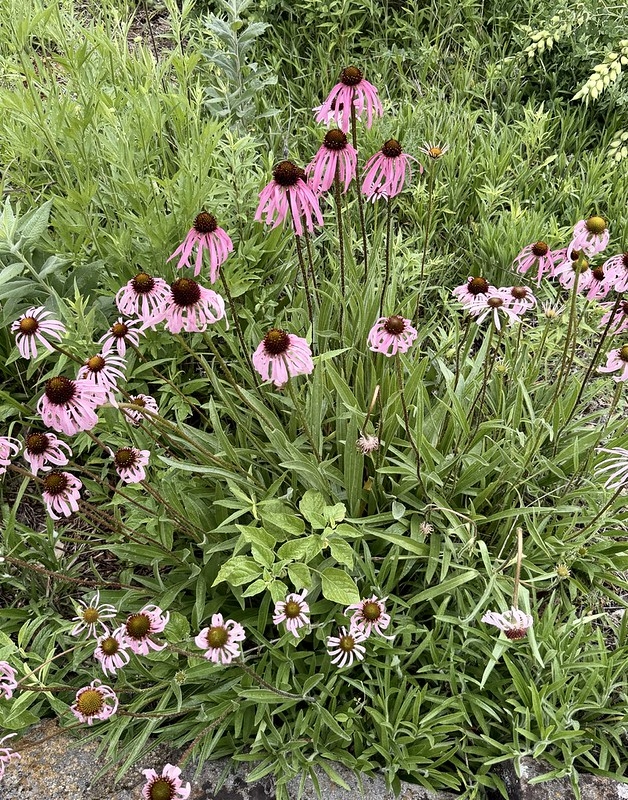
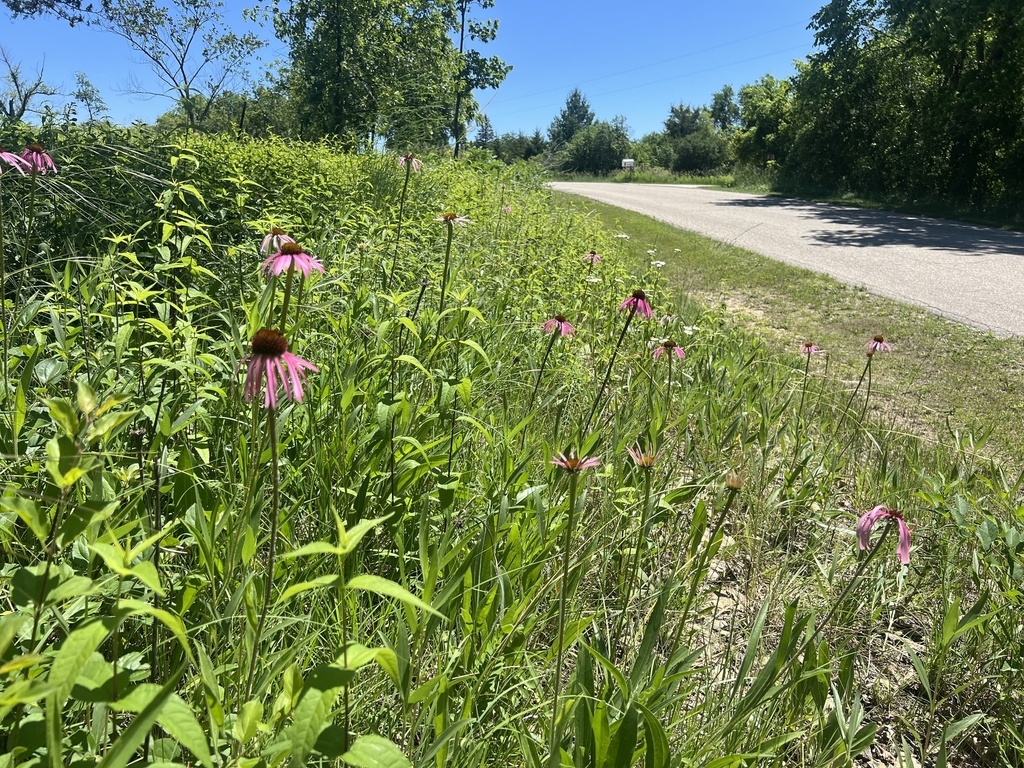
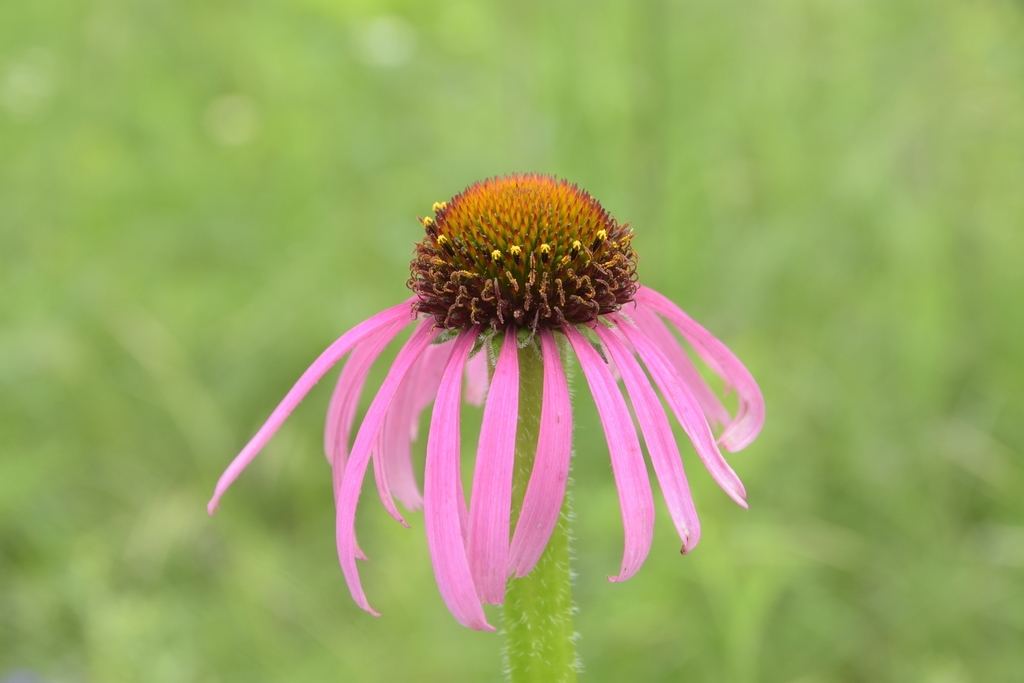
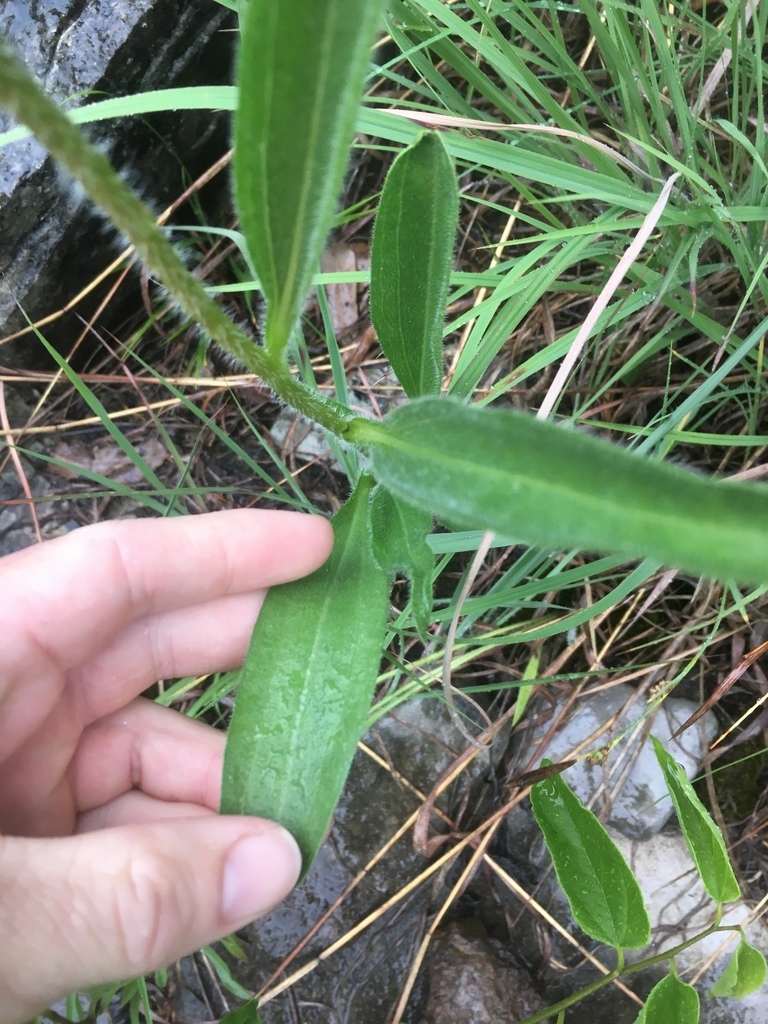
Prairie purple coneflower is an herbaceous perennial in the daisy family (Asteraceae) that is native to the central midwestern United States. It grows mixed open woodlands, glades, barrens and prairies. The species epithet is Latin for "simulate" and is likely in reference to this species' resemblance to the pale purple coneflower (Echinacea pallida).
It prefers well-drained soil (sand, loam, or clay), full sun, and a nearly any pH. Once established, it tolerates prolonged droughts. It has a long taproot, so it may be difficult to transplant. Consider sowing seeds directly in place or planting out very young plugs. As the plant is mostly unbranched, consider planting it among similarly sized grasses or other plants to give the coneflower some support.
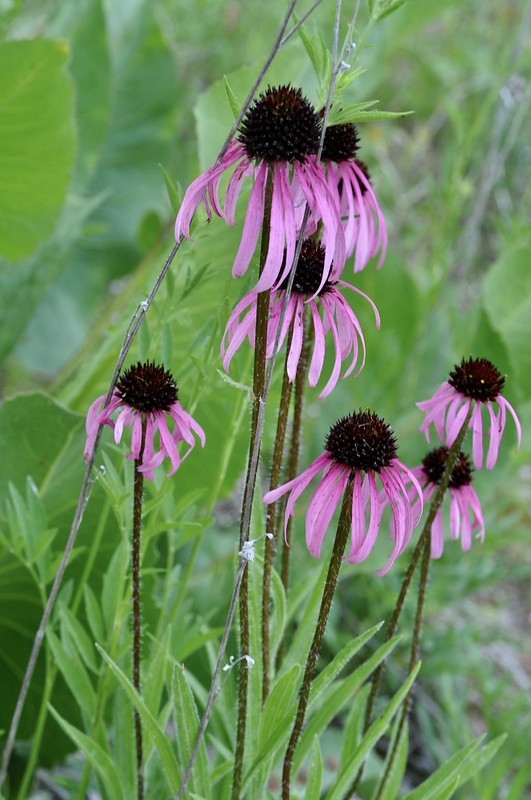
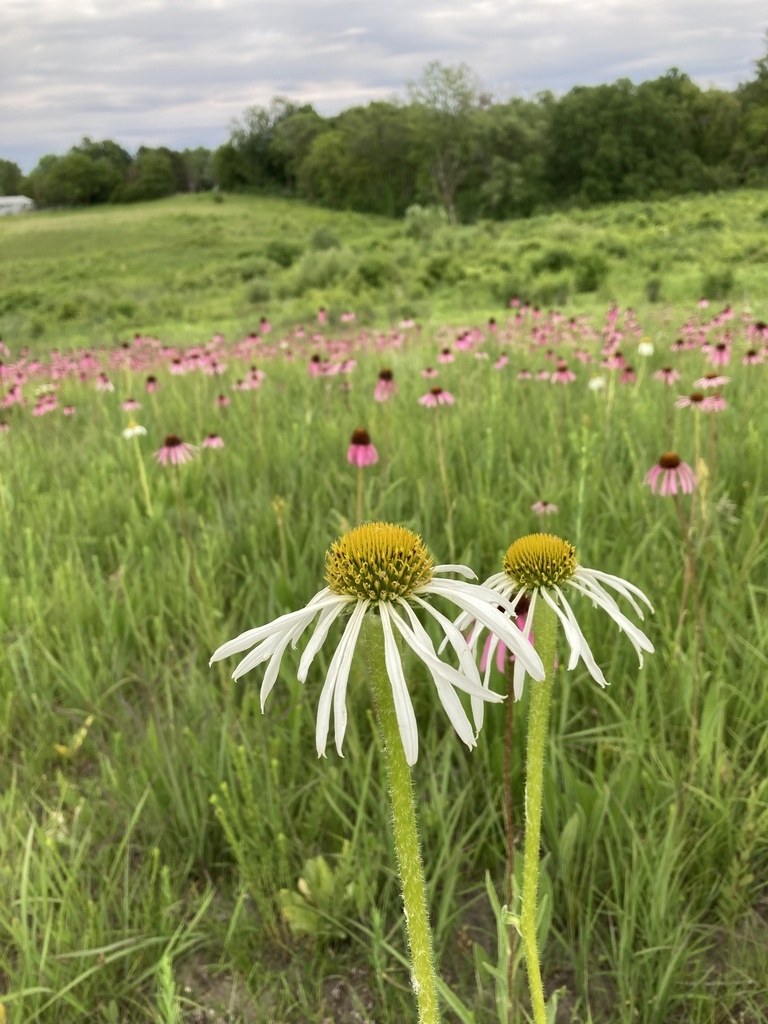
The prairie coneflowers are showy and work well as cut flowers or in dried floral arrangements. The flowers are attractive to bees, butterflies, and assorted other pollinators, and the seed heads are beloved by goldfinches and other finches. The prairie coneflower is very similar to the pale purple coneflower (E. pallida). In the prairie coneflower, the rays are narrower, the pollen is yellow and the fruits of the ray flowers are hairy. In the pale purple coneflower, the rays are a bit wider, the pollen is whitish and the fruits of the ray flowers are hairless.
The plants are excellent for borders, naturalistic or prairie-style gardens, wildflower gardens and pollinator gardens.
Insects, Diseases, and Other Plant Problems: Plant problems may include Japanese Beetles and powdery mildew.
- See this plant in the following landscape :
- Cultivars / Varieties:
-
- Tags:


- Cultivars / Varieties:
-
- Tags:
-
-
Attributes:
- Genus:
- Echinacea
- Species:
- simulata
- Family:
- Asteraceae
- Life Cycle:
- Perennial
- Country Or Region Of Origin:
- USA
- Distribution:
- IN, IL, MO, KY, TN, and AR
- Wildlife Value:
- Great for pollinators and seed-eating birds.
- Play Value:
- Attractive Flowers
- Attracts Pollinators
- Colorful
- Wildlife Food Source
- Dimensions:
- Height: 1 ft. 4 in. - 4 ft. 0 in.
- Width: 0 ft. 6 in. - 0 ft. 10 in.
-
-
Whole Plant Traits:
- Plant Type:
- Herbaceous Perennial
- Habit/Form:
- Erect
-
-
Cultural Conditions:
- Light:
- Full sun (6 or more hours of direct sunlight a day)
- Available Space To Plant:
- Less than 12 inches
- NC Region:
- Coastal
- Mountains
- Piedmont
-
-
Fruit:
- Fruit Type:
- Achene
-
-
Flowers:
- Flower Color:
- Pink
- Purple/Lavender
- Flower Inflorescence:
- Head
- Flower Value To Gardener:
- Good Cut
- Good Dried
- Long Bloom Season
- Long-lasting
- Showy
-
-
Leaves:
- Hairs Present:
- No
-
-
Stem:
- Stem Is Aromatic:
- No
-
-
Landscape:
- Landscape Location:
- Container
- Meadow
- Naturalized Area
- Small Space
- Landscape Theme:
- Butterfly Garden
- Children's Garden
- Cutting Garden
- Drought Tolerant Garden
- Pollinator Garden
- Design Feature:
- Border
- Mass Planting
- Attracts:
- Bees
- Butterflies
- Pollinators