


Chrysanthemum x morifolium
Common Name(s):
Previously known as:
- Chrysanthemum morifolium
- Dendranthema x grandiflorum
- Phonetic Spelling
- kris-AN-theh-mum mor-ih-FOH-lee-um
- This plant has low severity poison characteristics.
- See below
- Description
-
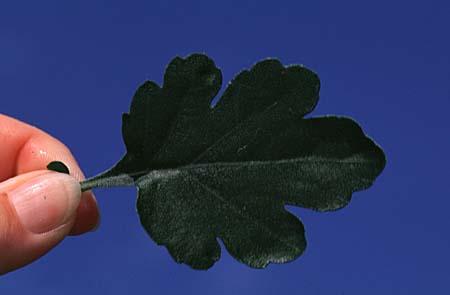
Autumn mum is an herbaceous perennial in the daisy family (Asteraceae). It is a complex hybrid involving five Chinese species: C. argyrophyllum, C. dichrum, C. indicum, C. nankingense and C. zawadzkii. There are hundreds of cultivars with various colors and characteristics. The hybrid epithet is a Latin compound meaning “mulberry [Morus] leaf” and alludes to the shape of the leaf.
While the plants will begin to grow in the summer and spring, it does not flower until the autumn. Plant in areas with full sun and well-drained soil, with protection from the afternoon sun in warmer locations. While favoring sunny locations, it will grow in areas with shade; however, too much shade can cause plants to sprawl instead of growing upright. To maintain these plants, cut them back three times during the spring and summer, with the last cut around mid-August to encourage bushy, compact growth and prevent spring flowering. They can be divided in the spring every few years to prevent plants from becoming congested. In the South, these plants easily overwinter outdoors. In colder climates, they may need to be dug up and overwintered in greenhouses.
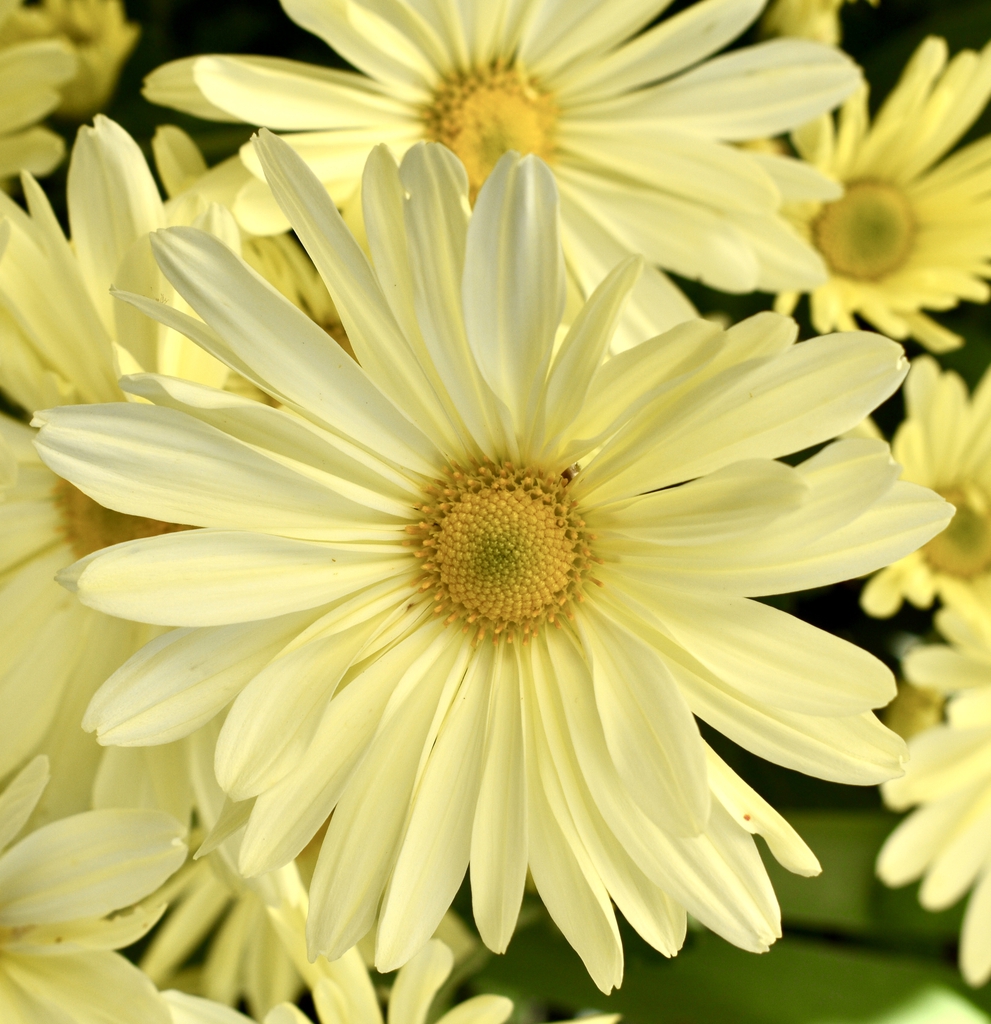
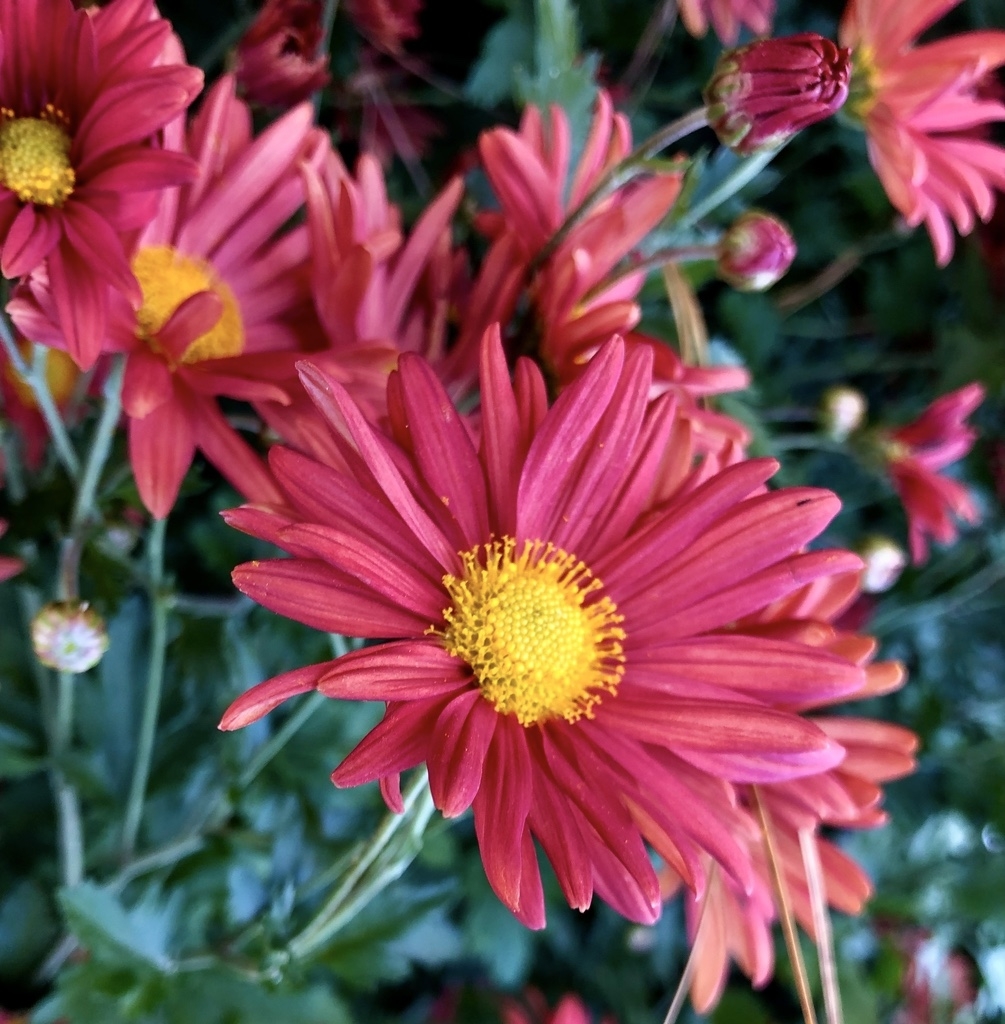
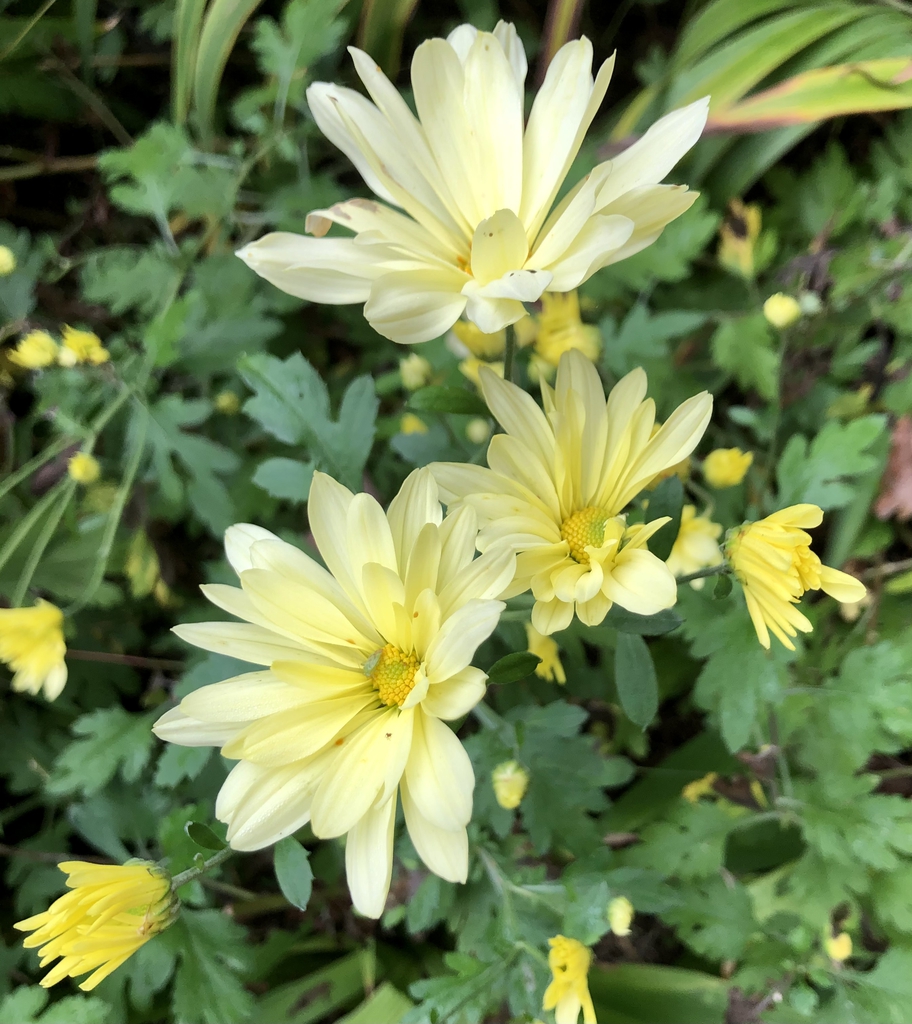
These perennials form erect mounds that reach 1 to 3 feet tall and 1 to 2 feet wide. The edible, aromatic flowers come in many colors from brownish shades to pastels and vibrant yellows. They can be solid, bi-colored, or edged around the petals with another color. The National Chrysanthemum Society has established judging categories. These illustrate the diversity of forms in this genus. They include:
Cascades: pot plants with a trailing growth habit and covered with masses of small daisy-like heads.
Charms: pot plants with a dome growth form and numerous, small, daisy-like heads.
Sprays: Outdoor or interior pot plants with many small heads borne on each branched stem.
Anemone-flowered Group: ray florets in 5 rows or fewer with a central cushion of tubular florets; heads to 6" diam.
Incurved Group: ray florets turned in toward the center, forming a tight ball; heads commonly 6-12" diam.
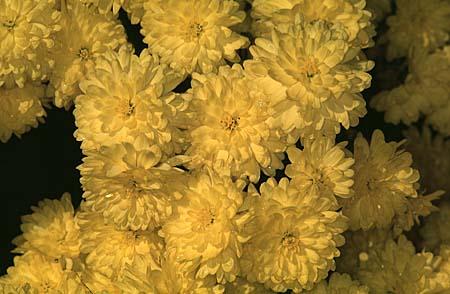
Pompon Group: ray florets are tightly packed (not curled) forming a tight globular bloom; heads to 6" diam.
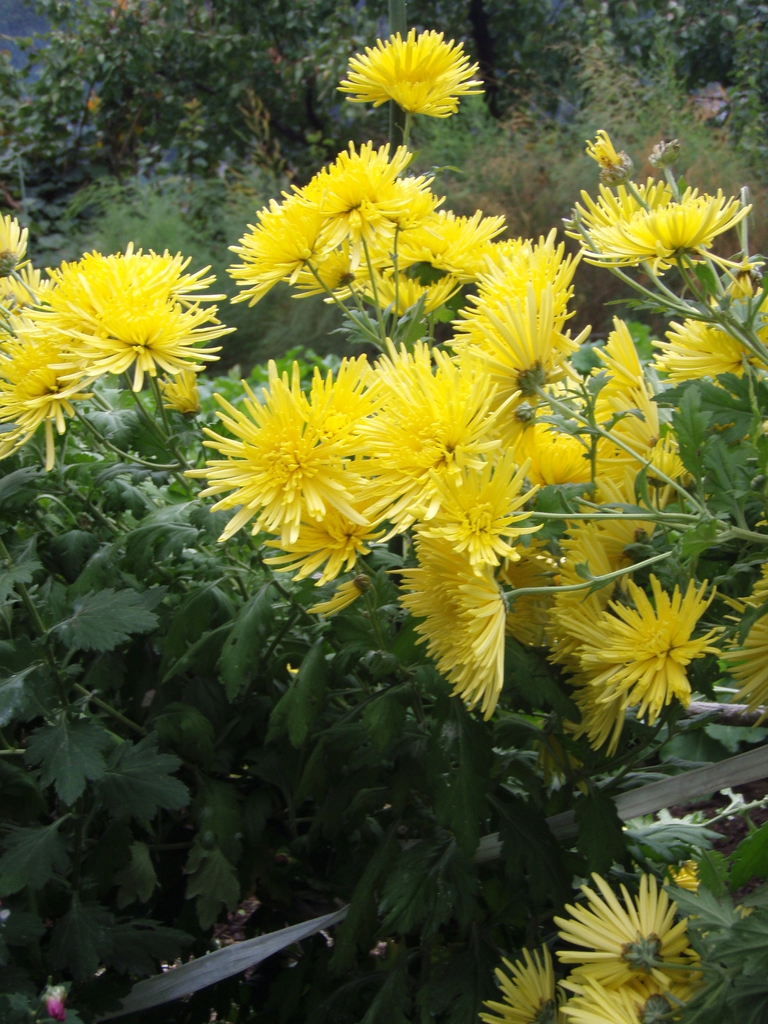
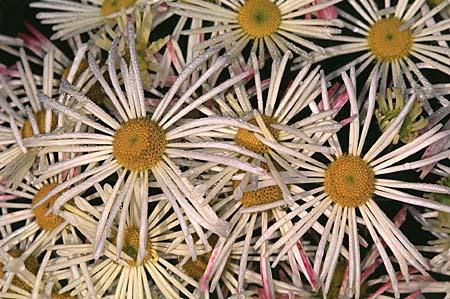
Spidery Group: ray florets elongate, thread-like to spoon-shaped; heads to 6" diam.
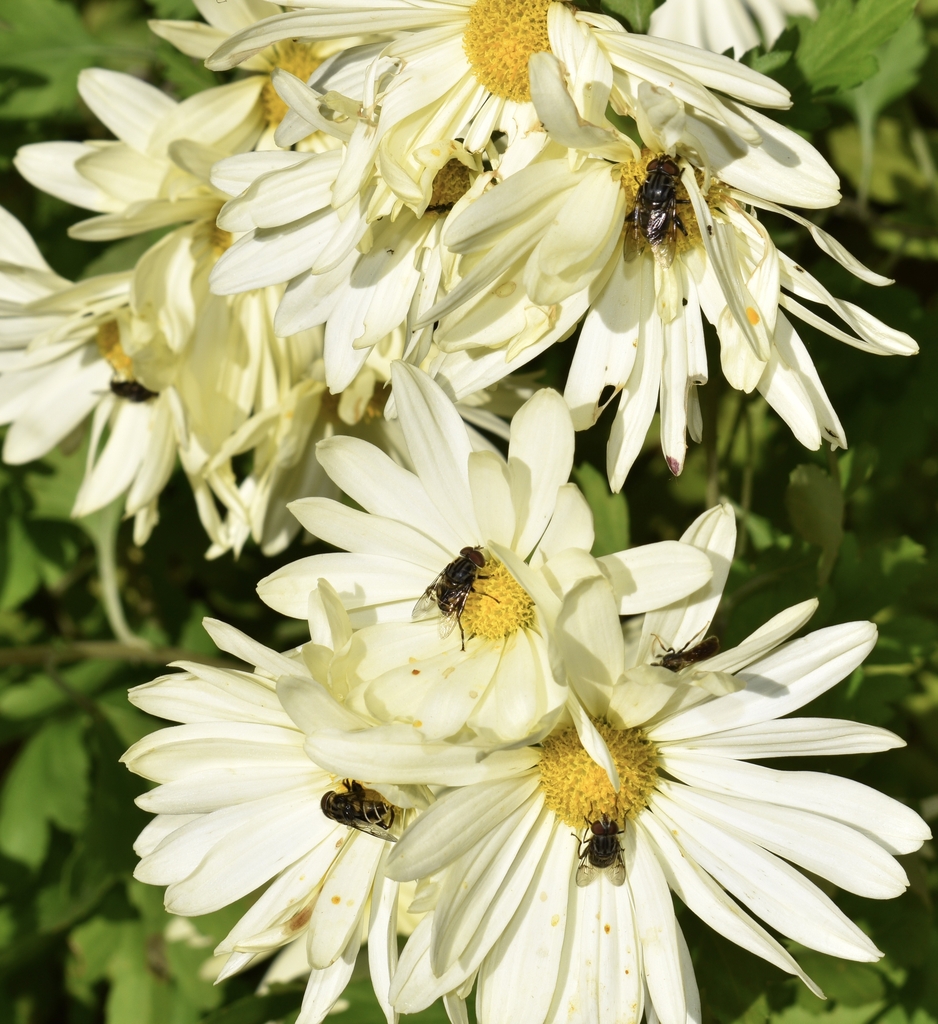
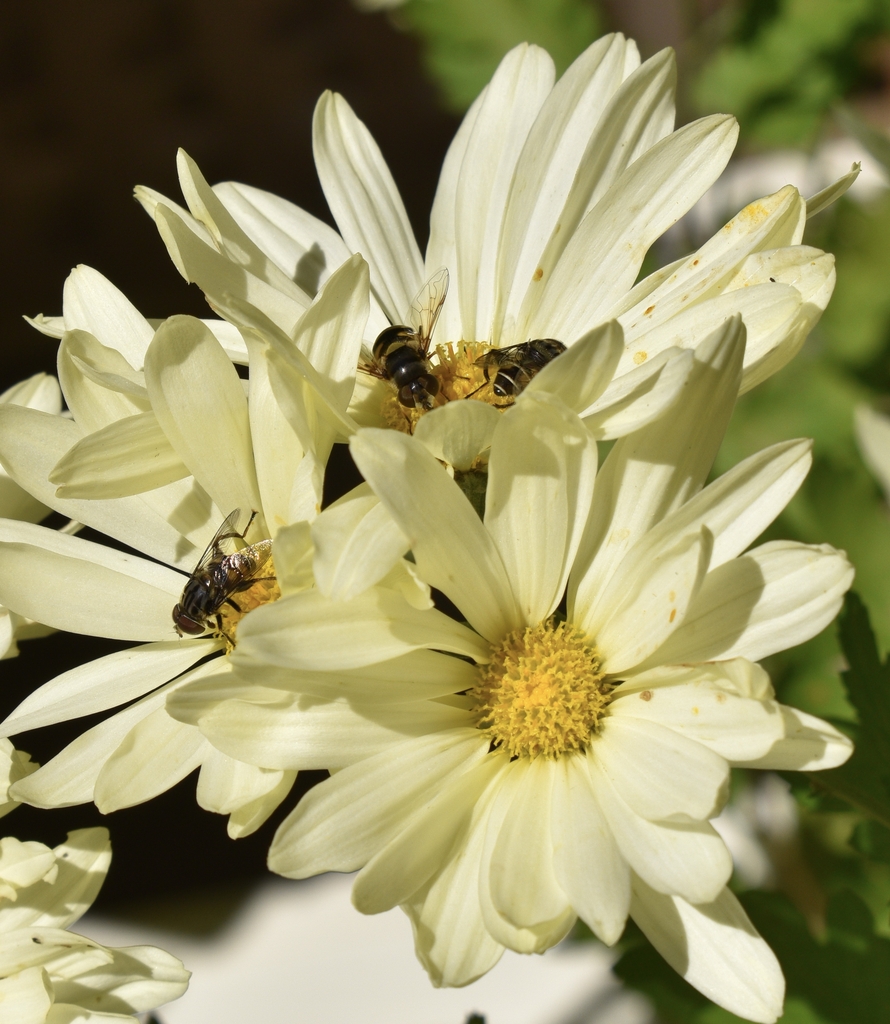
Autumn mums can be planted along edges, in the front of borders, or in cut flower gardens. They work well in containers planted near a patio or window boxes. The flowers attract pollinators, making them a welcome late-season nectar source in a pollinator garden.
Quick ID Hints:
- Leaves variable in size & shape, entire to lobed
- Heads of flowers variable in size & shape
Insects, Diseases, and Other Plant Problems: Aphids, thrips, spider mites and lace bugs are occasional insect problems. Bacterial blight, powdery mildew, stem rot, rust, root rot, verticillium wilt and leaf spot are occasional disease problems.
The Clemson Cooperative Extension Home & Garden Information Center has a factsheet on common pests and diseases.
- See this plant in the following landscape s :
- Pollinator Garden in Partial Shade Davidson County Extension Demonstration Garden
- Cultivars / Varieties:
-
- 'Bedazzled Bronze'
Burnt orange with bronze/gold tips. - 'Gethsemane Moonlight'
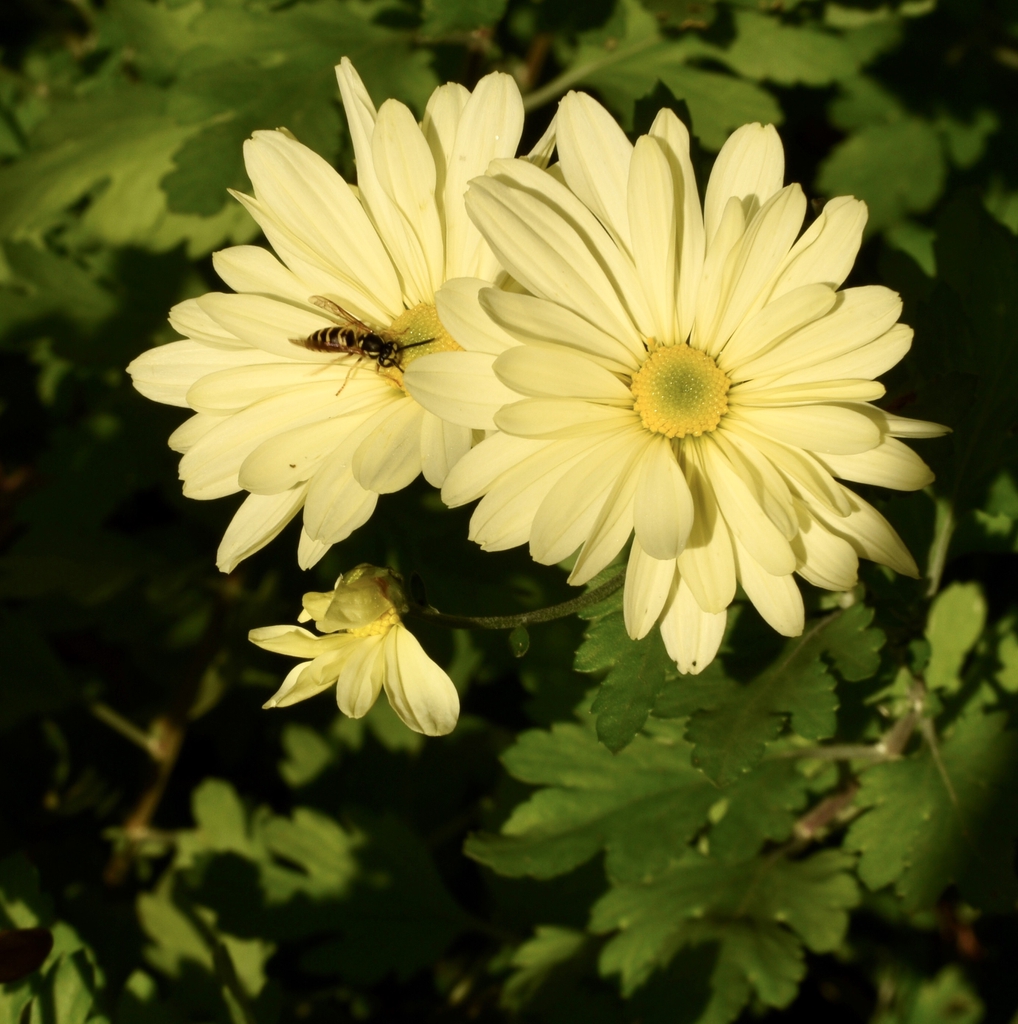
3-inch creamy-to-bright yellow flowers. - 'Kermit'
Green flowers - 'Moonbeam'
White flowers
- 'Bedazzled Bronze'
- 'Bedazzled Bronze', 'Gethsemane Moonlight', 'Kermit', 'Moonbeam'
- Tags:




 Download Image


 Download Image
 Download Image
 Download Image


- Cultivars / Varieties:
-
- 'Bedazzled Bronze'
Burnt orange with bronze/gold tips. - 'Gethsemane Moonlight'
3-inch creamy-to-bright yellow flowers. - 'Kermit'
Green flowers - 'Moonbeam'
White flowers
- 'Bedazzled Bronze'
- 'Bedazzled Bronze', 'Gethsemane Moonlight', 'Kermit', 'Moonbeam'
- Tags:
-
-
Attributes:
- Genus:
- Chrysanthemum
- Family:
- Asteraceae
- Uses (Ethnobotany):
- Used in Chinese traditional medicine.
- Life Cycle:
- Perennial
- Recommended Propagation Strategy:
- Division
- Stem Cutting
- Country Or Region Of Origin:
- Asia
- Wildlife Value:
- Flowers attract butterflies.
- Play Value:
- Attractive Flowers
- Attracts Pollinators
- Colorful
- Defines Paths
- Easy to Grow
- Edibility:
- The petals and flower buds are used to make a sweet drink or a tea in Asia and a wine in Korea.
- Dimensions:
- Height: 1 ft. 0 in. - 3 ft. 0 in.
- Width: 1 ft. 0 in. - 2 ft. 0 in.
-
-
Whole Plant Traits:
- Plant Type:
- Herbaceous Perennial
- Poisonous
- Habit/Form:
- Dense
- Erect
- Mounding
- Growth Rate:
- Rapid
- Maintenance:
- Medium
- Texture:
- Medium
-
-
Cultural Conditions:
- Light:
- Full sun (6 or more hours of direct sunlight a day)
- Soil Texture:
- High Organic Matter
- Soil pH:
- Neutral (6.0-8.0)
- Soil Drainage:
- Good Drainage
- Moist
- Available Space To Plant:
- 12 inches-3 feet
- NC Region:
- Coastal
- Mountains
- Piedmont
- USDA Plant Hardiness Zone:
- 5a, 5b, 6a, 6b, 7a, 7b, 8a, 8b, 9a, 9b
-
-
Flowers:
- Flower Color:
- Brown/Copper
- Gold/Yellow
- Orange
- Purple/Lavender
- White
- Flower Inflorescence:
- Corymb
- Head
- Flower Value To Gardener:
- Edible
- Fragrant
- Showy
- Flower Bloom Time:
- Fall
- Flower Shape:
- Dome
- Flower Petals:
- more than 20 petals/rays
- Flower Size:
- 3-6 inches
- Flower Description:
- A flower head with many peripheral petals of various shapes and colors. Large to gigantic heads, up to 10 inches in diameter, solitary or clustered in loose corymbs. Commonly double or semidouble, occasionally as singles; colors variable; ray flowers conspicuous, variable in size and shape; disc flowers often hidden, yellow.
-
-
Leaves:
- Leaf Color:
- Green
- Leaf Value To Gardener:
- Fragrant
- Leaf Type:
- Simple
- Leaf Arrangement:
- Alternate
- Leaf Shape:
- Lanceolate
- Ovate
- Leaf Margin:
- Entire
- Lobed
- Serrate
- Hairs Present:
- No
- Leaf Length:
- 3-6 inches
- Leaf Width:
- 1-3 inches
- Leaf Description:
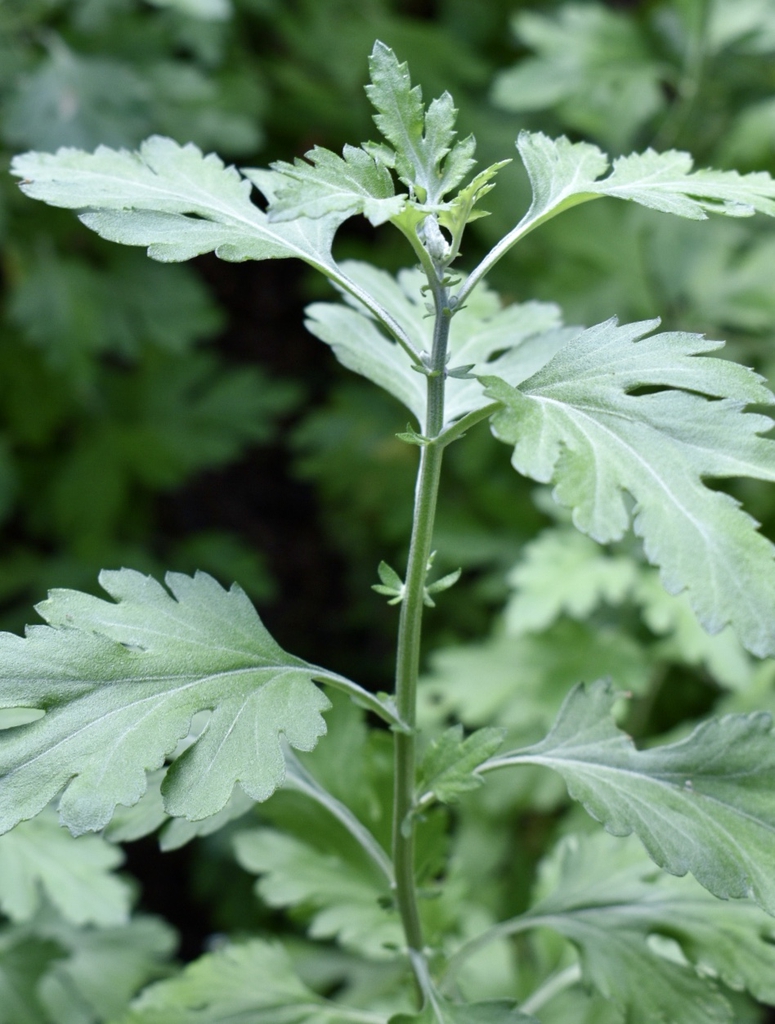
- Pinnately lobed and toothed. Alternate, simple, ovate to lanceolate, pinnately lobed, acute to obtuse, subtruncate-attenuate, entire to coarsely toothed; lobes to one-third to one-half deep into blade; lower surface grayish-pubescent.
-
-
Stem:
- Stem Color:
- Green
- Stem Is Aromatic:
- No
-
-
Landscape:
- Landscape Location:
- Container
- Patio
- Slope/Bank
- Small Space
- Walkways
- Landscape Theme:
- Asian Garden
- Butterfly Garden
- Cottage Garden
- Cutting Garden
- Pollinator Garden
- Design Feature:
- Border
- Mass Planting
- Small groups
- Attracts:
- Butterflies
- Pollinators
- Resistance To Challenges:
- Deer
- Rabbits
- Problems:
- Contact Dermatitis
- Poisonous to Humans
- Problem for Cats
- Problem for Children
- Problem for Dogs
- Problem for Horses
-
-
Poisonous to Humans:
- Poison Severity:
- Low
- Poison Symptoms:
- Stomach upset, vomiting if ingested. Contact with the foliage can cause mild rashes in some sensitive individuals.
- Poison Toxic Principle:
- Alantolactone, a sesquiterpene lactone, guaianolide, pyrethrins and other potential irritants
- Causes Contact Dermatitis:
- Yes
- Poison Part:
- Leaves
- Roots
- Sap/Juice