


Cenchrus orientalis
Common Name(s):
Previously known as:
- Pennisetum orientale
- Phonetic Spelling
- SEN-crus or-ee-en-TAH-lay
- Description
-
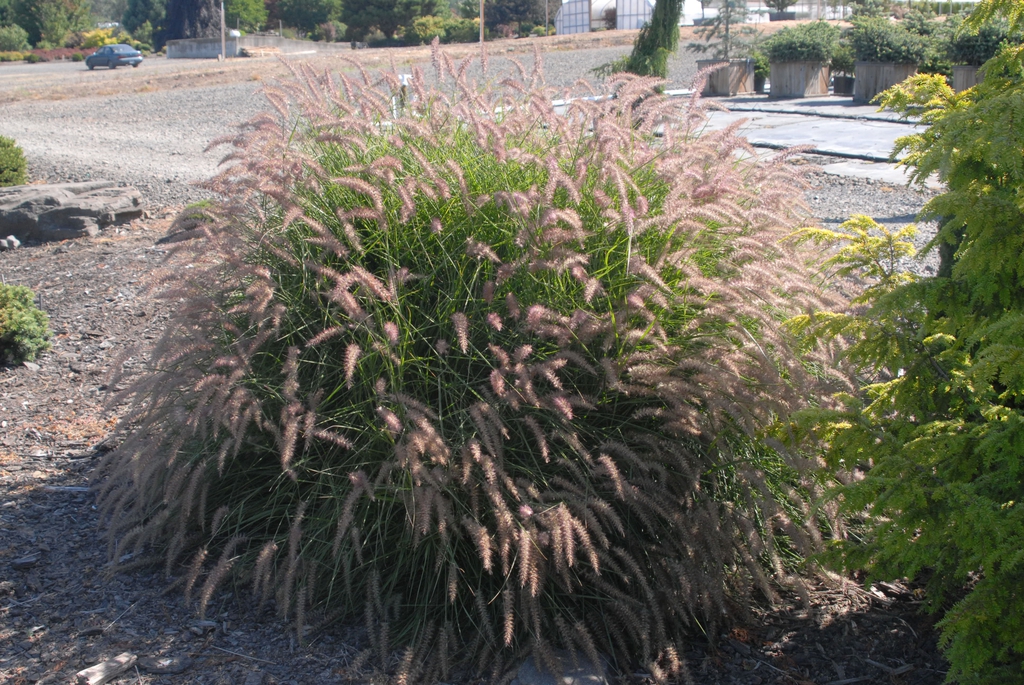
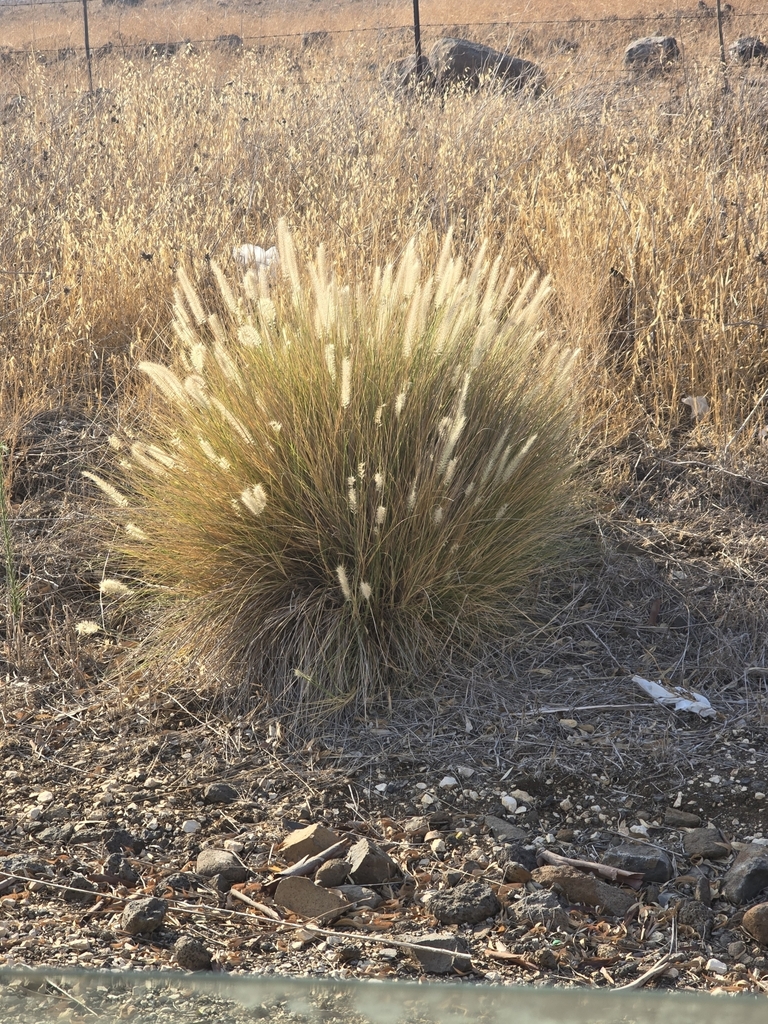
Oriental fountain grass is an ornamental plant with a spreading, clumping habit from the grass family (Poaceae). Mid-sized among the fountain grasses, growing to about 2 feet tall, it has green to gray-green leaves with pinkish white flowers that darken to mauve in the fall.
Oriental fountain grass grows in moist, well-drained soil and is drought-tolerant once mature. Does well in acid, alkaline and neutral soil as long as drainage is good. This is a warm-season grass as it does not tolerate frost well and should be planted in a sheltered position in the garden. Propagation is best by division.
This species is listed as a recommended ornamental with the Royal Horticultural Society and received the Award of Garden of Merit in July 2017. However, it has the potential to be weedy. See native alternatives to the left.
This versatile plant performs well in mass plantings or combined with contrasting perennials in mixed perennial borders. It is often used along walkways and slopes. Once mature and drought tolerant can be used in a xeriscape landscape.
Insects, Diseases and Other Plant Problems: No notable issues. Weedy. Is deer and rabbit resistant.
- See this plant in the following landscape :
- Cultivars / Varieties:
-
- 'Karley Rose'
Clumps of deep green foliage become rose-purple plumes from early summer until frost. - 'Tall Tails'
Produces extra-long, feathery pink and tan flower plumes.
- 'Karley Rose'
- 'Karley Rose', 'Tall Tails'
- Tags:


- Cultivars / Varieties:
-
- 'Karley Rose'
Clumps of deep green foliage become rose-purple plumes from early summer until frost. - 'Tall Tails'
Produces extra-long, feathery pink and tan flower plumes.
- 'Karley Rose'
- 'Karley Rose', 'Tall Tails'
- Tags:
-
-
Attributes:
- Genus:
- Cenchrus
- Species:
- orientalis
- Family:
- Poaceae
- Life Cycle:
- Perennial
- Recommended Propagation Strategy:
- Division
- Wildlife Value:
- Pollinators may visit the flowers. Song birds may eat the seeds. However, native grasses provide better nutrition for birds.
- Dimensions:
- Height: 2 ft. 0 in. - 3 ft. 0 in.
- Width: 3 ft. 0 in. - 5 ft. 0 in.
-
-
Whole Plant Traits:
- Plant Type:
- Ornamental Grasses and Sedges
- Habit/Form:
- Clumping
- Dense
- Erect
-
-
Cultural Conditions:
- Light:
- Full sun (6 or more hours of direct sunlight a day)
- Partial Shade (Direct sunlight only part of the day, 2-6 hours)
- Soil Texture:
- Clay
- Loam (Silt)
- Sand
- Soil pH:
- Neutral (6.0-8.0)
- Soil Drainage:
- Good Drainage
- Available Space To Plant:
- 3 feet-6 feet
- NC Region:
- Coastal
- Mountains
- Piedmont
- USDA Plant Hardiness Zone:
- 6a, 6b, 7a, 7b, 8a, 8b, 9a, 9b
-
-
Fruit:
- Display/Harvest Time:
- Fall
- Fruit Type:
- Caryopsis
- Fruit Length:
- < 1 inch
- Fruit Width:
- < 1 inch
- Fruit Description:
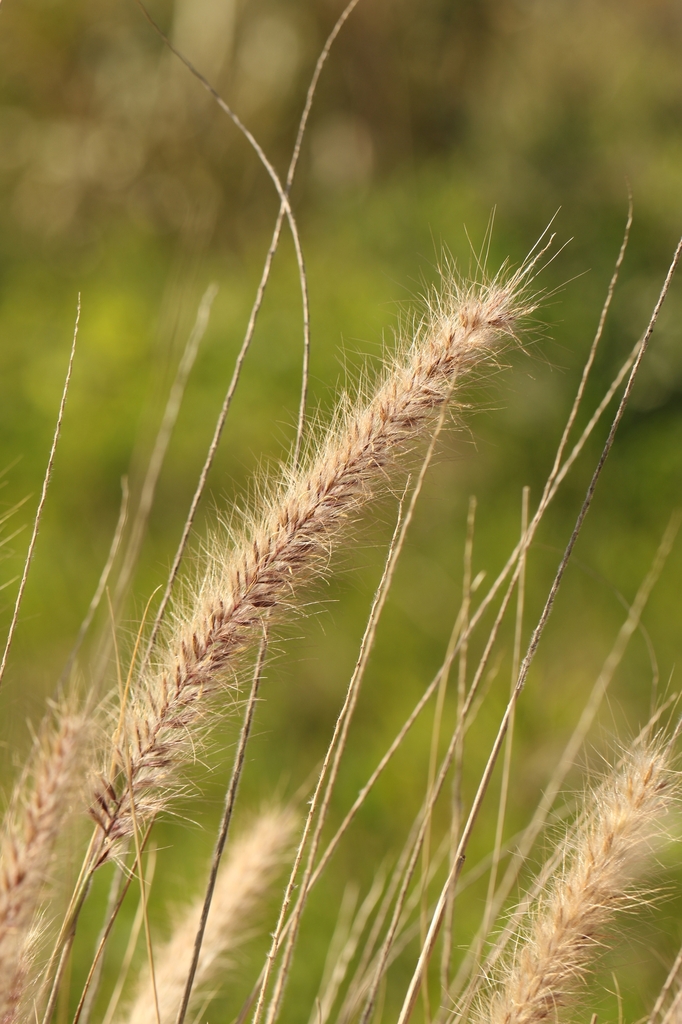
- Dry caryopsis enclosed in bristly and feathery plumes.
-
-
Flowers:
- Flower Color:
- Cream/Tan
- Pink
- Red/Burgundy
- White
- Flower Inflorescence:
- Panicle
- Flower Value To Gardener:
- Good Cut
- Good Dried
- Flower Bloom Time:
- Fall
- Summer
- Flower Description:
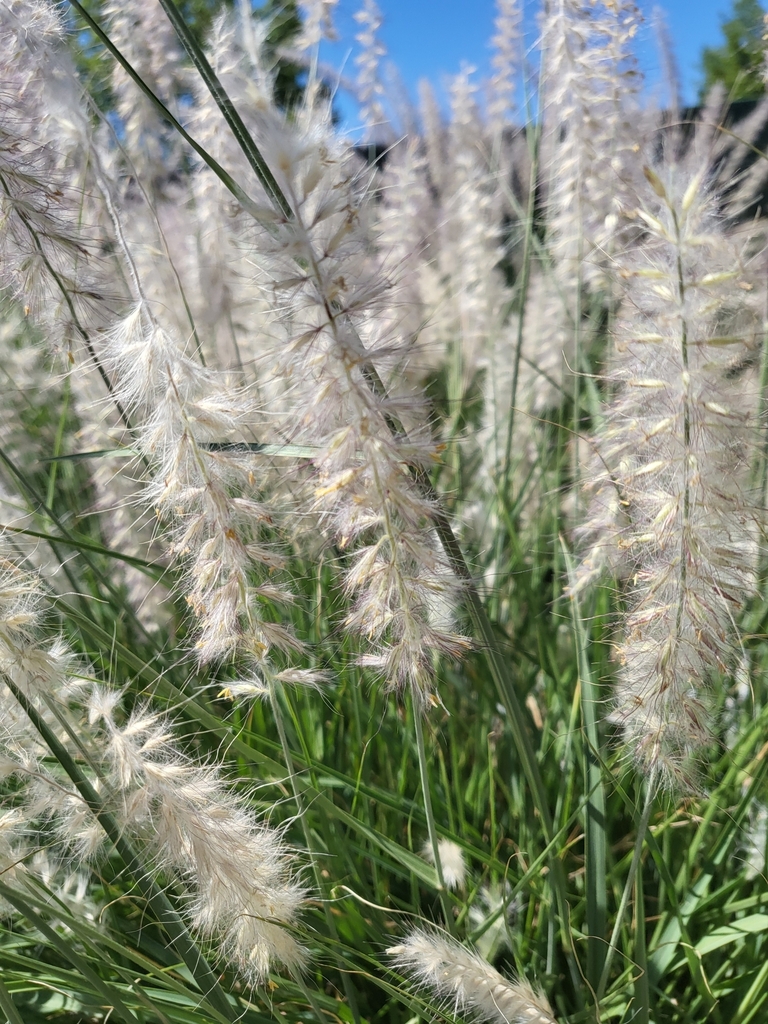
- The panicle is 8 to 12 inches long with often interrupted patches of spiklets that are fluffy, nearly white with pink tones and a bottle-brush appearance.
-
-
Leaves:
- Leaf Color:
- Gold/Yellow
- Gray/Silver
- Green
- Leaf Feel:
- Rough
- Leaf Type:
- Sheath
- Simple
- Leaf Arrangement:
- Rosulate
- Leaf Shape:
- Linear
- Hairs Present:
- Yes
- Leaf Length:
- > 6 inches
- Leaf Width:
- < 1 inch
- Leaf Description:
- Leaf blades are up to 2 feet long and 1/2 inch wide, and are flat or convolute, smooth or with soft hairs and rough margins.
-
-
Stem:
- Stem Is Aromatic:
- No
-
-
Landscape:
- Landscape Location:
- Container
- Slope/Bank
- Landscape Theme:
- Cutting Garden
- Rain Garden
- Rock Garden
- Design Feature:
- Border
- Mass Planting
- Attracts:
- Pollinators
- Songbirds
- Resistance To Challenges:
- Deer
- Drought
- Rabbits
- Problems:
- Weedy