


Polygonatum biflorum
Common Name(s):
Previously known as:
- Polygonatum biflorum var. commutatum
- Polygonatum biflorum var. hebetifolium
- Polygonatum commutatum
- Polygonatum hebetifolium
- Phonetic Spelling
- po-lig-oh-NAY-tum by-FLOR-um
- This plant has low severity poison characteristics.
- See below
- Description
-
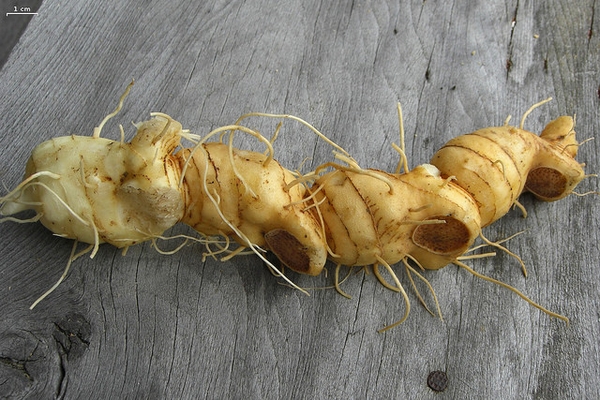
Solomon's seal is a native herbaceous perennial wildflower found in moist forested areas and roadbanks in the eastern U.S.A. and Canada in the asparagus family (Asparagaceae). The plant is said to possess scars on the rhizome that resemble the ancient Hebrew seal of King Solomon.
Solomon's seal grows 3 to 6 feet in height. and 2 to 4 feet wide. Plant it in medium to wet average soil in partial to full shade, though it does best with some sun. The seed should be collected and sown in September. If not sown when collected, treatment such as cold-moist stratification will be necessary. Rhizome cuttings may lie dormant for up to one year. Division can be done in the spring or fall when the plant is dormant.
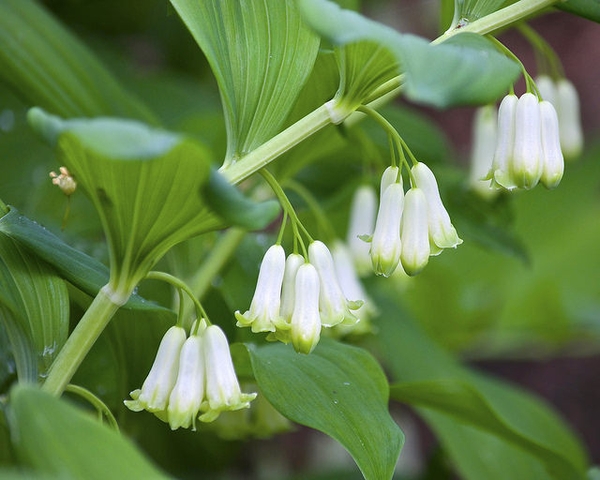
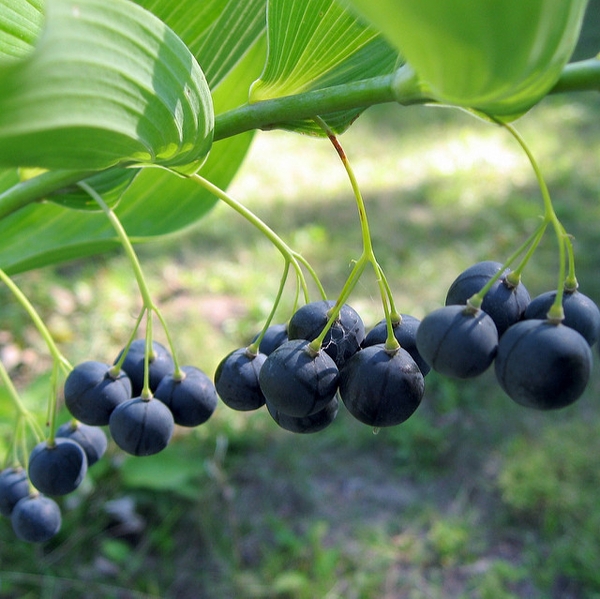
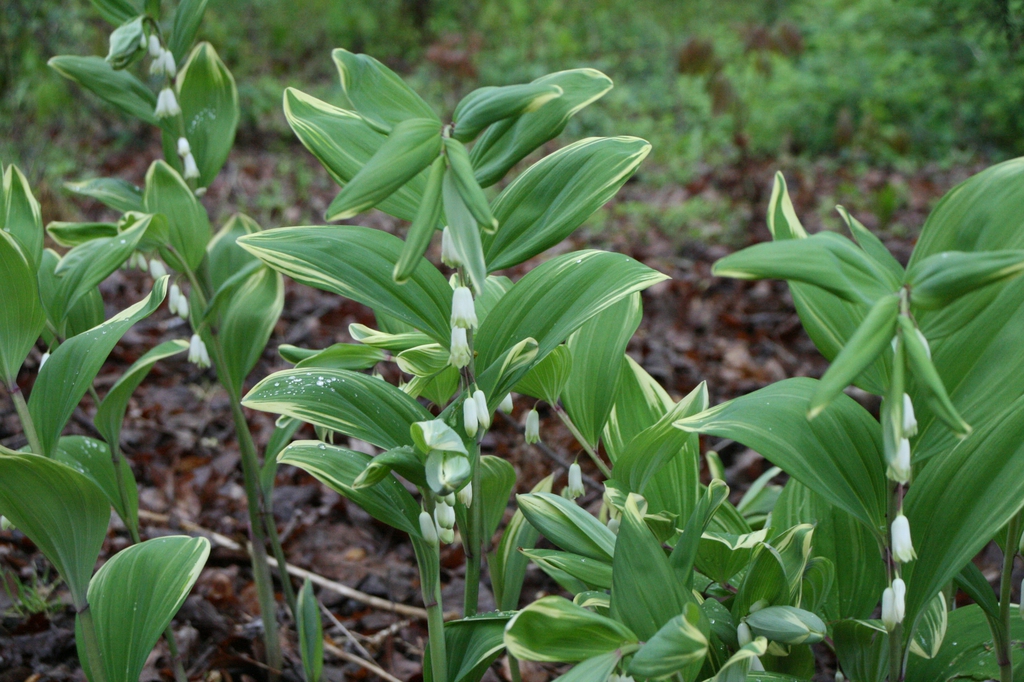
The pendulous flowers are creamy white, bell-shaped, 6-parted and appear in the leaf axils.. The flowers are followed by a blue to black berry.
Use it in a rain, woodland, shade or cottage garden, the back of a border, or let it naturalize in your yard.
Insects, Diseases, or Other Plant Problems: No serious problems. Watch for slugs and snails.
- See this plant in the following landscape :
- Cultivars / Varieties:
-
- Tags:


- Cultivars / Varieties:
-
- Tags:
-
-
Attributes:
- Genus:
- Polygonatum
- Species:
- biflorum
- Family:
- Asparagaceae
- Uses (Ethnobotany):
- Native Americans used the rhizomes as food. Thesed in herbal medicine. plant is u
- Life Cycle:
- Perennial
- Recommended Propagation Strategy:
- Division
- Root Cutting
- Seed
- Country Or Region Of Origin:
- Eastern North America, North Carolina
- Distribution:
- AL , AR , CT , DC , DE , FL , GA , IA , IL , IN , KS , KY , LA , MA , MD , ME , MI , MN , MO , MS , NC , ND , NE , NH , NJ , NM , NY , OH , OK , PA , RI , SC , SD , TN , TX , VA , VT , WI , WV , WY Canada: MB , NB , NS , ON , QC
- Wildlife Value:
- Roots consumed by mammals. Fruits attract birds.
- Edibility:
- Young shoots can be boiled for 10 minutes. Rootstock can be eaten after boiled for 20 minutes.
- Dimensions:
- Height: 3 ft. 0 in. - 6 ft. 0 in.
- Width: 2 ft. 0 in. - 4 ft. 0 in.
-
-
Whole Plant Traits:
- Plant Type:
- Herbaceous Perennial
- Native Plant
- Poisonous
- Wildflower
- Habit/Form:
- Arching
- Erect
-
-
Cultural Conditions:
- Light:
- Deep shade (Less than 2 hours to no direct sunlight)
- Partial Shade (Direct sunlight only part of the day, 2-6 hours)
- Soil Texture:
- High Organic Matter
- Soil Drainage:
- Good Drainage
- Moist
- Occasionally Dry
- Occasionally Wet
- Available Space To Plant:
- 12 inches-3 feet
- NC Region:
- Coastal
- Mountains
- Piedmont
- USDA Plant Hardiness Zone:
- 3a, 3b, 4a, 4b, 5a, 5b, 6a, 6b, 7a, 7b, 8a, 8b, 9a, 9b
-
-
Fruit:
- Fruit Color:
- Black
- Blue
- Fruit Value To Gardener:
- Showy
- Fruit Type:
- Berry
- Fruit Length:
- < 1 inch
- Fruit Description:
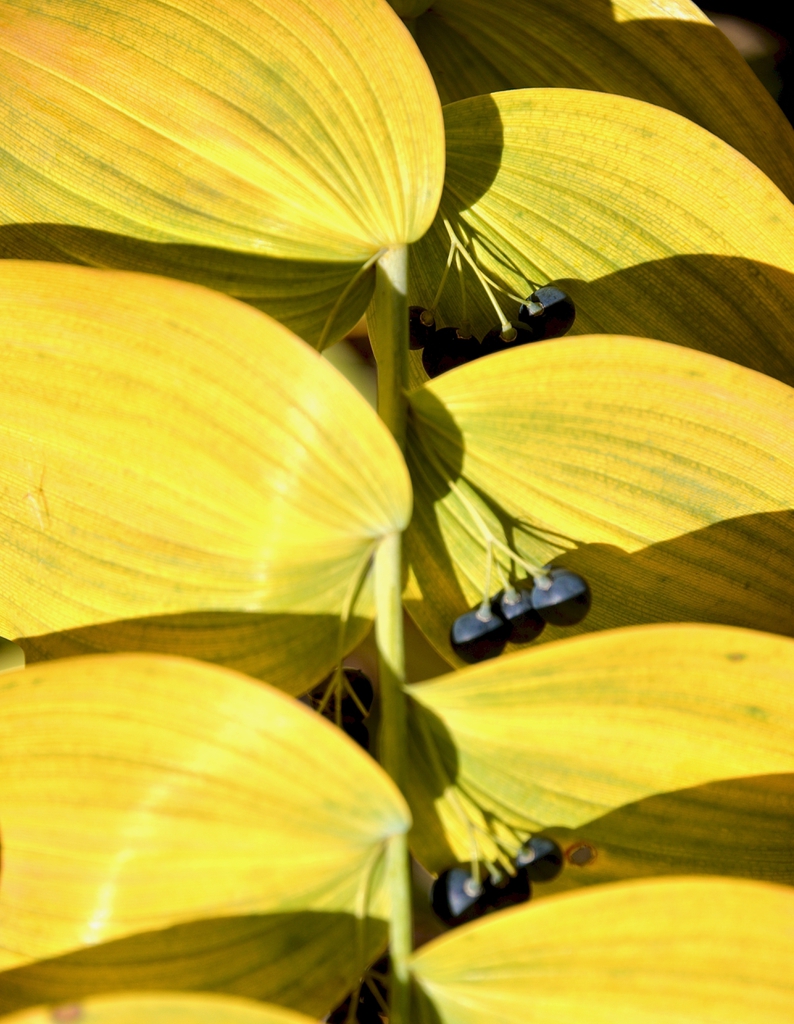
- Blue-black inedible (to humans) berries are very showy and appear in September to October, are blue-black and 1/4 to 1/2 inch wide.
-
-
Flowers:
- Flower Color:
- Cream/Tan
- Green
- White
- Flower Value To Gardener:
- Fragrant
- Flower Bloom Time:
- Spring
- Flower Shape:
- Tubular
- Flower Petals:
- 6 petals/rays
- Flower Size:
- < 1 inch
- Flower Description:
- Pendulous 1/2 in. bell-shaped, 6-parted greenish-white flowers produced in leaf axils in groups of 2 to 10.
-
-
Leaves:
- Leaf Color:
- Green
- Leaf Feel:
- Smooth
- Leaf Value To Gardener:
- Good Cut
- Showy
- Deciduous Leaf Fall Color:
- Gold/Yellow
- Leaf Type:
- Simple
- Leaf Arrangement:
- Alternate
- Leaf Shape:
- Oblong
- Ovate
- Leaf Margin:
- Entire
- Hairs Present:
- No
- Leaf Length:
- 3-6 inches
- Leaf Width:
- 1-3 inches
- Leaf Description:
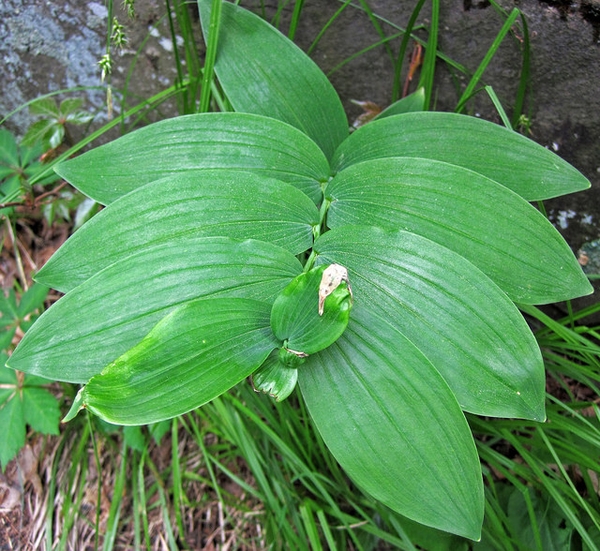
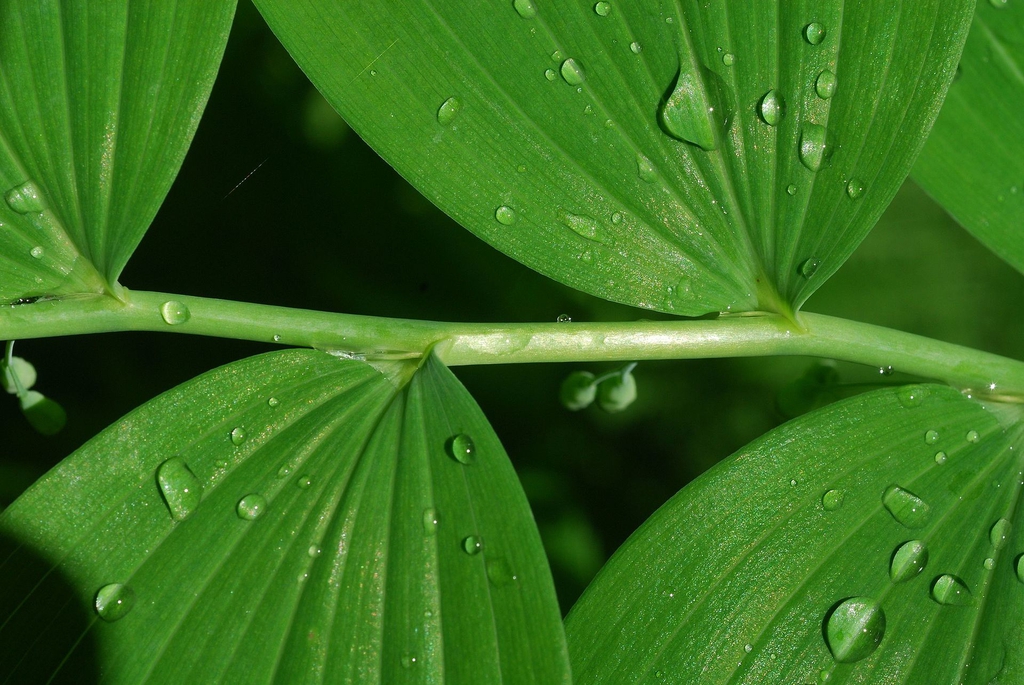
- The green leaves have distinct parallel veins and reach up to 6 inches long and 3 inches wide.
-
-
Stem:
- Stem Is Aromatic:
- No
- Stem Form:
- Zig Zags
- Stem Description:
- Unbranched stem, erect or arching.
-
-
Landscape:
- Landscape Location:
- Naturalized Area
- Woodland
- Landscape Theme:
- Native Garden
- Pollinator Garden
- Rain Garden
- Rock Garden
- Shade Garden
- Design Feature:
- Border
- Mass Planting
- Small groups
- Attracts:
- Butterflies
- Pollinators
- Songbirds
- Resistance To Challenges:
- Erosion
- Problems:
- Poisonous to Humans