


Potentilla indica
Common Name(s):
Previously known as:
- Duchesnea indica
- Phonetic Spelling
- poh-ten-TILL-uh IN-dih-kuh
- Description
-
Indian strawberry is a herbaceous perennial, native to India and the Far East. It is in the Rosaceae (rose) family and is often found in shady places, grassy slopes, lawns and disturbed areas. The plant is low growing at a fast rate, reaching 4 to 8 inches high, but with a 3 foot spread. The fruit is edible and has the appearance and texture of strawberries, but it is bland and dry. It is in leaf all year and produces attractive yellow, 3/4 inch flowers, in spring and summer.
Indian Strawberry does well in most moist, well drained soil types (sandy, loamy, or clay) in full sun or semi-shade.
The plant can quickly form a colony of plants, but flower and fruit production is sparse as most of the available energy is devoted to reproduction. The plant spreads aggressively, especially in semi-shaded sites, by long and slender stolons that develop from the crown and form new plants at their tips. It can be used as a ground cover and tolerates mowing, but it should not be grown with other small plants as it will quickly cover them.
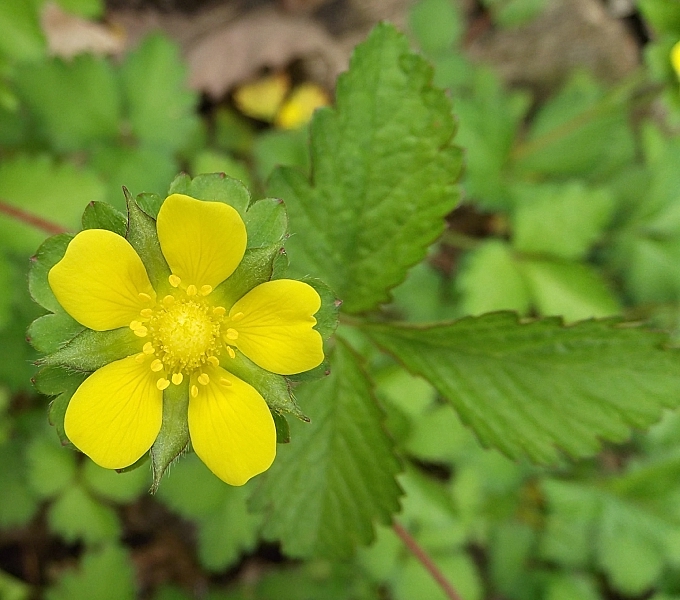
Indian Strawberry resembles Wild Strawberry, but Wild Strawberry has white flowers while Indian Strawberry flowers are yellow and the leaves are smaller.
Diseases, Insect Pests, and Other Plant Problems:
No known diseases or insect pests.
- See this plant in the following landscape :
- Cultivars / Varieties:
-
- Tags:


- Cultivars / Varieties:
-
- Tags:
-
-
Attributes:
- Genus:
- Potentilla
- Species:
- indica
- Family:
- Rosaceae
- Uses (Ethnobotany):
- A poultice of the crushed leaves is used to treat skin ailments such as eczema
- Life Cycle:
- Perennial
- Recommended Propagation Strategy:
- Division
- Seed
- Country Or Region Of Origin:
- India, the Far East, and Malesia
- Distribution:
- Introduced to Eastern to mid and coastal North America, Canada, Eastern and Western Europe, Japan, South Africa, and parts of South America.
- Wildlife Value:
- Attracts small bees and flies.
- Dimensions:
- Height: 0 ft. 3 in. - 0 ft. 8 in.
- Width: 1 ft. 0 in. - 3 ft. 0 in.
-
-
Whole Plant Traits:
- Plant Type:
- Ground Cover
- Wildflower
- Woody Plant Leaf Characteristics:
- Broadleaf Evergreen
- Deciduous
- Habit/Form:
- Creeping
- Spreading
- Growth Rate:
- Rapid
- Maintenance:
- Medium
-
-
Cultural Conditions:
- Light:
- Dappled Sunlight (Shade through upper canopy all day)
- Full sun (6 or more hours of direct sunlight a day)
- Partial Shade (Direct sunlight only part of the day, 2-6 hours)
- Soil Texture:
- Clay
- Loam (Silt)
- Sand
- Soil pH:
- Acid (<6.0)
- Alkaline (>8.0)
- Neutral (6.0-8.0)
- Soil Drainage:
- Good Drainage
- Moist
- Available Space To Plant:
- Less than 12 inches
- 12 inches-3 feet
- NC Region:
- Coastal
- Mountains
- Piedmont
- USDA Plant Hardiness Zone:
- 5a, 5b, 6a, 6b, 7a, 7b, 8a, 8b, 9a, 9b, 10a, 10b, 11a, 11b
-
-
Fruit:
- Fruit Color:
- Red/Burgundy
- Fruit Value To Gardener:
- Edible
- Display/Harvest Time:
- Fall
- Summer
- Fruit Type:
- Drupe
- Fruit Length:
- < 1 inch
- Fruit Width:
- < 1 inch
- Fruit Description:
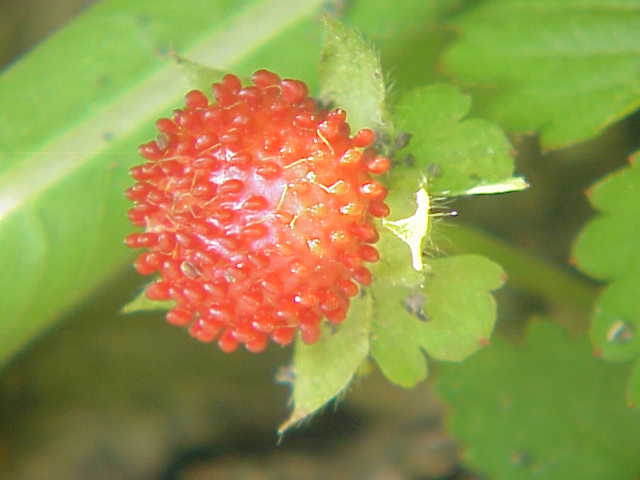
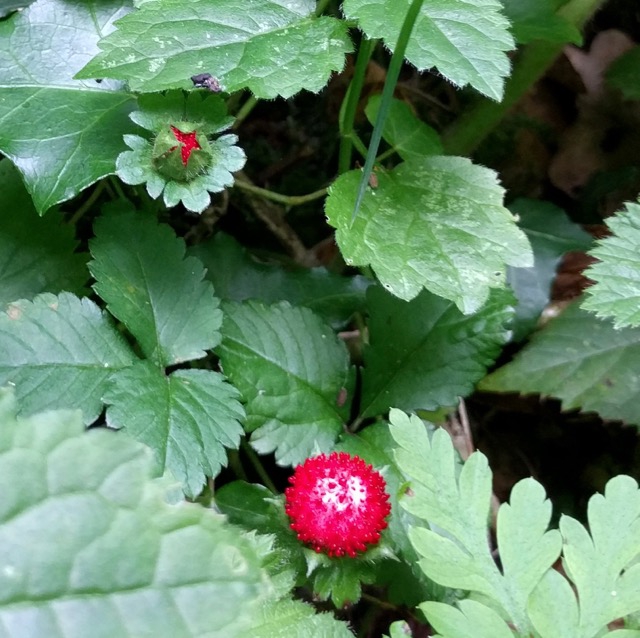
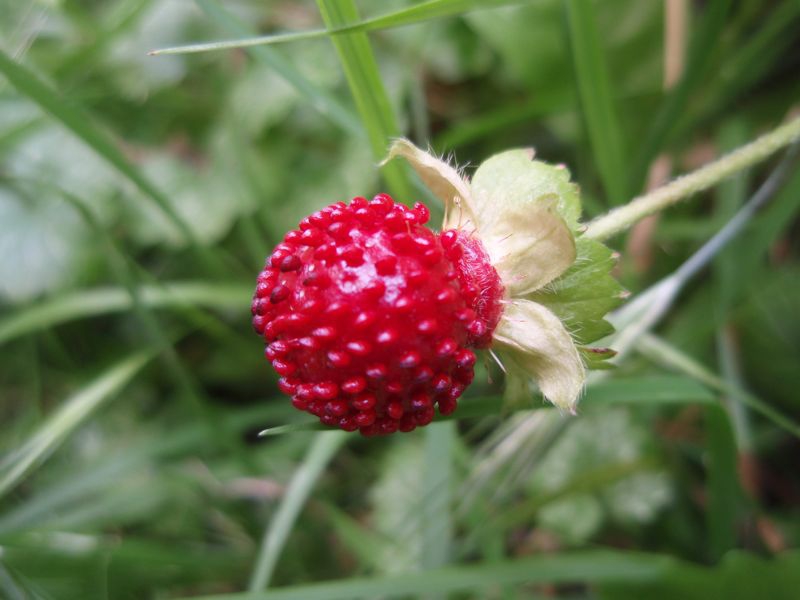
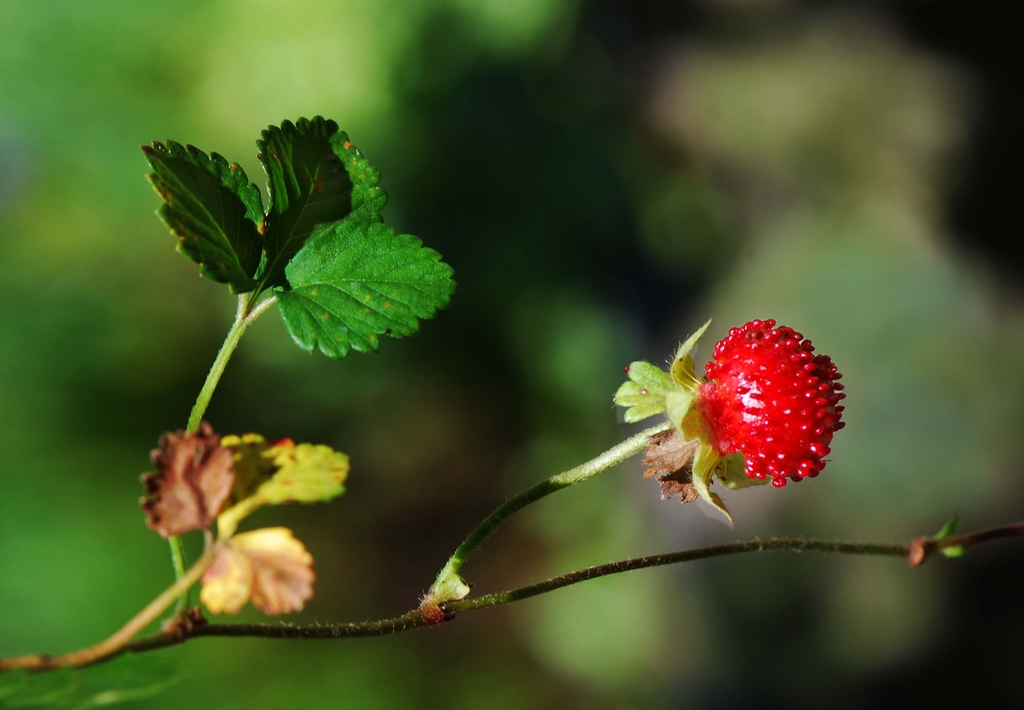
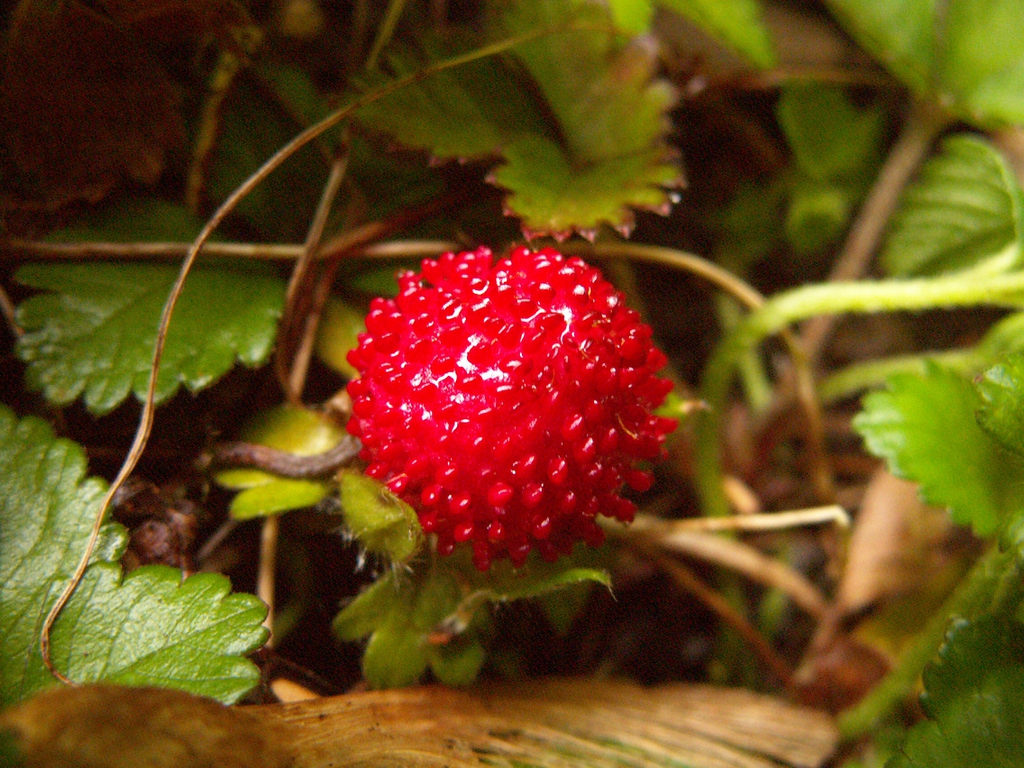
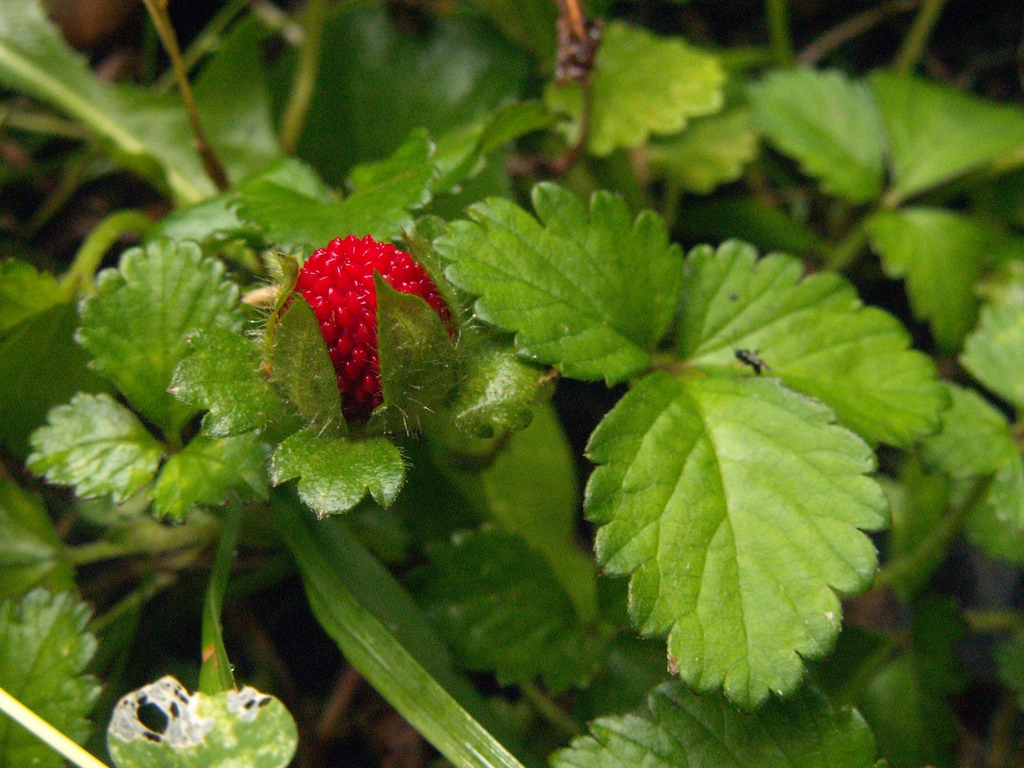
- Bright red drupes are about a ½ inch across and are spheroid or ovoid in shape. There are small red seeds scattered across its bumpy surface. They have a bland flavor and dry texture.
-
-
Flowers:
- Flower Color:
- Gold/Yellow
- Flower Inflorescence:
- Head
- Flower Bloom Time:
- Spring
- Summer
- Flower Shape:
- Star
- Flower Petals:
- 4-5 petals/rays
- Flower Size:
- < 1 inch
- Flower Description:
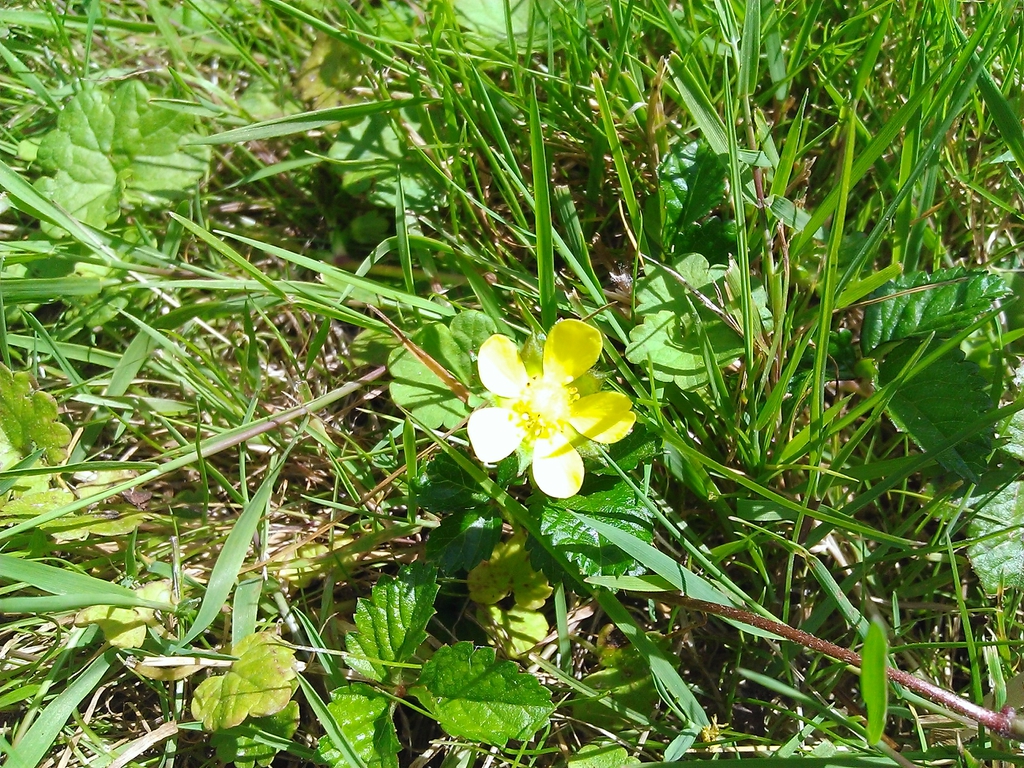
- Each flower is about 3/4 of an inch across, and consists of 5 yellow petals, 5 green sepals, numerous stamens with yellow anthers, and a central yellow receptacle with numerous pistils. Immediately underneath each flower, there are spreading bracts that are green and rectangular with 3 teeth along its outer edge. The blooming period occurs from late spring to mid-summer and lasts about a month.
-
-
Leaves:
- Woody Plant Leaf Characteristics:
- Broadleaf Evergreen
- Deciduous
- Leaf Color:
- Green
- Leaf Value To Gardener:
- Long-lasting
- Leaf Type:
- Compound (Pinnately , Bipinnately, Palmately)
- Leaf Arrangement:
- Alternate
- Leaf Shape:
- Obovate
- Ovate
- Leaf Margin:
- Crenate
- Serrate
- Hairs Present:
- Yes
- Leaf Length:
- 1-3 inches
- Leaf Width:
- 1-3 inches
- Leaf Description:
- Trifoliate basal leaves with long, hairy, petioles that develop from a crown of roots. Each leaflet is broadly ovate or obovate, ¾ to 1¾ inches long and ½ to 1¼ inches across. The middle leaflet is wedge-shaped. The margins of these leaflets are coarsely crenate-serrate with pinnate venation. The upper leaflet is medium to dark green and hairless.
-
-
Stem:
- Stem Is Aromatic:
- No
- Stem Form:
- Straight
- Stem Description:
- The plant crown produces one or more flowering stalks, each with a single flower.
-
-
Landscape:
- Landscape Location:
- Lawn
- Woodland
- Attracts:
- Bees
- Problems:
- Weedy