



Vernicia fordii
Common Name(s):
Previously known as:
- Aleurites fordii
- Phonetic Spelling
- al-eh-yoo-REE-teez FOR-dee-eye
- This plant has high severity poison characteristics.
- See below
- Description
-
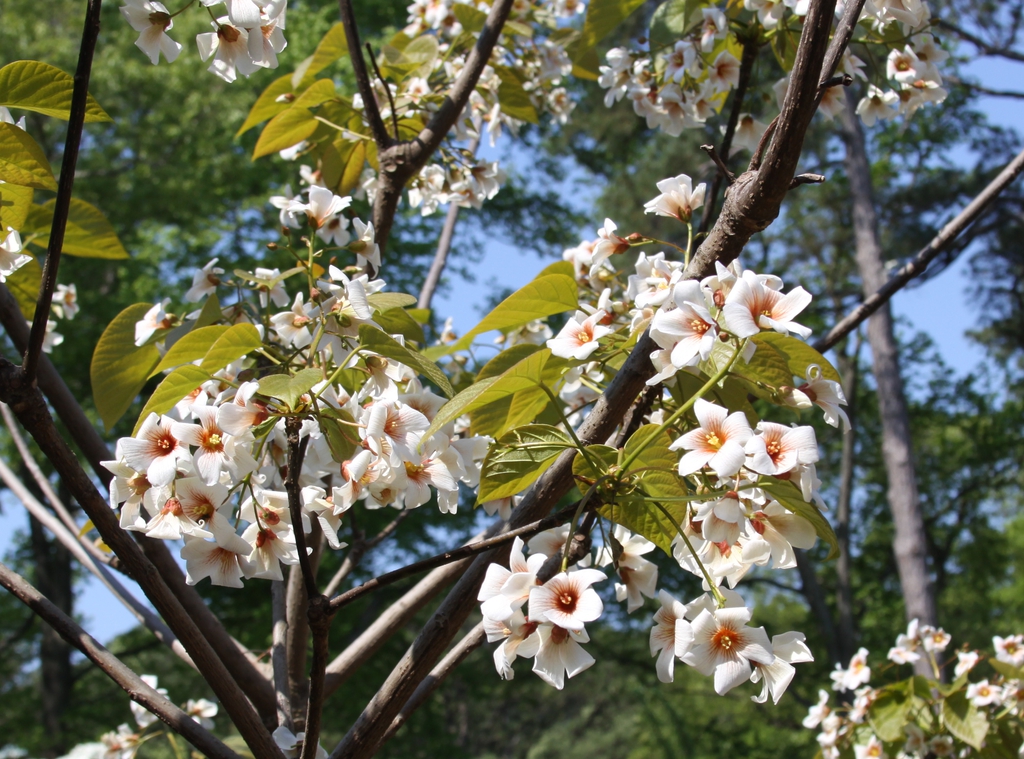
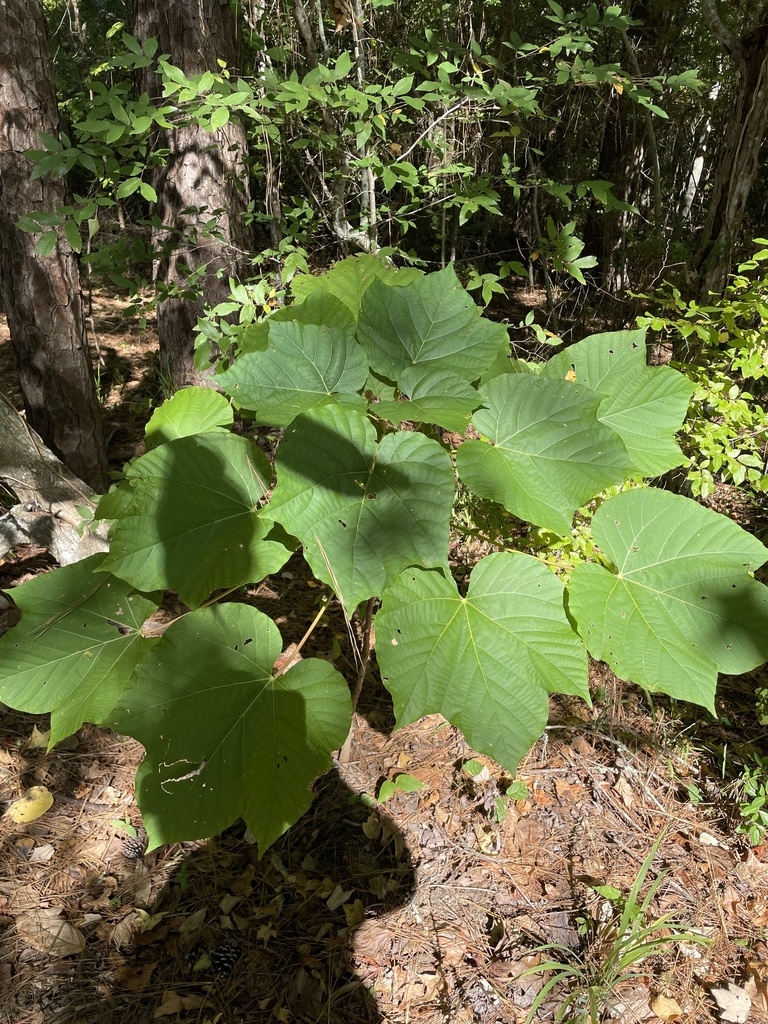
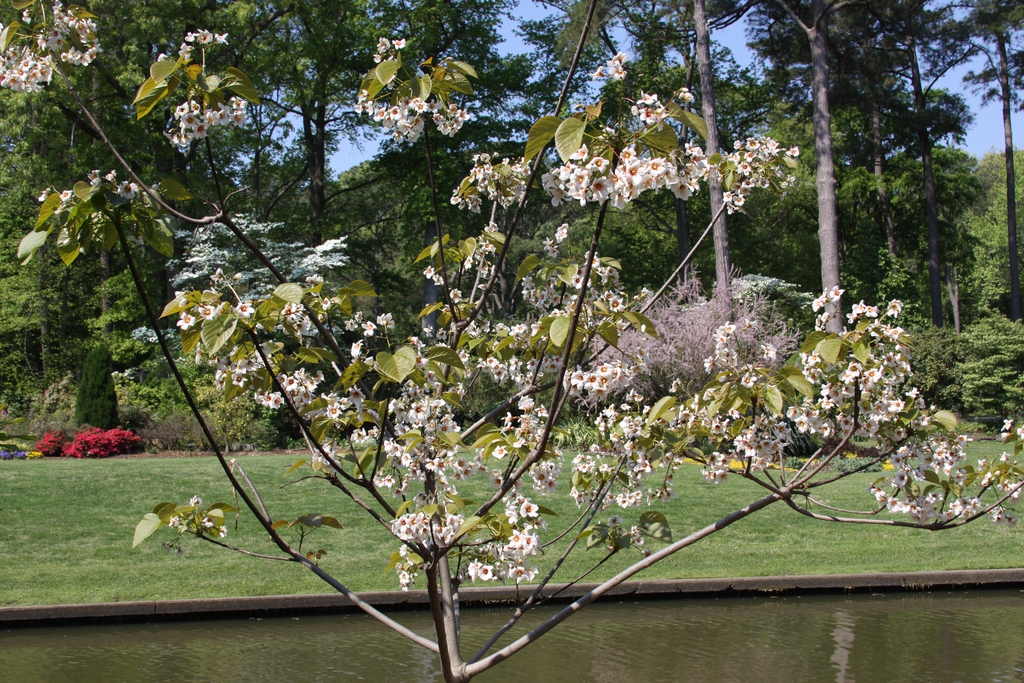
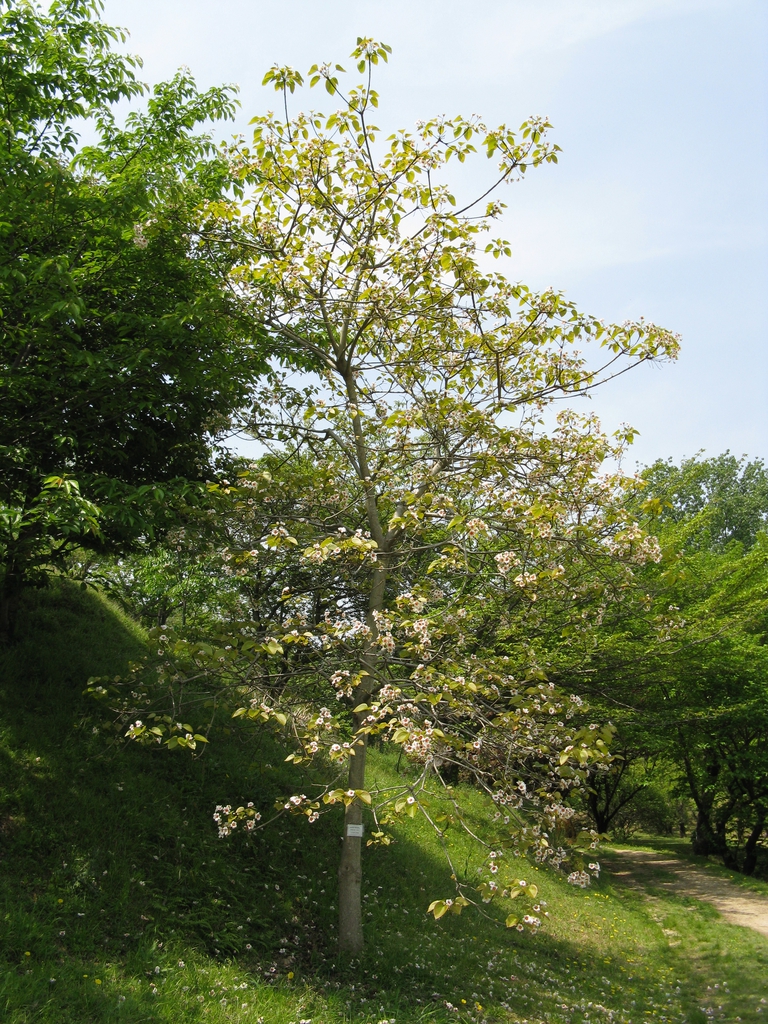
The tung oil tree is native to southern China and is a member of the spurge family (Euphorbiaceae). It can grow 40 ft tall and has hibiscus-type flowers that are white with red centers that bloom before the leaves appear. The species epithet honors Mr. Charles Ford, who was the superintendent of the Hong Kong Botanic Garden in the late 19th century and who first sent dried specimens to the Royal Botanic Gardens, Kew, for identification.
The tung oil tree grows in full sun but also tolerates being an understory tree. It is fast-growing and thrives on relatively well-drained, fertile soils with adequate moisture. It is not very cold-tolerant.
The seeds of the tung oil tree are rich in unsaturated oils, which are used in the production of lacquers, varnishes, resins and paints. The fatty acid responsible for tung oil's functionality is alpha-eleostearic acid. Early in the 1900s, the importation of these oils reached millions of gallons per year. Due to the high demand for the oils, this tree was brought to the US by Gulf Coast farmers in search of a cash crop. By the 1920s, there were over 10,000 acres of tung oil trees being grown along the Gulf Coast in Florida, Georgia, Alabama, Mississippi, Louisiana and Texas. By the 1940s, synthetic resins began to become alternatives to tung oil. Furthermore, freezes and hurricanes caused major crop losses. Production declined in the Southeast, and by the late 1960s, commercial production ceased. Today, in Florida, there is a resurgence of interest in the crop.
Abandoned plantation trees remained, and these were the source of seeds that established themselves in forest edges, rights of ways and urban green spaces. Its suckering habit has allowed the tung oil tree to flourish and spread. In FL, GA and AL, it is considered a weed. Controlling its growth and spread has proven to be a challenge. Since they can reproduce through suckers, the removal of a tree must be complete. After felling the tree, the remaining stump should be chemically treated immediately after the cutting is done. If you are seeking an ornamental, flowering tree, please consider planting alternatives to tung oil tree.
Insects, Diseases, and Other Plant Problems: Susceptible to dieback and canker.
- See this plant in the following landscape :
- Cultivars / Varieties:
-
- 'Spiers'
Late-blooming; flowers are less susceptible to frost damage.
- 'Spiers'
- 'Spiers'
- Tags:


- Cultivars / Varieties:
-
- 'Spiers'
Late-blooming; flowers are less susceptible to frost damage.
- 'Spiers'
- 'Spiers'
- Tags:
-
-
Attributes:
- Genus:
- Vernicia fordii
- Species:
- fordii
- Family:
- Euphorbiaceae
- Life Cycle:
- Woody
- Country Or Region Of Origin:
- China and Vietnam
- Distribution:
- AL, CA, FL, GA, LA, MS, PR, TX
- Wildlife Value:
- Attractive to bees, who pollinate the flowers.
- Play Value:
- Attractive Flowers
- Screening
- Shade
- Dimensions:
- Height: 15 ft. 0 in. - 25 ft. 0 in.
- Width: 10 ft. 0 in. - 15 ft. 0 in.
-
-
Whole Plant Traits:
- Plant Type:
- Poisonous
- Tree
- Woody Plant Leaf Characteristics:
- Broadleaf Evergreen
- Habit/Form:
- Rounded
- Spreading
- Growth Rate:
- Medium
- Maintenance:
- High
- Texture:
- Medium
-
-
Cultural Conditions:
- Light:
- Full sun (6 or more hours of direct sunlight a day)
- Soil Texture:
- Loam (Silt)
- Sand
- Soil pH:
- Acid (<6.0)
- Alkaline (>8.0)
- Neutral (6.0-8.0)
- Soil Drainage:
- Good Drainage
- Available Space To Plant:
- 24-60 feet
- NC Region:
- Coastal
- USDA Plant Hardiness Zone:
- 8a, 8b, 9a, 9b, 10a, 10b, 11a, 11b
-
-
Fruit:
- Fruit Color:
- Green
- Red/Burgundy
- Display/Harvest Time:
- Fall
- Fruit Type:
- Capsule
- Fruit Length:
- 1-3 inches
- Fruit Width:
- 1-3 inches
- Fruit Description:
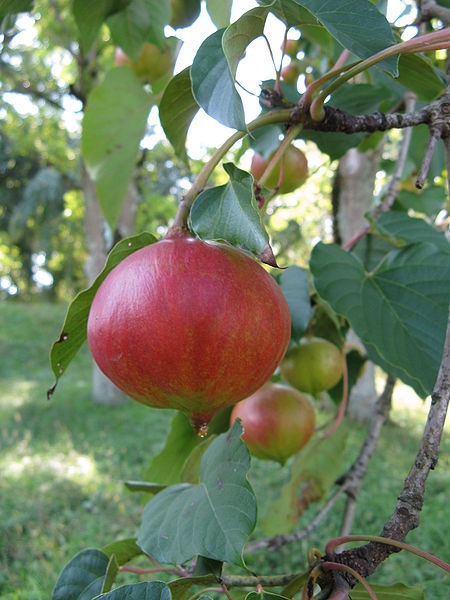
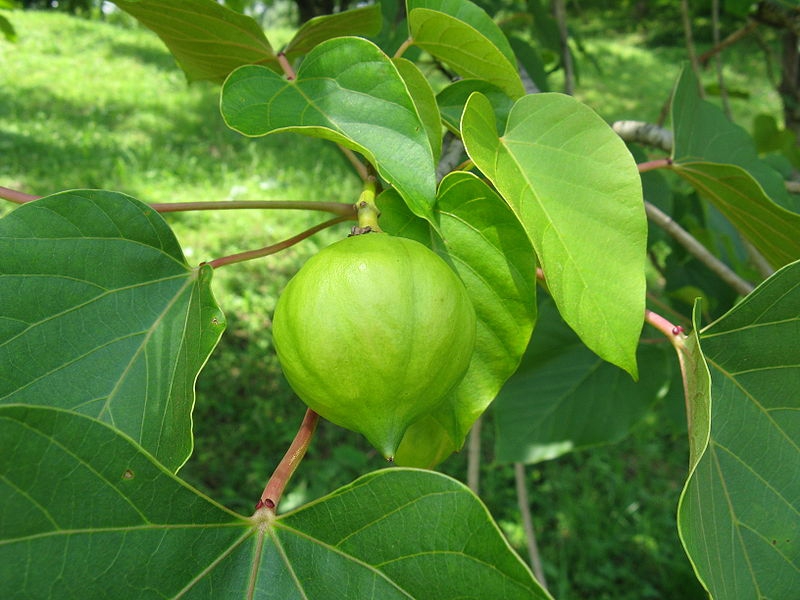
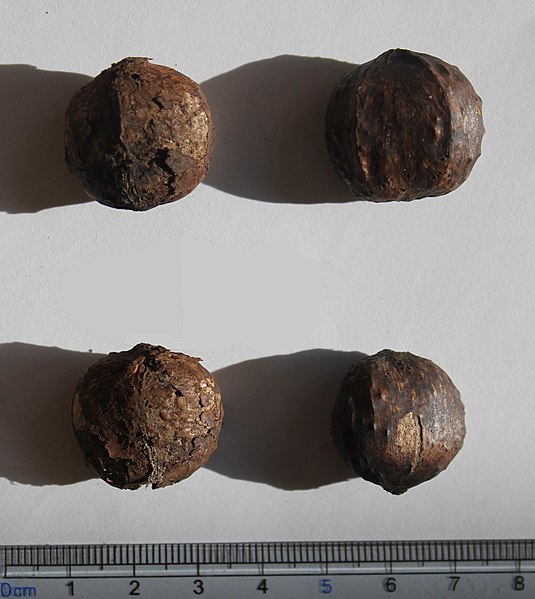
- 2- to 3-inch fruits are large, globular, split into segments and contain four or five seeds.
-
-
Flowers:
- Flower Color:
- Pink
- White
- Flower Inflorescence:
- Cyme
- Flower Value To Gardener:
- Showy
- Flower Bloom Time:
- Spring
- Flower Shape:
- Cup
- Flower Petals:
- 7 - 20 petals/rays
- Flower Size:
- 1-3 inches
- Flower Description:
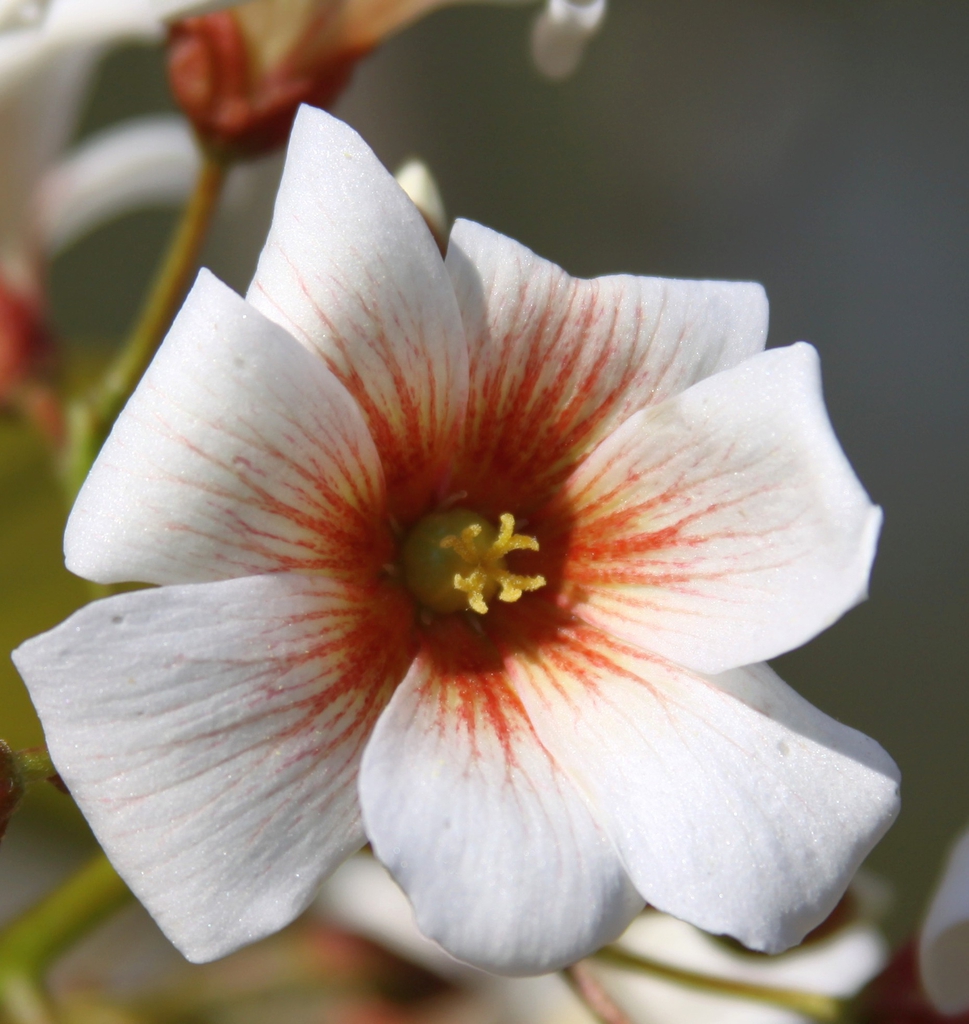
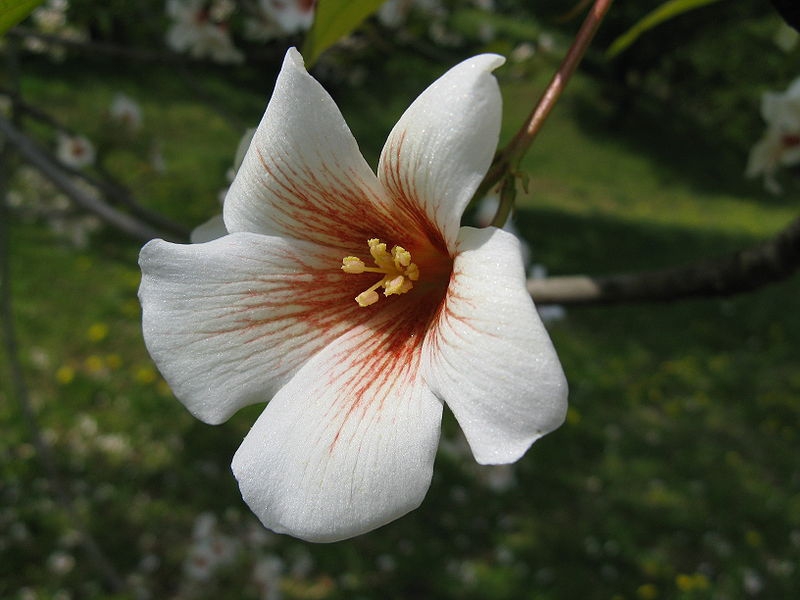
- Flowers are pale pink to white, with red veins. They have 5 to 7 petals in large clusters and bloom before or as the leaves emerge.
-
-
Leaves:
- Woody Plant Leaf Characteristics:
- Broadleaf Evergreen
- Leaf Color:
- Green
- Leaf Value To Gardener:
- Showy
- Deciduous Leaf Fall Color:
- Gold/Yellow
- Leaf Type:
- Simple
- Leaf Arrangement:
- Alternate
- Leaf Shape:
- Cordate
- Ovate
- Leaf Margin:
- Entire
- Lobed
- Hairs Present:
- Yes
- Leaf Length:
- > 6 inches
- Leaf Width:
- 3-6 inches
- Leaf Description:
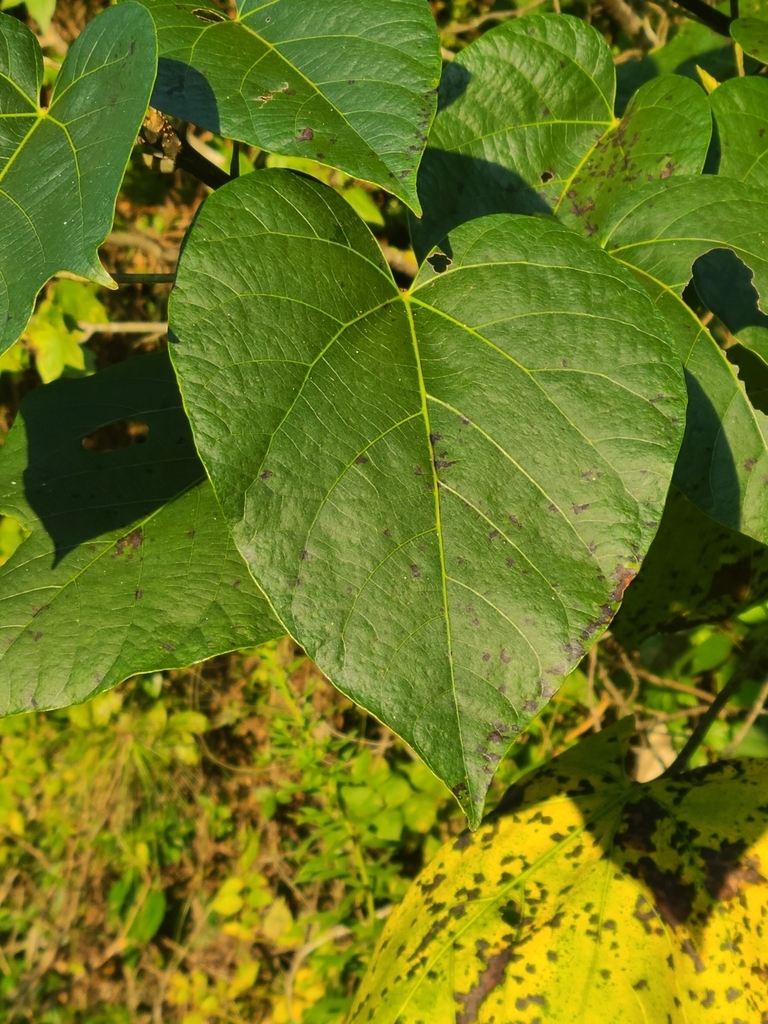
- Dark green leaves are alternate, simple, long-stalked, and heart-shaped but may be shallowly 3-lobed. They range from 6 to 10 inches long and 4 to 8 inches wide. The petioles are long with 2 conspicuous red glands at the base of each leaf. Both sides may have sparse hairs.
-
-
Bark:
- Bark Color:
- Light Brown
- Light Gray
- Surface/Attachment:
- Furrowed
- Bark Description:
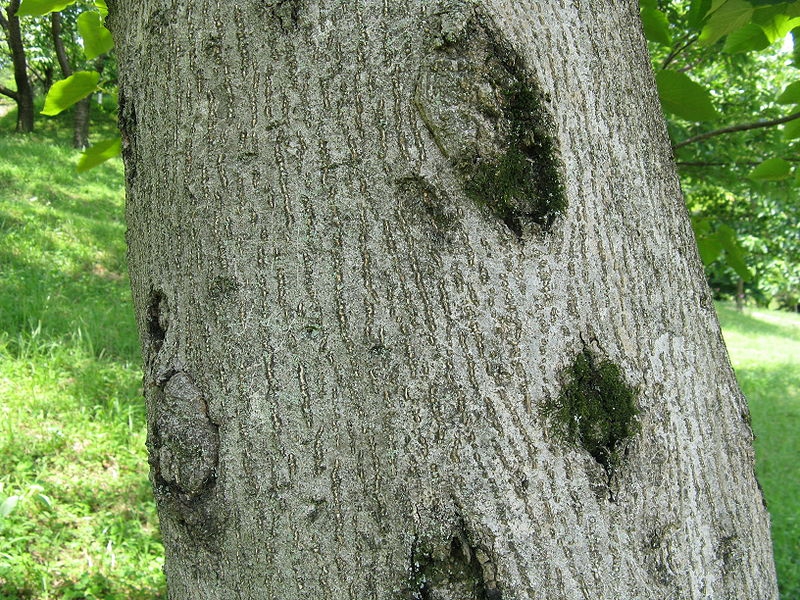
- The bark is smooth, thin, brownish gray or green-gray with reddish dots. It exudes a milky white sap when cut.
-
-
Stem:
- Stem Color:
- Brown/Copper
- Gray/Silver
- Red/Burgundy
- Stem Is Aromatic:
- No
- Stem Leaf Scar Shape:
- C-shaped, Cresent shaped
- Stem Lenticels:
- Conspicuous
- Stem Description:
- Twigs are dark gray-brown with numerous reddish lenticels and circular leaf scars.
-
-
Landscape:
- Attracts:
- Bees
- Resistance To Challenges:
- Drought
- Dry Soil
- Poor Soil
- Problems:
- Contact Dermatitis
- Poisonous to Humans
- Problem for Children
- Weedy
-
-
Poisonous to Humans:
- Poison Severity:
- High
- Poison Symptoms:
- All parts are toxic if consumed. Symptoms may include severe stomach pain, vomiting, diarrhea, weakness, slowed breathing, and poor reflexes; may be fatal.
- Poison Toxic Principle:
- Glycoside and phytotoxin
- Causes Contact Dermatitis:
- Yes
- Poison Part:
- Bark
- Flowers
- Fruits
- Leaves
- Roots
- Seeds
- Stems



