


Physocarpus opulifolius
Common Name(s):
- Phonetic Spelling
- fih-soh-KAR-pus op-yoo-lih-FOH-lee-us
- Description
-
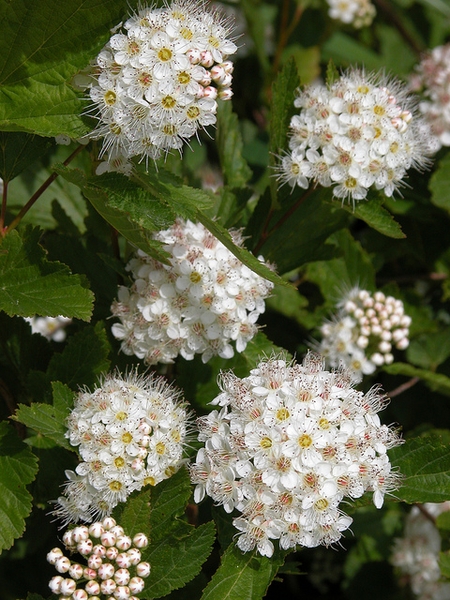
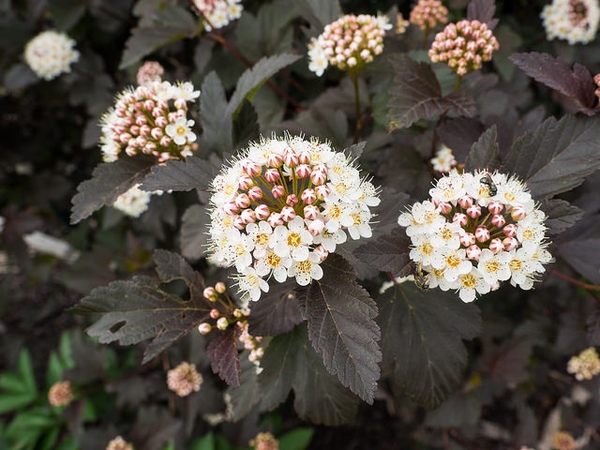
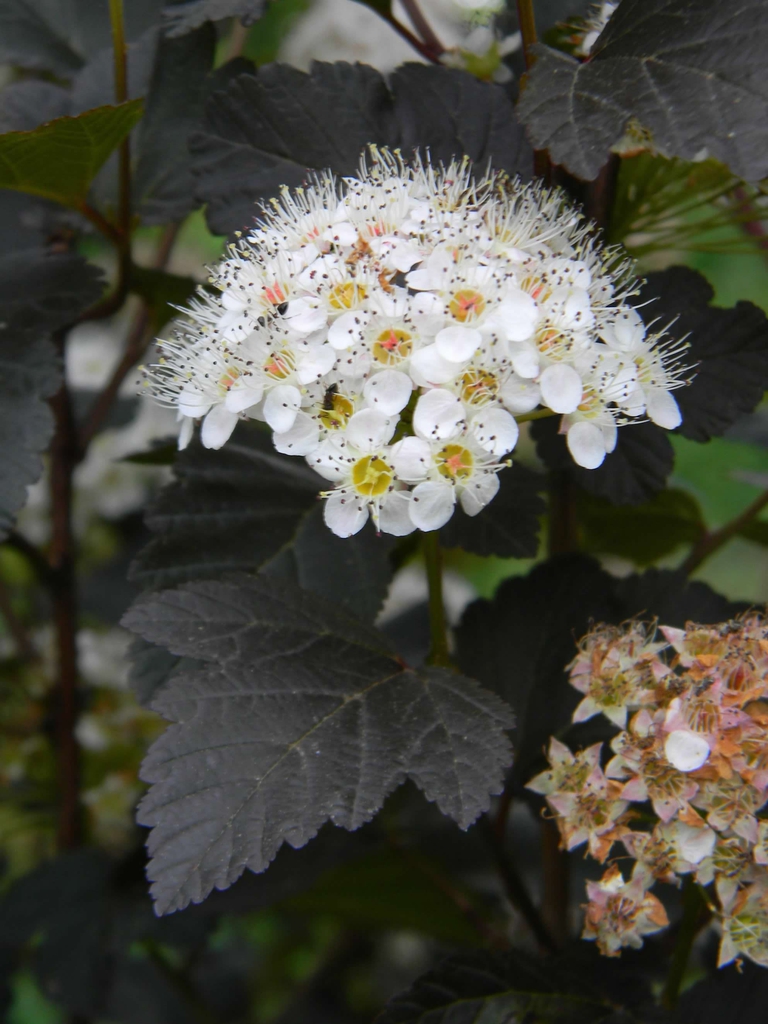
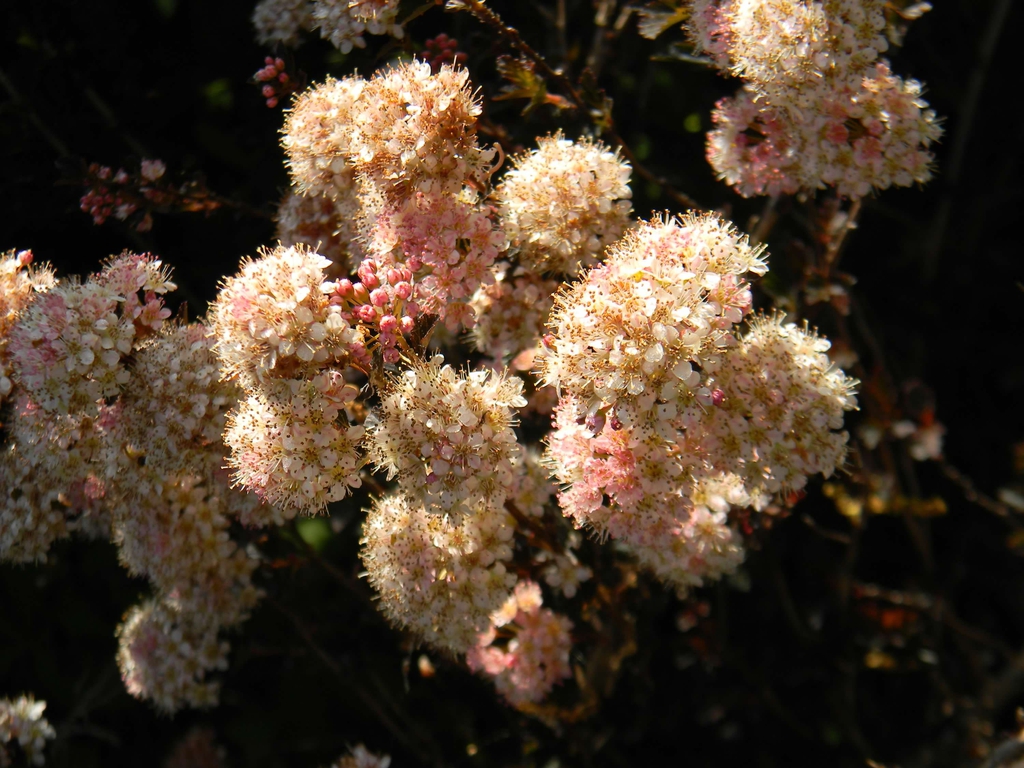
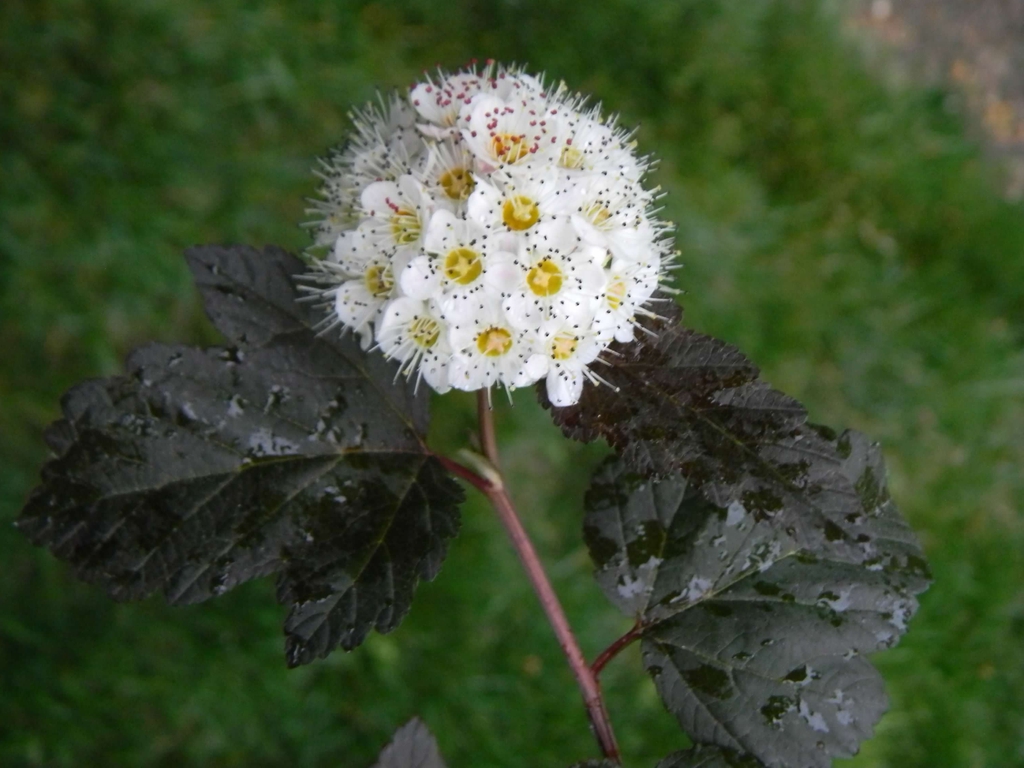
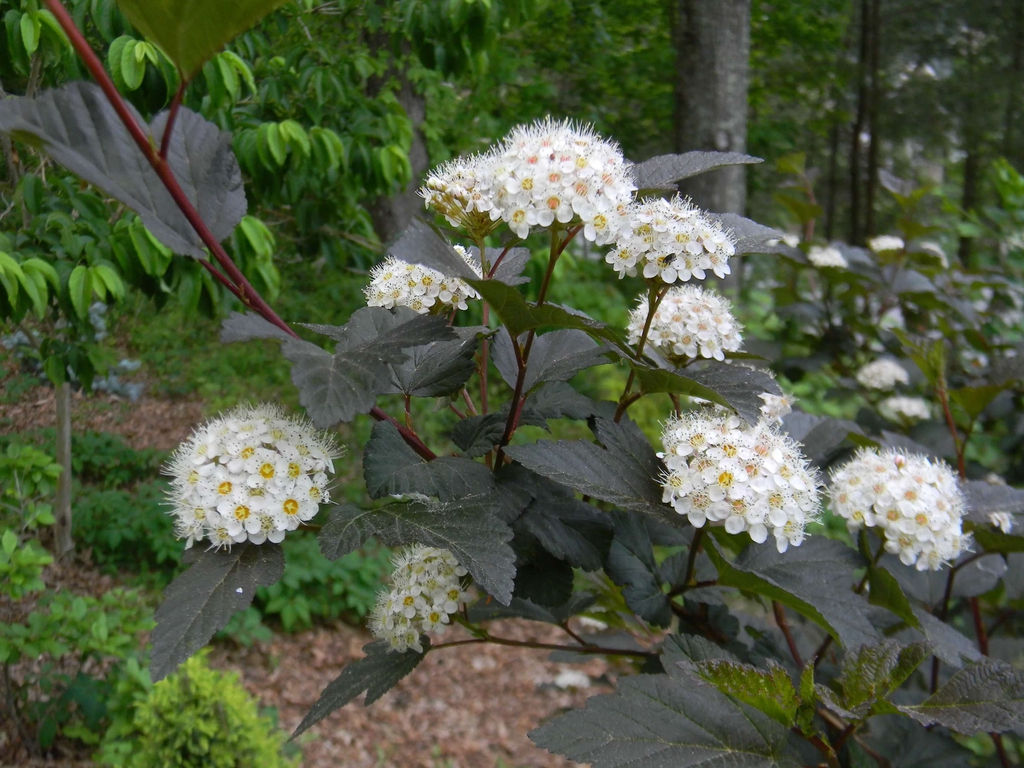
Ninebark is a flowering, deciduous shrub in the rose family and native to central and eastern North America. It displays white or pink flowers from late spring into early summer. If needed, prune just after blooming, but no later than mid-August. Keep in mind that next year's flowers will appear on old growth. It can be cut to the ground in the winter to rejuvenate. It may be found growing on rocky hillsides and banks of streams as well as in moist thickets.
Ninebark is a tough and adaptable plant that does well in slightly acidic, dry to medium, well-drained soil in full sun to part shade. It will tolerate a wide range of soil conditions. This plant will do well in full sun in the northern part of its range, but appreciates some shade in its southernmost locations.
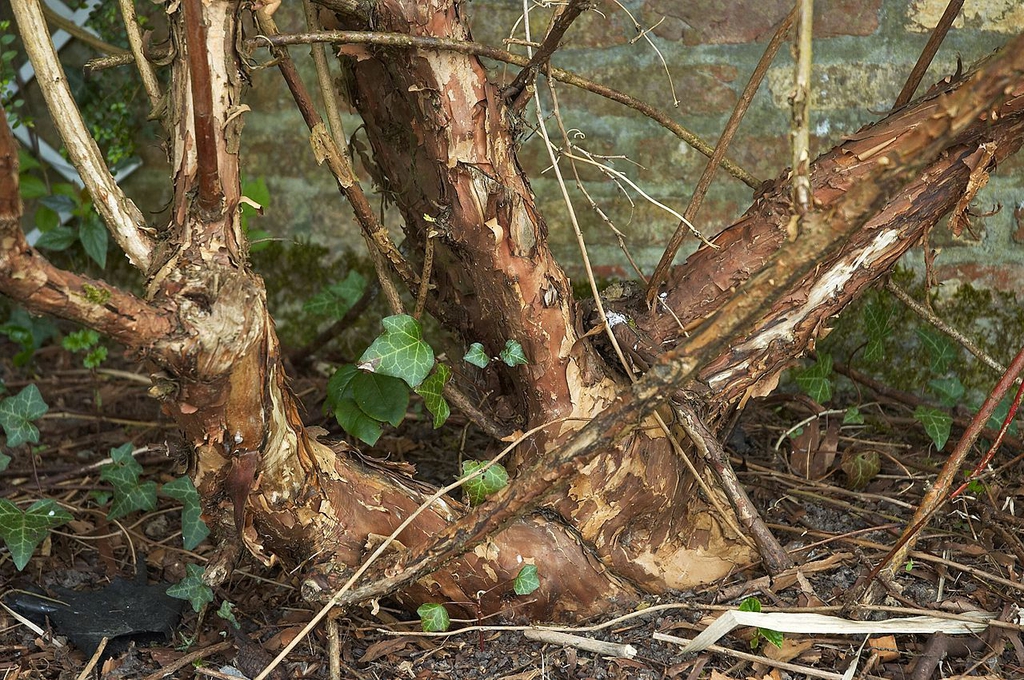
It is noted for its exfoliating bark that peels in strips to reveal several layers of reddish to light brown inner bark. The exfoliating bark is best seen in the winter when foliage does not cover it. The common name comes from the layers of bark, said to be 9 layers.
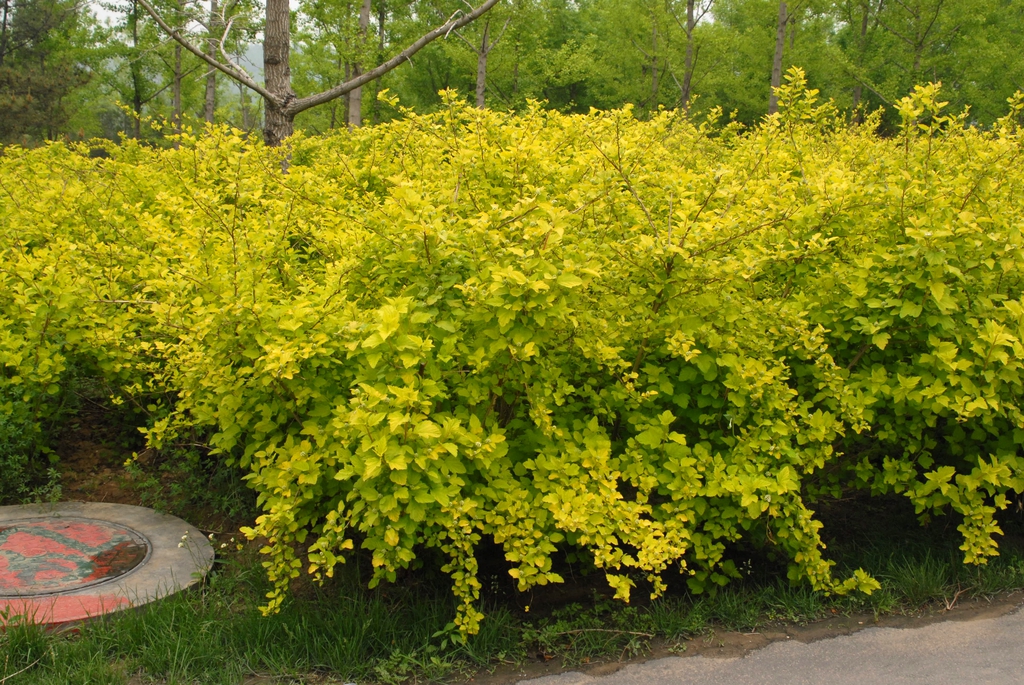
It is easy to transplant and can be used to create a flowering hedge.
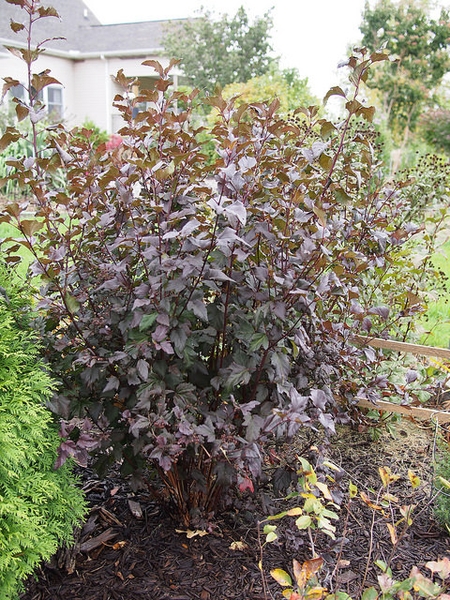
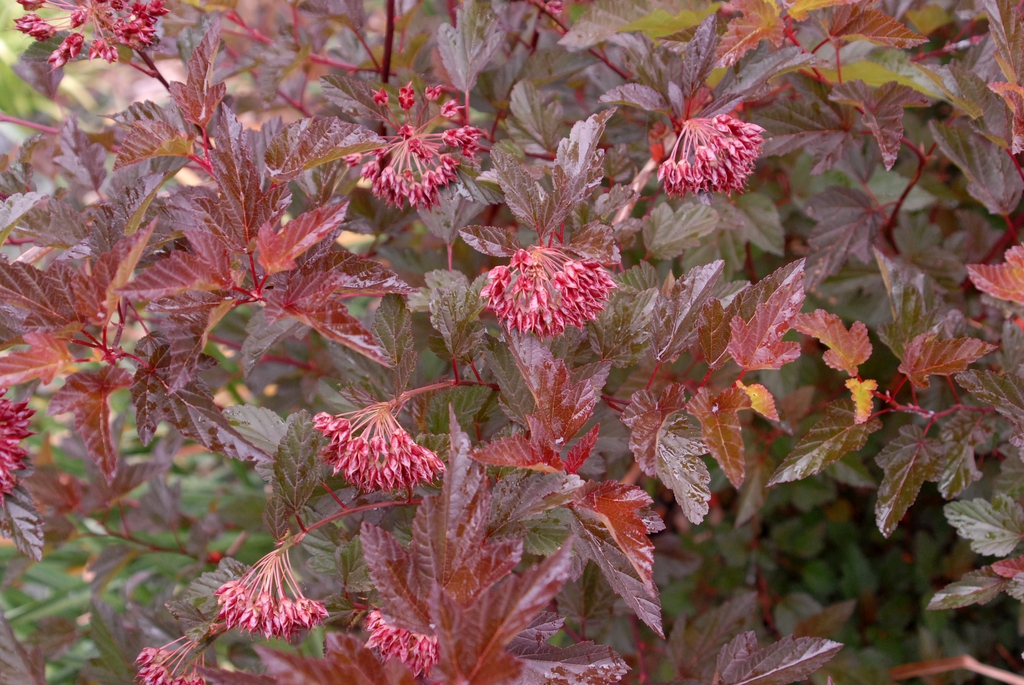
Cultivars of the purple-leafed type appear to lose the intensity of the purple when exposed to sunlight for longer periods of the day.
Clemson University Home and Garden Information Center has an article on the use of Ninebark in rain gardens.
Habitat: Var. intermedius: limestone river bluffs, mesic hammocks, streambanks; rock outcrops; var. opulifolius: Stream banks, riverside thickets and scour prairies, rock outcrops, cliffs, fens, seepage swamps, especially over mafic or calcareous rocks.
Diseases, Insect Pests, and Other Plant Problems:
Relatively trouble free, but can be susceptible to powdery mildew and fireblight.
- See this plant in the following landscape s :
- Small Water Features Mountain Ridge Top Garden - North Woods
- Cultivars / Varieties:
-
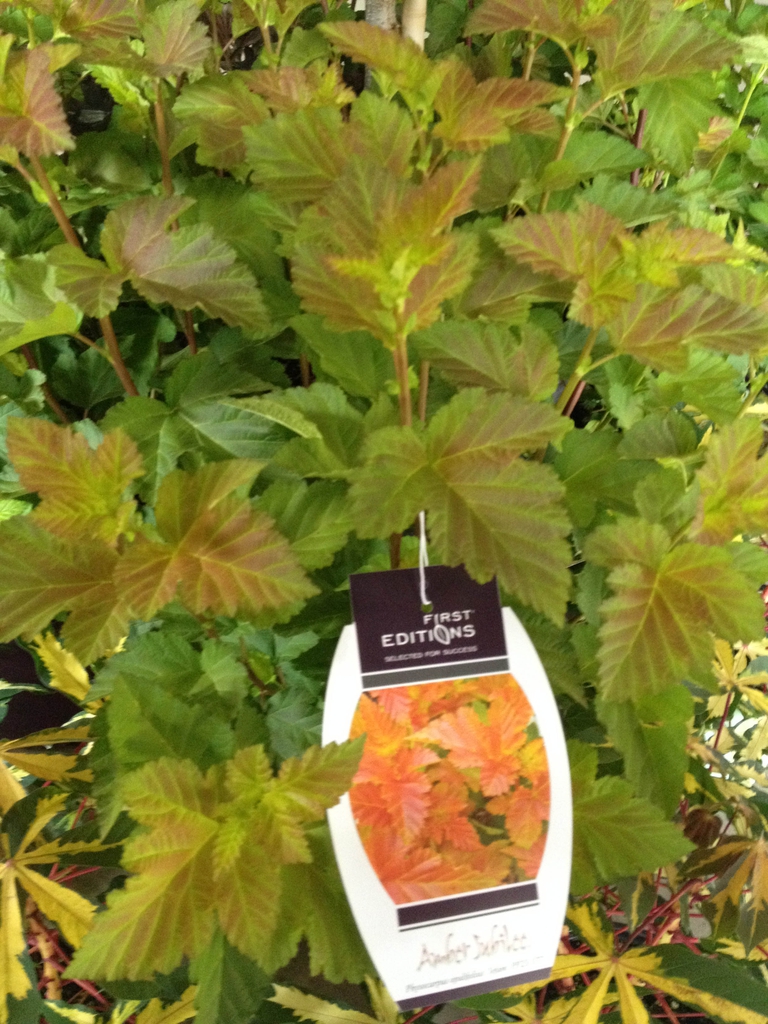
- 'Amber Jubilee'
- 'Aurea'
- 'Burgundy Candy"
Purple leafed type - 'Caramel Candy'
Purple leafed type - 'Center Glow'
Purple leafed type - 'Coppertina'
Purple leafed type - 'Dart's Gold'
Dwarf yellow foliage form. - 'Diablo'
Purple leaves with pink-tinged white flowers - 'Lady in Red'
Purple leafed type
Lemon Candy™ 'Podarus 3'
- 'Luteus'
8-10' tall, leaves initially yellow then change to yellowish-green or light green. - 'Monlo' = 'Diablo' = 'Purple Ninebark'
The leaves emerge a deep purple. - 'Nanus'
Similar to var. intermedius, but smaller 2' tall and wider. - 'Nugget'
More dense than 'Dart's Gold', 6' tall and wide. - 'Snowfall'
Green-leaved form, dense habit, 7'
'Summer Wine'
- var. intermedius
Smaller and more dense, 4' tall. - var. nana

Chartreuse leaves; 2 to 2.5 feet' tall, 2 to 3 feet wide.
Purple leafed type - 'Amber Jubilee'
- 'Amber Jubilee', 'Aurea', 'Burgundy Candy", 'Caramel Candy', 'Center Glow', 'Coppertina', 'Dart's Gold', 'Diablo', 'Lady in Red', Lemon Candy™ 'Podarus 3', 'Luteus', 'Monlo' = 'Diablo' = 'Purple Ninebark', 'Nanus', 'Nugget', 'Snowfall', 'Summer Wine', var. intermedius, var. nana
- Tags:


- Cultivars / Varieties:
-
- 'Amber Jubilee'
- 'Aurea'
- 'Burgundy Candy"
Purple leafed type - 'Caramel Candy'
Purple leafed type - 'Center Glow'
Purple leafed type - 'Coppertina'
Purple leafed type - 'Dart's Gold'
Dwarf yellow foliage form. - 'Diablo'
Purple leaves with pink-tinged white flowers - 'Lady in Red'
Purple leafed type
Lemon Candy™ 'Podarus 3'
- 'Luteus'
8-10' tall, leaves initially yellow then change to yellowish-green or light green. - 'Monlo' = 'Diablo' = 'Purple Ninebark'
The leaves emerge a deep purple. - 'Nanus'
Similar to var. intermedius, but smaller 2' tall and wider. - 'Nugget'
More dense than 'Dart's Gold', 6' tall and wide. - 'Snowfall'
Green-leaved form, dense habit, 7'
'Summer Wine'
- var. intermedius
Smaller and more dense, 4' tall. - var. nana
Chartreuse leaves; 2 to 2.5 feet' tall, 2 to 3 feet wide.
Purple leafed type - 'Amber Jubilee'
- 'Amber Jubilee', 'Aurea', 'Burgundy Candy", 'Caramel Candy', 'Center Glow', 'Coppertina', 'Dart's Gold', 'Diablo', 'Lady in Red', Lemon Candy™ 'Podarus 3', 'Luteus', 'Monlo' = 'Diablo' = 'Purple Ninebark', 'Nanus', 'Nugget', 'Snowfall', 'Summer Wine', var. intermedius, var. nana
- Tags:
-
-
Attributes:
- Genus:
- Physocarpus
- Species:
- opulifolius
- Family:
- Rosaceae
- Life Cycle:
- Perennial
- Recommended Propagation Strategy:
- Root Cutting
- Seed
- Stem Cutting
- Country Or Region Of Origin:
- Central and eastern North America
- Distribution:
- Introduced into European and central Asian countries.
- Fire Risk Rating:
- medium flammability
- Wildlife Value:
- Attracts birds and bees
- Particularly Resistant To (Insects/Diseases/Other Problems):
- Heat, drought, and soil compaction tolerant.
- Dimensions:
- Height: 5 ft. 0 in. - 8 ft. 0 in.
- Width: 4 ft. 0 in. - 6 ft. 0 in.
-
-
Whole Plant Traits:
- Plant Type:
- Native Plant
- Perennial
- Shrub
- Woody Plant Leaf Characteristics:
- Deciduous
- Habit/Form:
- Arching
- Dense
- Erect
- Multi-stemmed
- Spreading
- Growth Rate:
- Rapid
- Maintenance:
- Medium
- Texture:
- Coarse
-
-
Cultural Conditions:
- Light:
- Full sun (6 or more hours of direct sunlight a day)
- Partial Shade (Direct sunlight only part of the day, 2-6 hours)
- Soil Texture:
- Clay
- Loam (Silt)
- Sand
- Soil pH:
- Acid (<6.0)
- Alkaline (>8.0)
- Neutral (6.0-8.0)
- Soil Drainage:
- Good Drainage
- Moist
- Occasionally Dry
- Available Space To Plant:
- 6-feet-12 feet
- NC Region:
- Coastal
- Mountains
- Piedmont
- USDA Plant Hardiness Zone:
- 2a, 2b, 3a, 3b, 4a, 4b, 5a, 5b, 6a, 6b, 7a, 7b, 8a, 8b
-
-
Fruit:
- Fruit Color:
- Red/Burgundy
- Display/Harvest Time:
- Fall
- Summer
- Fruit Type:
- Capsule
- Fruit Description:
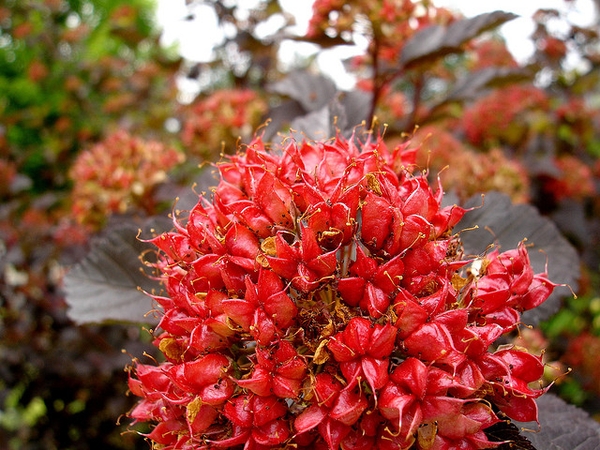
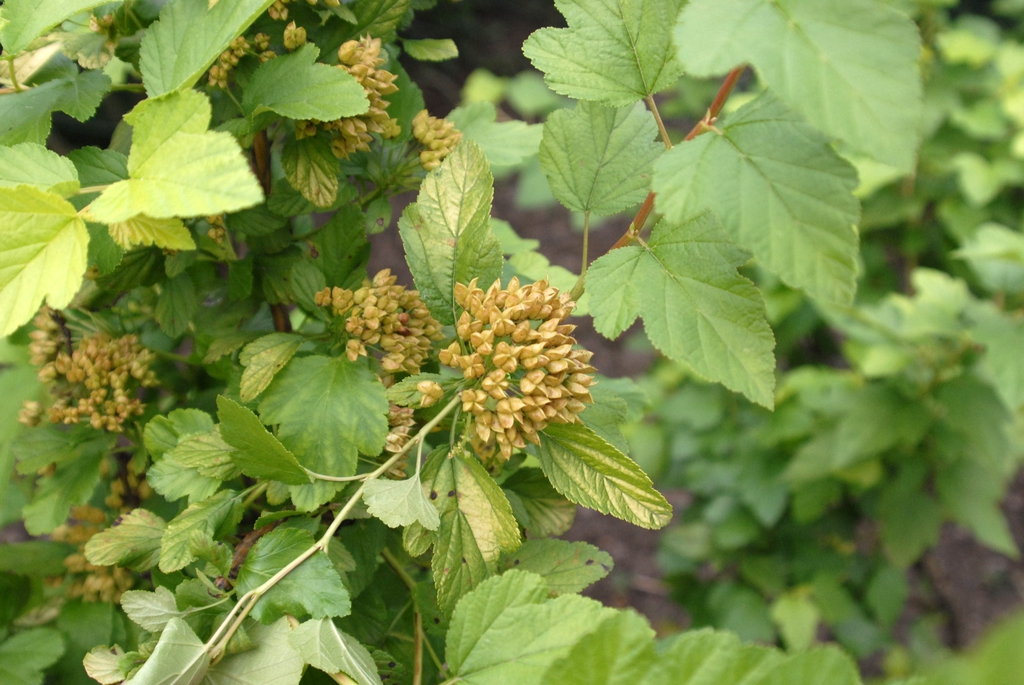
- Drooping clusters (seed capsules), round in shape display from July to September.
-
-
Flowers:
- Flower Color:
- Pink
- White
- Flower Inflorescence:
- Corymb
- Flower Value To Gardener:
- Showy
- Flower Bloom Time:
- Spring
- Summer
- Flower Petals:
- 4-5 petals/rays
- Flower Size:
- 1-3 inches
- Flower Description:
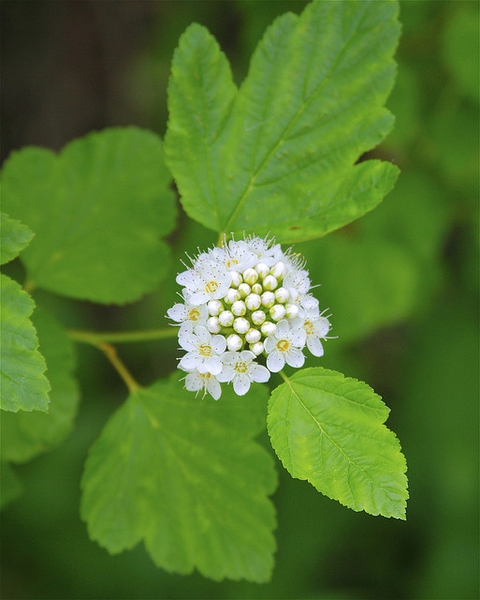
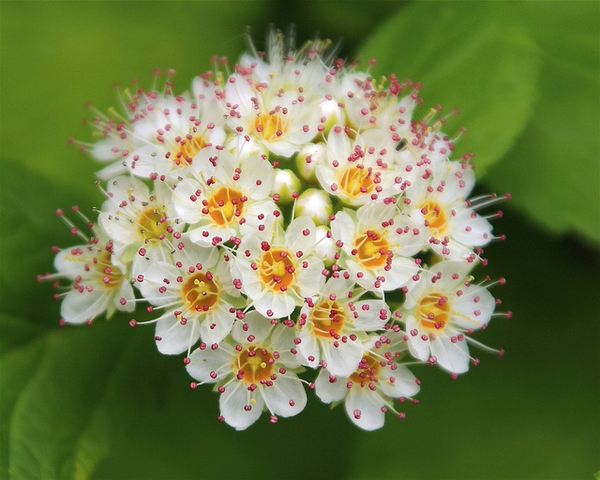
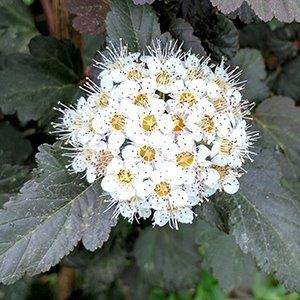
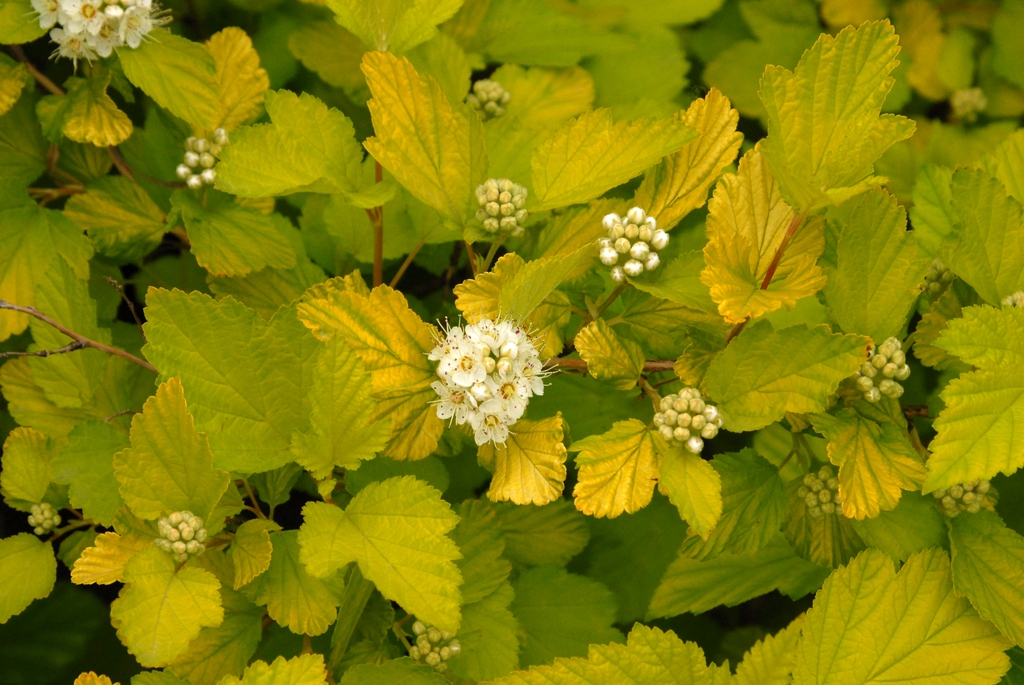
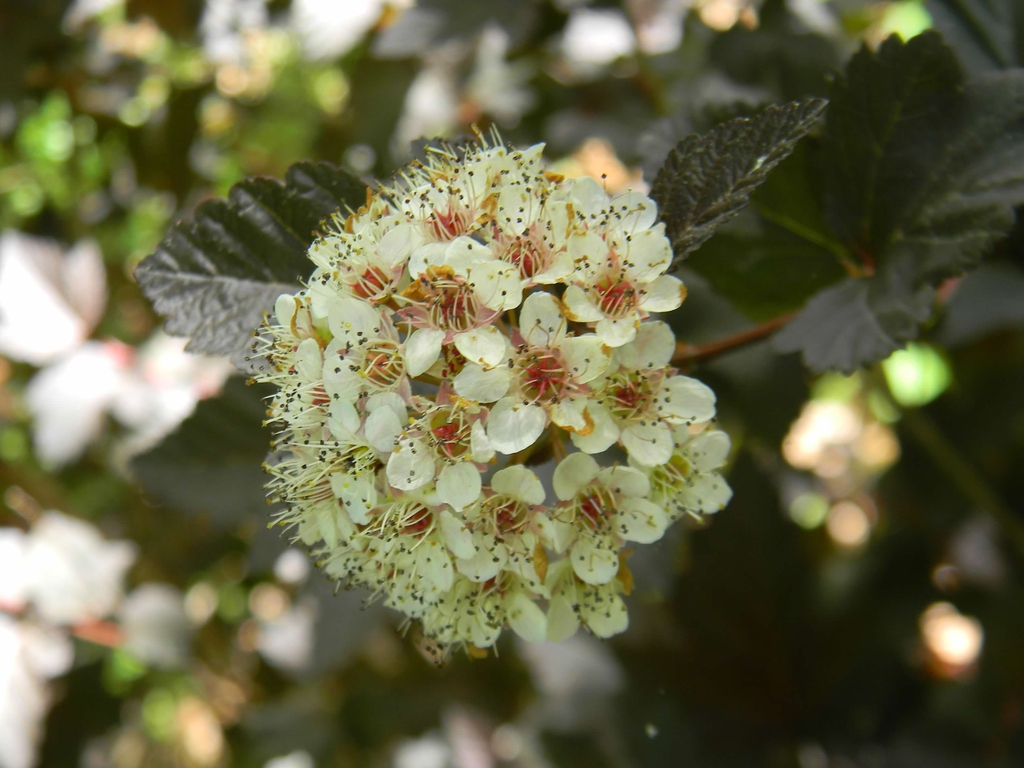
- Clusters of white-pinkish flowers from May to July. The small pink or white, five-petaled flowers appear in dense, 1 to 2 inch diameter, spirea-like clusters (corymbs).
-
-
Leaves:
- Woody Plant Leaf Characteristics:
- Deciduous
- Leaf Color:
- Gold/Yellow
- Green
- Deciduous Leaf Fall Color:
- Brown/Copper
- Gold/Yellow
- Leaf Type:
- Simple
- Leaf Arrangement:
- Alternate
- Leaf Shape:
- Orbicular
- Ovate
- Leaf Margin:
- Crenate
- Lobed
- Hairs Present:
- No
- Leaf Length:
- 1-3 inches
- Leaf Description:
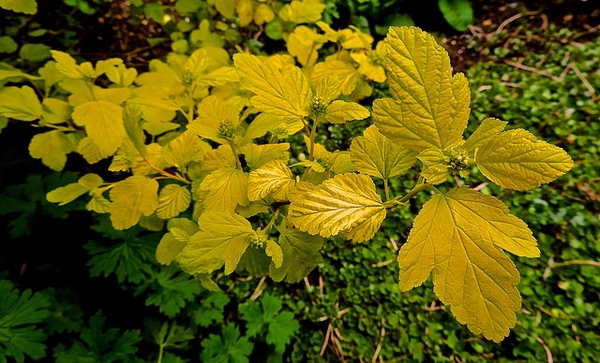
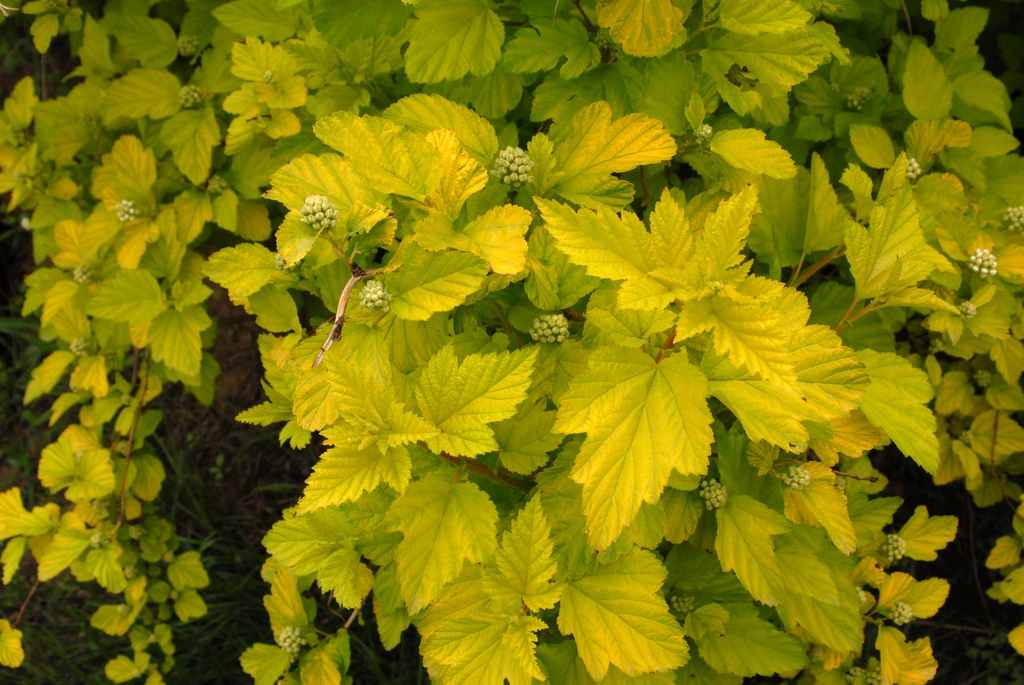
- Ovate to rounded, 3 to 5 lobed leaves (to 4 inches long) are dull green in summer and an undistinguished yellow in fall.
-
-
Bark:
- Bark Color:
- Dark Brown
- Surface/Attachment:
- Exfoliating
- Bark Description:
- Mature branches experience exfoliation. Strips of bark will peel to reveal layers of reddish-brown inner bark.
-
-
Stem:
- Stem Is Aromatic:
- No
-
-
Landscape:
- Landscape Location:
- Lawn
- Meadow
- Naturalized Area
- Recreational Play Area
- Slope/Bank
- Woodland
- Landscape Theme:
- Butterfly Garden
- Native Garden
- Pollinator Garden
- Rain Garden
- Winter Garden
- Design Feature:
- Barrier
- Border
- Hedge
- Mass Planting
- Screen/Privacy
- Attracts:
- Bees
- Butterflies
- Pollinators
- Small Mammals
- Songbirds
- Resistance To Challenges:
- Drought