


Compton Oak Quercus x comptoniae
- Phonetic Spelling
- KWER-kus kom-TON-ee-eye
- This plant has low severity poison characteristics.
- See below
- Description
-
Compton oak is a large deciduous naturally occuring hybrid white oak in the Fagacacae family. and is found in the southeastern United States. Its parents are the overcut oak (Q. lyrata) and the southern live oak (Q. virginiana). It naturally occurs in low-lying sites. It was first described in 1918 by Charles Sargent.
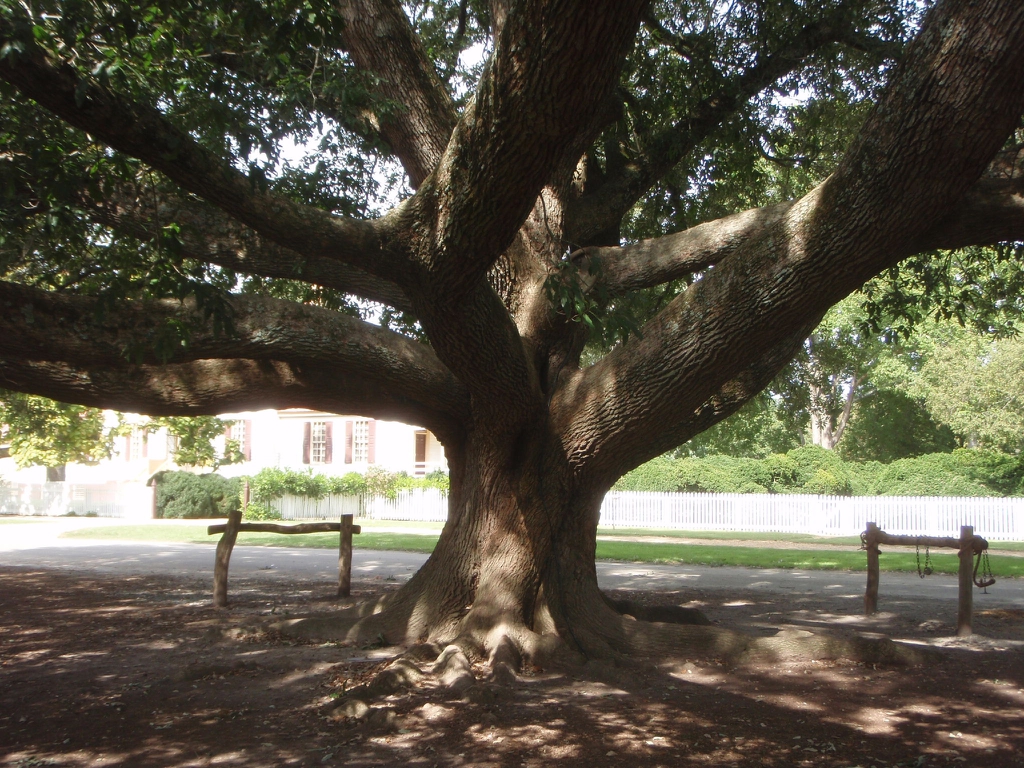
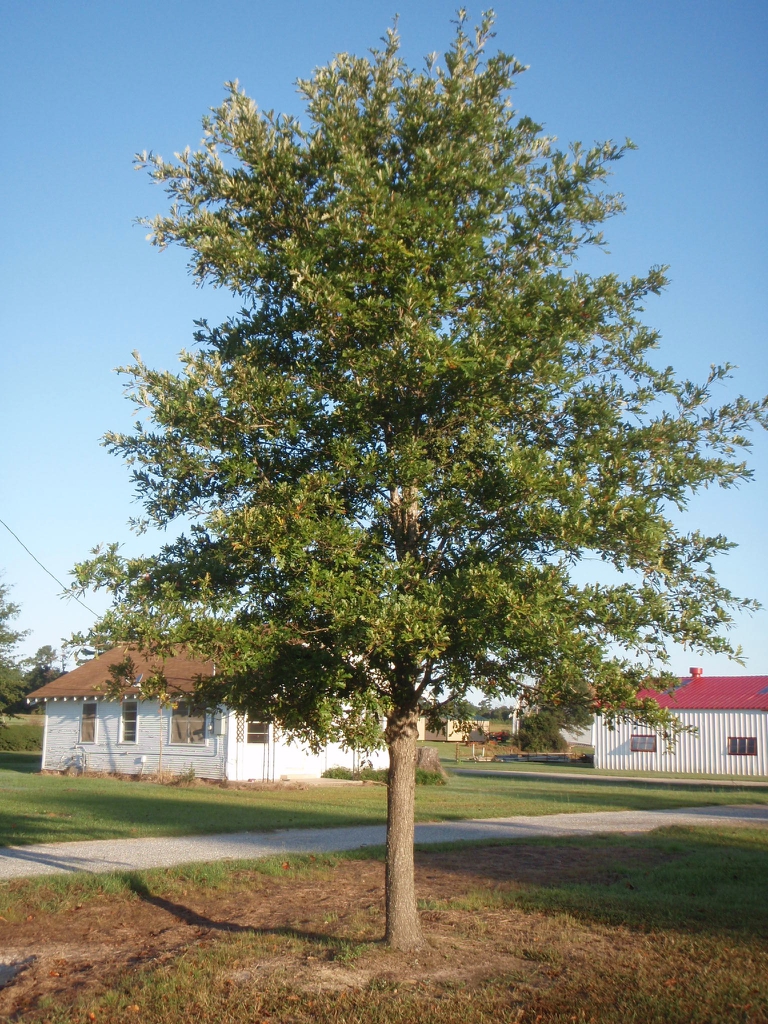
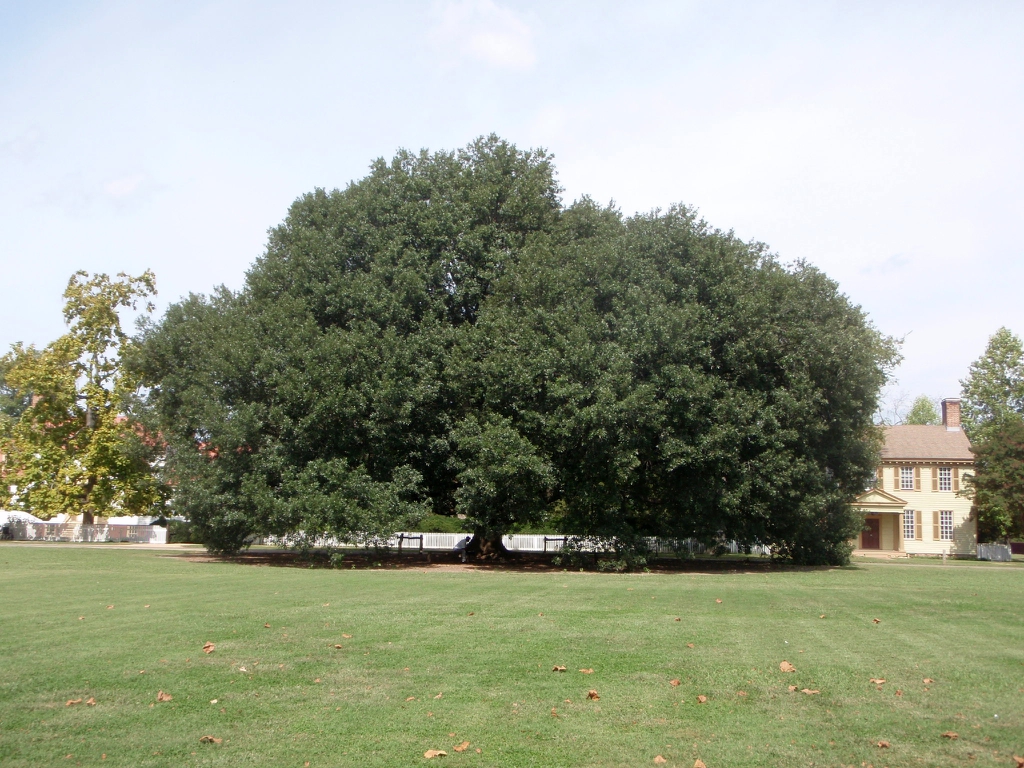
With two very different parents, the offspring are going to vary greatly but they all have a strong growth structure. Some may take the wider form of the live oak, while others are taller and narrower. They are semi-evergreen but may shed their leaves at different months of the year. Compton oak can grow 60 to 80 feet tall and wide. The parents also grow in different soil types, allowing the offspring to tolerate a variety of soils from moist to dry sandy.
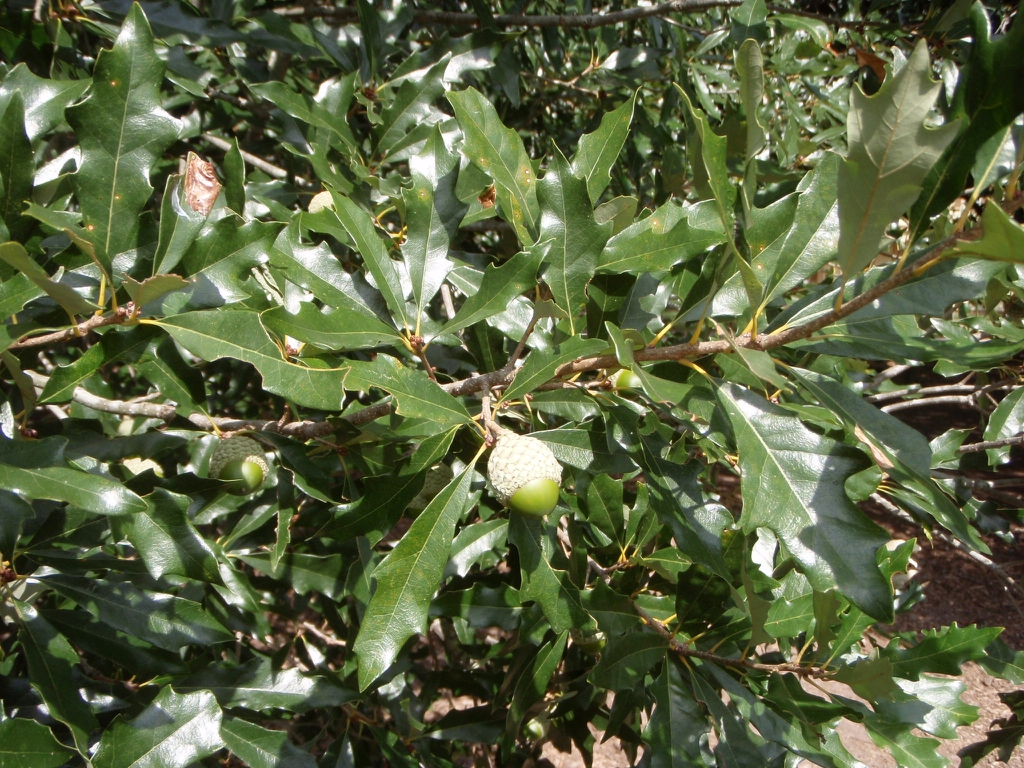
The leaves are also variable and can have lobed or entire margins. Fall color is good with yellows and reds. Acorns mature each fall to winter.
Use Compton oak as a shade tree or street tree or in naturalized areas. It will provide food and shelter to a variety of wildlife.
Insects, Diseases, and Other Plant Problems: See common pests and diseases of oaks in NC to the left. The Clemson Cooperative Extension Home and Garden Information Center has a factsheet on common pests and insects.
- See this plant in the following landscape :
- Cultivars / Varieties:
-
- Tags:



- Cultivars / Varieties:
-
- Tags:
-
-
Attributes:
- Genus:
- Quercus
- Family:
- Fagacacae
- Life Cycle:
- Woody
- Recommended Propagation Strategy:
- Seed
- Country Or Region Of Origin:
- Southeast USA
- Distribution:
- AL , FL , LA , MS , SC , TX , VA
- Wildlife Value:
- Oak trees support a wide variety of Lepidopteran. You may see Imperial Moth (Eacles imperialis) larvae which have one brood per season and appear from April-October in the south. Adult Imperial Moths do not feed. Banded Hairstreak (Satyrium calanus), which have one flight from June-August everywhere but Florida where they emerge April-May. Edward's Hairstreak (Satyrium edwardsii), has one flight from May-July in the south and June-July in the north. Gray Hairstreak (Strymon melinus), has three to four flights in the south from February-November and two flights in the north from May-September. White-M Hairstreak (Parrhasius m-album) has three broods in the north from February-October. Horace’s Duskywing (Erynnis horatius) has three broods in Texas and the deep south from January-November, and two broods in the north from April-September. Juvenal’s Duskywing (Erynnis juvenalis) has one brood from April-June, appearing as early as January in Florida. Acorns provide food to birds and mammals. The tree provides shelter to birds and mammals. They are host plants to moths and butterflies.
- Edibility:
- Acorns (nuts) are edible after tannins are leached or boiled out.
- Dimensions:
- Height: 60 ft. 0 in. - 80 ft. 0 in.
- Width: 50 ft. 0 in. - 80 ft. 0 in.
-
-
Whole Plant Traits:
- Plant Type:
- Perennial
- Tree
- Woody Plant Leaf Characteristics:
- Deciduous
- Habit/Form:
- Erect
- Growth Rate:
- Slow
- Maintenance:
- Low
- Texture:
- Coarse
-
-
Cultural Conditions:
- Soil Texture:
- Clay
- Loam (Silt)
- Sand
- Soil pH:
- Acid (<6.0)
- Soil Drainage:
- Moist
- Occasionally Dry
- Occasionally Wet
- NC Region:
- Coastal
- Mountains
- Piedmont
- USDA Plant Hardiness Zone:
- 6a, 6b, 7a, 7b, 8a, 8b, 9a, 9b
-
-
Fruit:
- Fruit Color:
- Brown/Copper
- Display/Harvest Time:
- Fall
- Winter
- Fruit Type:
- Nut
- Fruit Length:
- < 1 inch
- Fruit Width:
- < 1 inch
- Fruit Description:
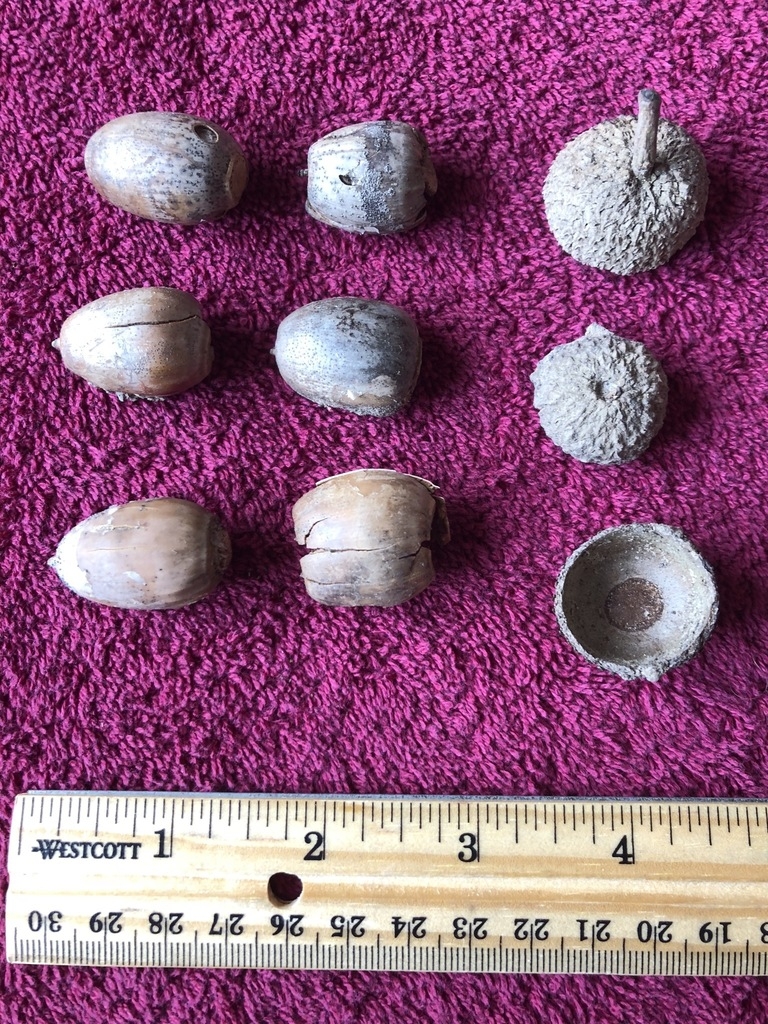
- The cup covers a third to three-quarters of the acorn; the scales are thin with their tips free, forming a serrate rim or fringe to the cup. The acorn matures in fall to winter.
-
-
Flowers:
- Flower Inflorescence:
- Insignificant
- Flower Bloom Time:
- Spring
- Flower Description:
- Insignificant yellow-brown flowers in spring
-
-
Leaves:
- Woody Plant Leaf Characteristics:
- Deciduous
- Leaf Color:
- Green
- Leaf Feel:
- Leathery
- Deciduous Leaf Fall Color:
- Gold/Yellow
- Red/Burgundy
- Leaf Type:
- Simple
- Leaf Arrangement:
- Alternate
- Leaf Shape:
- Oblanceolate
- Leaf Margin:
- Entire
- Lobed
- Hairs Present:
- Yes
- Leaf Length:
- 3-6 inches
- Leaf Width:
- 1-3 inches
- Leaf Description:
- Dark green leathery oblanceolate leaves with a wedge-shaped base and an acute or acuminate tip. They are 2 to 4 inches long and 1 to 1.5 inches wide. The foliage tends to be thicker than that of overcup oak, and not as much as southern live oak’s. The leaf margin is lobed in the upper half of the blade, with 3 or 4 shallow forward-pointing lobes or entire.
-
-
Bark:
- Surface/Attachment:
- Furrowed
- Bark Description:
- Bark becomes furrowed and dark gray with age.
-
-
Stem:
- Stem Is Aromatic:
- No
-
-
Landscape:
- Landscape Location:
- Coastal
- Lawn
- Landscape Theme:
- Drought Tolerant Garden
- Design Feature:
- Shade Tree
- Small Tree
- Attracts:
- Butterflies
- Moths
- Small Mammals
- Songbirds
- Resistance To Challenges:
- Poor Soil
- Problems:
- Problem for Horses
-
-
Poisonous to Humans:
- Poison Severity:
- Low
- Poison Symptoms:
- Abdominal pain, constipation then diarrhea (occasionally bloody), depression, frequent urination, discolored urine, jaundice; acorns can obstruct the digestive tract
- Poison Toxic Principle:
- Gallotannins, quercitrin, and quercitin
- Causes Contact Dermatitis:
- No
- Poison Part:
- Fruits
- Leaves