



Prunus americana
Common Name(s):
- Phonetic Spelling
- PROO-nus ah-mer-ih-KAY-nah
- This plant has medium severity poison characteristics.
- See below
- Description
-
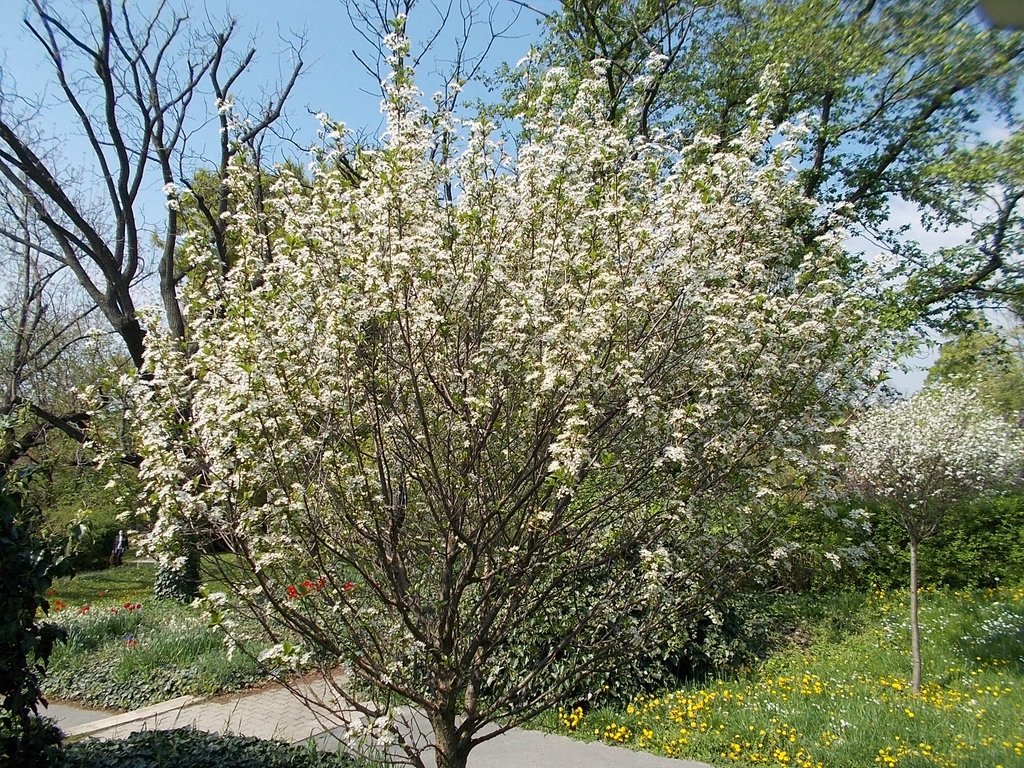
The American plum is a small, deciduous, flowering tree or shrub with a short, stout trunk and ascending branches in the rose family. It can be found in rocky or sandy soils in woodlands, pastures, abandoned farms, streams and hedgerows throughout North Carolina. As a tree, it typically grows to 10 to 20 feet tall with a broad, spreading crown. As a shrub, it suckers freely and can form large colonies or thickets. White flowers appear in early spring followed by showy and edible fruit. The genus name comes from the Latin for plum or cherry tree. The species name means of the Americas.
The American plum is easily grown in average, dry to medium, well-drained soils in full sun to part shade. You can remove suckers to prevent unwanted spread or to train the plant into a small tree.
Maintenance is required to prevent the plant from forming thickets with its thorn-like side branches unless that is the desired result. It is fairly adaptable, tough plant and is often grown for its ornamental blossoms as much as its fruit.
Fire Risk: This plant has a low flammability rating.
Seasons of Interest:
Blooms: Early spring Nut/Fruit/Seed: Late summer
Insects, Diseases, or Other Plant Problems:
Leaves and fruits are occasionally disfigured by insects and disease. Plum curculio and brown rot can affect the fruit. Other potential disease problems include leaf spot, canker and black knot. Other potential insect problems include aphids, scale, borers and tent caterpillars. This plant is susceptible to damage from deer.
- See this plant in the following landscape :
- Cultivars / Varieties:
-
- 'Fairlane'
- 'Fairlane'
- 'Fairlane'
- Tags:


- Cultivars / Varieties:
-
- 'Fairlane'
- 'Fairlane'
- 'Fairlane'
- Tags:
-
-
Attributes:
- Genus:
- Prunus
- Species:
- americana
- Family:
- Rosaceae
- Uses (Ethnobotany):
- The plum fruit is used to make jellies and jam. The fruit is also eaten dried, which is then called a prune.
- Life Cycle:
- Perennial
- Woody
- Recommended Propagation Strategy:
- Root Cutting
- Seed
- Stem Cutting
- Country Or Region Of Origin:
- North America, Canada south to Florida and west to Oregon.
- Fire Risk Rating:
- low flammability
- Wildlife Value:
- Its thickets provide good cover for songbirds and small mammals year-round. This plant provides nectar for pollinators and is a larval host plant for several species of butterflies. You may see Coral Hairstreak (Satyrium titus) which has one flight from May-August, Eastern Tiger Swallowtail (Papilio glaucus), which has three flights from February-November in the deep south and March-September in the north, Spring Azure (Celastrina ladon) which has many flights from January-October at the gulf coast getting shorter as you move north, Viceroy (Limenitis archippus) which has two to three broods May-September, and Red-spotted Purple (Limenitis arthemis astyanax) has two broods from April-October. The fruits are eaten by songbirds, wild turkeys, quail, white-tailed deer, and small mammals. Deer also eat the twigs and leaves.
- Play Value:
- Attracts Pollinators
- Edible fruit
- Fragrance
- Wildlife Cover/Habitat
- Wildlife Food Source
- Particularly Resistant To (Insects/Diseases/Other Problems):
- fire in the landscape. Heat and drought tolerant.
- Edibility:
- Although the plums can be eaten raw, the quality is somewhat poor. The fruits are perhaps better used for preserves and jellies or dried to make prunes.
- Dimensions:
- Height: 15 ft. 0 in. - 25 ft. 0 in.
- Width: 15 ft. 0 in. - 25 ft. 0 in.
-
-
Whole Plant Traits:
- Plant Type:
- Native Plant
- Shrub
- Tree
- Woody Plant Leaf Characteristics:
- Deciduous
- Habit/Form:
- Broad
- Spreading
- Growth Rate:
- Rapid
- Maintenance:
- Low
- Texture:
- Medium
- Appendage:
- Spines
- Thorns
-
-
Cultural Conditions:
- Light:
- Full sun (6 or more hours of direct sunlight a day)
- Partial Shade (Direct sunlight only part of the day, 2-6 hours)
- Soil Texture:
- Clay
- High Organic Matter
- Loam (Silt)
- Sand
- Soil pH:
- Acid (<6.0)
- Neutral (6.0-8.0)
- Soil Drainage:
- Good Drainage
- Moist
- Occasionally Dry
- Available Space To Plant:
- 12-24 feet
- NC Region:
- Mountains
- Piedmont
- USDA Plant Hardiness Zone:
- 3a, 3b, 4a, 4b, 5a, 5b, 6a, 6b, 7a, 7b, 8a, 8b, 9a, 9b
-
-
Fruit:
- Fruit Color:
- Purple/Lavender
- Red/Burgundy
- Fruit Value To Gardener:
- Edible
- Display/Harvest Time:
- Summer
- Fruit Type:
- Drupe
- Fruit Length:
- < 1 inch
- Fruit Width:
- < 1 inch
- Fruit Description:
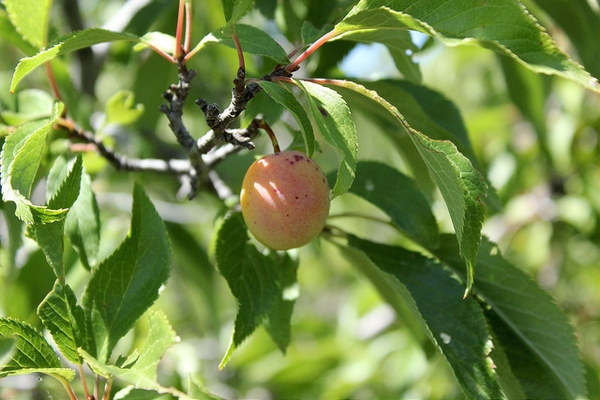
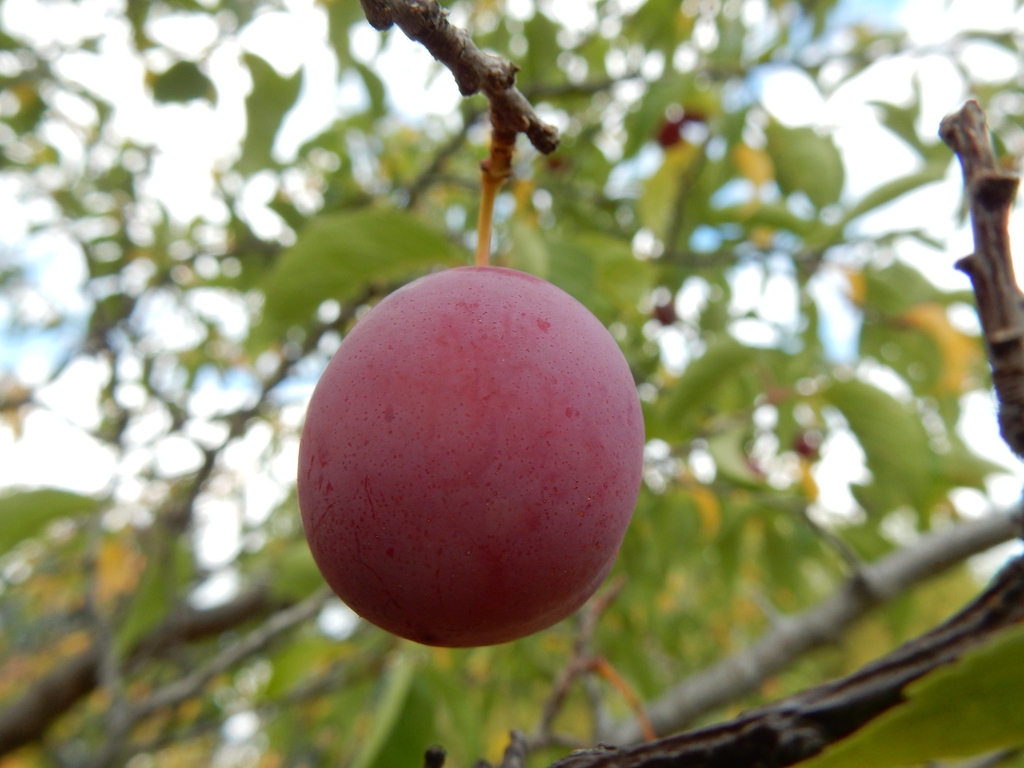
- Flowers are followed by 1 inch, thick-skin, edible, round, red-purple plums (1 inch in diameter) with bright yellow pulp which ripen in July and August. The pulp of each fruit is fleshy and juicy and becomes sweet when the fruit is fully mature.
-
-
Flowers:
- Flower Color:
- White
- Flower Inflorescence:
- Umbel
- Flower Value To Gardener:
- Fragrant
- Showy
- Flower Bloom Time:
- Spring
- Flower Shape:
- Cup
- Flower Petals:
- 4-5 petals/rays
- Flower Description:
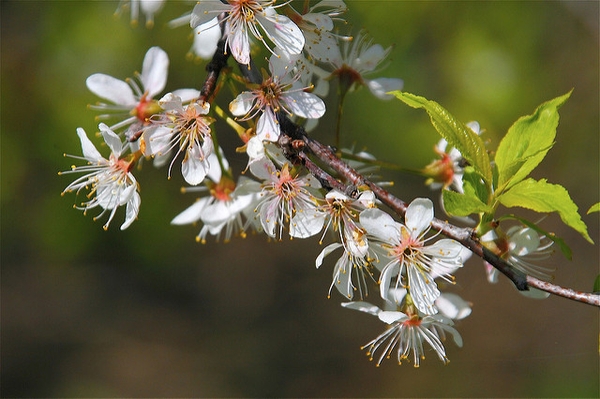
- The American plum has 2 to 5 flowered clusters (umbels) of 5-petaled white flowers (1 inch in diameter) that appear from March to April before the foliage. The flowers are aromatic.
-
-
Leaves:
- Woody Plant Leaf Characteristics:
- Deciduous
- Leaf Color:
- Green
- Deciduous Leaf Fall Color:
- Gold/Yellow
- Red/Burgundy
- Leaf Type:
- Simple
- Leaf Arrangement:
- Alternate
- Leaf Shape:
- Oblong
- Ovate
- Leaf Margin:
- Serrate
- Hairs Present:
- No
- Leaf Length:
- 3-6 inches
- Leaf Width:
- 1-3 inches
- Leaf Description:
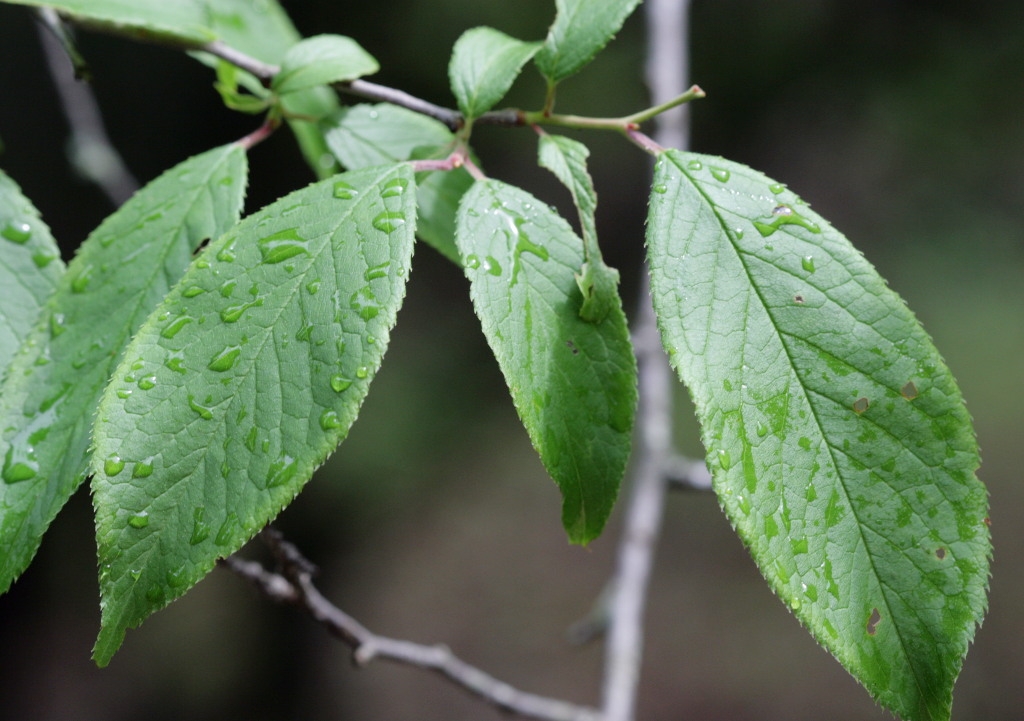
- The American plum has toothed, oblong to ovate leaves that are 3 to 4 inches long and turn yellow to red in autumn. The underside is pale green.
-
-
Bark:
- Bark Color:
- Dark Gray
- Light Gray
- Red/Burgundy
- Surface/Attachment:
- Exfoliating
- Ridges
- Smooth
- Bark Plate Shape:
- Irregular
- Bark Description:
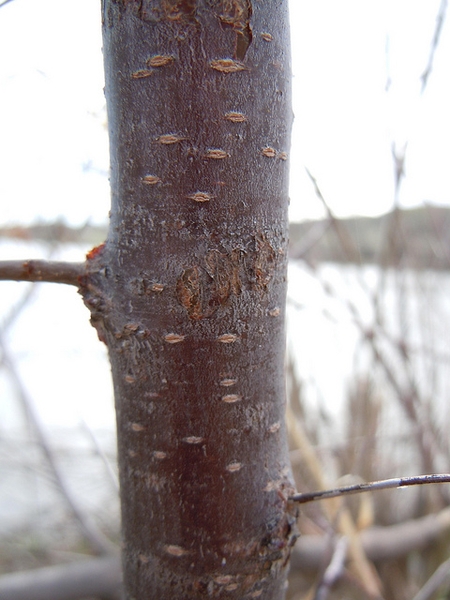
- The bark is smooth and reddish/gray with numerous horizontal lenticels. As the tree ages, the bark becomes rough with irregular ridges and exfoliating curling strips.
-
-
Stem:
- Stem Color:
- Brown/Copper
- Red/Burgundy
- Stem Is Aromatic:
- No
- Stem Description:
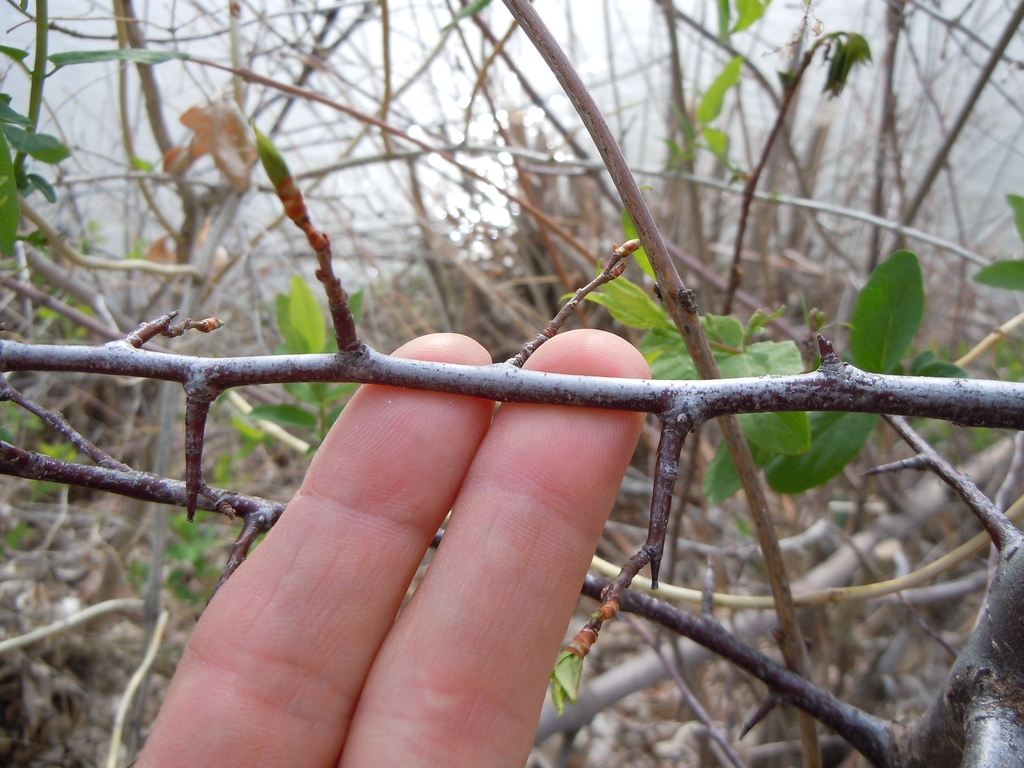
- Branches and twigs are an attractive dark reddish-brown and sometimes have thorny lateral branchlets. The smaller branches are contorted in their growth habit with small stout twigs or spines.
-
-
Landscape:
- Landscape Location:
- Recreational Play Area
- Landscape Theme:
- Butterfly Garden
- Children's Garden
- Edible Garden
- Native Garden
- Pollinator Garden
- Design Feature:
- Barrier
- Flowering Tree
- Security
- Attracts:
- Bees
- Butterflies
- Pollinators
- Small Mammals
- Songbirds
- Resistance To Challenges:
- Black Walnut
- Drought
- Dry Soil
- Fire
- Problems:
- Problem for Cats
- Problem for Dogs
- Problem for Horses
- Spines/Thorns
-
-
Poisonous to Humans:
- Poison Severity:
- Medium
- Poison Symptoms:
- The pits contain cyanide compounds, which are poisonous. If a couple of pits are accidentally swallowed, it will not cause poisoning. The pits are more poisonous if they are ground up/crushed or the seeds are chewed. Fruit that has not been pitted should not be blended into a smoothie. Symptoms include Gasping, weakness, excitement, pupil dilation, spasms, convulsions, coma, respiratory failure.
- Poison Toxic Principle:
- Cyanogenic glycosides
- Causes Contact Dermatitis:
- No
- Poison Part:
- Leaves
- Seeds
- Stems



