


Shellflower Pistia stratiotes
Other Common Name(s):
Other plants called Shellflower:
- Phonetic Spelling
- PIS-tee-ah stra-tee-OH-tays
- This plant has medium severity poison characteristics.
- See below
- Description
-
Water lettuce is a floating aquatic, poisonous plant in the arum family (Araceae). It is thought to be native to the regions around the Nile River but is now found in nearly all tropical and sub-tropical fresh waterways. It is considered invasive and a mosquito breeding habitat. It has been found as far north as Minnesota and Connecticut in this country, including in North Carolina
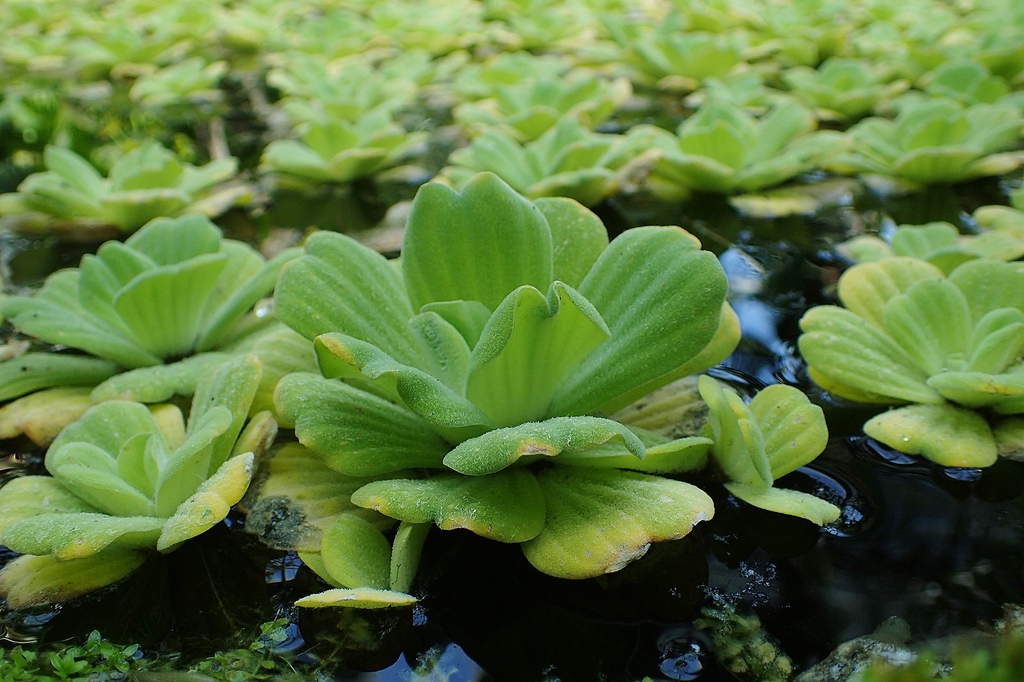
It forms large dense mats of plant matter which hinder boating, fishing, and other lake and river activities and depletes oxygen levels and kills fish. It can be very invasive in locations with year-round warm temperatures and high humidity. In colder climates, it survives by reseeding itself.
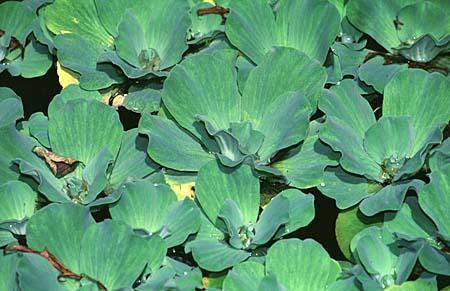
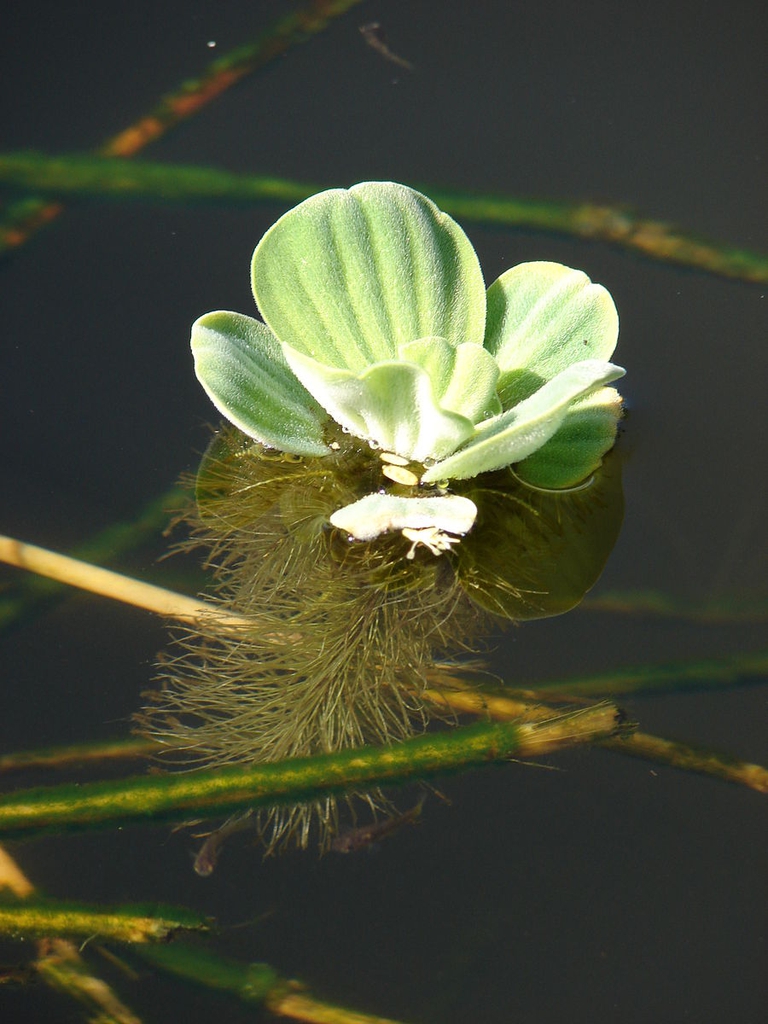
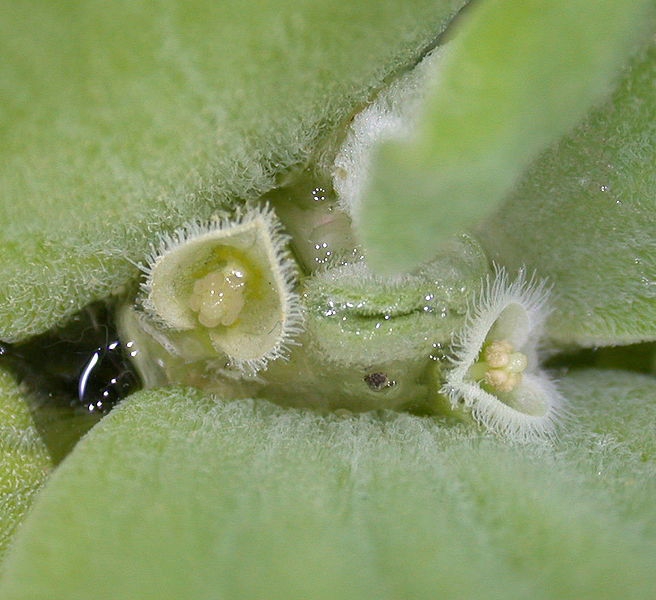
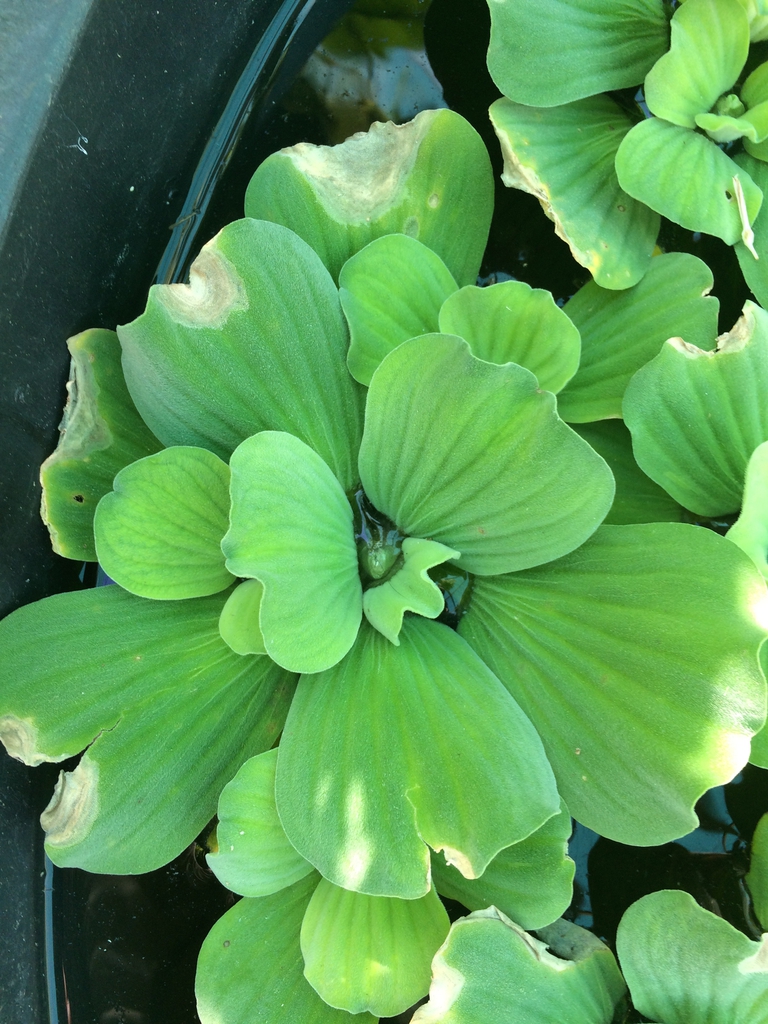
The rosette of leaves resembles floating heads of lettuce with roots hanging below. Small flowers without petals are hidden amongst the leaves. It produces plantlets on short floating stolons to form mats.
Control is by herbicides, physical removal and biological control with two species of insects.
It is sometimes used in aquariums. See some native alternatives to the left.
Insects, Diseases, and Other Plant Problems: No serious insect or disease problems. Watch for aphids. This plant is listed as invasive in NY, LA, TX, CA, SC, AL, CT, NH, DE, MI and FL and is on watch lists in other states. The EU has banned the sale of this plant.
- See this plant in the following landscape :
- Cultivars / Varieties:
-
- Tags:


- Cultivars / Varieties:
-
- Tags:
-
-
Attributes:
- Genus:
- Pistia
- Species:
- stratiotes
- Family:
- Araceae
- Life Cycle:
- Perennial
- Country Or Region Of Origin:
- Tropical and subtropical regions worldwide, USA
- Dimensions:
- Height: 0 ft. 3 in. - 0 ft. 6 in.
- Width: 0 ft. 6 in. - 1 ft. 6 in.
-
-
Whole Plant Traits:
- Plant Type:
- Herbaceous Perennial
- Poisonous
- Water Plant
- Woody Plant Leaf Characteristics:
- Broadleaf Evergreen
- Habit/Form:
- Spreading
- Growth Rate:
- Rapid
- Maintenance:
- High
- Texture:
- Medium
-
-
Cultural Conditions:
- Light:
- Full sun (6 or more hours of direct sunlight a day)
- Partial Shade (Direct sunlight only part of the day, 2-6 hours)
- Soil Drainage:
- Frequent Standing Water
- Available Space To Plant:
- Less than 12 inches
- NC Region:
- Coastal
- USDA Plant Hardiness Zone:
- 8a, 8b, 9a, 9b, 10a, 10b
-
-
Fruit:
- Fruit Color:
- Green
- Fruit Type:
- Berry
- Fruit Description:
- Inconspicuous fruits
-
-
Flowers:
- Flower Color:
- Gold/Yellow
- Green
- Insignificant
- White
- Flower Inflorescence:
- Spadix
- Flower Bloom Time:
- Spring
- Summer
- Flower Shape:
- Tubular
- Flower Description:
- Inconspicuous flowers that grow in the centr of the leaf rosettes. Male flowers surround a female flower
-
-
Leaves:
- Woody Plant Leaf Characteristics:
- Broadleaf Evergreen
- Leaf Color:
- Gray/Silver
- Green
- White
- Leaf Feel:
- Fleshy
- Soft
- Leaf Type:
- Simple
- Leaf Arrangement:
- Rosulate
- Leaf Shape:
- Spatulate
- Leaf Margin:
- Entire
- Hairs Present:
- Yes
- Leaf Length:
- 3-6 inches
- Leaf Width:
- 3-6 inches
- Leaf Description:
- A roughly 10 in. wide rosette of spongy, velvety, deeply veined lime green leaves that are whitish green on the underside.
-
-
Stem:
- Stem Color:
- Green
- Stem Is Aromatic:
- No
- Stem Surface:
- Smooth (glabrous)
- Stem Description:
- Floating stolons up to 25 feet long
-
-
Landscape:
- Resistance To Challenges:
- Heat
- Wet Soil
- Problems:
- Poisonous to Humans
- Weedy
-
-
Poisonous to Humans:
- Poison Severity:
- Medium
- Poison Symptoms:
- Intense burning and swelling of lips, tongue, and throat. Nausea vomiting and diarrhea may also occur when eaten in large quantities.
- Poison Toxic Principle:
- Calcium oxalate crystals plus unknown toxins
- Causes Contact Dermatitis:
- No
- Poison Part:
- Flowers
- Leaves
- Roots