



Umbrella Pine Pinus pinea
Other Common Name(s):
Other plants called Umbrella Pine:
- Phonetic Spelling
- PY-nus PY-nee-uh
- Description
-
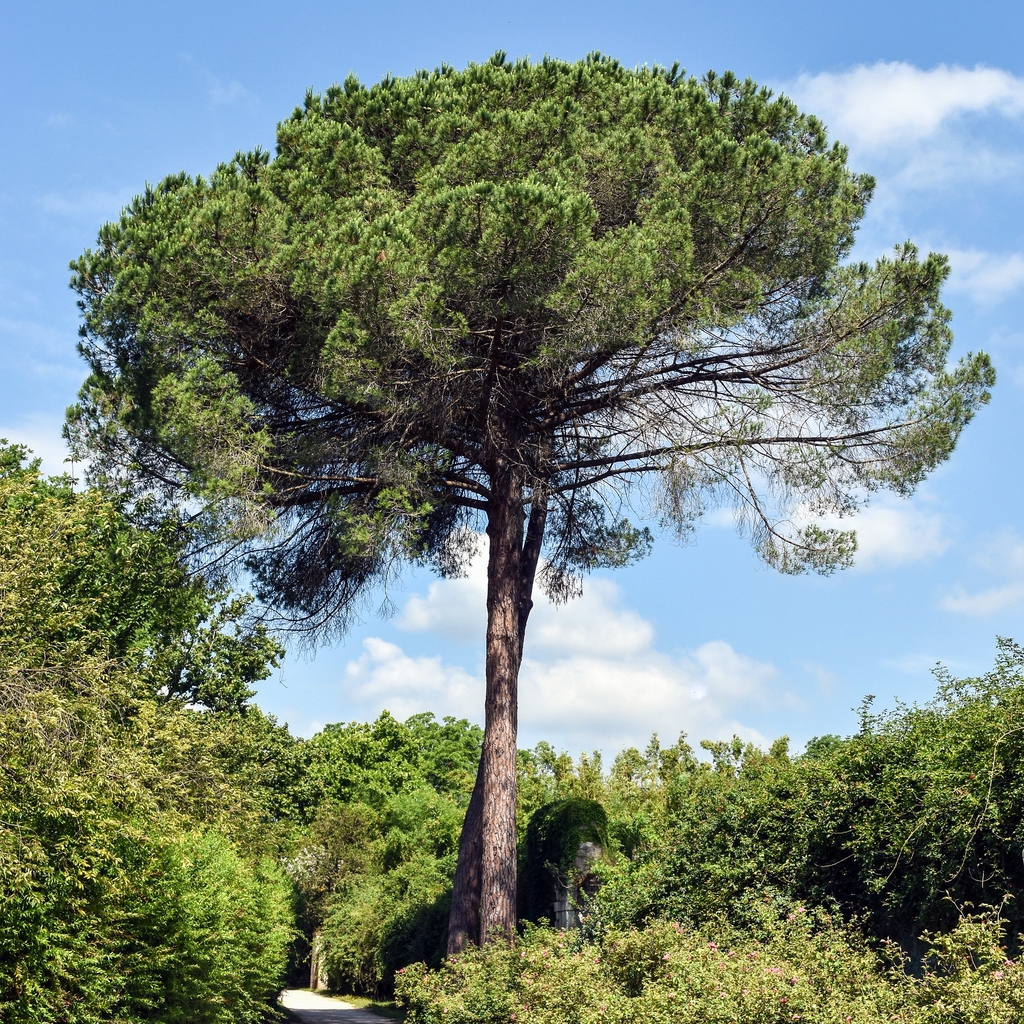
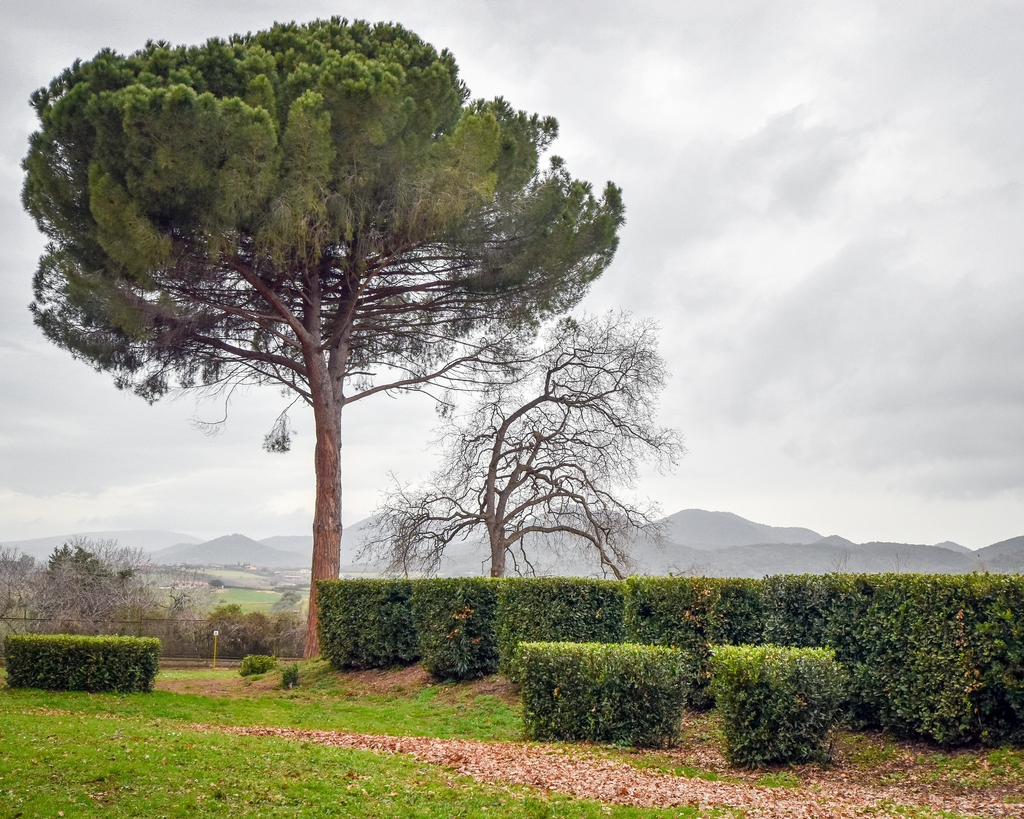
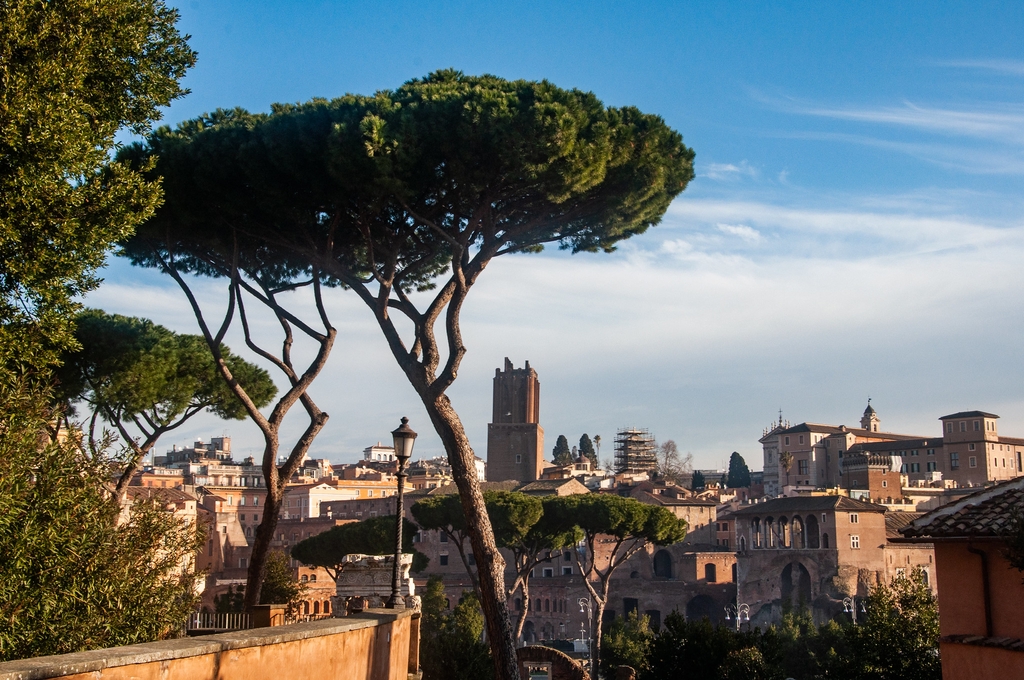
Stone Pine is a needled evergreen tree with a single trunk and branches at the top radiating out like an umbrella. It is a native of the coastal dunes and low hills of the Mediterranean countries. It is a medium sized tree in terms of height, maturing at 60 feet tall, but has a large trunk size at 40 feet. The edible pine nuts (pignolis) are soft and rich in oil and can be eaten raw or roasted. In the first few years after planting, the tree has a shrubby form. As it matures, the trunk grows thicker and taller, shedding lower branches. Eventually, it develops the umbrella shaped canopy. The needles are bright green. The genus name comes from the Latin name for pines. The species name means relating to pine.
Stone Pine does best in full sun, sandy to loam soil with a slightly acidic PH, and dry to medium moist conditions. Once established, the tree tolerates drought and most soil types, but it does not do well in poorly drained soil. It prefers cool summers and is not commonly found in southern climates. It has succeeded on the California coast.
Small, young Stone Pines are sold as indoor Christmas tree in some areas and, if the soil and climate conditions are favorable, can be planted outside after the holidays. They can also be used as seasonal indoor plants, but they will eventually grow out of that role.
Insects, Diseases, and Other Plant Problems:
Pine needle scale, Sawflies, borers and moths can be pests. It can suffer from fungus Diplodia pinea and Mycosphaerella pini or red band needle blight. This tree is susceptible to wind damage.
- See this plant in the following landscape :
- Cultivars / Varieties:
-
- Tags:


- Cultivars / Varieties:
-
- Tags:
-
-
Attributes:
- Genus:
- Pinus
- Species:
- pinea
- Family:
- Pinaceae
- Uses (Ethnobotany):
- The resin of this pine is used for varnishes, furniture wax and as an antiseptic and for kidney and bladder problems. A green dye can be made from the needles.
- Life Cycle:
- Woody
- Recommended Propagation Strategy:
- Grafting
- Seed
- Country Or Region Of Origin:
- Mediterranean coast (Southern Europe to Turkey and Lebanon)
- Distribution:
- Introduced into North Africa and Australia.
- Wildlife Value:
- This plant supports Imperial Moth (Eacles imperialis) larvae which have one brood per season and appear from April-October in the south. Adult Imperial Moths do not feed.
- Play Value:
- Edible fruit
- Textural
- Edibility:
- The seeds are edible and sold in the market as 'pine nuts. They can be eaten raw or roasted and may be added to a variety of culinary dishes.
- Dimensions:
- Height: 40 ft. 0 in. - 60 ft. 0 in.
- Width: 20 ft. 0 in. - 40 ft. 0 in.
-
-
Whole Plant Traits:
- Plant Type:
- Edible
- Tree
- Woody Plant Leaf Characteristics:
- Needled Evergreen
- Habit/Form:
- Erect
- Rounded
- Growth Rate:
- Slow
- Maintenance:
- Low
- Texture:
- Coarse
-
-
Cultural Conditions:
- Light:
- Full sun (6 or more hours of direct sunlight a day)
- Soil Texture:
- Clay
- Loam (Silt)
- Sand
- Soil pH:
- Acid (<6.0)
- Soil Drainage:
- Good Drainage
- Moist
- Occasionally Dry
- USDA Plant Hardiness Zone:
- 7a, 7b, 8a, 8b, 9a, 9b, 10a, 10b, 11a, 11b
-
-
Fruit:
- Fruit Color:
- Brown/Copper
- Fruit Value To Gardener:
- Edible
- Fruit Length:
- > 3 inches
- Fruit Description:
- Six inch long cones with cream-colored egg-shaped edible seeds. As a function of propagation, the seeds are released when the cones get hot, as in a fire. Dried cones are used in flower arrangements and the seeds are edible. Cones can take up to 36 months to mature.
-
-
Flowers:
- Flower Description:
- Non-flowering
-
-
Leaves:
- Woody Plant Leaf Characteristics:
- Needled Evergreen
- Leaf Color:
- Gray/Silver
- Green
- Leaf Feel:
- Glossy
- Leaf Value To Gardener:
- Fragrant
- Leaf Type:
- Needles
- Hairs Present:
- No
- Leaf Length:
- > 6 inches
- Leaf Description:
- Needles are in groups of 2 and are covered with a dull gray wax coating when young, but become dark green and glossy when older. Needles are 5 to 8 inches long.
-
-
Bark:
- Bark Color:
- Dark Brown
- Dark Gray
- Orange
- Red/Burgundy
- Surface/Attachment:
- Fissured
- Patchy
- Bark Plate Shape:
- Irregular
- Bark Description:
- Mature trees have orange to red-brown with gray patches and thick scaly irregular fissures.
-
-
Stem:
- Stem Is Aromatic:
- No
- Stem Description:
- Thick trunk with an umbrella-shaped crown, often losing lower branches as matures and its slender trunk grows taller.
-
-
Landscape:
- Landscape Location:
- Coastal
- Woodland
- Landscape Theme:
- Edible Garden
- Nighttime Garden
- Winter Garden
- Design Feature:
- Barrier
- Screen/Privacy
- Attracts:
- Moths
- Small Mammals
- Songbirds
- Resistance To Challenges:
- Deer
- Drought



