



Pinus edulis
Common Name(s):
- Phonetic Spelling
- PY-nus ED-yew-liss
- Description
-
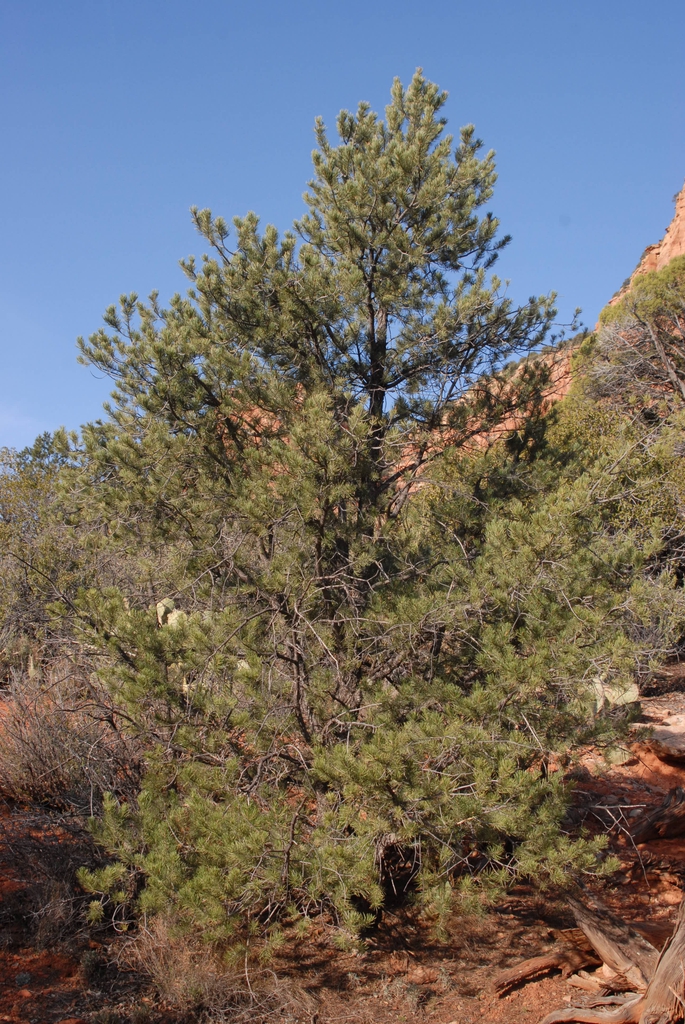
Pinyon pine is a gnarled evergreen with horizontal branches. It is symmetrical and bushy when young, develops a flat crown with age.
Its tasty seeds are edible. Known as pinyon nuts, Indian nuts, pine nuts, and pinoñes, they can be eaten raw, roasted or used in candies.
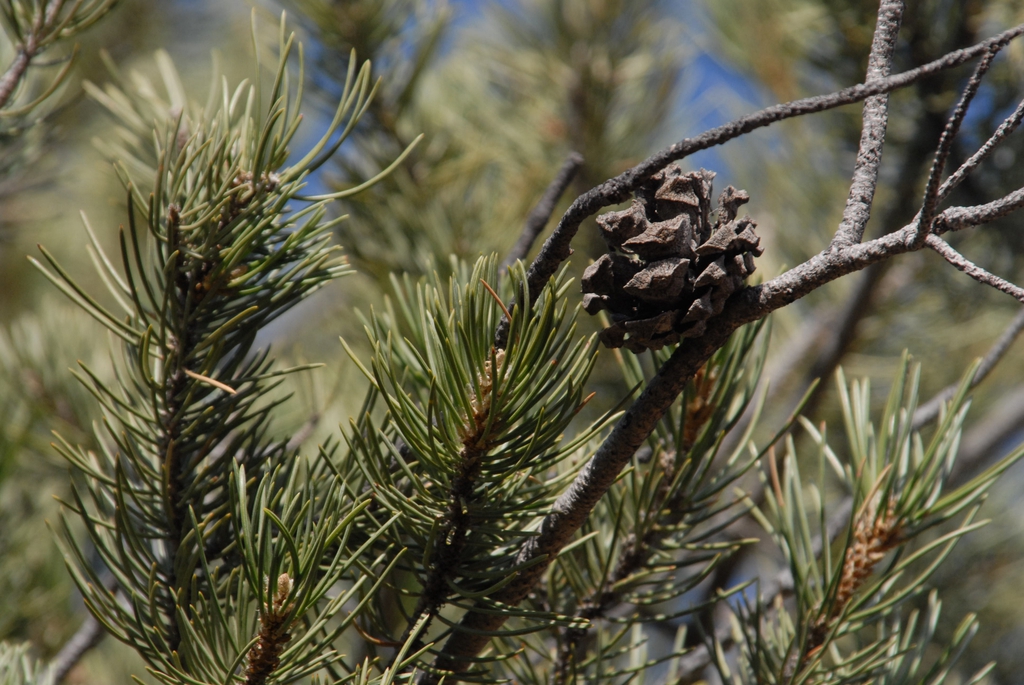
Pollen and Seed cones are both present on this variety. The egg-shaped pollen cones are yellow to red-brown. The egg-shaped seed cones mature 2 years after pollination, becoming more rounded in shape. The seeds are then dispersed.
In the USA, this plant can typically be found in the southwest at elevations over 4500 feet above sea level on dry slopes, mesas, and plateaus. Its wood is commonly used for fence posts and firewood.
Pinyon pine would not do well in the hot humid southeast except perhaps in the mountains. Use in a woodland or naturalized area and on slopes and banks.
Insect, Diseases, and Other Plant Problems: This tree is susceptible to wind damage.
- See this plant in the following landscape :
- Cultivars / Varieties:
-
- Tags:


- Cultivars / Varieties:
-
- Tags:
-
-
Attributes:
- Genus:
- Pinus
- Species:
- edulis
- Family:
- Pinaceae
- Life Cycle:
- Perennial
- Recommended Propagation Strategy:
- Root Cutting
- Seed
- Country Or Region Of Origin:
- Southwestern USA
- Distribution:
- AZ , CA , CO , NM , OK , TX , UT , WY
- Fire Risk Rating:
- high flammability
- Wildlife Value:
- This plant supports Imperial Moth (Eacles imperialis) larvae which have one brood per season and appear from April-October in the south. Adult Imperial Moths do not feed.
- Edibility:
- Large edible seeds
- Dimensions:
- Height: 10 ft. 0 in. - 20 ft. 0 in.
- Width: 12 ft. 0 in. - 36 ft. 0 in.
-
-
Whole Plant Traits:
- Plant Type:
- Shrub
- Tree
- Woody Plant Leaf Characteristics:
- Needled Evergreen
- Habit/Form:
- Oval
- Growth Rate:
- Slow
- Maintenance:
- Medium
- Texture:
- Medium
-
-
Cultural Conditions:
- Light:
- Full sun (6 or more hours of direct sunlight a day)
- Soil Texture:
- Clay
- Loam (Silt)
- Sand
- Shallow Rocky
- Soil Drainage:
- Good Drainage
- Available Space To Plant:
- more than 60 feet
- NC Region:
- Coastal
- Mountains
- Piedmont
- USDA Plant Hardiness Zone:
- 6a, 6b, 7a, 7b, 8a, 8b
-
-
Fruit:
- Fruit Color:
- Brown/Copper
- Red/Burgundy
- Display/Harvest Time:
- Fall
- Summer
- Fruit Length:
- 1-3 inches
- Fruit Description:
- No fruits. The elliptical pollen cones are typically 3–6 mm long and yellow to reddish brown. The seed cones start out pale yellow-green to red-purple and resemble at 1/4 inch pincusshion with scales that open to accept pollen. It matures the second year to 1 to 2 inch long green cone.
-
-
Flowers:
- Flower Description:
- No flowers
-
-
Leaves:
- Woody Plant Leaf Characteristics:
- Needled Evergreen
- Leaf Color:
- Blue
- Green
- Leaf Type:
- Needles
- Leaf Arrangement:
- Other/more complex
- Leaf Shape:
- Linear
- Leaf Margin:
- Entire
- Serrate
- Hairs Present:
- No
- Leaf Length:
- 1-3 inches
- Leaf Description:
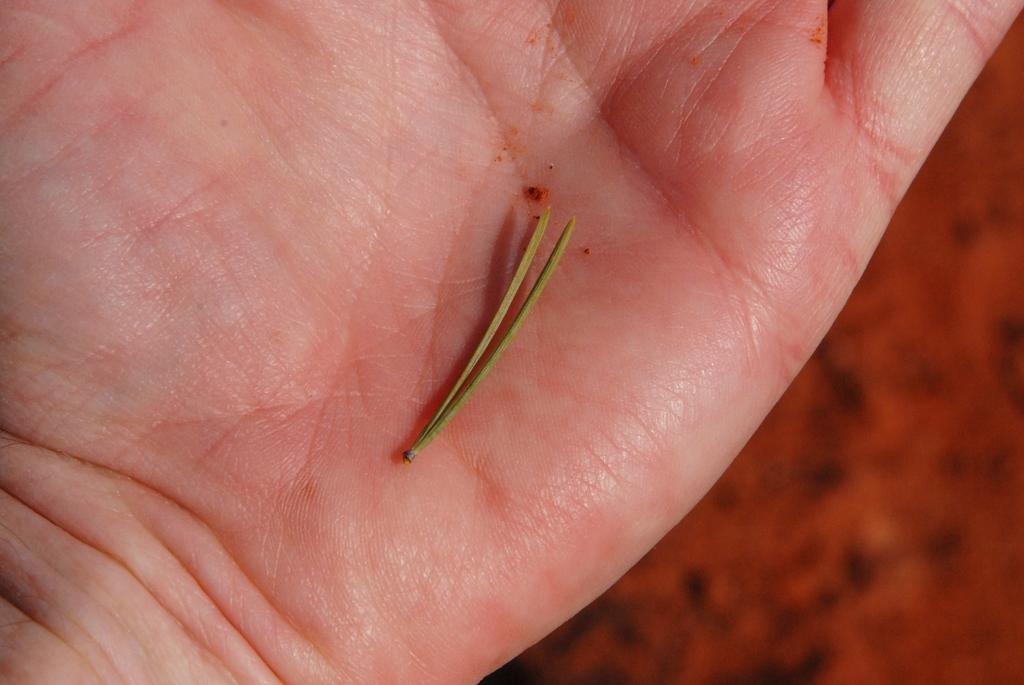
- .7 to 1.5 in. needles in bundles of 2, sometimes 1 or 3. They are blue-green with pale bands of stoma, especially on the upper surface. Margin are entire or finely serrated.
-
-
Bark:
- Bark Color:
- Dark Brown
- Light Brown
- Bark Description:
- Red-brown bark has shallow and irregular furrows, rounded, scaly ridges.
-
-
Stem:
- Stem Is Aromatic:
- No
-
-
Landscape:
- Landscape Location:
- Lawn
- Meadow
- Naturalized Area
- Slope/Bank
- Woodland
- Landscape Theme:
- Drought Tolerant Garden
- Edible Garden
- Nighttime Garden
- Rock Garden
- Design Feature:
- Accent
- Mass Planting
- Specimen
- Attracts:
- Moths
- Small Mammals
- Songbirds
- Resistance To Challenges:
- Deer
- Drought
- Dry Soil



