


Pelargonium x hybridum
Common Name(s):
Previously known as:
- Pelargonium × hortorum
- Phonetic Spelling
- pe-lar-GO-nee-um hy-BRID-um
- This plant has low severity poison characteristics.
- See below
- Description
-
Zonal pelargonium is a low-maintenance, tender perennial grown as an annual or a houseplant. It is in the geranium family (Geraniaceae). It is a hybrid cross between Pelargonium zonale and Pelargonium inquinans, both of which are native to the Cape region of South Africa.
Zonal pelargonium requires full sun and soils that are well-drained. Once established, plants are drought-tolerant, but they grow and flower more luxuriantly with moderate moisture. Plants in containers may be allowed to dry out between waterings. In insufficient light, plants become leggy and bloom poorly. Seeds should be started indoors in January or February on top of a heat mat set to 70 to 75 degrees. Plant outside after the last frost. Stem cuttings may be taken from July to August and grown under glass or in a sunny window until the danger of frost has passed. Plants can be overwintered indoors or in a cool greenhouse. Indoors, if they have adequate light, the plants can be kept growing with regular watering. Otherwise, they should be kept very dry and allowed to go dormant. Water the plants sparingly, only when the plants show signs of wilting. After the danger of frost has passed, the plants can be brought out of dormancy and watered normally. Give excellent ventilation to prevent foliar diseases.
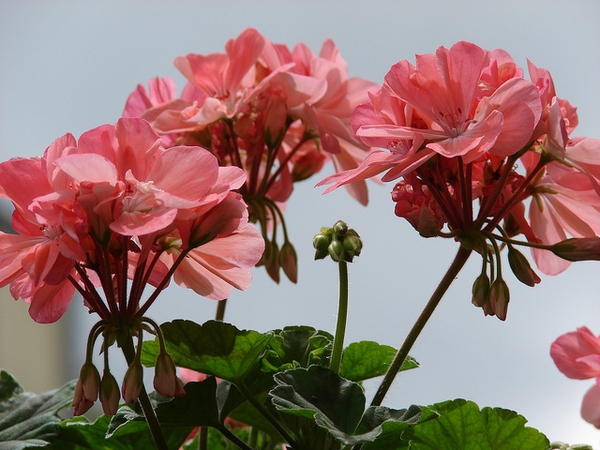
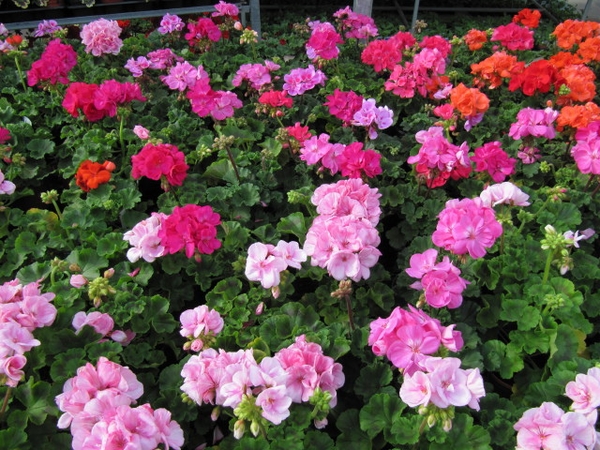
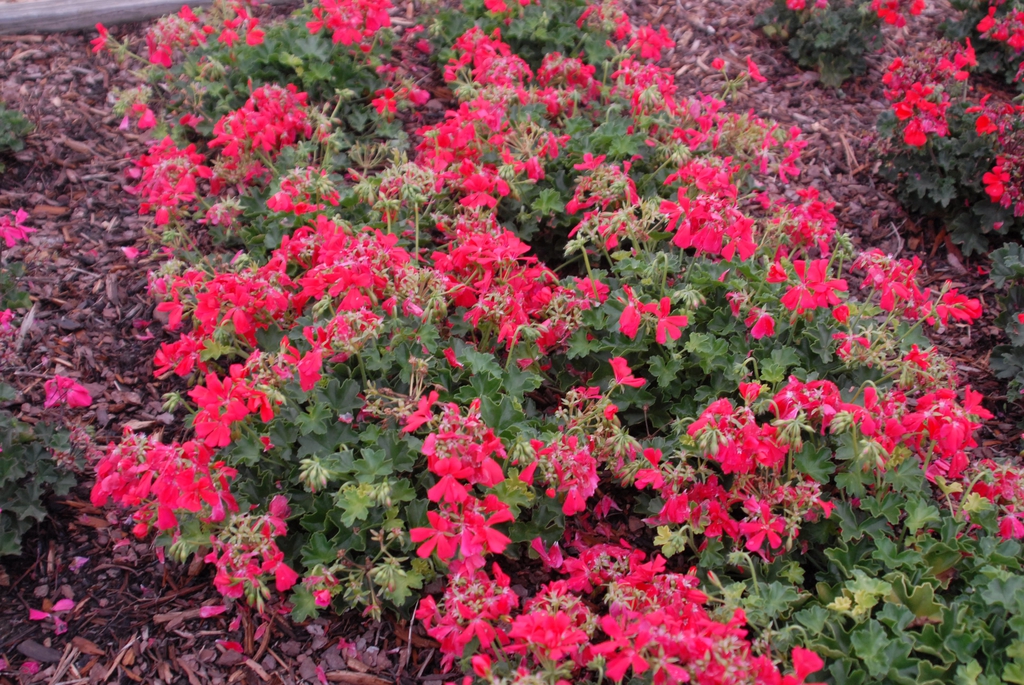
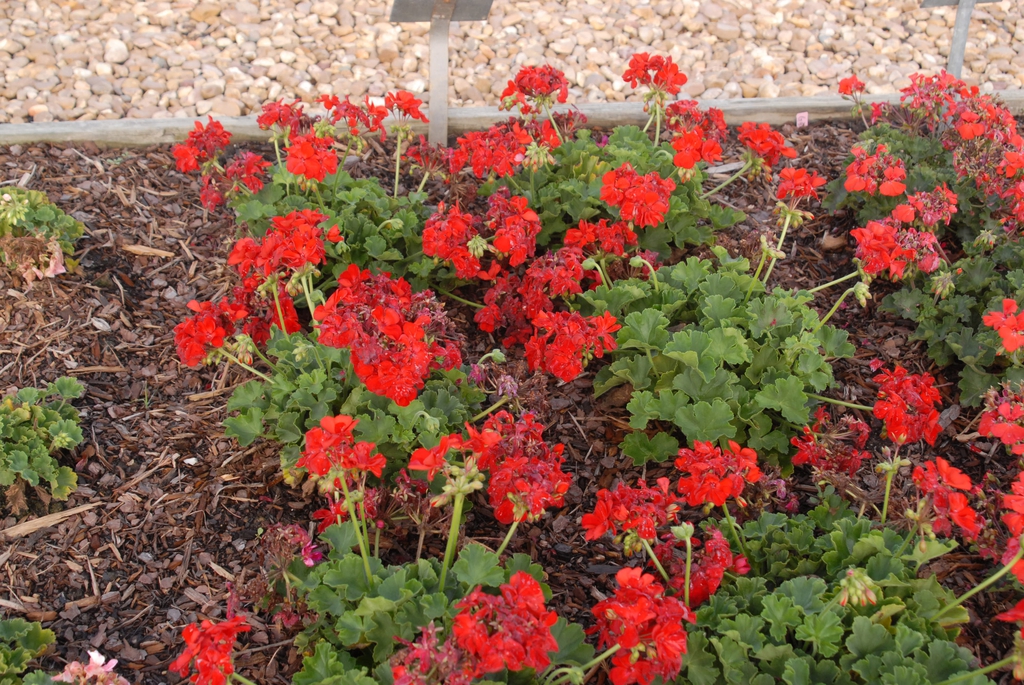
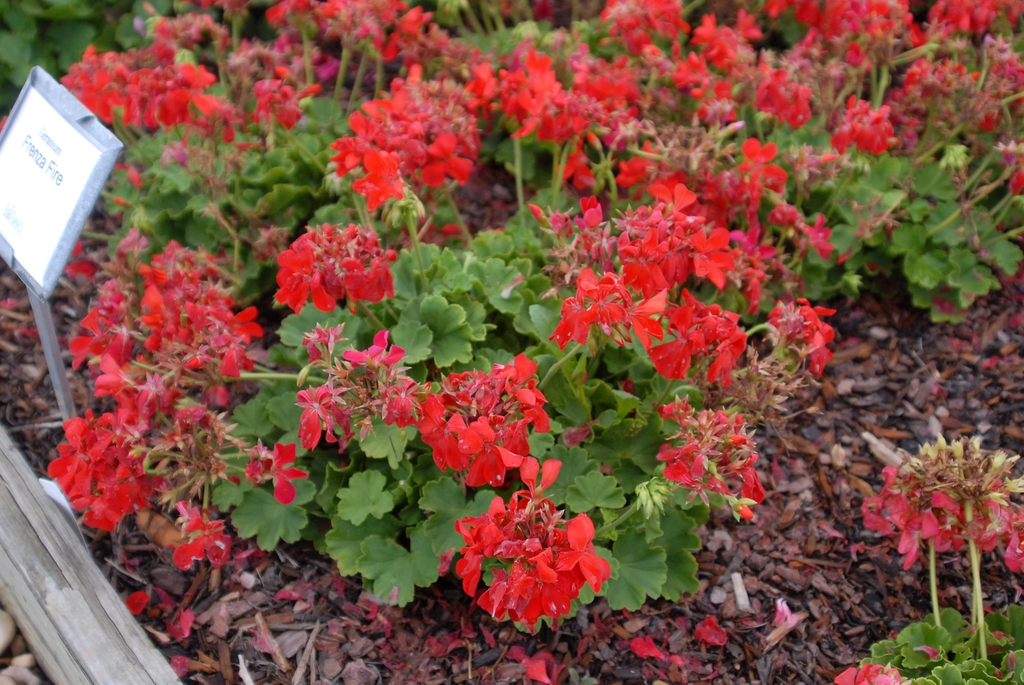
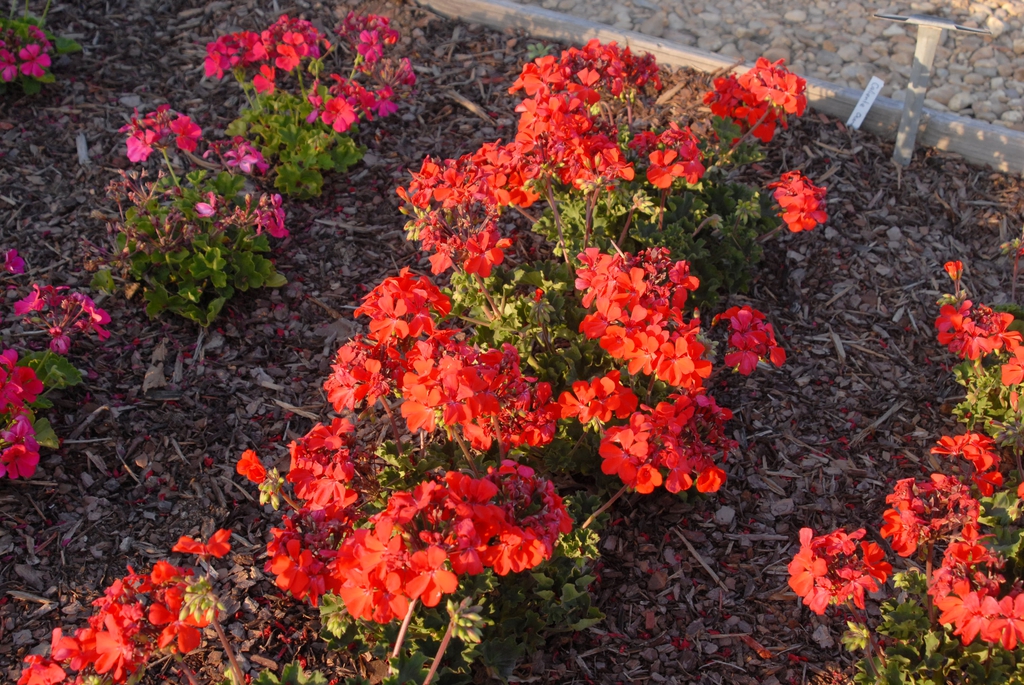
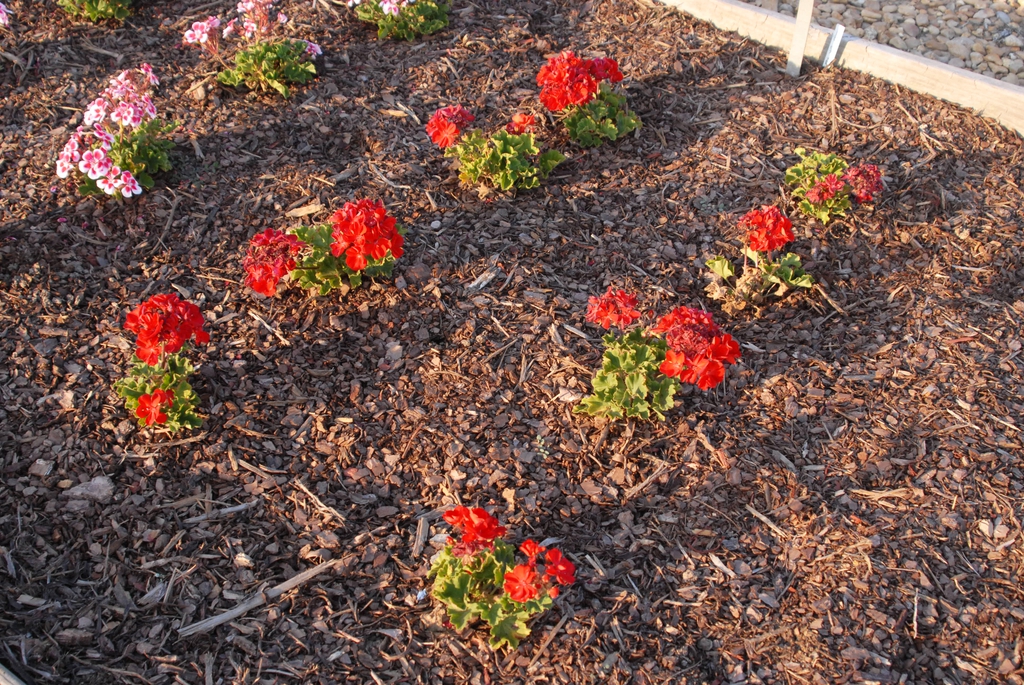
The humble zonal pelargonium is a marvel of modern breeding. The hybrid was first made in the late 18th century, but modern hybrids are uniform, floriferous and disease-resistant. The plant forms a rounded mound 1 to 3 feet tall. Flowers of pelargonium may be single, semi-double or double and are most commonly red, pink or white. The plant blooms throughout the warm months until frost. Horticulturists recognize several groups of zonal pelargoniums, including:
- Stellar cultivars, which have leaves with pointed lobes, include ‘Stellar Arctic Star’ and ‘Stellar Snowflake’.
- Cactus- or Poinsettia-flowered, which have twisted or quilled petals, including ‘Tangerine’, ‘Spitfire’ and ‘Coronia’.
- Rosebud cultivars, which have such tight clusters of flowers that the flowers never completely open, including ‘Appleblossom Rosebud’, ‘Wedding Royale’, and ‘Rosebud Supreme’.
- Miniatures, which are no more than 8 inches tall, include ‘Anna’, ‘Delta’ and ‘Jane Eyre’.
Pelargonium is a popular plant for hanging baskets, containers and garden beds. It can be overwintered indoors as a houseplant in a bright location.
Quick ID Hints:
- Flowers in umbel-like clusters on an elongated peduncle
- Leaves reniform to orbicular, often with a dark band within the margin (the “zone” of zonal pelargoniums)
Insects, Diseases, and Other Plant Problems: Susceptible to caterpillars, spider mites, mealybugs, fungal diseases and bacterial diseases.
VIDEO Created by Elisabeth Meyer for "Annuals, Perennials, Vines, and Groundcovers," a plant identification course developed in partnership with Longwood Gardens. Note: Throughout the video, the presenter refers to the plant as Pelargonium x hortorum. This name is now a synonym of P. x hybridum. Also, the presenter calls the inflorescence an umbel. While the inflorescence is umbel-like, it is not a true umbel.
- Profile Video:
- See this plant in the following landscape s :
- Deck Garden Container Gardens
- Cultivars / Varieties:
-
- Americana® Group
Many colors available on compact floriferous plants. Heat tolerant. - BullsEye™ Group
Leaves with very broad zone; many color forms available. - 'Caliente Orange'
- Daredevil® Group
Many colors available on compact floriferous plants. - 'Frenza Fire'
- Maverick™ Group
Large flowers; vigorous plants; many colors available. - 'Orange Appeal'
Orange-red flowers - Pinto™ Group
Vigorous, well branched plants; many colors available. - 'Sophia'
- 'Straitum'
- 'Tango Dark Red'
- Americana® Group
- Americana® Group, BullsEye™ Group, 'Caliente Orange', Daredevil® Group, 'Frenza Fire', Maverick™ Group, 'Orange Appeal', Pinto™ Group, 'Sophia', 'Straitum', 'Tango Dark Red'
- Tags:


- Cultivars / Varieties:
-
- Americana® Group
Many colors available on compact floriferous plants. Heat tolerant. - BullsEye™ Group
Leaves with very broad zone; many color forms available. - 'Caliente Orange'
- Daredevil® Group
Many colors available on compact floriferous plants. - 'Frenza Fire'
- Maverick™ Group
Large flowers; vigorous plants; many colors available. - 'Orange Appeal'
Orange-red flowers - Pinto™ Group
Vigorous, well branched plants; many colors available. - 'Sophia'
- 'Straitum'
- 'Tango Dark Red'
- Americana® Group
- Americana® Group, BullsEye™ Group, 'Caliente Orange', Daredevil® Group, 'Frenza Fire', Maverick™ Group, 'Orange Appeal', Pinto™ Group, 'Sophia', 'Straitum', 'Tango Dark Red'
- Tags:
-
-
Attributes:
- Genus:
- Pelargonium
- Family:
- Geraniaceae
- Life Cycle:
- Annual
- Perennial
-
-
Whole Plant Traits:
- Plant Type:
- Annual
- Herbaceous Perennial
- Houseplant
- Poisonous
- Habit/Form:
- Erect
- Mounding
- Rounded
- Spreading
- Growth Rate:
- Medium
- Maintenance:
- Medium
-
-
Cultural Conditions:
- Light:
- Full sun (6 or more hours of direct sunlight a day)
- Soil Drainage:
- Good Drainage
- Moist
- Available Space To Plant:
- Less than 12 inches
-
-
Fruit:
- Fruit Color:
- Brown/Copper
- Fruit Type:
- Capsule
- Fruit Length:
- < 1 inch
- Fruit Width:
- < 1 inch
- Fruit Description:
- Fruits are rare, but when present, they are elongated capsules with a beak, dehiscing from beak downwards, and coiling.
-
-
Flowers:
- Flower Color:
- Orange
- Pink
- Red/Burgundy
- Variegated
- White
- Flower Inflorescence:
- Cyme
- Flower Value To Gardener:
- Good Cut
- Long Bloom Season
- Showy
- Flower Bloom Time:
- Fall
- Spring
- Flower Petals:
- 4-5 petals/rays
- Flower Size:
- < 1 inch
- Flower Description:
- Flowers are single, semidouble to double, uniform in color of red, pink, or salmon, and occasionally bicolored. Flowers have 5 petals and appear subrotate. Inflorescence is an erect umbel-like cluster on a long peduncle.
-
-
Leaves:
- Leaf Color:
- Cream/Tan
- Gold/Yellow
- Green
- Leaf Feel:
- Papery
- Leaf Value To Gardener:
- Fragrant
- Leaf Type:
- Simple
- Leaf Arrangement:
- Alternate
- Leaf Shape:
- Cordate
- Orbicular
- Pinnatifid
- Reniform
- Leaf Margin:
- Crenulate
- Entire
- Lobed
- Sinuate
- Undulate
- Hairs Present:
- Yes
- Leaf Length:
- 3-6 inches
- Leaf Width:
- 3-6 inches
- Leaf Description:
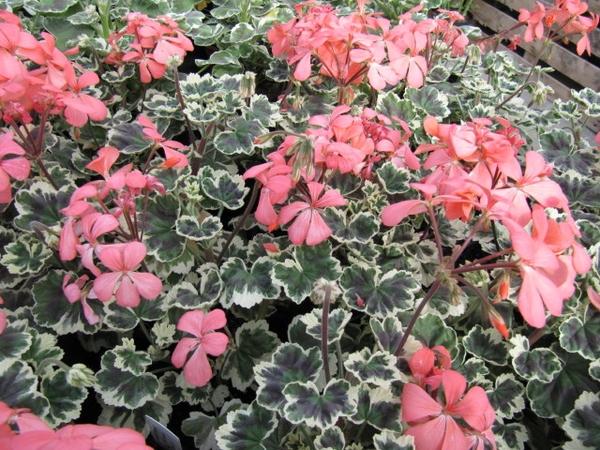
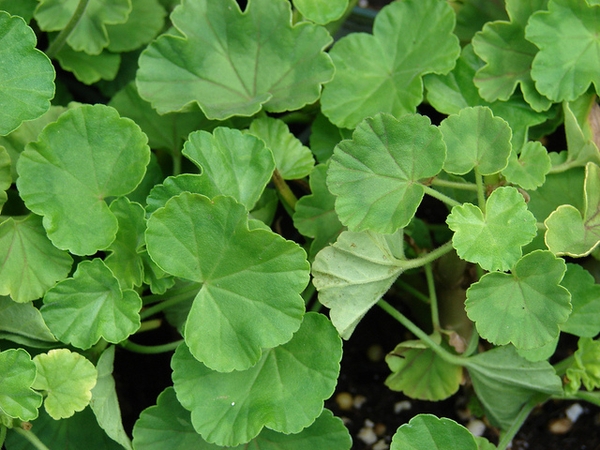
- Leaves are simple, alternate to subopposite, orbicular to reniform, crenate, undulate to sinuate, cordate, and pubescent. Bruised leaves are aromatic. Leaves are green, often variegated green with a dark green or brown zone in from the margin. Stipules are large and persistent.
-
-
Stem:
- Stem Is Aromatic:
- No
- Stem Surface:
- Smooth (glabrous)
- Stem Description:
- Stems are erect, succulent, and glabrescent.
-
-
Landscape:
- Landscape Location:
- Container
- Hanging Baskets
- Houseplants
- Patio
- Vertical Spaces
- Design Feature:
- Border
- Mass Planting
- Small groups
- Attracts:
- Butterflies
- Pollinators
- Resistance To Challenges:
- Drought
- Problems:
- Contact Dermatitis
- Malodorous
- Poisonous to Humans
- Problem for Cats
- Problem for Dogs
- Problem for Horses
-
-
Poisonous to Humans:
- Poison Severity:
- Low
- Poison Symptoms:
- Vomiting, anorexia when consumed in quantity. Primarily GI upset, but also ataxia, muscle weakness, depression or hypothermia in larger exposures. Cats are most sensitive. Contact (allergic) dermatitis is mild.
- Poison Toxic Principle:
- Geraniol, linalool
- Causes Contact Dermatitis:
- Yes
- Poison Part:
- Leaves