


Packera aurea
Common Name(s):
Previously known as:
- Senecio aureus
- Phonetic Spelling
- PAK-er-uh ARE-ee-uh
- This plant has low severity poison characteristics.
- See below
- Description
-
Golden ragwort is a native herbaceous perennial wildflower in the Asteraceae (daisy) family. It is found growing in forests, swamps, ravines, or riparian areas in eastern North America to Texas as an herbaceous flowering plant. This native plant is fairly common in the mountains and Piedmont region of North Carolina where it is one of the first spring wildflowers to bloom.
Plant it in full sun to partial shade in average, medium to wet, soils that should not be allowed to dry out. Plants that grow in sunlight require more moisture than plants growing in shade. Flowers will bloom in shady sites. It will self-seed and can colonize.
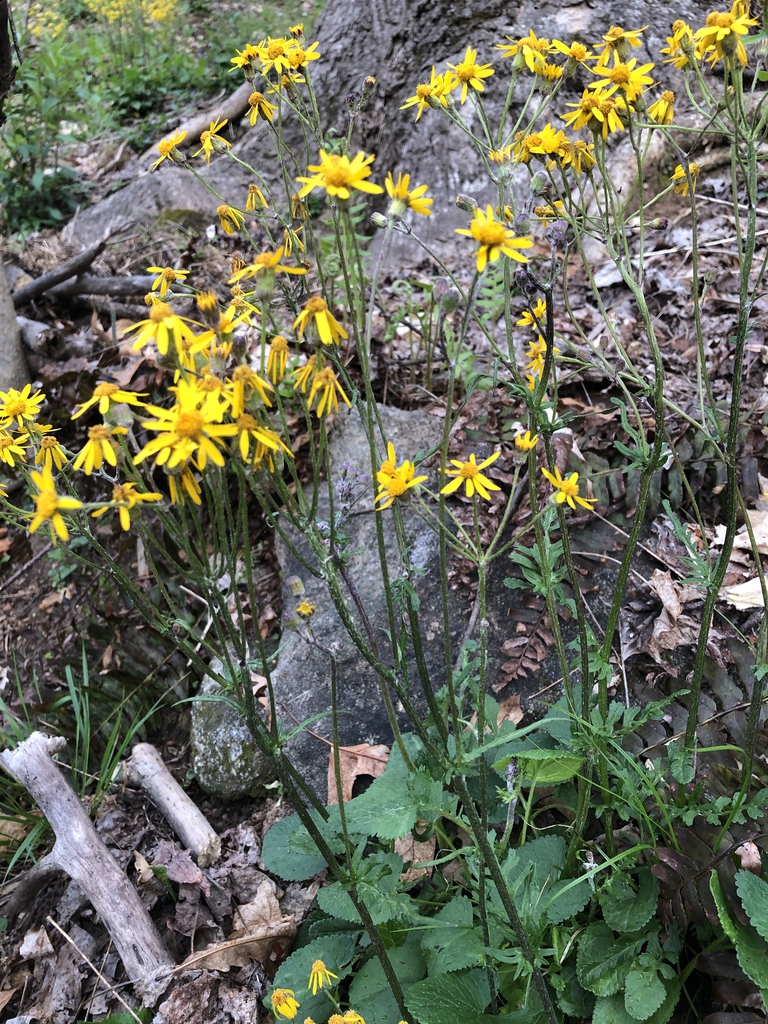
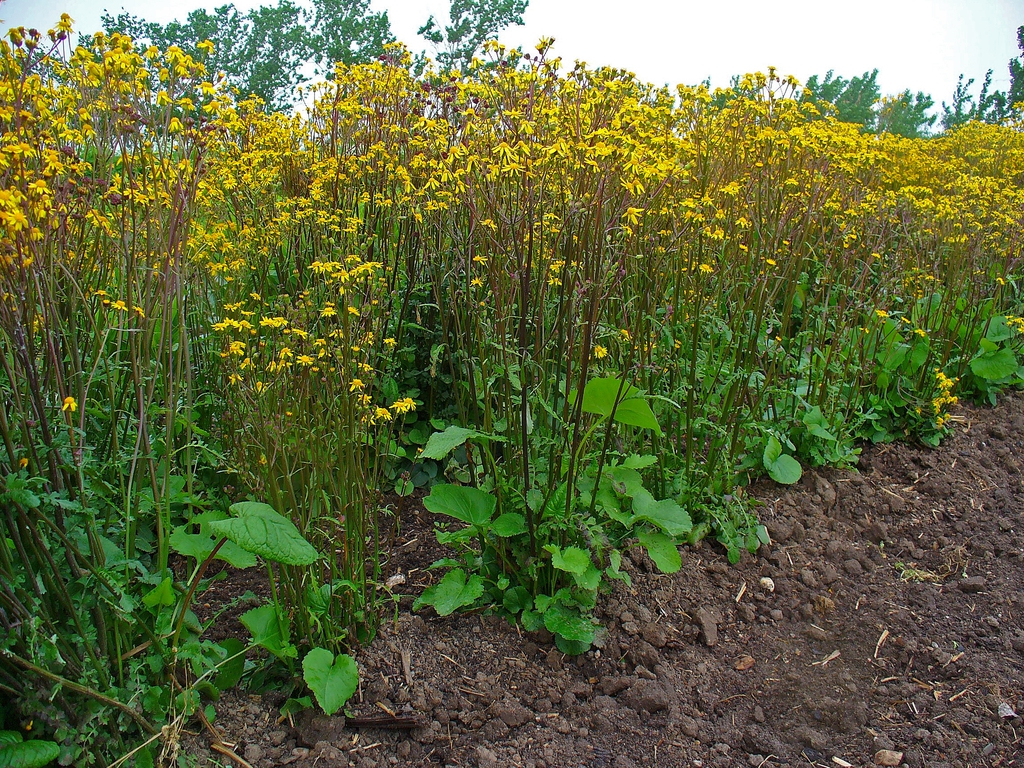
It forms thick spreading mats and in the spring it sends up stalks of bright yellow flowers that attract many pollinators. The blooms will add some much needed brightness to darker spots in the landscape. The flowers can look unkempt after they die so cut them down to the leafy base of the plant or leave the seeds for birds.
Allow it to naturalize in the landscape, use as a ground cover in shady wet areas, or along a border, in a bog, butterfly, or rain garden. It can be somewhat weedy.
Insects, Diseases, and Other Plant Problems: No serious diseases or insect problems. It can be somewhat weedy.
- See this plant in the following landscape :
- Cultivars / Varieties:
-
- 'Dark Shadow'
Purple leaves, young leaves are greenish-crimson
- 'Dark Shadow'
- 'Dark Shadow'
- Tags:
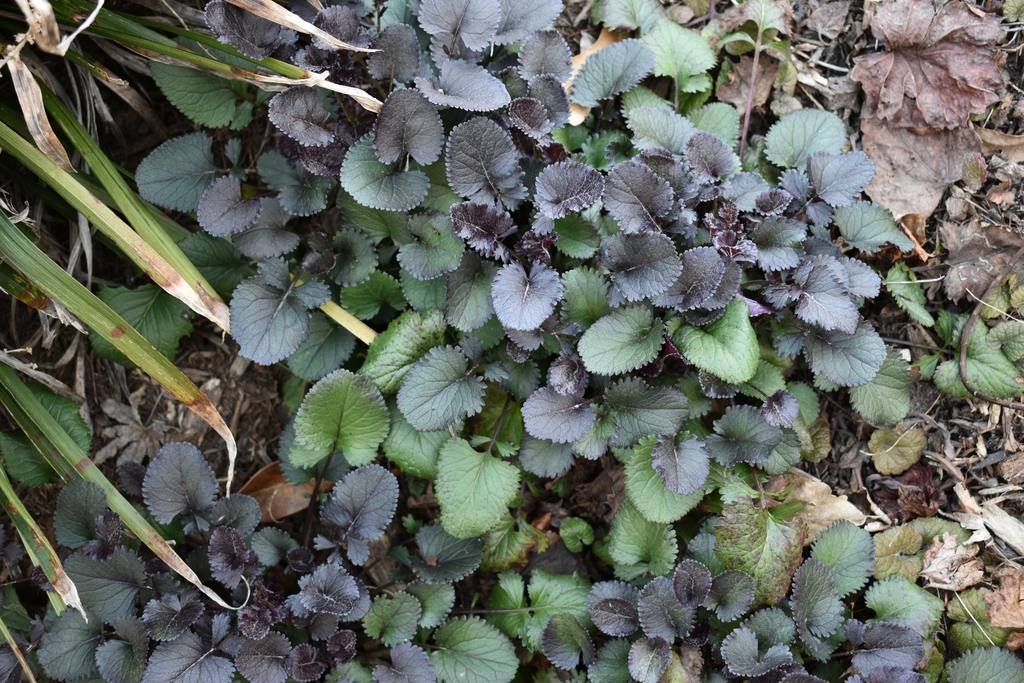
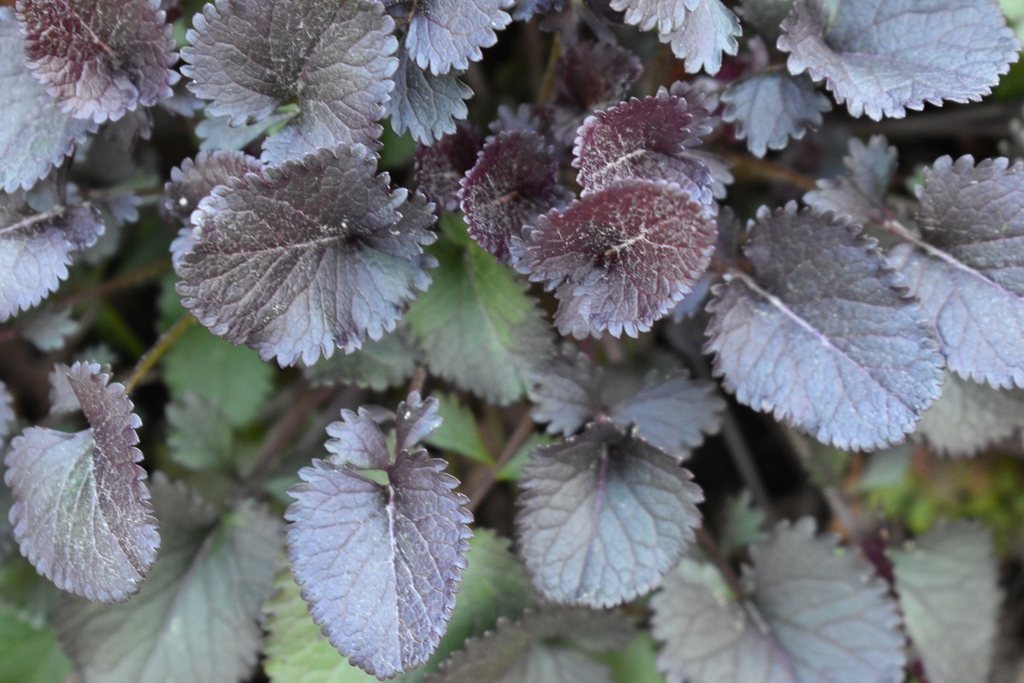


- Cultivars / Varieties:
-
- 'Dark Shadow'
Purple leaves, young leaves are greenish-crimson
- 'Dark Shadow'
- 'Dark Shadow'
- Tags:
-
-
Attributes:
- Genus:
- Packera
- Species:
- aurea
- Family:
- Asteraceae
- Life Cycle:
- Perennial
- Recommended Propagation Strategy:
- Division
- Seed
- Country Or Region Of Origin:
- Eastern Canada and Eastern United States to Texas.
- Distribution:
- Introduced into Germany.
- Wildlife Value:
- The blooms are attractive to butterflies, bees, and other insect pollinators. and seeds attract birds. The foliage is one of the few larval food sources for the northern metalmark butterfly.
- Dimensions:
- Height: 0 ft. 6 in. - 2 ft. 6 in.
- Width: 0 ft. 6 in. - 1 ft. 6 in.
-
-
Whole Plant Traits:
- Plant Type:
- Ground Cover
- Herbaceous Perennial
- Native Plant
- Poisonous
- Wildflower
- Woody Plant Leaf Characteristics:
- Broadleaf Evergreen
- Semi-evergreen
- Habit/Form:
- Clumping
- Growth Rate:
- Medium
- Maintenance:
- Medium
- Texture:
- Fine
-
-
Cultural Conditions:
- Light:
- Full sun (6 or more hours of direct sunlight a day)
- Partial Shade (Direct sunlight only part of the day, 2-6 hours)
- Soil Texture:
- High Organic Matter
- Loam (Silt)
- Soil pH:
- Acid (<6.0)
- Soil Drainage:
- Moist
- Occasionally Wet
- Available Space To Plant:
- Less than 12 inches
- 12 inches-3 feet
- NC Region:
- Mountains
- Piedmont
- USDA Plant Hardiness Zone:
- 3a, 3b, 4a, 4b, 5a, 5b, 6a, 6b, 7a, 7b, 8a, 8b
-
-
Fruit:
- Fruit Color:
- Brown/Copper
- Fruit Type:
- Achene
- Fruit Description:
- Each flower is replaced by a bullet-shaped achene with a small tuft of white hairs. The achenes are distributed by the wind.
-
-
Flowers:
- Flower Color:
- Gold/Yellow
- Purple/Lavender
- White
- Flower Inflorescence:
- Corymb
- Head
- Flower Value To Gardener:
- Showy
- Flower Bloom Time:
- Spring
- Summer
- Flower Shape:
- Radial
- Flower Petals:
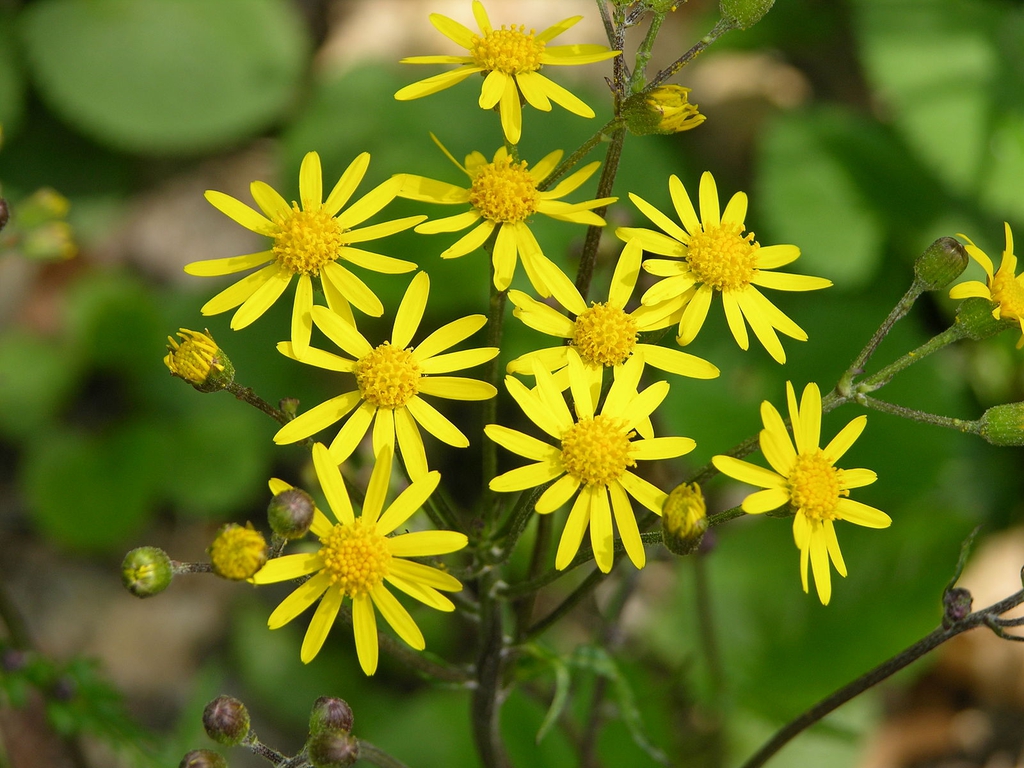
- 7 - 20 petals/rays
- Flower Size:
- 1-3 inches
- Flower Description:
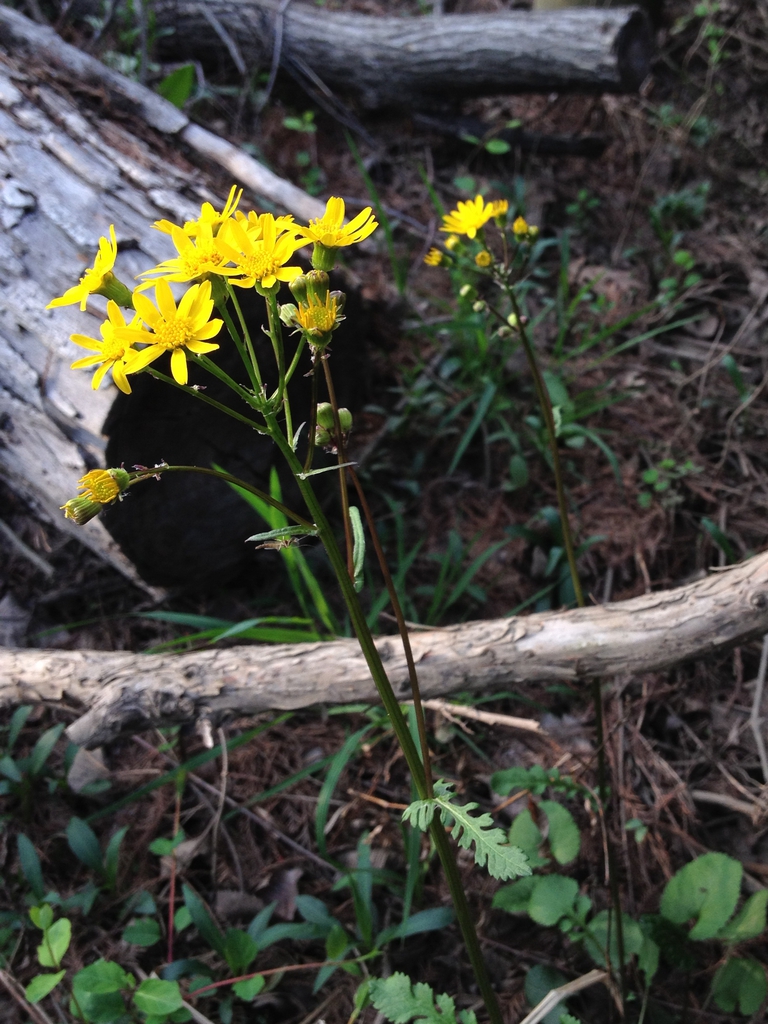
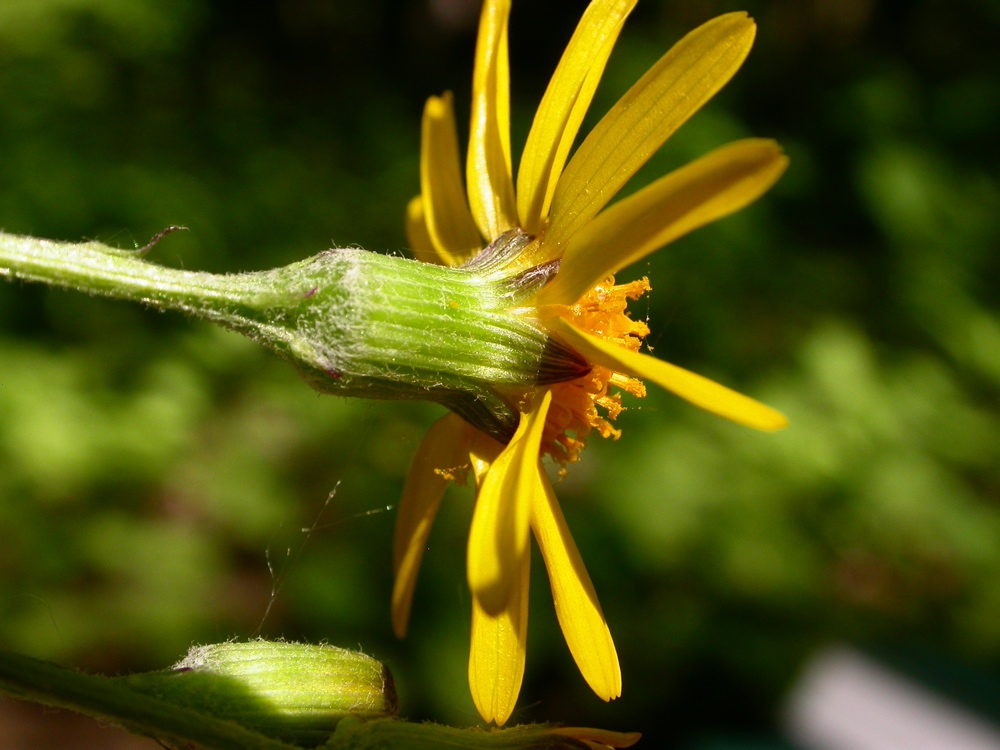
- Yellow (rarely white or purple) head flowers 1" across in a flat topped corymb resembling a small sunflower. Petals and disk flowers are yellow. Cut back after flowering or leave the seeds for the birds.
-
-
Leaves:
- Woody Plant Leaf Characteristics:
- Broadleaf Evergreen
- Semi-evergreen
- Leaf Color:
- Green
- Leaf Type:
- Compound (Pinnately , Bipinnately, Palmately)
- Leaf Arrangement:
- Alternate
- Leaf Shape:
- Cordate
- Leaf Margin:
- Dentate
- Lobed
- Hairs Present:
- No
- Leaf Length:
- 3-6 inches
- Leaf Description:
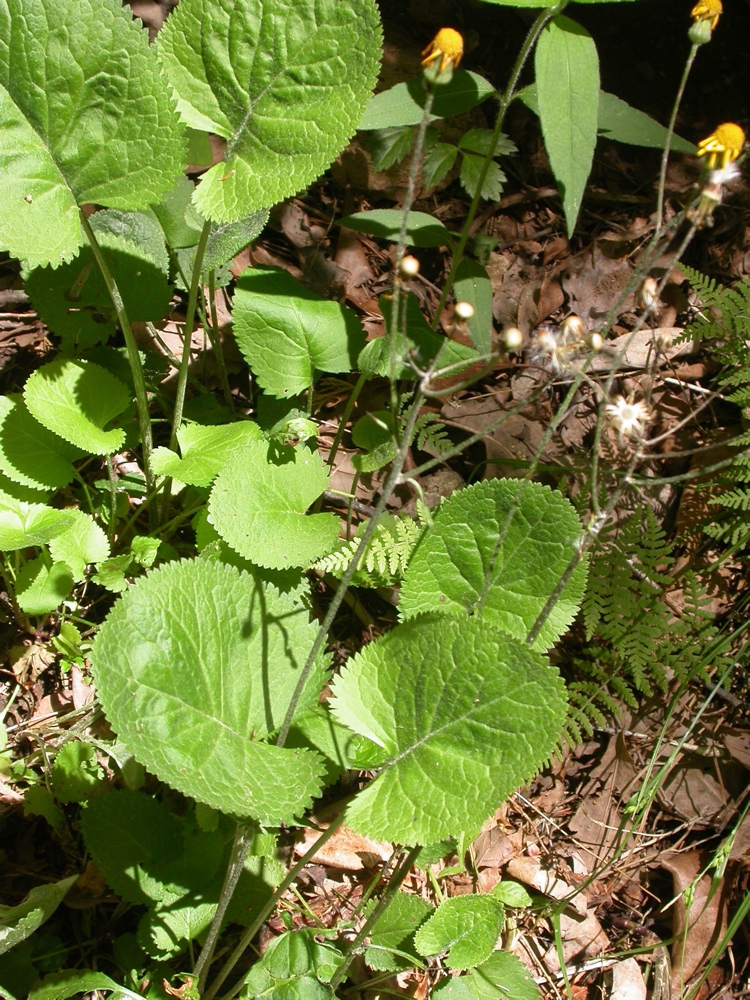
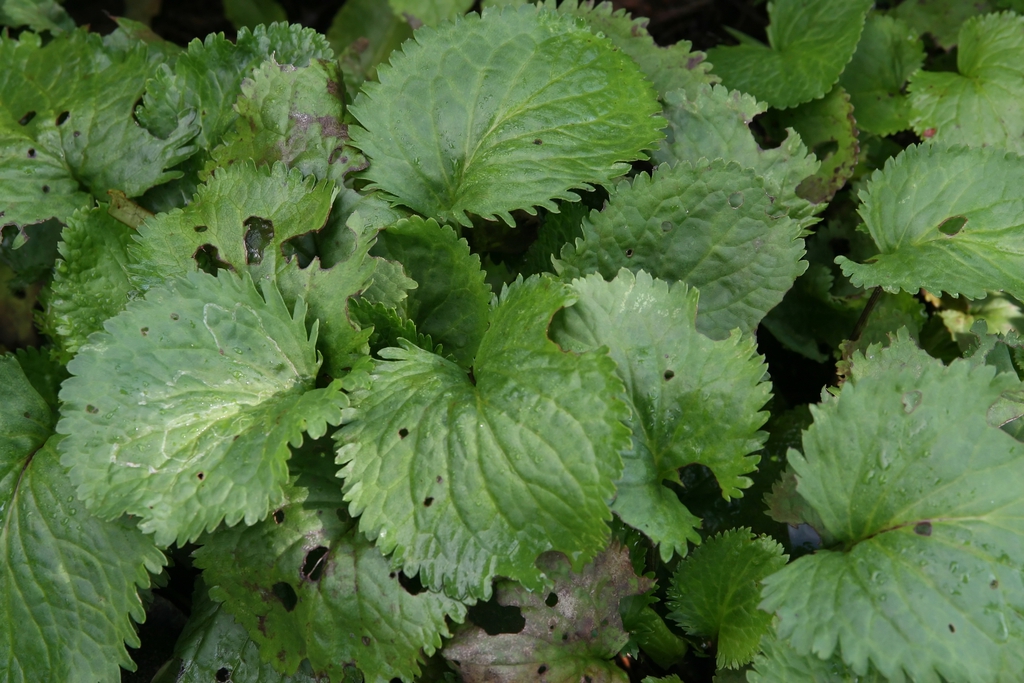
- Stem leaves are alternate, often lobed or pinnately divided and toothed; heart-shaped basal leaves are bluntly toothed, slender-stalked and are 2 to 4 in. long; reddish purple below. Basal leaves remain on the plant in mild winter and lend to the ground cover appearance. The ground cover will remain throughout the growing season as long as consistent moisture is provided.
-
-
Stem:
- Stem Is Aromatic:
- No
- Stem Cross Section:
- Oval
- Stem Form:
- Straight
- Stem Description:
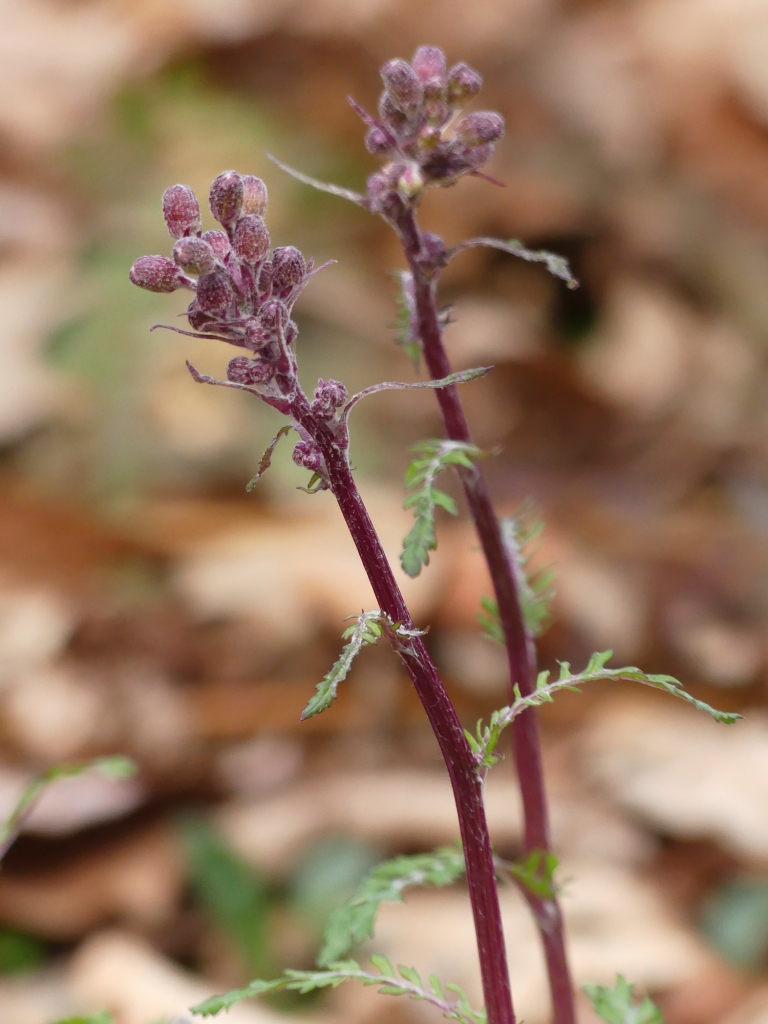
- Oblong stem leaves are finely cut (pinnately lobed) and quite distinctive. Flowering stems typically rise 1 to 2 feet from basal clumps.
-
-
Landscape:
- Landscape Location:
- Naturalized Area
- Riparian
- Landscape Theme:
- Native Garden
- Pollinator Garden
- Rain Garden
- Design Feature:
- Border
- Attracts:
- Butterflies
- Pollinators
- Songbirds
- Resistance To Challenges:
- Wet Soil
- Problems:
- Weedy