


Origanum vulgare subsp. hirtum
Common Name(s):
- Phonetic Spelling
- or-RI-ga-num vul-GAIR-ee HER-tum
- Description
-
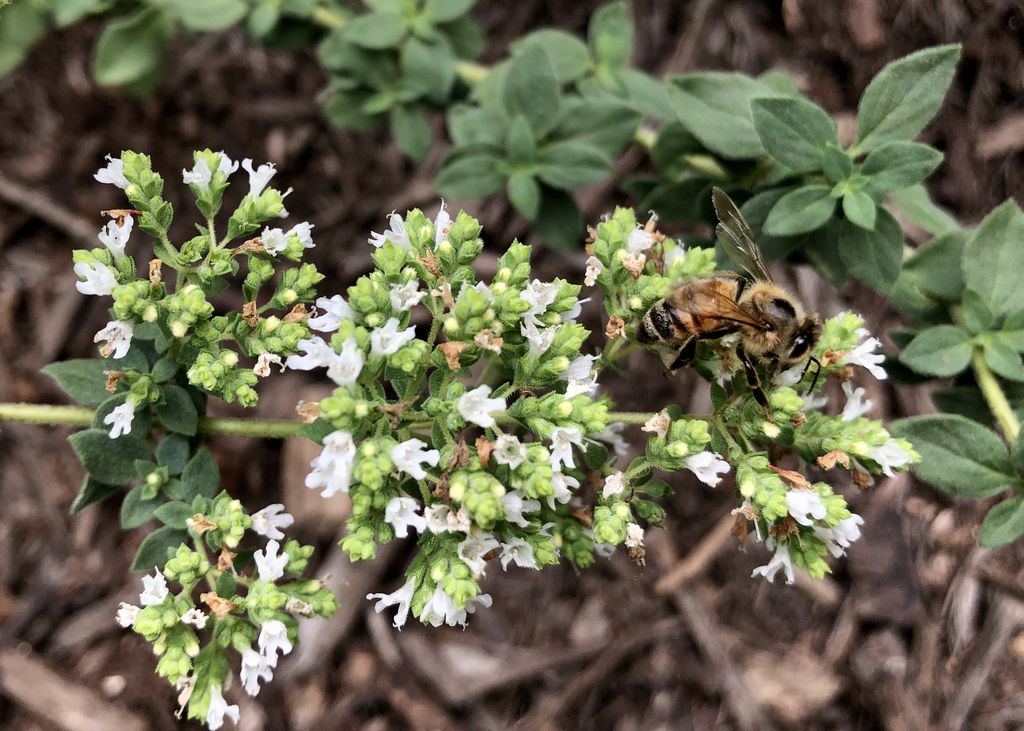
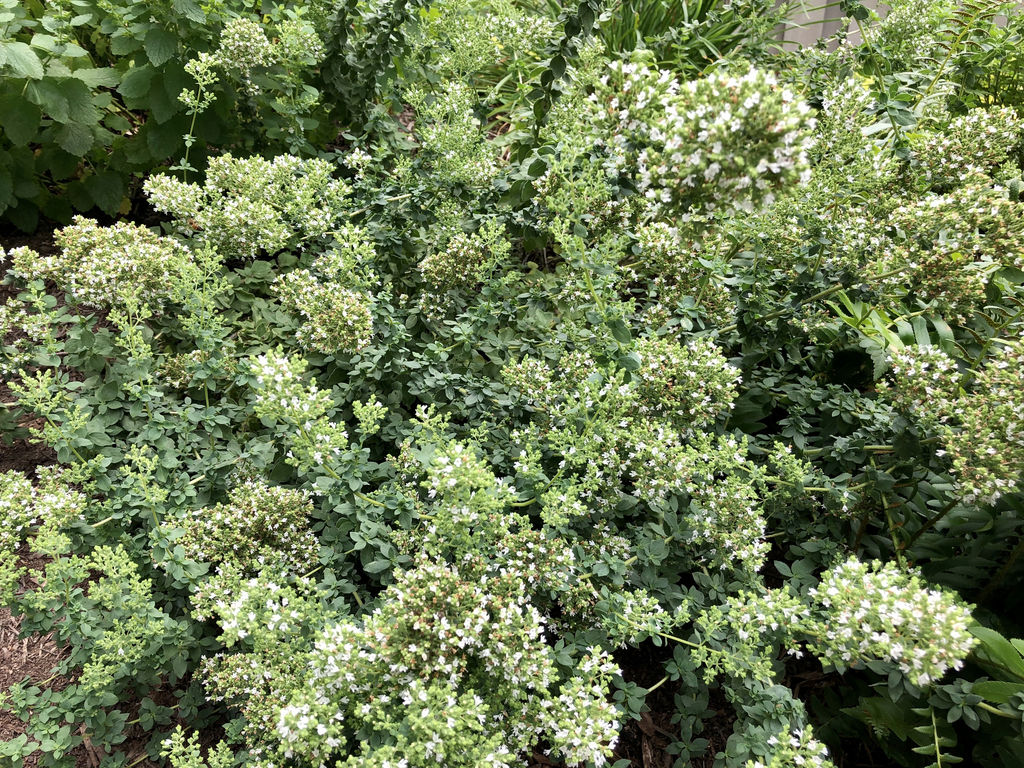
Greek Oregano is a hardy, bushy, herbaceous perennial culinary herb with edible leaves in the mint family. It is a compact plant, reaching a height of 9 inches at maturity after 2 to 3 years of growth. It has upright, spreading stems clad in aromatic, dark green leaves with small clusters of white flowers that appear in terminal and axillary spikelets from mid-summer to autumn.
Greek Oregano is grown primarily for culinary use. It produces flavorful leaves with the classic aroma and hot and spicy taste expected from oregano. Those leaves are commonly marketed in dry form for spice racks. However, Greek Oregano has minimal ornamental use.
Greek Oregano does best it in full sun to partial shade, in well-drained, moist to dry, soil. It will tolerate a variety of soil types, including sandy gravel and clay. Oregano plants tolerate heat and drought.
Greek Oregano works well in border fronts or massed along slopes. It is resistant to erosion and damage by deer. Shear plants back regularly before flowering. Clip leaves fresh as needed or keep them dried for year-round use. In general, the best leaf flavor occurs just prior to flowering.
Diseases, Insect Pests, and Other Plant Problems:
Root rot can occur in wet, poorly drained soils. Susceptible to fungal diseases, aphids, leaf miners, spider mites and leafhoppers.
- See this plant in the following landscape :
- Cultivars / Varieties:
-
- Tags:


- Cultivars / Varieties:
-
- Tags:
-
-
Attributes:
- Genus:
- Origanum
- Species:
- vulgare
- Family:
- Lamiaceae
- Uses (Ethnobotany):
- Leaves are a basic ingredient for sauces.
- Life Cycle:
- Perennial
- Recommended Propagation Strategy:
- Division
- Seed
- Country Or Region Of Origin:
- Greece, Turkey
- Distribution:
- Naturalized in eastern United States (New England to Carolina), West Coast (Washington to California), and Canada.
- Play Value:
- Attracts Pollinators
- Easy to Grow
- Edibility:
- Leaves are edible with a hot spicy taste and are used fresh or dried in soups, sauces, salads, stews, and dressings. This is the oregano that is commonly purchased in stores in dried form.
- Dimensions:
- Height: 0 ft. 6 in. - 0 ft. 9 in.
- Width: 1 ft. 0 in. - 1 ft. 6 in.
-
-
Whole Plant Traits:
- Plant Type:
- Edible
- Ground Cover
- Herb
- Herbaceous Perennial
- Woody Plant Leaf Characteristics:
- Deciduous
- Habit/Form:
- Cascading
- Clumping
- Erect
- Horizontal
- Prostrate
- Spreading
- Growth Rate:
- Medium
- Maintenance:
- Low
-
-
Cultural Conditions:
- Light:
- Full sun (6 or more hours of direct sunlight a day)
- Partial Shade (Direct sunlight only part of the day, 2-6 hours)
- Soil Texture:
- Clay
- Loam (Silt)
- Sand
- Soil pH:
- Acid (<6.0)
- Alkaline (>8.0)
- Neutral (6.0-8.0)
- Soil Drainage:
- Good Drainage
- Moist
- Occasionally Dry
- Available Space To Plant:
- 12 inches-3 feet
- NC Region:
- Coastal
- Mountains
- Piedmont
- USDA Plant Hardiness Zone:
- 4a, 4b, 5a, 5b, 6a, 6b, 7a, 7b, 8a, 8b
-
-
Fruit:
- Display/Harvest Time:
- Fall
- Fruit Description:
- Seeds ripen August through October.
-
-
Flowers:
- Flower Color:
- White
- Flower Inflorescence:
- Spike
- Flower Value To Gardener:
- Fragrant
- Showy
- Flower Bloom Time:
- Summer
- Flower Shape:
- Tubular
- Flower Size:
- < 1 inch
- Flower Description:
- Tiny white flowers in axillary spiklets appear late summer.
-
-
Leaves:
- Woody Plant Leaf Characteristics:
- Deciduous
- Leaf Color:
- Green
- Leaf Value To Gardener:
- Edible
- Fragrant
- Leaf Type:
- Simple
- Leaf Arrangement:
- Opposite
- Leaf Shape:
- Ovate
- Leaf Margin:
- Dentate
- Entire
- Hairs Present:
- No
- Leaf Length:
- 1-3 inches
- Leaf Description:
- Aromatic, glandular-spotted, rounded to ovate leaves (to 1 1/2 inches long), usually entire but sometimes slightly toothed.
-
-
Stem:
- Stem Color:
- Green
- Stem Is Aromatic:
- No
- Stem Cross Section:
- Square
- Stem Surface:
- Hairy (pubescent)
- Stem Description:
- Branching, square stems clad in leaves.
-
-
Landscape:
- Landscape Location:
- Container
- Naturalized Area
- Patio
- Slope/Bank
- Landscape Theme:
- Cottage Garden
- Edible Garden
- Pollinator Garden
- Design Feature:
- Accent
- Attracts:
- Bees
- Butterflies
- Moths
- Pollinators
- Resistance To Challenges:
- Deer
- Diseases
- Drought
- Dry Soil
- Erosion
- Heat
- Insect Pests
- Poor Soil
- Rabbits
- Problems:
- Problem for Cats
- Problem for Dogs
- Problem for Horses