


Origanum vulgare
Common Name(s):
- Phonetic Spelling
- oh-rih-GAY-num vul-GAR-ay
- Description
-
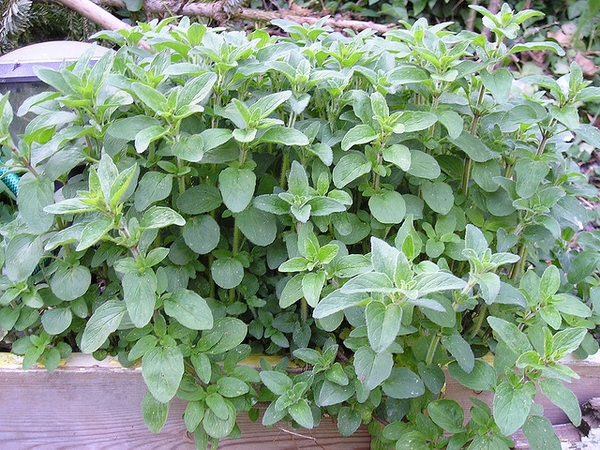
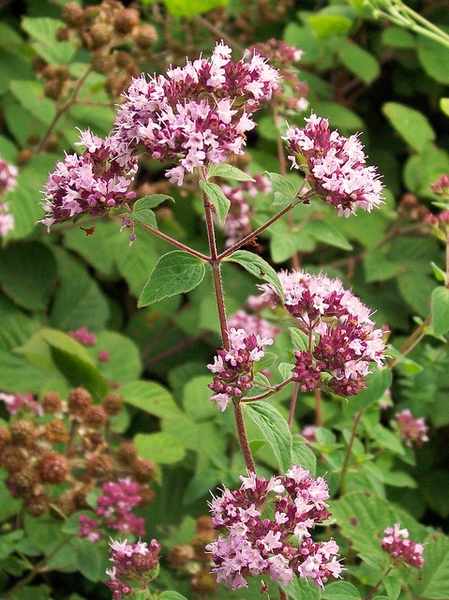
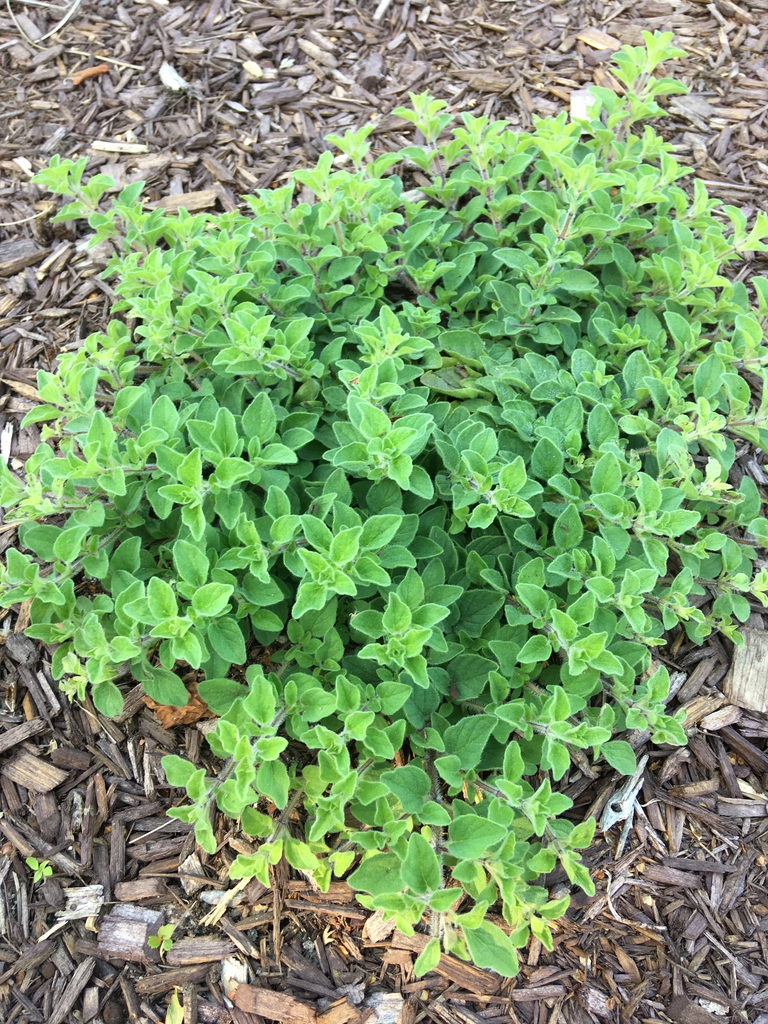
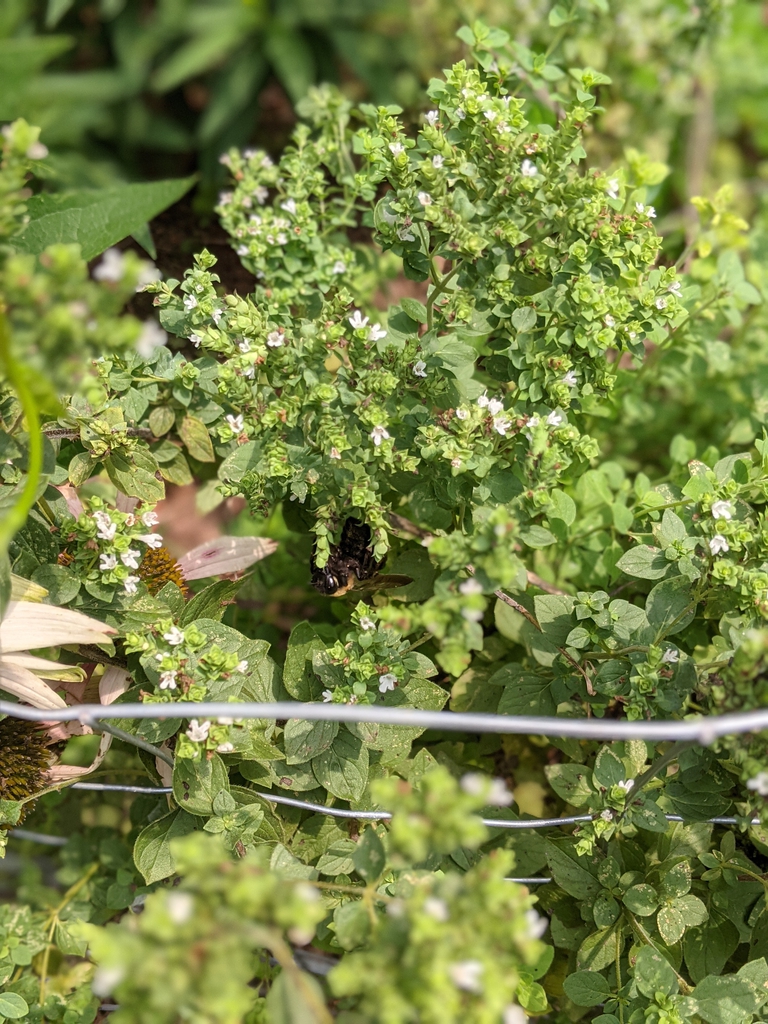
Oregano is a woody, branching, herbaceous perennial with a bushy habit in the mint family native to Europe and Asia. At maturity, it can reach a height of 3 feet with a 2 foot spread. Oregano is valued for its leaves that are used for flavoring in tomato dishes, meat, poultry, and pork stuffings; vegetables, and sauces. Flowers have a pungent, spicy flavor, but are milder than the leaves. The flowers attract a tremendous number of visitors and pollinators.The genus name comes from the Greek words oros meaning "mountain" and gamos meaning "beauty" in reference to the physical appearance of this plant. The species name is from the Latin vulgaris meaning common.
Oregano does best in average soil including sandy loams, dry to medium moisture with good drainage, and planted in a site with full sun. Some varieties of Oregano have golden or variegated leaves and these plants seem to do better with some shade at the heat of the day. In general, Oregano plants tolerate heat and drought.
Many cultivars of Oregano are available, many with a specific culinary or ornamental use. Some plants produce flavorful leaves with a strong aroma. Others are grown as ornamental plants.
To induce the growth of new leaves (and keep the plant tidy), shear plants back regularly before flowering. Clip leaves fresh as needed or keep them dried for year-round use. In general, the best leaf flavor occurs just prior to flowering. Some home kitchens propagate new plants from cuttings of plants known to have superior aroma or taste rather than grow new plants from seed.
Oregano has also been found to repel ants and other insect pests. It can also be grown as a ground cover for sunny sites, forming a slowly spreading clump.
Diseases, Insect Pests, and Other Plant Problems:
Root rot can occur in wet, poorly drained soils. Susceptible to fungal diseases, aphids, leaf miners and spider mites.
VIDEO Created by Laura Barth for "Vegetables, Herbs, Fruits, and Nuts," a plant identification course developed in partnership with Longwood Gardens.
- Profile Video:
- See this plant in the following landscape s :
- Vegetable, Herb and Mostly Native Pollinator Garden Small Water Features Herb & Flower Cottage Garden
- Cultivars / Varieties:
-
- 'Aureum'
Ornamental plant with golden yellow foliage.
Origanum vulgare subsp. hirtum
Greek oregano: the standard culinary oregano. - 'Aureum'
- 'Aureum', Origanum vulgare subsp. hirtum
- Tags:



- Cultivars / Varieties:
-
- 'Aureum'
Ornamental plant with golden yellow foliage.
Origanum vulgare subsp. hirtum
Greek oregano: the standard culinary oregano. - 'Aureum'
- 'Aureum', Origanum vulgare subsp. hirtum
- Tags:
-
-
Attributes:
- Genus:
- Origanum
- Species:
- vulgare
- Family:
- Lamiaceae
- Uses (Ethnobotany):
- Leaves are a basic ingredient for sauces.
- Life Cycle:
- Perennial
- Recommended Propagation Strategy:
- Division
- Leaf Cutting
- Root Cutting
- Seed
- Country Or Region Of Origin:
- Europe, Macaronesia to China
- Distribution:
- Naturalized in eastern United States (New England to Carolina), West Coast (Washington to California), and Canada.
- Play Value:
- Attracts Pollinators
- Easy to Grow
- Edibility:
- Leaves and flowers for tea, flavoring.
- Dimensions:
- Height: 1 ft. 0 in. - 3 ft. 0 in.
- Width: 1 ft. 0 in. - 2 ft. 0 in.
-
-
Whole Plant Traits:
- Plant Type:
- Edible
- Herb
- Herbaceous Perennial
- Woody Plant Leaf Characteristics:
- Deciduous
- Habit/Form:
- Cascading
- Horizontal
- Multi-stemmed
- Spreading
- Growth Rate:
- Medium
-
-
Cultural Conditions:
- Light:
- Full sun (6 or more hours of direct sunlight a day)
- Partial Shade (Direct sunlight only part of the day, 2-6 hours)
- Soil Texture:
- Clay
- Loam (Silt)
- Sand
- Soil pH:
- Acid (<6.0)
- Alkaline (>8.0)
- Neutral (6.0-8.0)
- Soil Drainage:
- Good Drainage
- Moist
- Occasionally Dry
- Available Space To Plant:
- 12 inches-3 feet
- NC Region:
- Coastal
- Mountains
- Piedmont
- USDA Plant Hardiness Zone:
- 4a, 4b, 5a, 5b, 6a, 6b, 7a, 7b, 8a, 8b
-
-
Fruit:
- Display/Harvest Time:
- Fall
- Fruit Description:
- Seeds ripen August through October.
-
-
Flowers:
- Flower Color:
- Pink
- Purple/Lavender
- White
- Flower Inflorescence:
- Spike
- Flower Value To Gardener:
- Edible
- Fragrant
- Flower Bloom Time:
- Spring
- Summer
- Flower Shape:
- Tubular
- Flower Petals:
- 4-5 petals/rays
- Bracts
- Flower Size:
- < 1 inch
- Flower Description:
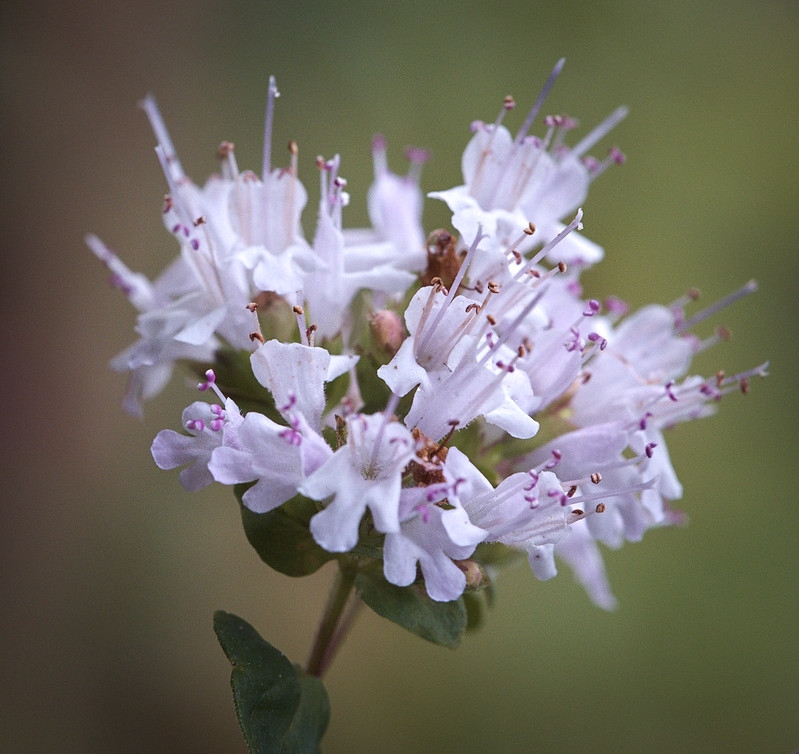
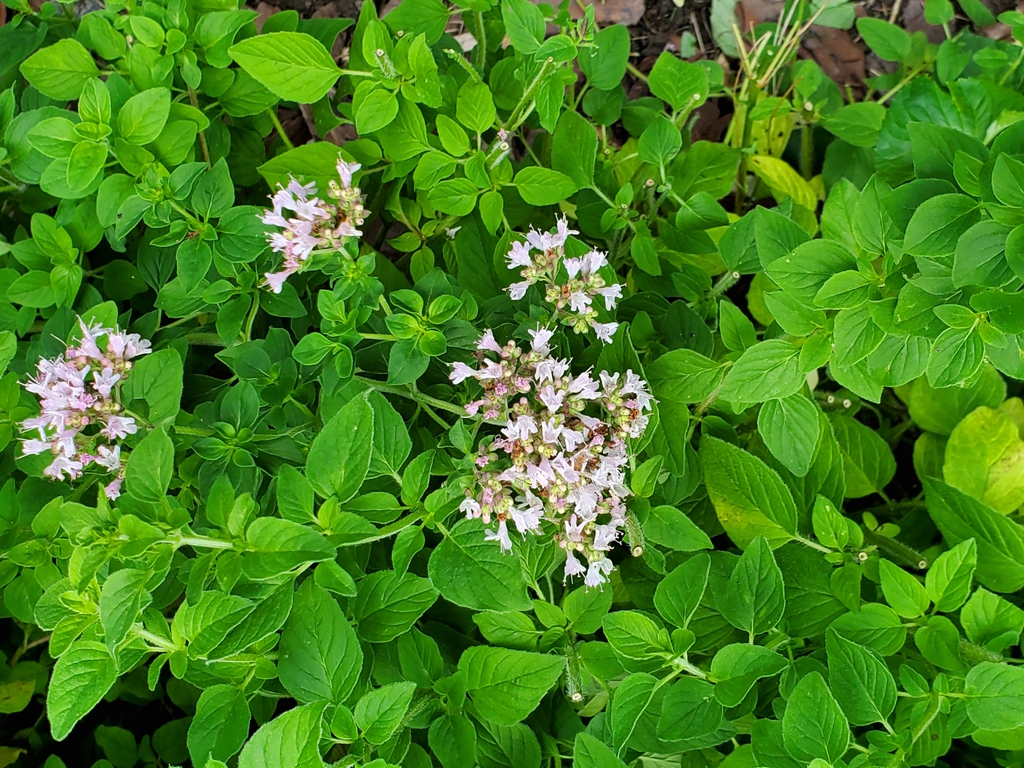
- Tiny, two-lipped, pinkish-purple or white flowers with 4 protruding stamens and leafy purple-toned bracts, bloom in axillary or terminal corymb-like spikelets in late Spring and Summer.
-
-
Leaves:
- Woody Plant Leaf Characteristics:
- Deciduous
- Leaf Color:
- Green
- Variegated
- Leaf Value To Gardener:
- Edible
- Fragrant
- Leaf Type:
- Simple
- Leaf Arrangement:
- Opposite
- Leaf Shape:
- Ovate
- Leaf Margin:
- Dentate
- Entire
- Hairs Present:
- No
- Leaf Length:
- 1-3 inches
- Leaf Description:
- Aromatic, glandular-spotted, rounded to ovate leaves (to 1 1/2 inches long), usually entire but sometimes slightly toothed.
-
-
Stem:
- Stem Is Aromatic:
- No
- Stem Cross Section:
- Square
- Stem Description:
- Branching, square stems clad in leaves.
-
-
Landscape:
- Landscape Location:
- Container
- Houseplants
- Naturalized Area
- Landscape Theme:
- Edible Garden
- Pollinator Garden
- Rock Garden
- Design Feature:
- Accent
- Attracts:
- Bees
- Butterflies
- Moths
- Pollinators
- Resistance To Challenges:
- Deer
- Diseases
- Drought
- Dry Soil
- Foot Traffic
- Heat
- Insect Pests
- Rabbits
- Slugs