


Narcissus jonquilla
Common Name(s):
- Phonetic Spelling
- nar-SIS-us jong-KWIL-uh
- This plant has low severity poison characteristics.
- See below
- Description
-
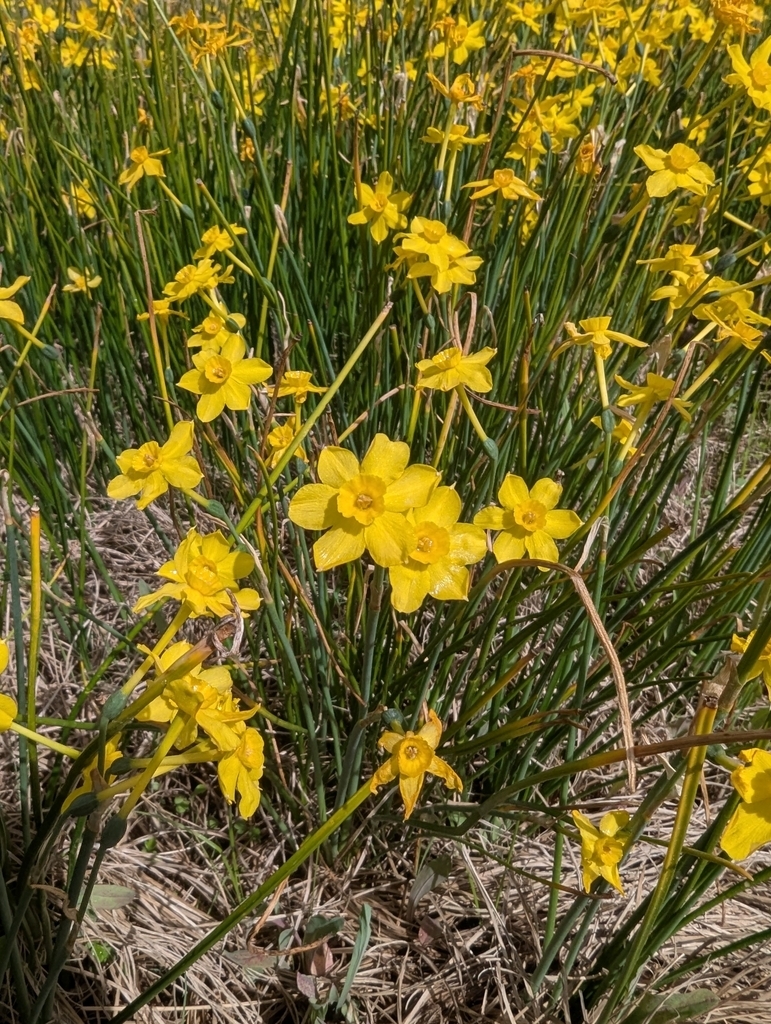
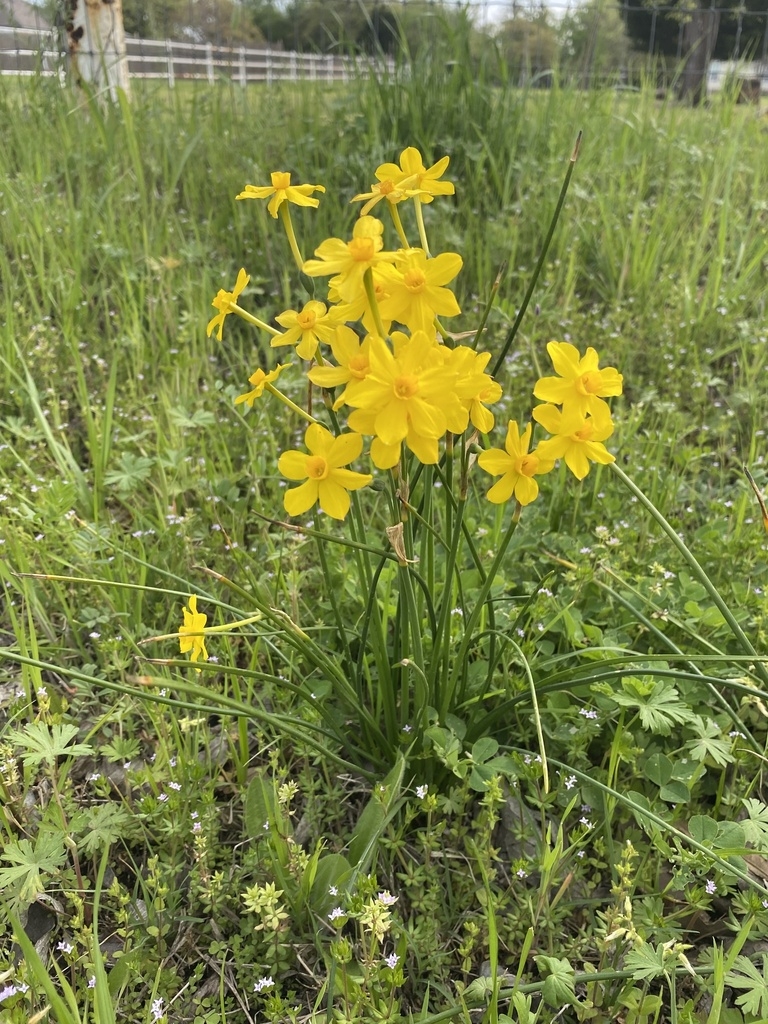
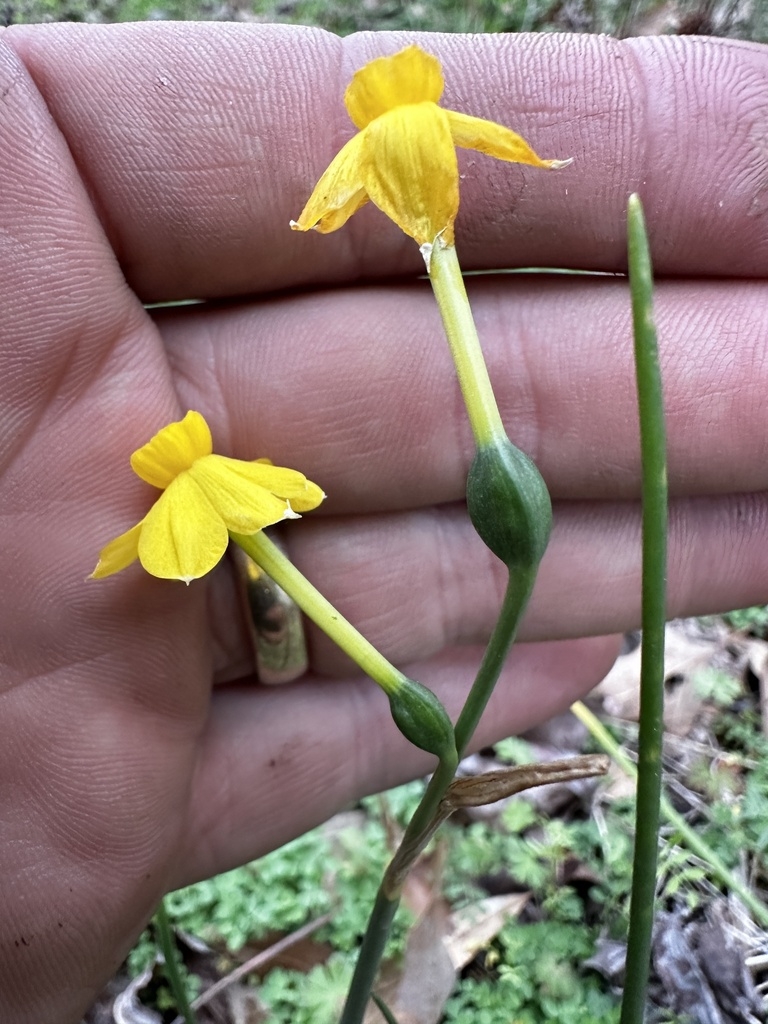
The Jonquil is a flowering herbaceous perennial, bulb in the onion family that grows up to 1 1⁄2 feet tall. This plant blooms in mid-spring, has a spreading habit and is good for naturalizing. It has long slender leaves and clusters of fragrant, deep yellow flowers.The genus name honors the beautiful youth from Greek mythology who became so entranced with his own reflection that he pined away and the gods turned him into this flower. The species name comes from the Spanish, jonquillo, which means "little rush" and refers to the narrow, rush-like leaves.
Jonquils prefer moist, well-drained, lime-free soil in full sun or partial shade. This plant benefits from the addition of bone meal or superphosphate to the planting soil. This plant is tolerant of heat and drought, but is intolerant of extremely wet conditions.
In the fall, plant the bulbs in quantity 3 to 5 inches deep and 3 to 6 inches apart to enjoy these easy to grow showy golden-yellow flowers in the spring. Flowers face the sun, so site the bulbs with any shade areas at the rear of the planting. Seed heads can be removed after flowering, but do not remove leaves until they have died back as they are providing nutrients to next year's bulb. Cut foliage back after it has browned naturally. The plant matures relatively slowly, reaching full height in 2 to 5 years.
Quick ID Hints:
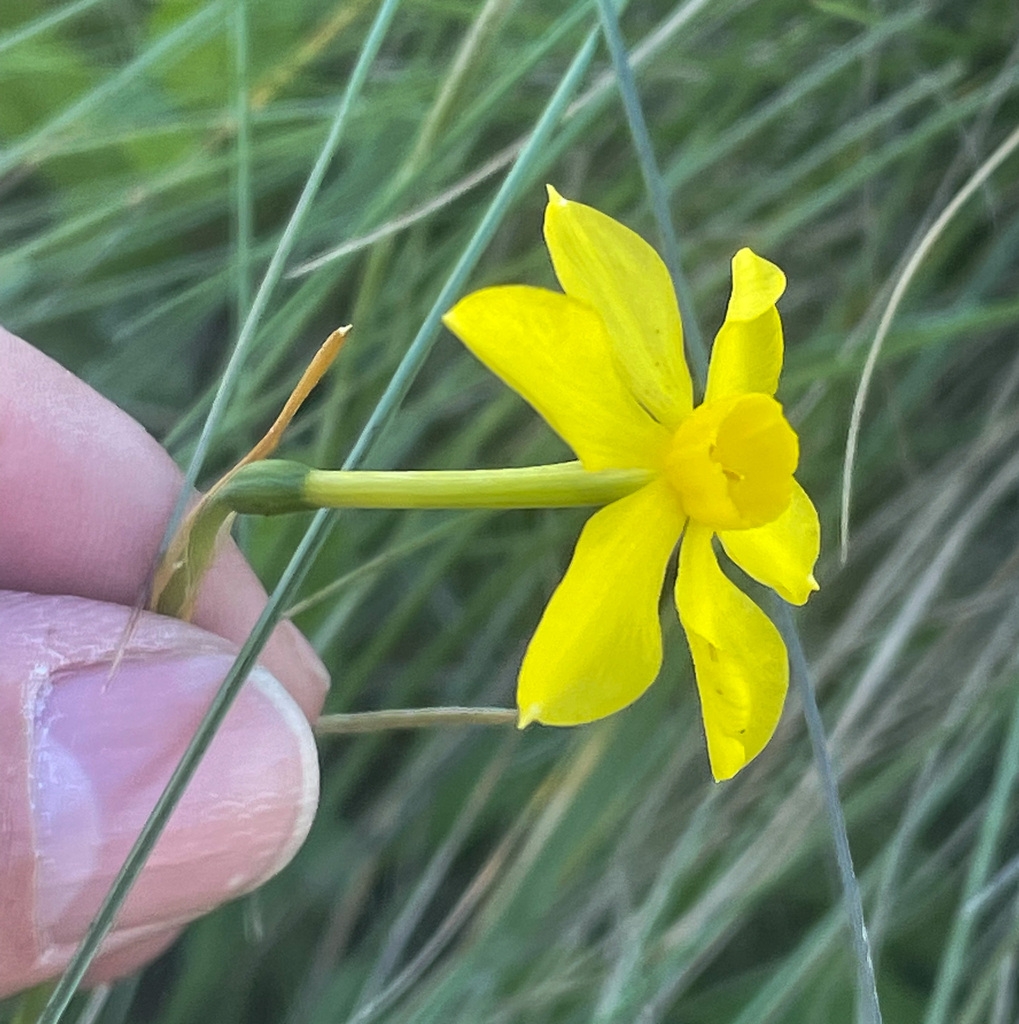
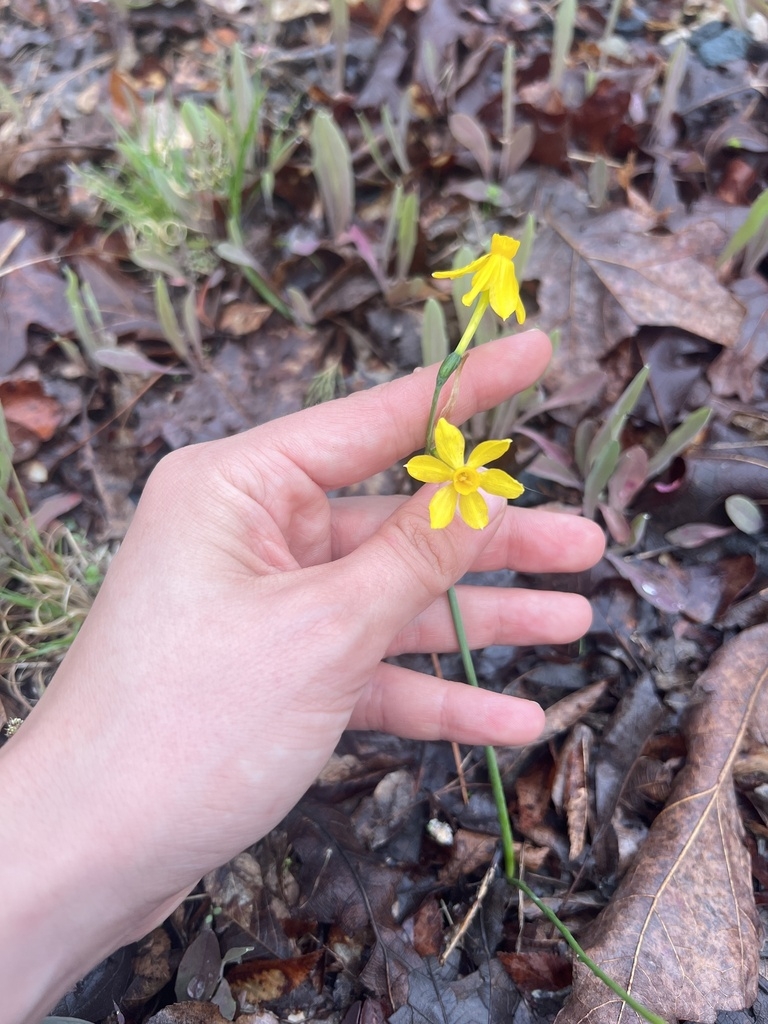
- 1 to 3 flowers per stem, cylindric and onion-like leaves
- Perianth segments are spreading, not reflexed, and yellow
- Corona is cup-shaped and yellow
Insects, Diseases, and Other Plant Problems:
No serious insect pests or diseases. Bulb rot can occur in poorly-drained soils. Watch for snail, slugs and bulb mites.
VIDEO Created by Elisabeth Meyer for "Edibles, Bulbs, and Houseplants", a plant identification course developed in partnership with Longwood Gardens.
- Profile Video:
- See this plant in the following landscape s :
- Dry Rock Stream Garden Mountain Ridge Top Garden - South Lawn and Border Backyard Respite Landscape
- Cultivars / Varieties:
-
- Tags:


- Cultivars / Varieties:
-
- Tags:
-
-
Attributes:
- Genus:
- Narcissus
- Species:
- jonquilla
- Family:
- Amaryllidaceae
- Life Cycle:
- Bulb
- Perennial
- Recommended Propagation Strategy:
- Division
- Country Or Region Of Origin:
- Portugal, Spain
- Distribution:
- Europe, Canada, and much of the United States
- Dimensions:
- Height: 0 ft. 9 in. - 1 ft. 0 in.
- Width: 0 ft. 6 in. - 0 ft. 9 in.
-
-
Whole Plant Traits:
- Plant Type:
- Bulb
- Herbaceous Perennial
- Habit/Form:
- Clumping
- Erect
- Growth Rate:
- Slow
- Maintenance:
- Low
-
-
Cultural Conditions:
- Light:
- Full sun (6 or more hours of direct sunlight a day)
- Partial Shade (Direct sunlight only part of the day, 2-6 hours)
- Soil Texture:
- Clay
- High Organic Matter
- Loam (Silt)
- Sand
- Soil pH:
- Acid (<6.0)
- Neutral (6.0-8.0)
- Soil Drainage:
- Good Drainage
- Moist
- Available Space To Plant:
- Less than 12 inches
- USDA Plant Hardiness Zone:
- 4a, 4b, 5a, 5b, 6a, 6b, 7a, 7b, 8a, 8b
-
-
Flowers:
- Flower Color:
- Gold/Yellow
- Flower Inflorescence:
- Solitary
- Umbel
- Flower Value To Gardener:
- Fragrant
- Showy
- Flower Bloom Time:
- Spring
- Flower Shape:
- Cup
- Flower Petals:
- 2-3 rays/petals
- Flower Size:
- < 1 inch
- Flower Description:
- Flowers have 1 to 3 petals, are scapose, ascending, fragrant, less than an inch in diameter, subtended by a one-valved, and have a membranous spathe. They are perianth tubular at base with 6 segments. The perianth segments are yellow, elliptic, and entire. Corona is yellow, conspicuous, cup-shaped, and has a margin that is shallowly lobed or somewhat crenate and less than an inch long and wide.
-
-
Leaves:
- Leaf Color:
- Green
- Leaf Shape:
- Linear
- Leaf Margin:
- Entire
- Hairs Present:
- No
- Leaf Width:
- < 1 inch
- Leaf Description:
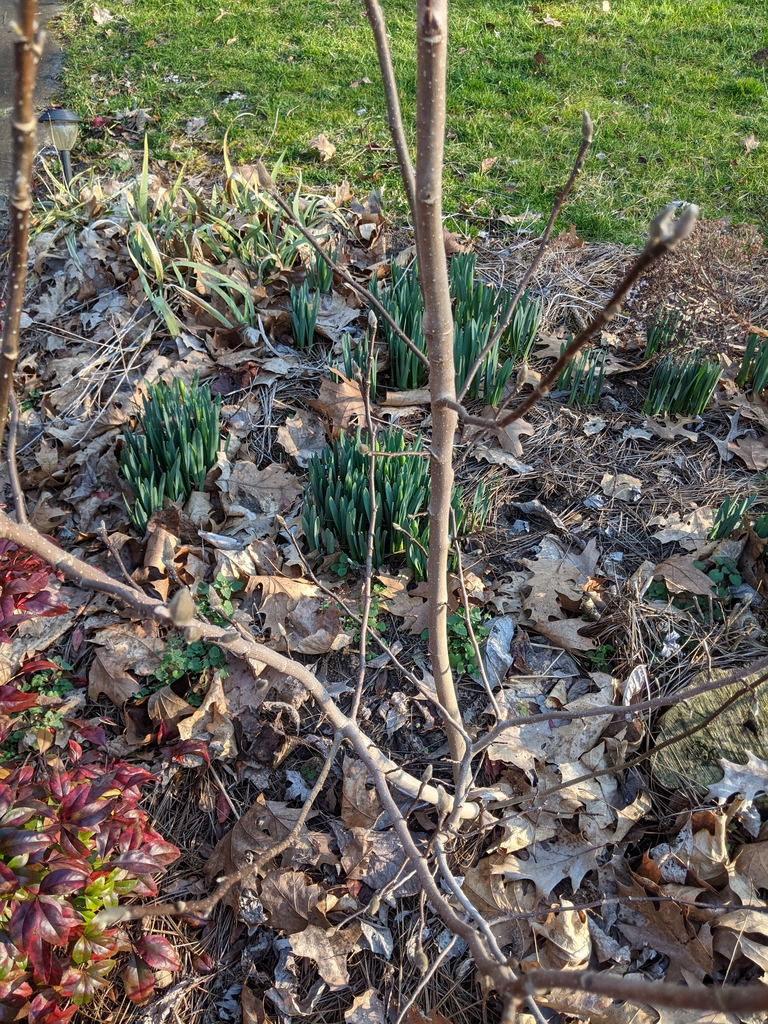
- Leaves are basal, linear, channeled at base and cylindric above, entire, erect, and less than an inch wide.
-
-
Stem:
- Stem Is Aromatic:
- No
-
-
Landscape:
- Landscape Location:
- Walkways
- Design Feature:
- Accent
- Border
- Mass Planting
- Resistance To Challenges:
- Deer
- Diseases
- Drought
- Heat
- Insect Pests
- Rabbits
- Problems:
- Problem for Cats
- Problem for Dogs
- Problem for Horses