


Plantain Musa acuminata
Other Common Name(s):
Other plants called Plantain:
- Phonetic Spelling
- MOO-sah ah-kew-min-AY-tuh
- Description
-
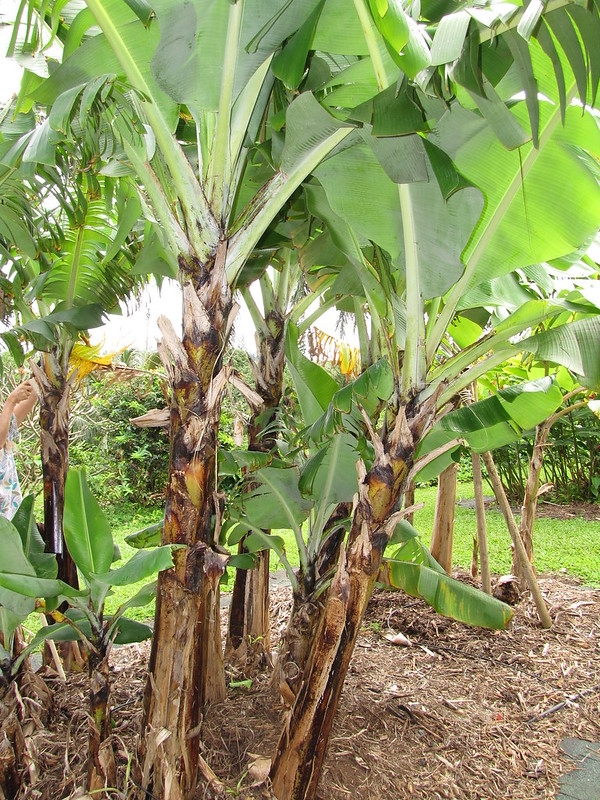
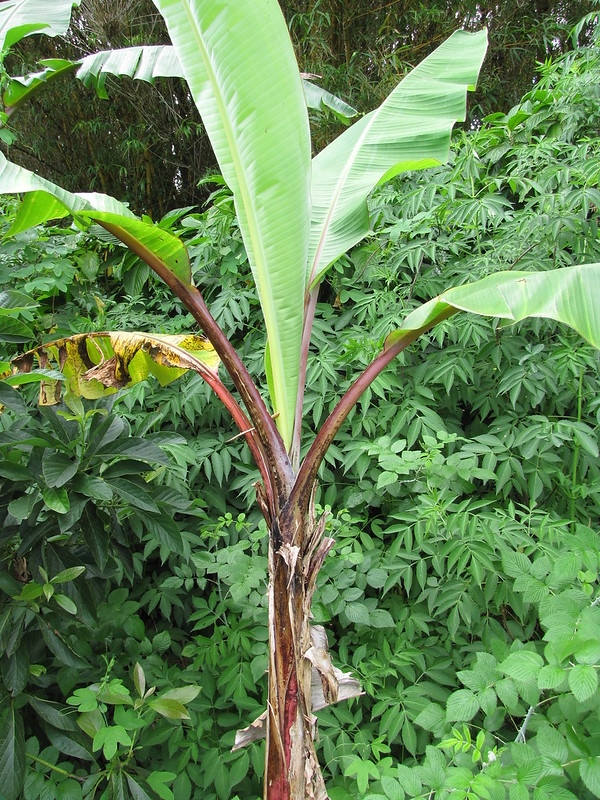
The Banana plant is a herbaceous perennial in the banana family (Musaceae). It is native to Southeast Asia and Australia and is a fast growing, rather tall plant, maturing to about 20 feet high. This species encompasses both wild and cultivated banana plants including many of the ornamental bananas sold at nurseries. Plants produce huge paddle-shaped leaves that grow to 6 to 10 feet long and the plants are often grown for the tropical appearance of the foliage rather than the fruit. The genus name is derived from the Arabic name for the fruit, mauz. The species epithet means coming to a sharp point.
If grown outdoors, Banana plants do best in organically rich, moist, well-drained soil in full sun. The plants tolerate some part shade, especially filtered sun in the heat of the day. Do not allow the soil to dry out and fertilize regularly. Protect the plant from strong winds that can damage the large leaves.
Banana plants are hardy to USDA Zones 10 and 11. In colder climates, you can grow the plant in containers to be brought indoors or as a houseplant. Keep in mind, the size of the plant and the work involved in moving it from outdoors to indoors.
Younger plants often will not flower and fruit until the 2nd or 3rd year. Container plants, when cut close to the ground in fall each year, may never flower.
The most well-known banana cultivar is the Cavendish, the large yellow banana commonly found in grocery stores. The sweet, creamy fruit continues to ripen after harvest, turning from green and starchy to black-spotted yellow and sweet.
VIDEO Created by Laura Barth for "Vegetables, Herbs, Fruits, and Nuts," a plant identification course developed in partnership with Longwood Gardens.
Diseases, Insect Pests, and Other Plant Problems:
No known insect or disease problems; however, watch for aphids, spider mites, mealybugs and scale on houseplants. The plants are susceptible to anthracnose, wilt and mosiac virus.
- Profile Video:
- See this plant in the following landscape :
- Dry Stream Bed Garden in Cabarrus County
- Cultivars / Varieties:
-
- Cavendish subgroup
A number of cultivars from the triploid AAA cultivar group; most well known banana - 'Zebrina'
Dwarf for ornamental use as well as fruit. 5 to 6 feet tall.
- Cavendish subgroup
- Cavendish subgroup, 'Zebrina'
- Tags:


- Cultivars / Varieties:
-
- Cavendish subgroup
A number of cultivars from the triploid AAA cultivar group; most well known banana - 'Zebrina'
Dwarf for ornamental use as well as fruit. 5 to 6 feet tall.
- Cavendish subgroup
- Cavendish subgroup, 'Zebrina'
- Tags:
-
-
Attributes:
- Genus:
- Musa
- Species:
- acuminata
- Family:
- Musaceae
- Life Cycle:
- Perennial
- Recommended Propagation Strategy:
- Seed
- Country Or Region Of Origin:
- Southeast Asia, India, Indonesia
- Distribution:
- Turkey, Spain, Florida, Costa Rica, Ecuador
- Dimensions:
- Height: 12 ft. 0 in. - 20 ft. 0 in.
- Width: 6 ft. 0 in. - 10 ft. 0 in.
-
-
Whole Plant Traits:
- Plant Type:
- Edible
- Herbaceous Perennial
- Houseplant
- Woody Plant Leaf Characteristics:
- Broadleaf Evergreen
- Deciduous
- Habit/Form:
- Erect
- Growth Rate:
- Rapid
- Maintenance:
- Medium
-
-
Cultural Conditions:
- Light:
- Full sun (6 or more hours of direct sunlight a day)
- Partial Shade (Direct sunlight only part of the day, 2-6 hours)
- Soil Texture:
- Clay
- High Organic Matter
- Loam (Silt)
- Sand
- Soil Drainage:
- Good Drainage
- Moist
- USDA Plant Hardiness Zone:
- 10a, 10b, 11a, 11b
-
-
Fruit:
- Fruit Color:
- Black
- Brown/Copper
- Gold/Yellow
- Green
- Red/Burgundy
- Fruit Value To Gardener:
- Edible
- Showy
- Fruit Type:
- Berry
- Fruit Length:
- > 3 inches
- Fruit Width:
- 1-3 inches
- Fruit Description:
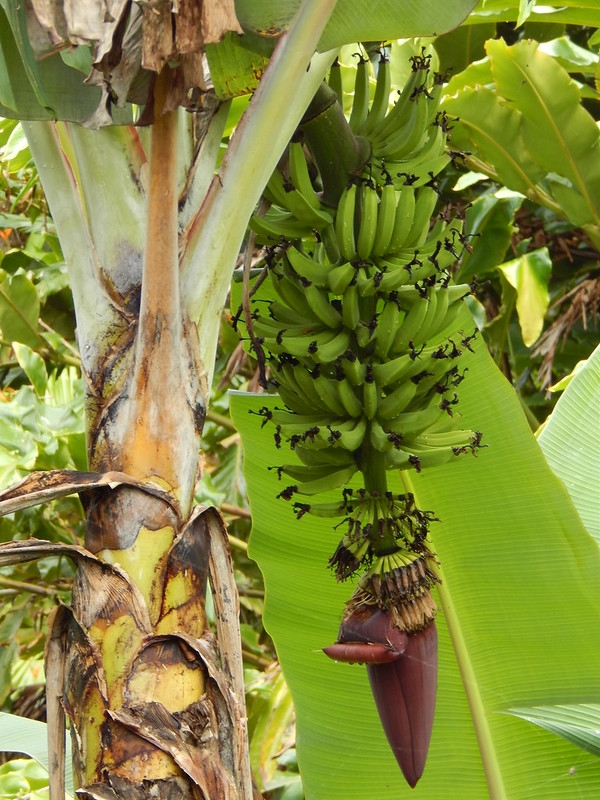
- An elongated, peelable fruit with creamy flesh. Many commercial cultivars are often bred to be seedless.
-
-
Flowers:
- Flower Color:
- Cream/Tan
- Gold/Yellow
- Flower Description:
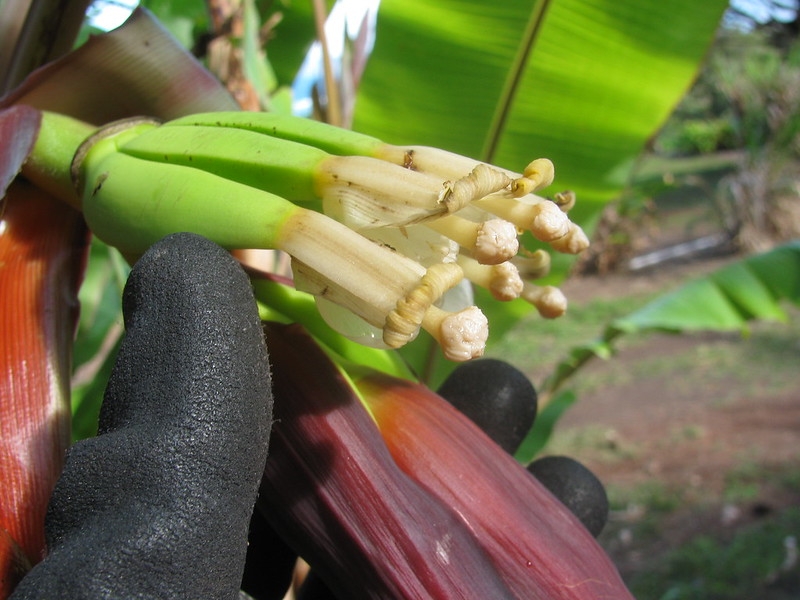
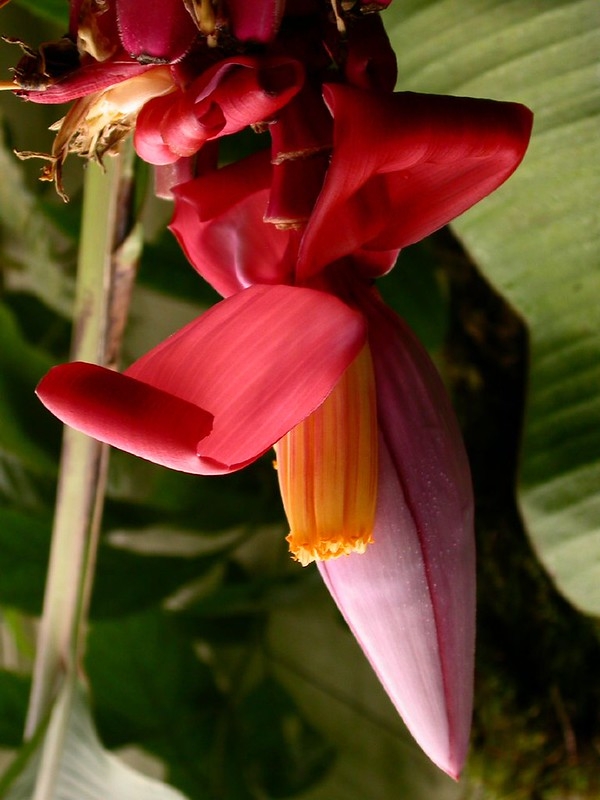
- Cream to yellow flowers appear in summer on mature plants (2 to 3 years). Flowers grow horizontally from the trunk.
-
-
Leaves:
- Woody Plant Leaf Characteristics:
- Broadleaf Evergreen
- Deciduous
- Leaf Color:
- Green
- Leaf Value To Gardener:
- Showy
- Hairs Present:
- No
- Leaf Length:
- > 6 inches
- Leaf Width:
- > 6 inches
- Leaf Description:
- Six to ten foot long leaves. Leaf sheathes overlap to form a trunk-like pseudostem (false stem) that dies after flowering and fruiting. However, the roots push out new shoots (suckers) which form new pseudostems.
-
-
Stem:
- Stem Is Aromatic:
- No
-
-
Landscape:
- Landscape Location:
- Container
- Houseplants
- Lawn
- Landscape Theme:
- Edible Garden
- Design Feature:
- Accent