


Marshallia graminifolia
Common Name(s):
Previously known as:
- Athanasia graminifolia
- Marshallia tenuifolia var. graminifolia
- Phonetic Spelling
- mar-SHALL-ee-uh gram-in-ee-FOH-lee-uh
- Description
-
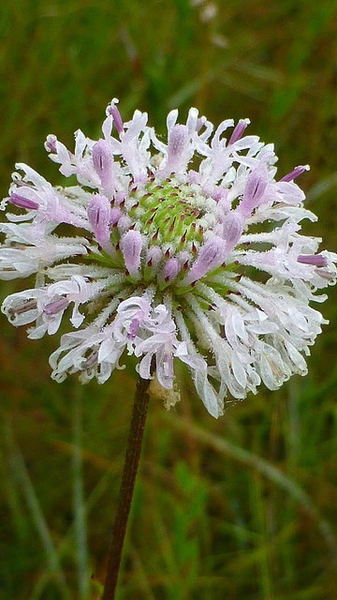
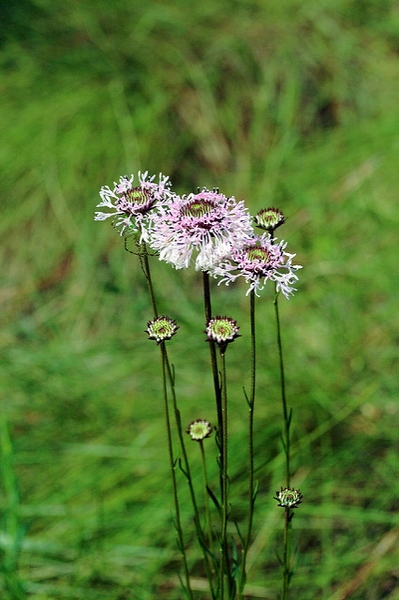
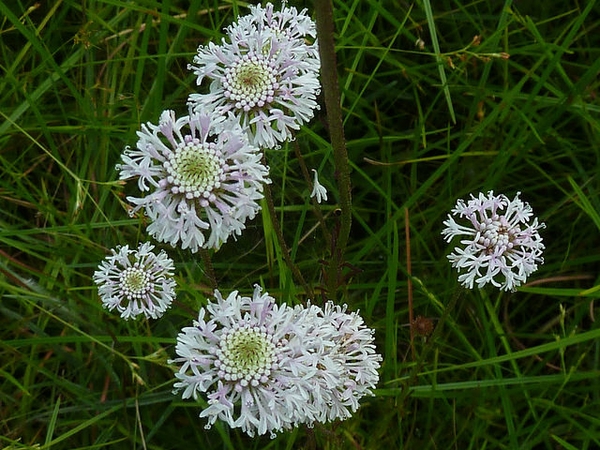
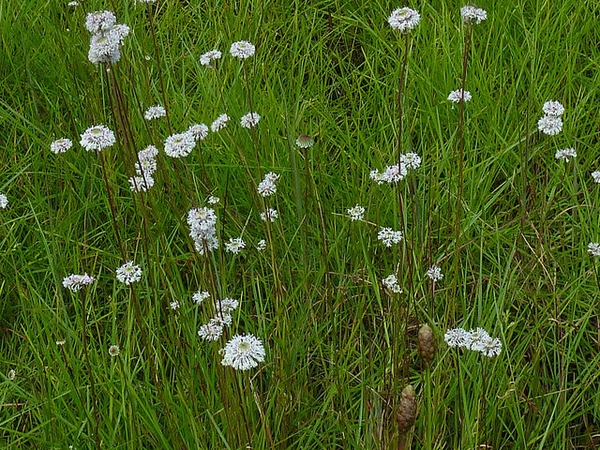
Grassleaf Barbara's Buttons is a native, flowering perennial wildflower found in moist to wet flatwoods, pine savannas, pocosins, and bogs in the Coastal Plains of the Southeastern United States, extending as far west as Texas, and belongs to the daisy family (Asteraceae). In the late summer and early fall, Grassleaf Barbara's Buttons produces showy, sweetly fragrant, white to pale pink blooms of tubular disc florets above its bright green, long, grass-like leaves. The rest of the year, its rosette of low-growing green foliage can provide foreground accents for other blooms. The genus name Marshallia honors an American botanist, Moses Marshall. The specific epithet graminifolia means "grasslike leaves"; hence the common name.
Prefers full sun to partial shade and moist to wet, organic, acidic soils. It is hardy in zones 7a to 10b. They grow best in coastal or piedmont regions. It is wet-soil tolerant. Propagated best by seeds or division.
Consider for use in a wildflower garden or water garden, or near a pond or bog. This native wildflower is available at nurseries specializing in native plants. The flowers attract pollinators, and the long-lasting blooms are a good choice as a cut flower.
Insects, Diseases, and Other Plant Problems: No known serious insect pests or diseases. Monitor for aphids and slugs. Provide good circulation to prevent fungal diseases.
- See this plant in the following landscape :
- Cultivars / Varieties:
-
- 'Georgetown'
Basal rosette, with a 20-inch spike bearing a lavender and white flower
- 'Georgetown'
- 'Georgetown'
- Tags:


- Cultivars / Varieties:
-
- 'Georgetown'
Basal rosette, with a 20-inch spike bearing a lavender and white flower
- 'Georgetown'
- 'Georgetown'
- Tags:
-
-
Attributes:
- Genus:
- Marshallia
- Species:
- graminifolia
- Family:
- Asteraceae
- Life Cycle:
- Perennial
- Recommended Propagation Strategy:
- Division
- Seed
- Country Or Region Of Origin:
- Southeastern United States to Texas
- Distribution:
- Native: Alabama, Florida, Georgia, Louisiana, Mississippi, North Carolina, South Carolina, and Texas
- Wildlife Value:
- Flowers attract butterflies.
- Play Value:
- Attractive Flowers
- Attracts Pollinators
- Easy to Grow
- Fragrance
- Wildlife Food Source
-
-
Whole Plant Traits:
- Plant Type:
- Herbaceous Perennial
- Native Plant
- Wildflower
- Woody Plant Leaf Characteristics:
- Deciduous
- Habit/Form:
- Erect
- Growth Rate:
- Medium
- Maintenance:
- Low
- Texture:
- Fine
-
-
Cultural Conditions:
- Light:
- Full sun (6 or more hours of direct sunlight a day)
- Partial Shade (Direct sunlight only part of the day, 2-6 hours)
- Soil Texture:
- High Organic Matter
- Loam (Silt)
- Sand
- Soil pH:
- Acid (<6.0)
- Soil Drainage:
- Moist
- Occasionally Wet
- Available Space To Plant:
- 12 inches-3 feet
- NC Region:
- Coastal
- USDA Plant Hardiness Zone:
- 7a, 7b, 8a, 8b, 9a, 9b, 10a, 10b
-
-
Fruit:
- Fruit Color:
- Brown/Copper
- Display/Harvest Time:
- Fall
- Fruit Type:
- Achene
- Fruit Description:
- The fruit is a small, brown or copper cypsela, but frequently called an achene. A pappus is present. Displays from September to December
-
-
Flowers:
- Flower Color:
- Pink
- Purple/Lavender
- White
- Flower Inflorescence:
- Solitary
- Flower Value To Gardener:
- Fragrant
- Good Cut
- Long-lasting
- Flower Bloom Time:
- Fall
- Summer
- Flower Size:
- < 1 inch
- Flower Description:
- Each flower is borne on an erect stem. The solitary flower is whitish-pink or pale lavender and consists of 45 to 90 tubular disc florets without petal rays. The spherical flower head measures from 0.8 to 1.2 inches in diameter. Blooms from July to September.
-
-
Leaves:
- Woody Plant Leaf Characteristics:
- Deciduous
- Leaf Color:
- Green
- Leaf Type:
- Simple
- Leaf Arrangement:
- Alternate
- Rosulate
- Whorled
- Leaf Shape:
- Linear
- Oblanceolate
- Leaf Margin:
- Entire
- Hairs Present:
- No
- Leaf Length:
- 3-6 inches
- Leaf Width:
- < 1 inch
- Leaf Description:
- The basal oblanceolate leaves are whorled. The cauline leaves along the stem are simple or sparingly placed. They are smaller than the basal leaves, linear, and sessile or petiolate. The leaf margins are entire, and the leaf surface is smooth.
-
-
Stem:
- Stem Color:
- Green
- Stem Is Aromatic:
- No
- Stem Description:
- The stems are erect, green, and simple or branched.
-
-
Landscape:
- Landscape Location:
- Coastal
- Pond
- Landscape Theme:
- Butterfly Garden
- Native Garden
- Rock Garden
- Water Garden
- Design Feature:
- Border
- Attracts:
- Bees
- Butterflies
- Songbirds
- Resistance To Challenges:
- Heat
- Wet Soil