



Common Liverwort Marchantia polymorpha
Other Common Name(s):
- Phonetic Spelling
- mar-KAN-tee-ah pal-ee-MOR-fuh
- Description
-
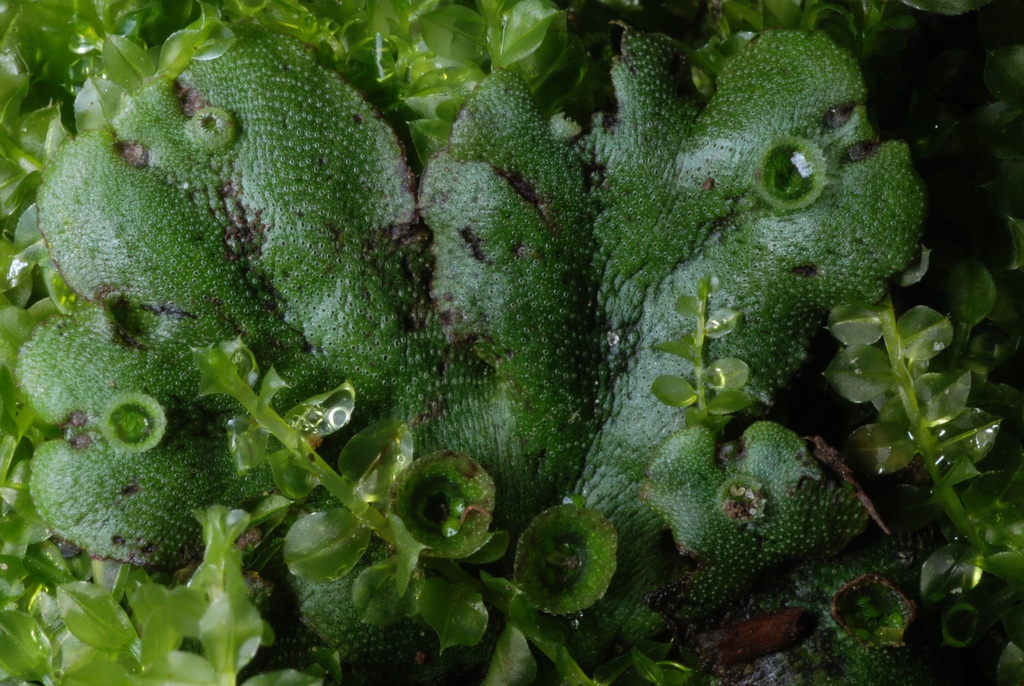
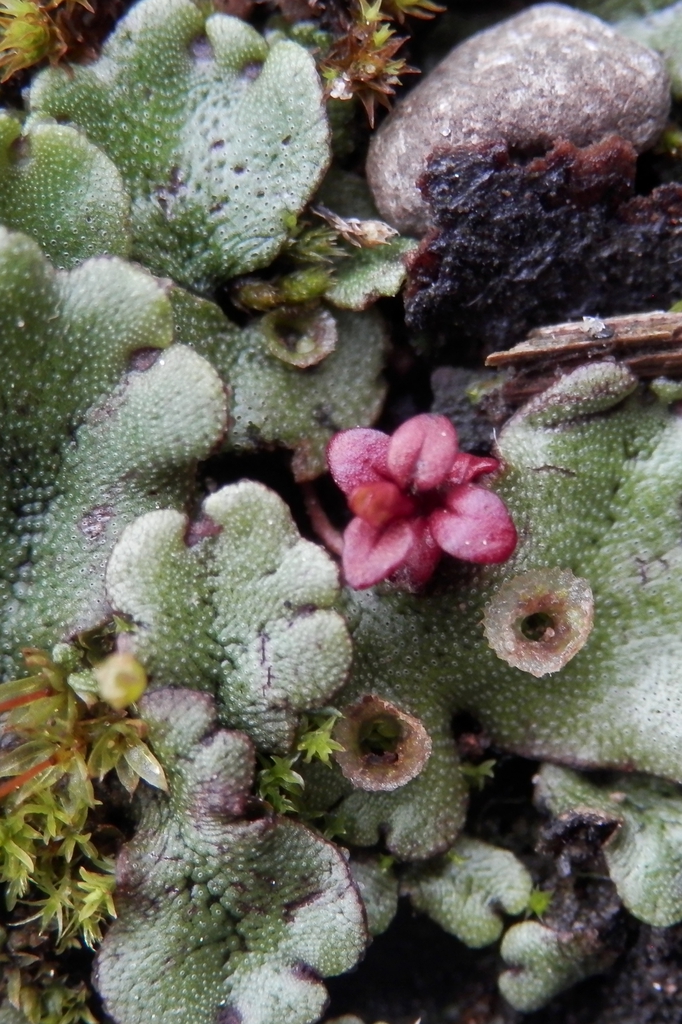
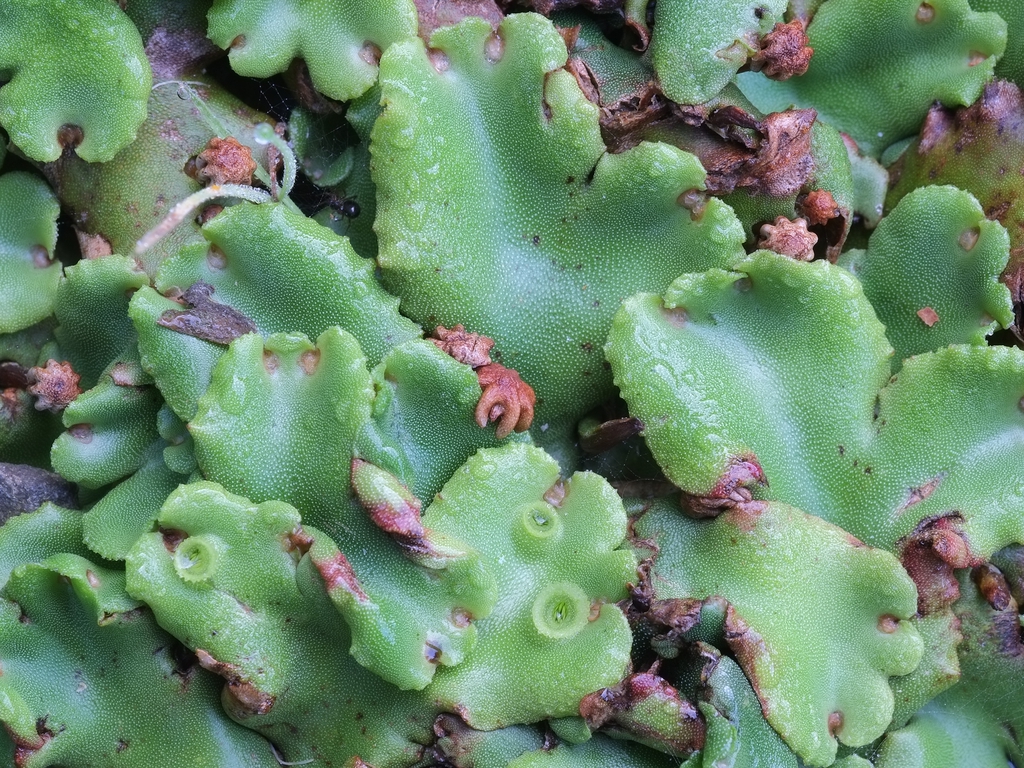
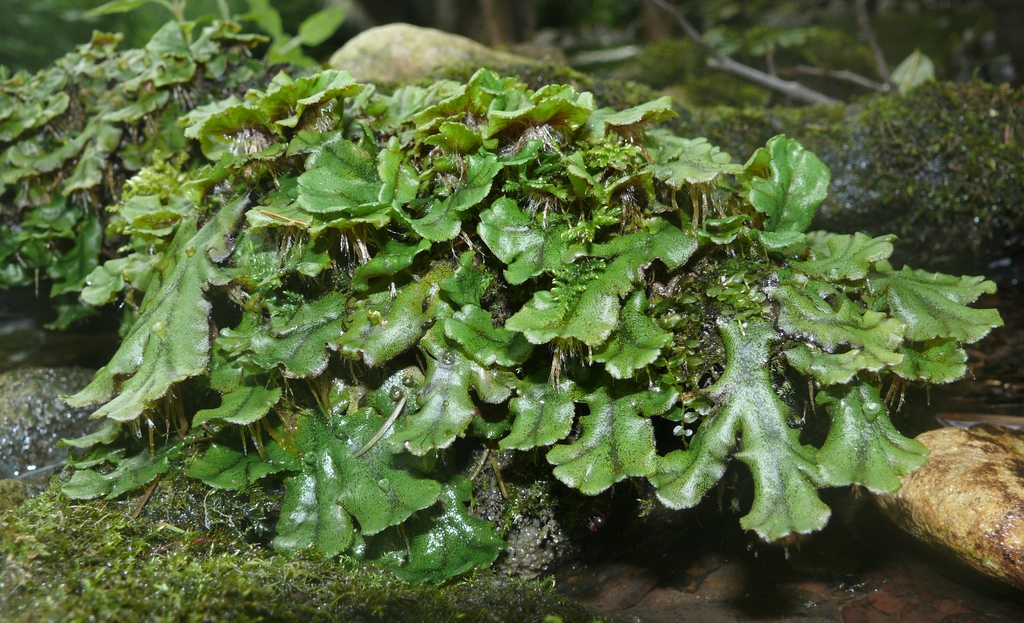
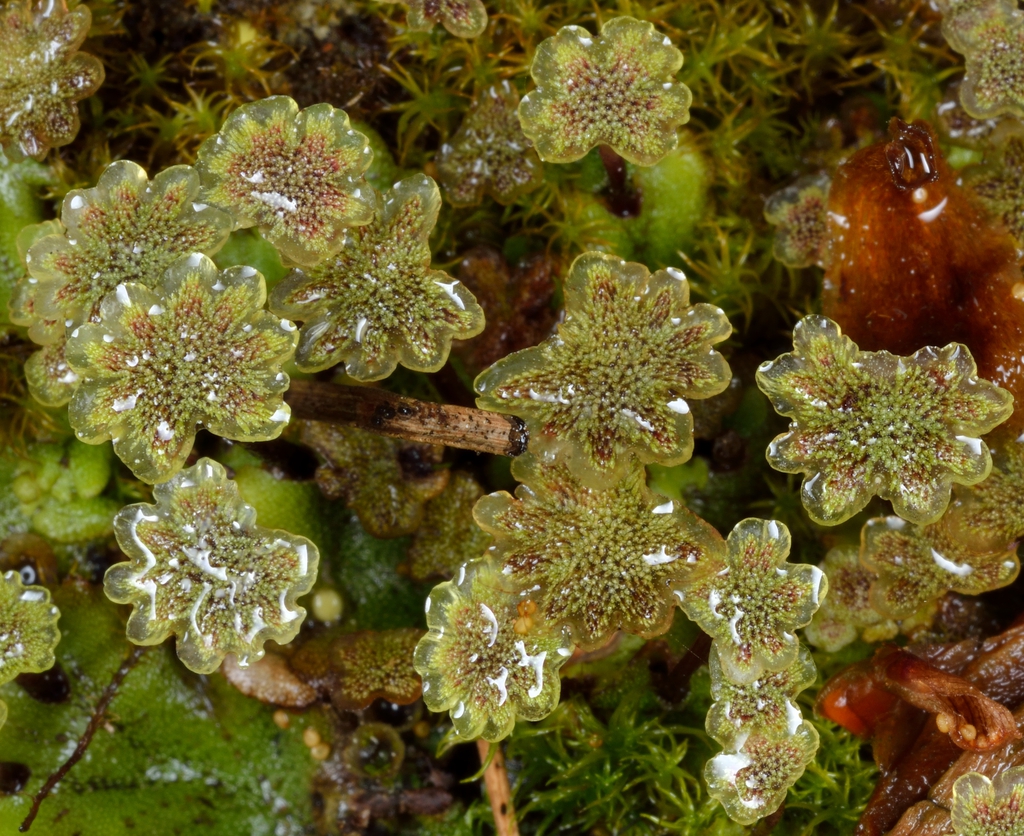
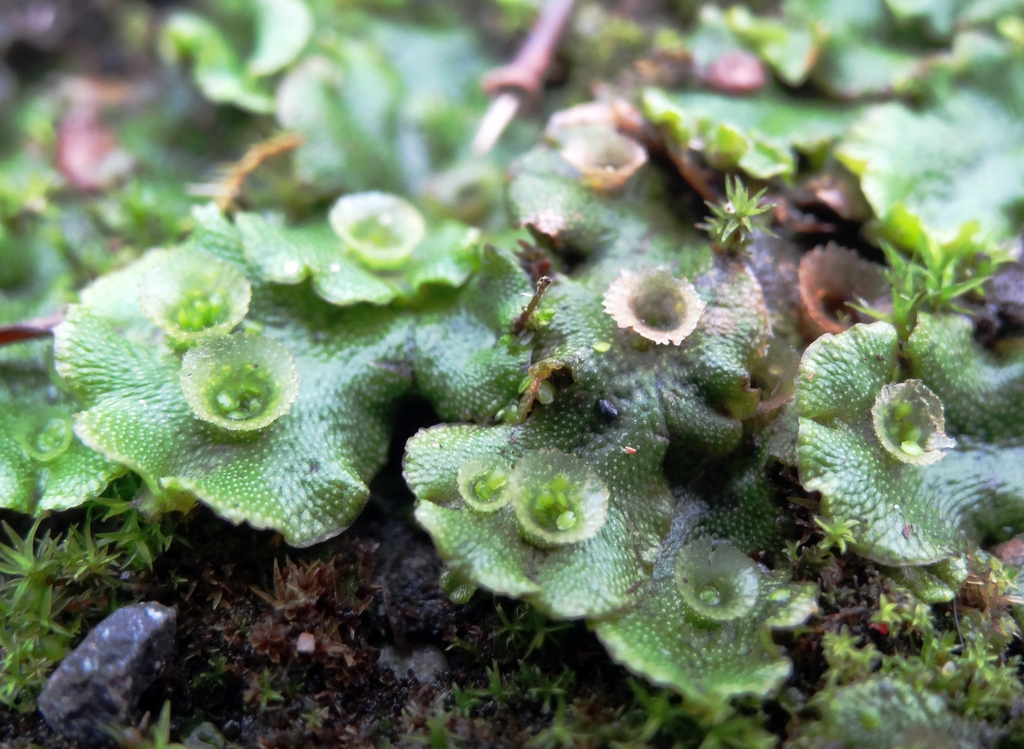
Common liverwort is a primitive, moss-like plant that forms leaf-like mats on the soil surface. It is a member of the thalloid liverwort family. The Common liverwort does not have phloem and xylem like ferns, conifers and flowering plants to transport water, food and minerals through the plant. The plant body, or thallus, is not differentiated into stems, roots, and leaves. Numerous rhizoids attach the thallus to the soil. As a result, liverworts tend to be small, a few cells thick, and grow in moist locations.
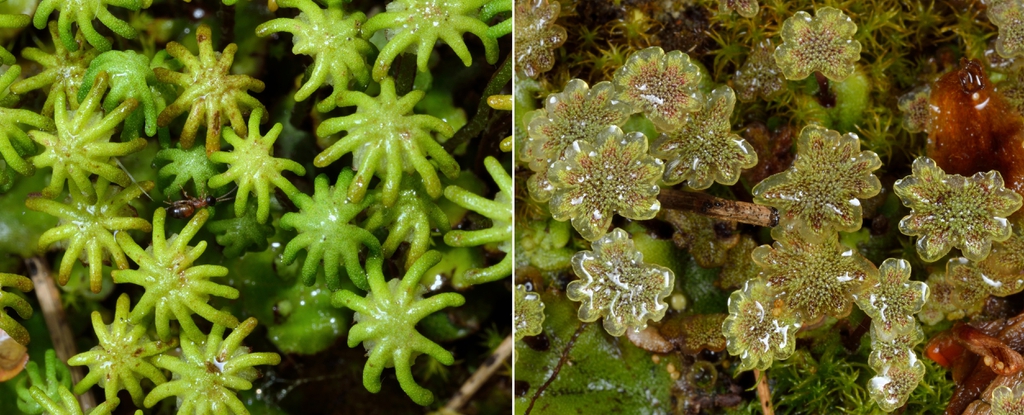
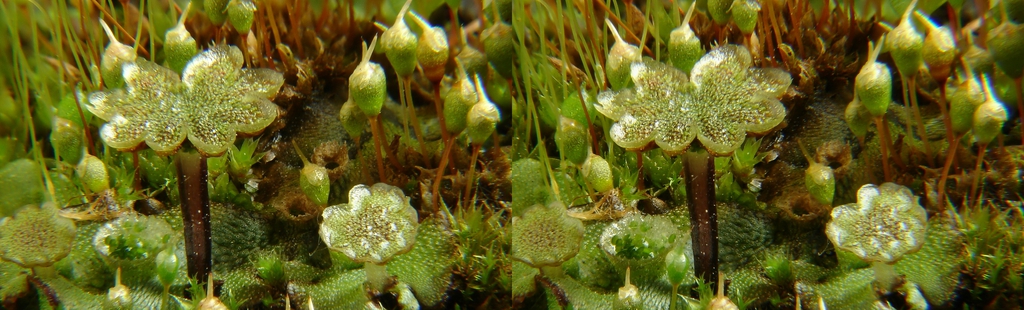
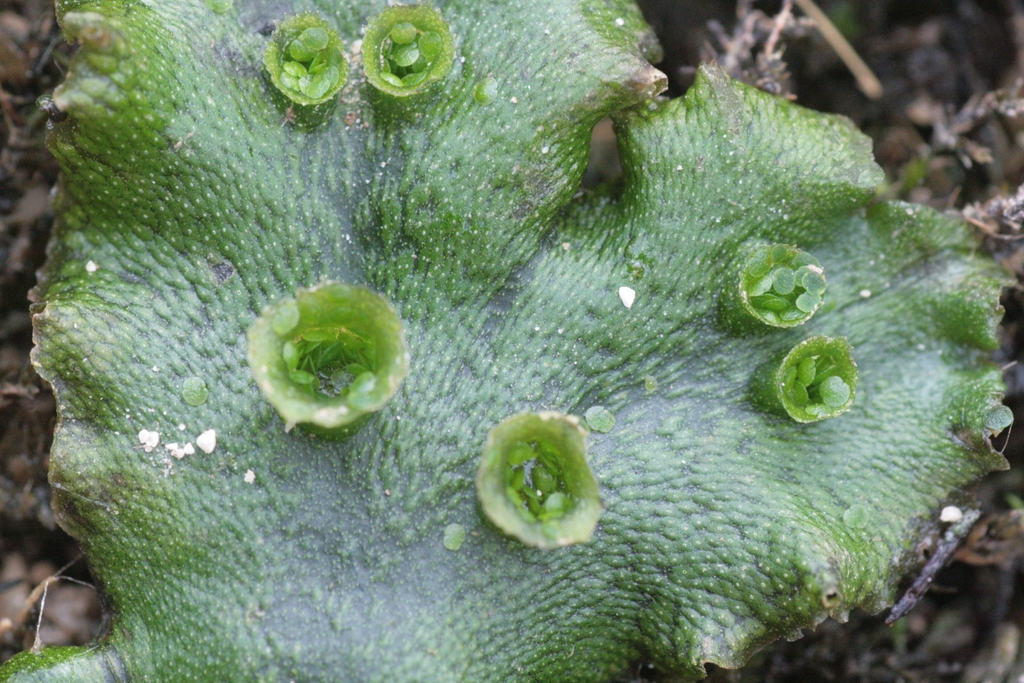
Common liverwort reproduces by wind-dispersed spores and (more commonly) by gemmae produced in cup-like structures. Gemmae are splashed out of the cups by rain or irrigation. Liverworts prefer moist, cool conditions and occur primarily in crops with frequent irrigation, such as propagation areas and herbaceous perennials. It does not require natural light to grow and has been shown to reproduce under artificial light.
Common liverwort can be very challenging to manage. Inspect other plants before purchase and eradicate infestations of liverwort before it can spread. Liverworts have been suppressed by some pre-emergence herbicides, mulches, and non-selective contact herbicides. Persistent infestations will require frequent hand weeding and changes in cultural practices to achieve acceptable suppression.
This plant is often the first to grow after a fire. It secures the soil from erosion and, over time, raises the quality of the soil to a point where other vegetation can be established. It is considered to use in rehabilitating disturbed sites due to its ability to tolerate high lead concentrations in soils, along with other heavy metals
Insects, Diseases, and Other Plant Problems: Fungus gnats, springtails, slugs and snails can be a problem. Diseases include Slime molds in too wet conditions, bacterial and fungal diseases.
- See this plant in the following landscape :
- Cultivars / Varieties:
-
- Tags:


- Cultivars / Varieties:
-
- Tags:
-
-
Attributes:
- Genus:
- Marchantia
- Species:
- polymorpha
- Family:
- Marchantiaceae
- Uses (Ethnobotany):
- It has been used medicinally for liver ailments.
- Country Or Region Of Origin:
- worldwide
-
-
Whole Plant Traits:
- Plant Type:
- Weed
- Habit/Form:
- Horizontal
- Spreading
- Growth Rate:
- Rapid
- Maintenance:
- High
-
-
Cultural Conditions:
- Light:
- Deep shade (Less than 2 hours to no direct sunlight)
- Partial Shade (Direct sunlight only part of the day, 2-6 hours)
- Soil Drainage:
- Moist
- Occasionally Wet
-
-
Fruit:
- Fruit Description:
- No fruit.
-
-
Flowers:
- Flower Description:
- No flowers.
-
-
Leaves:
- Hairs Present:
- No
- Leaf Description:
- No leaves.
-
-
Stem:
- Stem Is Aromatic:
- No
-
-
Landscape:
- Problems:
- Weedy



