


Leptosyne californica
Common Name(s):
Previously known as:
- Coreopsis californica
- Leptosyne newberryi
- Phonetic Spelling
- lep-to-SY-nee kal-ih-FOR-nik-uh
- Description
-
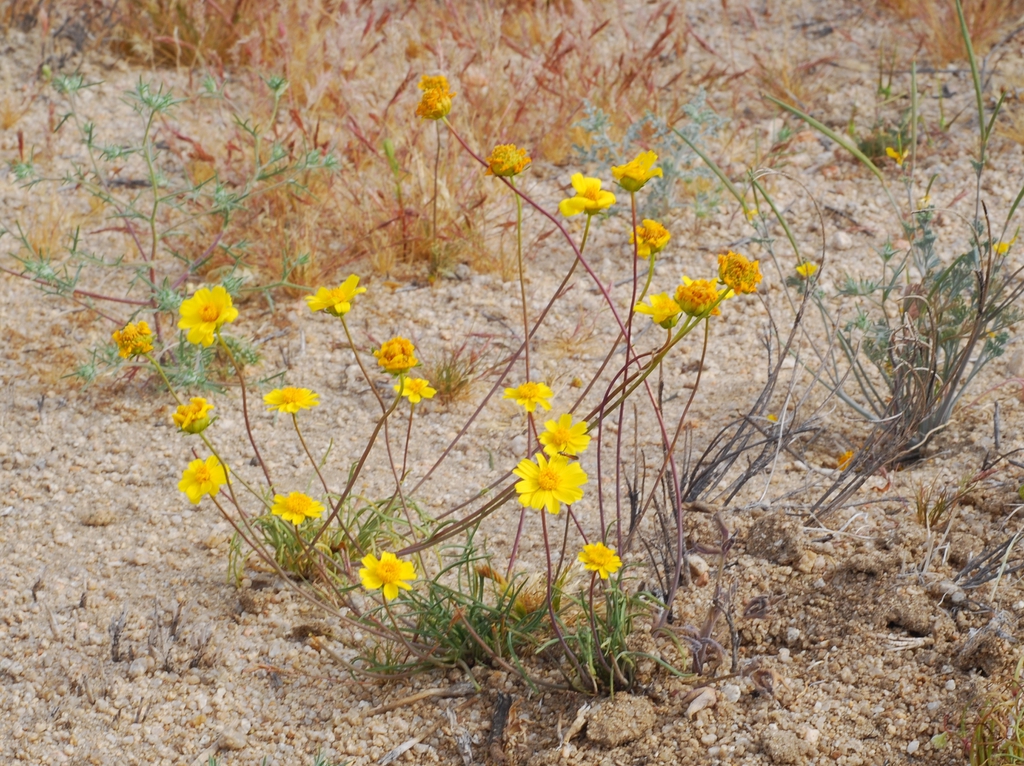
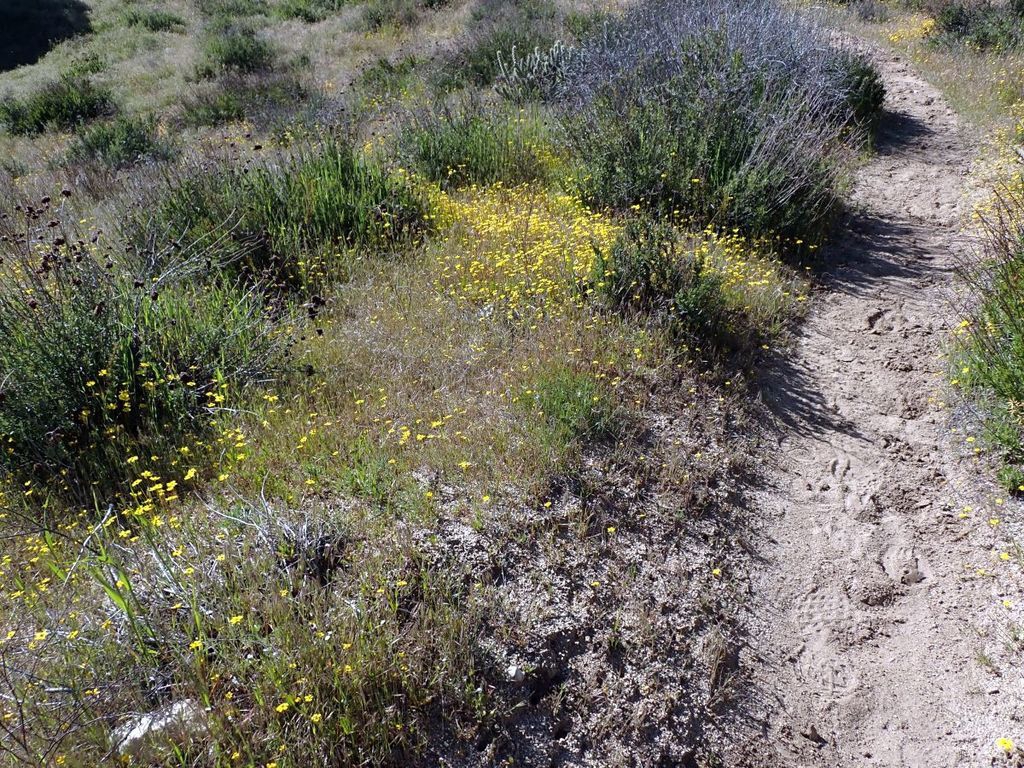
California tickseed is a low-growing annual wildflower native to California, Arizona, and northwestern Mexico, found in washes, plains, and hillsides, below 4,000 feet. It is upright, clump-forming, growing 6 to 12 inches tall and equally as wide, with showy, bright yellow daisy-like flowers that have both ray and disc florets. The leaves are dark green, linear, growing 1-4 inches in length, and appear in clusters at the base of the plant. The erect, reddish leafless stems are topped with the yellow flowers from February to June. It is a member of the daisy family (Asteraceae). The genus name, Leptosyne, is derived from two Greek words: leptos, meaning slender, thin, or weak, and syne, meaning together or joined. The specific epithet californica means "of California."
It thrives in full sun to partial shade and well-drained to dry sandy or loamy soils. It tolerates slightly acidic to alkaline soils. It is intolerant of clay soils. California tickseed is frost-tender and is hardy in zones 9b to 11a. Once established, it is drought-tolerant and will also help to prevent soil erosion in disturbed soils. Deadheading will encourage further flower production. During the winter, prune back the plant to the basal rosette. Propagated by seeds or division.
The flowers of the California tickseed attract pollinators such as bees, butterflies, moths, flies, and bats. The plant may be used as an ornamental and is best planted as a border or in a desert, grassland, or woodland setting.
Insects, Diseases, and Other Plant Problems: Monitor for aphids and spider mites. May be susceptible to powdery mildew and rust in humid conditions.
- See this plant in the following landscape :
- Cultivars / Varieties:
-
- Tags:


- Cultivars / Varieties:
-
- Tags:
-
-
Attributes:
- Genus:
- Leptosyne
- Species:
- californica
- Family:
- Asteraceae
- Uses (Ethnobotany):
- Native Americans used the plant for medicinal purposes. Used in the treatment of colds, coughs, and rheumatism.
- Life Cycle:
- Annual
- Recommended Propagation Strategy:
- Division
- Seed
- Country Or Region Of Origin:
- California to Arizona, and Mexico
- Distribution:
- Arizona, Southern California, and Mexico Northwest
- Wildlife Value:
- Attracts bees, butterflies, moths, hoverflies, and bats.
- Play Value:
- Attractive Flowers
- Attracts Pollinators
- Dimensions:
- Height: 0 ft. 6 in. - 1 ft. 0 in.
- Width: 0 ft. 6 in. - 1 ft. 0 in.
-
-
Whole Plant Traits:
- Plant Type:
- Annual
- Native Plant
- Wildflower
- Habit/Form:
- Clumping
- Erect
- Growth Rate:
- Medium
- Maintenance:
- Low
- Texture:
- Fine
-
-
Cultural Conditions:
- Light:
- Full sun (6 or more hours of direct sunlight a day)
- Soil Texture:
- Loam (Silt)
- Sand
- Soil pH:
- Acid (<6.0)
- Alkaline (>8.0)
- Neutral (6.0-8.0)
- Soil Drainage:
- Good Drainage
- Occasionally Dry
- Available Space To Plant:
- Less than 12 inches
- 12 inches-3 feet
- USDA Plant Hardiness Zone:
- 9b, 10a, 10b, 11a
-
-
Fruit:
- Fruit Color:
- Cream/Tan
- Display/Harvest Time:
- Summer
- Fruit Type:
- Achene
- Fruit Length:
- < 1 inch
- Fruit Width:
- < 1 inch
- Fruit Description:
- The fruit is obovate, flat, rusty-tan or light brown. It is a cypsela but is often called an achene.
-
-
Flowers:
- Flower Color:
- Gold/Yellow
- Flower Inflorescence:
- Head
- Solitary
- Flower Value To Gardener:
- Showy
- Flower Bloom Time:
- Spring
- Winter
- Flower Shape:
- Radial
- Flower Petals:
- more than 20 petals/rays
- Flower Size:
- < 1 inch
- Flower Description:
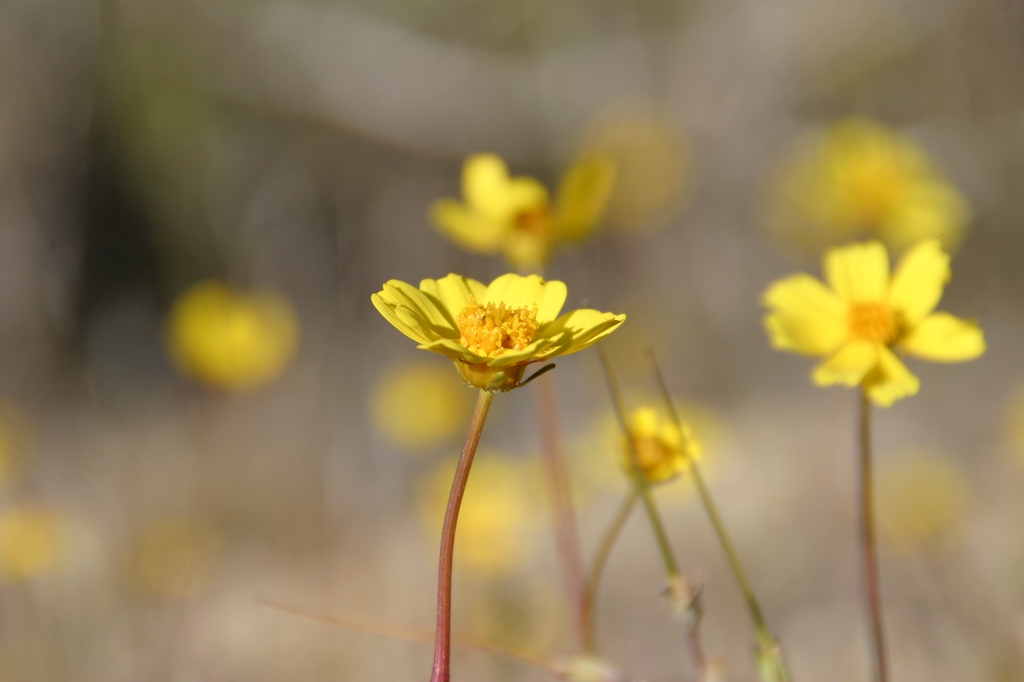
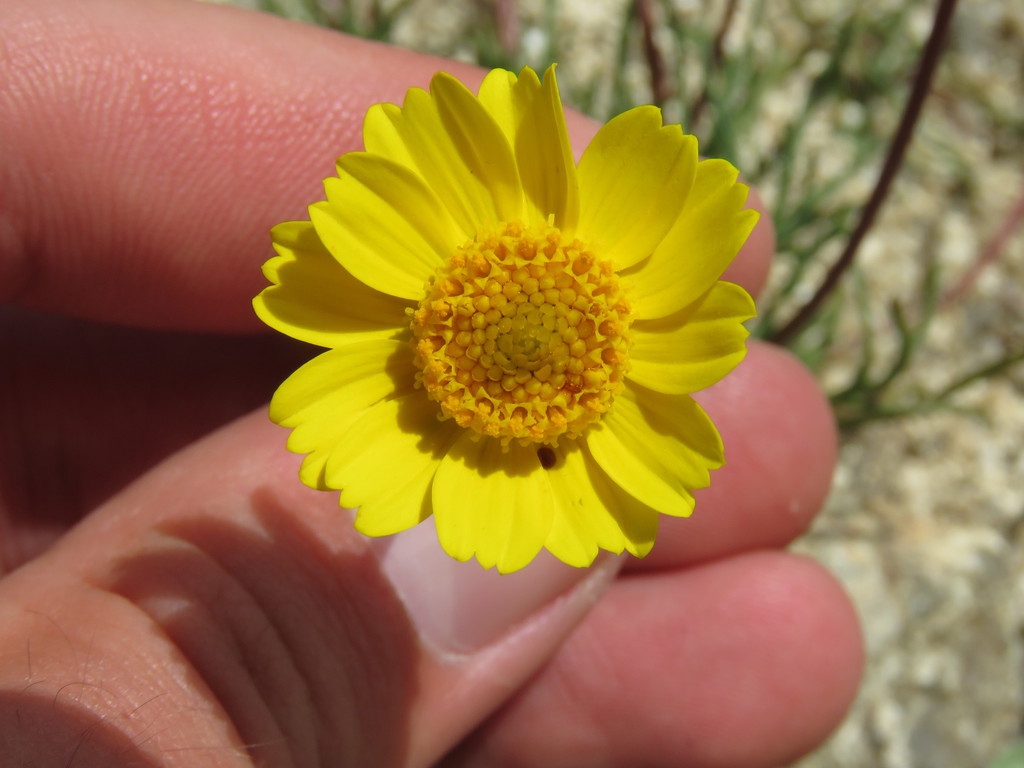
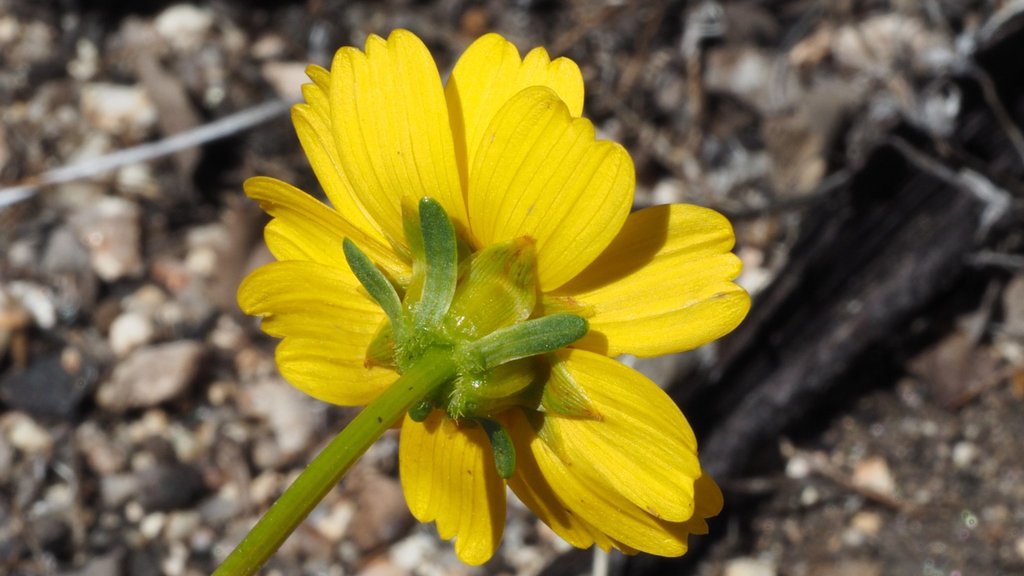
- Each flower is borne atop a leafless reddish stem. The daisy-like flower is 1 inch in diameter and consists of 5 to 12 bright yellow ray florets and 20 to 60 golden yellow disc florets. The ray petals have a notched tip. There is an upper row of 5 to 8 broad, yellow, pointed bracts at the base of the flower, and a lower row of 2 to 7 narrow, green bracts. Blooming occurs from February to June.
-
-
Leaves:
- Leaf Color:
- Green
- Leaf Type:
- Simple
- Leaf Arrangement:
- Rosulate
- Leaf Shape:
- Linear
- Leaf Margin:
- Entire
- Hairs Present:
- No
- Leaf Length:
- 1-3 inches
- Leaf Width:
- < 1 inch
- Leaf Description:
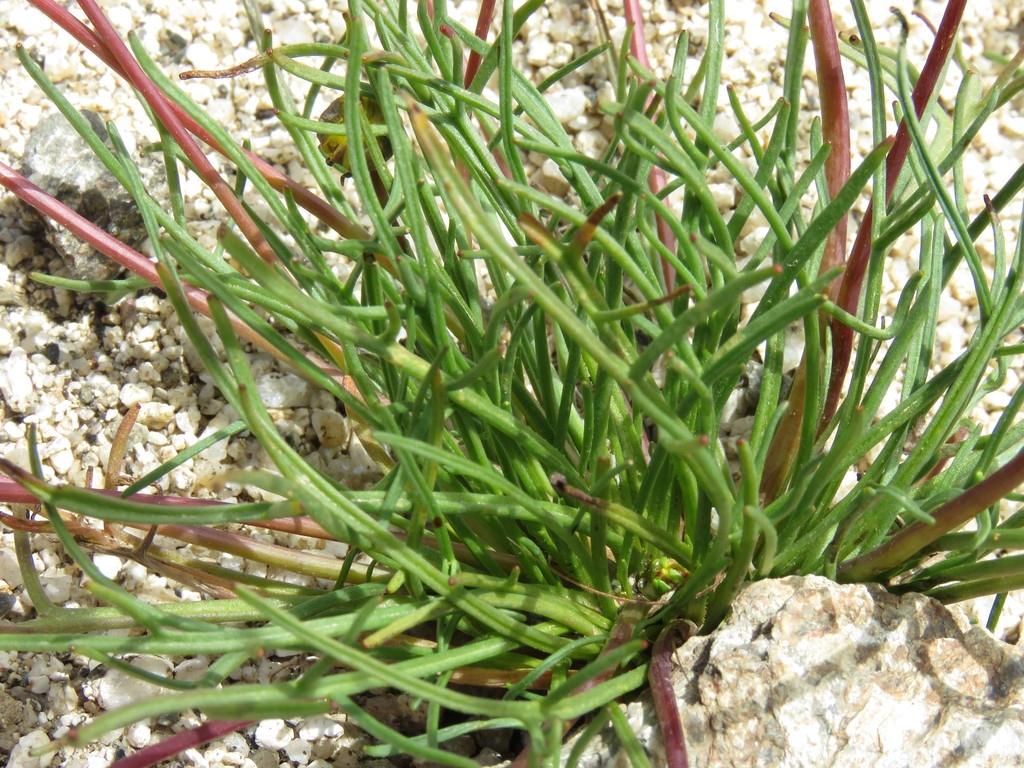
- The leaves are mostly basal with a few cauline leaves. They are 1-4 inches long, 0.3-0.5 mm wide, narrow, thread-like, cylindrical, with entire margins. The leaves grow at the base of the plant in a dense cluster.
-
-
Stem:
- Stem Color:
- Green
- Red/Burgundy
- Stem Is Aromatic:
- No
- Stem Surface:
- Smooth (glabrous)
- Stem Description:
- The stems are erect, smooth, leafless, and green to reddish.
-
-
Landscape:
- Landscape Location:
- Naturalized Area
- Landscape Theme:
- Drought Tolerant Garden
- Rock Garden
- Design Feature:
- Border
- Attracts:
- Bats
- Bees
- Butterflies
- Moths
- Pollinators
- Resistance To Challenges:
- Drought
- Dry Soil
- Erosion
- Poor Soil